

Typeform built its reputation on beautiful, conversational forms, and that reputation is well-earned. But enterprise teams often hit real walls: per-response pricing that scales painfully at volume, limited native lead qualification, logic branching that feels constrained for complex workflows, and compliance requirements that need more robust tooling than Typeform's standard tiers offer.
If your team is managing high-volume lead generation, sophisticated routing workflows, or multi-department data collection with real compliance stakes, you need a platform built for that scale. Not one you're constantly working around.
This list covers the best Typeform alternatives for enterprise use cases in 2026. Each tool was evaluated on form flexibility, lead qualification capabilities, integration depth, security standards, and pricing transparency. For additional context on what to look for, see our guides on lead forms for B2B companies and how to qualify leads with forms.
1. Orbit AI
Best for: High-growth B2B and SaaS teams that need AI-powered lead qualification built into the form layer.
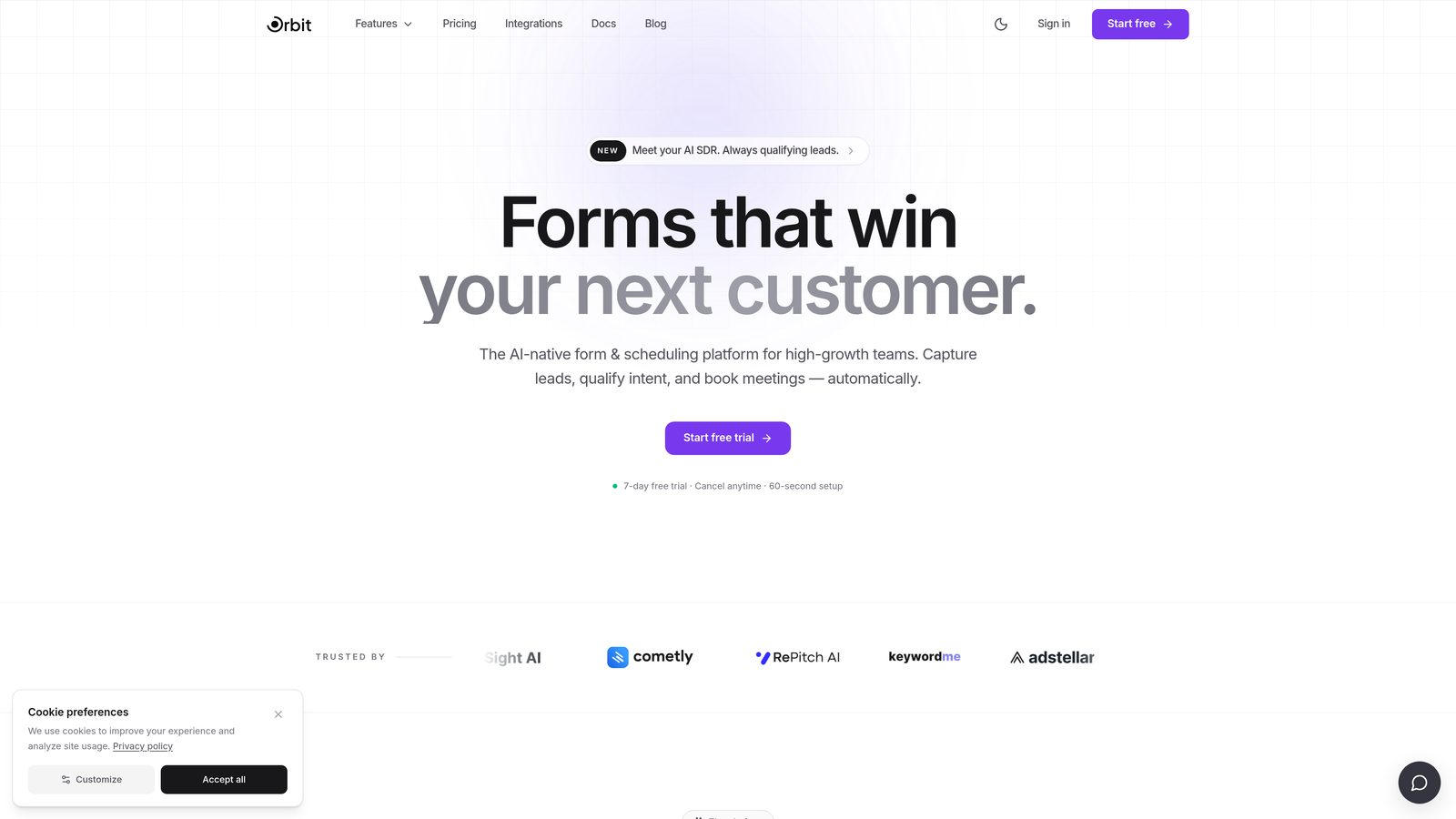
Orbit AI is an AI-powered form builder with native lead scoring and qualification, designed specifically for conversion-focused enterprise teams.
Where This Tool Shines
Most form builders treat qualification as an afterthought, something you bolt on with a Zap or a CRM workflow after the submission lands. Orbit AI flips that entirely. The intelligence layer lives inside the form itself, scoring and routing leads based on responses in real time, before they ever hit your CRM.
For revenue teams where forms are a critical touchpoint rather than a passive data collection utility, this distinction matters. You're not just capturing information; you're actively filtering and prioritizing it at the source. That's a meaningful shift for teams running high-volume inbound pipelines.
Key Features
AI-Powered Lead Qualification: Native qualification logic built directly into the form layer, no separate automation tool or manual scoring required.
Intelligent Lead Scoring and Routing: Automatically scores and routes leads based on form responses, so your sales team focuses on the right prospects first.
Conversion-Optimized Form Design: Modern, branded UX built with conversion best practices in mind, not just aesthetics.
Conditional Logic and Dynamic Fields: Personalized form experiences that adapt based on how respondents answer, keeping forms relevant and completion rates high.
CRM and Marketing Automation Integrations: Connects with the platforms your revenue stack already runs on, keeping data flowing without manual exports.
Best For
Orbit AI is the strongest fit for growth teams and B2B SaaS companies where lead quality matters as much as lead volume. If your current form setup requires manual review or post-submission scoring to separate good leads from bad ones, this platform is worth a serious look.
Pricing
Pricing is available on request. Visit orbitforms.ai for details or to get in touch with the team directly.
2. Jotform
Best for: Enterprises needing HIPAA compliance, multi-step approval workflows, and a deep template library.
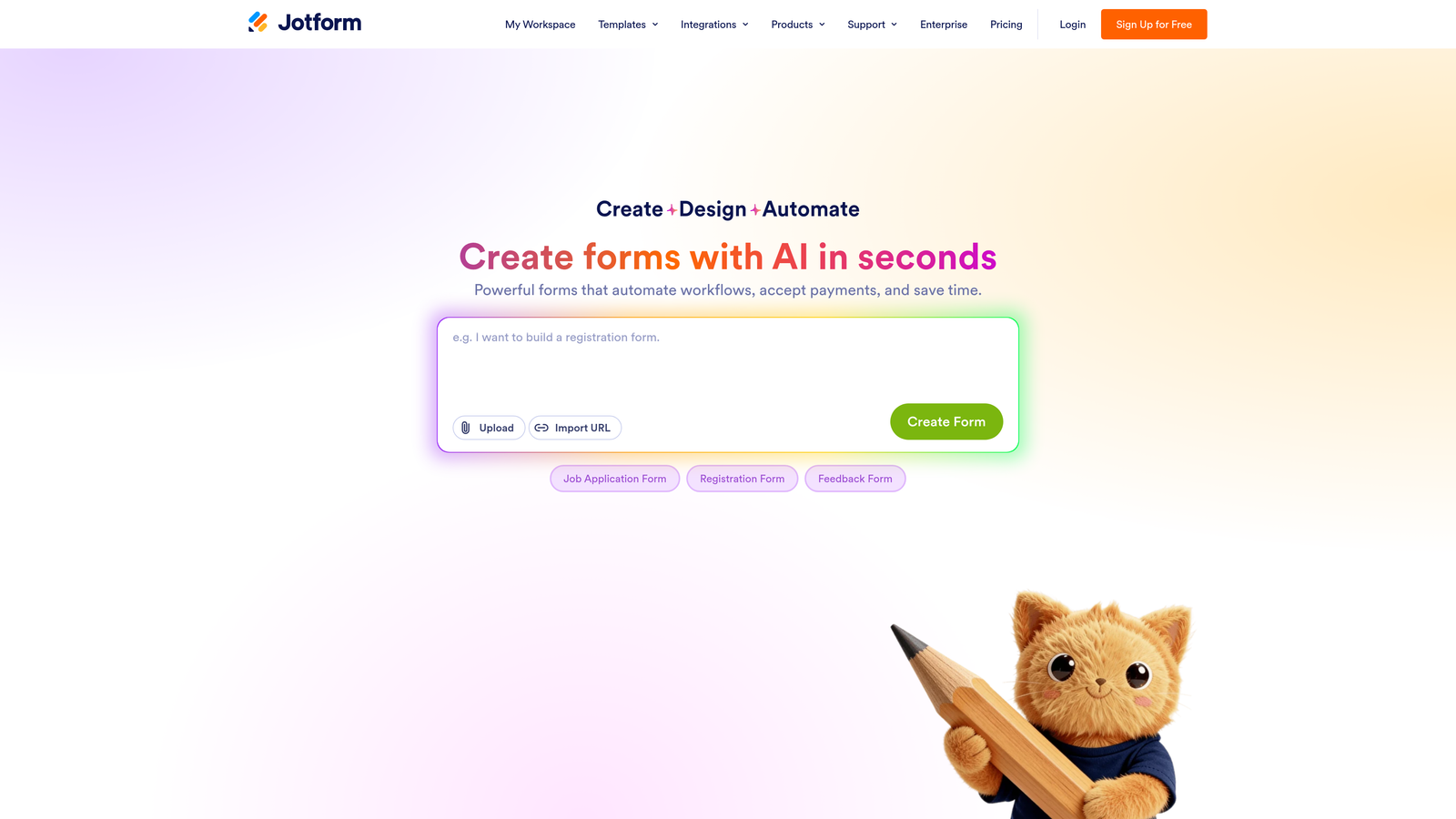
Jotform is one of the most feature-complete form builders on the market, with a strong enterprise tier built for regulated industries and multi-department deployments.
Where This Tool Shines
Jotform's breadth is genuinely impressive. Thousands of templates, built-in payment processing, e-signature support, and a workflow automation layer called Jotform Approvals make it a one-stop shop for organizations that need forms to do a lot of different things across a lot of different teams.
The enterprise tier is where Jotform earns its credibility for larger organizations. HIPAA compliance, SSO, advanced user management, and strong data security controls make it a viable option for healthcare, legal, and financial services teams that can't compromise on compliance posture.
Key Features
HIPAA-Compliant Forms: Enterprise security with SSO support, making it suitable for regulated industries with strict data handling requirements.
Jotform Approvals: Multi-step workflow automation that routes form submissions through approval chains before action is taken.
Extensive Template Library: Thousands of industry-specific templates that dramatically reduce time-to-deploy for new form projects.
Built-In Payment Processing: Accept payments and e-signatures directly within forms, without third-party workarounds.
Advanced User Management: Role-based access controls and team management features designed for enterprise-scale deployments.
Best For
Jotform is a strong fit for large organizations that need compliance documentation, multi-department rollout, and workflow automation in a single platform. It's particularly well-suited to healthcare, HR, and operations teams managing complex, approval-driven processes.
Pricing
A free tier is available. Paid plans scale by usage, and enterprise pricing is custom and quote-based. Contact Jotform directly for enterprise-specific terms.
3. Formstack
Best for: Regulated industries needing forms, documents, and e-signatures in one integrated workflow suite.
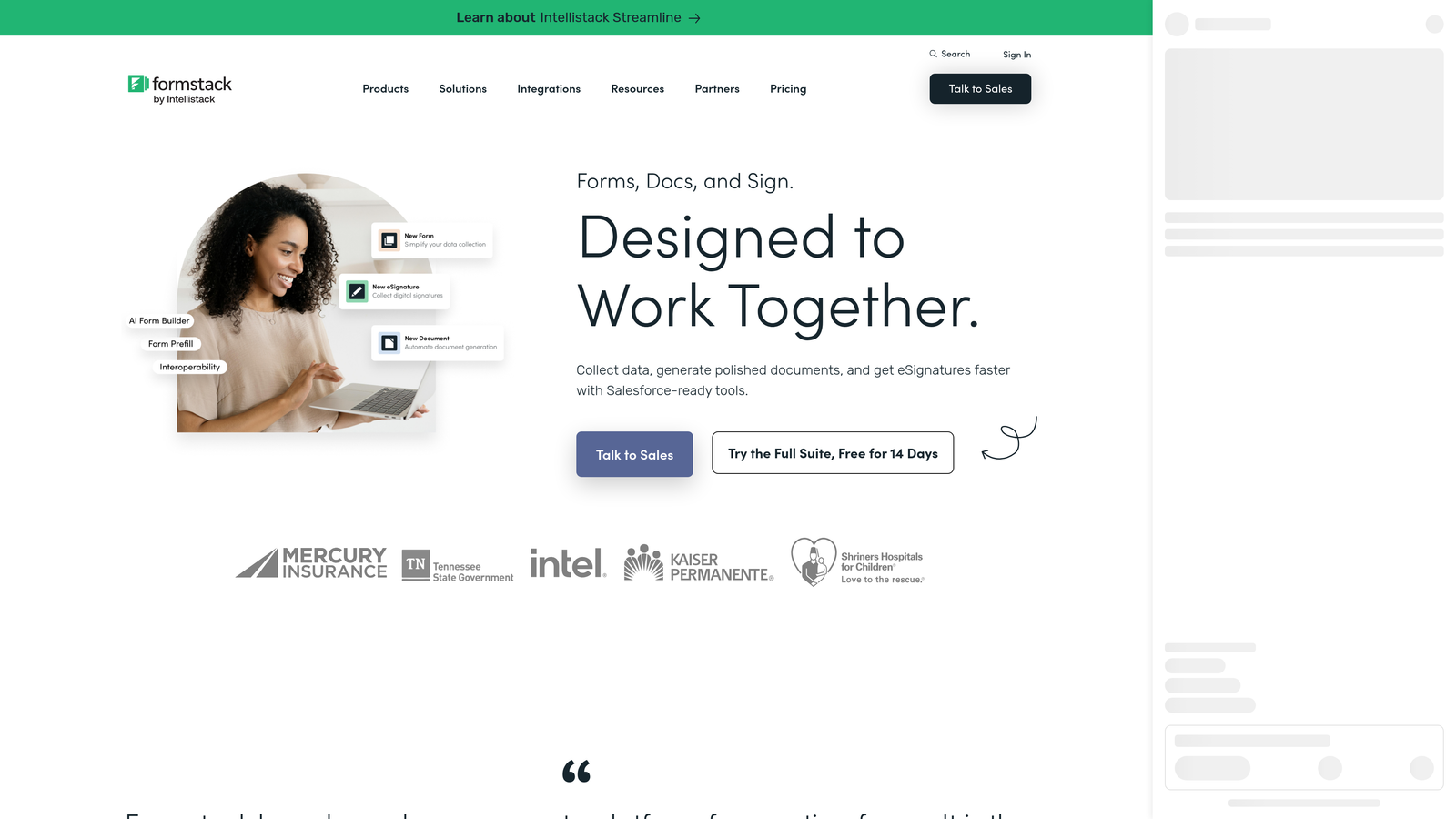
Formstack is a workplace productivity platform that combines forms, document generation, and electronic signatures into a unified enterprise solution.
Where This Tool Shines
Formstack's core differentiator is the integrated suite. Where most form builders stop at data collection, Formstack extends into document generation and signature capture, making it particularly powerful for workflows that require a complete paper trail. Think onboarding, contracts, compliance documentation, and HR processes.
The Salesforce-native integration is a standout feature for CRM-driven organizations. If your team lives in Salesforce, Formstack connects directly to your existing data architecture rather than requiring middleware or manual field mapping. That kind of native depth is rare and genuinely valuable at enterprise scale.
Key Features
Forms, Documents, and Sign: A unified suite covering the full data-to-document workflow, from collection to signature, in one platform.
Salesforce-Native Integration: Direct, deep integration with Salesforce for CRM-connected data collection without relying on third-party connectors.
Robust Conditional Logic: Sophisticated field routing and branching that handles complex, multi-path workflows cleanly.
Compliance for Regulated Industries: Strong security posture suited to healthcare, financial services, and HR environments with strict data requirements.
Modular Pricing: Use Forms as a standalone product or bundle with Documents and Sign depending on your workflow needs.
Best For
Formstack is best suited to enterprises in regulated industries where forms are one piece of a larger document workflow. Organizations heavily invested in Salesforce will find the native integration particularly compelling.
Pricing
Modular pricing structure. Forms plans are available as a standalone product, with full suite pricing available on request. Check formstack.com for current plan details.
4. Paperform
Best for: Marketing teams building branded form and landing page experiences with flexible, document-style layouts.
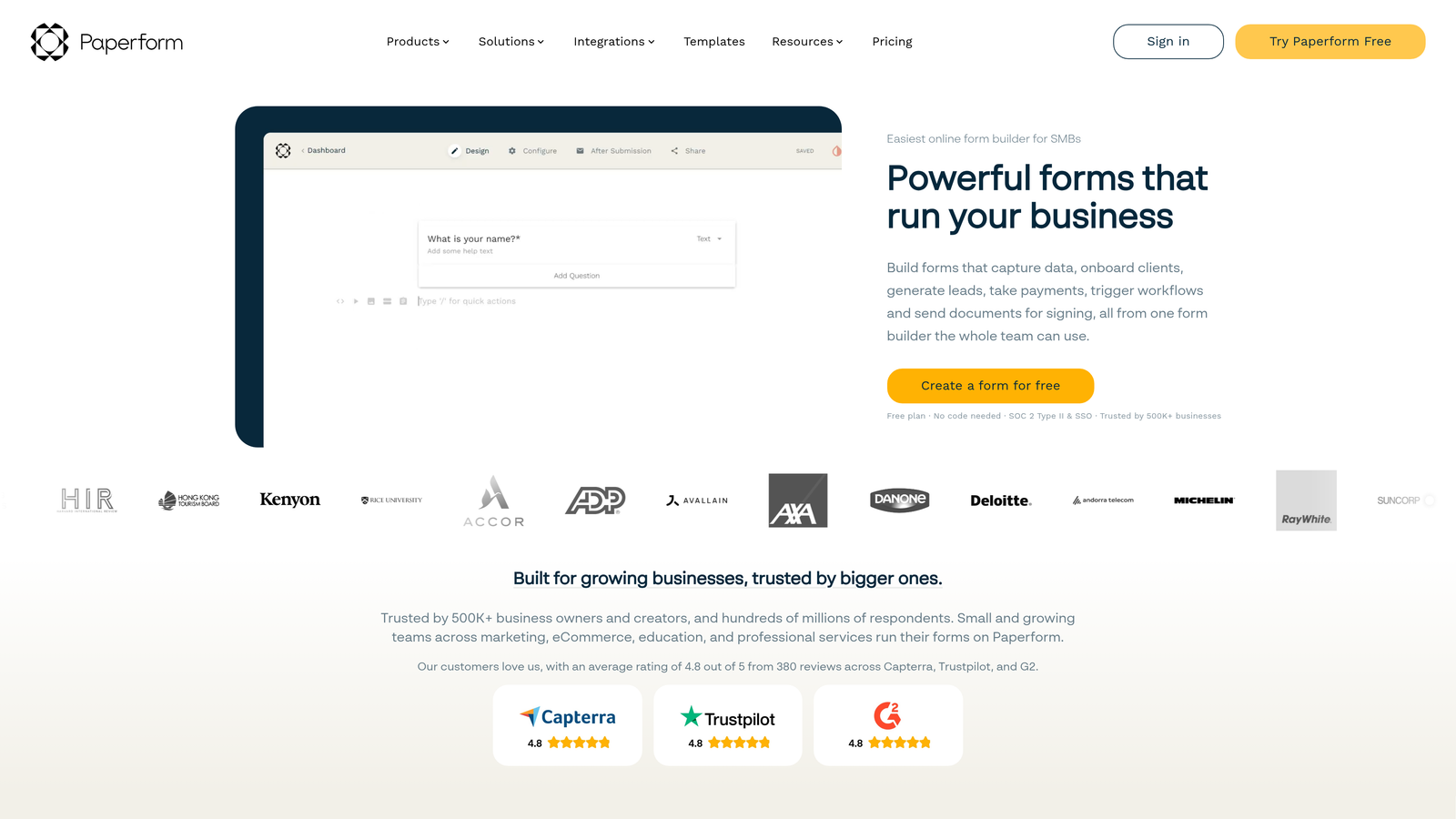
Paperform is a flexible form builder with a unique freeform editor that blends content and form fields like a document, giving marketing teams more creative control than traditional form builders allow.
Where This Tool Shines
Paperform's editor is genuinely different from anything else on this list. Instead of a rigid field-by-field builder, you write content and embed form fields inline, like you're composing a document. The result is forms that feel more like branded landing pages than typical data collection screens, which can meaningfully improve completion rates for marketing-driven use cases.
Calculation fields and advanced conditional logic add real depth for teams that need forms to do more than capture input. Product configurators, booking forms with scheduling logic, and quote calculators are all within reach without custom development.
Key Features
Freeform Document-Style Editor: Blend content blocks and form fields freely, creating experiences that feel like branded pages rather than standard forms.
Advanced Conditional Logic and Calculations: Build dynamic forms with calculation fields for pricing, scoring, or configuration use cases.
Built-In Payment Processing: Native integrations with Stripe, PayPal, and Square for transactional forms without additional tools.
Custom Domain and Branding Controls: Strong white-labeling and brand customization options for teams that care about consistent visual identity.
Product and Booking Forms: Inventory management and scheduling logic built in for e-commerce and service-based use cases.
Best For
Paperform is a natural fit for marketing teams and agencies that need form experiences to feel like an extension of their brand. It's less focused on enterprise compliance than Jotform or Formstack, but excels where creative flexibility and conversion-focused design are the priority.
Pricing
Tiered plans including Essentials, Pro, and Business levels. An Agency plan is available for multi-client teams. Visit paperform.co for current pricing.
5. Tally
Best for: Teams that want fast, clean form building with a generous free tier and Notion-style simplicity.
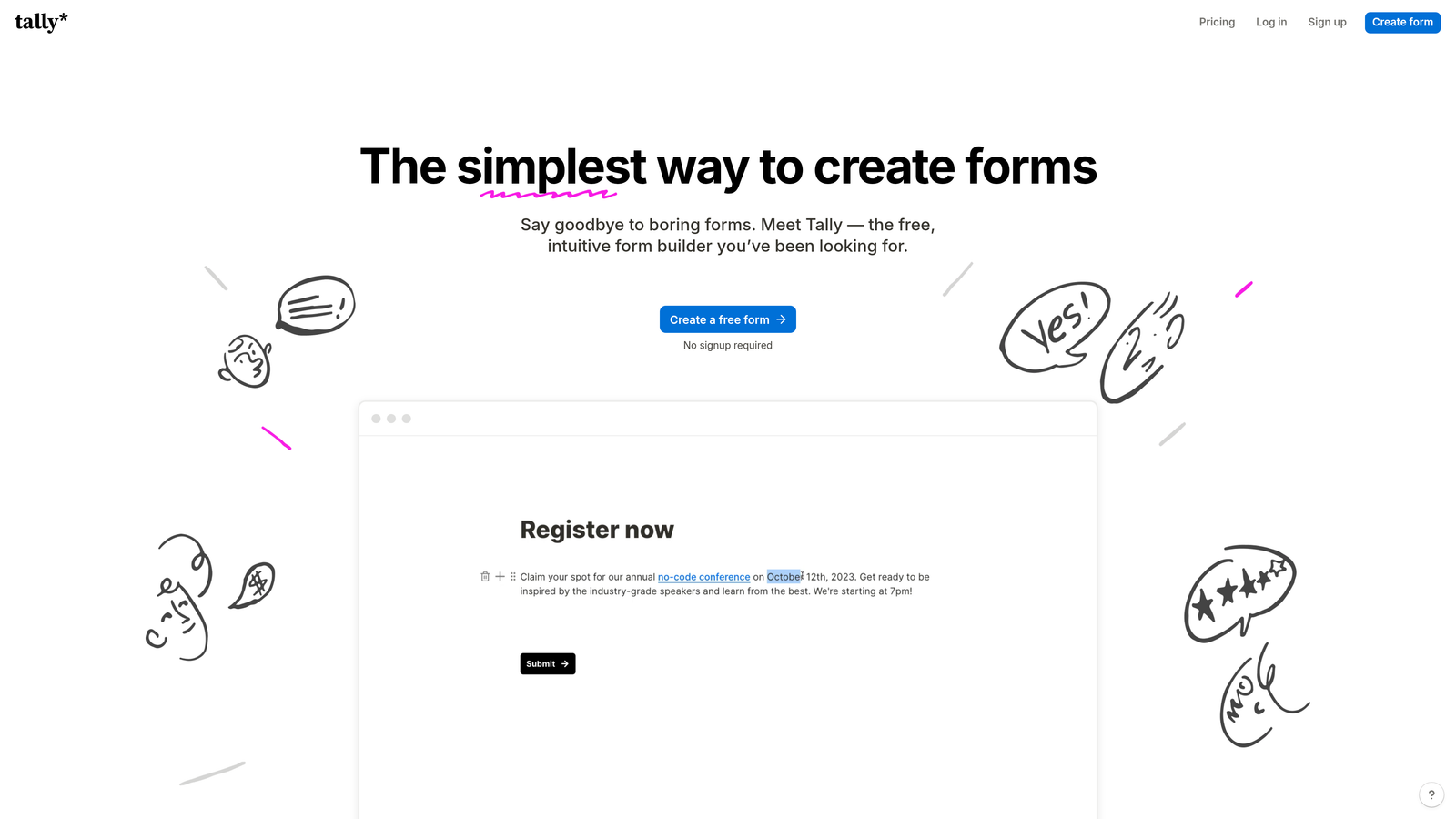
Tally is a clean, Notion-inspired form builder with a minimal block editor, unlimited free forms, and a growing integration ecosystem that makes it a surprisingly capable option for internal tools and lean teams.
Where This Tool Shines
Tally's free tier is genuinely one of the most generous in the market. Unlimited forms and unlimited submissions at no cost is an unusual offer, and for teams that need to move fast without budget approval cycles, that matters. The block editor is intuitive enough that most people can build a working form in minutes without any onboarding.
The aesthetic is clean and distraction-free, which works particularly well for internal tools, employee surveys, and feedback collection where a polished branded experience is less critical than speed and simplicity. It's not the deepest enterprise platform on this list, but for the right use case, it's hard to beat on ease of use.
Key Features
Unlimited Free Forms and Submissions: The free plan genuinely doesn't cap your form count or submission volume, a rare and practical advantage.
Notion-Style Block Editor: Fast, intuitive form building that feels familiar to teams already working in block-based tools.
Conditional Logic and Hidden Fields: Available on paid plans for more sophisticated, personalized form flows.
Zapier and Native Integrations: Connect form submissions to your existing workflow tools without custom development.
Clean, Minimal Form UX: Distraction-free respondent experience that works well for internal tools and straightforward data collection.
Best For
Tally is best for lean teams, startups, and internal operations use cases where speed, simplicity, and cost efficiency matter more than enterprise compliance or advanced lead qualification. It's a practical choice for teams that need to ship forms fast without a steep learning curve.
Pricing
Free tier includes unlimited forms and submissions. The Pro plan unlocks advanced conditional logic, custom domains, and branding removal. Check tally.so for current Pro pricing.
6. Typeform
Best for: Consumer-facing surveys and research where conversational UX and brand polish are the top priority.
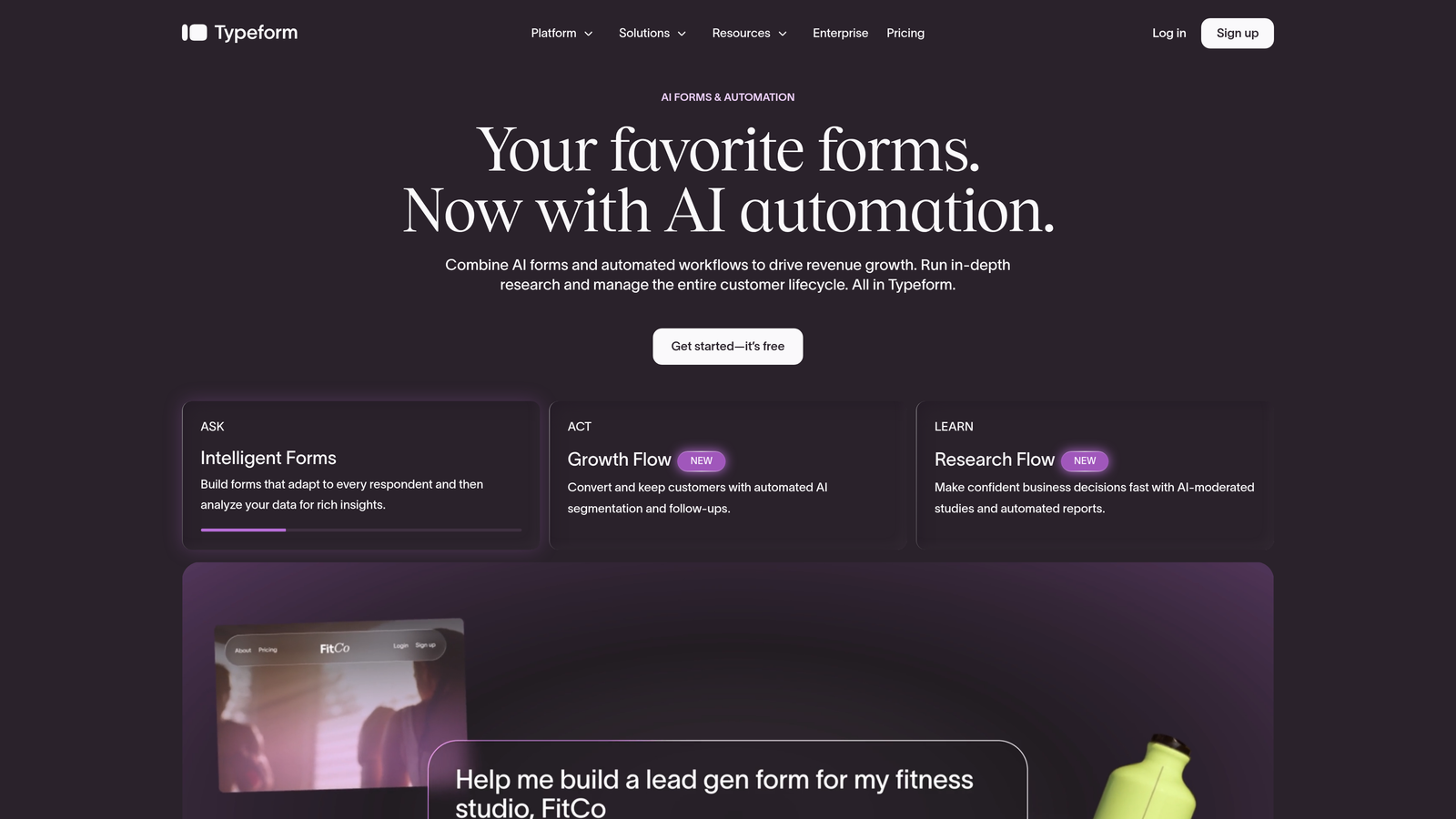
Typeform is the original conversational form builder, with a distinctive one-question-at-a-time interface that has set the standard for survey UX and remains genuinely strong for specific use cases.
Where This Tool Shines
Typeform's core strength is the respondent experience. The conversational, single-question format creates a focused, engaging flow that tends to perform well for consumer research, brand surveys, and any context where keeping someone's attention through a longer form is the primary challenge.
For teams doing market research, customer satisfaction surveys, or audience segmentation studies, Typeform's completion UX is hard to argue with. The platform also supports video and image embedding within questions, which adds richness to research-oriented experiences that text-only forms can't match.
Key Features
Conversational One-Question-at-a-Time UI: The defining feature that made Typeform famous, and still one of the best survey completion experiences available.
Logic Jumps and Branching: Conditional flows that personalize the respondent path based on previous answers.
Video and Image Embedding: Enrich form questions with visual media for more engaging survey experiences.
CRM and Automation Integrations: Connects with HubSpot, Salesforce, and Zapier for downstream data routing.
Strong Survey Completion UX: The focused format tends to support higher completion rates for longer, research-oriented forms.
Best For
Typeform remains a solid choice for consumer-facing research, brand surveys, and marketing teams where the form experience itself is part of the brand impression. It's less suited to high-volume enterprise lead generation or compliance-heavy workflows where its pricing model and qualification limitations become friction points.
Pricing
Tiered plans including Basic, Plus, Business, and Enterprise levels. Per-response pricing on lower tiers can become costly at high submission volumes. Enterprise pricing is available but typically requires a direct conversation with their sales team.
Which Tool Is Right for Your Enterprise?
The right choice depends on what's actually breaking down with your current setup. Here's a quick way to think through it.
If lead qualification is your core problem, and your team is spending time manually reviewing form submissions to figure out which leads are worth pursuing, Orbit AI is built specifically for that challenge. The AI qualification layer lives inside the form itself, scoring and routing leads automatically so your sales team starts with better signal from the first interaction.
If compliance is non-negotiable and you're in healthcare, HR, or financial services, Jotform or Formstack are the strongest options. Jotform covers HIPAA and SSO with a massive template library; Formstack extends further into document generation and e-signatures with deep Salesforce connectivity.
If your marketing team needs creative control and wants forms that feel like branded landing pages rather than data collection screens, Paperform's document-style editor gives you flexibility that traditional form builders don't.
If you're moving fast, working lean, or building internal tools where compliance and advanced qualification aren't the priority, Tally's generous free tier and clean editor are hard to beat for speed and simplicity.
And if you're evaluating away from Typeform specifically because of per-response pricing or qualification limitations at scale, most of the tools on this list will address those gaps directly.
For growth and B2B teams where forms are a revenue-critical touchpoint, the shift from passive data collection to active lead intelligence is where the real leverage is. Start building free forms today and see how AI-powered qualification can change what your forms actually do for your pipeline.


