

Enterprise teams outgrow Typeform faster than you'd expect. The platform's per-response pricing, limited logic capabilities, and lack of native lead qualification make it a poor fit for high-volume, high-stakes data collection. Whether you're running multi-step lead qualification flows, complex onboarding surveys, or compliance-sensitive intake forms, you need a platform built for scale, not one that charges you more as you grow.
This guide covers the top Typeform alternatives for enterprise teams in 2026. Each tool has been evaluated on enterprise-critical criteria: advanced logic and branching, integration depth, security and compliance posture, team collaboration features, and pricing transparency. If you're managing lead generation at scale or trying to convert more inbound traffic into qualified pipeline, at least one of these platforms will be a significant upgrade.
1. Orbit AI
Best for: High-growth B2B teams that need forms to qualify and route leads, not just collect responses.
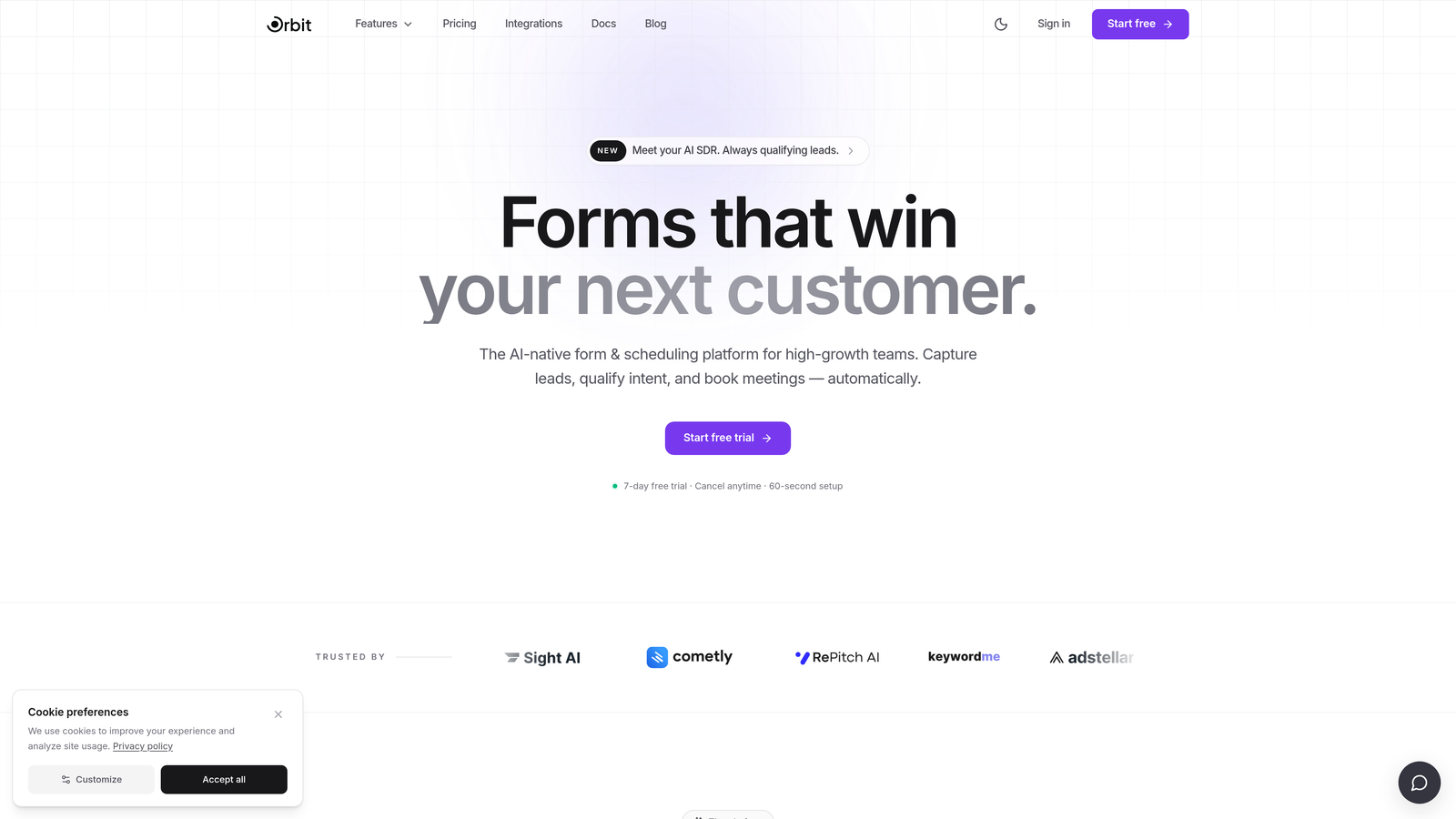
Orbit AI is an AI-powered form builder with native lead qualification, scoring, and routing built directly into the form flow.
Where This Tool Shines
Most form builders treat qualification as an afterthought, leaving your team to manually sort submissions in a CRM after the fact. Orbit AI flips that model. The platform embeds lead scoring and routing logic directly into the form experience, so by the time a prospect hits submit, your team already knows whether they're a fit and where they should go next.
This is a meaningful differentiator for enterprise demand gen teams running high-volume inbound flows. Instead of relying on third-party enrichment tools or manual review, the qualification happens automatically, inside the form itself.
Key Features
AI-Powered Lead Qualification: Scoring logic built into form flows surfaces high-intent leads automatically, without manual CRM triage.
Conditional Logic for Multi-Step Sequences: Build complex branching paths that adapt based on respondent answers, ideal for layered qualification workflows.
Lead Routing Automation: Qualified leads are directed to the right team member, CRM workflow, or follow-up sequence based on their score and profile.
Conversion-Optimized Design: Modern, brand-aligned form UI designed to reduce drop-off and improve completion rates across device types.
Built for B2B Demand Gen: Purpose-built for SaaS and B2B teams, not a general-purpose tool retrofitted for enterprise use cases.
Best For
Enterprise and high-growth SaaS teams where form submissions need to feed directly into a qualified pipeline. Particularly strong for inbound lead gen, account-based marketing intake flows, and multi-step onboarding sequences where lead quality matters as much as lead volume.
Pricing
Visit orbitforms.ai for current plans and enterprise pricing options. A free starting point is available to explore the platform before committing.
2. Jotform
Best for: Regulated industries that need enterprise compliance credentials alongside powerful form functionality.
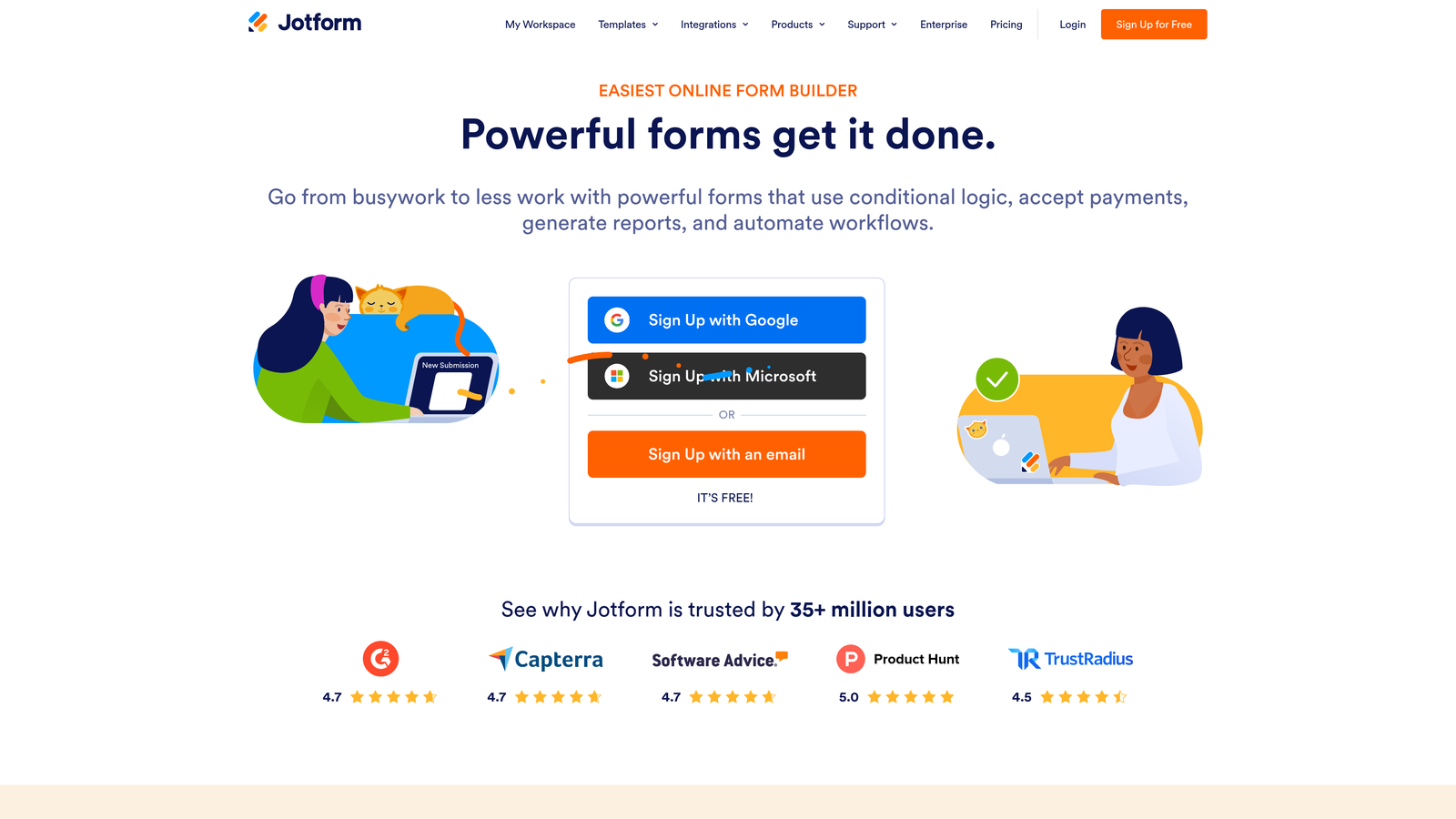
Jotform is one of the most feature-complete form builders available, with strong enterprise compliance credentials including HIPAA, SOC 2, and SSO support.
Where This Tool Shines
Jotform's compliance posture sets it apart from most competitors in this space. For teams operating in healthcare, financial services, or any regulated environment, the availability of HIPAA-compliant plans and SOC 2 certification removes a significant barrier to adoption. You're not building workarounds or waiting on security reviews to get approved.
Beyond compliance, the platform's sheer breadth is impressive. Thousands of templates, native payment processing, e-signature support, and complex conditional logic make it a genuine all-in-one solution for enterprise teams that need to cover a wide range of form use cases without stitching together multiple tools.
Key Features
HIPAA and SOC 2 Compliance: Purpose-built compliance plans for healthcare, finance, and other regulated industries.
Enterprise SSO and Permissions: Advanced team controls, role-based access, and single sign-on for large organizations managing multiple users.
Extensive Template Library: Thousands of pre-built templates across industries, reducing time-to-launch for new form projects.
Native Payments and E-Signatures: Collect payments and signatures without leaving the platform or adding third-party integrations.
Complex Conditional Logic: Multi-step branching, calculation fields, and dynamic form behavior for sophisticated data collection flows.
Best For
Enterprise teams in regulated industries where compliance is non-negotiable. Also a strong fit for organizations that need a single platform to handle a wide variety of form types, from HR intake to payment collection to client onboarding.
Pricing
Free tier available. Paid plans scale by submission volume. Enterprise pricing is available on request directly through Jotform's sales team.
3. Formstack
Best for: Operations-heavy enterprise teams that need workflow automation, document generation, and approvals alongside form collection.
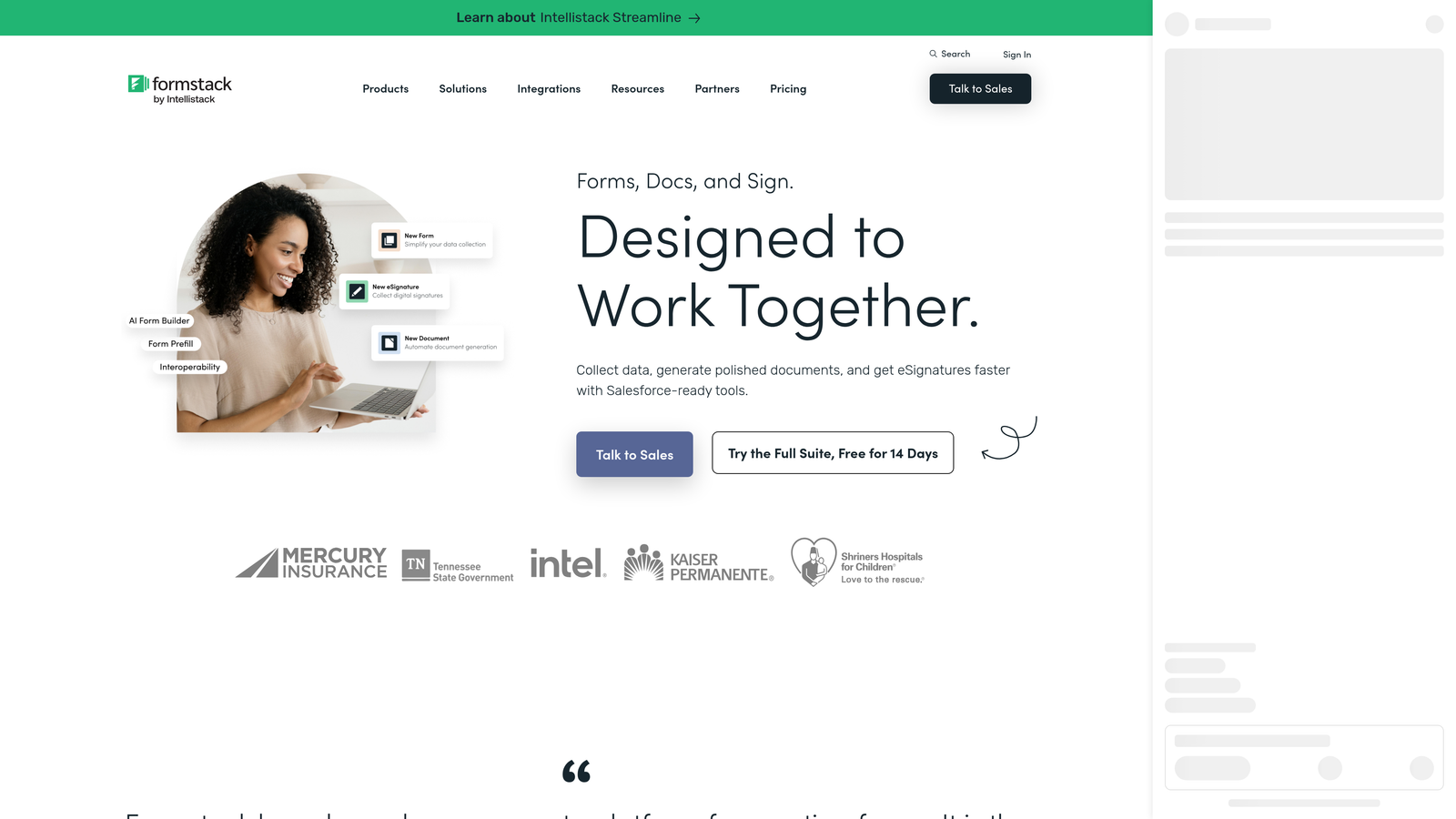
Formstack is a workflow automation platform built around forms, including document generation, e-signatures, and multi-step approval flows.
Where This Tool Shines
Formstack is best understood as a productivity suite that happens to start with a form. Where other tools stop at data collection, Formstack extends into what happens next: generating a document from the submission, routing it through an approval chain, collecting a signature, and pushing the completed record into Salesforce. For ops teams managing complex internal processes, that end-to-end capability in a single platform is genuinely valuable.
The Salesforce integration deserves particular mention. Formstack's native Salesforce connector is deeper than most competitors, making it a natural fit for revenue operations teams that live in Salesforce and need form data to flow cleanly into their existing object structure.
Key Features
Formstack Documents: Auto-generate PDFs and formatted documents directly from form submission data.
Formstack Sign: Built-in e-signature collection without requiring a separate tool or integration.
Multi-Step Approval Workflows: Route submissions through internal review and approval processes before finalizing.
Deep Salesforce Integration: Native connector built for revenue and operations teams managing complex CRM workflows.
HIPAA Compliance: Meets compliance requirements for healthcare and financial services use cases.
Best For
Enterprise operations, legal, HR, and revenue teams that need forms to trigger downstream workflows. Best when you need the full suite: forms, documents, signatures, and approvals working together rather than just a standalone form builder.
Pricing
Modular pricing by product. The Forms product starts at a premium price point relative to simpler builders. Enterprise pricing is available on request. Budget accordingly if you plan to use multiple Formstack products together.
4. Paperform
Best for: Marketing teams that want forms to feel like branded landing pages, with native payments and strong design flexibility.
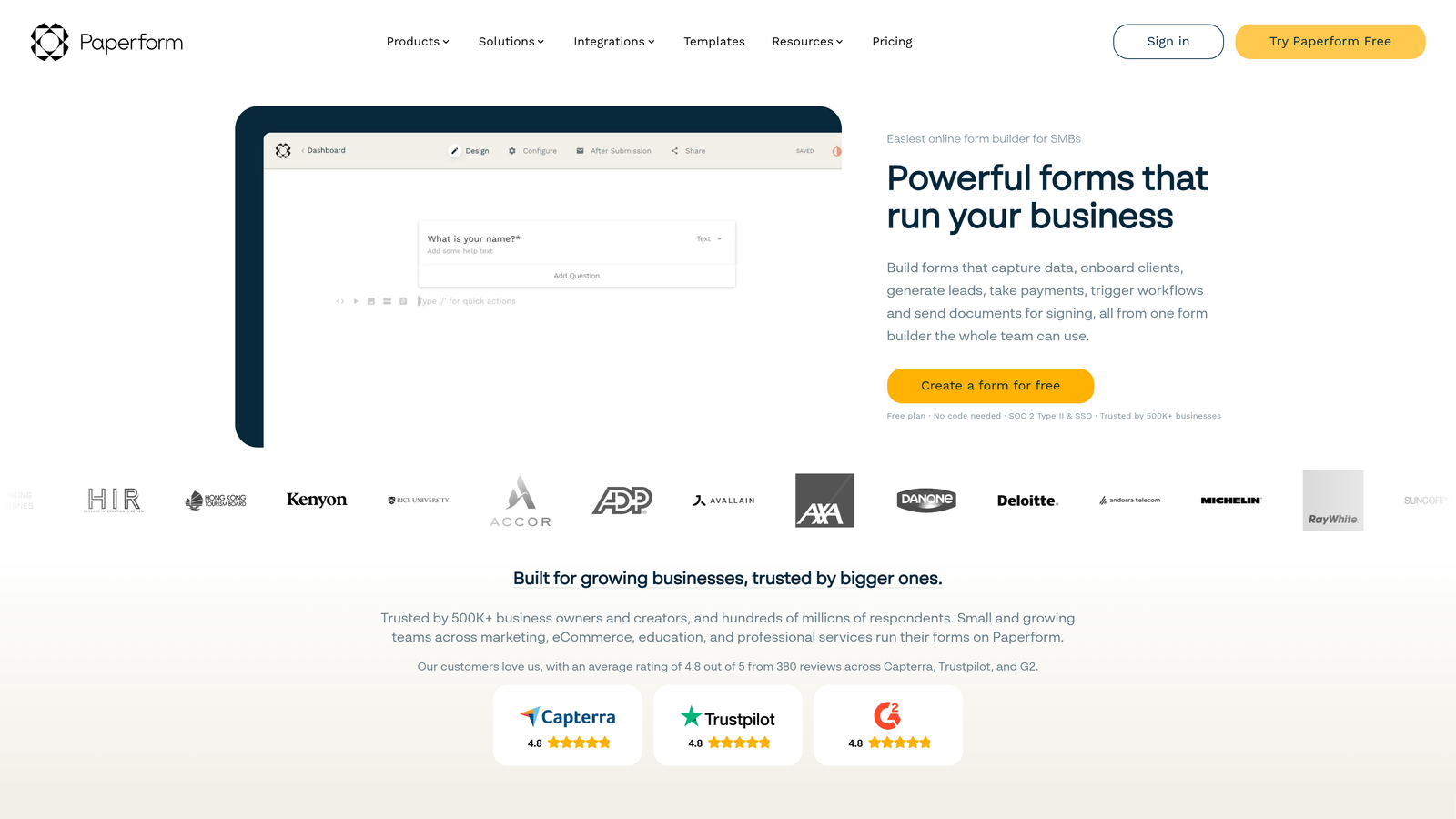
Paperform is a hybrid form builder and landing page creator that lets marketing teams build beautiful, branded form pages with native payments and flexible design controls.
Where This Tool Shines
Paperform occupies a unique position in this space. Rather than building a form and embedding it somewhere, you're building a page, and the form is woven into it. The result feels far more polished than a typical form widget, which matters when you're running campaign-specific intake pages or event registrations where brand presentation directly affects conversion.
For marketing teams that have struggled with the visual limitations of traditional form builders, Paperform offers a meaningful upgrade in creative control without requiring design or development resources to execute.
Key Features
Page-Builder Style Editor: Forms are built as full pages, giving marketing teams complete control over layout, imagery, and brand presentation.
Native Payment Processing: Supports Stripe, PayPal, and Square natively, enabling product sales, event ticketing, and service bookings within the form.
Appointment Booking and Product Listings: Built-in scheduling and product functionality for teams that need more than basic data collection.
Conditional Logic and Calculator Fields: Dynamic form behavior including pricing calculators and branching paths based on user input.
Campaign and Event Use Cases: Particularly well-suited to time-bound marketing campaigns where a dedicated, branded page matters.
Best For
Marketing teams running campaign intake pages, event registrations, or service bookings where design quality and brand alignment are priorities. Less suited to compliance-heavy enterprise environments or complex internal approval workflows.
Pricing
Tiered subscription plans with agency and team options available. Check paperform.co for current pricing, as plans are updated periodically.
5. Typeform
Best for: Brand-forward survey experiences at moderate volume where conversational UX is a priority.
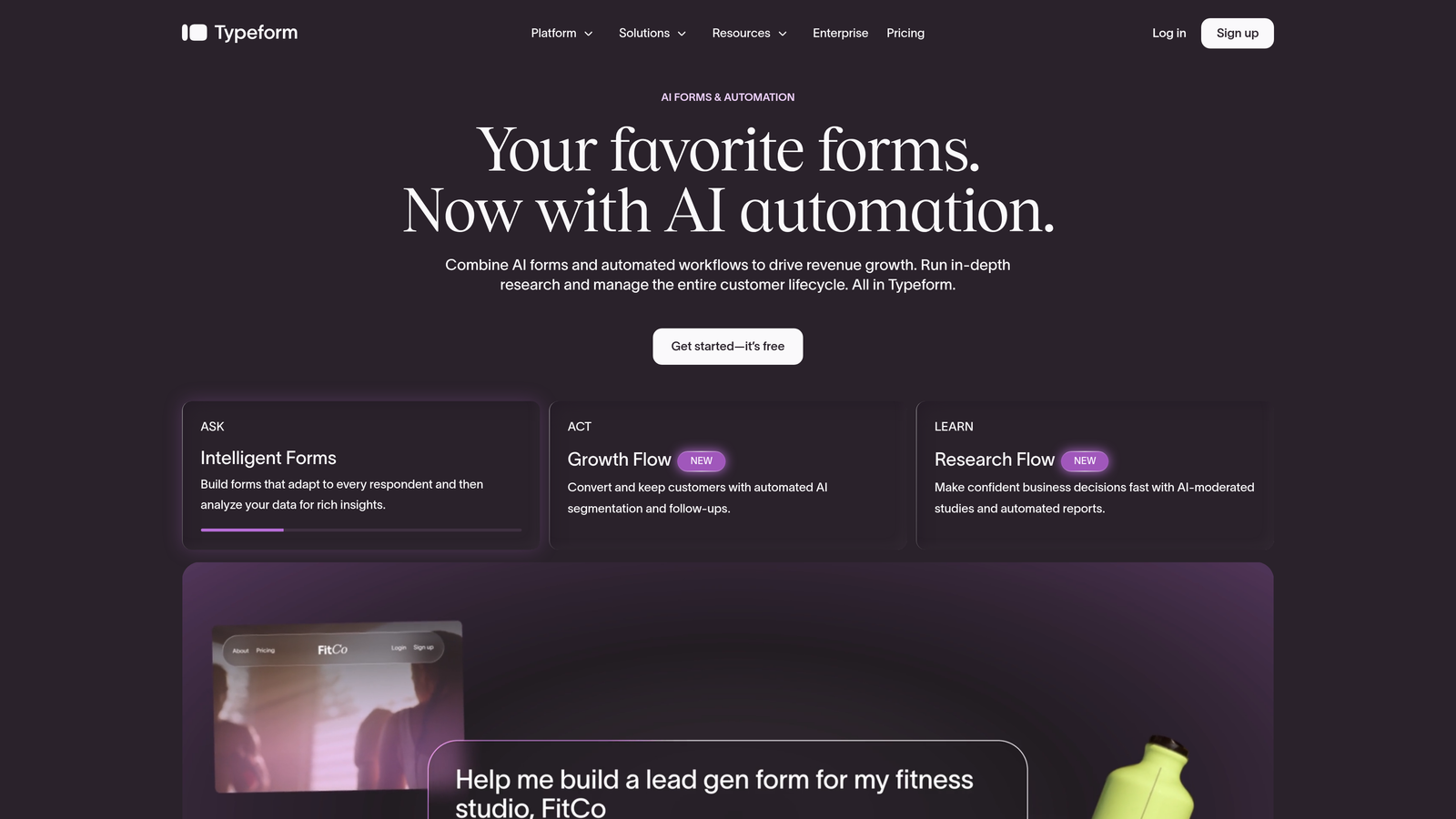
Typeform is the original conversational form platform, still a strong choice for polished survey experiences, though enterprise pricing and per-response costs can become a real constraint at scale.
Where This Tool Shines
Typeform's one-question-at-a-time format remains genuinely differentiated for certain use cases. NPS surveys, research studies, and brand-aligned intake flows benefit from the conversational pacing, which tends to feel less clinical than a traditional multi-field form. Completion rates for well-designed Typeform surveys can be strong when the audience and context are right.
The platform also offers solid visual customization, making it easy to align form aesthetics with brand guidelines. For teams that care deeply about how a survey looks and feels, Typeform still delivers a premium experience on that dimension.
Key Features
Conversational One-Question UX: The defining feature: questions presented one at a time to reduce cognitive load and improve engagement.
Brand Customization: Strong visual design controls for fonts, colors, imagery, and overall form aesthetic.
CRM and Marketing Integrations: Connects with major CRM and marketing automation platforms for downstream data routing.
Enterprise Plan: Includes advanced security, admin controls, and dedicated support for larger organizations.
NPS and Research Survey Fit: Particularly effective for feedback collection, research panels, and brand-aligned survey experiences.
Best For
Teams running NPS programs, customer research, or brand-forward intake flows at moderate submission volumes. If per-response pricing isn't a concern and conversational UX is the priority, Typeform remains a credible choice. At high volume or with complex qualification requirements, the cost-to-value ratio becomes harder to justify.
Pricing
Per-response pricing on lower tiers can scale poorly at high volume. Enterprise plan pricing is available on request. Evaluate total cost carefully against your expected monthly submission volume before committing.
6. Tally
Best for: Internal teams and budget-conscious departments that need fast, simple form creation without per-response fees.
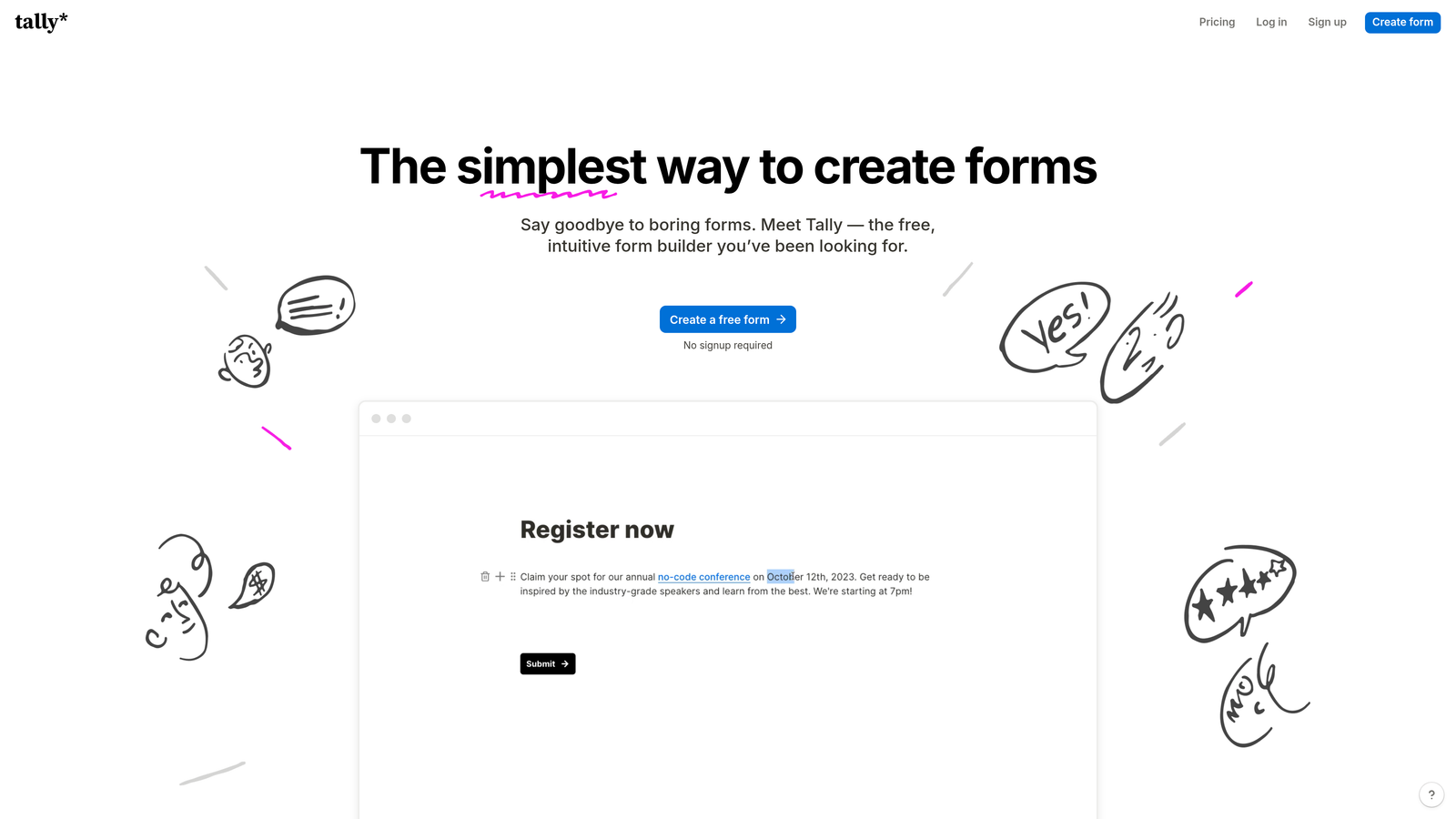
Tally is a lightweight, Notion-inspired form builder with a generous free tier and a clean block editor that makes form creation genuinely fast.
Where This Tool Shines
Tally's free tier is unusually generous: unlimited forms, unlimited submissions, and no per-response charges. For internal use cases, quick surveys, or teams operating under tight budget constraints, that value proposition is difficult to argue with. The Notion-like editing experience also means most team members can pick it up without training.
It's worth being clear about what Tally is not, though. It lacks enterprise compliance features like HIPAA certification or robust SSO options, and it's not designed for complex lead qualification or high-stakes external-facing workflows. It's a tool that excels at simplicity, and that's exactly what some teams need.
Key Features
Unlimited Free Tier: Unlimited forms and submissions at no cost, making it accessible for teams of any size or budget.
Notion-Inspired Block Editor: Intuitive drag-and-drop editing that most users can navigate immediately without onboarding.
Conditional Logic and Hidden Fields: Available on paid plans for teams that need more dynamic form behavior.
Clean Notion Embeds: Embeds natively into Notion pages, making it a natural fit for teams already working in that ecosystem.
Transparent Pricing: No per-response fees on any tier, which simplifies cost forecasting for teams managing budgets carefully.
Best For
Internal teams, startups, or budget-conscious departments within larger organizations that need fast, simple form creation without compliance complexity. Not the right fit for external-facing enterprise workflows, regulated data collection, or lead qualification at scale.
Pricing
Free tier with unlimited forms and submissions. Pro plan unlocks advanced features. Check tally.so for current pricing details.
Which Tool Is Right for Your Team?
The right choice here depends almost entirely on what you're trying to accomplish. No single platform wins across every dimension, and the most expensive or feature-rich option isn't always the best fit for your specific use case.
If lead qualification and conversion optimization are the priority, Orbit AI is purpose-built for that outcome. It's the only platform in this list that treats lead scoring and routing as core functionality rather than a bolt-on. For high-growth B2B teams where form submissions need to feed directly into a qualified pipeline, that distinction matters.
For compliance-heavy industries like healthcare or financial services, Jotform leads the field. Its HIPAA and SOC 2 credentials, combined with enterprise SSO and a deep template library, make it the most defensible choice for regulated environments.
For operations teams that need forms to trigger downstream workflows, document generation, and approval chains, Formstack's suite approach is hard to replicate with simpler tools. For marketing-led campaigns where brand presentation drives conversion, Paperform's page-builder model gives creative teams the control they need.
Typeform still has a place for brand-forward survey experiences at moderate volume, particularly NPS programs and customer research. And for lightweight internal use where budget and simplicity are the governing constraints, Tally is hard to beat.
If you're running inbound lead generation at scale and your current forms are just collecting responses without qualifying them, that's a conversion problem worth solving. Start building free forms today and see how intelligent form design and AI-powered lead qualification can turn your form submissions into a genuine pipeline asset.


