

When you know exactly which channels, campaigns, and touchpoints are driving your best leads, you stop guessing and start scaling. Lead source tracking software closes the loop between your marketing spend and actual pipeline, so you can double down on what works and cut what doesn't.
But not every tool tracks the same way. Some focus on form-level capture, others on multi-touch attribution across your entire funnel. The right choice depends on where your leads enter your pipeline and how deeply you need to analyze the journey.
This list covers the best lead source tracking tools available in 2026, with a focus on tools that high-growth SaaS and B2B teams actually use. We've prioritized tools that are easy to implement, integrate well with CRMs and ad platforms, and give you actionable data rather than dashboards full of noise.
1. Orbit AI
Best for: High-growth SaaS and B2B teams that want lead source tracking and qualification in one workflow.
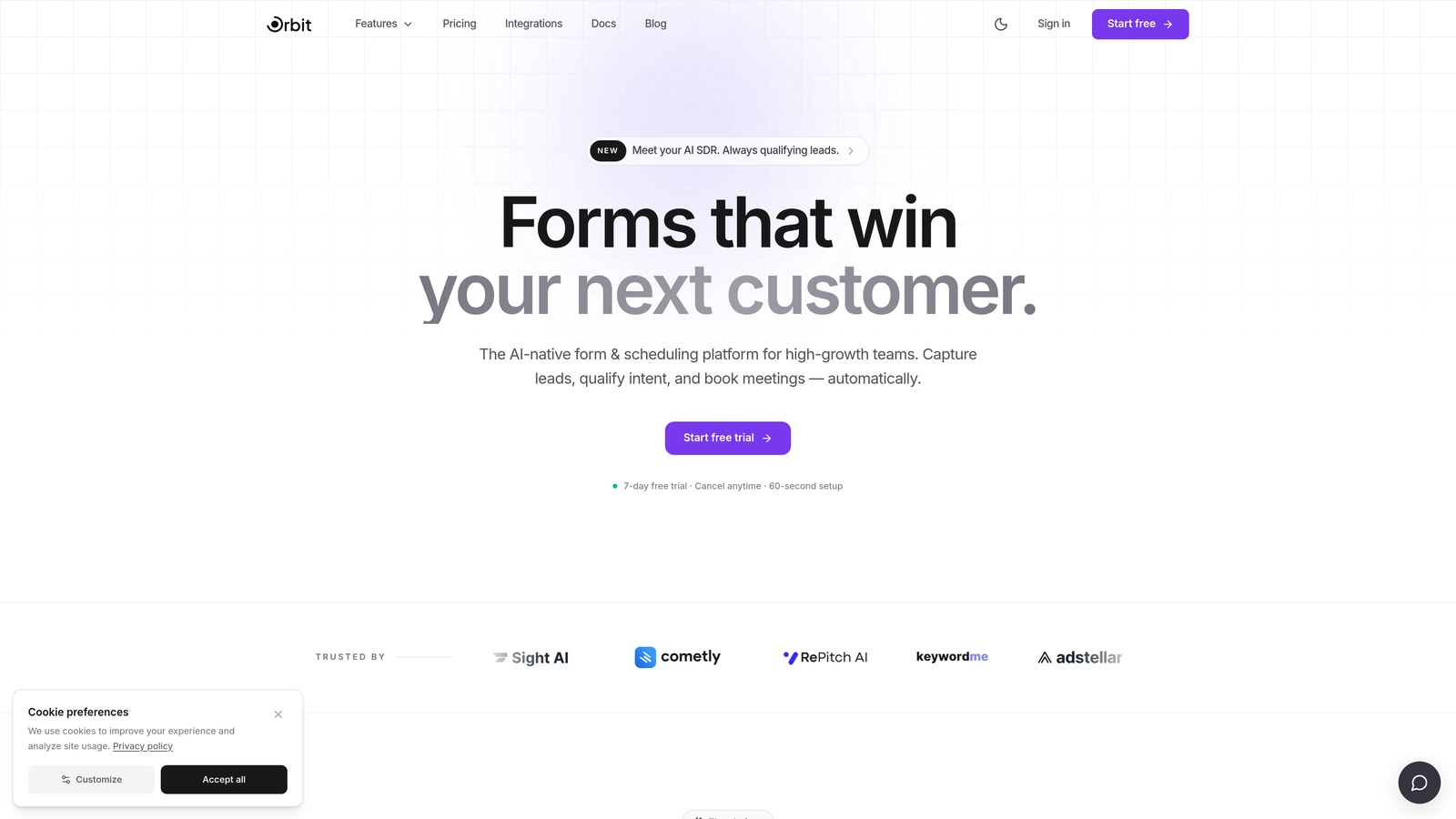
Orbit AI is an AI-powered form builder that combines UTM source attribution with intelligent lead qualification at the point of form submission.
Where This Tool Shines
Most form tools treat lead source tracking as a passive data capture exercise. Orbit AI goes a step further by layering AI-powered qualification on top of source data, so you don't just know where a lead came from, you know how good that lead is based on their responses and the channel that brought them in.
This combination matters for high-growth teams. When your CRM receives a lead record that includes UTM source, medium, campaign, and a qualification score, your sales team can prioritize outreach intelligently rather than treating every submission equally.
Key Features
UTM Parameter Capture: Hidden fields capture source, medium, campaign, and term data at the moment of form submission, passing it cleanly into your CRM or marketing platform.
AI Lead Qualification: Leads are automatically scored based on their form responses and source context, giving your team a qualification signal before any manual review.
Conversion-Optimized Design: Form templates are built specifically for high-growth teams, with layouts and UX patterns designed to maximize completion rates.
CRM and Platform Integrations: Source data and qualification scores flow downstream into your existing marketing stack, keeping your pipeline data complete and actionable.
Multi-Step and Conversational Formats: Flexible form structures help you collect richer lead data without sacrificing completion rates.
Best For
SaaS and B2B teams running paid acquisition, content-driven lead gen, or any multi-channel strategy where understanding lead quality by source is a competitive advantage. Particularly well-suited to teams that are tired of manually qualifying inbound leads after the fact.
Pricing
Visit orbitforms.ai for current pricing and plan details. A free tier is available to get started.
2. Typeform
Best for: Teams that prioritize conversational form UX with reliable UTM passthrough to CRMs.
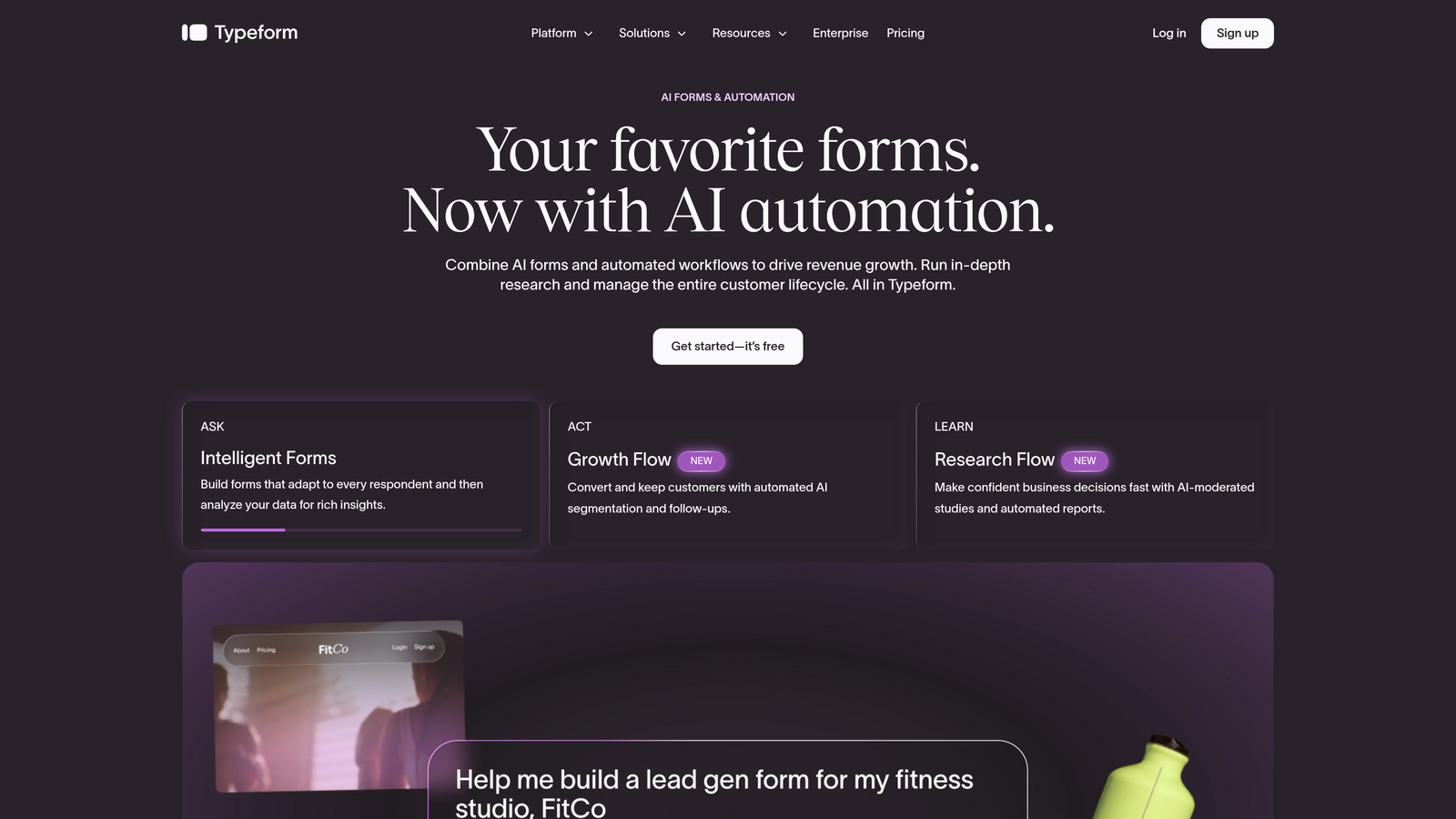
Typeform is a conversational form platform known for its one-question-at-a-time format and consistently high completion rates.
Where This Tool Shines
Typeform's hidden fields feature allows marketers to append UTM parameters to form URLs and capture that source data alongside every response. When integrated with HubSpot or Salesforce, that source context flows directly into the lead record, making it a practical choice for teams that already use those CRMs.
The conversational format is a genuine differentiator. For forms that ask more than a few questions, the one-at-a-time experience tends to feel less overwhelming than a traditional long form, which can improve completion rates for demo requests and qualification surveys.
Key Features
Hidden Fields for UTM Capture: Supports source, medium, campaign, and term parameters passed through the URL and stored with each submission.
Conversational Format: One-question-at-a-time interface reduces form abandonment for multi-step lead capture flows.
Native CRM Integrations: Direct connections to HubSpot, Salesforce, and other major platforms for seamless source data passthrough.
Logic Branching: Conditional paths allow you to tailor the form experience based on earlier responses, useful for qualification flows.
Embed Options: Forms can be embedded into landing pages, websites, and campaign pages without friction.
Best For
Marketing teams running campaigns that drive traffic to dedicated landing pages, where a polished, branded form experience and reliable UTM tracking are both priorities. Less suited to teams that need built-in lead scoring without additional tooling.
Pricing
Free plan available. Paid plans start at approximately $25 per month billed annually, with higher tiers for larger response volumes and advanced features.
3. Jotform
Best for: Agencies and ops teams managing multiple lead sources across campaigns, clients, or business units.
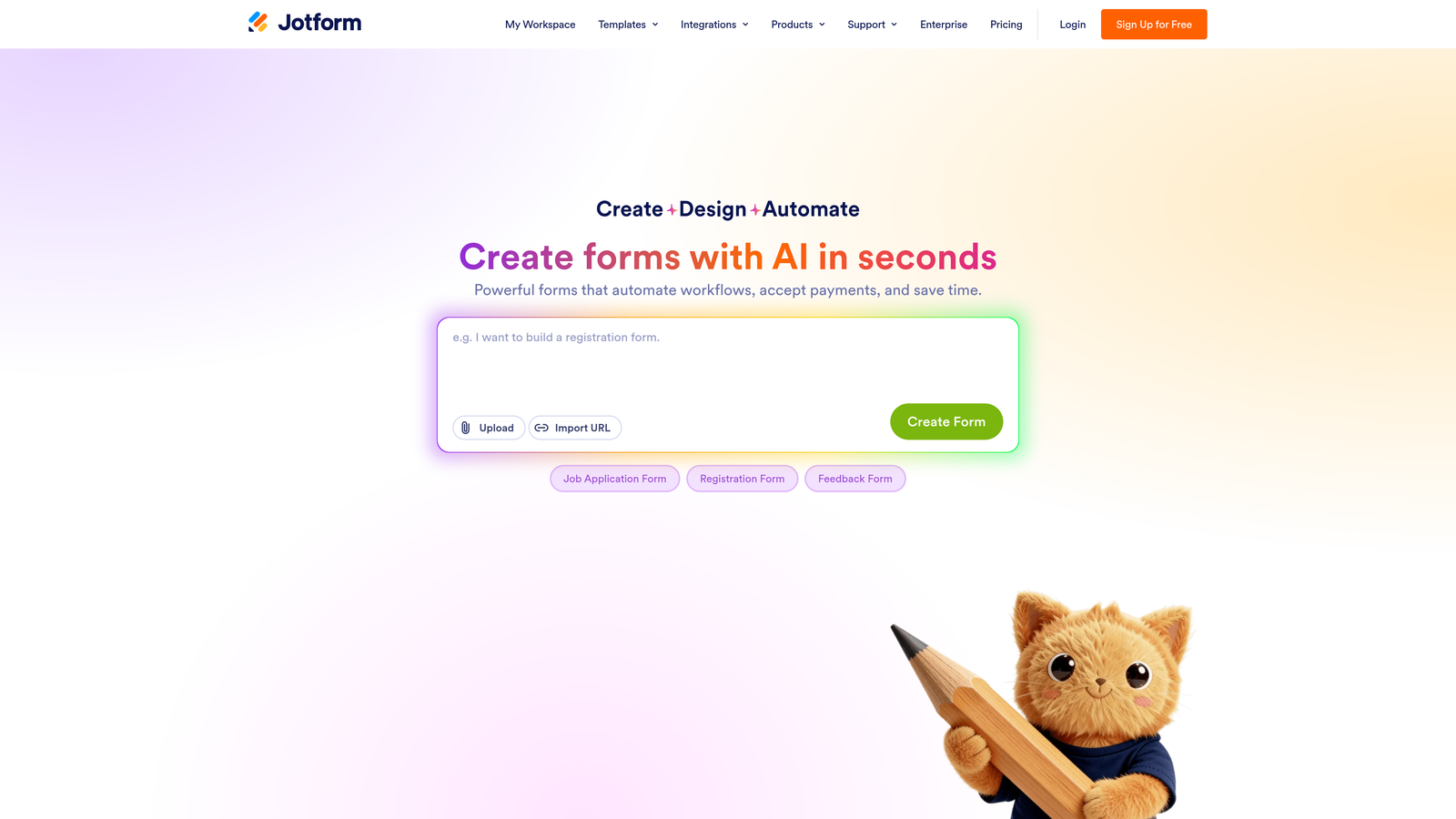
Jotform is a feature-rich form builder with one of the largest integration ecosystems available, making it a strong choice when your lead tracking requirements span many different tools and workflows.
Where This Tool Shines
Jotform's strength is breadth. Its integration library covers CRMs, payment processors, marketing automation platforms, and project management tools, which means source data captured via hidden fields can be routed to virtually any downstream system without custom development.
For teams managing lead gen across multiple campaigns or clients simultaneously, Jotform's template library and multi-user access features make it practical to spin up and manage many forms at once without starting from scratch each time.
Key Features
Hidden Field UTM Capture: Supports UTM parameter tracking across all form types, with source data stored alongside each submission.
Extensive Integration Ecosystem: Connects to hundreds of tools including major CRMs, marketing platforms, and payment processors.
Large Template Library: Hundreds of pre-built form templates for rapid deployment across different use cases.
Form Analytics and Reporting: Submission-level reporting gives teams visibility into form performance and lead volume by source.
Team Collaboration: Multi-user access and team workspaces support agencies and larger ops teams managing forms across accounts.
Best For
Operations teams, agencies, and businesses with complex integration requirements or high form volume. Jotform is less design-forward than some alternatives, but it compensates with depth of functionality and flexibility.
Pricing
Free plan available. Paid plans start at approximately $34 per month billed annually, scaling with submission volume and team size.
4. Paperform
Best for: Teams that need lead source tracking inside a content-rich, editorially designed page experience.
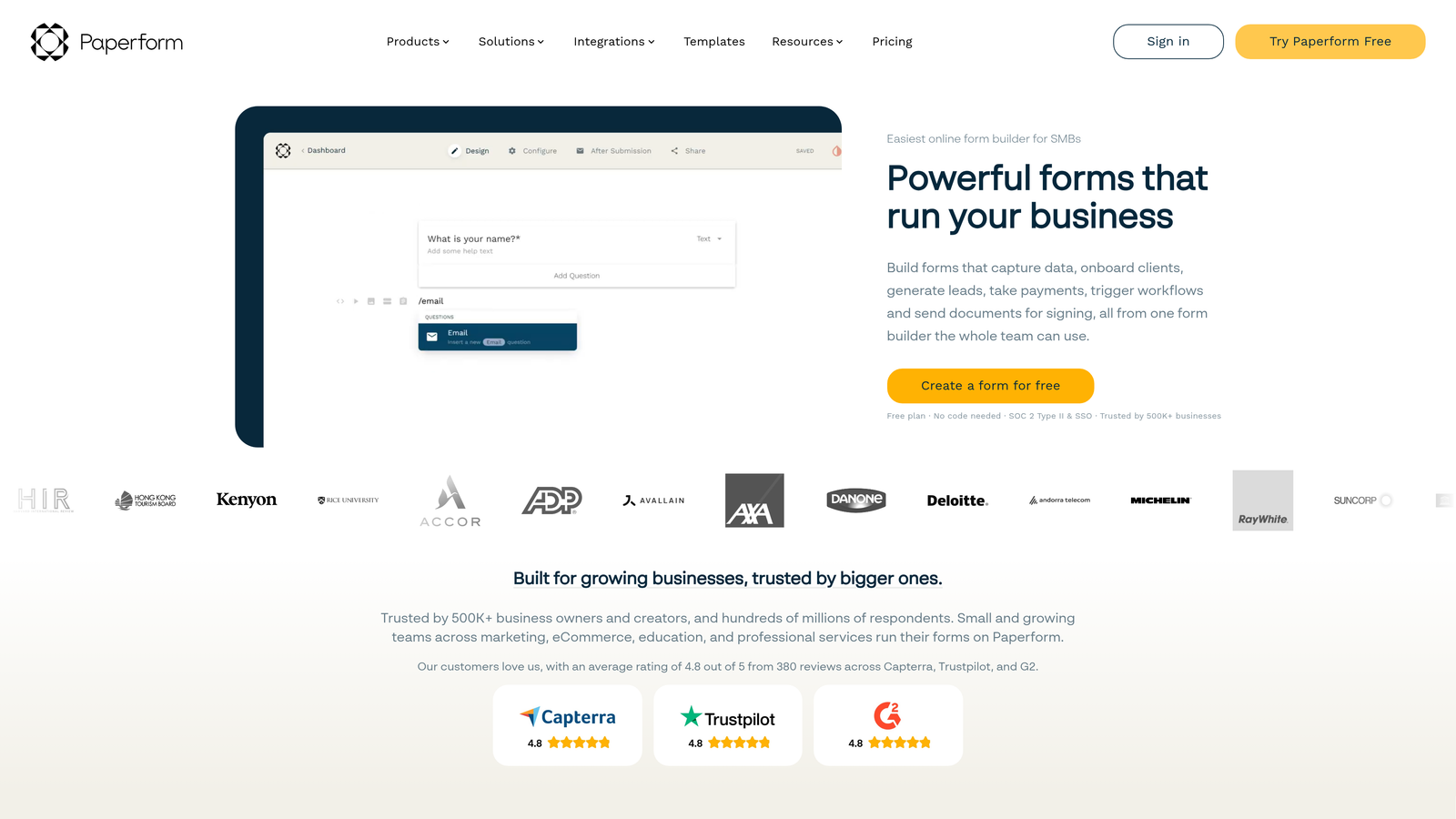
Paperform is a hybrid form and landing page builder that blends rich content design with hidden field source tracking, useful when your form is embedded within a longer editorial or campaign experience.
Where This Tool Shines
Where most form tools separate the form from the surrounding content, Paperform lets you build both in a single canvas. You can combine text, images, video, and form fields in one flowing page, which makes it well-suited to use cases like event registrations, detailed intake forms, or campaign pages where context matters as much as the form itself.
Hidden fields allow URL parameters including UTM data to be captured at submission, and native integrations alongside Zapier support ensure that source data can be passed to your CRM or marketing platform without manual handling.
Key Features
URL Parameter Capture: Hidden fields support UTM and custom parameter tracking for lead source attribution at the point of submission.
Page-Level Design Flexibility: Combine text, media, and form elements in a single page layout without needing a separate landing page tool.
Native Integrations and Zapier: Connect to CRMs and marketing platforms for downstream source data passthrough.
Conditional Logic and Calculations: Supports branching logic and calculated fields for more complex form experiences.
Custom Domain Support: Branded form pages with custom domain options for a professional presentation.
Best For
Content marketers, consultants, and B2B teams whose forms live inside longer-form campaign pages or editorial experiences. Less suited to teams that need deep analytics or AI-assisted qualification out of the box.
Pricing
Plans start at approximately $24 per month billed annually. There is no permanent free plan, though a trial is available.
5. Tally
Best for: Lean teams and early-stage startups that need basic lead source tracking without cost or complexity.
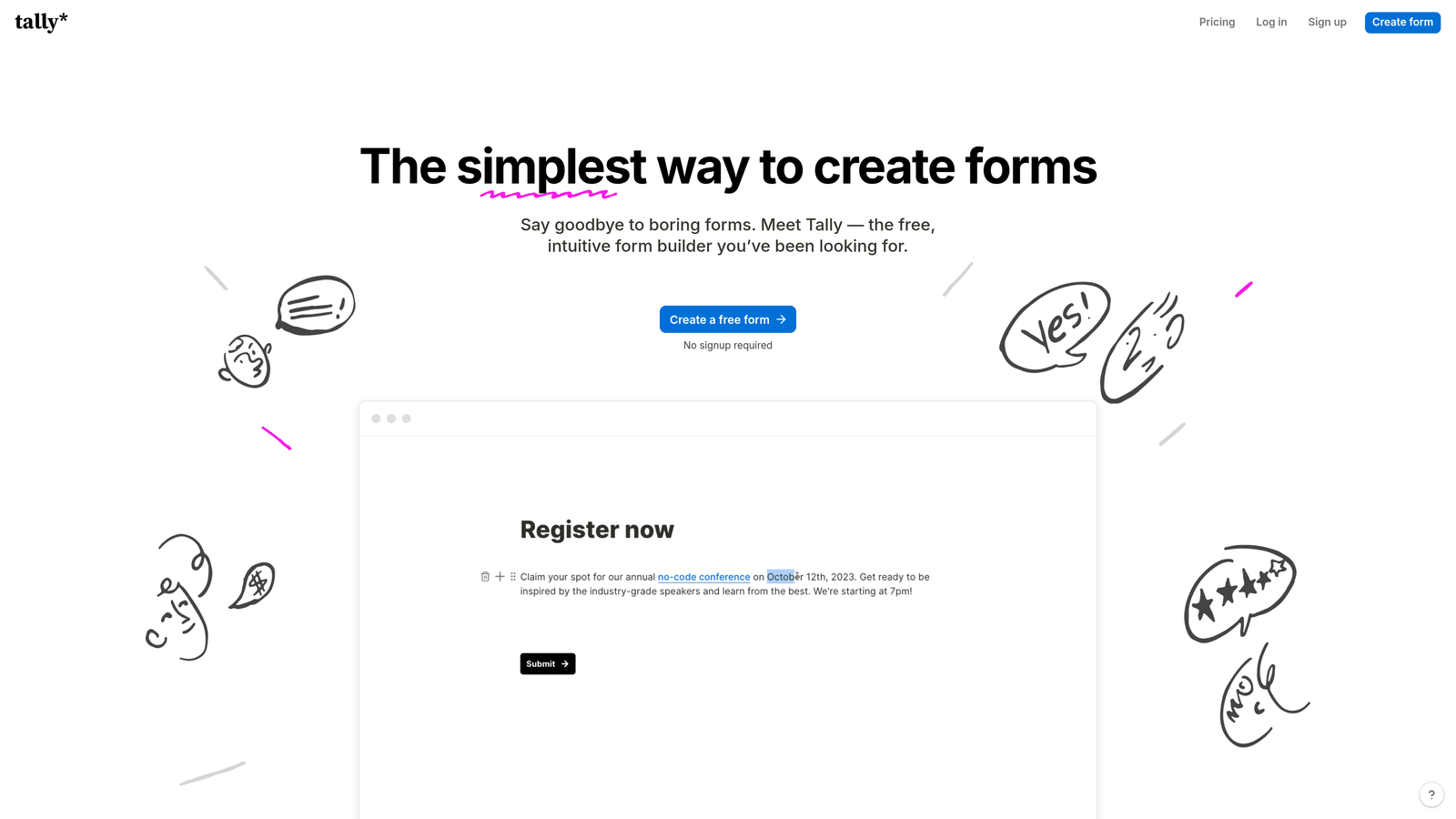
Tally is a lightweight, free-first form builder with hidden field and UTM support, offering a practical entry point for teams that need source attribution without committing to a paid tool.
Where This Tool Shines
Tally's free tier is genuinely generous compared to most competitors. Unlimited forms and unlimited submissions on the free plan means early-stage teams can implement UTM tracking across their entire lead gen operation before spending anything. The Notion-like editor makes form creation fast and approachable, even for non-technical team members.
The interface is deliberately minimal, which is a strength for teams that want to get a form live quickly without navigating a complex feature set. For straightforward lead capture with source tracking, Tally removes most of the friction.
Key Features
Hidden Fields for UTM Capture: Available on both free and paid plans, allowing source parameter tracking without a paid upgrade.
Clean Form Interface: Distraction-free design keeps the focus on the form experience rather than surrounding visual noise.
Unlimited Forms and Submissions: Free tier supports unlimited usage, making it accessible for teams with tight budgets.
Notion-Like Editor: Familiar block-based editing interface speeds up form creation considerably.
Basic Integrations: Native connections and Zapier support for passing lead data and source context to downstream tools.
Best For
Early-stage startups, indie teams, and lean marketing operations that need functional UTM tracking without the overhead of a more complex platform. Teams that eventually need deeper analytics or AI qualification may outgrow it, but as an entry point it's hard to beat.
Pricing
Generous free plan available. Tally Pro starts at approximately $29 per month, adding features like custom domains and priority support.
6. Formstack
Best for: Enterprise teams that need lead source tracking alongside compliance features, audit trails, and deep workflow automation.
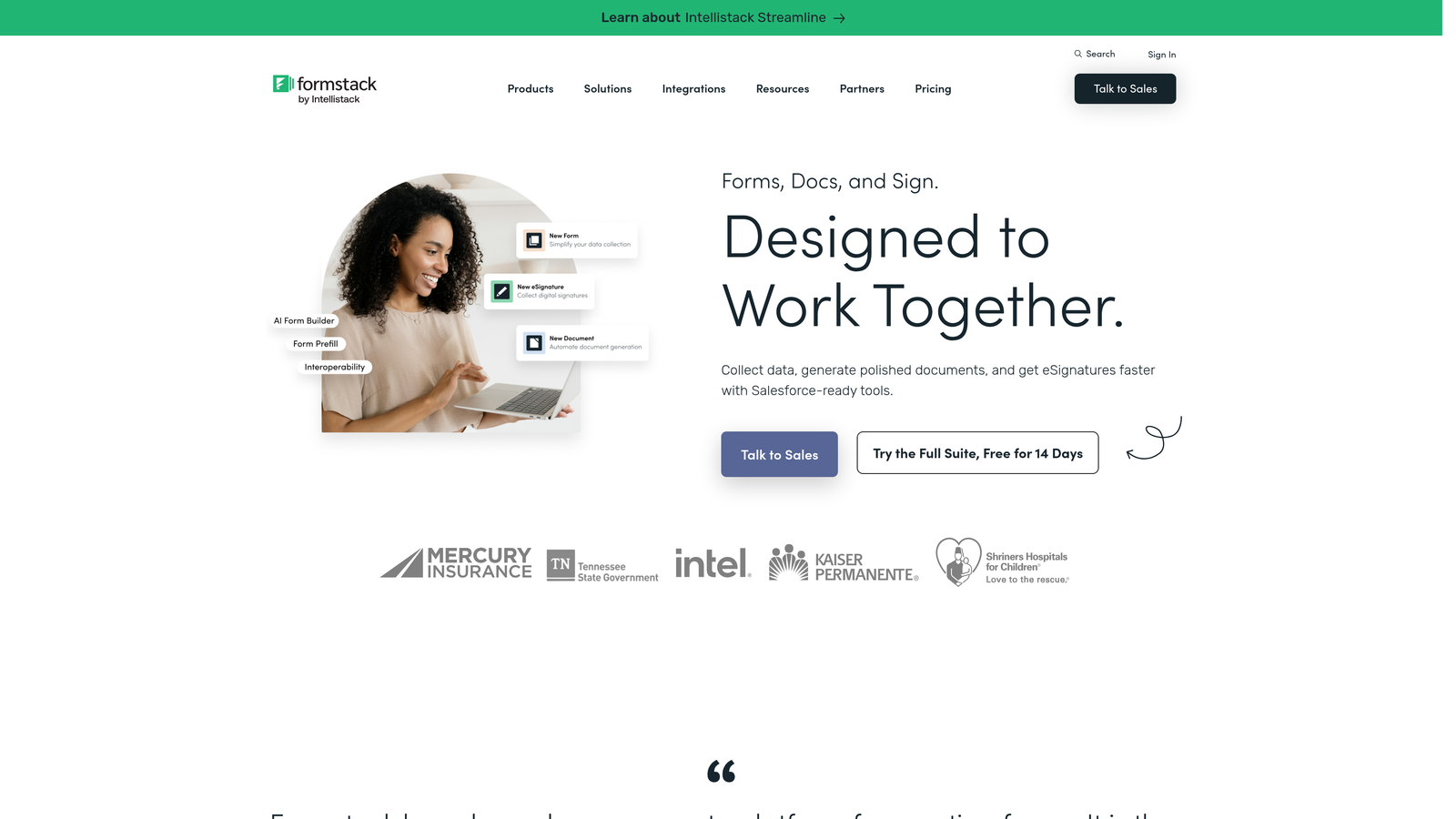
Formstack is an enterprise form and workflow platform built for organizations that need more than basic UTM capture, including governance, compliance, and complex lead routing requirements.
Where This Tool Shines
Formstack's differentiator is its enterprise-grade infrastructure. For teams in regulated industries or large organizations where HIPAA compliance, GDPR controls, and data governance are non-negotiable, Formstack provides the compliance layer that lighter tools don't offer. Source tracking is available, but it sits within a broader workflow and compliance framework.
Its native Salesforce integration is particularly strong, making it a natural fit for enterprise sales teams that need lead source data to flow cleanly into Salesforce records with full audit trail support.
Key Features
Hidden Field UTM Capture: Supports URL parameter tracking for lead source attribution alongside standard form submissions.
Advanced Form Analytics: Submission-level reporting and form performance analytics for teams managing high-volume lead intake.
Enterprise CRM Integrations: Native Salesforce integration and connections to other enterprise platforms for clean data passthrough.
Compliance Features: HIPAA and GDPR compliance capabilities for teams operating in regulated industries or under strict data governance requirements.
Workflow Automation: Lead routing, approval workflows, and follow-up automation built into the platform for end-to-end process management.
Best For
Mid-market and enterprise organizations, particularly in healthcare, financial services, or other regulated sectors, where compliance requirements and workflow complexity justify the higher price point. Likely overkill for early-stage or lean teams.
Pricing
Plans start at approximately $83 per month billed annually. Enterprise pricing is available for larger organizations with custom requirements.
Which Tool Is Right for Your Stack?
Lead source tracking isn't just a reporting feature. It's a strategic input. When your form captures UTM data, qualifies the lead, and routes it to the right rep with full source context, you compress the time between "lead arrived" and "deal started." That's the real value of getting this layer right.
Here's a quick way to think about the choice:
Orbit AI is the strongest fit for high-growth SaaS and B2B teams that want source tracking and lead qualification working together in the same workflow. If you're running paid acquisition and want to know both where a lead came from and how qualified they are before a rep touches them, it's built for that.
Typeform is the right call when conversational form UX and reliable UTM passthrough to HubSpot or Salesforce are the primary requirements. It's polished and well-integrated, though it doesn't offer native qualification.
Jotform suits teams with complex integration requirements or high form volume across multiple campaigns or clients. Its ecosystem depth is genuinely hard to match.
Paperform works well when your form needs to live inside a content-rich page experience rather than as a standalone widget. Think campaign pages and editorial-style lead capture.
Tally is the practical starting point for lean teams and early-stage startups. The free tier with UTM support is a rare combination, and it removes every barrier to getting started.
Formstack is the enterprise pick for organizations where compliance, audit trails, and deep workflow automation are requirements alongside lead source tracking.
If you're rethinking how your forms fit into your lead gen stack, start building free forms today and see how Orbit AI's approach to conversion-optimized lead capture with built-in qualification can change what your pipeline data actually tells you.


