

For SaaS teams, forms aren't just data collection tools. They're the front door to your pipeline. Whether you're qualifying leads, onboarding new users, or capturing product feedback, the form solution you choose directly shapes conversion rates and lead quality.
The problem? Most generic form builders weren't designed with SaaS workflows in mind. They often lack conditional logic depth, native lead scoring, or the design flexibility needed to match a polished product experience. You end up duct-taping integrations together just to get basic lead routing working.
This guide compares the top custom form solutions purpose-built or well-suited for SaaS teams in 2026. We evaluated each tool on customization depth, integration capabilities, AI features, and overall fit for high-growth teams focused on conversion optimization. Whether you're a scrappy startup or a scaling SaaS business, you'll find the right fit here.
1. Orbit AI
Best for: SaaS teams that need forms to qualify leads, score responses, and route contacts automatically.
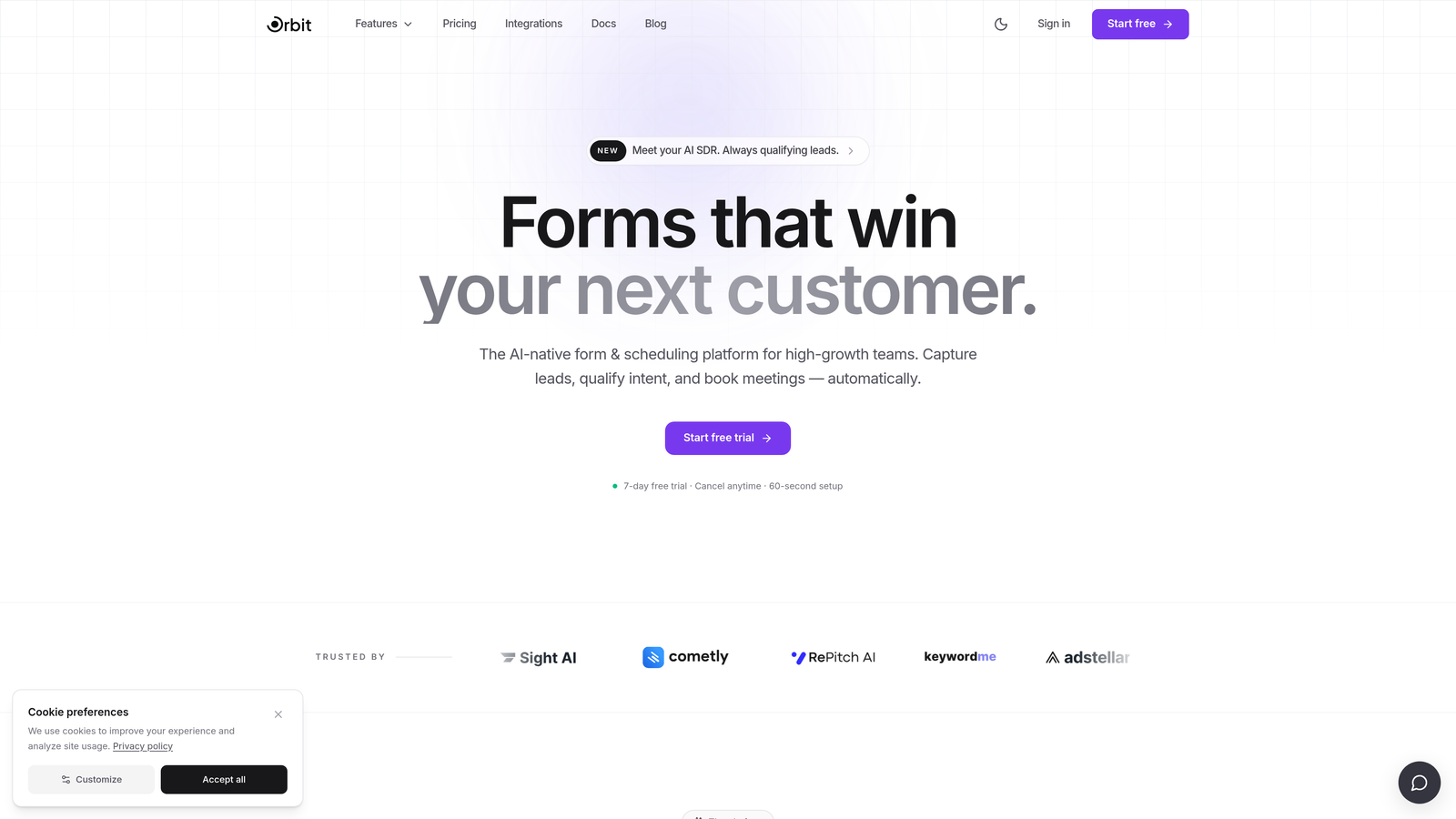
Orbit AI is an AI-powered form builder built specifically for high-growth SaaS teams that need forms to do more than collect data.
Where This Tool Shines
Most form builders stop at data collection. Orbit AI goes further by embedding lead qualification directly into the form flow itself. As prospects fill out your form, the AI engine scores their responses in real time and routes qualified leads to the right team or CRM automatically, without requiring manual review or post-submission workflows.
This is particularly valuable for demand generation teams managing high volumes of inbound interest. Instead of passing raw form submissions to sales and letting reps sort through noise, Orbit AI surfaces the most qualified leads immediately. The result is a tighter handoff between marketing and sales, and a form experience that actually contributes to pipeline quality.
Key Features
AI-Powered Lead Qualification: Scores leads based on form responses in real time, so your sales team focuses on the prospects most likely to convert.
Conversion-Optimized Templates: Modern, customizable form designs built to maximize completion rates without sacrificing visual quality.
Conditional Logic and Dynamic Fields: Personalize the form experience based on each respondent's answers, reducing friction and improving relevance.
Native Lead Routing: Automatically sends qualified leads to the right team member or CRM based on scoring rules you define.
Built for SaaS Workflows: Designed from the ground up for high-growth teams focused on pipeline quality over raw volume.
Best For
Orbit AI is the strongest fit for SaaS marketing and demand gen teams that are serious about lead quality. If your current process involves manually triaging form submissions or losing qualified leads in a messy handoff to sales, this is the tool designed to solve exactly that problem.
Pricing
Visit orbitforms.ai for current pricing and plan details. The platform is built for teams that view forms as a revenue tool, not just a data collection checkbox.
2. Typeform
Best for: Teams that want a conversational form experience to reduce abandonment and improve completion rates.
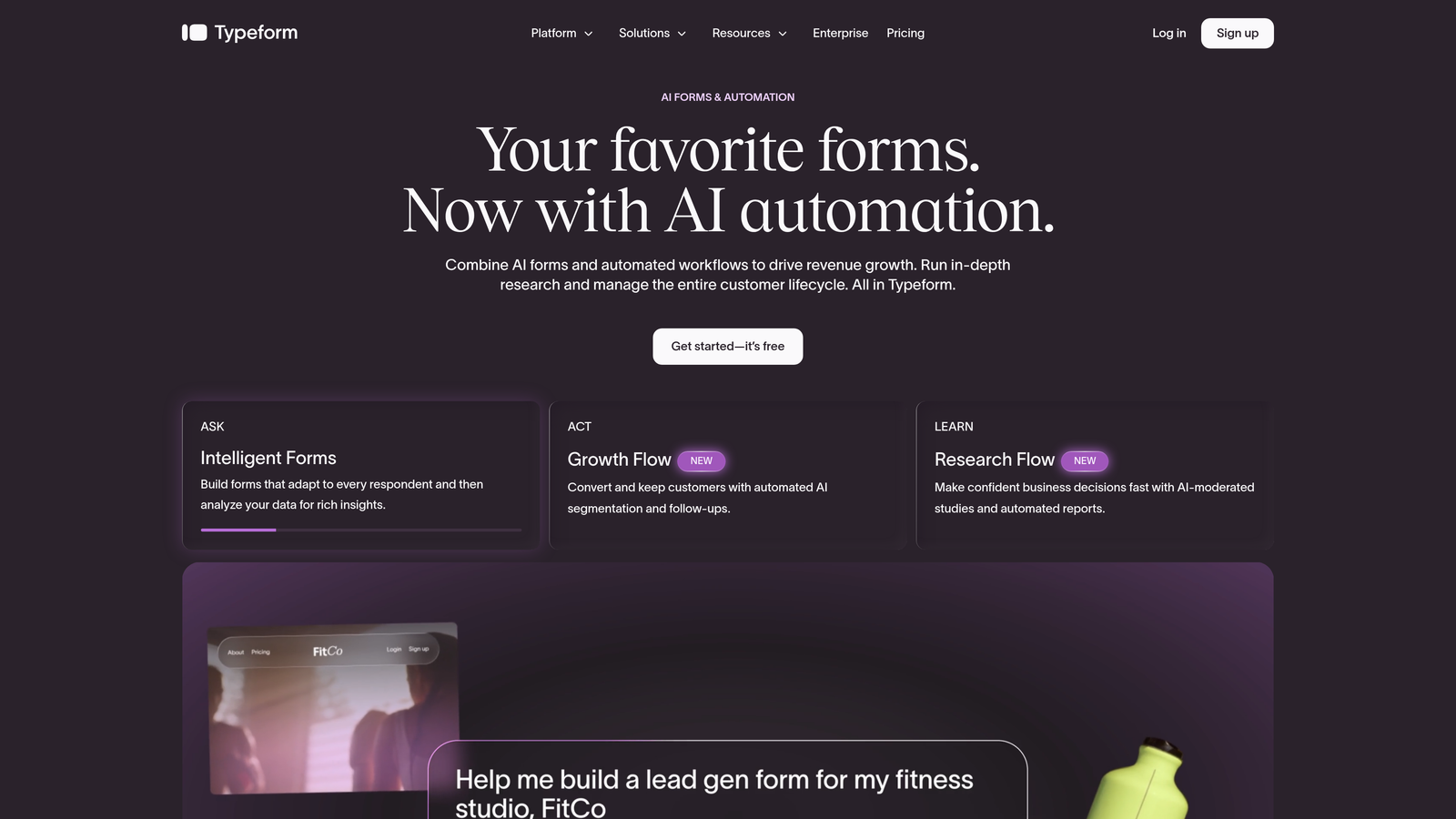
Typeform is a conversational form builder known for its one-question-at-a-time interface that reduces cognitive load for respondents.
Where This Tool Shines
Typeform's signature format presents one question at a time, which tends to feel less overwhelming than a traditional long-form page. For SaaS teams running lead gen campaigns or user research surveys, this approach can meaningfully reduce form abandonment compared to dense multi-field layouts.
The brand customization options are also strong. You can match fonts, colors, and background media to your product's visual identity, which matters when you're trying to deliver a cohesive experience from ad click to form completion. Logic jumps let you build branching paths so respondents only see questions relevant to their situation.
Key Features
Conversational One-Question Format: Presents questions sequentially to reduce cognitive load and improve form completion rates.
Brand Customization: Fonts, colors, and background media can be matched to your product's visual identity.
Logic Jumps and Conditional Branching: Build personalized question paths based on how respondents answer earlier questions.
SaaS-Friendly Integrations: Connects natively with HubSpot, Salesforce, Zapier, Slack, and other common SaaS tools.
Rich Media Embeds: Add video and images directly within form questions to provide context or increase engagement.
Best For
Typeform works well for SaaS teams prioritizing respondent experience above all else, particularly for surveys, research forms, and top-of-funnel lead capture where completion rate is the primary metric. Teams that need deep, native lead scoring or AI-driven qualification will want to supplement it with additional tooling.
Pricing
A free tier is available with limited features. Paid plans unlock advanced logic, integrations, and branding. Verify current pricing at typeform.com.
3. Paperform
Best for: Teams that want to blend rich content with form fields to create landing-page-style form experiences.
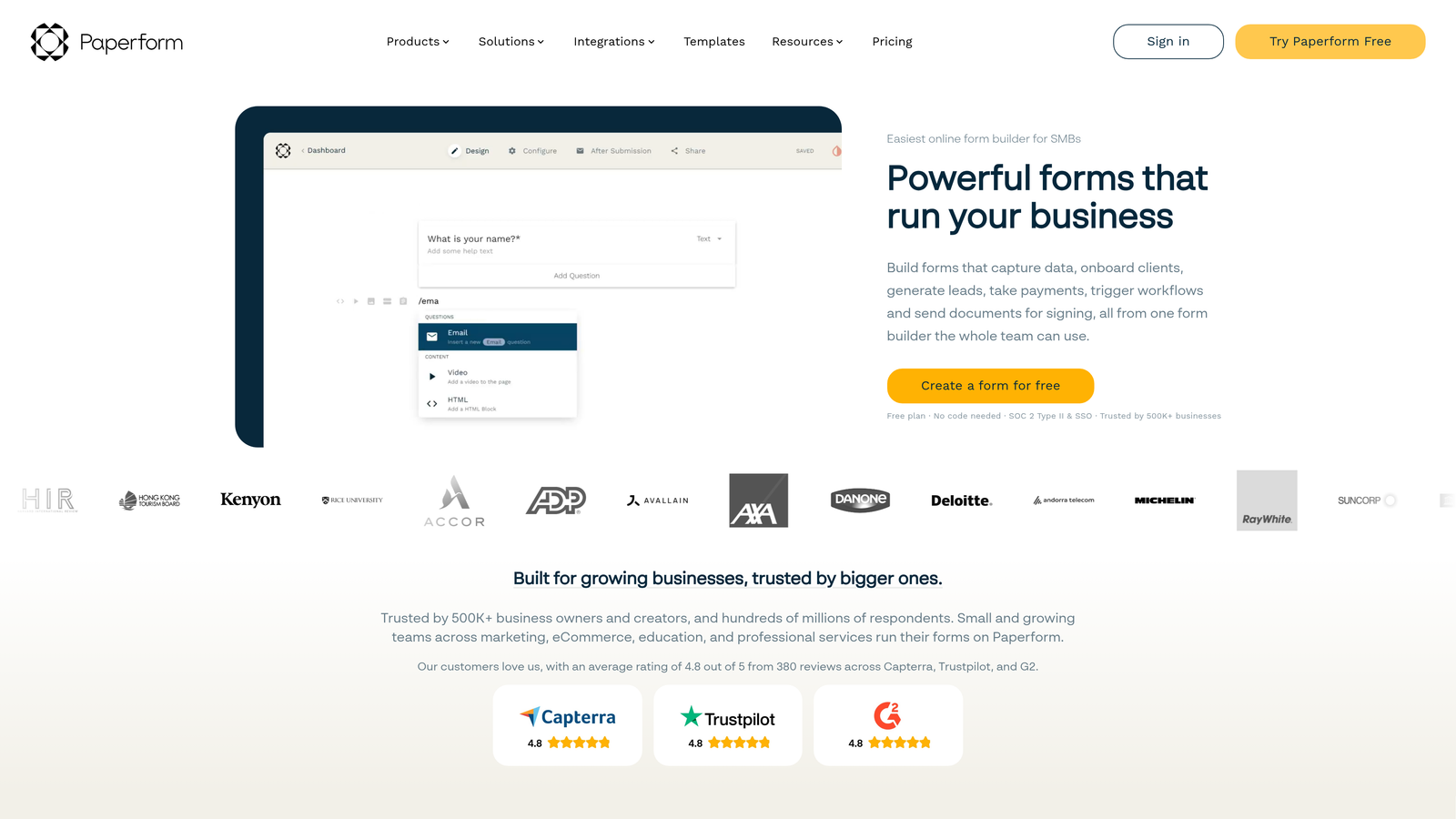
Paperform is a flexible form builder with a document-style editor that lets teams combine text, images, and video alongside form fields in a single canvas.
Where This Tool Shines
Paperform occupies a unique space between a landing page builder and a form tool. Instead of a blank form with labeled fields, you build something closer to a rich document where form inputs live alongside explanatory content, images, and embedded media. This makes it particularly effective for product demos, event registrations, or any form where context helps drive conversions.
The built-in payment processing and calculation fields add further flexibility. SaaS teams that need to collect payments, generate quotes, or run product configurators within a form will find Paperform's native capabilities genuinely useful, without requiring additional payment integrations.
Key Features
Document-Style Editor: Combines rich content with form fields in one canvas, enabling landing-page-quality form experiences.
Built-In Payments and Calculations: Native payment processing, product listings, and calculation fields without third-party payment integrations.
Conditional Logic and Multi-Page Forms: Support for complex branching flows across multiple pages.
Custom Domains and White-Label Options: Publish forms on your own domain with your branding for a fully cohesive experience.
Integration Support: Connects with Zapier, HubSpot, Slack, and other common tools in the SaaS stack.
Best For
Paperform is a strong choice for SaaS teams that want their forms to function as mini landing pages, particularly for product-led growth flows, event sign-ups, or any scenario where context and content help move prospects toward conversion.
Pricing
No permanent free tier is available, though a trial lets you explore the platform. Paid plans are available at different tiers. Verify current pricing at paperform.co.
4. Tally
Best for: Teams that want a fast, lightweight form builder with a generous free tier and minimal setup friction.
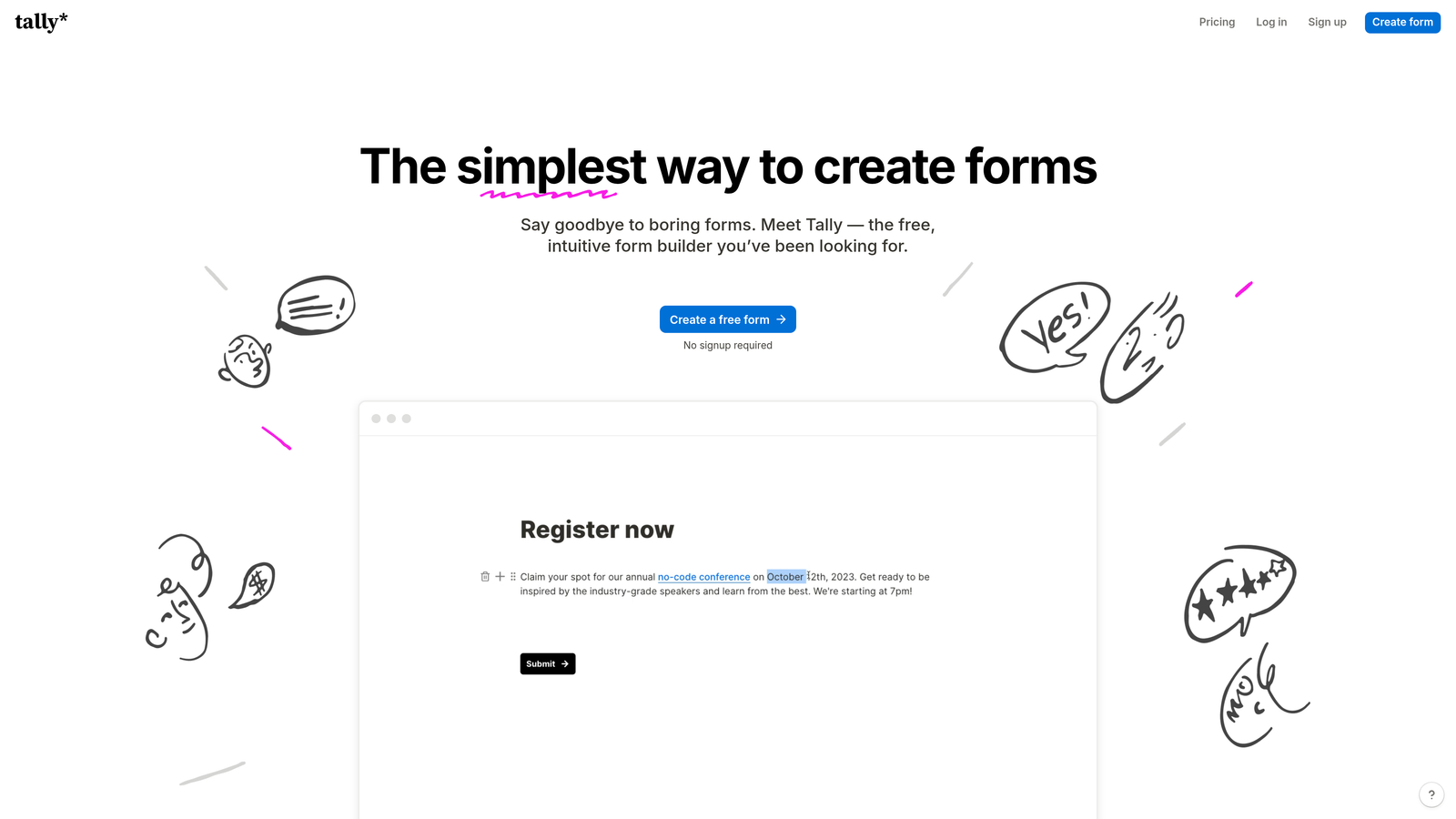
Tally is a Notion-inspired, block-based form builder that makes it quick and easy to create clean, functional forms without a learning curve.
Where This Tool Shines
Tally's biggest selling point is its accessibility. If your team already lives in Notion, the block-based editor will feel immediately familiar. You can go from idea to published form in minutes, which matters for teams that need to move fast without waiting on design or dev resources.
The free tier is genuinely useful. Unlike many tools that cap free usage at a handful of responses or forms, Tally offers unlimited forms and unlimited responses at no cost. For early-stage SaaS teams or those experimenting with new form use cases, this removes a meaningful barrier to getting started.
Key Features
Block-Based Editor: Notion-inspired interface with a minimal learning curve for teams already familiar with block editors.
Unlimited Free Forms and Responses: The free plan doesn't cap forms or responses, making it genuinely usable without a paid upgrade.
Conditional Logic and Hidden Fields: Supports branching logic and hidden fields for more dynamic form experiences.
Seamless Embeds: Embeds cleanly into websites and Notion pages without technical complexity.
Integration Support: Connects via Zapier and native integrations to popular productivity and marketing tools.
Best For
Tally is ideal for early-stage SaaS teams, indie founders, or internal teams that need functional forms quickly without a budget commitment. It's less suited to teams that need advanced lead qualification, AI scoring, or deep CRM routing out of the box.
Pricing
Free tier with unlimited forms and responses. A paid plan unlocks additional features. Verify current pricing at tally.so.
5. Formstack
Best for: Mid-market and enterprise SaaS teams that need workflow automation, document generation, and compliance support.
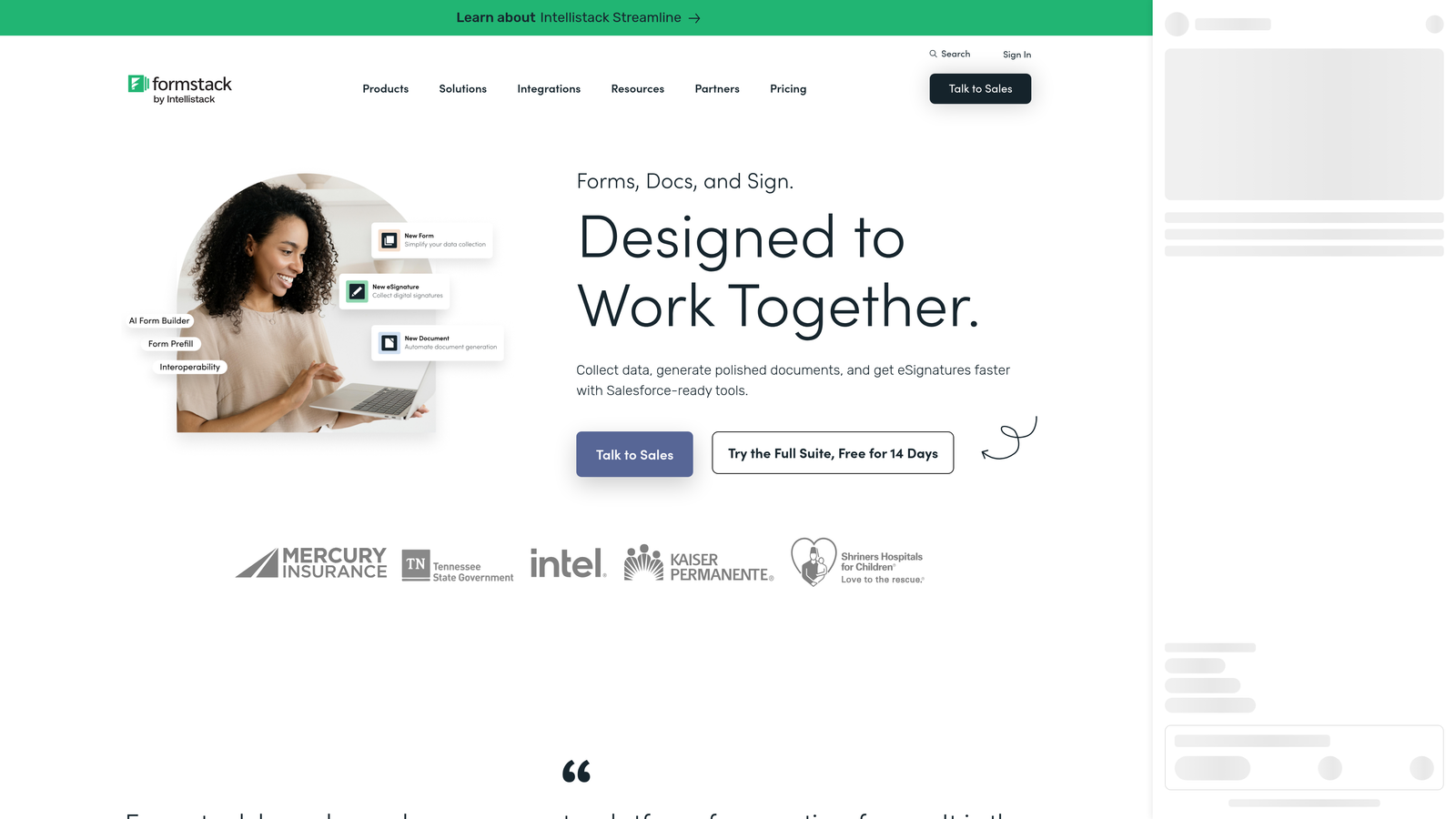
Formstack is an enterprise-grade form and workflow automation platform that extends well beyond data collection into document generation, e-signatures, and multi-step approval processes.
Where This Tool Shines
Formstack is built for organizations where forms are part of larger operational workflows, not just a lead capture mechanism. If your SaaS team needs forms to trigger document generation, collect e-signatures, or route submissions through multi-step internal approvals, Formstack handles that complexity natively.
Compliance is another area where Formstack differentiates itself. For SaaS companies operating in regulated industries or handling sensitive customer data, built-in HIPAA and GDPR support reduces the compliance burden significantly compared to assembling those capabilities across multiple tools.
Key Features
Advanced Workflow Automation: Conditional routing and multi-step approval workflows built directly into the platform.
Document Generation and E-Signatures: Create and send documents for signature without leaving the Formstack ecosystem.
Compliance Features: Built-in HIPAA and GDPR support for teams handling sensitive data in regulated contexts.
Complex Field Types and Calculations: Robust field options for capturing detailed, structured data across complex forms.
Enterprise Integrations: Connects with Salesforce, HubSpot, and other enterprise software stacks.
Best For
Formstack is best suited to mid-market and enterprise SaaS teams with complex internal workflows, compliance requirements, or the need to connect forms to document and signature processes. It's likely overkill for smaller teams focused primarily on lead capture and conversion optimization.
Pricing
Formstack sits at a higher price point reflecting its enterprise feature set. Verify current pricing and plan structure at formstack.com.
6. Jotform
Best for: Teams managing multiple form use cases simultaneously that want breadth of templates and broad integration support.
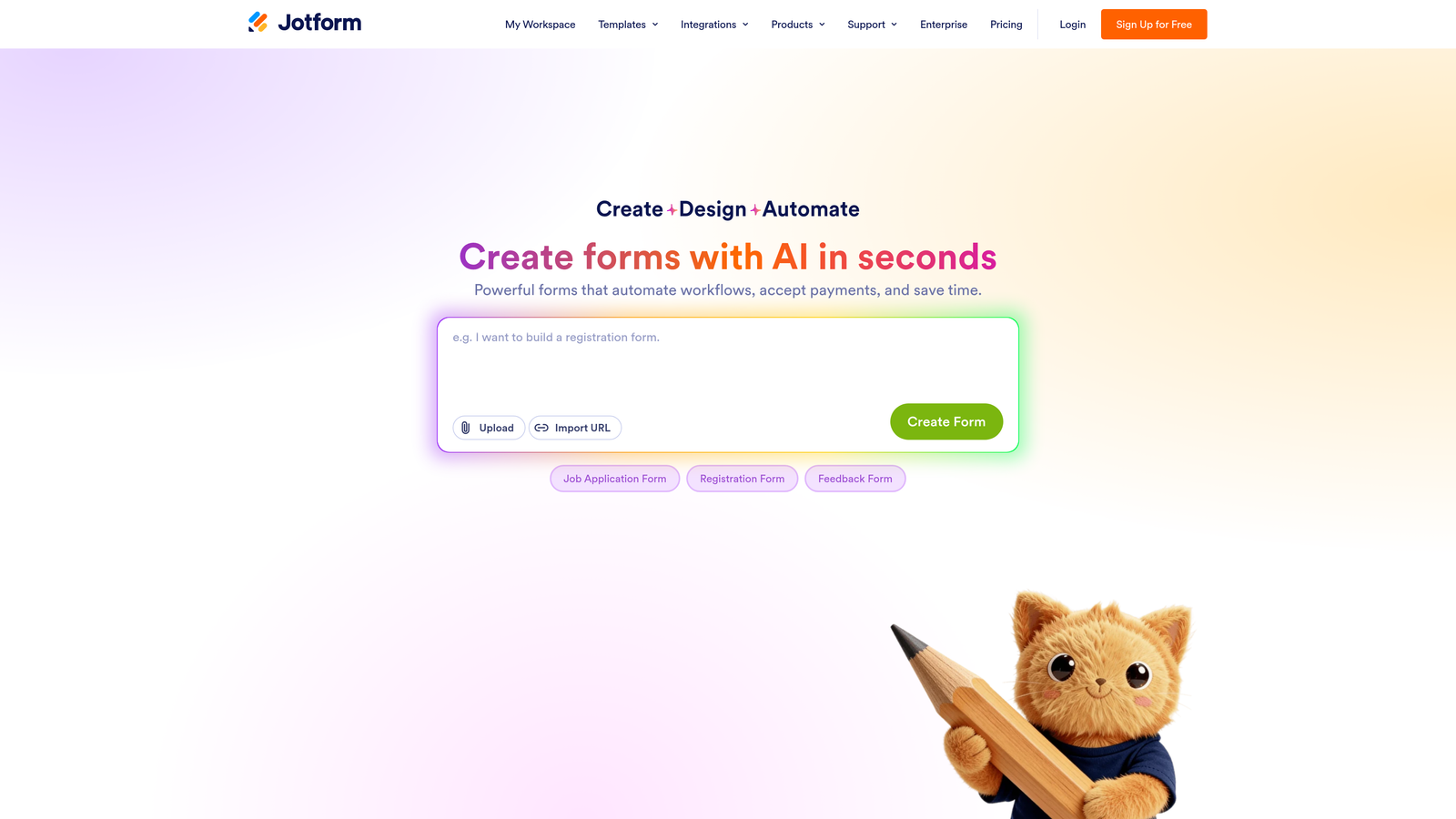
Jotform is a widely-used form builder with one of the largest template libraries in the market, broad integration support, and built-in payment processing across multiple providers.
Where This Tool Shines
Jotform's template library is one of its most compelling advantages. Whether you're building a lead gen form, a product feedback survey, an event registration page, or a payment collection form, there's likely a template that gets you most of the way there. This breadth makes Jotform particularly useful for SaaS operations teams managing diverse form needs across departments.
The platform has also expanded into AI-assisted form building, allowing teams to generate form structures from a text prompt. For teams that need to spin up new forms quickly across multiple use cases, this feature meaningfully reduces the time from brief to published form.
Key Features
Extensive Template Library: A large collection of templates covering a wide range of SaaS use cases, from lead capture to payment collection. Verify the current count at jotform.com.
Built-In Payment Processing: Native integrations with Stripe, PayPal, Square, and other payment providers without requiring external setup.
Conditional Logic and Multi-Page Forms: Supports branching logic and multi-page structures for more complex data capture flows.
AI Form Builder: Generate form structures from a text prompt to accelerate form creation across multiple use cases.
Broad Integration Ecosystem: Connects to CRMs, project management tools, and marketing platforms across a large integration library.
Best For
Jotform suits SaaS teams that need to cover many different form use cases under one platform, especially when template variety and payment processing are priorities. Teams focused specifically on AI-driven lead qualification will find Orbit AI a more targeted fit for that use case.
Pricing
A free tier is available. Paid plans scale with submission volume and feature access. Verify current pricing at jotform.com.
Which Tool Is Right for Your SaaS Team?
Each of these tools occupies a distinct position in the market, and the right choice depends almost entirely on what your team actually needs forms to do.
Orbit AI is the strongest choice for SaaS teams where lead quality is the primary metric. Its AI-powered qualification engine and native lead routing make it the only tool on this list purpose-built for the full lead-to-pipeline workflow, not just data collection.
Typeform excels when the respondent experience is your top priority. Its conversational format works well for surveys, research, and top-of-funnel lead capture where completion rate matters most.
Paperform is the go-to when you want forms that function more like landing pages, combining rich content with form fields in a single, polished canvas.
Tally is the fastest path from idea to published form, with a genuinely useful free tier that makes it ideal for early-stage teams or internal use cases.
Formstack is built for enterprise complexity: workflow automation, document generation, e-signatures, and compliance features that most growing SaaS teams won't need until they're operating at significant scale.
Jotform offers the broadest template coverage and the widest range of use cases under one roof, making it a practical choice for operations teams managing diverse form needs across an organization.
Here's a quick-pick guide to simplify the decision: if you need AI lead qualification, go with Orbit AI. For conversational UX, choose Typeform. For rich content forms, Paperform is your best bet. For lightweight simplicity and a free start, Tally is hard to beat. For enterprise workflow automation, Formstack is the right call. For sheer template breadth and payment flexibility, Jotform covers the most ground.
If lead quality and conversion optimization are your team's core priorities, Orbit AI was built specifically for that outcome. Start building free forms today and see how AI-powered qualification can transform the way your team captures and converts inbound interest.


