

Your onboarding form is the first real interaction a new user has with your product. Before they explore your dashboard, before they invite a teammate, before they experience a single "aha moment," they fill out a form. A clunky, generic one signals friction immediately. A smart, well-designed one starts the relationship right: it collects what you need, segments users intelligently, and routes them toward the experience that actually fits them.
As SaaS teams push deeper into product-led growth, the onboarding form has evolved from a simple data collection step into a qualification and personalization layer. The tools below reflect that shift. Whether you're optimizing a signup flow, building a multi-step onboarding sequence, or qualifying trial users before they hit your core features, this list covers the best options available in 2026.
Selection criteria: ease of integration, conditional logic, CRM connectivity, design flexibility, and suitability for high-growth SaaS teams. Here are the top onboarding form tools worth your attention.
1. Orbit AI
Best for: SaaS teams who want onboarding forms that qualify and convert simultaneously.
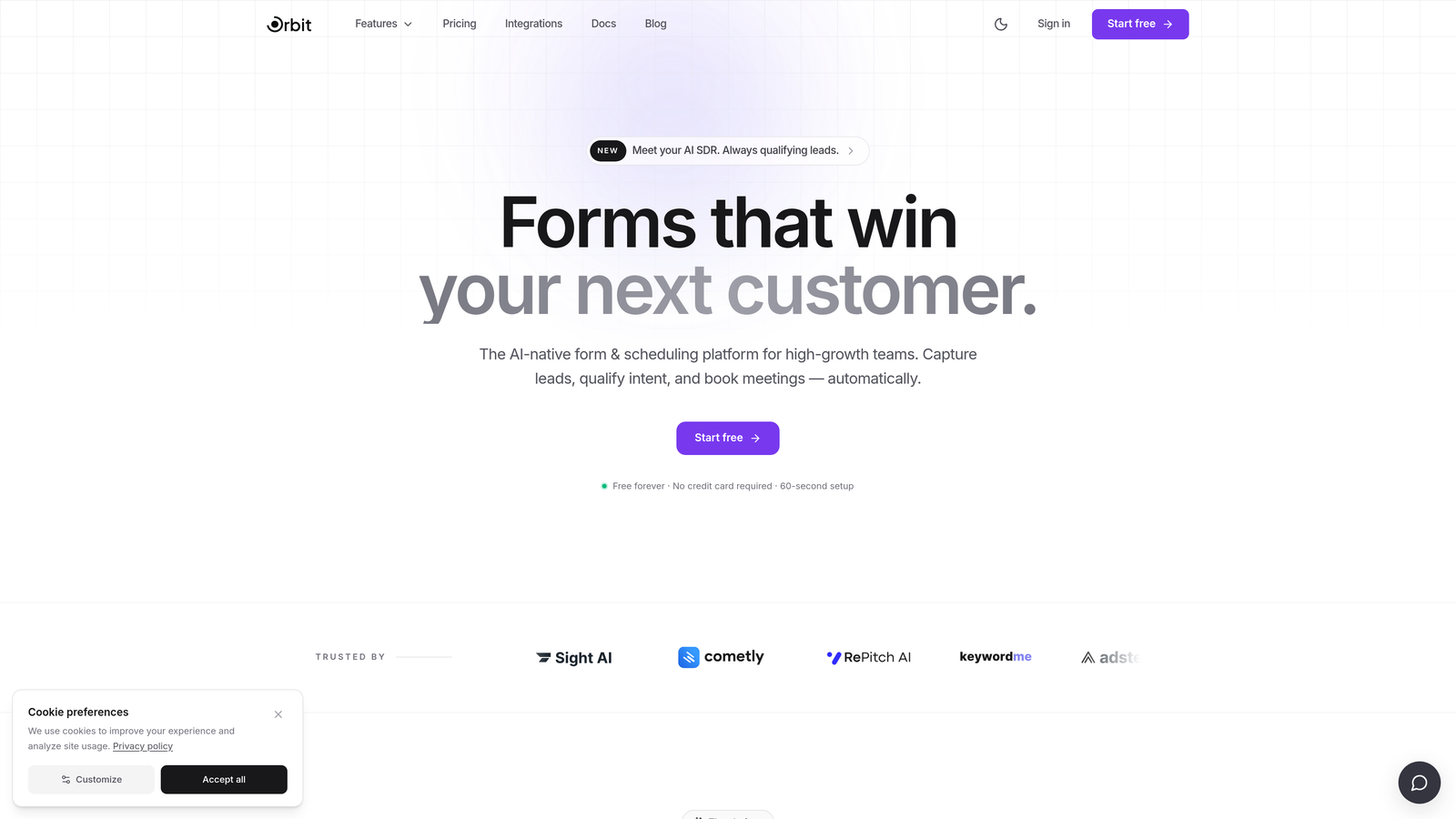
Orbit AI is an AI-powered form builder designed specifically for high-growth SaaS teams who need more than a data collection step at signup.
Where This Tool Shines
Most form builders collect data and hand it off. Orbit AI goes a step further by qualifying that data in real time. Its built-in lead qualification engine scores and routes users based on their responses, so your sales and success teams receive pre-segmented leads rather than a raw list of signups. For SaaS teams running high-volume trial funnels, that distinction matters.
The design quality is also a genuine differentiator. Orbit AI's templates are built for SaaS onboarding contexts specifically, not adapted from generic survey tools. The result is a form experience that feels like a natural extension of your product rather than a bolt-on step before it.
Key Features
AI-Powered Lead Qualification: Automatically scores and routes users based on form responses, reducing manual sales triage at the top of your funnel.
SaaS-Optimized Templates: Conversion-focused form templates built for signup and onboarding flows, not repurposed from general-purpose survey tools.
Conditional Logic: Personalizes the onboarding path based on user inputs, so a solo founder and an enterprise team see different questions and flows.
CRM Integrations: Syncs qualified leads directly to your pipeline without middleware, keeping your CRM data clean from the first touchpoint.
Modern Brand Design: Highly customizable styling that reflects your brand identity from the moment a user interacts with your product.
Best For
High-growth SaaS teams running product-led or sales-assisted funnels where lead qualification at the point of signup saves meaningful time downstream. Particularly well-suited for teams that care about both conversion rate and data quality coming out of their onboarding flow.
Pricing
Visit orbitforms.ai for current pricing plans. Free options are available to get started.
2. Typeform
Best for: SaaS teams prioritizing a low-friction, conversational signup experience.
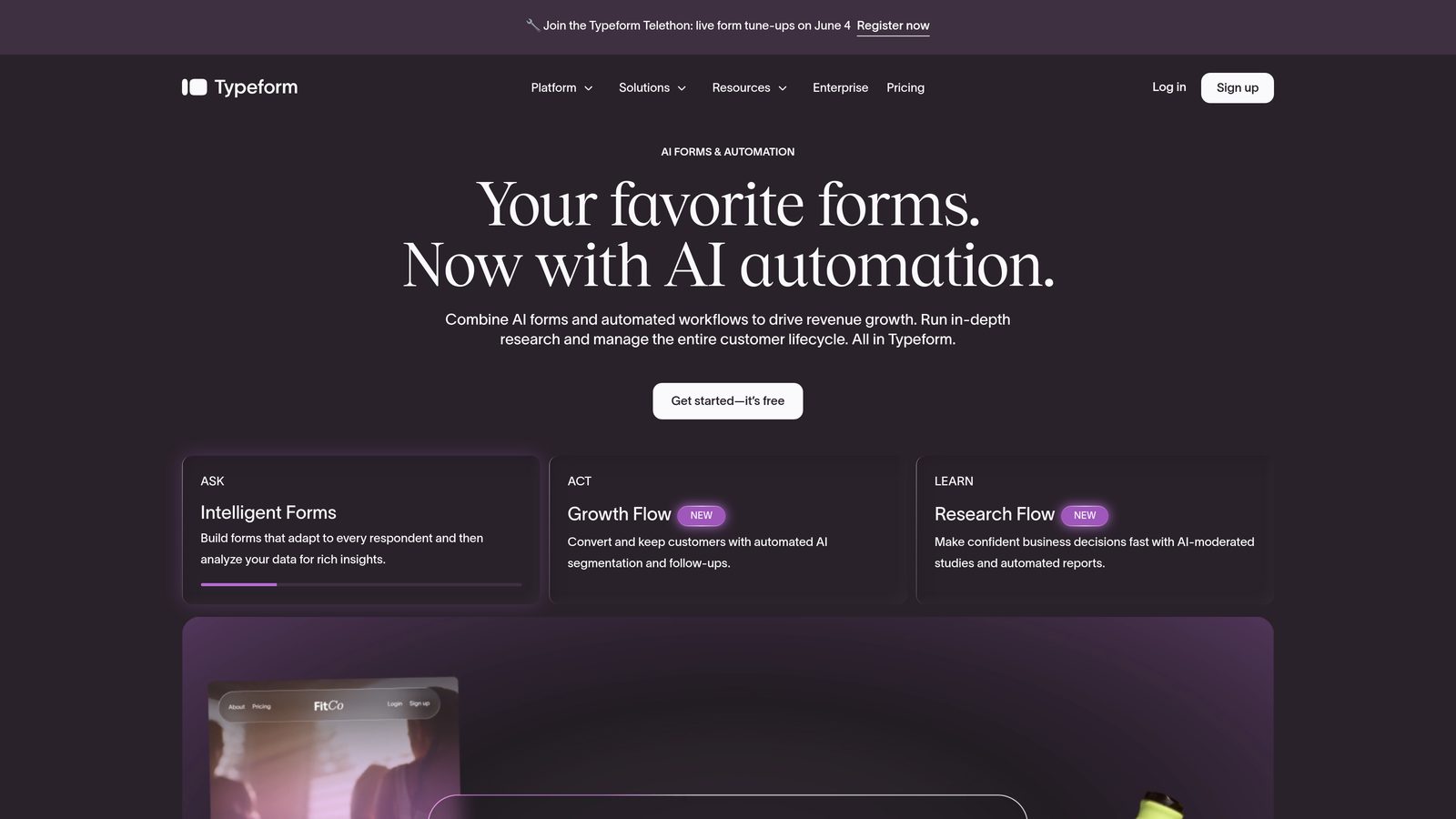
Typeform is a conversational form builder known for its one-question-at-a-time format that reduces perceived effort during onboarding flows.
Where This Tool Shines
Typeform's core UX premise is simple: showing one question at a time makes forms feel less like a chore. For SaaS onboarding, where drop-off at signup is a real problem, that friction reduction is meaningful. Users move through the flow at a natural pace rather than confronting a wall of fields.
The VideoAsk add-on extends this further, enabling video-based onboarding interactions that feel personal without requiring live support. For SaaS teams experimenting with human-touch onboarding at scale, it's a genuinely interesting option.
Key Features
Conversational UI: One-question-at-a-time format designed to reduce drop-off in multi-step onboarding sequences.
Logic Jumps: Conditional branching that adapts the form path based on previous answers.
Native Integrations: Direct connections to HubSpot, Salesforce, Slack, and other SaaS staples without requiring Zapier.
VideoAsk Add-On: Video-based form interactions for teams that want a more personal onboarding touch at scale.
Brand Styling: Customizable themes that align the form experience with your product's visual identity.
Best For
SaaS teams with longer onboarding questionnaires who need a format that keeps completion rates high. Also well-suited for teams experimenting with video-assisted onboarding or persona-based segmentation at signup.
Pricing
Free tier available. Paid plans start from approximately $25/month. Verify current pricing at typeform.com.
3. HubSpot Forms
Best for: SaaS marketing teams already running on the HubSpot CRM ecosystem.
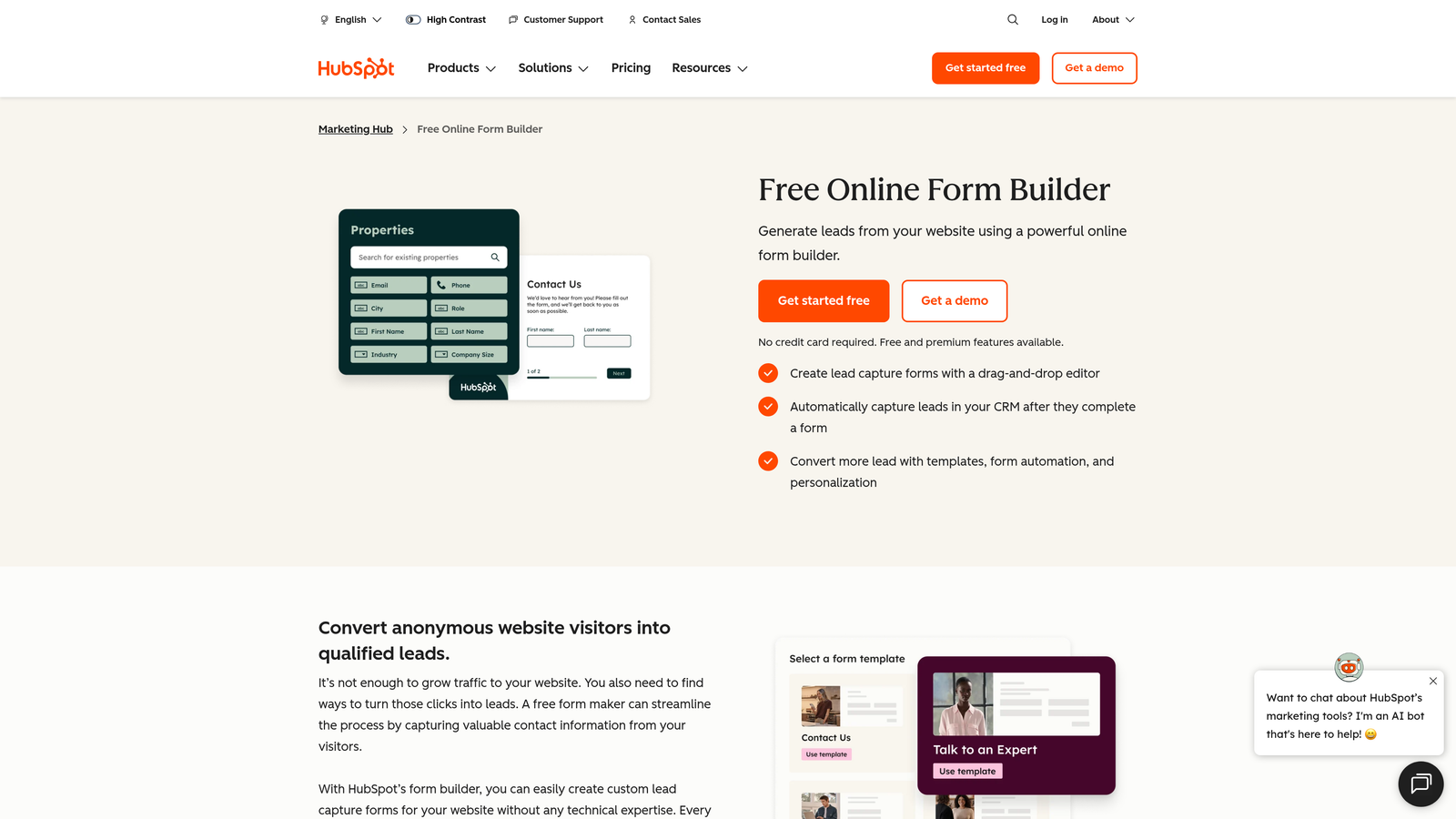
HubSpot Forms is a native form builder within HubSpot's platform, offering seamless CRM sync and progressive profiling without any middleware.
Where This Tool Shines
If your team lives in HubSpot, this is the path of least resistance. Form submissions become CRM contacts instantly, with no Zapier step, no sync delay, and no field mapping headaches. For teams where sales and marketing share a HubSpot instance, that native connection eliminates a common source of data quality issues.
Progressive profiling is the standout feature for SaaS onboarding specifically. Instead of asking the same questions to returning visitors, HubSpot Forms serves new questions each time, gradually building a richer contact profile without overwhelming users at first signup.
Key Features
Native CRM Sync: Form submissions write directly to HubSpot CRM contacts with no middleware required.
Progressive Profiling: Asks different questions to returning visitors, building contact data incrementally over time.
Smart Fields: Pre-populates fields for known contacts, reducing friction for returning users.
Flexible Placement: Supports embedded forms, pop-ups, and standalone landing page forms.
A/B Testing: Available on paid Marketing Hub tiers for teams optimizing conversion rates.
Best For
SaaS marketing teams already invested in the HubSpot ecosystem who want onboarding forms that feed directly into their CRM, lifecycle stages, and automated workflows without additional tooling.
Pricing
Free with HubSpot CRM. Advanced features require paid Marketing Hub plans. Verify current tiers at hubspot.com.
4. Tally
Best for: Early-stage SaaS teams and indie developers who need a capable free-tier form builder fast.
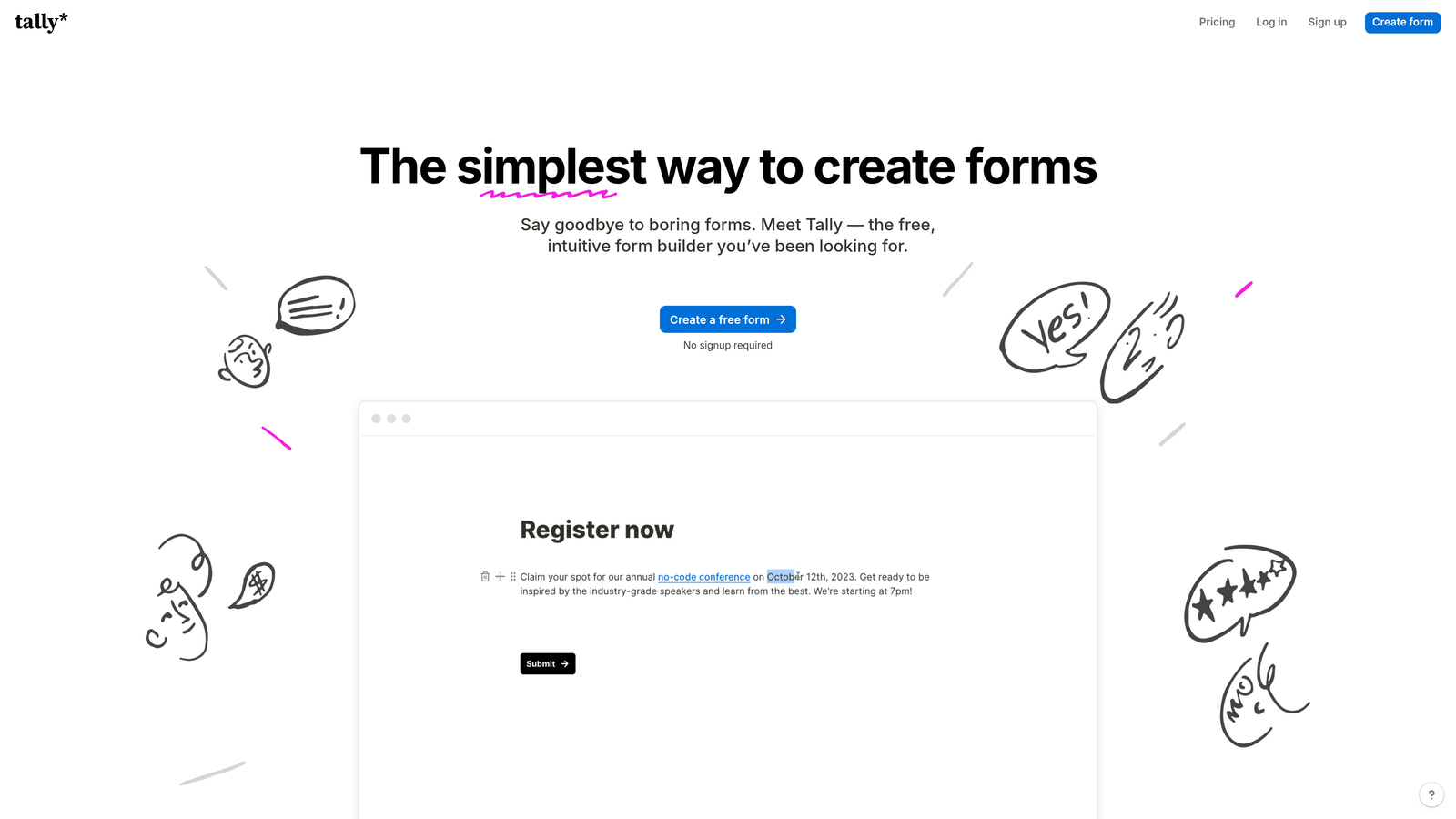
Tally is a Notion-inspired form builder with a generous free plan and a minimal learning curve that appeals strongly to lean SaaS teams.
Where This Tool Shines
Tally's free tier is unusually generous: unlimited forms, unlimited responses, no submission caps. For pre-revenue or early-stage SaaS teams watching every dollar, that's a meaningful advantage over tools that gate basic functionality behind paid plans.
The Notion-style block editor makes building forms feel intuitive if your team already lives in Notion. It's not the most powerful tool on this list, but for simple onboarding flows, waitlist signups, or beta access forms, it covers the essentials cleanly and without friction.
Key Features
Unlimited Free Tier: No form or response limits on the free plan, making it genuinely usable without paying.
Block Editor: Notion-style editing interface with a minimal learning curve for teams already familiar with that workflow.
Conditional Logic: Multi-step forms with branching logic for basic personalization of onboarding paths.
File Uploads and Payments: Handles file collection and payment steps within the same form flow.
Clean Embeds: Embeds smoothly into product pages, documentation, and landing pages.
Best For
Early-stage SaaS teams, indie developers, and bootstrapped products that need solid onboarding forms without a budget. Also useful for internal tooling where design polish and CRM sync are not priorities.
Pricing
Free tier with unlimited responses. Pro plan available for advanced features. Verify current pricing at tally.so.
5. Jotform
Best for: SaaS teams in regulated industries that need compliance features alongside strong integration depth.
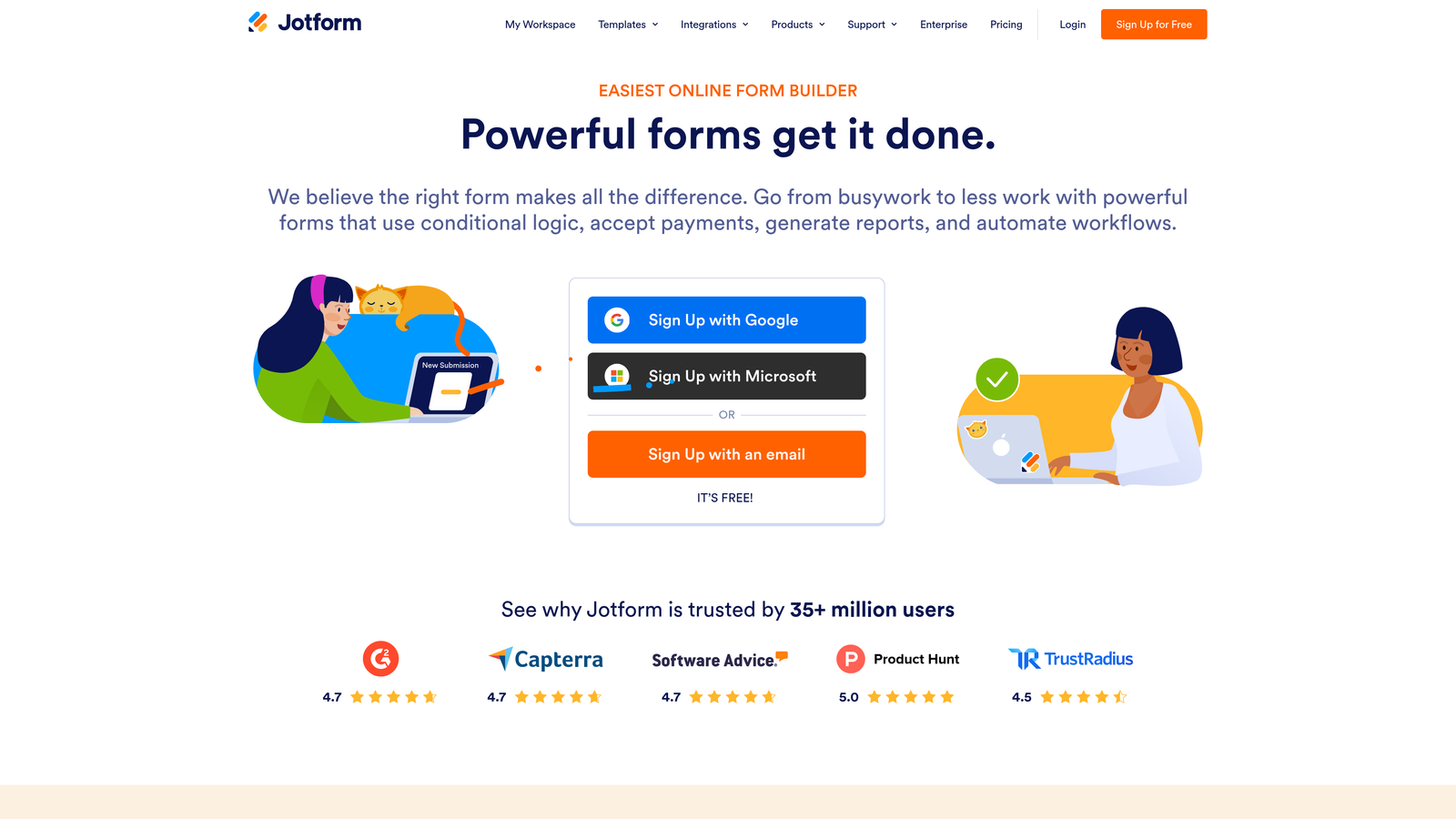
Jotform is a feature-rich form builder with 150+ native integrations and robust compliance options for teams operating in regulated verticals.
Where This Tool Shines
Jotform's breadth is its defining characteristic. With over 150 native integrations spanning CRMs, payment processors, project management tools, and industry-specific platforms, it connects to almost any stack a SaaS team might be running. That flexibility makes it a strong choice for teams with complex data routing requirements at onboarding.
For SaaS products in healthcare, legal, or financial services, the HIPAA and GDPR compliance options are a genuine differentiator. Most form builders treat compliance as an afterthought. Jotform has built it in as a core feature, which matters when your onboarding form collects sensitive user data.
Key Features
150+ Native Integrations: Connects directly to Salesforce, HubSpot, payment processors, and a wide range of SaaS tools without middleware.
Compliance Options: HIPAA and GDPR-compliant configurations for teams in regulated industries.
Approval Workflows: Multi-step forms with built-in approval routing for onboarding processes that require human review.
E-Signature and Document Generation: Handles agreements and document steps within the onboarding flow itself.
Template Library: Extensive pre-built templates covering a range of SaaS onboarding and signup use cases.
Best For
SaaS teams in regulated industries (healthtech, fintech, legaltech) where compliance is non-negotiable, and teams with complex integration requirements across multiple platforms.
Pricing
Free tier available. Paid plans scale with submission volume. Verify current pricing at jotform.com.
6. Feathery
Best for: Engineering-led SaaS teams who need pixel-perfect onboarding forms with SDK-level control.
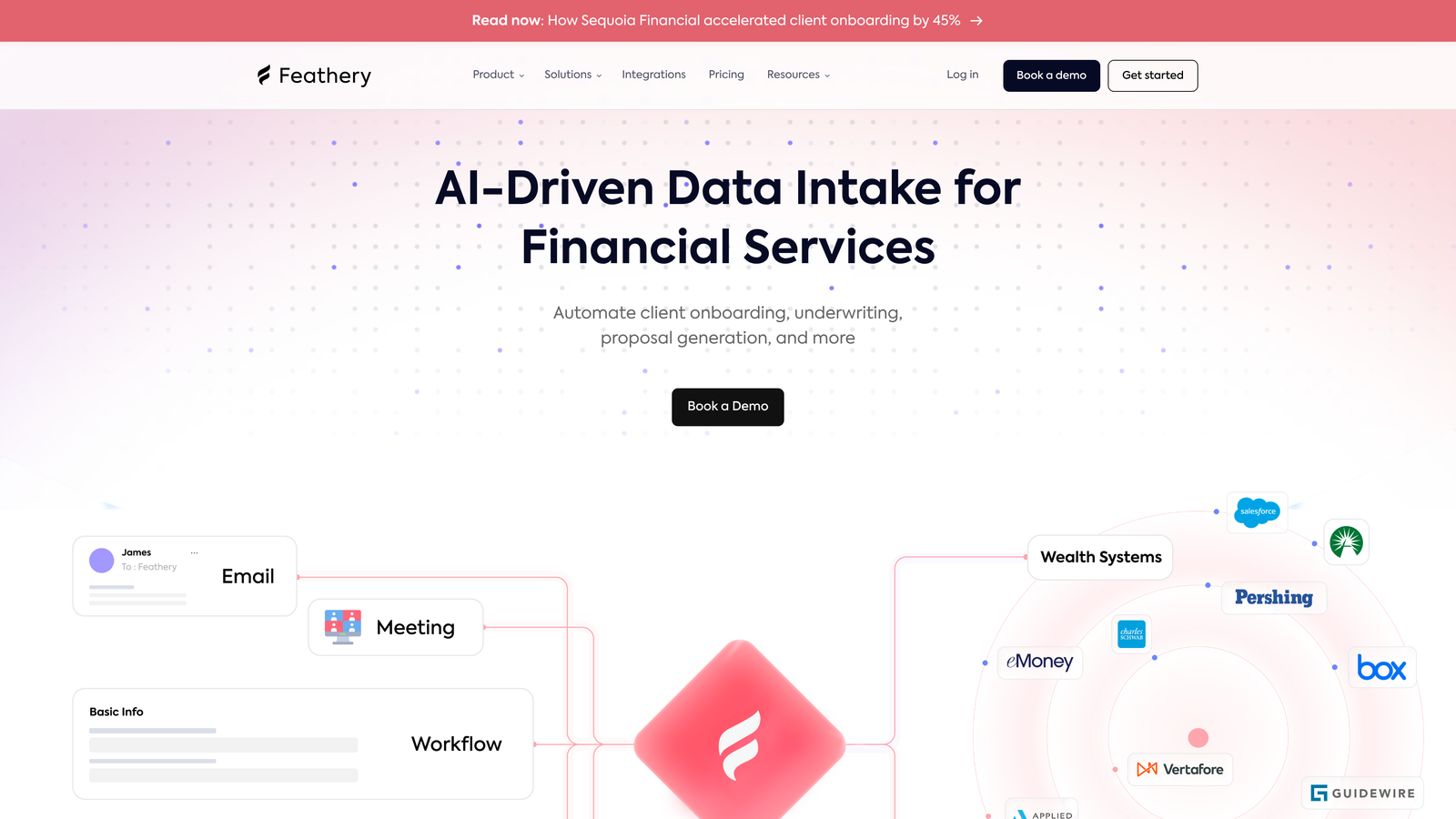
Feathery is a developer-first onboarding form platform built specifically for product teams that need design precision and deep technical integration.
Where This Tool Shines
Feathery occupies a distinct position on this list: it was built for product onboarding, not adapted from a general-purpose form tool. That specificity shows. Its React SDK and API-first architecture give engineering teams the kind of control that most form builders simply don't offer, including the ability to make onboarding forms feel completely native to the product experience.
The built-in logic engine handles complex branching scenarios that would require workarounds in other tools. For SaaS products with sophisticated onboarding paths based on role, company size, or use case, Feathery's logic capabilities are a meaningful advantage.
Key Features
React SDK and API-First Architecture: Gives engineering teams full programmatic control over form behavior and data flow.
Pixel-Perfect Design Control: Achieves precise visual fidelity without requiring custom CSS or front-end workarounds.
Advanced Logic Engine: Handles complex conditional branching for multi-path onboarding sequences.
A/B Testing: Built-in experimentation for optimizing onboarding flow performance.
Product-Native Feel: Designed to integrate seamlessly into the product UI rather than feeling like an external form tool.
Best For
Engineering-led SaaS teams where the onboarding form needs to feel indistinguishable from the product itself. Particularly strong for teams with complex, multi-path onboarding flows and the technical capacity to leverage an SDK.
Pricing
Free tier available for development. Paid plans required for production use. Verify current pricing at feathery.io.
7. Fillout
Best for: SaaS teams using no-code backends like Airtable, Notion, or Supabase as their data layer.
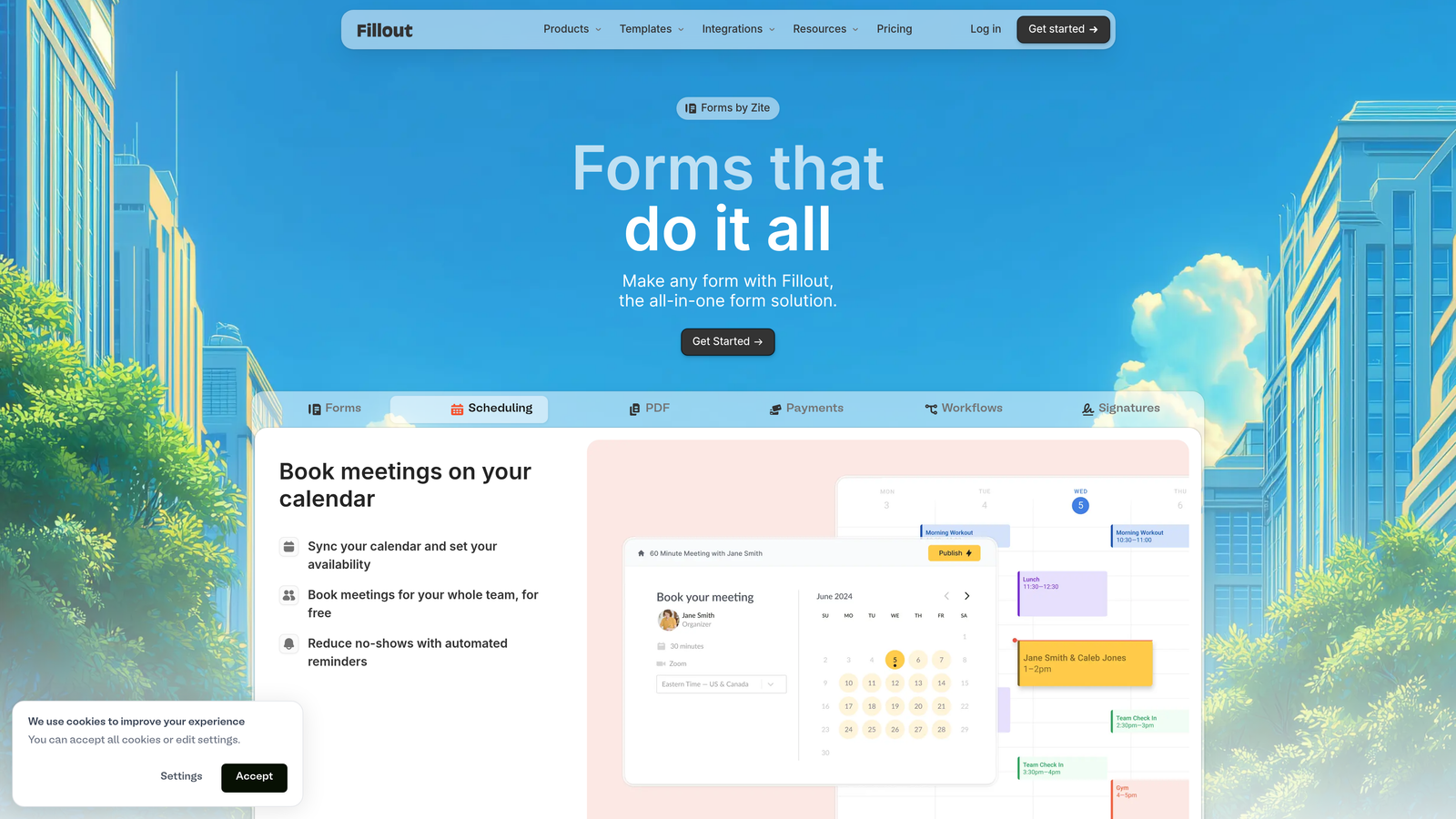
Fillout is a modern form builder with native two-way sync to Airtable, Notion, Supabase, and major CRMs, making it a natural fit for no-code and low-code SaaS stacks.
Where This Tool Shines
Fillout's two-way sync capability is what sets it apart. Most form tools write to a database and stop there. Fillout's connections to Airtable, Notion, and Supabase are bidirectional, meaning form responses update existing records rather than just creating new rows. For SaaS teams using these platforms as lightweight backends, that's a significant operational improvement.
The tool also handles a broader range of form types than most competitors. Scheduling forms, payment forms, and multi-step onboarding flows are all supported within the same platform, reducing the need to stitch together multiple tools for different onboarding steps.
Key Features
Two-Way Database Sync: Bidirectional connections to Airtable, Notion, and Supabase that update existing records rather than just appending new ones.
CRM Integrations: Native HubSpot and Salesforce connections for teams running traditional sales pipelines alongside no-code backends.
Conditional Logic: Multi-step forms with branching support for personalized onboarding paths.
Scheduling and Payments: Handles scheduling and payment collection within the same form environment.
Mobile-Responsive UI: Clean, modern design that performs well across device types.
Best For
Early to mid-stage SaaS teams using Airtable, Notion, or Supabase as their primary data layer, and teams that want to consolidate multiple form types (onboarding, scheduling, payments) into a single tool.
Pricing
Free tier available. Paid plans unlock advanced features. Verify current pricing at fillout.com.
8. Paperform
Best for: SaaS teams where the onboarding form doubles as a brand moment and needs to look exceptional.
Paperform is a hybrid form and landing page builder that lets teams create onboarding experiences that are as much a design statement as a data collection step.
Where This Tool Shines
Paperform sits at the intersection of form builder and landing page tool. Its document-style layout allows teams to blend rich media, copy, and form fields into a single cohesive experience. For SaaS products where the onboarding form is also a first brand impression, that flexibility is hard to find elsewhere.
Full custom CSS support and 3,000+ integrations via Zapier give design-conscious teams both the visual control and the connectivity they need. It's not the most developer-focused tool on this list, but for marketing and design teams building polished onboarding experiences, it covers a lot of ground.
Key Features
Document-Style Layout: Blends rich media, written content, and form fields into a single, cohesive experience rather than a traditional form structure.
Custom CSS and Brand Control: Full styling flexibility for teams that need precise visual alignment with their product brand.
3,000+ Integrations: Connects to a wide range of tools via Zapier, covering most SaaS stack configurations.
Conditional Logic and Multi-Step Flows: Supports branching and multi-page forms for personalized onboarding paths.
Built-In Analytics: Conversion tracking and form analytics without requiring a separate analytics tool.
Best For
SaaS teams where onboarding is a high-touch brand experience, particularly those in design-forward verticals where the quality of the signup flow signals product quality to prospective users.
Pricing
No free tier. Paid plans start from approximately $24/month. Verify current pricing at paperform.co.
9. Google Forms
Best for: Pre-launch waitlists, beta signups, or internal SaaS tooling where speed and zero cost matter most.
Google Forms is a free, zero-setup form tool that works well for lightweight use cases where design polish and CRM connectivity are not requirements.
Where This Tool Shines
Google Forms earns its place on this list for one reason: it costs nothing and requires nothing. No account setup beyond a Google login, no submission limits, no time spent evaluating pricing tiers. For pre-launch teams collecting waitlist signups or running a quick beta access form, it removes every barrier to getting something live quickly.
It's worth being clear about what it isn't, though. Google Forms is not a production onboarding tool for a scaling SaaS product. The design options are limited, conditional logic is basic, and there's no native CRM sync. Responses export to Google Sheets, which works fine for small volumes but doesn't scale to a real pipeline.
Key Features
Completely Free: No submission limits, no paid tiers, no cost at any scale.
Instant Setup: Live in minutes with no account required beyond a Google login.
Basic Conditional Logic: Section branching for simple multi-path forms.
Google Sheets Export: Responses sync automatically to a connected spreadsheet for easy review.
Universal Accessibility: Shareable with anyone who has a Google account, with no friction on the respondent side.
Best For
Pre-launch SaaS teams collecting waitlist interest, founders running quick beta access signups, or internal tooling scenarios where the audience is known and design is irrelevant. Not recommended for production onboarding at any meaningful scale.
Pricing
Free with no limitations on submissions or forms.
Which Onboarding Form Tool Is Right for Your SaaS?
The right tool depends almost entirely on where your team is and what you need the form to do beyond collecting data.
If you want AI-powered qualification at signup: Orbit AI is the clear choice. It's the only tool on this list that scores and routes users based on form responses natively, making it ideal for teams where lead quality coming out of the onboarding flow matters as much as volume.
If you're deep in the HubSpot ecosystem: HubSpot Forms is the lowest-friction path. Native CRM sync and progressive profiling make it the natural choice for marketing-led SaaS teams already running on HubSpot.
If your engineering team needs SDK-level control: Feathery is purpose-built for this. No other tool on the list gives developers the same level of design precision and programmatic integration.
If you're early-stage and budget-constrained: Tally's free tier is genuinely useful, not artificially limited. It covers the essentials without requiring a paid plan to get meaningful functionality.
If your onboarding form is also a brand statement: Paperform's hybrid form-and-landing-page format gives design teams flexibility that traditional form builders don't offer.
For most high-growth SaaS teams, the gap between a form that collects data and one that qualifies and converts is where real revenue impact lives. Start building free forms today with Orbit AI and see how intelligent form design can change what comes out of your onboarding funnel from day one.


