

If your forms still look like they were built in 2012 — clunky dropdowns, walls of fields, zero logic — you're losing leads before they even start. Outdated form design tools weren't built for today's conversion-obsessed, mobile-first world. They lack conditional logic, AI-driven qualification, modern UX patterns, and the kind of analytics that actually tell you why people abandon.
This roundup covers the best alternatives: tools genuinely built for speed, design quality, and lead performance. Whether you're a SaaS team chasing qualified pipeline or an agency building forms for clients, these platforms represent the current standard — not the legacy one. We've evaluated each on design flexibility, logic capabilities, integrations, and how well they support conversion optimization goals.
1. Orbit AI
Best for: High-growth SaaS and B2B teams that need forms to qualify leads in real time.
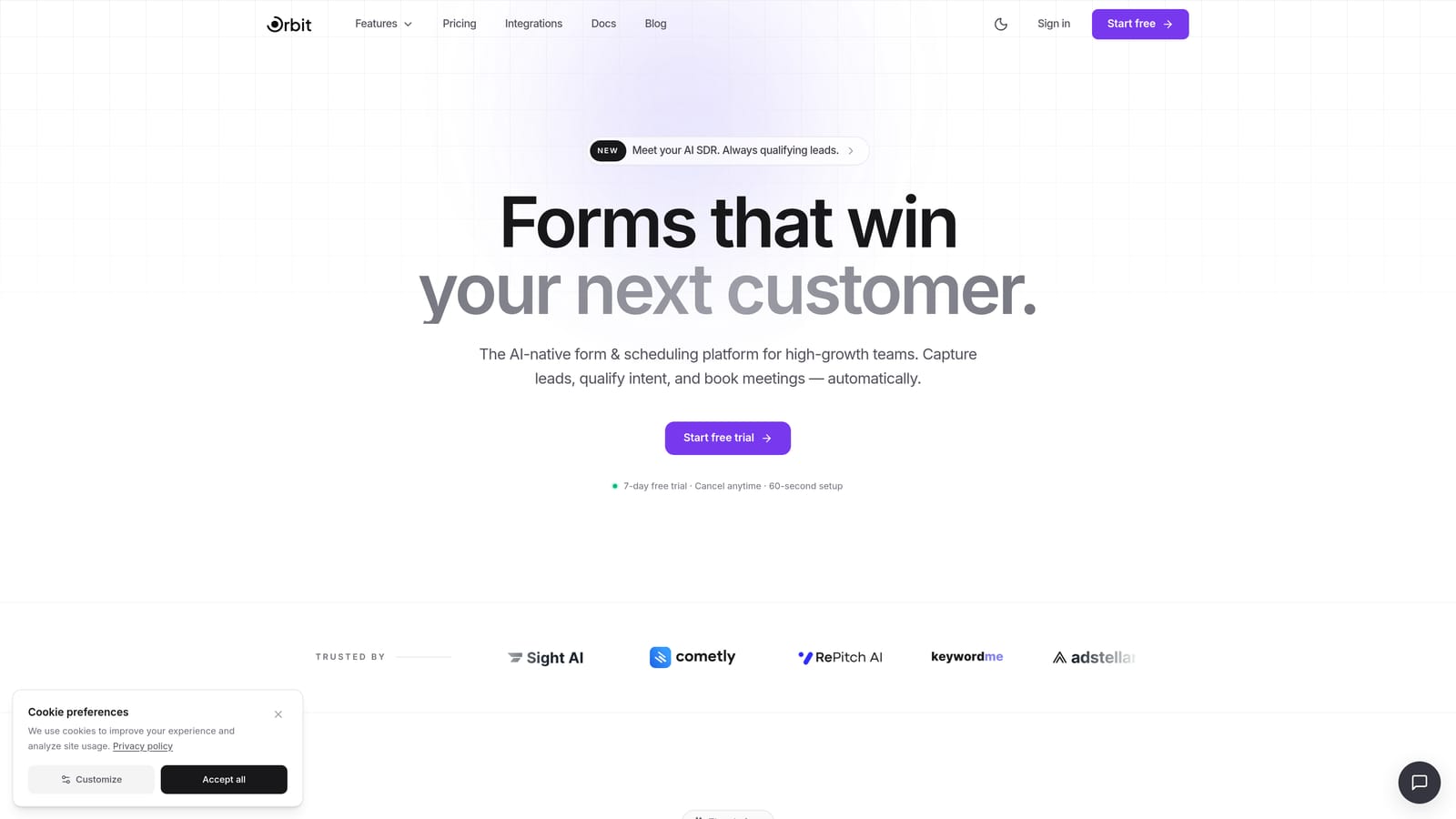
Orbit AI is an AI-powered form builder designed for teams that treat forms as a revenue lever, not just a data collection checkbox.
Where This Tool Shines
Most form tools collect submissions and hand them off to your CRM for qualification later. Orbit AI flips that model. The AI qualification layer scores and filters leads at the point of submission, so your sales team is working with ranked, pre-qualified prospects from the moment a form is completed.
The platform is built with conversion optimization at its core. Templates are designed for mobile-first experiences, conditional logic creates personalized form paths based on user input, and the analytics focus on lead quality rather than raw submission volume.
Key Features
AI-Driven Lead Qualification: Scores and qualifies leads in real time during the form flow, before they reach your CRM.
Conversion-Optimized Templates: Pre-built templates designed for modern, mobile-first experiences with strong visual defaults.
Conditional Logic: Dynamic form paths that adapt based on user responses, creating personalized journeys for different prospect segments.
CRM and Marketing Stack Integrations: Connects with the tools your team already uses to keep data flowing without manual work.
Real-Time Analytics: Reporting built around lead quality metrics, not just submission counts.
Best For
SaaS companies, B2B teams, and growth-focused organizations where the quality of inbound leads directly impacts revenue. Particularly valuable for teams running paid acquisition who need forms to do more than just collect email addresses.
Pricing
Visit orbitforms.ai for current pricing details. Plans are designed for high-growth teams with conversion-focused needs.
2. Typeform
Best for: Brand-conscious teams that want a polished, conversational form experience.
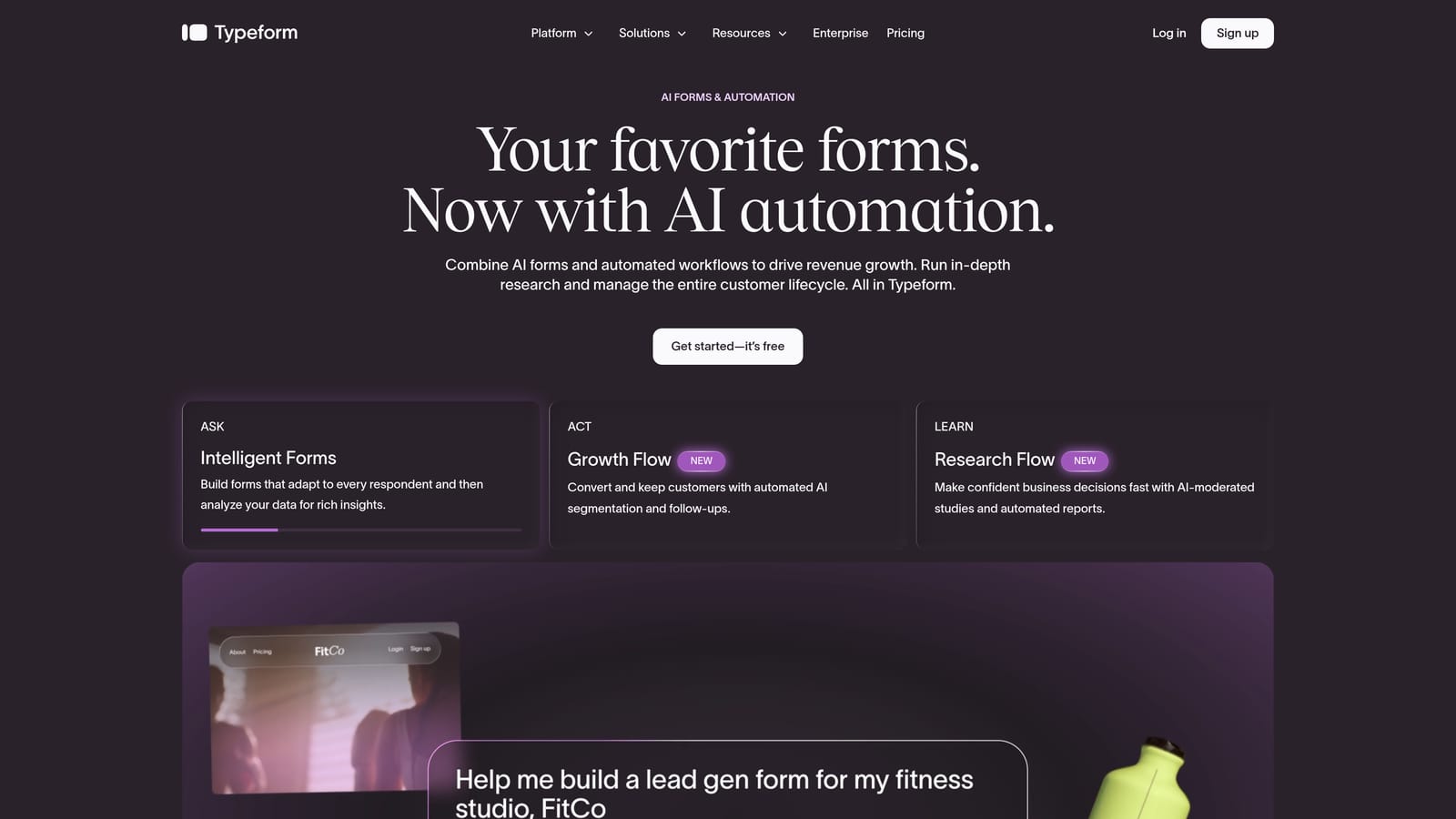
Typeform is a conversational form platform known for its one-question-at-a-time UX and strong visual design — a significant step up from legacy form tools.
Where This Tool Shines
Typeform's signature format presents one question at a time, which reduces cognitive load and tends to improve completion rates for longer forms. The visual experience is polished by default, making it a natural fit for teams where brand perception matters.
It's worth noting that very long forms can feel slow in this format, and more advanced logic features are gated behind higher-tier plans. But for mid-length forms with a strong brand story, Typeform remains one of the most visually compelling options available.
Key Features
Conversational Format: One-question-at-a-time presentation that reduces friction and keeps respondents engaged through the form.
Visual Customization: Strong brand theming options including custom fonts, colors, backgrounds, and imagery.
Logic Jumps: Conditional branching that routes respondents to different questions based on their answers.
Integrations: Native connections with HubSpot, Salesforce, Slack, and a broad range of other platforms.
Media Embedding: Supports video and image embedding directly within the form flow.
Best For
Marketing teams, agencies, and brand-led businesses that want forms to feel like an extension of their visual identity. Also works well for surveys, research, and lead capture where respondent experience is a priority.
Pricing
A free tier is available with limitations. Paid plans unlock advanced logic and integrations. Verify current pricing at typeform.com.
3. Tally
Best for: Startups and indie teams that want modern form design without the cost.
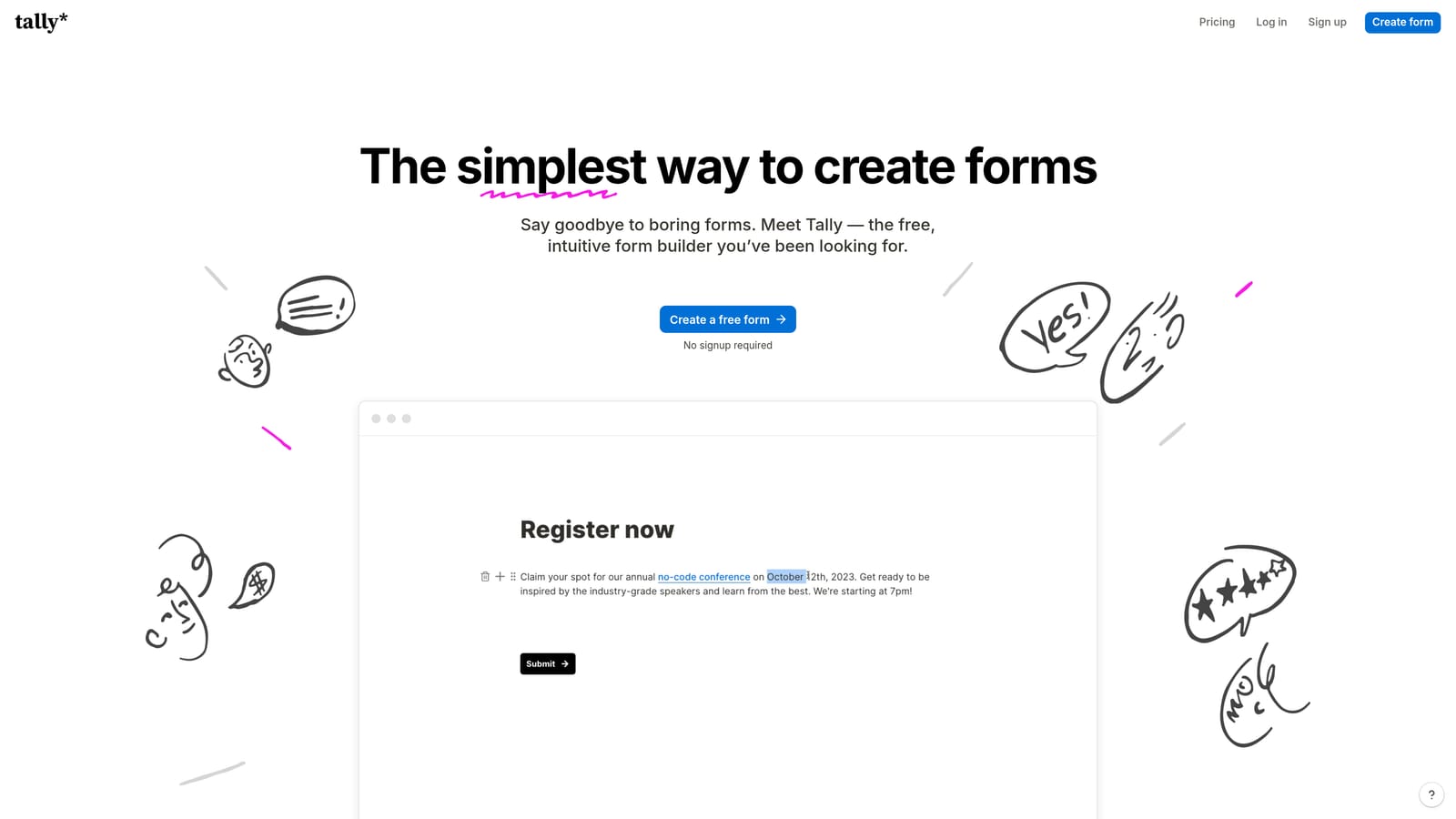
Tally is a Notion-inspired form builder with a clean, minimalist editor and one of the most generous free plans in the market.
Where This Tool Shines
Tally's block-based editor feels immediately familiar to anyone who uses Notion. You build forms the way you'd write a document — no drag-and-drop confusion, no cluttered toolbars. The result is a surprisingly fast workflow for creating clean, modern-looking forms.
The free plan is genuinely useful: unlimited forms and responses with no submission caps. For early-stage teams or solo builders who need modern aesthetics without a monthly bill, Tally punches well above its price point.
Key Features
Block Editor: Notion-style editing interface that's intuitive for non-technical users and fast to work with.
Unlimited Free Tier: Unlimited forms and responses on the free plan, which is rare in this category.
Conditional Logic: Logic and hidden fields available for creating dynamic form experiences.
Embed Support: Embeds cleanly into websites and Notion pages with minimal friction.
Stripe Payments: Payment collection via Stripe available on the Pro plan.
Best For
Startups, indie makers, freelancers, and small teams who need modern form design on a tight budget. Also a strong option for Notion-heavy teams who want forms that integrate naturally into their existing workspace.
Pricing
Generous free tier with no response limits. A Pro plan unlocks advanced features. Verify current pricing at tally.so.
4. Paperform
Best for: Teams that need forms to sell, educate, or book — not just collect data.
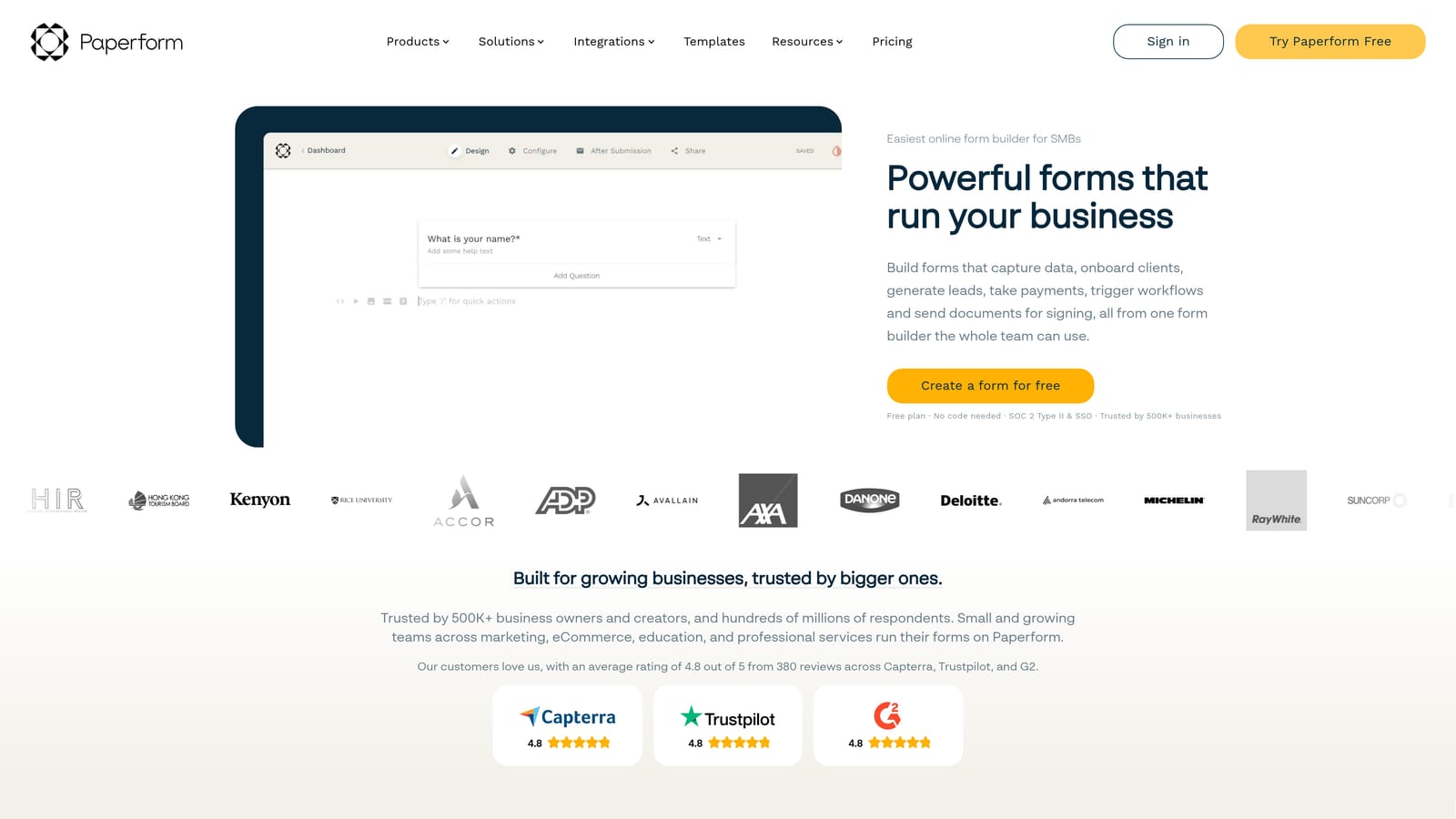
Paperform is a hybrid form and landing page builder that combines rich content with form fields in a single, cohesive experience.
Where This Tool Shines
Paperform occupies a unique space: it's not quite a form builder and not quite a landing page builder, but it does both surprisingly well. You can mix text, images, product displays, and embedded media alongside your form fields, which makes it ideal for forms that need to do some selling or explaining before the user hits submit.
The multi-step format with strong conditional logic keeps longer forms manageable, and the payment integrations make it a practical choice for product launches, event registrations, and booking flows.
Key Features
Rich Content Editor: Combine form fields with text, images, video, and product displays in a single document-style layout.
Multi-Step Forms: Break longer forms into digestible steps with conditional logic controlling the path.
Payment Integrations: Supports Stripe, PayPal, and Square for direct payment collection within the form.
Booking and Scheduling: Built-in scheduling capabilities for appointment and booking use cases.
Custom Domain Support: Publish forms on your own domain for a seamless brand experience.
Best For
E-commerce teams, coaches, consultants, and agencies building forms that need to inform and convert simultaneously. Particularly strong for product launches, booking pages, and event registrations where context matters before the ask.
Pricing
Paid plans only — no permanent free tier. Verify current pricing and plan details at paperform.co.
5. Jotform
Best for: High-volume teams with diverse form needs across multiple departments or industries.
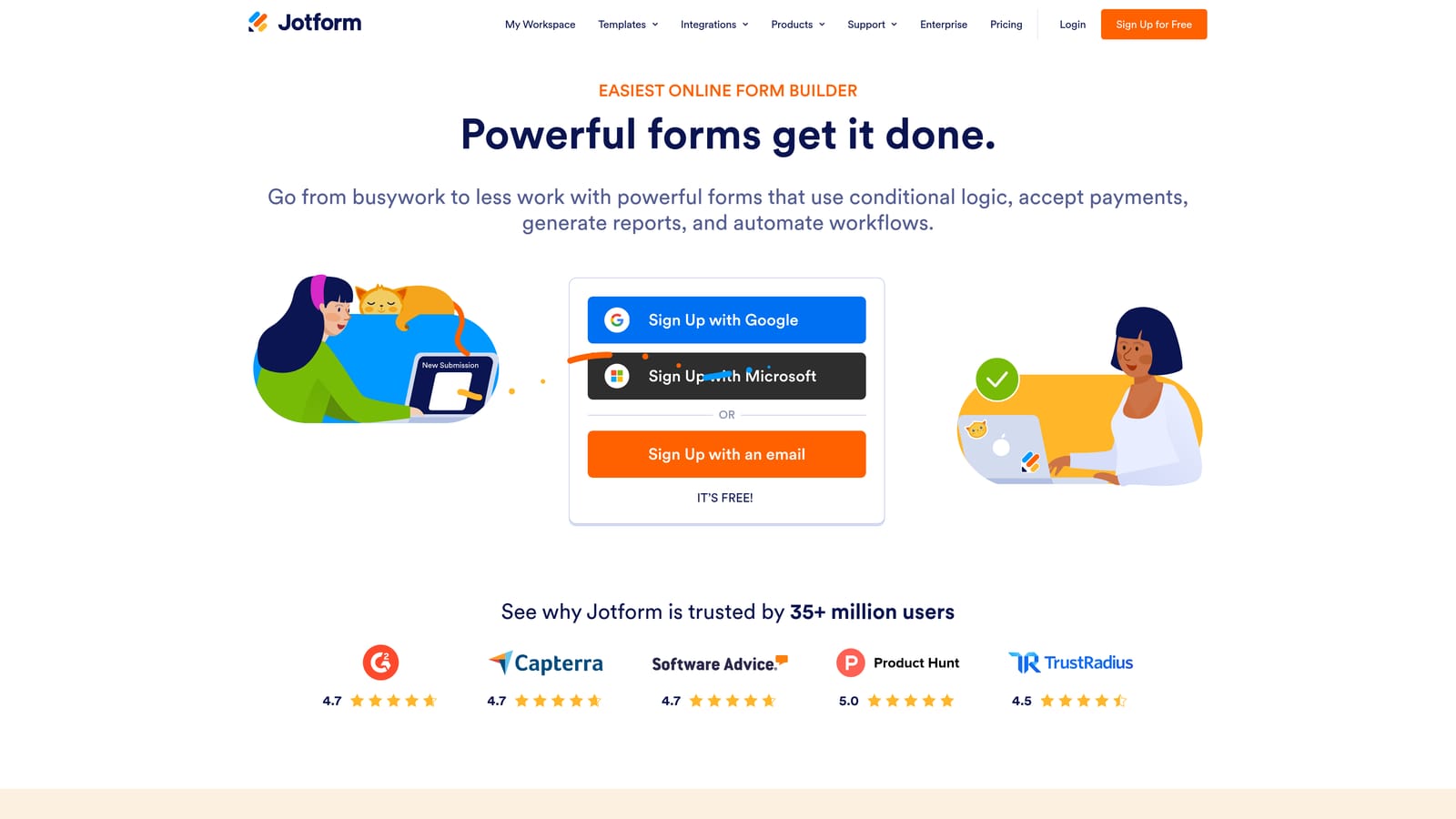
Jotform is one of the most widely used form platforms available, with an enormous template library and broad integration support that covers nearly every use case imaginable.
Where This Tool Shines
Jotform's strength is breadth. With over 10,000 templates spanning industries from healthcare to education to HR to e-commerce, it's the platform you reach for when your team has varied, high-volume form needs across multiple departments. Whatever the use case, there's almost certainly a template that gets you 80% of the way there.
The platform also has robust compliance features, including HIPAA-compliant plans, which makes it one of the few options that works across both regulated and non-regulated use cases within the same organization.
Key Features
10,000+ Templates: Extensive template library covering virtually every industry and form type.
HIPAA Compliance: Compliant plans available for healthcare and other regulated industries.
Payment and E-Signature Support: Native payment collection, e-signature workflows, and approval routing.
Integration Library: Extensive third-party integrations across CRM, marketing, storage, and productivity platforms.
Jotform Tables: Built-in data management tool for organizing and acting on form submission data.
Best For
Enterprises, healthcare organizations, educational institutions, and any team managing diverse form needs at volume. Also a strong fit for operations and HR teams who need approval workflows alongside data collection.
Pricing
Free tier available; paid plans scale based on submission volume and feature access. Verify current pricing at jotform.com.
6. Formstack
Best for: Regulated industries and enterprise teams with complex workflow and compliance requirements.
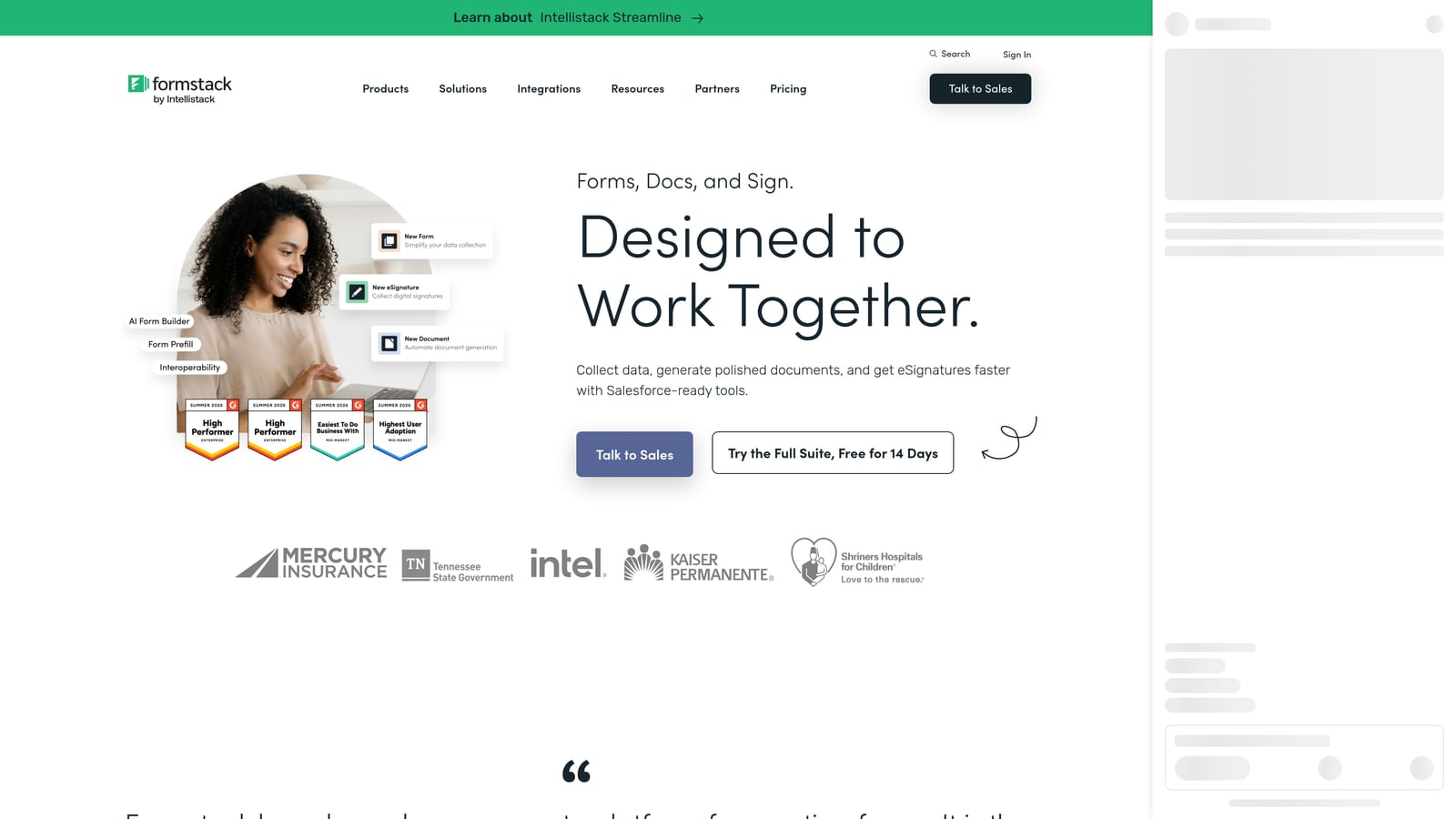
Formstack is an enterprise-grade platform that combines form building with document generation, e-signatures, and sophisticated workflow automation.
Where This Tool Shines
Formstack goes well beyond form building. It's a workflow platform where forms are the entry point for complex, multi-step internal processes: document generation, e-signature collection, approval routing, and compliance reporting all live within the same ecosystem. For teams in regulated industries, that level of integration is hard to replicate by stitching together separate tools.
The Salesforce-native integration is particularly strong, making it a natural choice for revenue operations and enterprise sales teams that run their entire pipeline through Salesforce and need forms to feed directly into that system with full data integrity.
Key Features
HIPAA Compliance: Compliant forms and data handling for healthcare and other regulated sectors.
Document Generation: Automatically generate documents from form submission data, reducing manual work.
E-Signature Workflows: Collect legally binding signatures as part of a connected form and document flow.
Advanced Routing and Approvals: Complex conditional routing and multi-step approval workflows for internal processes.
Audit Trails: Compliance reporting and audit trail capabilities for regulated environments.
Best For
Enterprise teams, healthcare organizations, financial services firms, and any business with complex internal workflows that span form collection, document generation, and approval processes. Best suited for organizations where compliance is non-negotiable.
Pricing
Higher-tier pricing reflecting the enterprise feature set. Verify current plans and pricing at formstack.com.
Which Tool Is Right for Your Team?
The right choice comes down to what you're actually trying to achieve. Here's a quick breakdown by use case to cut through the noise.
AI-powered lead qualification: Orbit AI is the clear choice. No other tool on this list qualifies and scores leads at the point of submission, which is a meaningful advantage for SaaS and B2B teams where lead quality directly drives revenue.
Conversational UX and brand polish: Typeform remains the benchmark for forms that feel like a premium brand experience, particularly for mid-length surveys and lead capture flows.
Modern forms on a tight budget: Tally's free plan is genuinely hard to beat. Clean design, unlimited responses, and a Notion-style editor that most teams will find immediately intuitive.
Forms that educate and convert simultaneously: Paperform's hybrid content-plus-form format is purpose-built for this. If your form needs to tell a story before it asks for information, Paperform handles that better than anything else here.
High-volume, multi-department needs: Jotform's template library and compliance features make it the practical choice for organizations managing diverse form use cases across teams.
Complex compliance and workflow automation: Formstack is the enterprise-grade option for regulated industries where forms feed into document generation, e-signatures, and approval workflows.
For high-growth teams where forms are a direct revenue lever, the upgrade from outdated form design tools starts with rethinking what a form should actually do. Collecting submissions is table stakes. Qualifying, scoring, and routing leads in real time is where the competitive advantage lives.
Start building free forms today with Orbit AI and see how intelligent form design can transform your lead generation results — or explore our guides on improving lead quality and increasing form submissions to get more from whichever platform fits your team best.


