

Static forms that ask every respondent the same questions are a conversion killer. Skip logic transforms a generic form into a personalized conversation that qualifies leads, reduces drop-off, and surfaces the data that actually matters. Whether you're routing enterprise prospects to a sales call or filtering out unqualified leads before they hit your CRM, the right skip logic form builder makes the difference between a form that converts and one that collects dust.
This guide covers the best skip logic form builders available in 2026, evaluated on logic depth, ease of use, AI capabilities, integrations, and pricing. We've included options for lean startup teams, mid-market SaaS companies, and enterprise operations alike. If you're also losing leads to poor form UX, check out our guide on why visitors abandon forms and why forms lose leads.
1. Orbit AI
Best for: High-growth SaaS teams that want skip logic tied to lead qualification and scoring.
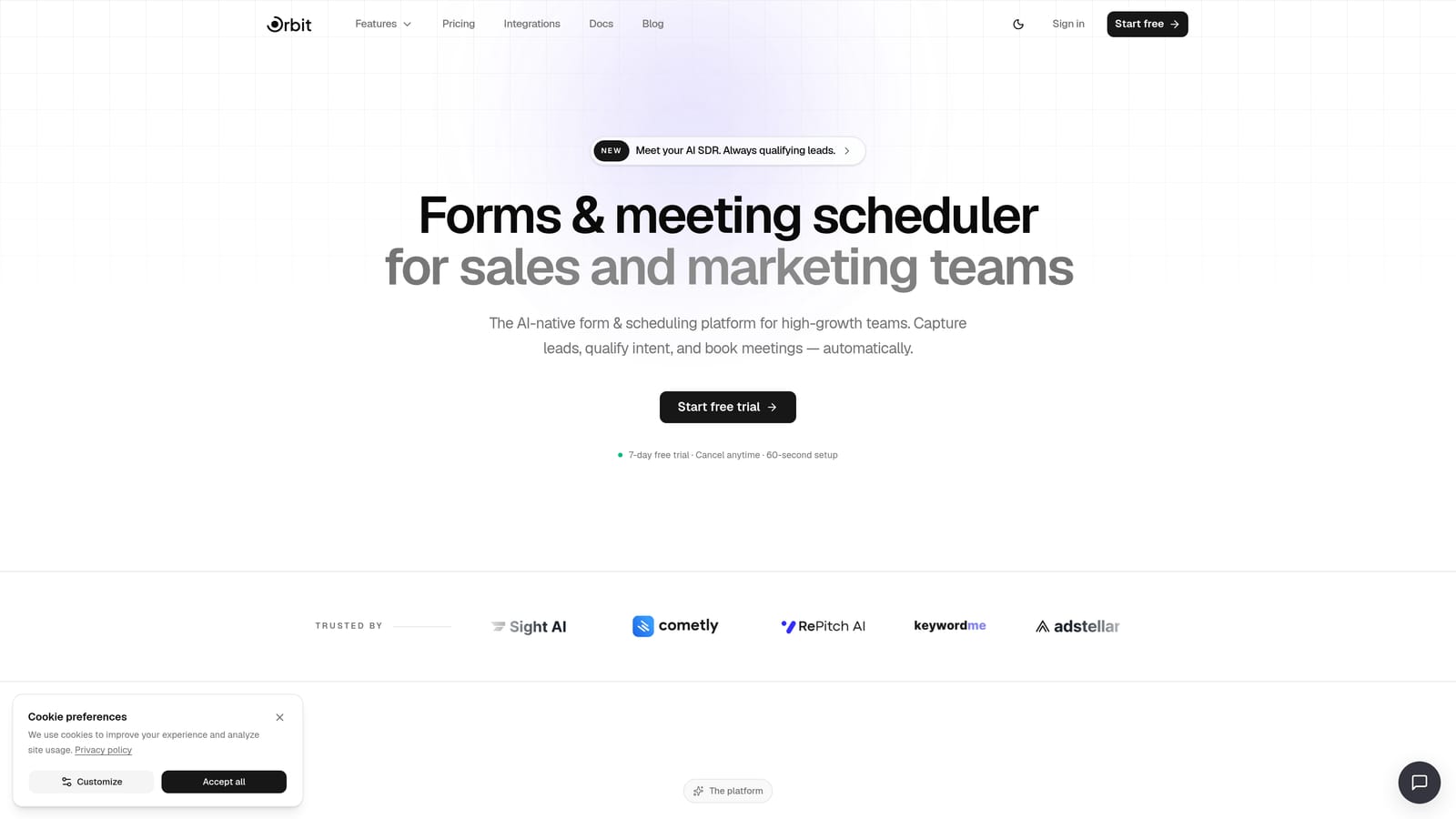
Orbit AI is an AI-powered form builder that goes beyond conditional logic to qualify, score, and route leads automatically.
Where This Tool Shines
Most form builders treat skip logic as a display feature: show this question, hide that one. Orbit AI ties branching directly to lead quality signals, so the path a respondent takes doesn't just change what they see next — it informs how they're scored, tagged, and followed up with. That's a meaningful shift for SaaS teams where the cost of a misrouted lead is high.
The platform is also built with conversion in mind from the ground up. The form design is modern and clean, the builder is fast, and the analytics go path-level deep — so you can see exactly where respondents are dropping off and which branches are producing your best-fit leads.
Key Features
AI-Driven Conditional Logic: Branching paths adapt based on lead quality signals, not just static field values.
Built-In Lead Qualification and Scoring: Respondents are scored as they move through the form, enabling smarter routing without manual CRM work.
Native Workflows, Sequences, and Contacts: Post-submission automation lives inside the platform — no Zapier required for core follow-up actions.
Path-Level Analytics: Track conversion rates by branch so you can optimize the logic, not just the form as a whole.
Modern, Conversion-Optimized Design: Forms look polished out of the box, with a design-forward builder that doesn't require a designer.
Best For
High-growth SaaS and B2B teams that want skip logic connected to real lead qualification workflows. Particularly well-suited for teams tired of stitching together form tools, CRMs, and automation platforms to achieve what Orbit AI handles natively.
Pricing
Visit orbitforms.ai/pricing for current plans. A free starting option is available.
2. Typeform
Best for: Marketing teams that want beautiful, conversational forms with visual skip logic.
Typeform is a conversational form builder known for its one-question-at-a-time format and polished visual design.

Where This Tool Shines
Typeform's Logic Jumps editor is genuinely beginner-friendly. You can set up branching paths visually without writing a single rule from scratch, which makes it a strong choice for marketing teams who need skip logic without a technical setup process.
The conversational format also pairs naturally with skip logic: because only one question appears at a time, irrelevant questions simply never show up. Respondents experience the form as a smooth, personalized interaction rather than a filtered checklist. The tradeoff is that complex, multi-branch logic can become harder to manage as forms grow.
Key Features
Logic Jumps: Visual skip logic editor designed for one-question-at-a-time conversational flows.
Recall Information: Pull earlier answers into later questions to create a personalized respondent experience.
Brand-Forward Design: Extensive customization options for fonts, colors, and layouts that match your brand identity.
Integrations: Native connections to HubSpot, Salesforce, Slack, and Zapier for downstream automation.
Best For
Marketing teams and agencies that prioritize respondent experience and brand aesthetics. Also a solid choice for lead gen forms where a polished, conversational feel is part of the conversion strategy.
Pricing
Free tier available. Paid plans start at approximately $25/month and scale with responses and feature access.
3. Jotform
Best for: Operations, HR, and agency teams that need granular, multi-condition branching logic.
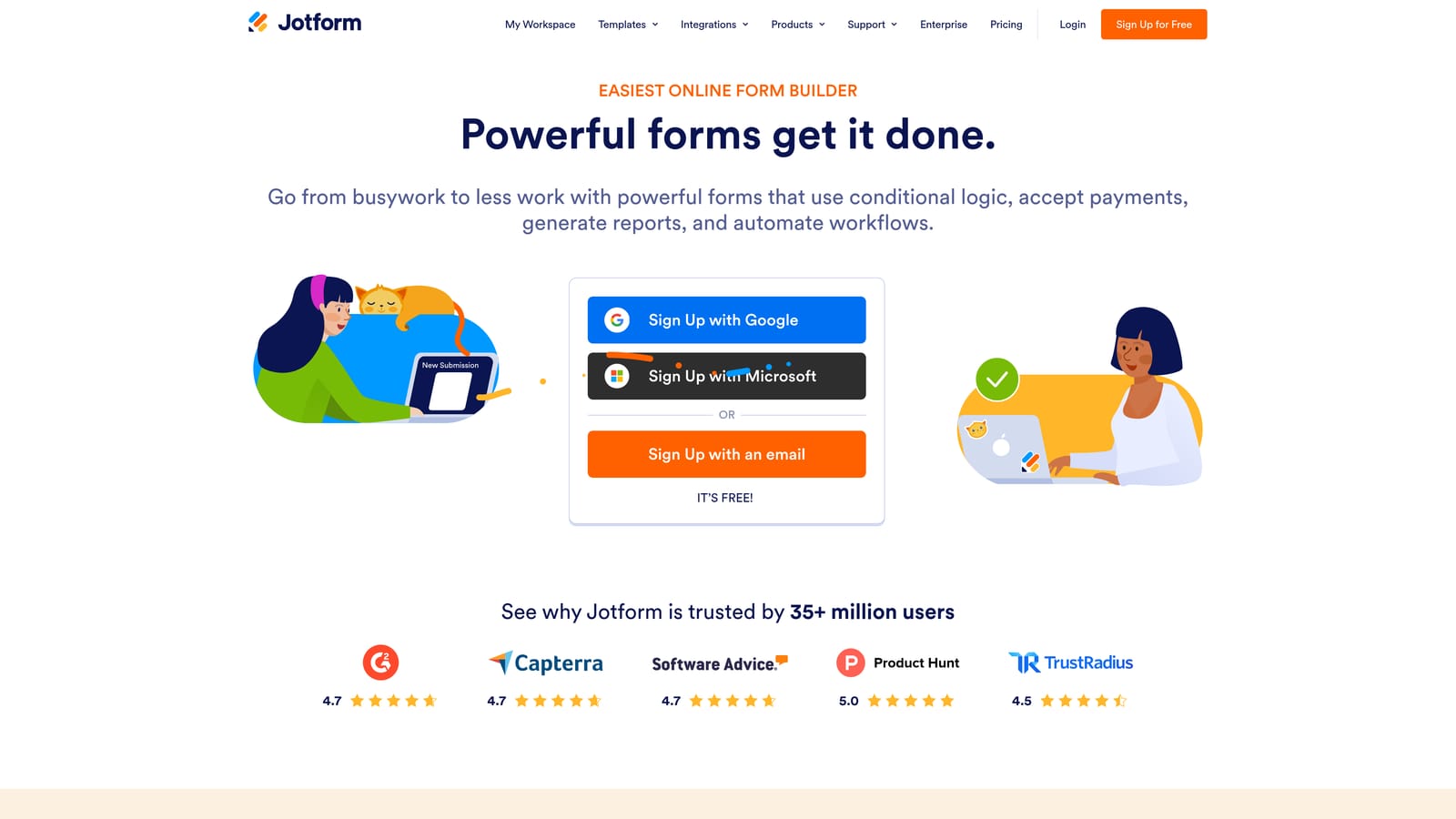
Jotform is one of the most feature-rich form builders available, with conditional logic that supports genuinely complex rule structures.
Where This Tool Shines
If you need AND/OR operators, multi-condition rules, and the ability to show or hide entire sections based on combinations of responses, Jotform delivers. It's the kind of logic depth that operations teams and agencies reach for when other tools hit a ceiling.
The template library is enormous, which accelerates setup for common use cases. And the integration library covers everything from payment processors to major CRMs, so the data collected through your branching logic can flow into almost any downstream system.
Key Features
Multi-Condition Rules: AND/OR operators let you build complex branching logic based on combinations of field values.
Show/Hide at Any Level: Apply logic to individual fields, entire pages, or full form sections.
10,000+ Templates: A large library of starting points, including logic-driven workflow templates.
Extensive Integration Library: Connects with payment processors, CRMs, project management tools, and more.
Best For
Operations teams, HR departments, and agencies managing complex data collection workflows where multi-condition logic is a hard requirement rather than a nice-to-have.
Pricing
Free tier available. Paid plans start at approximately $34/month, scaling with submission volume and storage.
4. Tally
Best for: Startups and indie teams that want conditional logic without paying for it.
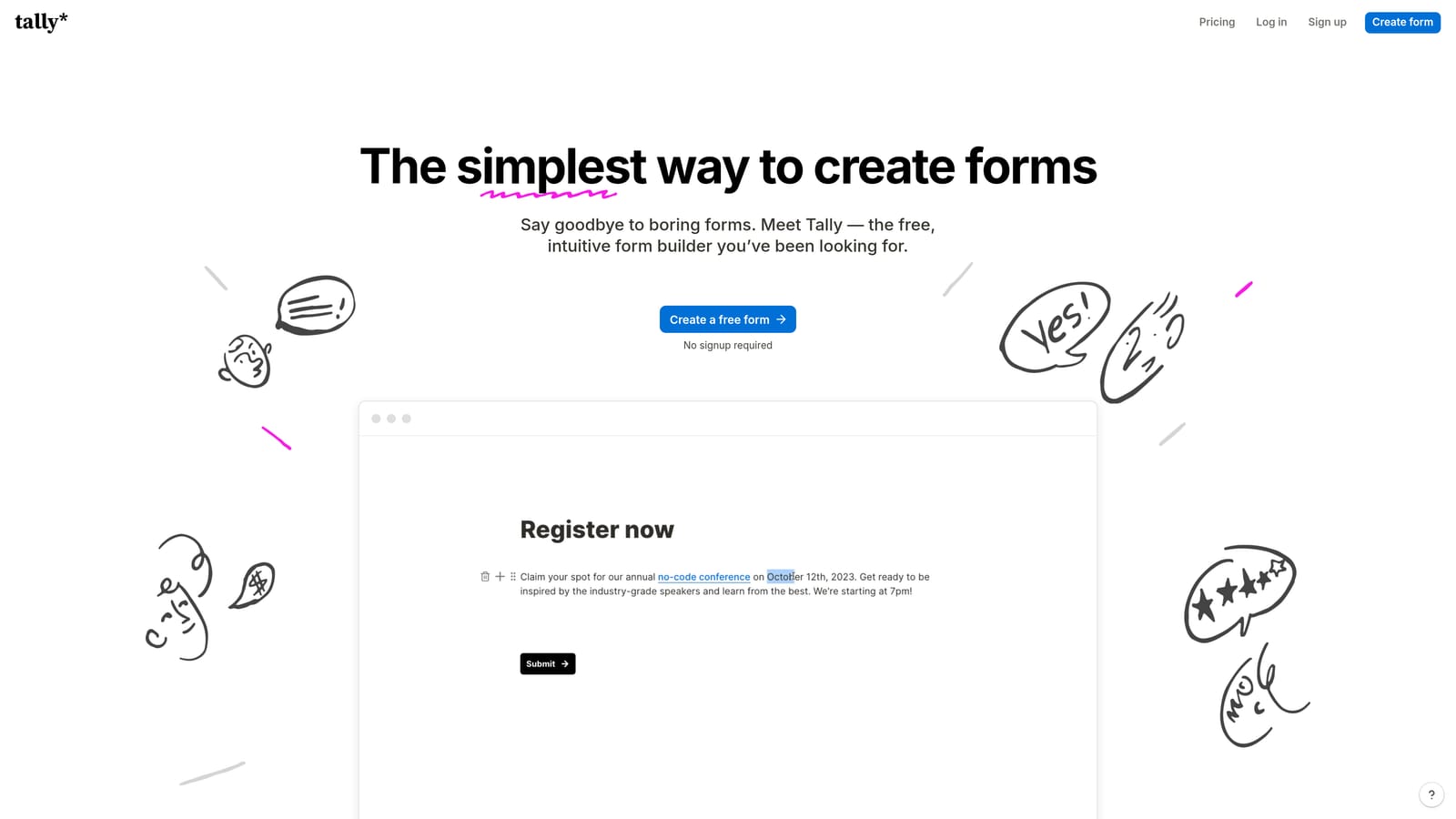
Tally is a Notion-inspired form builder where conditional logic is available on the free plan — a genuine rarity in this space.
Where This Tool Shines
Tally's free tier is unusually generous. Most form builders gate conditional logic behind paid plans, but Tally includes show/hide logic and jump-to-page branching at no cost. For early-stage teams that need smart forms without a monthly bill, that's a real differentiator.
The Notion-style block editor also makes form building fast. If your team already lives in Notion, the mental model transfers immediately. Tally embeds cleanly into Notion pages, websites, and apps, which makes it popular with product-led teams building lightweight onboarding or feedback flows.
Key Features
Free Conditional Logic: Show/hide fields and jump-to-page branching included on the free plan.
Block-Based Editor: Notion-style builder that's fast to use and easy to learn.
Clean Embeds: Integrates smoothly into Notion, websites, and web apps without friction.
Lightweight and Fast: No bloat; forms load quickly and the builder stays out of your way.
Best For
Early-stage startups, indie hackers, and product teams that need conditional logic on a tight budget. Also a good fit for teams already embedded in the Notion ecosystem.
Pricing
Free plan includes conditional logic. Tally Pro starts at approximately $29/month for advanced features and higher submission limits.
5. Paperform
Best for: Teams that want design flexibility and multi-condition logic in the same tool.
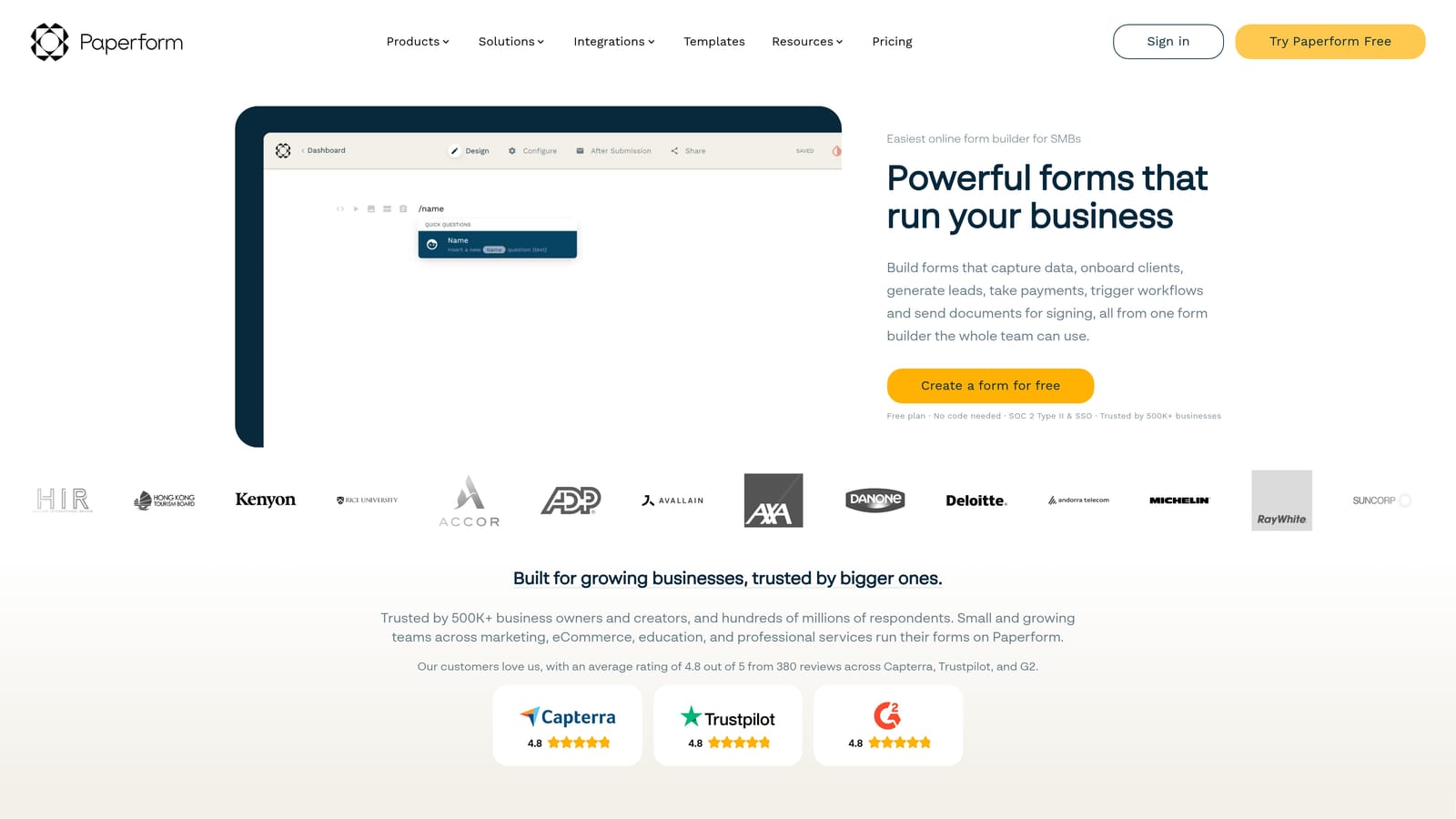
Paperform is a design-first form builder that combines freeform page-builder aesthetics with robust conditional logic capabilities.
Where This Tool Shines
Paperform sits in an interesting position: it gives you the design freedom of a landing page builder alongside the logic depth of a proper form tool. You can mix rich text, images, and media with form fields on the same page, then apply multi-condition logic across any of it.
Calculation fields are a standout feature. You can use them to compute values mid-form and then feed those computed values into conditional logic rules — useful for pricing configurators, eligibility screeners, and quote generators where the branching depends on a calculated result rather than a raw field value.
Key Features
Multi-Condition Logic: Apply branching rules across individual fields and entire form sections.
Freeform Editor: Mix rich text, images, and media alongside form fields for a landing page-style experience.
Calculation Fields: Compute values mid-form and use them as inputs for conditional logic rules.
Integrations: Connects with Zapier, Stripe, and major marketing platforms.
Best For
Teams that need both design control and logic depth — particularly useful for pricing configurators, eligibility screeners, or any form where the visual presentation is part of the conversion strategy.
Pricing
Paid plans only; starts at approximately $24/month. No meaningful free tier is available.
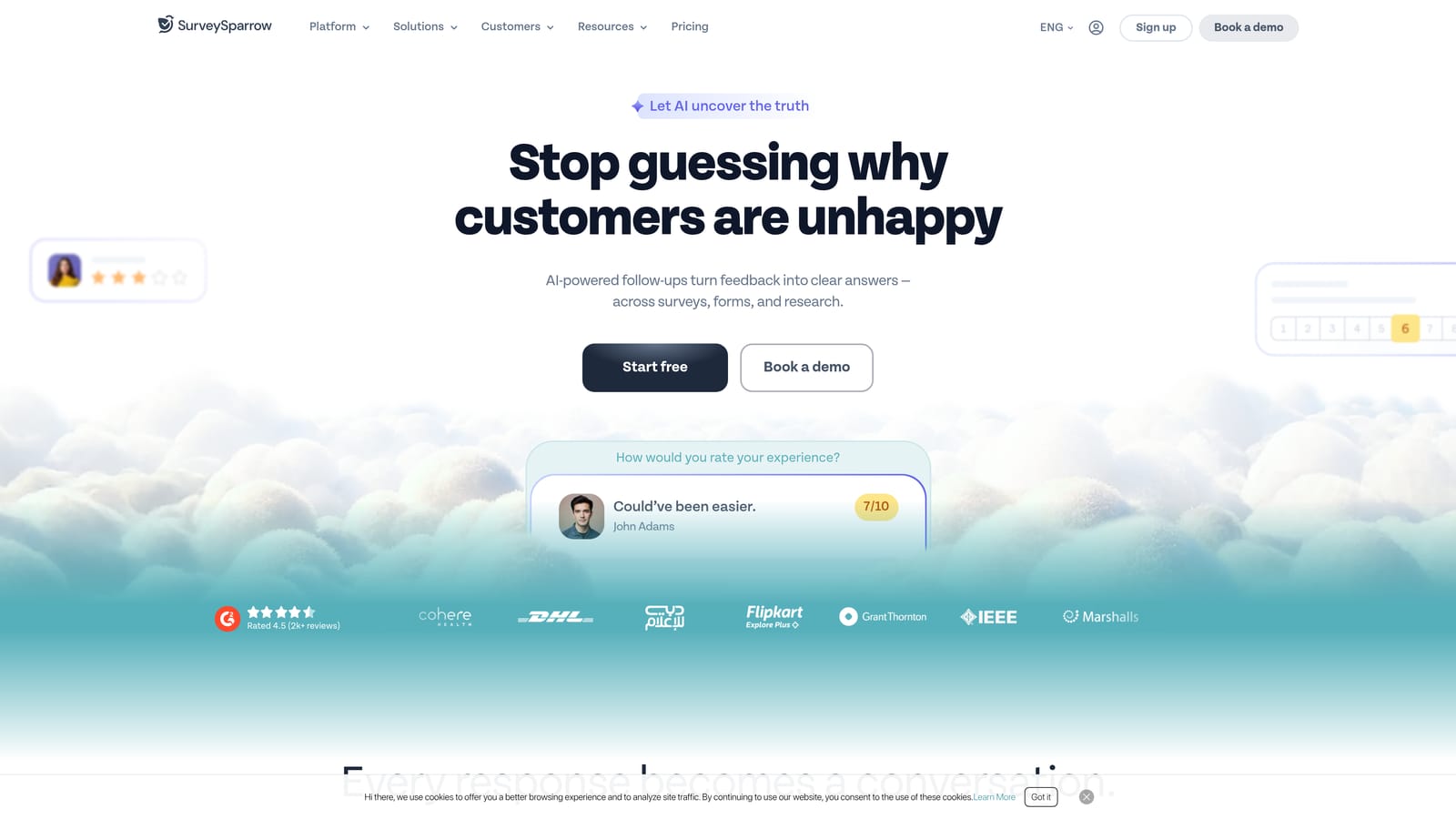
6. SurveySparrow
Best for: Customer success and HR teams running recurring feedback programs with skip logic.
SurveySparrow is a conversational survey platform with skip logic optimized for feedback collection and recurring survey programs.
Where This Tool Shines
SurveySparrow's strongest differentiator is its recurring survey automation. You can set up NPS, CSAT, or employee feedback surveys to run on a schedule, with skip logic ensuring each respondent only sees questions relevant to their previous answers. Over time, the built-in reporting surfaces trends rather than just snapshots.
The platform supports both chat-style and classic survey formats, and skip logic works across both. For teams running ongoing feedback programs, the combination of branching logic and automated recurrence reduces the manual work of managing survey cycles significantly.
Key Features
Skip Logic Across Formats: Conditional branching works in both chat-style and traditional survey layouts.
Recurring Survey Automation: Schedule NPS, CSAT, and employee feedback surveys to run automatically on a defined cadence.
Question Piping: Pull earlier answers into later questions for personalized survey paths.
Trend Reporting: Built-in analytics designed for recurring data, showing how responses shift over time.
Best For
Customer success teams managing NPS and CSAT programs, HR teams running employee engagement surveys, and any team that needs skip logic paired with recurring automation rather than one-off forms.
Pricing
Free trial available. Paid plans start at approximately $19/month, scaling with responses and features.
7. Fillout
Best for: Product and ops teams that need visual branching logic with native database integrations.
Fillout is a modern form builder with a visual branching editor and native integrations for Notion, Airtable, and Supabase.

Where This Tool Shines
Fillout's native database integrations set it apart from most form builders. Rather than pushing data through Zapier, you can connect directly to Notion databases, Airtable bases, or Supabase tables and have form responses write directly to those sources. Combined with multi-path conditional logic, this makes Fillout particularly useful for product and ops teams building internal tools and workflows on top of existing databases.
Smart end-page routing is another useful feature: you can send respondents to different confirmation pages based on the path they took through the form, which enables lightweight lead segmentation without additional automation setup.
Key Features
Visual Branching Editor: Multi-path conditional logic built in a clear, visual interface.
Native Database Integrations: Direct connections to Notion, Airtable, and Supabase without middleware.
Smart End-Page Routing: Route respondents to different confirmation pages based on their form path.
Scheduling, Payments, and File Uploads: Extended functionality alongside conditional logic in a single builder.
Best For
Product teams and operations managers who work heavily in Notion or Airtable and want form logic that connects directly to their existing data infrastructure.
Pricing
Free tier available. Paid plans start at approximately $15/month, with advanced logic and integrations unlocked on higher tiers.
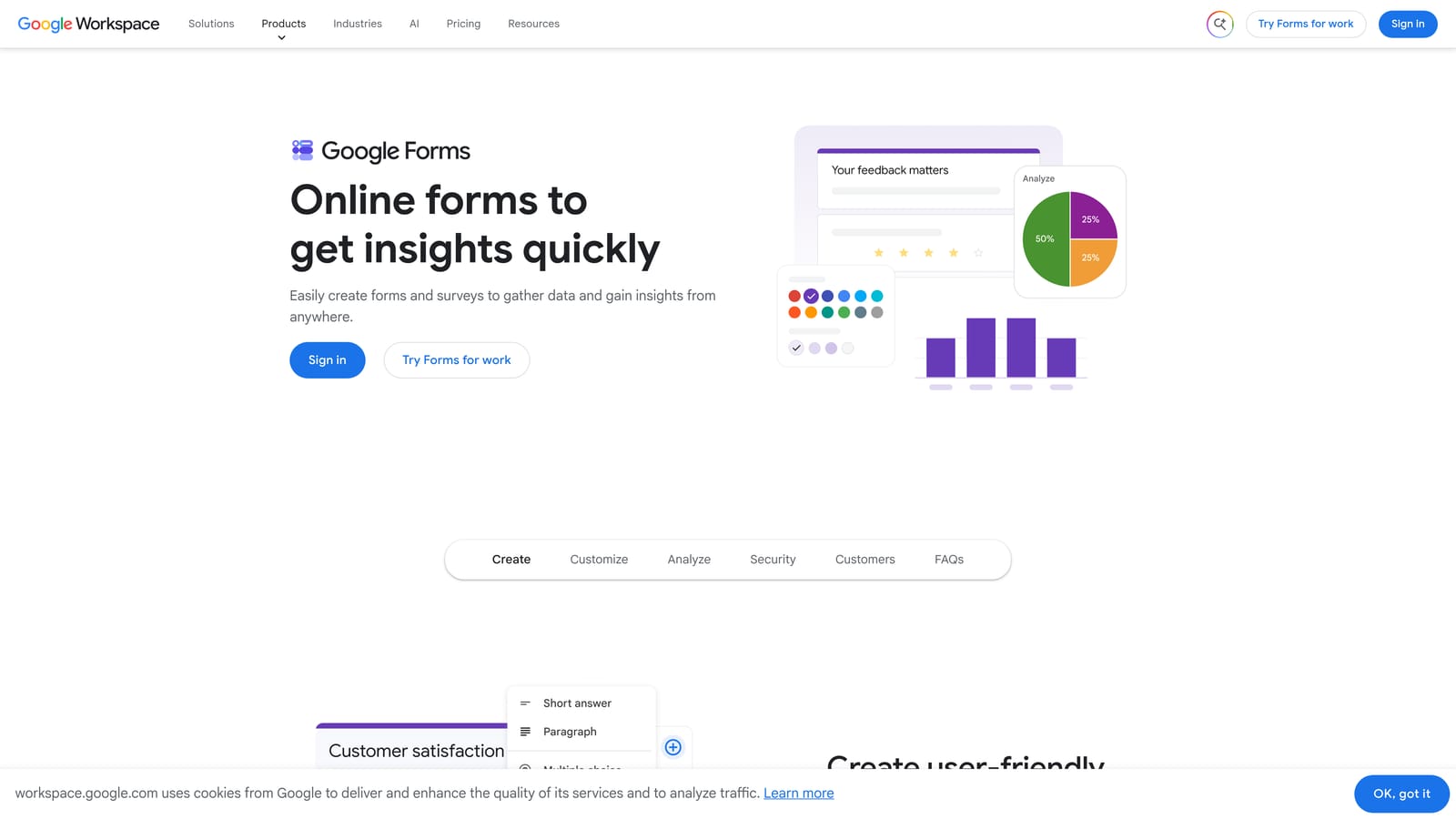
8. Google Forms
Best for: Internal teams that need basic section branching at zero cost.
Google Forms is a free, widely accessible form tool with simple section-based skip logic built in.
Where This Tool Shines
Google Forms is not trying to compete with the tools above on logic depth or design. What it offers is zero cost, zero setup friction, and immediate familiarity for anyone already in Google Workspace. For internal surveys, simple intake forms, and quick data collection where the audience is internal or low-stakes, that's often enough.
The Google Sheets integration is seamless: responses populate a spreadsheet automatically, which makes basic analysis straightforward without any additional tooling. If your branching needs are simple and your audience is internal, Google Forms is hard to argue against on a cost basis.
Key Features
Section Branching: Route respondents to different sections based on multiple-choice answers — the primary skip logic mechanism.
Completely Free: No subscription required; available to anyone with a Google account.
Google Sheets Integration: Responses sync automatically to a linked spreadsheet for instant analysis.
Google Workspace Collaboration: Easy sharing and co-editing within existing Google Workspace environments.
Best For
Internal teams, educators, and anyone who needs basic branching logic for simple, low-volume use cases where design, lead qualification, and advanced automation are not requirements.
Pricing
Free with a Google account. No paid tiers.
9. Formstack
Best for: Enterprise and regulated-industry teams that need advanced logic with compliance and document workflows.
Formstack is an enterprise form and workflow platform with advanced conditional logic, HIPAA compliance, and integrated document generation.
Where This Tool Shines
Formstack operates at a different level of organizational complexity than most tools on this list. Conditional logic here isn't just about showing or hiding questions — it can trigger workflow routing, approval chains, and document generation based on the path a respondent takes. For enterprise teams where a form submission kicks off a multi-step internal process, that depth is genuinely useful.
HIPAA compliance is a hard requirement in healthcare and certain financial verticals, and Formstack is one of the few form platforms that meets it. If your team collects sensitive data and needs both advanced branching logic and compliance coverage, Formstack is one of a small number of options that can deliver both.
Key Features
Advanced Conditional Logic with Workflow Routing: Branching logic can trigger approval chains and multi-step internal workflows, not just field visibility.
HIPAA Compliance: Meets HIPAA requirements for healthcare and regulated industries handling sensitive data.
Forms, Documents, and E-Signatures: Combines three distinct workflow tools in a single platform.
Salesforce-Native Integration: Deep CRM integration designed for enterprise teams running sales and service workflows in Salesforce.
Best For
Enterprise teams, healthcare organizations, and regulated-industry companies that need advanced conditional logic alongside compliance, document generation, and deep CRM integration. The price point reflects the enterprise feature set.
Pricing
Starts at approximately $83/month. Enterprise pricing is available for larger teams with more complex requirements.
Which Skip Logic Form Builder Is Right for You?
The right tool depends less on feature lists and more on what happens after someone submits your form. Here's a quick reference to help you match the tool to the use case.
For AI-powered lead qualification: Orbit AI is the strongest option if you want skip logic connected to lead scoring, native automation, and path-level analytics in a single platform. It's built specifically for high-growth SaaS teams where the form is the first step in a qualification workflow, not just a data collection exercise.
For polished, conversational lead gen: Typeform is the go-to for marketing teams that want a beautiful respondent experience with visual logic that's easy to configure.
For complex, multi-condition rules: Jotform gives you the most granular logic control, making it the right call for operations, HR, and agency workflows with genuinely complex branching requirements.
For free conditional logic: Tally is the standout option if budget is a constraint. No other tool on this list includes skip logic on a free plan with as much usability.
For enterprise and compliance use cases: Formstack is the appropriate choice when HIPAA compliance, workflow routing, and document generation are non-negotiable requirements.
If you're building forms to generate and qualify leads for a growing SaaS business, the gap between a basic form tool and an AI-powered platform like Orbit AI becomes clear quickly. Transform your lead generation with AI-powered forms that qualify prospects automatically while delivering the modern, conversion-optimized experience your high-growth team needs. Start building free forms today and see how intelligent form design can elevate your conversion strategy.


