

Most survey tools collect responses. The best ones tell you which respondents are actually worth your sales team's time. If you're running lead generation campaigns, gating content, or qualifying inbound interest, a generic survey tool creates a bottleneck: your team ends up manually sorting through submissions to find the real opportunities.
Survey tools with built-in lead qualification change that equation. They use conditional logic, scoring, and smart routing to automatically separate high-intent prospects from casual browsers, so your team focuses energy where it counts.
This guide covers six tools that handle both survey collection and lead qualification, ranging from AI-native platforms built for conversion to flexible form builders with qualification add-ons. Whether you're a growth team running outbound sequences, a SaaS company qualifying trial signups, or an agency managing multiple client funnels, there's a fit here for your workflow.
We've evaluated each tool on qualification depth, form UX, automation capabilities, and pricing transparency.
1. Orbit AI
Best for: High-growth SaaS and B2B teams that need AI-driven lead scoring without manual rule setup
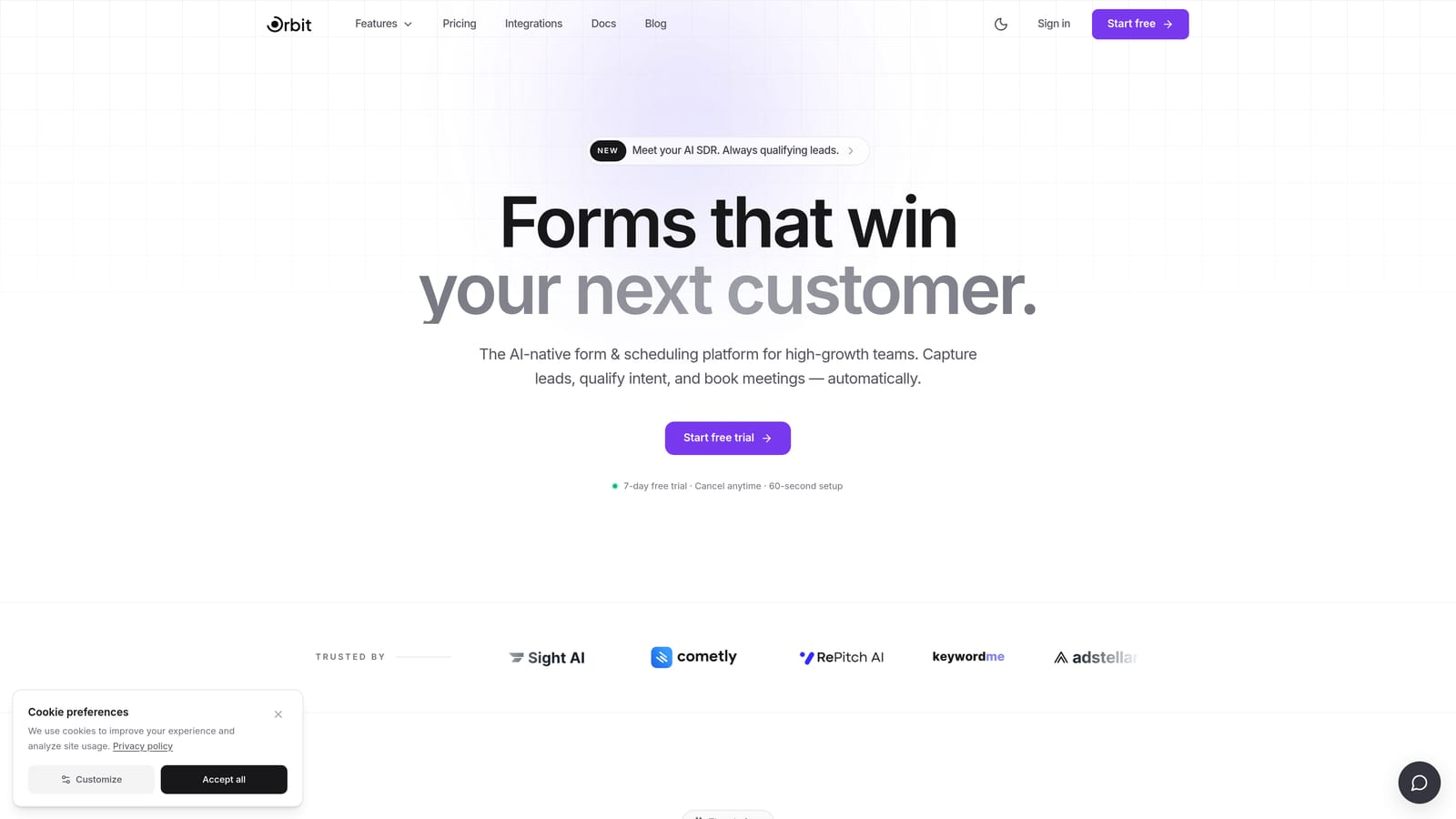
Orbit AI is an AI-powered form and survey platform built specifically for lead qualification and conversion optimization.
Where This Tool Shines
What separates Orbit AI from the rest of this list is where the intelligence sits. Rather than requiring you to manually configure scoring rules or build complex branching trees, the platform uses AI to handle qualification logic automatically. You define what a good lead looks like, and the system scores and routes respondents accordingly.
The form design is equally intentional. Orbit AI is built for high completion rates, with a clean, minimal UI that removes friction at every step. For teams where form performance directly impacts pipeline, that design-first approach matters as much as the qualification logic behind it.
Key Features
AI-Powered Lead Qualification: Automatically scores and routes leads based on responses, eliminating the need for manual triage or complex rule configuration.
Conversion-Optimized Form Design: Modern, minimal templates built specifically to maximize completion rates across device types.
Conditional Logic with Intelligent Branching: Respondents see personalized question paths based on their answers, keeping forms relevant and reducing drop-off.
Purpose-Built for B2B and SaaS Workflows: The platform is designed around the specific needs of high-growth teams qualifying inbound leads, trial signups, and gated content requests.
Clean, Performance-Focused UI: Less configuration overhead means faster deployment and less time spent maintaining logic trees.
Best For
Orbit AI is the strongest fit for SaaS companies, growth marketers, and B2B teams that need qualification to happen automatically at scale. If your current process involves someone manually reviewing form submissions to decide who gets a sales follow-up, this platform is built to solve exactly that problem.
Pricing
Check orbitforms.ai for current plans and free trial availability. A free starting option is available for teams that want to test the platform before committing.
2. Typeform
Best for: Teams prioritizing high engagement and brand-consistent survey experiences
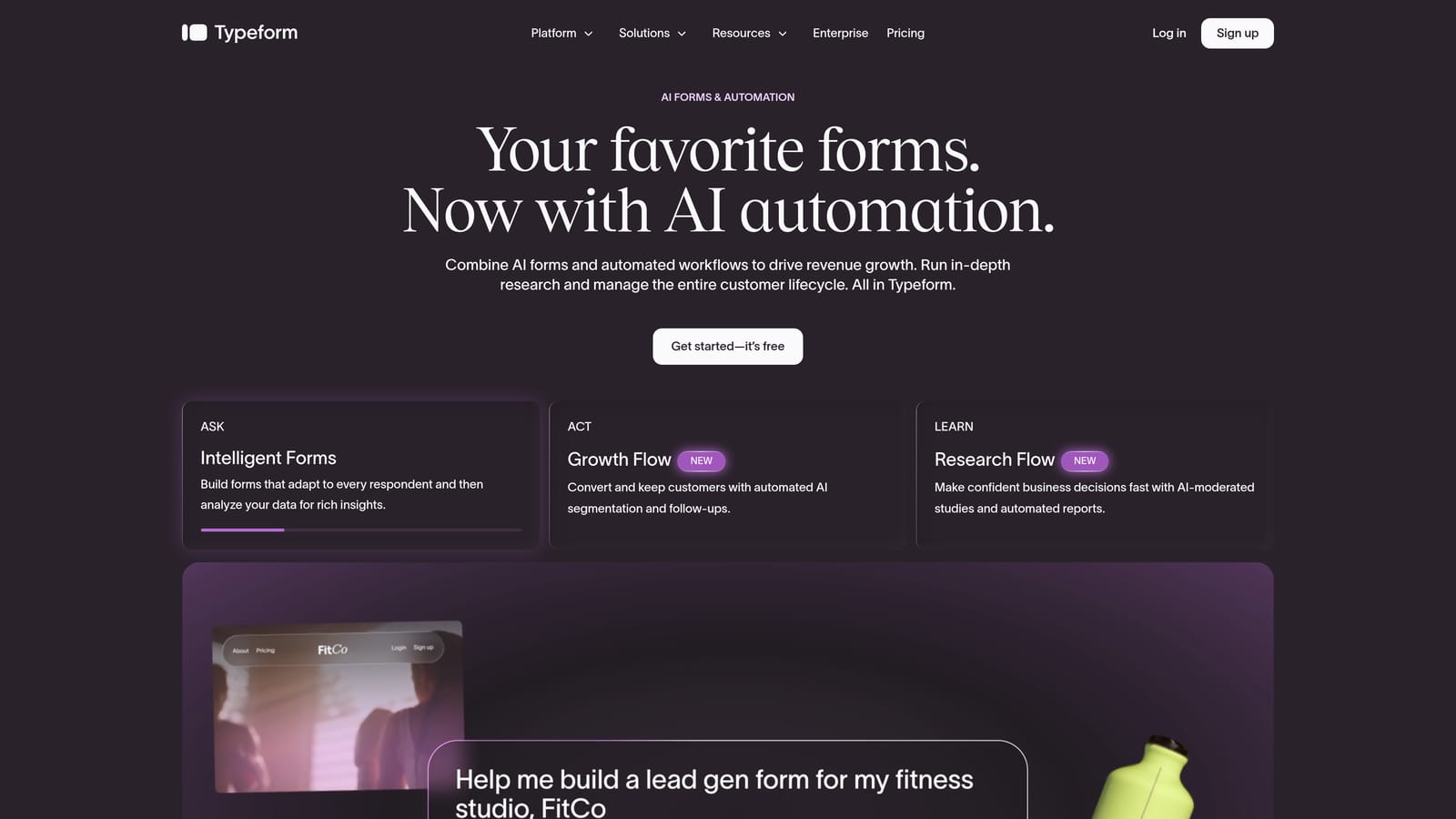
Typeform is a conversational survey platform known for its one-question-at-a-time format that drives strong completion rates.
Where This Tool Shines
Typeform's core strength is the respondent experience. The conversational format feels more like a dialogue than a form, which tends to reduce drop-off on longer qualification flows. For teams where brand perception matters and where a polished survey experience reflects on the company, Typeform delivers.
On the qualification side, Typeform supports logic jumps and conditional branching that let you route respondents based on their answers. This works well for basic qualification routing, such as sending enterprise prospects down one path and SMB leads down another. Where it falls short is deeper lead scoring: Typeform is better at routing than at assigning weighted scores to leads automatically.
Key Features
Conversational One-Question Format: Presents questions sequentially to keep respondents engaged and reduce form fatigue on longer surveys.
Logic Jumps and Conditional Branching: Route respondents to different question sets or outcomes based on their answers.
Brand Customization: Strong control over fonts, colors, and imagery for teams that need on-brand survey experiences.
Native CRM Integrations: Connects with HubSpot, Salesforce, and Zapier for passing qualified responses into your existing martech stack.
Embed Options: Flexible embed formats for landing pages, popups, and inline placements.
Best For
Typeform is a solid choice for marketing teams that want visually polished surveys with basic qualification routing. It's less suited for teams that need automatic lead scoring or complex multi-condition qualification logic. If you're evaluating alternatives, our Typeform alternatives guide covers additional options worth considering.
Pricing
A free tier is available with limited responses and features. Paid plans start at a monthly fee and scale with usage. Verify current pricing at typeform.com.
3. Jotform
Best for: Teams that need flexible, template-rich forms with multi-step approval workflows
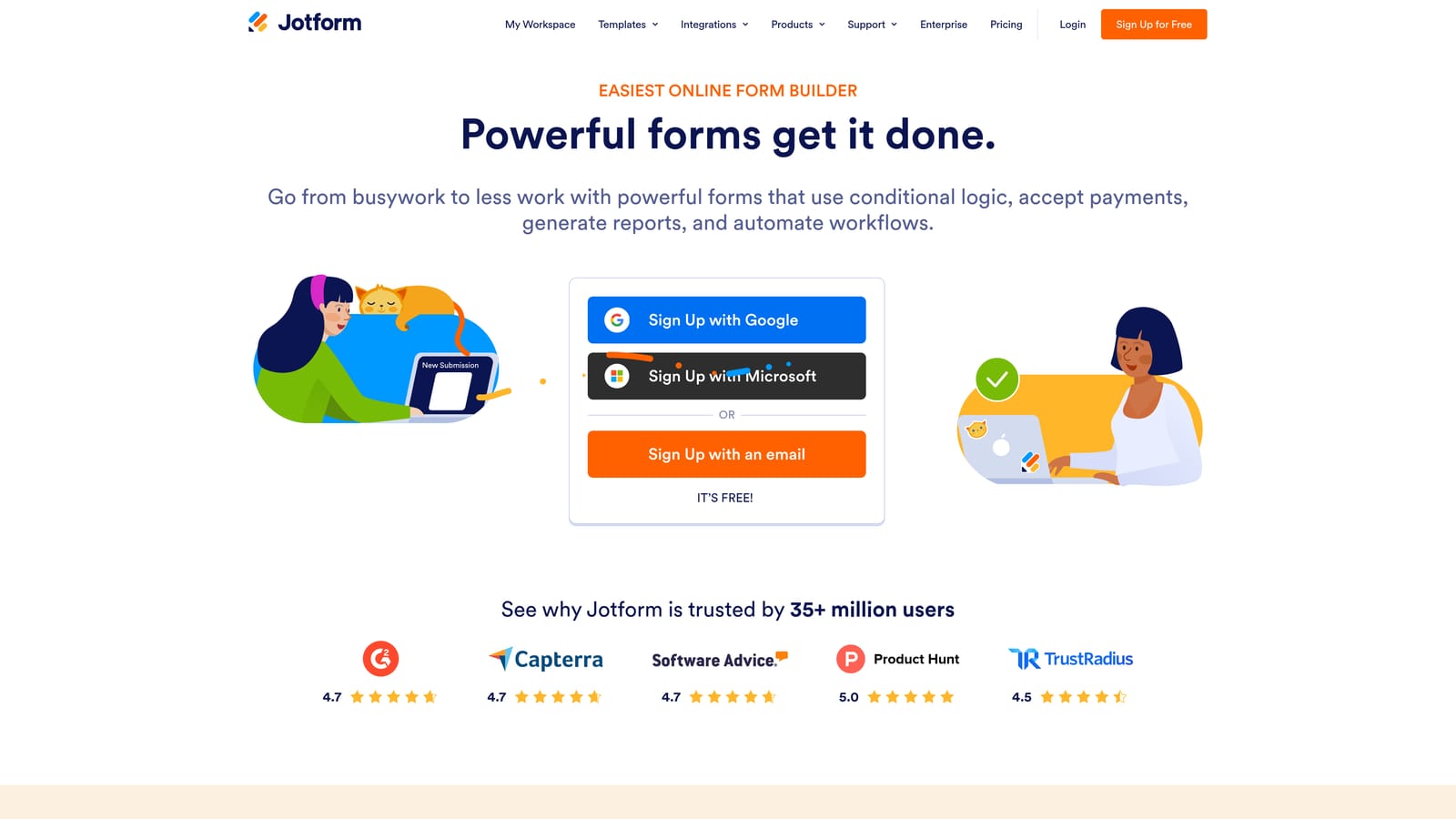
Jotform is a highly flexible drag-and-drop form builder with robust conditional logic, approval workflows, and a wide integration library suited to complex qualification processes.
Where This Tool Shines
Jotform's depth is its defining characteristic. With over 10,000 templates and conditional logic available across most plan tiers, it gives teams a lot of raw material to work with. For organizations that need multi-step qualification workflows, such as an initial form that triggers an internal review before a lead is passed to sales, Jotform's approval workflow functionality covers that use case well.
The trade-off is setup time. Jotform offers a lot of flexibility, but that flexibility comes with configuration overhead. Teams that want a quick deployment with minimal technical work may find the platform more involved than expected. For teams with specific, complex requirements and the capacity to configure them, it's a capable tool.
Key Features
Robust Conditional Logic: Available across most plan tiers, supporting branching, show/hide fields, and routing based on respondent input.
Approval Workflows: Multi-step review processes that let internal teams evaluate and route leads before they reach sales.
10,000+ Templates: Broad library for fast starting points across industries and use cases.
Wide Integration Library: Connects with major CRMs, payment processors, and project management tools for end-to-end data flow.
Submission Management: Built-in tools for viewing, filtering, and managing form responses within the platform.
Best For
Jotform works well for operations teams, agencies, and organizations with complex multi-step qualification requirements. It's a strong fit when you need approval workflows or when your qualification process involves internal review steps before a lead is actioned.
Pricing
A free tier is available with limited monthly submissions. Paid plans scale with submission volume and storage needs. Verify current pricing at jotform.com.
4. Paperform
Best for: Teams building standalone qualification pages where context and copy are part of the conversion strategy
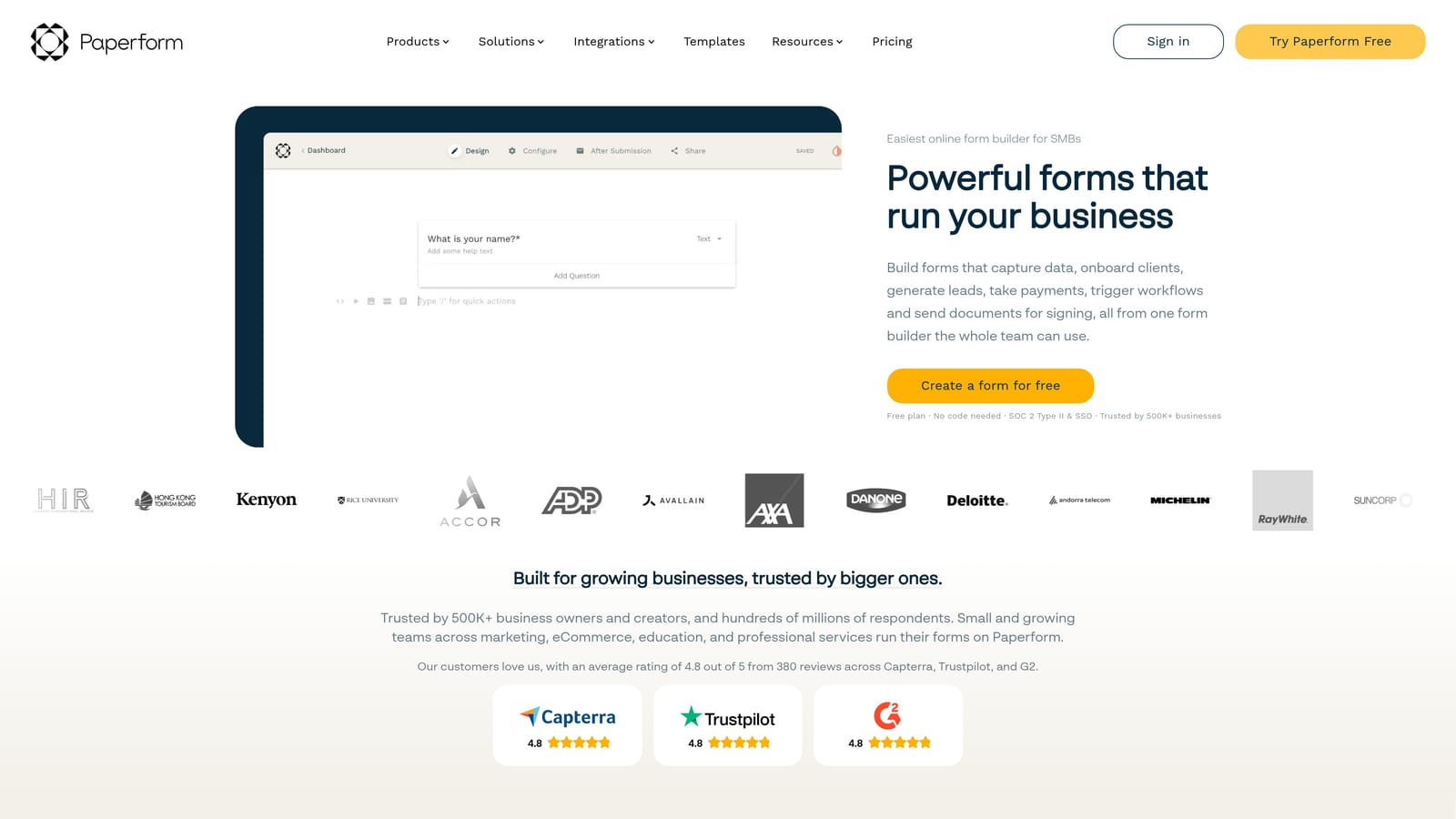
Paperform is a hybrid form and landing page builder that combines rich content with conditional logic, making it well-suited for standalone lead qualification pages.
Where This Tool Shines
Paperform occupies a unique position in this category. Rather than presenting a form in isolation, it lets you embed forms within rich content: text, images, video, and formatted copy all live alongside the questions. For qualification flows where context helps respondents self-select accurately, this format is genuinely useful. Think of it as a landing page and a qualification survey rolled into one.
The calculation fields are worth noting for teams interested in basic lead scoring. You can assign values to answer options and use calculations to generate a score that determines routing or triggers different outcomes. It's not AI-driven scoring, but it gives you more scoring capability than most form builders at this price point.
Key Features
Hybrid Form and Landing Page Format: Embed rich content alongside form questions for context-rich qualification experiences.
Conditional Logic: Branching and routing based on respondent answers for personalized qualification paths.
Calculation Fields: Assign values to answers and generate scores, enabling basic lead scoring setups without external tools.
Rich Media Embedding: Include video, images, and formatted text to provide context that improves answer accuracy and self-qualification.
Standalone Page Publishing: Publish qualification forms as full pages without needing a separate website or landing page tool.
Best For
Paperform is a strong fit for content-driven qualification flows where copy and context are part of the conversion strategy. It's less suited for high-volume, automated lead scoring at scale, where an AI-native platform like Orbit AI would be a better match.
Pricing
No permanent free tier is available, but a trial lets you test the platform before purchasing. Verify current plan pricing at paperform.co.
5. Tally
Best for: Startups and lean teams with straightforward qualification needs and tight budgets
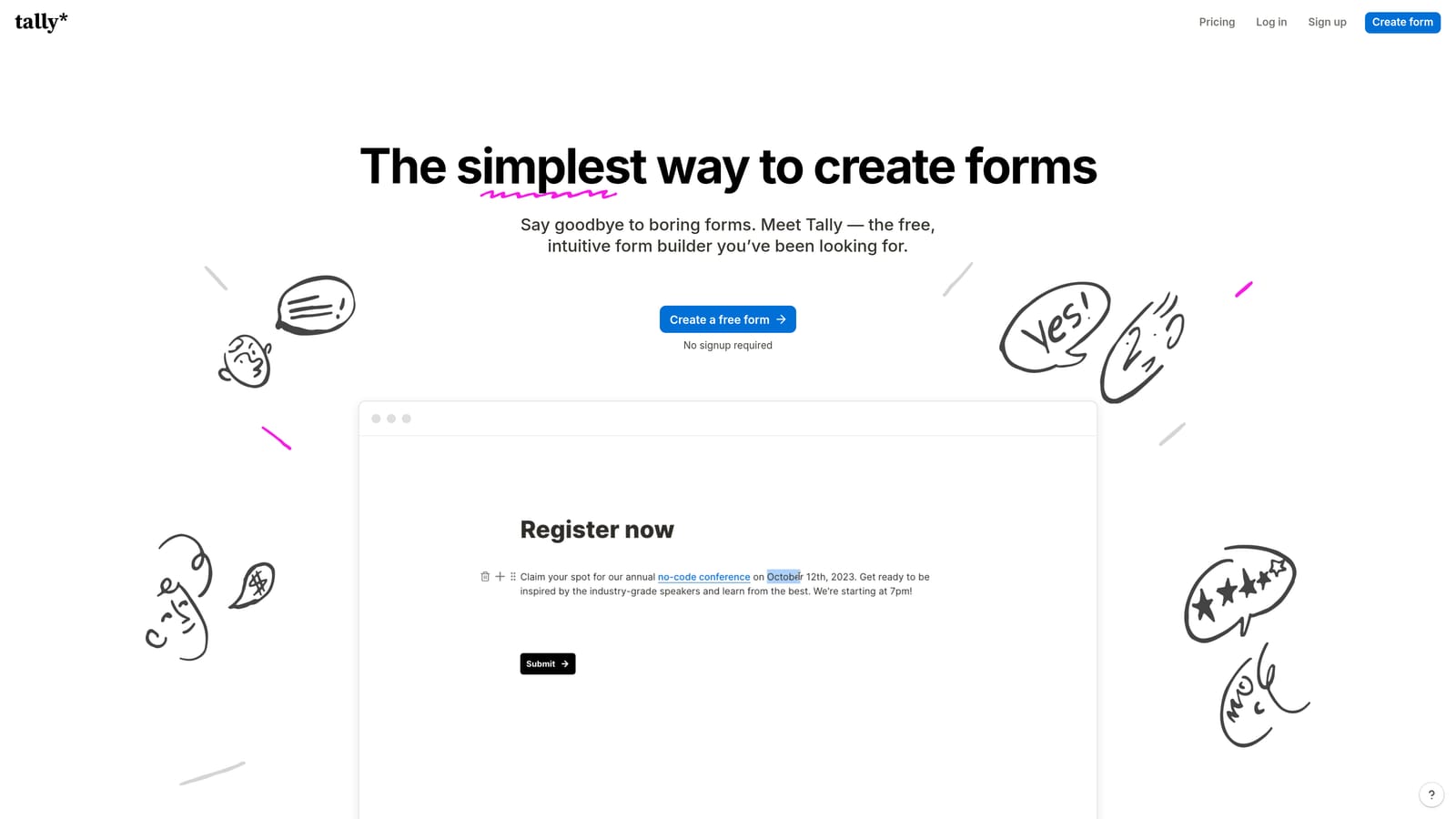
Tally is a lightweight, Notion-style form builder with conditional logic included on the free plan, making it an accessible entry point for basic lead qualification.
Where This Tool Shines
Tally's standout quality is what it gives you for free. Conditional logic on the free plan is genuinely uncommon in this category, and for startups or early-stage teams that need basic qualification routing without a monthly commitment, that matters. The Notion-like editor also makes form creation fast and intuitive, with minimal learning curve for teams already familiar with block-based editors.
The limitations become apparent when qualification requirements grow more complex. Tally doesn't offer AI-driven scoring or advanced routing logic, so it works best for straightforward qualification flows: routing leads by budget range, company size, or timeline. For teams that need that level of simplicity, it's an excellent value. For teams that need more depth, it will hit a ceiling quickly.
Key Features
Conditional Logic on Free Plan: Route respondents based on answers without needing a paid subscription, a rare offering in this category.
Notion-Style Editor: Block-based form creation that's fast and intuitive for teams already comfortable with modern productivity tools.
Basic Qualification Routing: Support for routing by budget, timeline, company size, and other common qualification criteria.
Zapier and Native Integrations: Connect qualified responses to CRM tools and downstream workflows without manual data transfer.
Unlimited Forms on Free Plan: Build and publish multiple qualification forms without hitting a form count limit.
Best For
Tally is the right choice for early-stage startups, solo founders, and lean teams that need simple lead routing without a budget for paid tools. It's not the right fit for teams that need automated scoring, AI qualification, or complex multi-condition routing.
Pricing
A generous free tier covers most basic needs. A Pro plan is available for teams that need additional features and branding control. Verify current pricing at tally.so.
6. Formstack
Best for: Enterprise teams with complex qualification workflows, compliance requirements, and deep CRM dependencies
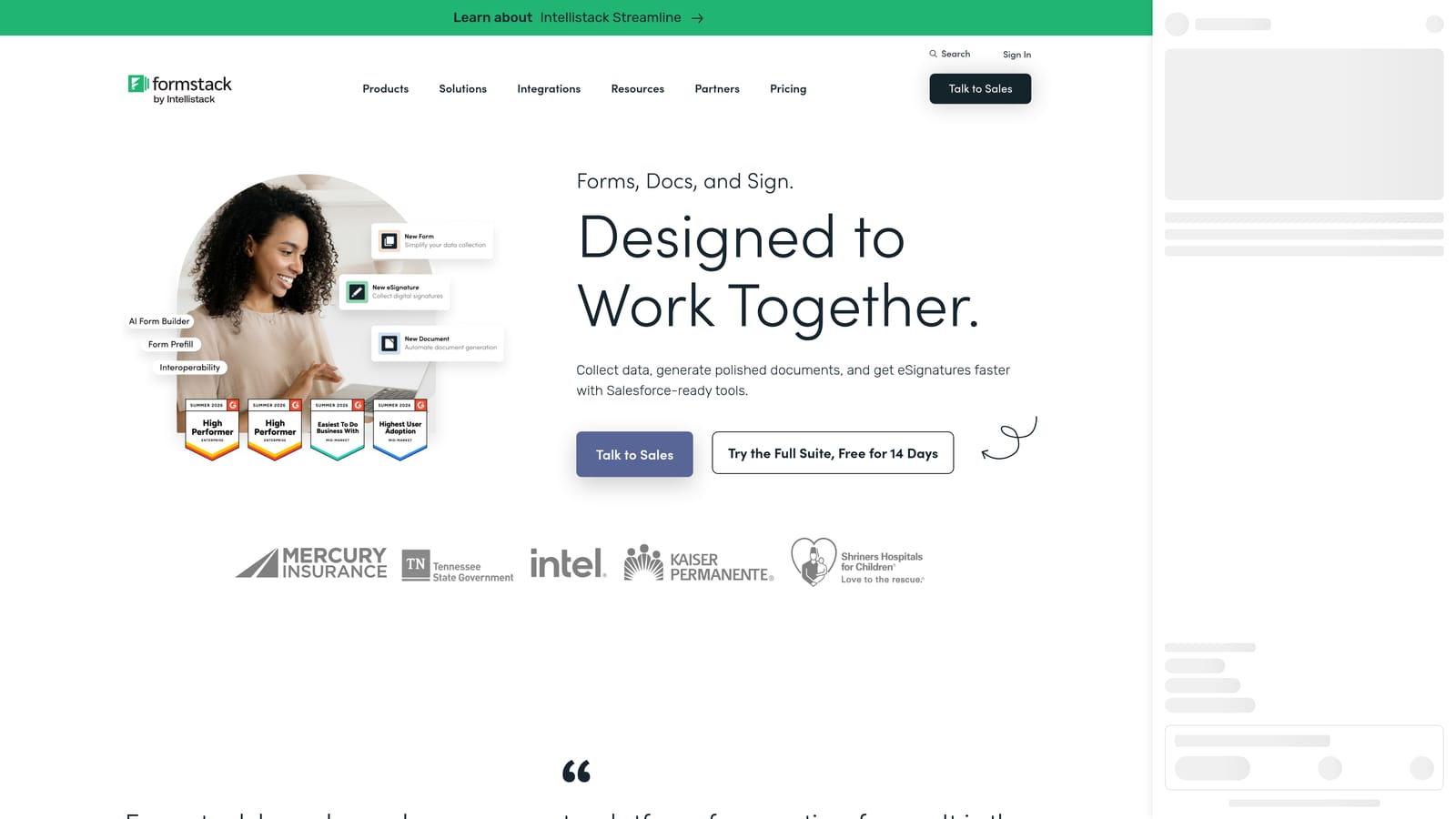
Formstack is an enterprise-grade form and workflow platform with deep CRM integrations, compliance features, and advanced data routing built for large organizations.
Where This Tool Shines
Formstack is built for environments where qualification is one piece of a larger, more complex workflow. Its native Salesforce integration is a standout: data flows directly into Salesforce records without middleware, which matters for enterprise sales teams that live in their CRM. Compliance features including HIPAA and GDPR support make it one of the few tools in this category that regulated industries can deploy with confidence.
The platform also extends beyond forms. Formstack's Documents and Sign products can layer onto qualification workflows, taking a lead from initial form submission through document generation and signature collection within a single platform. For enterprise teams managing high-stakes qualification and onboarding processes, that end-to-end capability is meaningful.
Key Features
Native Salesforce Integration: Direct CRM connection for qualified lead data without relying on Zapier or manual exports.
HIPAA and GDPR Compliance: Built-in compliance features for healthcare, finance, and other regulated industries that need to qualify leads within strict data governance frameworks.
Advanced Workflow Routing: Multi-condition routing and approval workflows designed for enterprise qualification processes with multiple stakeholders.
Forms, Documents, and Sign: Combined products that support lead-to-contract workflows within a single platform ecosystem.
Enterprise Security Controls: User permissions, audit logs, and access controls suited to large team environments.
Best For
Formstack is the right fit for enterprise organizations, regulated industries, and large sales teams with Salesforce-centric workflows. It's significantly over-engineered for startups or SMBs, and the pricing reflects that enterprise positioning.
Pricing
Enterprise pricing applies. Contact the Formstack sales team or verify current plan options at formstack.com.
Which Tool Is Right for Your Team?
The right survey tool for lead qualification depends almost entirely on where your team sits on two axes: qualification complexity and available setup time.
If you're a high-growth SaaS or B2B team that needs qualification to happen automatically without manual rule configuration, Orbit AI is the purpose-built choice. The AI-driven scoring and routing removes the biggest bottleneck in most lead gen workflows, and the conversion-optimized design means you're not sacrificing form performance to get that intelligence.
For teams that prioritize respondent experience and brand consistency above all else, Typeform delivers a polished conversational format with enough conditional logic for basic routing. If you need multi-step approval workflows and maximum template flexibility, Jotform covers that ground well, though expect more configuration time upfront.
Paperform is the right call when your qualification page needs to do double duty as a content experience. Tally is the honest answer for early-stage teams that need free conditional logic and simple routing without complexity. And Formstack is the enterprise choice when Salesforce integration and compliance are non-negotiable requirements.
If you're still building out your qualification criteria, our guides on how to qualify leads with forms and sales qualified lead criteria are useful starting points before you commit to a platform.
For most growth teams, the fastest path to better lead quality is a platform that handles qualification logic without adding operational overhead. Start building free forms today and see how AI-powered qualification can replace manual triage with an automated system that works while your team focuses on closing.


