

Web forms are often the first real interaction a prospect has with your brand, and a poorly designed one can kill conversions before they even start. Whether you're capturing leads, qualifying prospects, or collecting customer data, the form design software you choose shapes the entire experience.
The market has matured significantly. Today's best tools compete on visual design quality, conditional logic, and how well they route data downstream into your CRM or sales workflow. For high-growth B2B teams especially, the question is no longer just "can this form collect data?" but "can this form help us qualify leads before they hit our pipeline?"
This guide covers the top web form design software tools available in 2026, evaluated on design flexibility, conversion features, ease of use, and overall value. We've included options for teams at every stage, from scrappy early-stage startups to scaling SaaS companies optimizing every touchpoint in their funnel. If you want forms that don't just look good but actually perform, you're in the right place.
1. Orbit AI
Best for: High-growth SaaS and B2B teams who need forms that qualify leads, not just collect them.
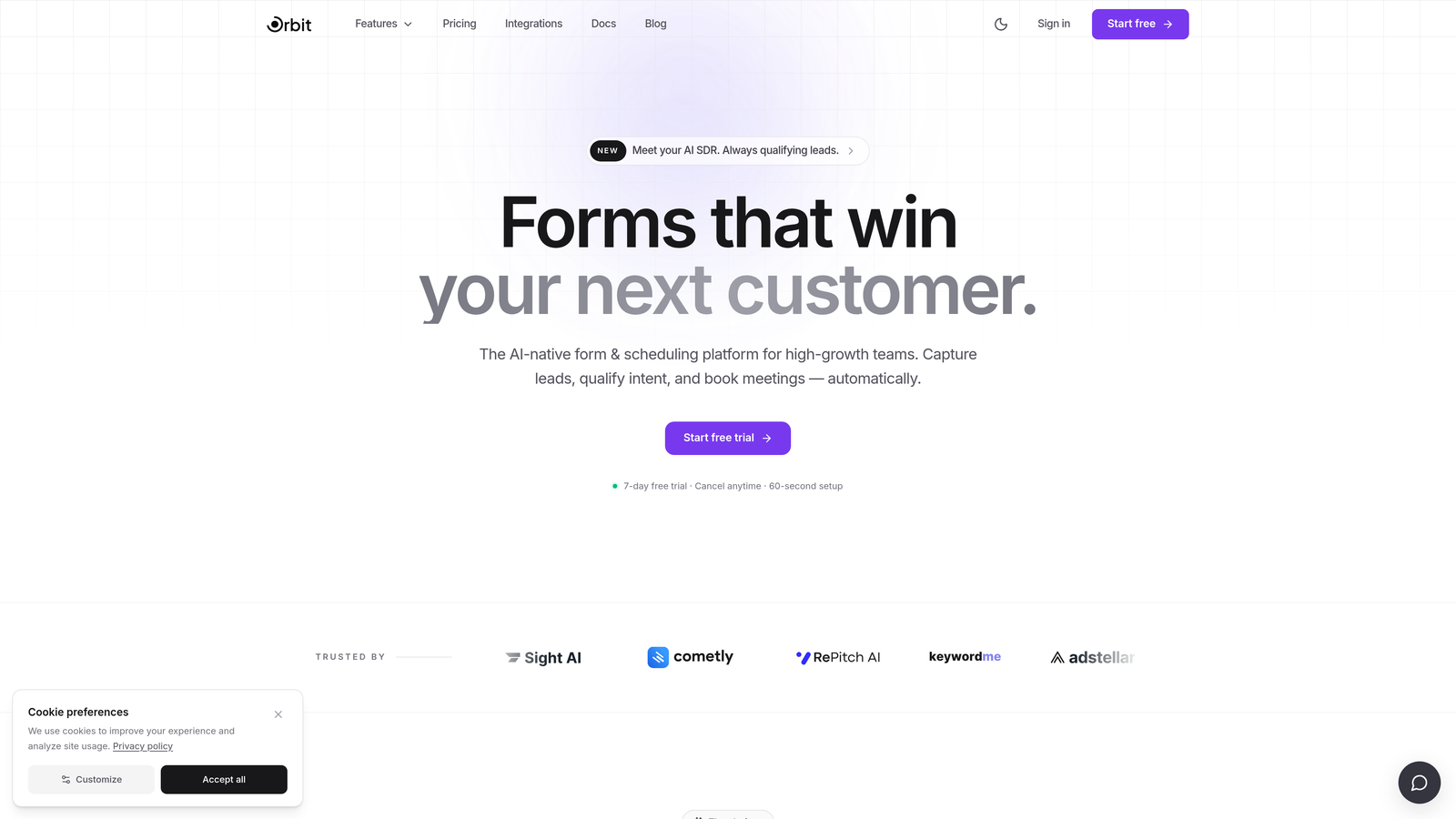
Orbit AI is an AI-powered form builder with built-in lead qualification and scoring, designed specifically for conversion-focused teams who want more signal from every submission.
Where This Tool Shines
Most form builders stop at data collection. Orbit AI is built around what happens next. The platform integrates AI-powered lead qualification directly at the form layer, which means your sales team receives pre-scored, pre-qualified leads rather than a raw list of submissions to sort through manually.
The design output is clean and modern, with brandable aesthetics that feel native to high-quality SaaS products. This isn't a tool that requires a designer to make it look good; the defaults are already conversion-optimized. For teams running demand gen or inbound funnels, that combination of visual quality and built-in intelligence is genuinely rare.
Key Features
AI Lead Qualification: Scoring and qualification happen at the form layer itself, delivering pre-filtered leads directly to your sales workflow.
Conversion-Optimized Design: Forms are built with modern aesthetics and layout defaults that support higher completion rates without custom design work.
Lead Scoring in the Submission Flow: Each submission is scored based on the responses provided, giving your team immediate context on lead quality.
B2B-Specific Architecture: The platform is purpose-built for high-growth and B2B use cases, not a general-purpose tool stretched to fit.
Clean, Brandable Output: Form styling is customizable and outputs a polished experience that reflects well on your brand.
Best For
Orbit AI is the strongest fit for SaaS companies, B2B marketing teams, and growth operators who need their forms to contribute to pipeline quality, not just pipeline volume. If lead qualification is a bottleneck in your funnel, this is worth a close look.
Pricing
Visit orbitforms.ai for current pricing and plan details, as offerings may be updated regularly.
2. Typeform
Best for: Marketing teams who prioritize a polished, experience-first form interaction with minimal design effort.
Typeform is a conversational form platform known for its one-question-at-a-time UX and strong out-of-the-box visual design.

Where This Tool Shines
Typeform's signature format, presenting one question at a time in a full-screen interface, tends to feel less like filling out a form and more like having a conversation. For survey-style forms, NPS collection, and top-of-funnel lead capture, this approach can support stronger completion rates compared to traditional multi-field layouts.
The design quality is consistently high with minimal configuration. You can embed images and video, apply brand colors, and have something that looks genuinely polished in a short time. The trade-off is that deeply custom branded experiences or complex conditional routing can feel constrained within Typeform's opinionated structure.
Key Features
Conversational One-Question Format: The signature UX presents questions sequentially, reducing cognitive load and improving perceived ease of completion.
Strong Visual Defaults: Design quality is high out of the box with minimal manual styling required.
Broad Integration Library: Connects to major CRMs, email platforms, and automation tools including Zapier.
Logic Jumps and Conditional Branching: Routes respondents through different question paths based on their answers.
Video and Image Embedding: Supports rich media inside form questions for more engaging experiences.
Best For
Typeform suits marketing teams running surveys, customer research, or top-of-funnel lead capture who want a premium-feeling experience without heavy design investment. Teams with more complex lead qualification or scoring needs may find it limiting.
Pricing
A free plan is available with limitations; paid plans start at a monthly fee. Verify current pricing at typeform.com as plans change periodically.
3. Paperform
Best for: Teams who want a flexible, document-style form experience with built-in payment and booking support.
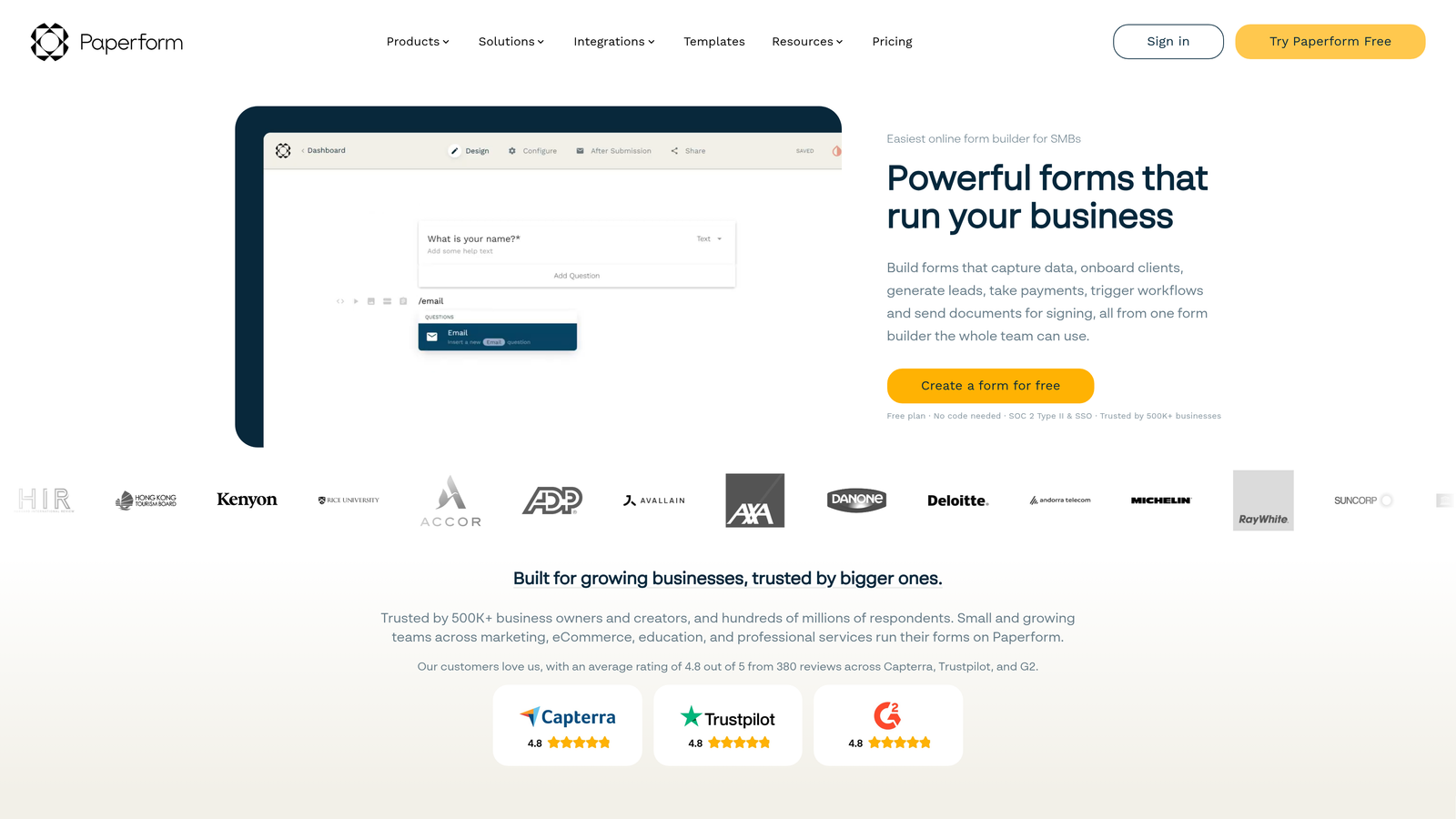
Paperform is a flexible form builder that blends form fields with a freeform page editor, letting users create rich, document-style form pages with text, images, and fields placed freely.
Where This Tool Shines
Paperform occupies an interesting middle ground between a form builder and a lightweight landing page tool. The editor lets you place text blocks, images, and form fields anywhere on the page, which gives you far more layout control than most form platforms allow. The result can feel closer to a designed page than a standard form.
It also supports payment collection via Stripe, product sales, and appointment bookings natively, making it a strong fit for small businesses, consultants, and service providers who need a single tool to handle multiple transaction types. For pure lead qualification or B2B pipeline work, it's less specialized.
Key Features
Freeform Page Editor: Place text, images, and form fields anywhere on the page for maximum layout flexibility.
Built-In Payment Collection: Native Stripe integration supports payments, product sales, and deposits directly inside forms.
Booking and Scheduling Support: Handles appointment bookings without requiring a separate tool.
Conditional Logic and Calculation Fields: Supports dynamic form behavior and numeric calculations within the form.
Custom Domain Support: Publish forms on your own domain for a fully branded experience.
Best For
Paperform works well for small businesses, coaches, consultants, and creative teams who need design flexibility and transaction support in one place. It's less suited for teams focused on lead scoring, CRM-heavy workflows, or B2B pipeline optimization.
Pricing
No permanent free plan is available. Paid plans are offered at various tiers; verify current pricing at paperform.co.
4. Jotform
Best for: Teams with diverse, high-volume form needs across multiple departments or use cases.
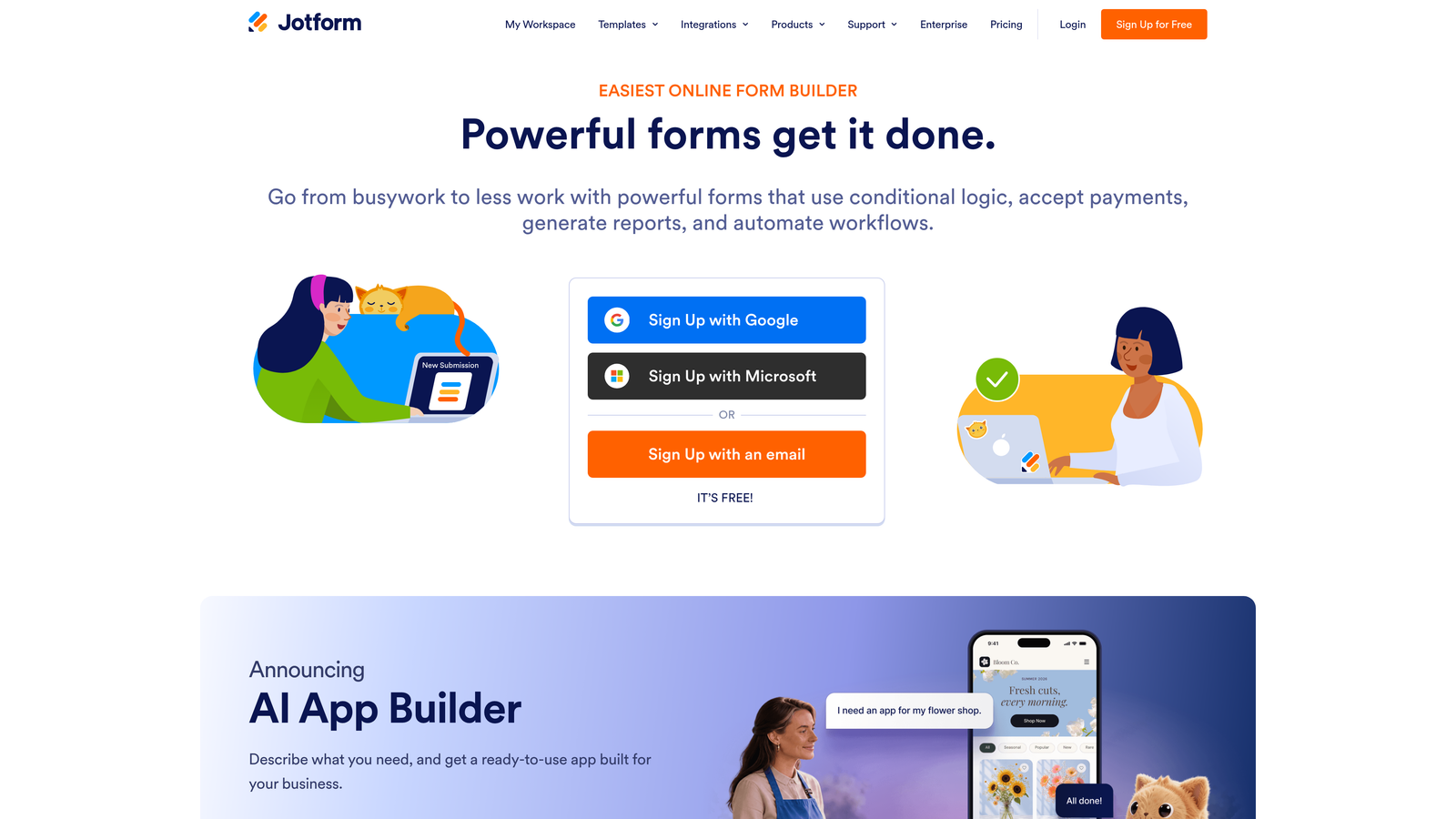
Jotform is one of the most established form builders on the market, offering a vast template library and broad field type support for organizations with varied form requirements.
Where This Tool Shines
Jotform's greatest strength is breadth. The platform supports thousands of pre-built templates spanning virtually every industry and use case, from HR onboarding to healthcare intake forms to e-commerce order collection. If you need a form for something specific, there's a reasonable chance Jotform already has a template for it.
The enterprise tier adds HIPAA compliance, making it a viable option for healthcare and regulated industries that most other form builders can't serve. The integration ecosystem is similarly expansive. The trade-off is that the interface can feel dated compared to newer entrants, and the platform isn't optimized specifically for conversion-focused lead generation.
Key Features
Thousands of Pre-Built Templates: Covers a wide range of industries and use cases, reducing setup time significantly.
Wide Field Type Support: Includes e-signatures, file uploads, payment fields, and more in a single platform.
Multiple Payment Integrations: Connects with several payment processors for flexible transaction handling.
HIPAA-Compliant Enterprise Tier: Enables use in regulated industries where data compliance is a requirement.
Extensive Third-Party Integrations: Broad ecosystem connecting to CRMs, project management tools, and automation platforms.
Best For
Jotform is a strong fit for organizations that need a single form platform to serve multiple departments with varied requirements. It's particularly well-suited for operations, HR, healthcare, and teams managing high form volume across different use cases.
Pricing
A free plan is available with submission limits. Paid plans scale with usage and features; verify current pricing at jotform.com.
5. Tally
Best for: Early-stage teams and indie makers who want clean, functional forms without spending anything upfront.
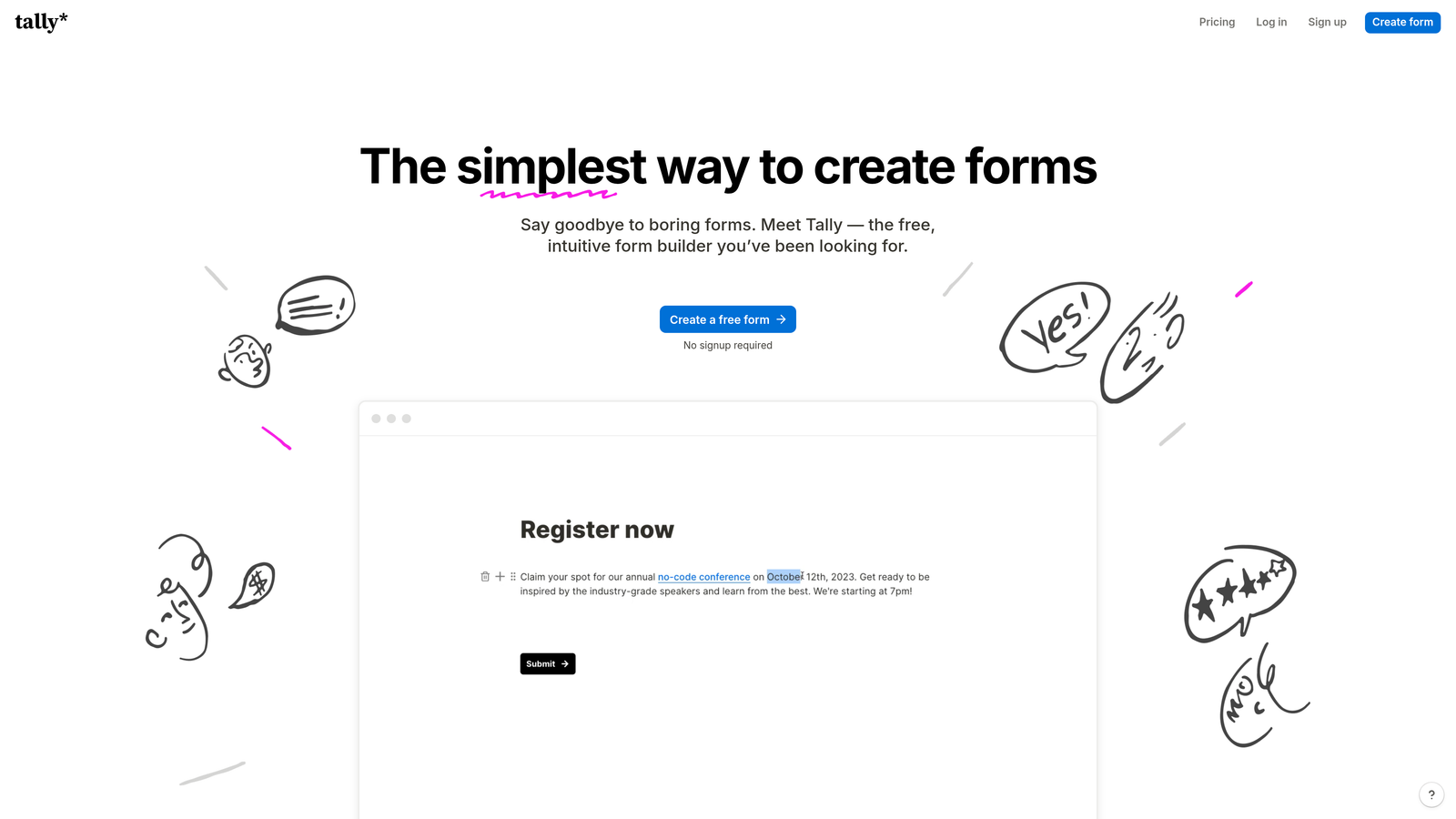
Tally is a minimalist, Notion-inspired form builder with a generous free tier, built for users who want simple, distraction-free forms without a steep learning curve.
Where This Tool Shines
Tally's block-based editor will feel immediately familiar to anyone who uses Notion. You build forms the same way you'd write a document, which makes it genuinely fast to get something live. The free tier is notably generous compared to most competitors, making it a practical starting point for founders, indie hackers, and early-stage teams watching their tool spend.
The aesthetic is clean and minimal by default, which works well for simple lead capture, feedback collection, and internal forms. Where it falls short is in advanced capabilities: deep conditional logic, lead scoring, and enterprise workflow routing are either limited or unavailable depending on your plan.
Key Features
Block-Based Notion-Style Editor: Familiar, document-like editing experience that reduces the learning curve significantly.
Generous Free Tier: Unlimited forms and responses available on the free plan (verify current terms at tally.so, as these may change).
Clean, Minimal Design: Distraction-free form output that looks polished without customization effort.
Conditional Logic on Paid Plans: Basic branching logic available at higher tiers.
Flexible Embedding Options: Share via link or embed anywhere with a simple iframe.
Best For
Tally is ideal for solo operators, indie makers, and early-stage startups who need functional forms quickly without a budget commitment. Teams that eventually need lead qualification, scoring, or advanced routing will likely outgrow it.
Pricing
A generous free tier is available; a Pro plan unlocks additional features. Verify current pricing at tally.so.
6. Formstack
Best for: Operations-heavy teams who need forms as part of a broader workflow automation and document generation system.
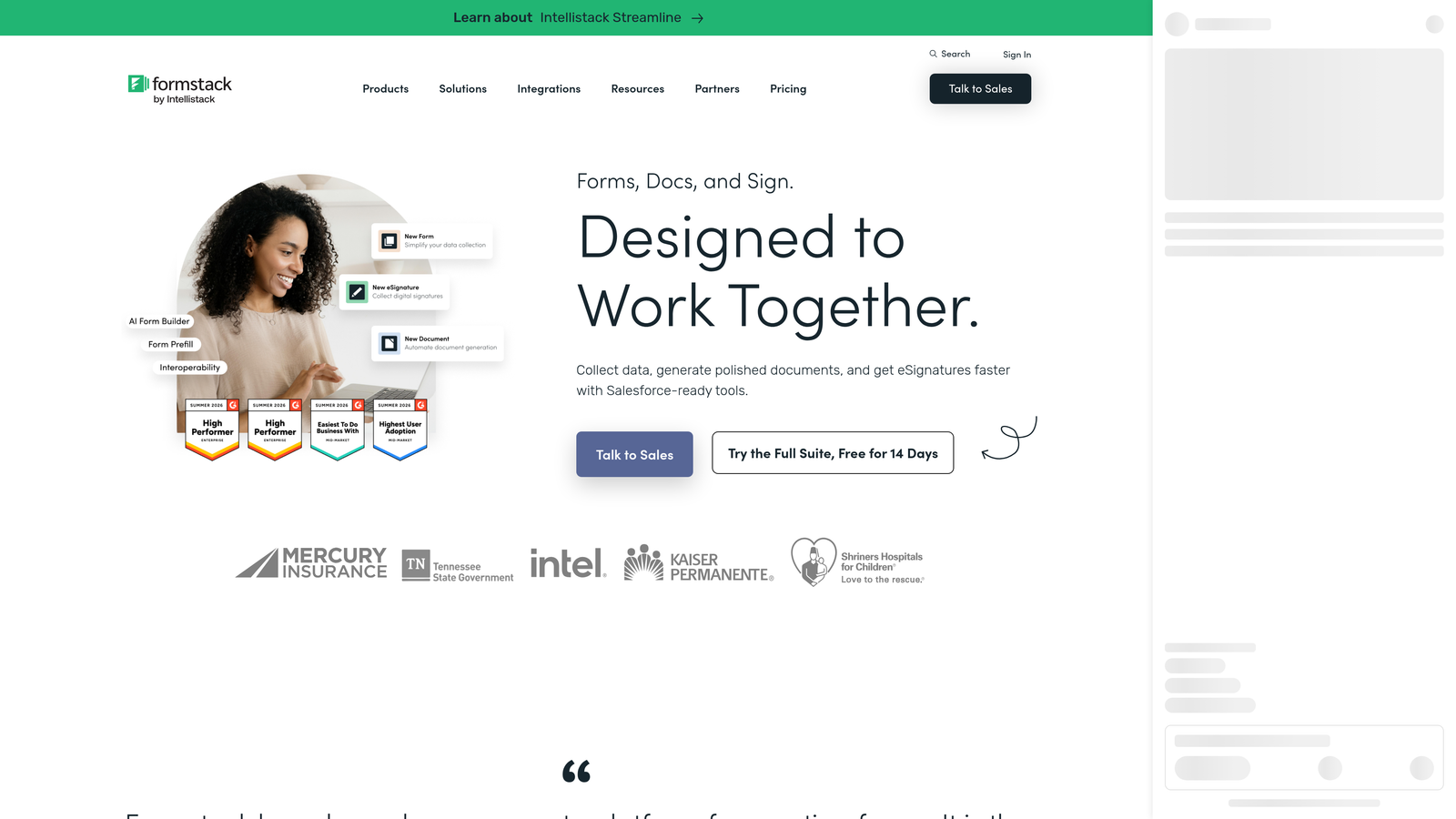
Formstack is an enterprise-grade platform that extends well beyond form building into document generation and workflow automation, suited for teams managing complex internal processes.
Where This Tool Shines
Formstack isn't primarily a marketing form tool. Its real strength is in operational workflows: approval routing, document generation, compliance-ready data handling, and process automation across departments. For HR, legal, operations, and compliance teams, those capabilities are genuinely valuable and hard to replicate with lighter-weight tools.
The document merge and generation features set it apart from every other tool on this list. If your form submission needs to trigger a populated contract, a pre-filled document, or a multi-step approval chain, Formstack is built for that kind of complexity. The trade-off is cost and a learning curve that reflects its enterprise positioning.
Key Features
Advanced Workflow Routing and Approval Flows: Routes submissions through multi-step approval chains with conditional logic.
Document Generation and Merge: Generates populated documents from form submissions, a capability few competitors offer.
Conditional Logic and Branching: Supports complex form logic for varied respondent paths.
HIPAA and Compliance-Ready Options: Built to meet regulatory requirements in healthcare and other governed industries.
Enterprise Integration Support: Connects with major enterprise stacks including CRMs, ERPs, and HR platforms.
Best For
Formstack suits operations, HR, legal, and compliance teams at mid-market and enterprise organizations who need forms embedded within larger workflow and document processes. It's not optimized for marketing lead gen or conversion-focused use cases.
Pricing
Pricing is on the higher end of the market. Verify current plans and tiers at formstack.com.
Which Tool Is Right for Your Team?
Every tool on this list does something well. The question is whether it does the right thing for your specific situation.
If you're running a high-growth SaaS or B2B operation and lead quality matters as much as lead volume, Orbit AI is the standout choice. It's the only platform here that brings AI-powered qualification directly into the form layer, giving your sales team pre-scored leads instead of a raw submission pile to sort through.
Typeform is the right call when the form experience itself is a brand touchpoint and you want polished, conversational interactions with minimal design work. It's excellent for marketing surveys, NPS, and top-of-funnel capture.
Jotform wins on breadth. If you have multiple departments with diverse form needs and compliance requirements like HIPAA, it's the most versatile platform on the list. Tally is the obvious starting point if budget is a constraint and you need something clean and functional fast.
Paperform earns its place for teams who want design flexibility and transaction support (payments, bookings) in a single tool, particularly useful for service businesses and consultants. And Formstack is the right fit when forms are part of a larger operational or compliance workflow rather than a marketing function.
For teams serious about turning form submissions into qualified pipeline, the gap between a generic form builder and a purpose-built conversion tool is significant. Start building free forms today with Orbit AI and see how intelligent form design can elevate your conversion strategy.


