

High-growth teams face a brutal reality: manually qualifying hundreds of leads per week is impossible to sustain. Sales reps spend hours chasing prospects who were never a fit, while high-intent buyers slip through the cracks. The cost isn't just wasted time—it's lost revenue and burned-out teams.
Automated lead grading tools solve this by using AI and machine learning to score prospects based on behavioral signals, firmographic data, and engagement patterns. The right platform can transform your pipeline efficiency by surfacing your best opportunities instantly.
We evaluated these tools based on AI capabilities, integration depth with existing tech stacks, ease of setup, and scalability for growing teams. Here are the top automated lead grading tools transforming how high-growth companies prioritize their pipelines in 2026.
1. Orbit AI
Best for: Teams that want to qualify leads at the moment of capture, before CRM entry
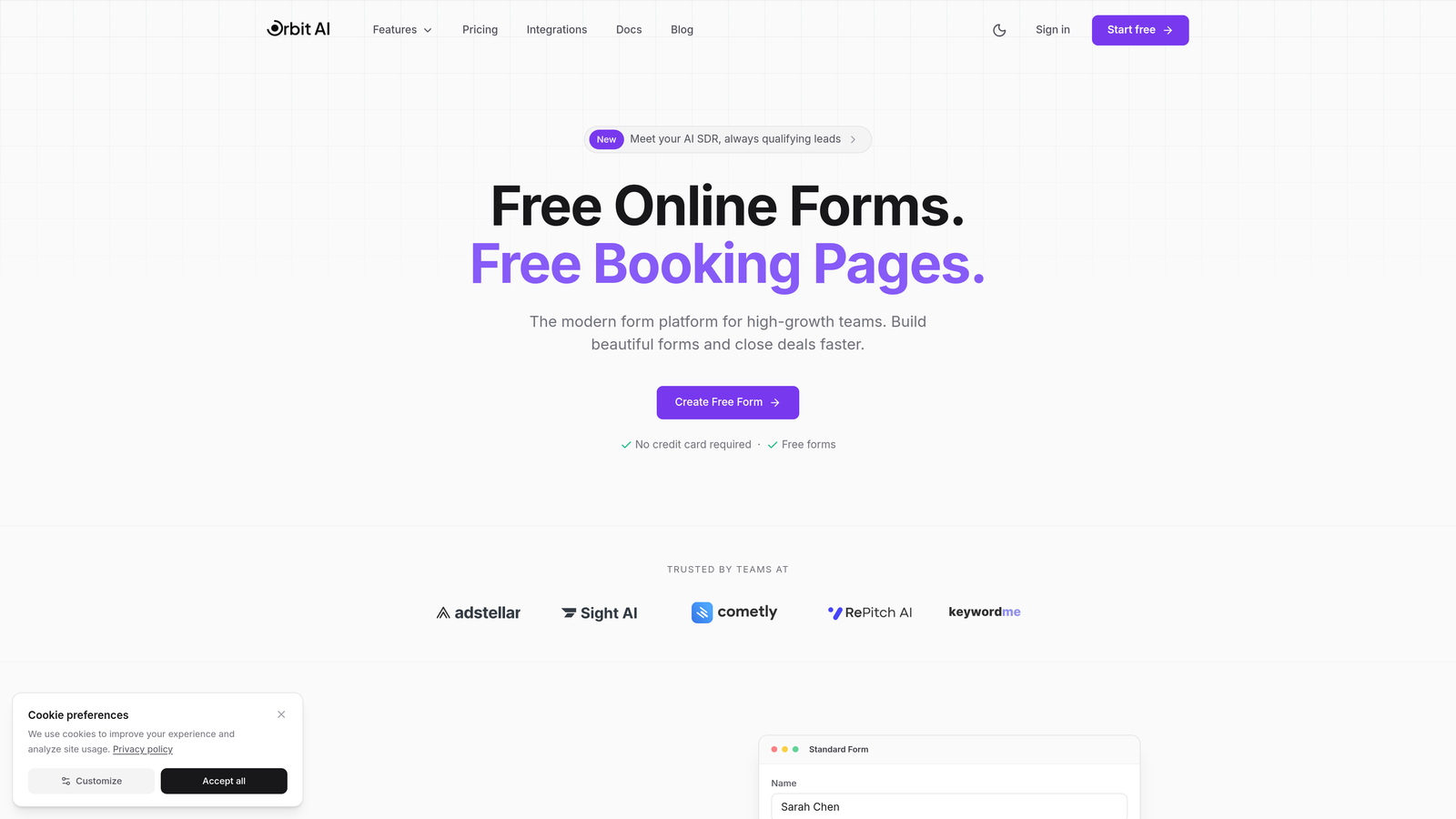
Orbit AI takes a fundamentally different approach to lead grading by qualifying prospects during form submission rather than after they enter your CRM.
Where This Tool Shines
Most lead scoring tools grade contacts after they're already in your database. Orbit AI scores them in real-time as they fill out your forms, using AI to analyze response patterns and answers instantly.
This means your sales team only receives notifications for qualified leads, and lower-quality submissions can be routed to nurture sequences automatically. The platform combines intelligent lead qualification with conversion-optimized form design, so you're not sacrificing user experience for better data.
Key Features
AI Lead Qualification: Built directly into the form submission flow, analyzing responses as prospects type.
Automatic Lead Grading: Scores leads based on response patterns, completeness, and fit criteria without manual rule configuration.
Native CRM Integrations: Connects seamlessly with HubSpot, Salesforce, and other major CRMs to pass scored leads instantly.
Conditional Logic: Shows or hides form fields based on previous answers to collect the right qualification data.
Real-Time Routing: Automatically routes high-scoring leads to sales while sending lower scores to marketing nurture.
Best For
High-growth teams that generate significant inbound volume and need to filter quality at the point of capture. Particularly valuable if you're struggling with form spam, unqualified demo requests, or sales teams complaining about lead quality.
Pricing
Contact for pricing; free trial available to test the AI qualification on your actual form traffic.
2. HubSpot Lead Scoring
Best for: Teams already using HubSpot CRM who want predictive scoring with zero setup friction
HubSpot Lead Scoring uses machine learning to analyze your contact properties and behavioral data, predicting which leads are most likely to convert.
Where This Tool Shines
If you're already in the HubSpot ecosystem, this is the path of least resistance. The predictive scoring model learns from your historical conversion data without requiring you to build complex rule sets.
You can also layer manual scoring rules on top of the AI predictions for custom criteria specific to your business. The tight CRM integration means scores update in real-time as contacts engage with your emails, visit your website, or download content.
Key Features
Predictive Scoring: HubSpot's ML models analyze your closed-won deals to identify patterns in contacts who convert.
Manual Scoring Rules: Create custom point values for specific actions, properties, or behaviors that matter to your business.
Behavioral Signals: Tracks engagement across email opens, website visits, content downloads, and form submissions.
Native CRM Integration: No data syncing required—scores live directly in contact records and update automatically.
Workflow Automation: Trigger actions based on score thresholds, like assigning high-scoring leads to sales or enrolling low scores in nurture sequences.
Best For
Companies already using HubSpot Marketing Hub who want predictive scoring without adding another platform to their stack. Works best when you have at least six months of closed-won data for the ML model to learn from.
Pricing
Included with Marketing Hub Professional at $800/month and Enterprise plans; predictive scoring requires Professional tier or higher.
3. Salesforce Einstein Lead Scoring
Best for: Enterprise Salesforce users who need AI-powered predictions based on historical win/loss patterns
Salesforce Einstein Lead Scoring analyzes your closed-won and closed-lost opportunities to predict which current leads will convert.
Where This Tool Shines
Einstein learns from your actual sales outcomes, not generic industry benchmarks. It identifies which combination of factors—job title, company size, engagement behaviors—correlate with deals that close.
The platform automatically updates its models as new deals close, so your scoring stays current with changing buyer patterns. Sales reps can see which factors influenced each score, providing context for their outreach strategy rather than just a number.
Key Features
Predictive Scoring: Analyzes historical closed-won and closed-lost data to predict conversion likelihood for active leads.
Automatic Model Updates: Retrains scoring models as new conversion data flows into Salesforce without manual intervention.
Scoring Factor Transparency: Shows reps which attributes contributed to each lead's score for better context.
Deep Salesforce Integration: Scores appear natively in lead and contact records with no external tools required.
Account and Opportunity Scoring: Extends beyond individual leads to score entire accounts and open opportunities.
Best For
Enterprise sales teams with significant historical data in Salesforce and complex, multi-touch sales cycles where understanding conversion patterns provides competitive advantage.
Pricing
Included with Sales Cloud Einstein at $50/user/month as an add-on, or bundled in Unlimited edition.
4. MadKudu
Best for: Product-led growth companies that need to score based on in-app behavior and usage patterns
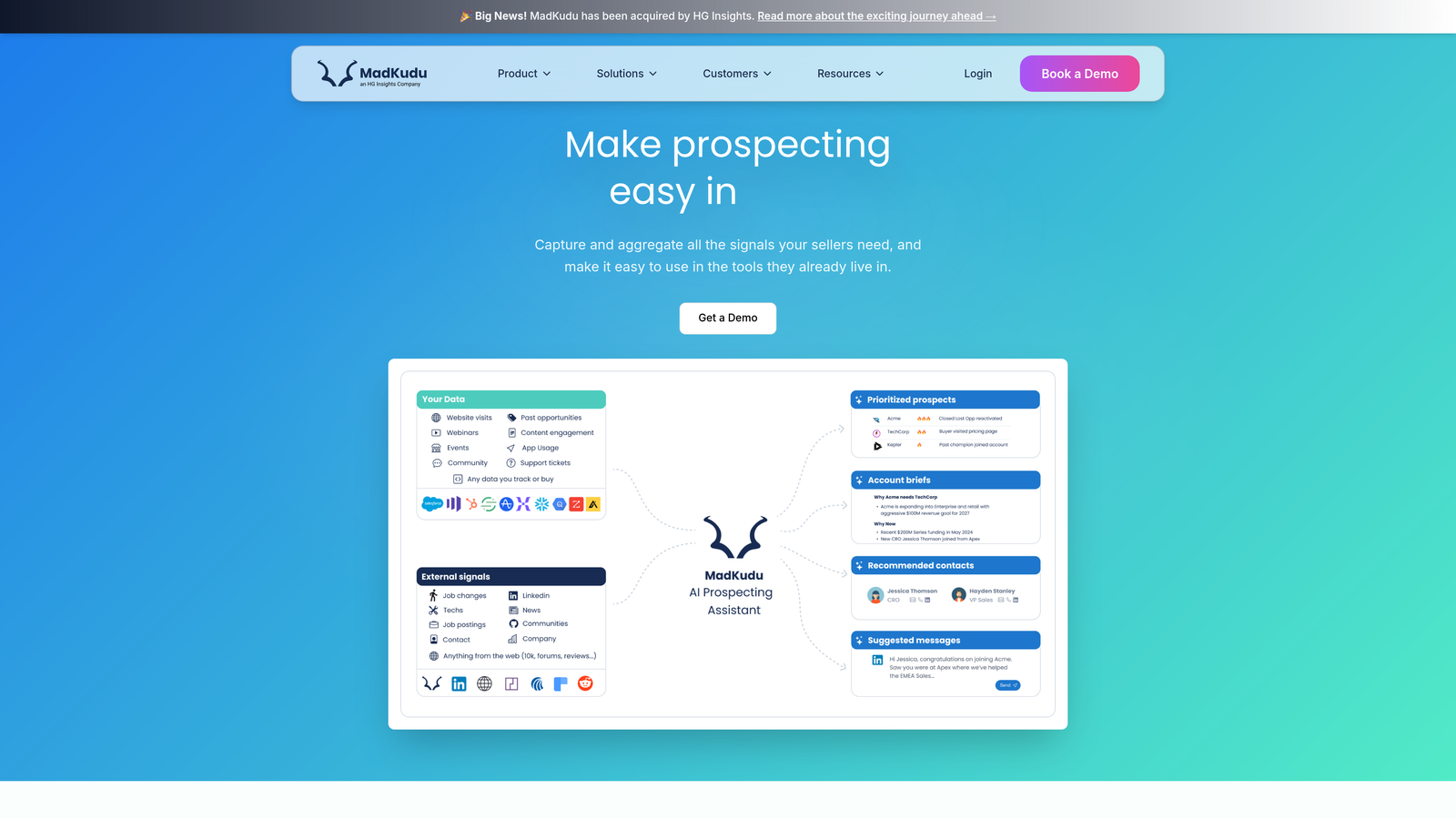
MadKudu combines firmographic fit scoring with product usage signals to identify which free trial users or freemium accounts are most likely to convert to paid.
Where This Tool Shines
Traditional lead scoring tools focus on marketing touches—email opens, content downloads, website visits. MadKudu goes deeper by incorporating how prospects actually use your product during trials or freemium experiences.
This makes it particularly powerful for PLG companies where the product itself is the primary qualification mechanism. The platform identifies Product Qualified Leads (PQLs) by analyzing activation milestones, feature adoption, and usage frequency alongside traditional demographic fit signals.
Key Features
Product Usage Signals: Integrates with your application to score based on feature adoption, activation events, and engagement frequency.
Firmographic Enrichment: Automatically enriches records with company size, industry, and technographic data for fit scoring.
Real-Time Scoring API: Provides instant scores via API for live routing decisions or batch processing for existing databases.
PQL Identification: Specifically designed to surface Product Qualified Leads for PLG sales motions.
Data Warehouse Integration: Connects to Snowflake, BigQuery, and other warehouses for comprehensive signal analysis.
Best For
SaaS companies with product-led growth strategies, free trial programs, or freemium models where product usage is the strongest conversion predictor.
Pricing
Custom pricing based on lead volume and data sources; typically starts around $1,500/month for mid-market companies.
5. Clearbit Reveal + Enrichment
Best for: Teams that need to identify anonymous website visitors and enrich lead records with firmographic data
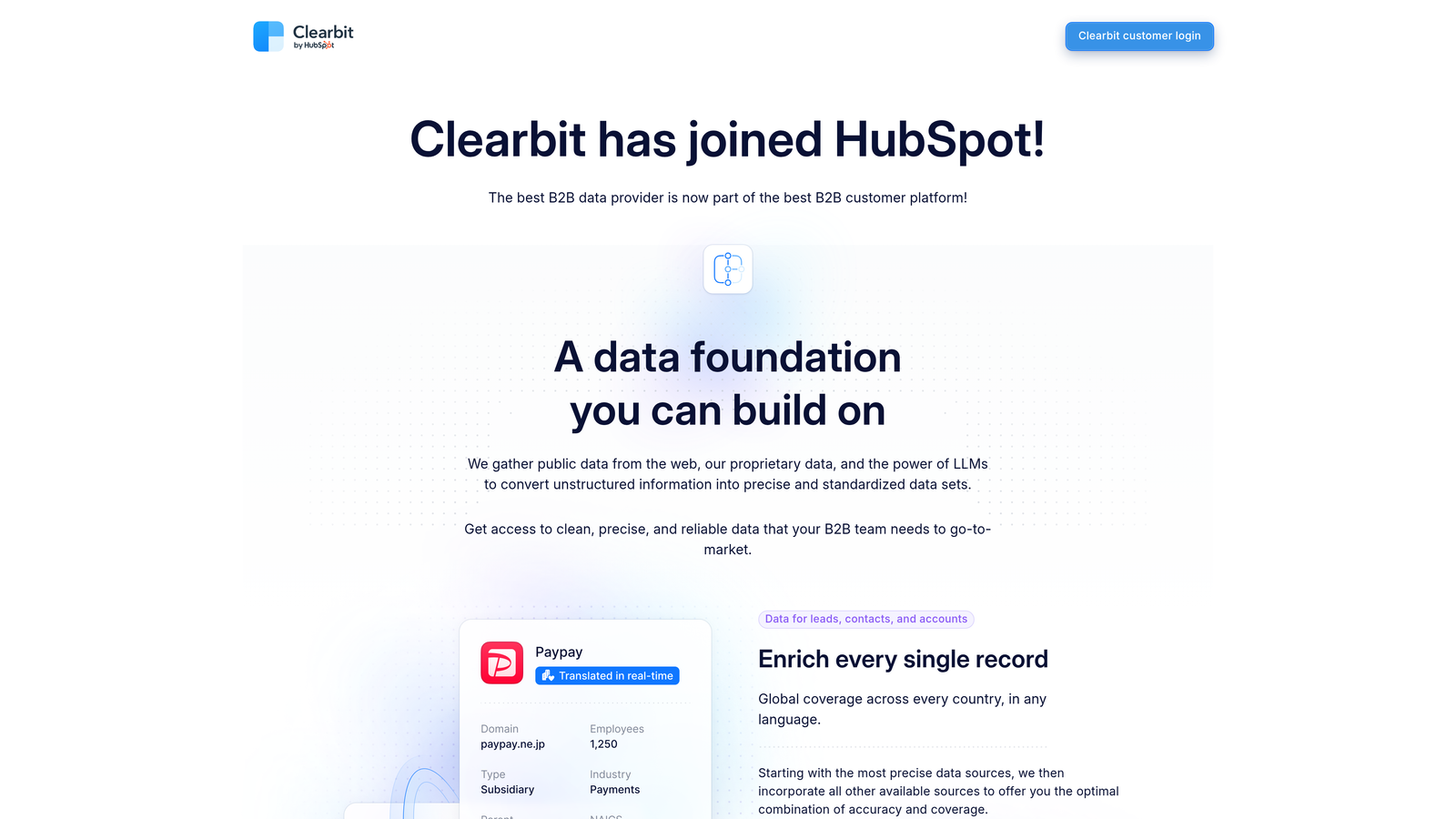
Clearbit identifies companies visiting your website anonymously and enriches form submissions with over 100 firmographic and technographic data points for more accurate scoring.
Where This Tool Shines
Many high-intent prospects research your product without filling out forms. Clearbit Reveal uses reverse IP lookup to identify which companies are browsing your site, even when visitors don't convert.
When prospects do submit forms, Clearbit instantly enriches their records with employee count, revenue estimates, technology stack, and other signals that feed into your ICP scoring model. This transforms minimal form data into comprehensive qualification profiles without making prospects fill out longer forms.
Key Features
Anonymous Visitor Identification: Identifies companies browsing your website by IP address before they submit forms.
100+ Data Points: Enriches records with firmographic, technographic, and demographic information automatically.
Real-Time Enrichment: Appends data at the moment of form submission for instant qualification.
ICP Scoring: Grades leads based on how well enriched attributes match your ideal customer profile.
Native Integrations: Connects directly with Salesforce, HubSpot, Marketo, and other major platforms.
Best For
B2B companies with high-value enterprise deals where firmographic fit is a critical qualification factor, or teams struggling with incomplete form data.
Pricing
Custom pricing based on enrichment volume; startup programs typically begin around $99/month, scaling with usage.
6. Breadcrumbs
Best for: Revenue teams that want to build custom scoring models without data science expertise
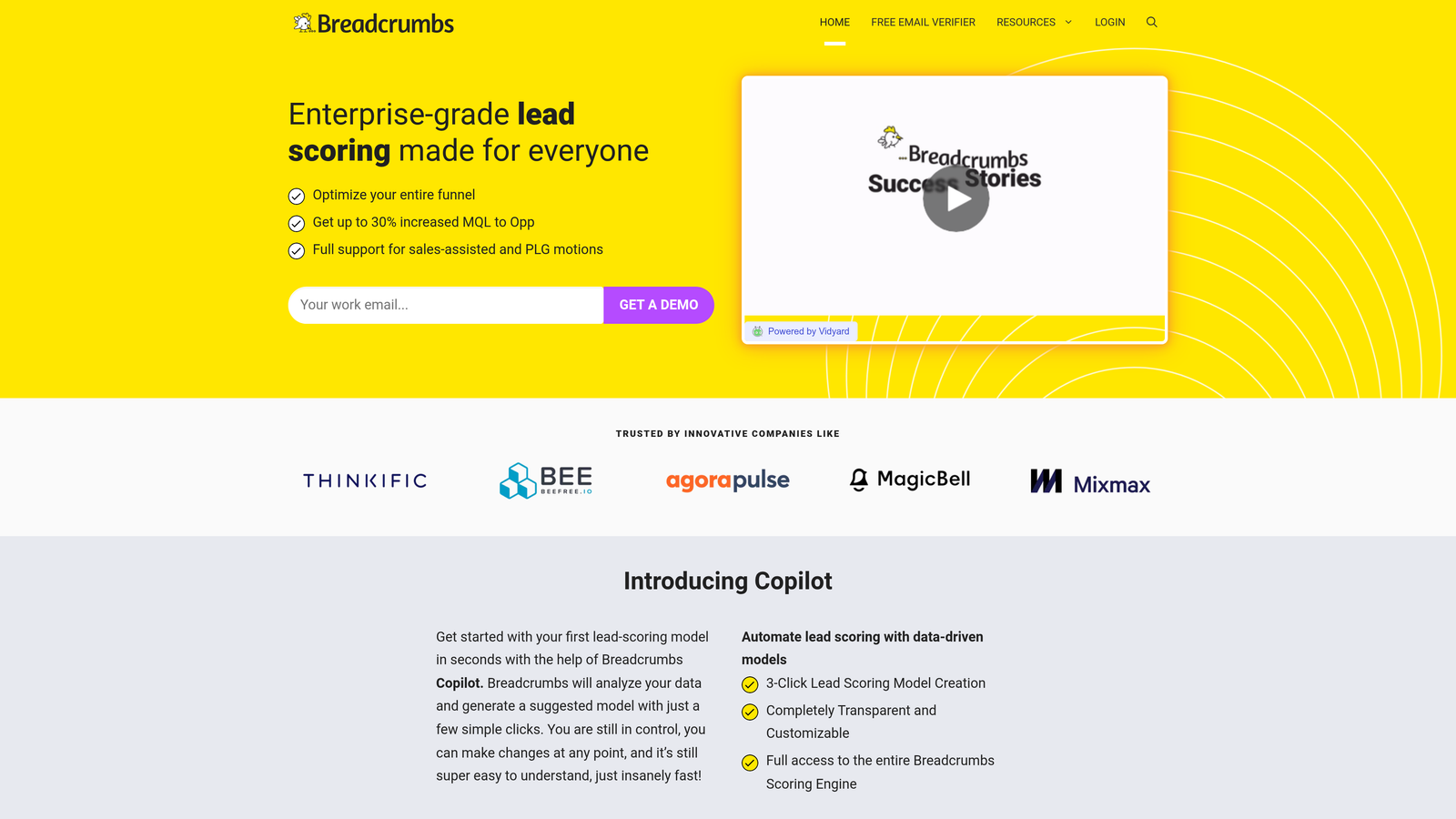
Breadcrumbs provides a no-code platform for building sophisticated lead scoring models that combine fit and activity signals with recency and frequency weighting.
Where This Tool Shines
Most predictive scoring tools are black boxes—you get a score but limited control over the model. Breadcrumbs flips this by letting revenue teams build transparent, customizable models through a visual interface.
The platform's co-dynamic scoring approach weighs both static fit criteria (job title, company size) and dynamic activity signals (email engagement, website visits) with decay functions for aging data. You can test different model configurations and see performance analytics to optimize over time.
Key Features
No-Code Model Builder: Visual interface for creating scoring models without SQL or Python knowledge.
Co-Dynamic Scoring: Combines static fit attributes with dynamic behavioral signals in a single score.
Recency and Frequency Weighting: Applies decay functions so recent, frequent actions score higher than old, sporadic engagement.
CRM and MAP Integrations: Syncs with major CRMs and marketing automation platforms to pull scoring signals.
Model Performance Analytics: Shows which scoring factors correlate with conversions to guide optimization.
Best For
Revenue operations teams that want full control over their scoring methodology without requiring data science resources or engineering support.
Pricing
Free tier available for basic scoring; paid plans start at $400/month for advanced features and higher contact volumes.
7. 6sense Revenue AI
Best for: Enterprise account-based marketing teams using intent data to prioritize accounts
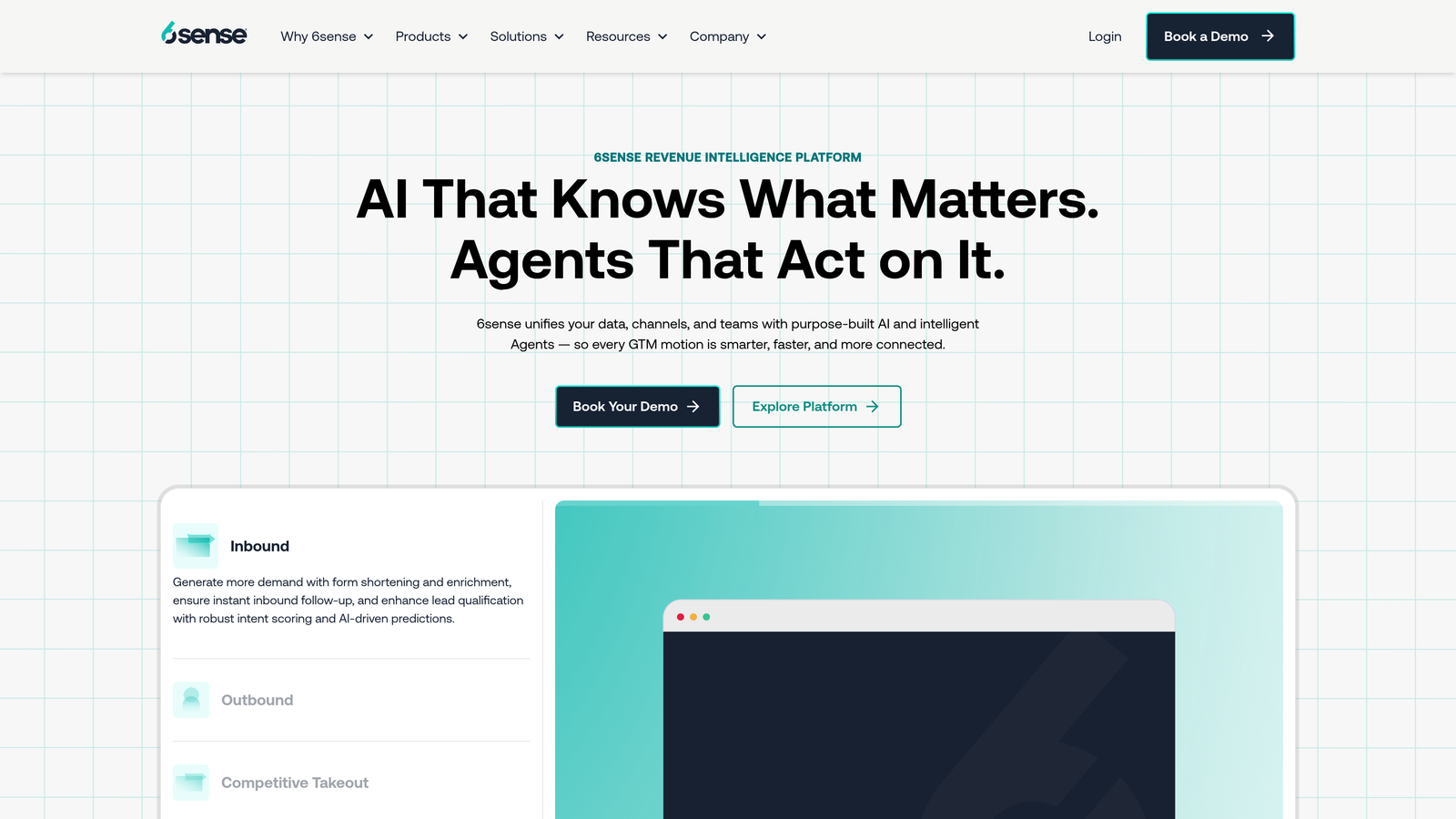
6sense Revenue AI uses third-party intent data and AI to predict which accounts are in-market and at what stage of the buying journey.
Where This Tool Shines
Unlike contact-level lead scoring, 6sense operates at the account level, aggregating signals across all contacts at a target company. It layers in intent data from across the web—research activity, content consumption, competitor comparisons—to predict buying stage.
The platform identifies accounts showing early buying signals before they engage with your marketing, allowing sales and marketing to orchestrate coordinated outreach. This makes it particularly valuable for enterprise ABM programs where account prioritization matters more than individual lead scores.
Key Features
Third-Party Intent Data: Integrates external research signals from publisher networks and content consumption patterns.
Buying Stage Predictions: Classifies accounts into stages from awareness through decision based on behavioral signals.
Anonymous Visitor Identification: Reveals which accounts are researching your category without direct engagement.
AI Account Prioritization: Ranks target accounts by conversion likelihood and buying stage for focused outreach.
Orchestration Capabilities: Coordinates sales and marketing actions across channels based on account intelligence.
Best For
Enterprise B2B companies with account-based strategies, long sales cycles, and the budget to invest in comprehensive intent data and AI prioritization.
Pricing
Enterprise pricing model; typically $50,000+/year depending on target account database size and intent data coverage.
8. Zoho CRM Lead Scoring
Best for: Budget-conscious teams that need both rule-based and AI scoring in an affordable CRM
Zoho CRM Lead Scoring offers flexible scoring with both manual rule configuration and Zia AI predictions at a fraction of enterprise CRM costs.
Where This Tool Shines
Zoho proves you don't need enterprise budgets for intelligent lead scoring. The platform lets you build traditional rule-based models assigning points for specific actions and attributes, while Zia AI adds predictive conversion likelihood scores.
The negative scoring capability is particularly useful—you can deduct points for disqualifying behaviors like unsubscribing from emails or repeatedly bouncing. Score decay automatically reduces scores for leads that go cold, keeping your pipeline focused on active opportunities.
Key Features
Rule-Based Scoring: Create custom point values for actions, field values, and behaviors that indicate qualification.
Zia AI Predictions: Machine learning model predicts conversion likelihood based on historical patterns in your CRM.
Negative Scoring: Deduct points for disqualifying actions or attributes to filter out poor-fit leads.
Score Decay: Automatically reduces scores over time for leads that haven't engaged recently.
Zoho Ecosystem Integration: Works seamlessly across Zoho's suite of business applications.
Best For
Small to mid-sized businesses that want sophisticated scoring capabilities without enterprise price tags, especially those already using other Zoho products.
Pricing
Included with Zoho CRM Professional at $23/user/month and higher tiers; Zia AI features available in Professional and above.
9. Freshsales Freddy AI
Best for: Sales teams that want AI contact scoring combined with built-in communication tools
Freshsales Freddy AI scores contacts based on engagement patterns while providing integrated phone and email capabilities for immediate follow-up.
Where This Tool Shines
Freshsales takes a holistic approach by combining AI scoring with the communication tools sales reps need to act on those scores. Freddy AI analyzes email opens, website visits, and other engagement signals to predict which contacts are most likely to convert.
The platform goes beyond just scoring by providing deal insights and next-best-action recommendations. Reps can see scores directly in their visual pipeline and immediately call or email high-scoring contacts without switching tools, reducing friction between insight and action.
Key Features
Freddy AI Contact Scoring: Predicts conversion likelihood based on engagement patterns and contact attributes.
Engagement Tracking: Monitors email opens, link clicks, website visits, and form submissions automatically.
Deal Insights: Provides AI-powered recommendations for next actions on open opportunities.
Visual Sales Pipeline: Displays contact scores directly in pipeline views for quick prioritization.
Built-In Phone and Email: Integrated communication tools let reps act on scores without leaving the platform.
Best For
Sales teams that want an all-in-one CRM with AI scoring and communication tools rather than stitching together multiple point solutions.
Pricing
AI features included with Pro plan at $39/user/month and higher; Growth plan ($15/user/month) includes basic CRM without AI scoring.
Making the Right Choice
The best automated lead grading tool depends on where you need to qualify prospects and what signals matter most to your business.
For teams that want to filter quality at the point of capture—before unqualified leads even hit your CRM—Orbit AI's form-first approach eliminates downstream qualification work. If you're already invested in HubSpot or Salesforce, their native scoring capabilities provide the smoothest integration path with predictive models that learn from your conversion history.
Product-led growth companies should prioritize MadKudu's ability to score based on actual product usage, not just marketing touches. Enterprise teams running sophisticated ABM programs will find 6sense's intent data and account-level intelligence worth the investment. Budget-conscious teams can get surprisingly robust scoring from Zoho or Freshsales at a fraction of enterprise costs.
The common thread across effective lead grading is moving beyond manual rule-based scoring to AI models that learn from your actual conversion patterns. The tools that win are those that integrate seamlessly into your existing workflow, whether that's at form submission, in your CRM, or across your entire revenue tech stack.
Transform your lead generation with AI-powered forms that qualify prospects automatically while delivering the modern, conversion-optimized experience your high-growth team needs. Start building free forms today and see how intelligent form design can elevate your conversion strategy.


