

Tally is a genuinely solid starting point for form building. The free tier is generous, the editor is clean, and you can get a basic form live in minutes. But if your team is focused on lead generation and conversion optimization, you'll likely hit its ceiling faster than expected.
Limited conditional logic, no native lead qualification, and thin CRM integrations can quietly stall your pipeline. When the quality of every lead matters as much as the volume, you need a tool that does more than collect submissions.
This guide covers the top Tally alternatives for teams in 2026, evaluated on form-building depth, team collaboration, integrations, and conversion-focused capabilities. If you're also exploring the broader landscape, our roundup of Typeform alternatives for businesses and guide to how to build effective web forms are worth reading alongside this one.
1. Orbit AI
Best for: High-growth SaaS and B2B teams that need forms to qualify leads, not just capture them.
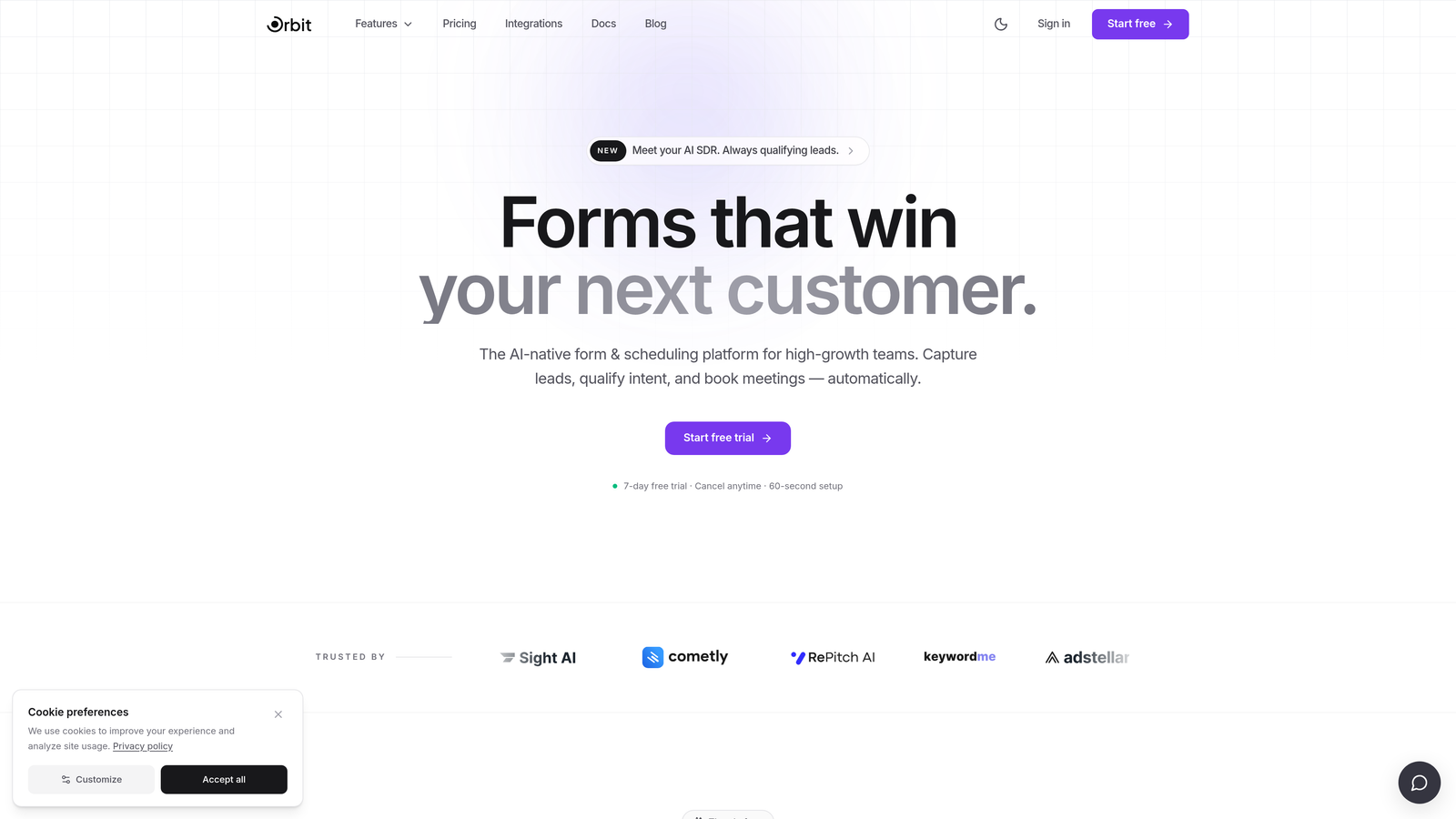
Orbit AI is an AI-powered form builder built specifically for teams where lead quality drives revenue.
Where This Tool Shines
Most form builders treat qualification as an afterthought, leaving your sales team to manually sort through every submission. Orbit AI flips that model by embedding AI-powered lead scoring directly into the form experience itself. Responses are scored and routed automatically, so your team focuses on the leads that actually matter.
Beyond the intelligence layer, the platform is built with conversion in mind. Templates are designed for B2B and SaaS contexts, the UI is clean and modern, and the overall experience reflects the kind of brand polish that high-growth teams expect from their customer-facing touchpoints.
Key Features
AI Lead Qualification: Scores leads automatically based on form responses, eliminating manual triage and routing high-intent prospects to the right team or CRM.
Conversion-Optimized Templates: Pre-built templates designed specifically for B2B and SaaS use cases, so you're starting from a strong baseline rather than a blank canvas.
Conditional Logic and Dynamic Fields: Personalize form flows based on respondent answers, creating a more relevant experience that improves completion rates.
Lead Routing Automation: Automatically send qualified leads to the right team member, Slack channel, or CRM based on scoring criteria you define.
Modern UI and Brand Control: A clean, polished design system that lets teams maintain brand consistency without fighting the tool's defaults.
Best For
Orbit AI is the strongest fit for SaaS companies, B2B marketing teams, and growth-focused organizations where lead quality is a core metric. If your team is running demand generation campaigns and needs forms that actively contribute to pipeline quality, this is the tool built for that job.
Pricing
Plans are designed for growing teams. Check current pricing and available tiers at orbitforms.ai for the most up-to-date information.
2. Typeform
Best for: Teams that want a conversational, interview-style form experience that keeps respondents engaged.
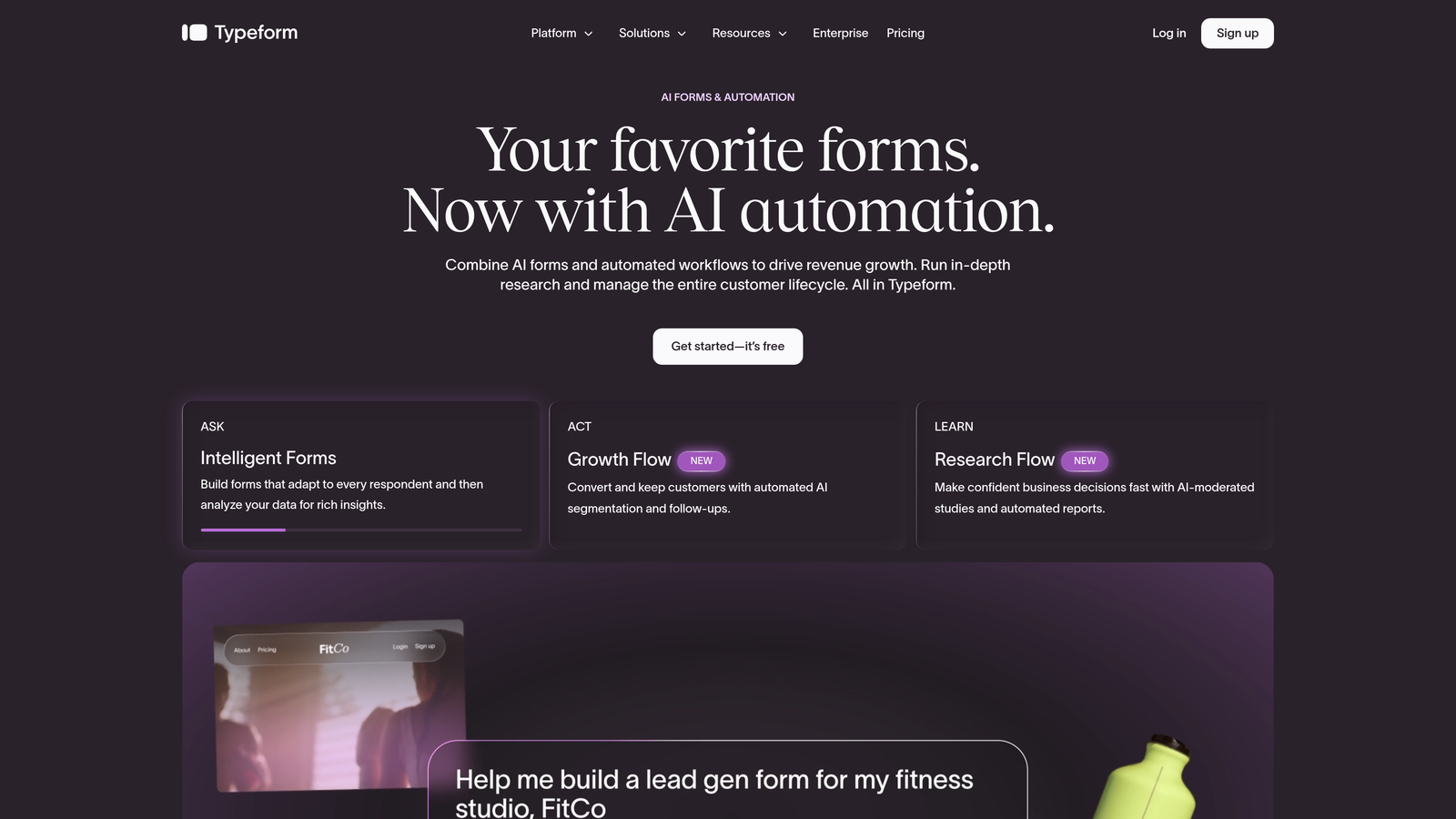
Typeform is the leading conversational form builder, known for its one-question-at-a-time format that transforms standard forms into more engaging interactions.
Where This Tool Shines
Typeform's core strength is the respondent experience. By presenting one question at a time, it creates a flow that feels less like filling out a form and more like answering a conversation. This format works particularly well for surveys, research, and onboarding flows where keeping someone engaged through the end matters.
The platform also offers strong brand customization, letting teams match their form aesthetic closely to their broader visual identity. Its integration library is extensive, covering the major CRMs and marketing platforms most teams already use.
Key Features
Conversational One-Question-at-a-Time UX: Presents each question individually to create a more engaging, less overwhelming experience for respondents.
Logic Jumps: Conditional branching that routes respondents through different question paths based on their previous answers.
Brand Customization: Custom fonts, colors, backgrounds, and layouts to align forms with your brand identity.
Integration Library: Connects with HubSpot, Salesforce, Slack, Zapier, and a wide range of other tools your team likely already uses.
Rich Media Embedding: Add images and video directly within questions to provide context or improve the respondent experience.
Best For
Typeform suits marketing teams running surveys, user research, or lead capture flows where the respondent experience is a priority. It's a strong choice when brand presentation matters, though teams specifically needing lead qualification intelligence will find it lacks that native capability.
Pricing
A free tier is available with limited responses. The Basic plan starts at approximately $25 per month, with higher-tier Business plans available for teams needing more responses and advanced features.
3. Paperform
Best for: Teams that need forms, payments, and scheduling consolidated into a single tool.
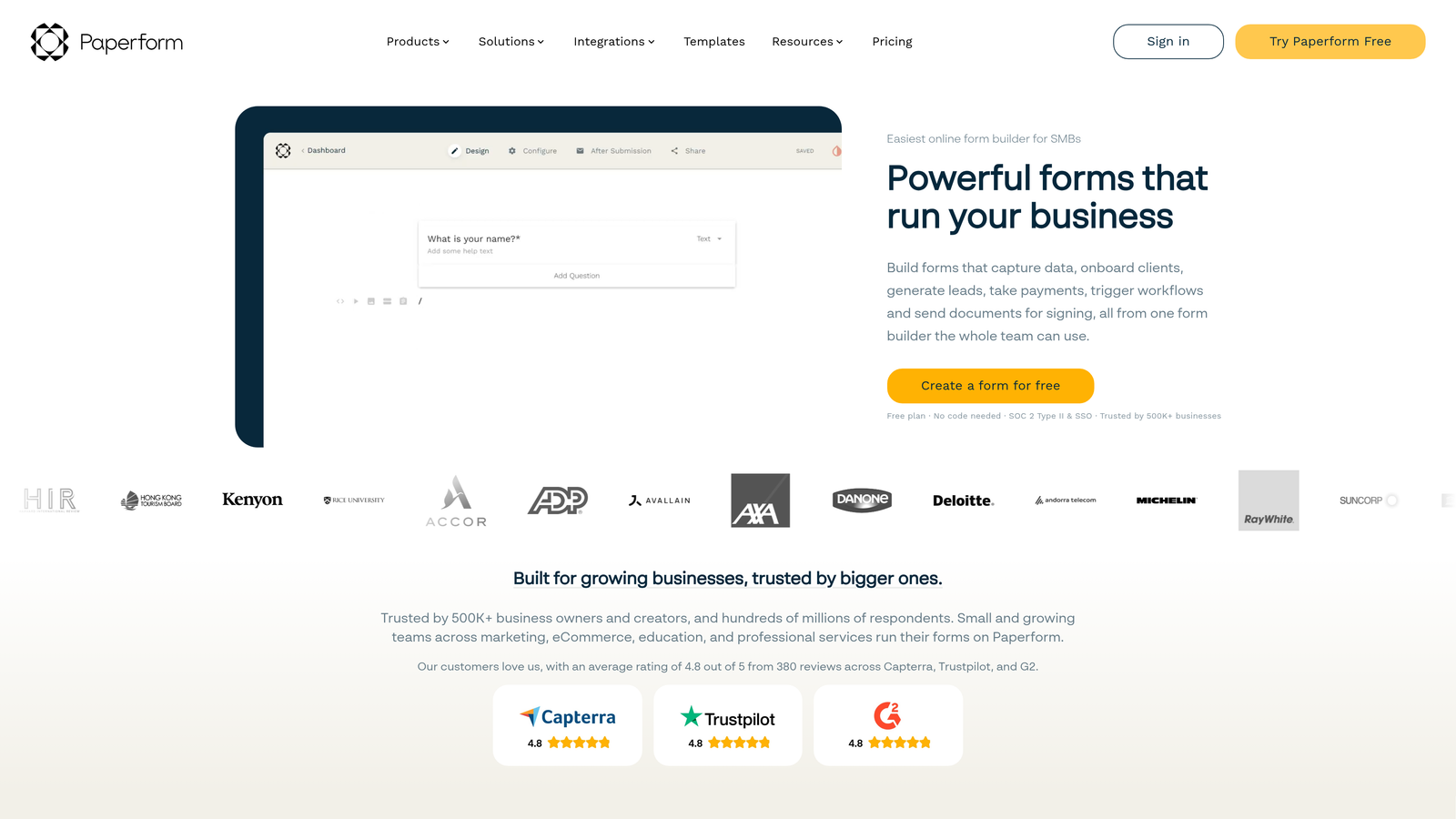
Paperform is a hybrid form and landing page builder that combines rich content design with native payment processing and appointment booking.
Where This Tool Shines
Paperform occupies an interesting position in the market: it's less a pure form builder and more a lightweight page builder that happens to handle forms exceptionally well. You can combine product fields, rich media, pricing logic, and payment collection all within a single form experience, which is genuinely useful for service businesses and teams running transactional workflows.
The scheduling and booking capabilities add another layer of utility, making Paperform a realistic option for teams looking to reduce their tool stack without sacrificing functionality.
Key Features
Forms as Landing Pages: Build forms that incorporate rich media, product listings, and branded design, functioning more like full landing pages than traditional forms.
Native Payment Processing: Accept payments directly through forms via Stripe, PayPal, and Square without needing a separate payment tool.
Conditional Logic and Calculation Fields: Create dynamic pricing, scoring, or branching experiences based on respondent inputs.
Appointment Booking: Built-in scheduling functionality for teams that need to capture bookings directly from a form.
Custom Domains and White-Labeling: Host forms on your own domain and remove Paperform branding for a fully branded experience.
Best For
Paperform is well-suited for service businesses, consultants, and teams running transactional workflows where payment collection and scheduling are part of the same interaction. It's less focused on lead qualification and more on consolidating the full transaction flow.
Pricing
The Essentials plan starts at approximately $24 per month. Higher tiers unlock team collaboration features, more monthly submissions, and advanced customization options.
4. Jotform
Best for: Teams managing diverse form needs across multiple departments with a wide range of use cases.
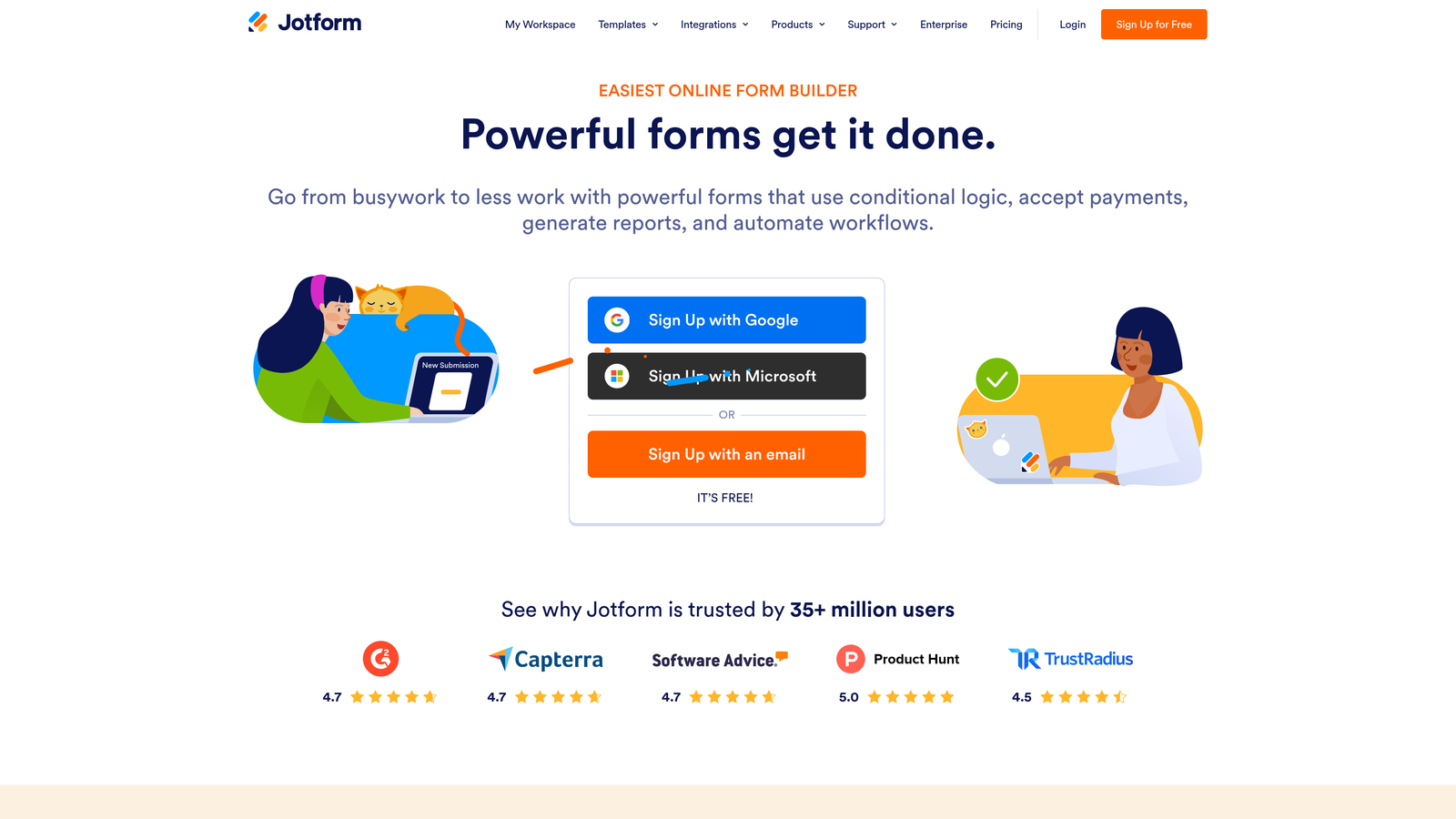
Jotform is one of the most established form builders on the market, offering an expansive template library and broad integration support for virtually any workflow.
Where This Tool Shines
Jotform's defining advantage is breadth. With thousands of pre-built templates and an integration ecosystem that covers the major CRMs, payment processors, HR tools, and productivity platforms, it can handle almost any form use case your team throws at it. This makes it particularly valuable for larger organizations where different departments have very different form requirements.
Jotform Tables adds a built-in data management layer, letting teams organize and act on responses without immediately exporting everything to a separate tool. For teams that need approval workflows or e-signature capabilities alongside standard forms, it covers those bases too.
Key Features
Extensive Template Library: Thousands of pre-built templates spanning virtually every industry and use case, making it fast to deploy forms across departments.
Jotform Tables: A built-in data management interface for organizing, filtering, and acting on form responses without leaving the platform.
Payment and Approval Workflows: Native support for payment collection, multi-step approval chains, and e-signature workflows.
Broad Integration Ecosystem: Connects with popular CRMs, payment processors, and productivity tools across a wide integration library.
Team Workspaces: Shared workspaces and form collaboration features available on higher-tier plans for multi-user teams.
Best For
Jotform works well for mid-size to larger organizations that need one platform to serve multiple departments with different requirements. It can feel feature-heavy for simple use cases, but for teams with varied needs, that depth is an asset rather than a liability.
Pricing
A free tier is available with usage limits. The Bronze plan starts at approximately $34 per month, with team and enterprise plans scaling higher based on submission volume and user count.
5. Formstack
Best for: Enterprise teams in regulated industries that need compliance, document generation, and workflow automation in one platform.
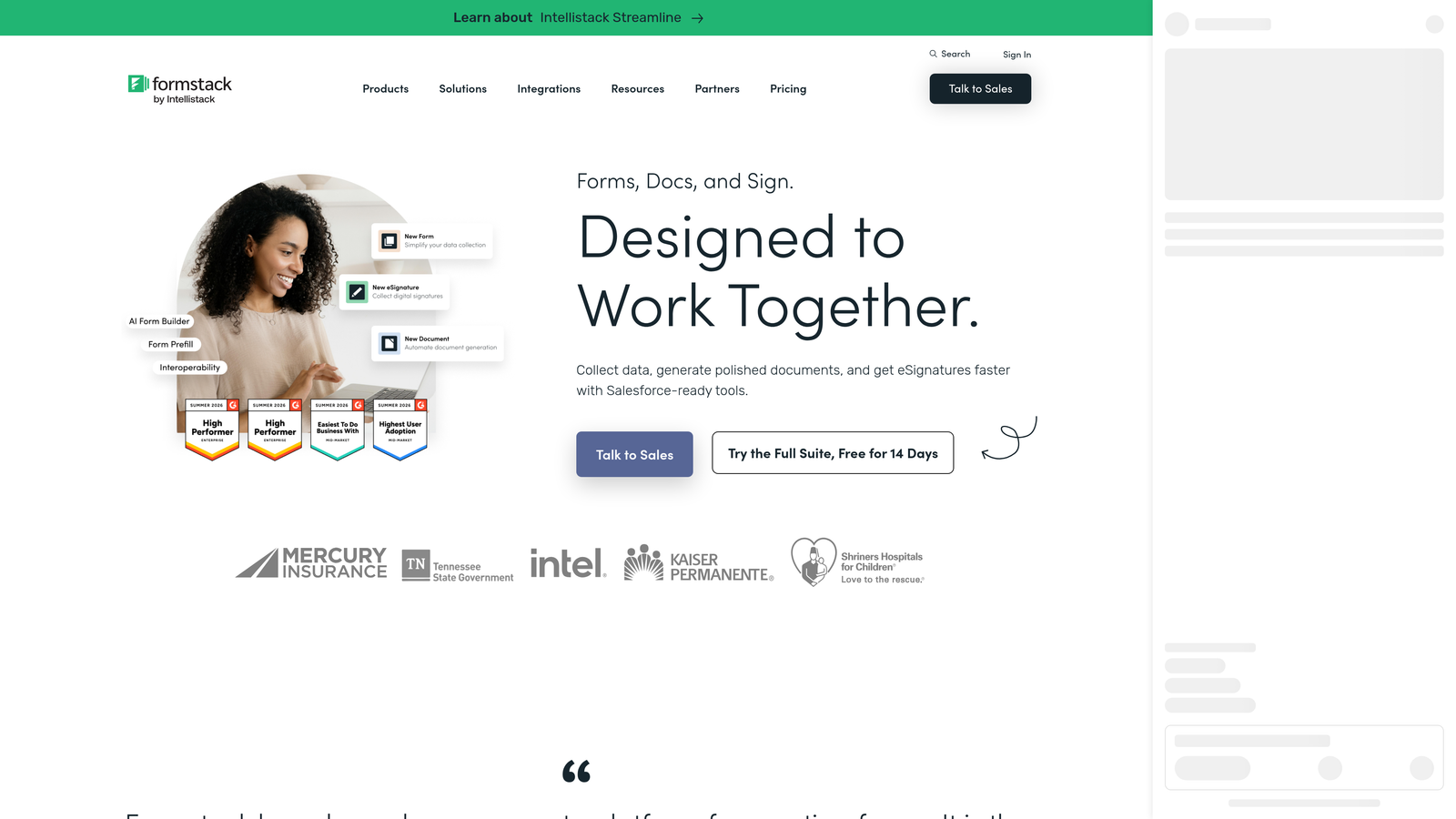
Formstack is an enterprise-grade platform that extends well beyond form building into document generation and multi-step workflow automation.
Where This Tool Shines
Formstack is in a different category from the other tools on this list. Where most form builders focus on data capture, Formstack is designed to automate what happens after the submission. Document generation, approval routing, digital signatures, and deep CRM integrations are all native capabilities, making it a serious workflow automation platform that happens to start with a form.
Its HIPAA compliance and SOC 2 certification make it one of the few form platforms genuinely suited for healthcare, finance, and other regulated industries where data handling requirements are non-negotiable.
Key Features
HIPAA and SOC 2 Compliance: Certified for regulated industry use cases where data security and compliance requirements must be met at the platform level.
Document Generation: Auto-populate contracts, agreements, and reports directly from form submission data, eliminating manual document creation.
Approval Workflows: Multi-step automation chains that route submissions through defined approval processes before triggering downstream actions.
Advanced Conditional Logic: Conditional fields, prefill capabilities, and complex field types for sophisticated form experiences.
Enterprise Integrations: Deep, native integrations with Salesforce, HubSpot, and other enterprise systems beyond standard Zapier connections.
Best For
Formstack is the right choice for enterprise teams in regulated industries, or organizations that need forms to trigger complex downstream workflows involving documents and approvals. It's significantly more expensive than the other options here and is best evaluated against an enterprise budget and a genuine need for its compliance and automation depth.
Pricing
Forms plans start at approximately $83 per month. Full platform bundles combining Forms, Docs, and Sign are priced considerably higher, reflecting the enterprise positioning of the product.
Which Tool Is Right for Your Team?
Each of these Tally alternatives addresses a different gap, so the right choice depends on what's actually slowing your team down.
If your core challenge is lead quality rather than lead volume, Orbit AI is the clearest choice. It's the only tool on this list with native AI lead qualification built directly into the form experience, making it purpose-built for SaaS and B2B teams where pipeline quality drives growth. The conversion-optimized templates and lead routing automation mean you're not just collecting submissions; you're actively filtering and directing the right prospects to the right people.
For teams where the respondent experience is the priority, Typeform remains the gold standard for conversational form design. If you need forms that double as transactional pages with built-in payments and scheduling, Paperform is the strongest all-in-one option. For organizations managing diverse form needs across multiple departments, Jotform's template breadth and data management tools make it a practical choice. And for enterprise teams in regulated industries with document automation requirements, Formstack is in a category of its own.
The common thread across all of these: they go meaningfully further than Tally for teams with real conversion and workflow requirements.
Transform your lead generation with AI-powered forms that qualify prospects automatically while delivering the modern, conversion-optimized experience your high-growth team needs. Start building free forms today and see how intelligent form design can elevate your conversion strategy.


