

Patient intake forms are often the first real touchpoint between a healthcare provider and a new patient. A clunky, paper-heavy process can cost you time, accuracy, and patient trust before the appointment even begins. The right digital form builder changes that entirely: smooth pre-visit data collection, fewer errors, and a patient experience that actually encourages people to complete the form rather than abandon it halfway through.
Here's the challenge: not every form builder is built for healthcare intake. Some are too generic, others are locked behind enterprise pricing, and very few are designed with form completion rates as a core priority. Whether you're running a private wellness practice, a multi-location clinic, or a health-focused startup, the tools below represent the strongest options available in 2026 for building patient intake forms that work.
A quick note before we dive in: HIPAA compliance status can change as products evolve. Always verify current BAA availability and compliance features directly with each vendor before deploying any form to collect Protected Health Information (PHI).
1. Orbit AI
Best for: Teams prioritizing form completion rates, intelligent data collection, and conversion-optimized intake experiences.
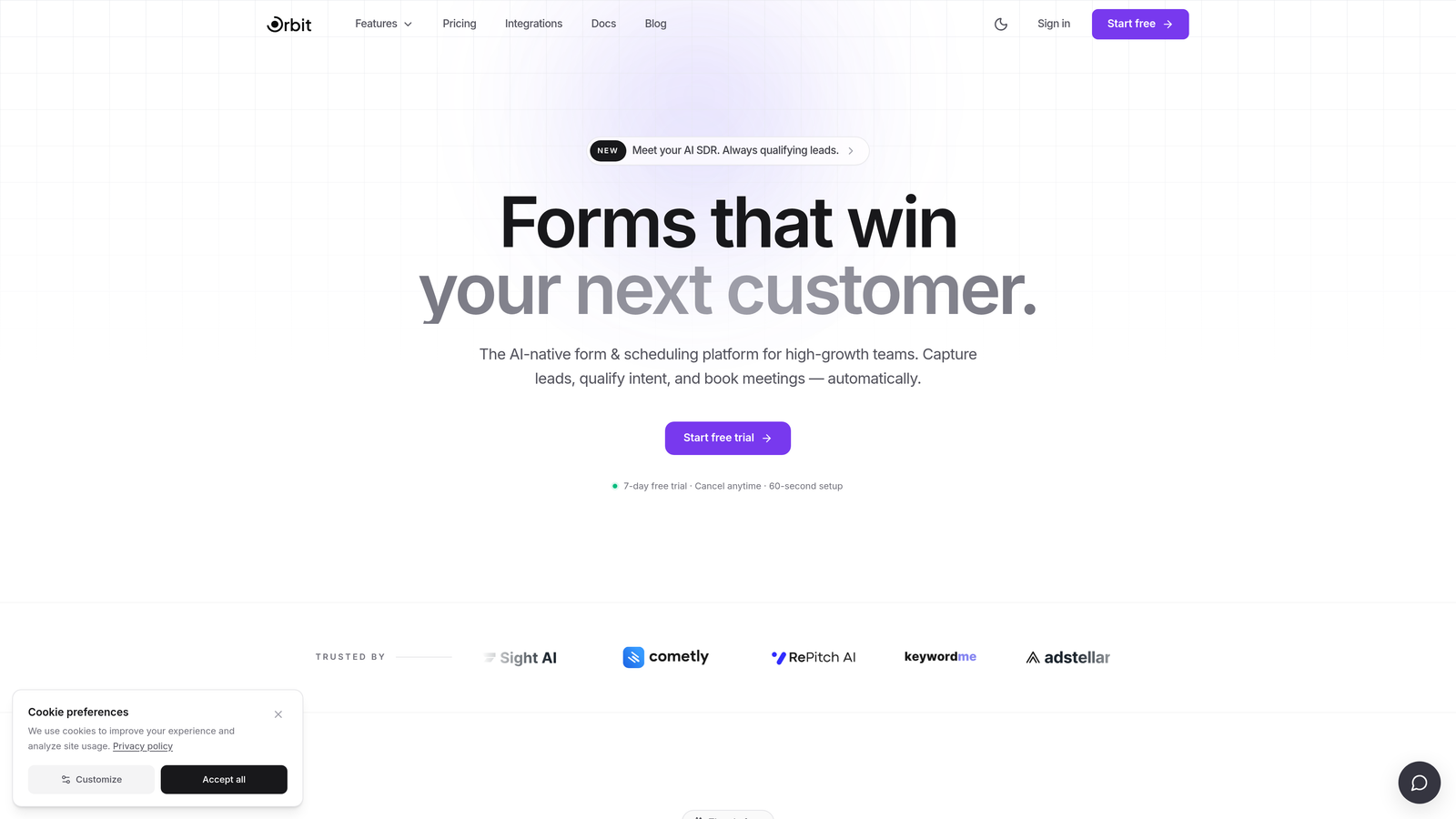
Orbit AI is an AI-powered form builder designed to maximize form completion and data quality through adaptive conditional logic and intelligent lead qualification.
Where This Tool Shines
Most form builders give you a static set of questions. Orbit AI takes a different approach: its AI-driven logic adapts the form flow in real time based on how a patient responds. Ask about a chief complaint, and the form intelligently surfaces the most relevant follow-up questions rather than presenting a wall of irrelevant fields. For intake scenarios where data quality matters as much as completion rate, this is a meaningful advantage.
The platform is built with conversion optimization as a first principle, not an afterthought. Clean, modern design combined with smart branching means patients encounter a form experience that feels intuitive rather than bureaucratic. For health-focused teams that care about first impressions, that distinction matters.
Key Features
AI-Driven Conditional Logic: Adapts the form flow dynamically based on patient responses, reducing irrelevant questions and form fatigue.
Conversion-Optimized Design: Forms are built around completion rate principles, with a modern UI that keeps patients engaged from start to finish.
Lead Qualification Scoring: Automatically segments and prioritizes respondents based on their answers, useful for triage or routing patients to the right care pathway.
Customizable Branding: Clean, white-label design options let you match your practice's visual identity without technical overhead.
CRM and Platform Integrations: Connects with marketing platforms and CRMs to keep patient data flowing into your existing workflows.
Best For
High-growth health teams, digital-first clinics, and wellness brands that want intake forms optimized for completion and data quality. Also well-suited for health startups building their first structured intake process. Note: verify current HIPAA compliance features directly with Orbit AI before deploying for PHI collection.
Pricing
Visit orbitforms.ai for current pricing details. A free trial is available to get started without a commitment.
2. Jotform
Best for: Healthcare practices that need HIPAA compliance, a BAA, and a large library of ready-made medical intake templates.
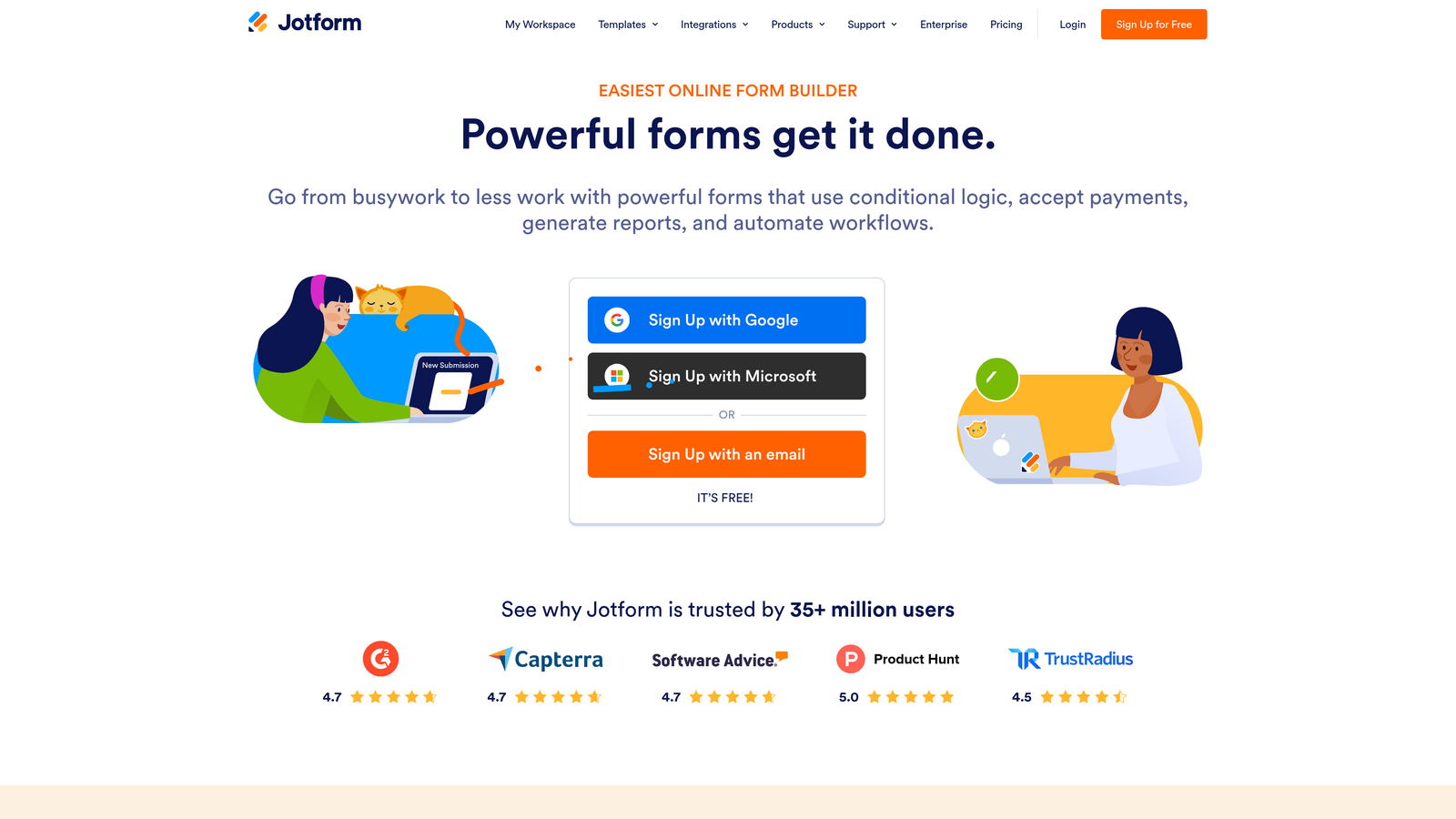
Jotform is one of the most established and widely used form builders in healthcare, offering a dedicated HIPAA compliance mode and thousands of pre-built medical templates.
Where This Tool Shines
Jotform's depth is hard to overstate. With over 10,000 templates in its library, including dozens purpose-built for medical intake, new patient registration, and consent collection, you can have a functional intake form running in minutes rather than hours. For practices that don't want to build from scratch, this is a serious time advantage.
The HIPAA compliance mode, available on paid plans with a BAA, makes Jotform one of the more accessible compliance-ready options for smaller and mid-sized practices. It supports e-signatures, file uploads, and payment collection, which means you can handle consent forms, insurance card uploads, and copay collection all within the same platform.
Key Features
HIPAA Compliance Mode: Available on paid plans with a Business Associate Agreement, making it suitable for PHI collection.
10,000+ Templates: Includes pre-built medical intake, new patient registration, and consent form templates to accelerate setup.
E-Signature and File Upload: Collect signed consent forms and supporting documents like insurance cards directly within the form.
Payment Collection: Integrates with Stripe, PayPal, and other processors for copay or service fee collection.
Broad Integrations: Connects with Google Sheets, Salesforce, and a range of EHR-adjacent tools via native integrations and Zapier.
Best For
Small to mid-sized medical practices, dental offices, and mental health providers that need a proven, compliance-ready form builder with minimal setup time. Particularly strong for teams that want to start from a template rather than build from zero.
Pricing
Free plan available. Paid plans start at approximately $34/month (Bronze). HIPAA compliance requires a paid plan. Verify current pricing and BAA terms at jotform.com.
3. Typeform
Best for: Practices focused on patient experience and reducing drop-off through a conversational, low-friction intake format.
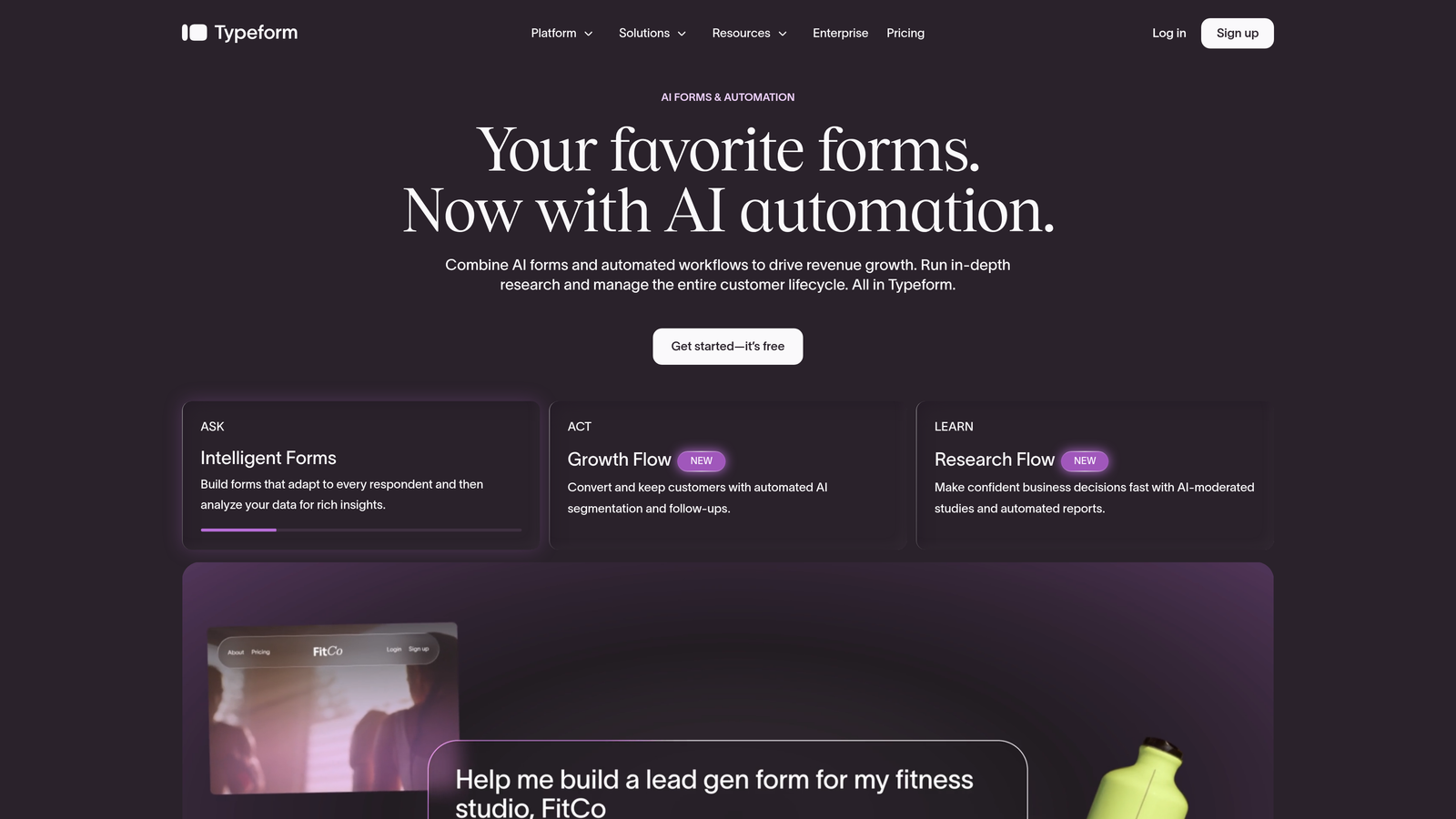
Typeform is a conversational form builder known for its one-question-at-a-time interface that makes long intake processes feel significantly shorter and more engaging.
Where This Tool Shines
The core insight behind Typeform is simple: presenting one question at a time reduces cognitive overload and keeps respondents moving forward. For patient intake, where forms can easily run 20 or 30 fields long, this format can meaningfully improve completion rates compared to traditional multi-field layouts. Patients feel like they're having a conversation rather than filling out paperwork.
The design quality is consistently polished. Typeform forms look modern and branded out of the box, which matters for practices that want their digital touchpoints to reflect the quality of their in-person care. Conditional logic and logic jumps allow you to build smart flows that skip irrelevant questions based on patient responses.
Key Features
Conversational Interface: One-question-at-a-time format reduces form fatigue and improves completion rates for longer intake sequences.
Conditional Logic and Logic Jumps: Route patients through personalized question flows based on their answers, keeping forms relevant and concise.
Branded Design: Visually polished form templates with strong customization options for colors, fonts, and imagery.
Hidden Fields: Pass pre-known data (like appointment type or referral source) into the form without asking patients to re-enter it.
Integrations: Connects with Zapier, HubSpot, Google Sheets, and a range of scheduling and CRM platforms.
Best For
Digital-first clinics, wellness brands, and health practices where patient experience is a top priority. Best suited for non-PHI intake steps or practices that have verified Typeform's current HIPAA compliance status directly with the vendor before deploying for PHI collection.
Pricing
Free plan available with limited responses. Paid plans start at approximately $25/month. Verify HIPAA compliance status directly with Typeform before using for PHI data.
4. Paperform
Best for: Private pay practices, wellness coaches, and health brands that want a single tool combining intake forms, payments, and appointment booking.
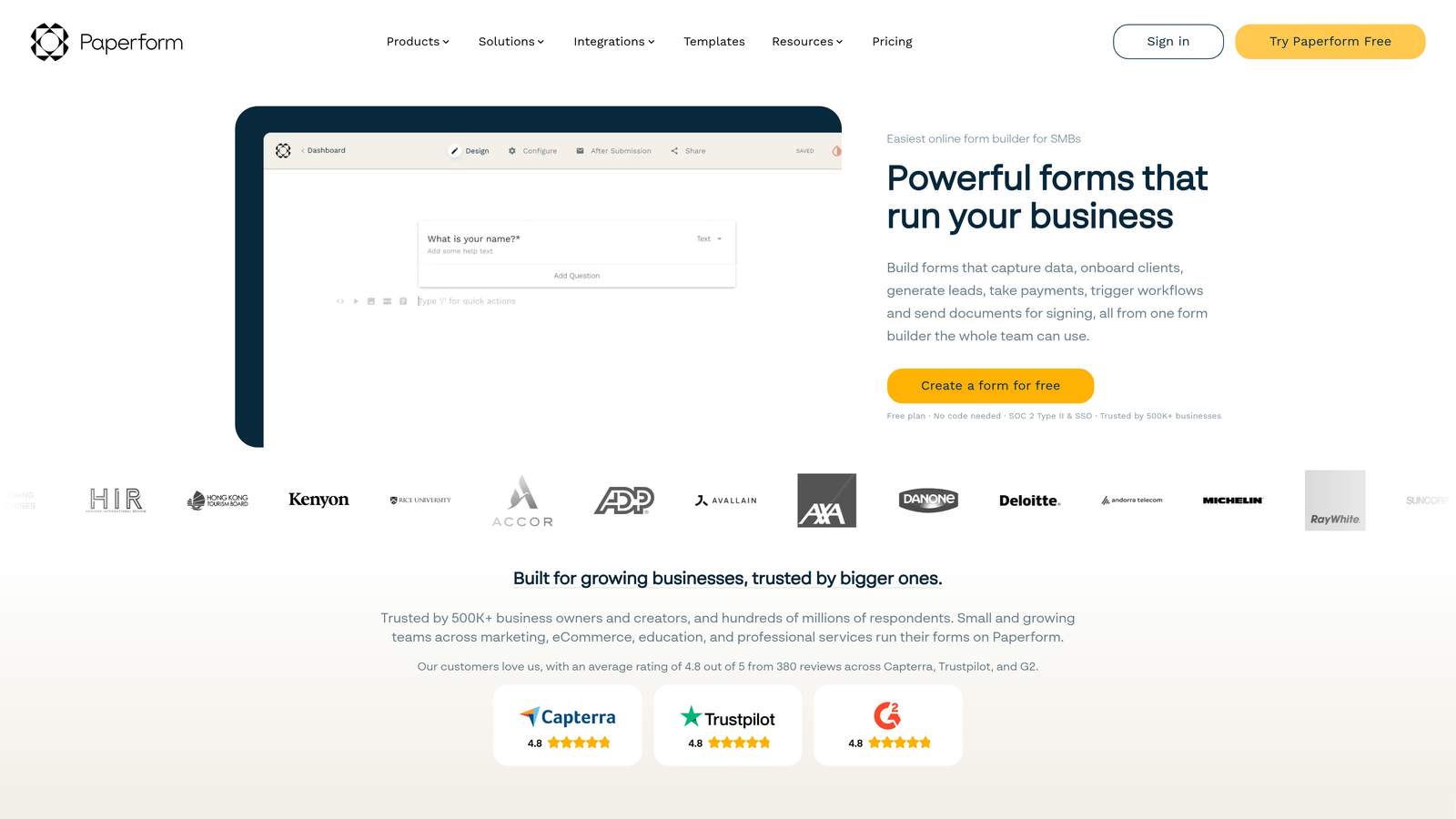
Paperform is a flexible form builder with a document-editor feel, letting you combine rich intake forms with payment collection and scheduling in one experience.
Where This Tool Shines
Paperform's document-style editor is its defining feature. Instead of dragging and dropping fields into a rigid template, you write and design your form the way you'd write a document, embedding form fields inline with text, images, and other content. The result tends to feel warmer and more human than a standard form, which can be a real advantage for wellness and mental health practices where the intake experience sets the emotional tone for care.
The built-in payment and scheduling capabilities mean private pay practices can handle the full pre-visit workflow in one place: collect intake data, take a deposit, and confirm an appointment without stitching together multiple tools.
Key Features
Document-Style Editor: Create rich, branded intake forms that combine text, media, and form fields in a natural, readable layout.
Built-In Payment Collection: Accept payments via Stripe and other processors directly within the intake form, ideal for private pay or deposit collection.
Appointment Scheduling: Booking and scheduling integration lets patients complete intake and confirm their appointment in a single flow.
Conditional Logic and Multi-Step Forms: Build personalized question paths and break long forms into manageable sections.
White-Label and Custom Domain Options: Embed forms on your own domain for a fully branded patient experience.
Best For
Private pay practices, wellness coaches, health coaches, and boutique healthcare brands that want a polished, all-in-one pre-visit experience. Verify HIPAA compliance status directly with Paperform before using for PHI collection.
Pricing
Starts at approximately $24/month (Essentials plan). No permanent free plan; a 14-day free trial is available. Verify current pricing and compliance features at paperform.co.
5. Formstack
Best for: Larger healthcare organizations that need enterprise-grade HIPAA compliance, advanced workflow routing, and deep integrations with EHR and Salesforce.
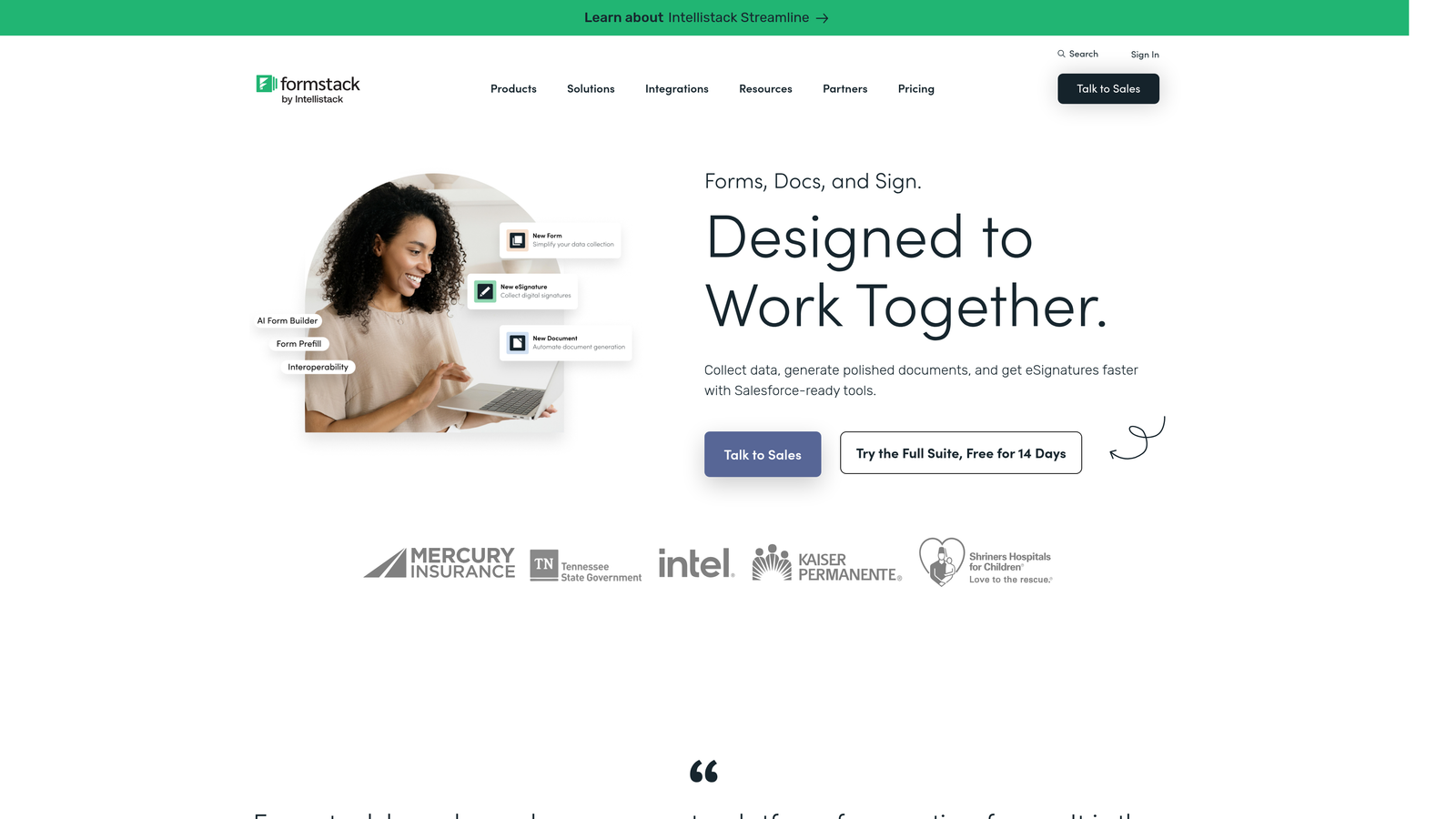
Formstack is an enterprise-grade form and workflow platform built for organizations that need more than a simple form: complex routing, document generation, e-signatures, and dedicated compliance infrastructure.
Where This Tool Shines
Formstack is designed for the complexity that larger healthcare organizations actually face. A single patient intake submission might need to trigger routing to different departments, generate a pre-populated document, collect a signature, and sync to an EHR or Salesforce instance. Formstack handles all of that within a single platform, which reduces the patchwork of integrations that enterprise teams typically manage.
The HIPAA compliance offering is robust, with a BAA available on qualifying plans and compliance built into the platform architecture rather than bolted on as an afterthought. For organizations where compliance is non-negotiable and workflows are complex, Formstack is one of the few tools that genuinely meets the bar.
Key Features
HIPAA Compliance with BAA: Dedicated compliance infrastructure with a Business Associate Agreement available on qualifying plans.
Advanced Workflow Routing: Route submissions through multi-step approval chains and department-specific workflows automatically.
Document Generation and E-Signatures: Generate pre-populated documents from form submissions and collect legally binding signatures.
Conditional Logic and Multi-Page Forms: Build complex, branching intake sequences that adapt based on patient responses.
Enterprise Integrations: Native connections to Salesforce, EHR platforms, and other enterprise tools used in large healthcare organizations.
Best For
Hospital systems, multi-location medical groups, and larger healthcare organizations with complex intake workflows, compliance requirements, and enterprise integration needs. The price point reflects this positioning.
Pricing
Starts at approximately $83/month (Forms plan). Enterprise pricing available for larger deployments. HIPAA compliance included on qualifying plans. Verify current pricing at formstack.com.
6. Tally
Best for: Small practices, health startups, and early-stage teams that want to launch a basic intake form quickly without any upfront cost.
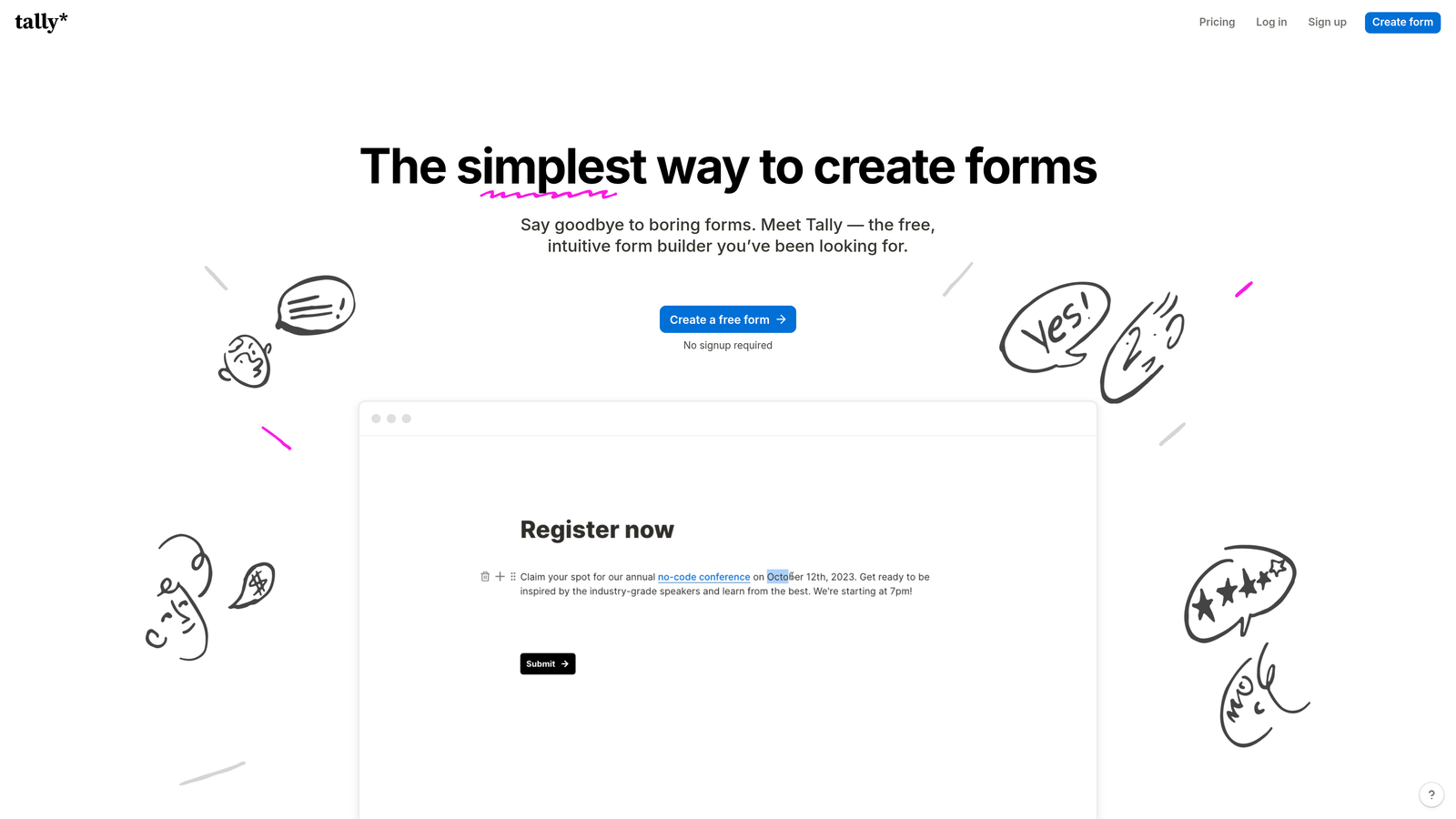
Tally is a free-first form builder with an unlimited free plan, offering a clean, Notion-like interface for building intake forms without spending a dollar to get started.
Where This Tool Shines
Tally's free plan is genuinely generous: unlimited forms, unlimited responses, conditional logic, and hidden fields, all without a credit card. For a health startup validating its intake process, or a solo practitioner who needs a basic new patient form without a monthly subscription, Tally removes the financial barrier entirely.
The editor is minimal and fast. If you've used Notion, Tally will feel immediately familiar. You can build a functional intake form in under 15 minutes and embed it anywhere: your website, a shared link, or an email. It won't win awards for advanced features, but for straightforward intake collection, it does the job cleanly.
Key Features
Unlimited Free Plan: Unlimited forms and unlimited responses at no cost, with no response limits or form caps on the free tier.
Notion-Like Editor: Minimal, block-based editor that makes form creation fast and intuitive without a learning curve.
Conditional Logic on Free Tier: Build branching question flows without upgrading to a paid plan.
Flexible Embedding: Share via link, embed on your website, or include in email workflows with no restrictions.
Zapier Integration: Connect Tally to other tools in your stack for basic automation and data routing.
Best For
Solo practitioners, small practices, and health startups in early stages who need a fast, free intake solution for non-PHI data. Tally is not HIPAA-compliant and should not be used to collect Protected Health Information.
Pricing
Free plan with unlimited forms and responses. Tally Pro starts at approximately $29/month for advanced features like custom domains and priority support. Verify current pricing at tally.so.
Choosing the Right Tool for Your Practice
The best patient intake form builder depends on where your practice is today and what you're optimizing for. Here's a quick guide to help you match the right tool to your situation.
For enterprise healthcare organizations: Formstack is the clear choice when you need robust HIPAA compliance, a BAA, complex workflow routing, and deep EHR integrations. The higher price point is justified by the compliance infrastructure and enterprise-grade capabilities.
For HIPAA compliance with template speed: Jotform offers one of the most accessible compliance-ready options for small to mid-sized practices, with thousands of pre-built medical templates to get you live quickly.
For patient experience and conversational intake: Typeform's one-question-at-a-time format is hard to beat when reducing drop-off and improving the feel of your intake process is the priority. Verify its current HIPAA status before deploying for PHI.
For private pay and all-in-one intake: Paperform combines intake forms, payments, and scheduling in a single polished experience, making it ideal for wellness practices and private pay clinics.
For zero-budget starts: Tally's unlimited free plan lets you launch a basic intake form immediately, with no cost and no commitment, though it's limited to non-PHI data collection.
For AI-powered conversion optimization: If your priority is maximizing the percentage of patients who actually complete your intake form, and collecting high-quality, structured data in the process, Orbit AI is built for exactly that. Its adaptive conditional logic and conversion-first design make it the strongest option for health teams that treat their intake form as a strategic asset, not just an administrative checkbox.
Ready to see what a smarter intake form looks like? Start building free forms today and experience how AI-powered form design can improve both your patient experience and your data quality from day one.


