

Typeform is beautiful, no question. But when you're scaling fast, the pricing starts to sting. Response limits kick in sooner than you'd expect, team seats add up quickly, and suddenly you're paying premium rates for features you could get elsewhere at a fraction of the cost.
The good news is that the alternatives have genuinely caught up. Whether you're a SaaS startup optimizing your onboarding funnel or a marketing team running high-volume lead gen campaigns, there are budget-friendly options that don't compromise on the things that actually drive conversions: clean design, smart logic, and seamless integrations.
This list covers the top cheap alternatives to Typeform in 2026, evaluated on pricing value, form design quality, lead qualification capabilities, and ease of use. Orbit AI leads the list because it's built specifically for conversion-focused teams, but every tool here is worth a serious look depending on your workflow.
1. Orbit AI
Best for: High-growth SaaS and B2B teams that need AI-powered lead qualification built directly into the form experience.
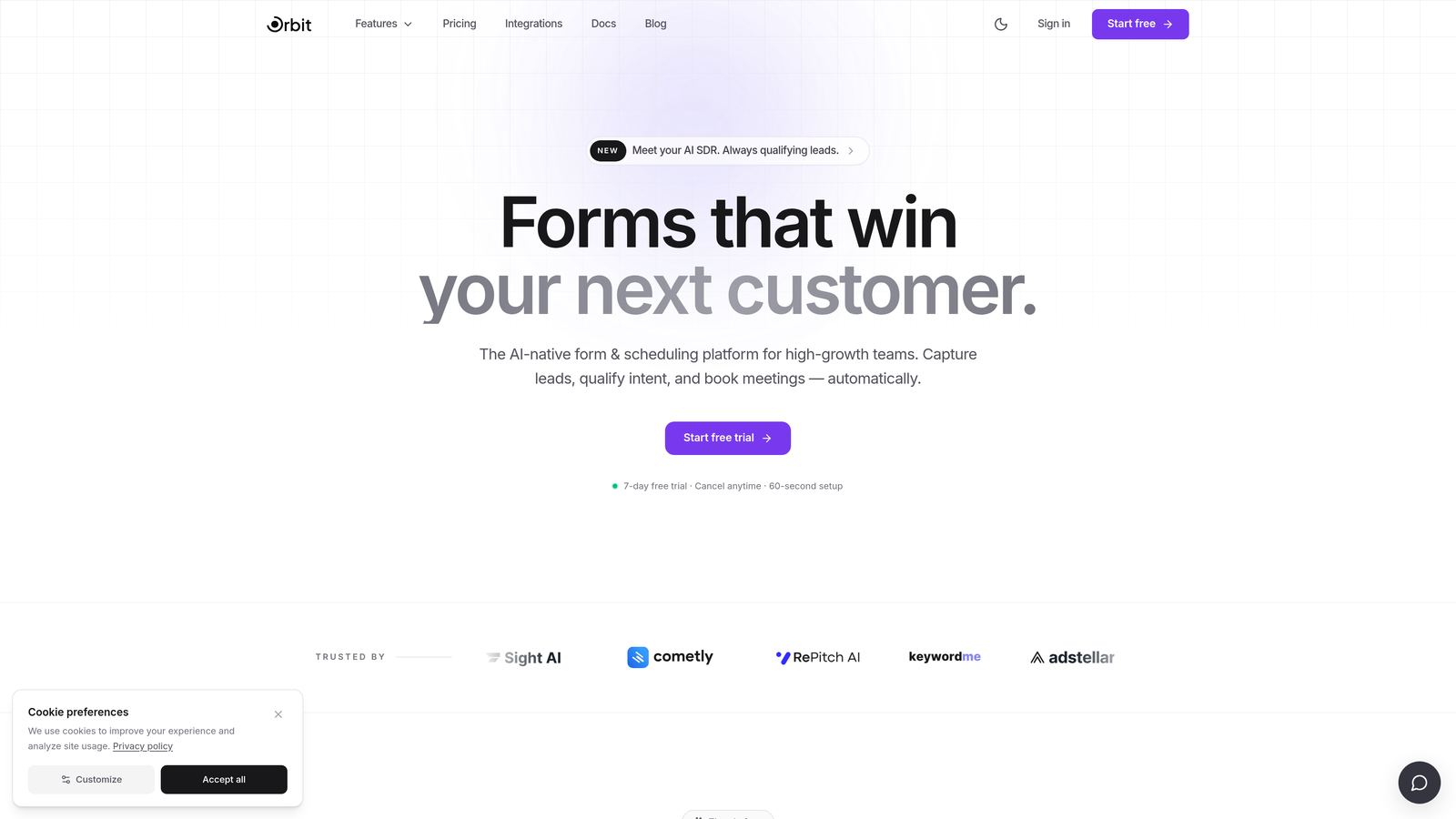
Orbit AI is an AI-powered form builder designed from the ground up for conversion-focused teams who need more than just a pretty form.
Where This Tool Shines
Most form builders treat lead qualification as an afterthought, something you bolt on through a CRM integration after the fact. Orbit AI bakes it directly into the form experience. As respondents move through a form, the AI scores and qualifies leads in real time, so your team knows exactly who to follow up with first without manually sorting through submissions.
The design quality is another standout. You get a modern, branded form UI that looks like it was built by a designer, even if you've never touched design software. For high-growth teams that need to move fast without sacrificing polish, that combination of intelligence and aesthetics is genuinely rare at this price point.
Key Features
AI Lead Qualification: Native lead scoring built into the form flow, not dependent on third-party integrations or manual tagging after submission.
Conversion-Optimized Design: Modern, clean form templates designed specifically to maximize completion rates and reduce drop-off.
Lead Scoring and Prioritization: Automatically ranks incoming leads so sales and marketing teams can focus their energy where it matters most.
Beautiful Branded UI: Fully customizable visual design that matches your brand without requiring a designer or custom CSS.
Built for B2B and SaaS Workflows: Form logic and structure tailored to the specific needs of onboarding funnels, demo request flows, and high-volume lead gen campaigns.
Best For
Orbit AI is the strongest fit for SaaS companies, B2B marketing teams, and growth-focused operators who need their forms to do more than collect data. If lead qualification is a core part of your funnel and you want that intelligence native to the form itself, this is the tool to start with.
Pricing
Positioned as a cost-effective alternative to Typeform's mid and upper tiers. Check orbitforms.ai for current pricing plans and available tiers.
2. Tally
Best for: Teams and individuals who want a Typeform-like experience on a tight budget or the free tier.
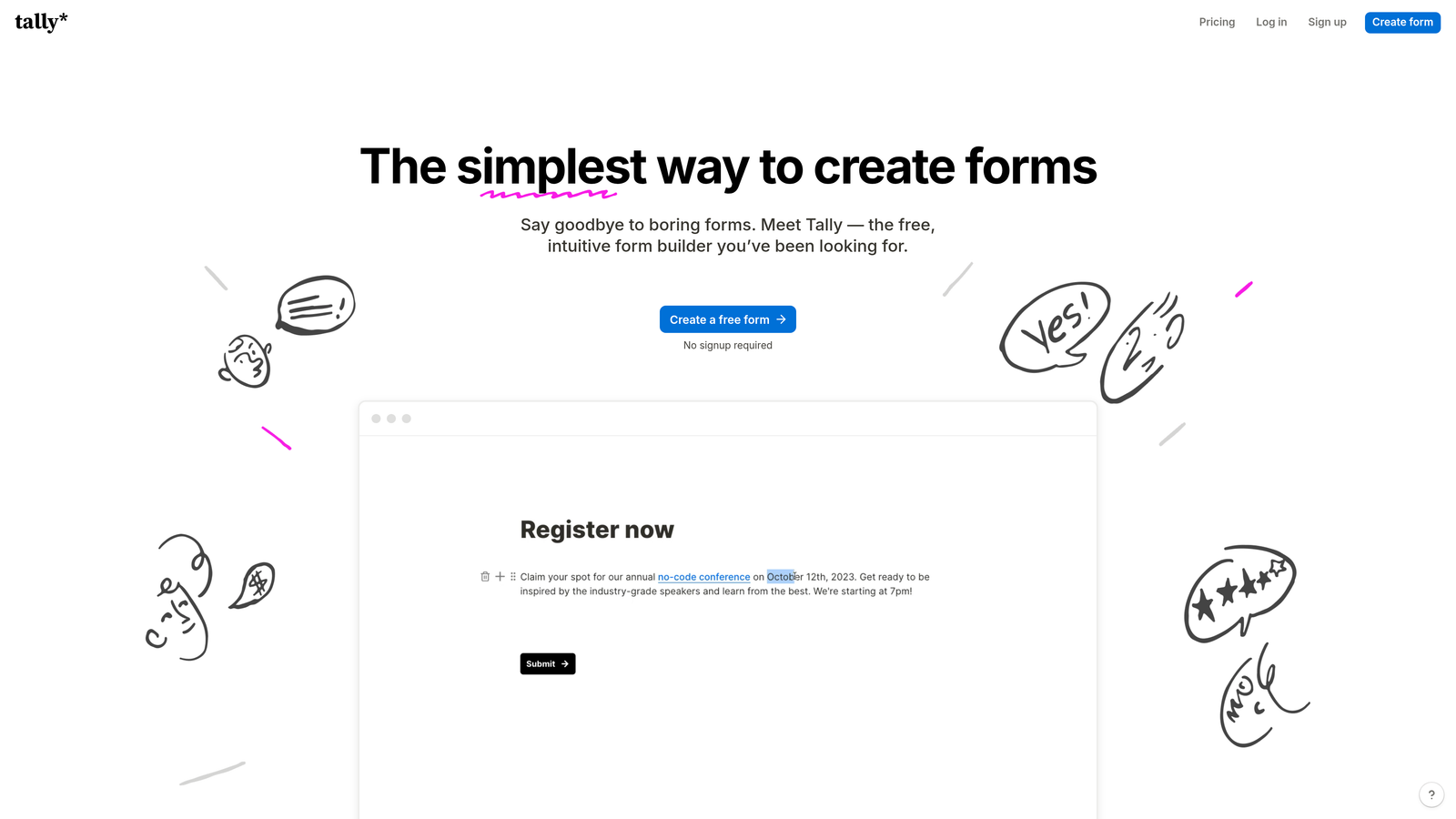
Tally is a minimalist form builder with a generous free plan and a clean, conversational interface that feels familiar to Typeform users.
Where This Tool Shines
Tally's biggest selling point is its free tier. Unlike most form tools that lock core functionality behind a paywall, Tally offers unlimited forms on its free plan, making it genuinely useful for solo operators, early-stage startups, and teams running lean. The setup is fast, the interface is uncluttered, and you can have a working form live in minutes.
The one-question-at-a-time conversational flow is available without upgrading, which directly addresses what most people love about Typeform. For straightforward data collection and lead capture, Tally punches well above its price tag.
Key Features
Generous Free Plan: Unlimited forms available on the free tier, making it accessible without any upfront commitment (verify current limits at tally.so).
Conversational Form Style: One-question-at-a-time UX that mirrors the Typeform experience without the Typeform price.
Conditional Logic: Basic logic jumps and conditional fields to create branching paths based on respondent answers.
Easy Embeds: Simple embed options for websites, Notion pages, and other platforms with minimal technical setup required.
Fast to Launch: Lightweight editor with a low learning curve, ideal for teams that need to ship forms quickly.
Best For
Tally is ideal for freelancers, early-stage startups, content creators, and small teams that need clean, functional forms without a budget. It's less suited for complex lead qualification workflows or enterprise-level integrations, but for straightforward use cases it's hard to beat the value.
Pricing
Free plan available with meaningful functionality. Paid plans are notably more affordable than Typeform's equivalent tiers. Verify current pricing at tally.so.
3. Jotform
Best for: Agencies and teams that need a wide template library, payment collection, and broad third-party integrations at scale.
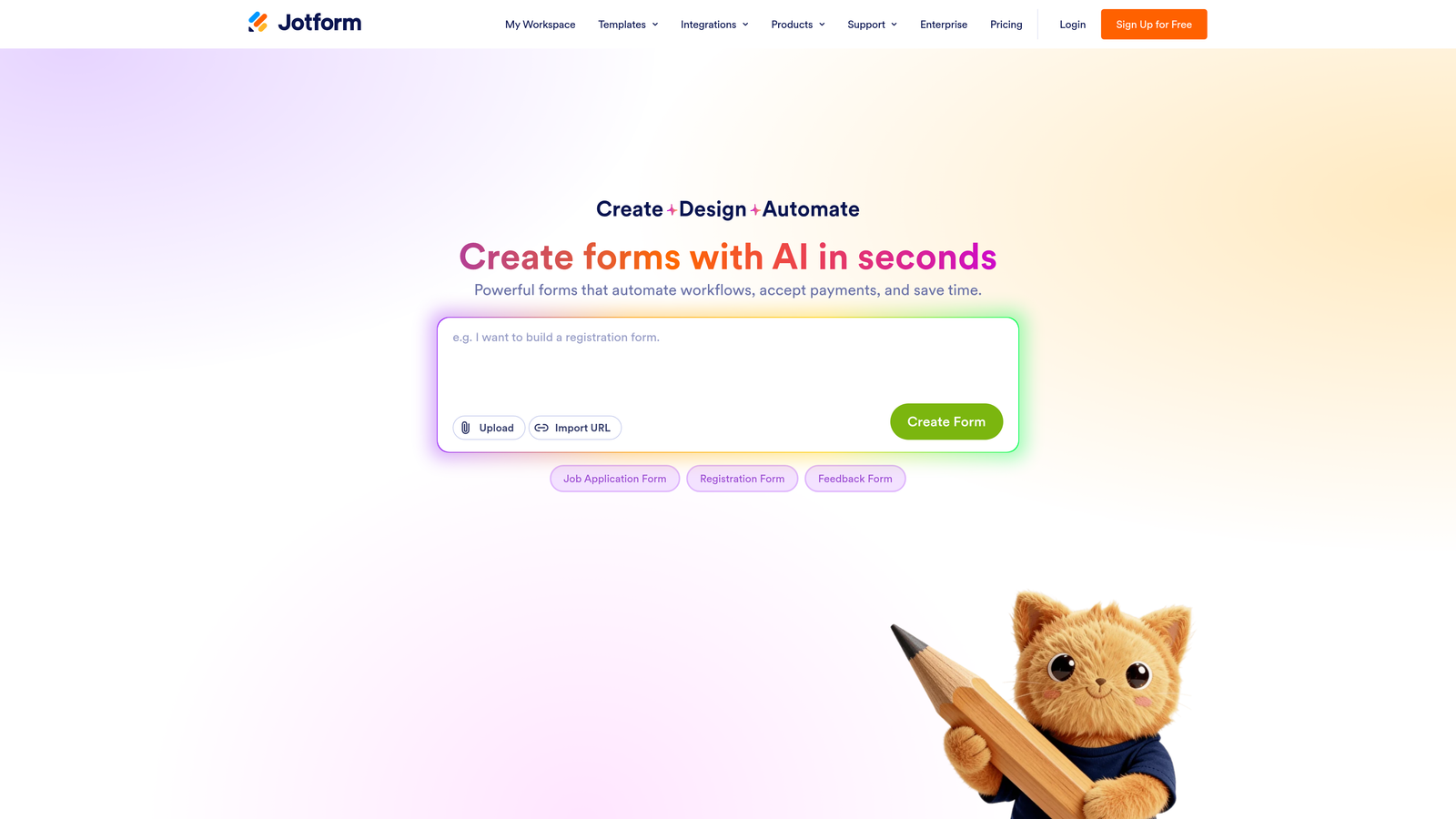
Jotform is one of the most feature-rich form builders on the market, with thousands of templates and an extensive integration ecosystem.
Where This Tool Shines
If variety and volume are your priorities, Jotform delivers. The template library covers virtually every industry and use case imaginable, so you're rarely starting from a blank canvas. For teams managing multiple clients or running diverse campaigns, that breadth of ready-made options significantly reduces build time.
The payment integration support is also a standout feature. Stripe, PayPal, and Square are all natively supported, making Jotform a practical choice for teams that need to collect payments or deposits directly through their forms without adding a separate tool to the stack.
Key Features
10,000+ Templates: An extensive library spanning industries from healthcare to e-commerce, covering almost any form use case you can think of.
Payment Integrations: Native support for Stripe, PayPal, Square, and other payment processors built directly into the form flow.
Third-Party App Ecosystem: Broad integrations with CRMs, marketing tools, project management platforms, and more.
Conditional Logic and Multi-Page Forms: Flexible form structure with branching logic and multi-step layouts for more complex data collection needs.
Free Tier Available: A functional free plan with submission limits to get started without a financial commitment.
Best For
Jotform works well for agencies managing multiple client accounts, teams with diverse form needs across departments, and anyone who needs payment collection built into their forms. The interface can feel less polished than Typeform's conversational style, but the sheer feature depth makes it a strong value proposition at comparable price points.
Pricing
Free plan available with submission limits. Paid plans scale by submission volume and are generally more affordable than Typeform at comparable feature levels. Verify current tiers at jotform.com.
4. Paperform
Best for: Marketers who want to build rich, branded campaign pages that also function as data collection forms.
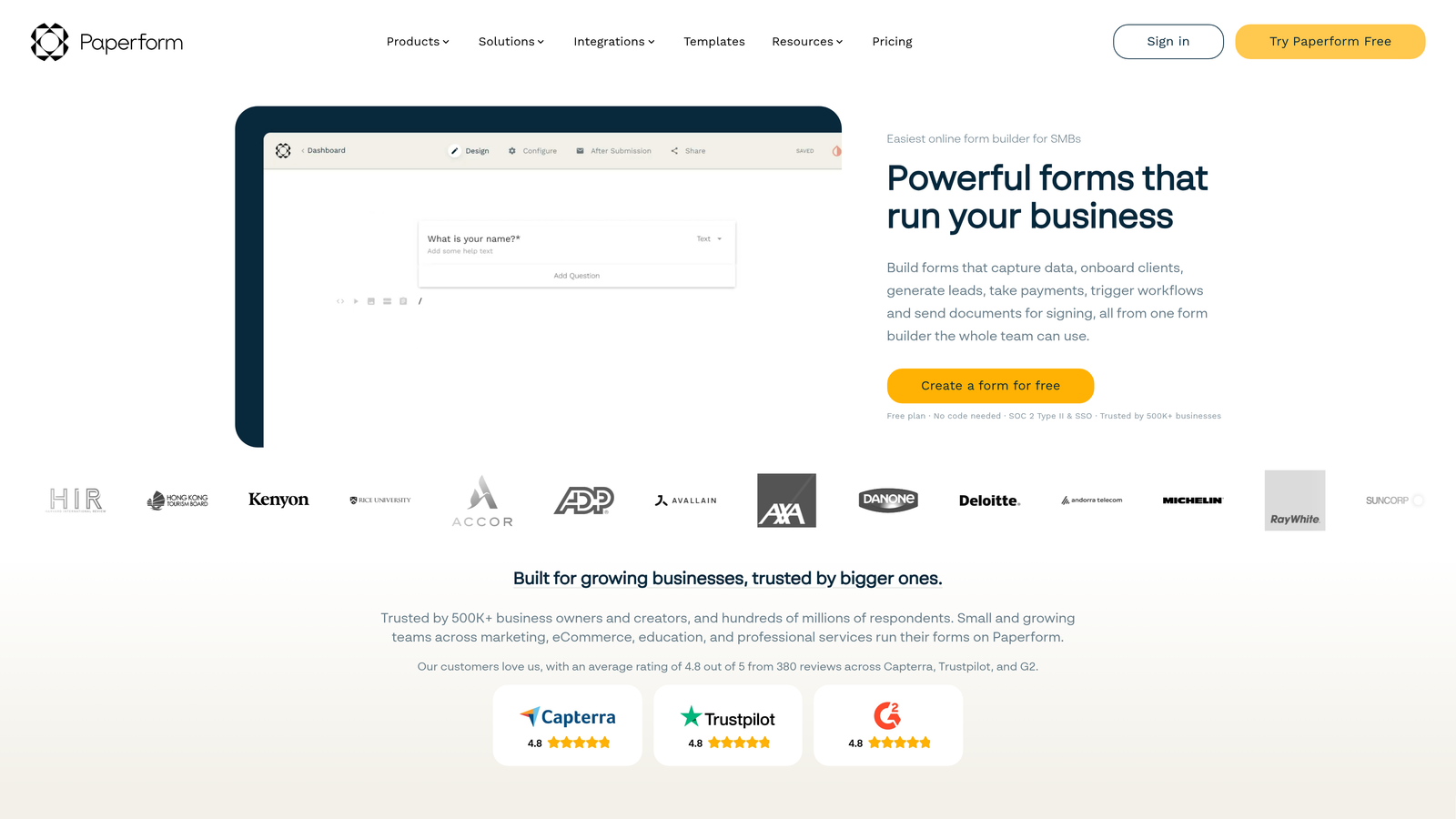
Paperform is a hybrid form and landing page builder that lets you mix content, images, and form fields freely in a single freeform editor.
Where This Tool Shines
Paperform occupies a unique niche. Rather than treating a form as a standalone widget, it lets you build what feels more like a content-rich landing page where form fields are woven naturally into the narrative. For marketers running campaign-specific lead gen pages, that flexibility means you can tell a story and collect data in the same breath, without stitching together a separate landing page tool and a form builder.
The output looks polished and professional without requiring design skills. Conditional logic and calculation fields add meaningful depth for use cases like pricing calculators, product recommendation flows, or multi-step qualification sequences.
Key Features
Freeform Page Editor: Mix text, images, videos, and form fields freely on the same canvas, creating a landing page and form in one.
Conditional Logic: Show or hide fields based on previous answers to create personalized, branching form experiences.
Calculation Fields: Built-in calculation support for pricing estimators, quizzes with scored outputs, and similar dynamic use cases.
Payment Collection: Native payment integrations for collecting fees, deposits, or purchases directly within the form page.
Clean Professional Output: Visually polished results without needing a designer or custom code.
Best For
Paperform is best suited for marketers, consultants, and small business owners who want their forms to feel like branded experiences rather than generic data collection widgets. It's less focused on AI-driven lead qualification, but for campaign landing pages and rich content forms, it's a genuinely capable tool.
Pricing
No free tier available. Paid plans start at a lower price point than Typeform's comparable tiers. Verify current pricing at paperform.co.
5. Formstack
Best for: Mid-market and enterprise teams in regulated industries that need workflow automation, document generation, and compliance features.
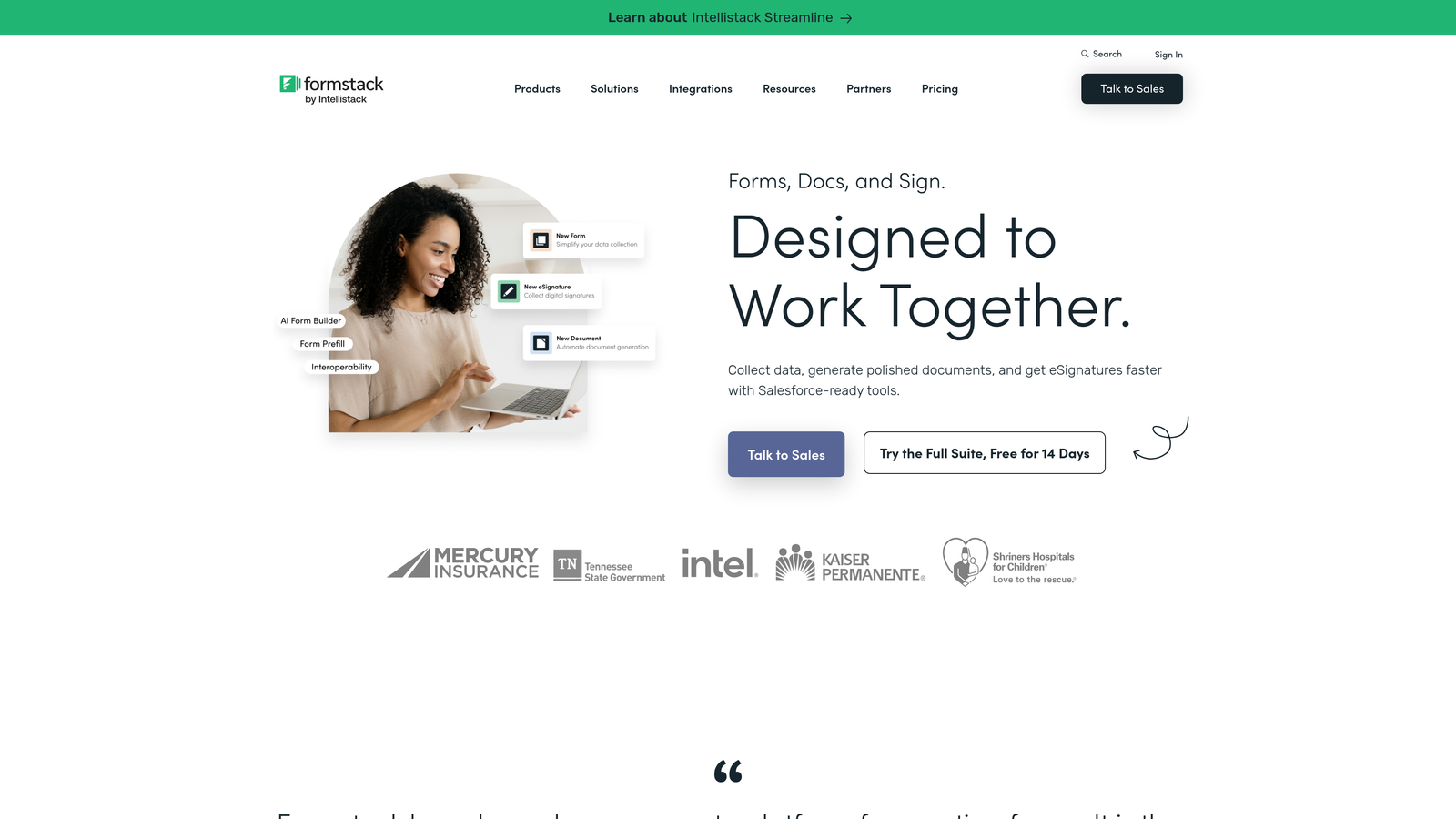
Formstack is a workflow-focused form platform built for teams that need their forms to connect to complex downstream processes, not just collect data.
Where This Tool Shines
Formstack goes well beyond basic form building. The platform is designed for organizations where a submitted form triggers a chain of actions: routing approvals, generating documents, updating CRM records, and notifying the right stakeholders automatically. For HR, legal, healthcare, and operations teams, that level of process integration is genuinely valuable.
The Formstack Documents feature is a particular differentiator. It allows teams to auto-generate PDFs, contracts, and other formatted documents from form submission data, which eliminates a significant amount of manual document prep work in compliance-heavy environments.
Key Features
Advanced Workflow Automation: Connect form submissions to multi-step approval workflows and downstream business processes without custom development.
Formstack Documents: Auto-generate PDFs, contracts, and formatted documents directly from form data, reducing manual document preparation.
HIPAA-Compliant Options: Healthcare-ready compliance features for organizations that need to collect sensitive patient or health-related data securely.
Enterprise CRM Integrations: Strong Salesforce integration and connections to other enterprise-grade CRM and marketing platforms.
Approval Workflows and Routing: Multi-step routing logic to send submissions through the right review and approval chains automatically.
Best For
Formstack is the right choice for mid-market and enterprise teams in healthcare, HR, legal, and operations that need forms to function as part of a larger automated workflow. It's not the cheapest option on this list in absolute terms, but it competes well with Typeform at upper tiers and delivers considerably more process automation per dollar.
Pricing
Higher price point than some alternatives on this list, but competitive with Typeform at enterprise tiers. Verify current pricing at formstack.com.
6. Typeform
Best for: Teams where brand-forward, conversational UX is the absolute top priority and budget is not a constraint.
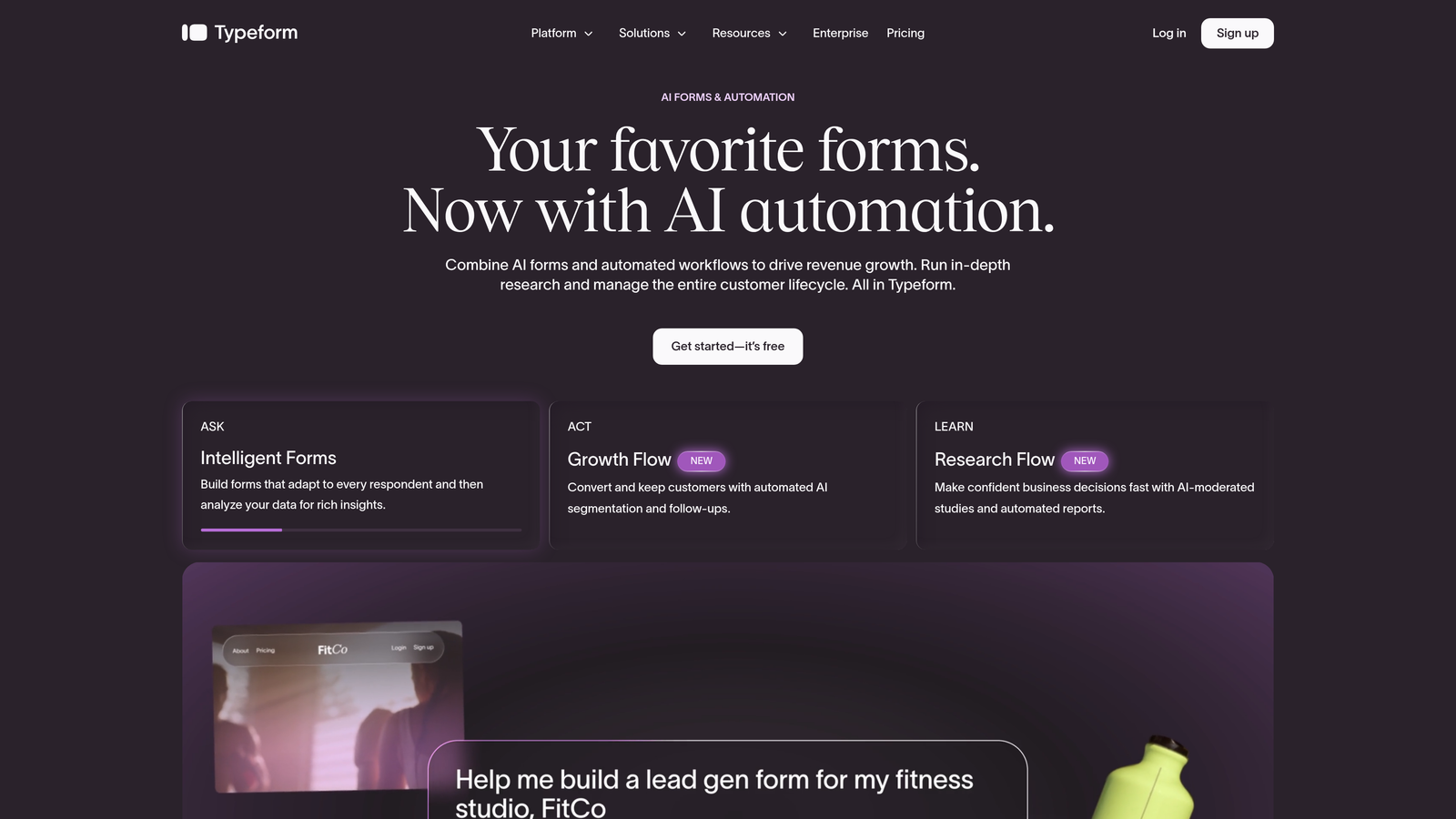
Typeform is the original conversational form tool and the benchmark against which every other option on this list is measured.
Where This Tool Shines
There's a reason Typeform became the category standard. The one-question-at-a-time interface creates a genuinely engaging respondent experience that feels more like a conversation than a form. For brand-sensitive use cases where first impressions matter, the polished, visually refined output is hard to match out of the box.
The logic jump and conditional branching capabilities are mature and reliable, and the integration ecosystem covers all the major CRM and marketing platforms. Video questions on higher tiers add another dimension for teams that want to go beyond text-based interactions.
Key Features
Conversational One-Question UX: The industry-defining format that presents one question at a time to maximize engagement and completion rates.
Polished Brand-Forward Design: Highly refined visual output that sets the aesthetic standard for form builders.
Logic Jumps and Conditional Branching: Mature conditional logic for creating personalized, non-linear form experiences.
CRM and Marketing Integrations: Connects to major CRM platforms, email marketing tools, and marketing automation systems.
Video Questions: Available on higher-tier plans, allowing respondents to answer with recorded video responses.
Best For
Typeform is best for teams where design quality and conversational UX are non-negotiable and budget is secondary. It's included here as the benchmark, not as the recommended budget choice. If you're reading this article, you're likely already aware of its strengths and looking for a more cost-effective path to similar results.
Pricing
Response limits apply at lower tiers, and team plans add per-seat costs. This pricing structure is the primary reason many growing teams start exploring alternatives. Verify current plans at typeform.com.
Which Tool Is Right for Your Team?
The right Typeform alternative depends entirely on what's driving you away from Typeform in the first place. Here's a quick way to think through your options.
If you need AI-powered lead qualification built natively into your forms, Orbit AI is the clear starting point. It's built specifically for high-growth SaaS and B2B teams that need their forms to do more than collect responses. The combination of intelligent lead scoring and conversion-optimized design addresses the exact gap that Typeform leaves for growth-focused teams.
If budget is the primary constraint and you need something functional right now, Tally's free tier is genuinely hard to beat for straightforward lead capture and data collection. For teams that need breadth of templates and payment collection, Jotform offers strong value at comparable price points. If your use case is campaign landing pages with embedded forms, Paperform's hybrid editor is worth exploring. And for mid-market or enterprise teams in regulated industries, Formstack's workflow automation and compliance features justify its price point when compared against Typeform's upper tiers.
The common thread across all of these options is that you don't have to pay Typeform prices to get Typeform-quality results. The alternatives have matured significantly, and in several cases they've surpassed the benchmark in specific areas that matter most to modern growth teams.
Transform your lead generation with AI-powered forms that qualify prospects automatically while delivering the modern, conversion-optimized experience your high-growth team needs. Start building free forms today and see how intelligent form design can elevate your conversion strategy.


