

Every abandoned cart, missed upsell, and lost customer inquiry costs ecommerce stores real revenue. The forms your store uses — from checkout fields and product inquiry forms to post-purchase surveys and lead capture popups — directly shape the buying experience.
A clunky, generic form builder won't cut it when you need seamless integrations with Shopify, WooCommerce, or BigCommerce, plus the ability to handle order-specific logic, payment processing, and mobile-first design. We evaluated dozens of form builders and narrowed the field to nine that genuinely serve ecommerce use cases.
Our selection criteria: ecommerce platform integrations, payment and order form capabilities, conditional logic for product-specific workflows, mobile responsiveness, and conversion optimization features. Whether you're running a DTC brand, a multi-SKU marketplace, or a subscription box service, this list has a tool that fits.
1. Orbit AI
Best for: Ecommerce teams that want AI-powered lead qualification built directly into their forms.
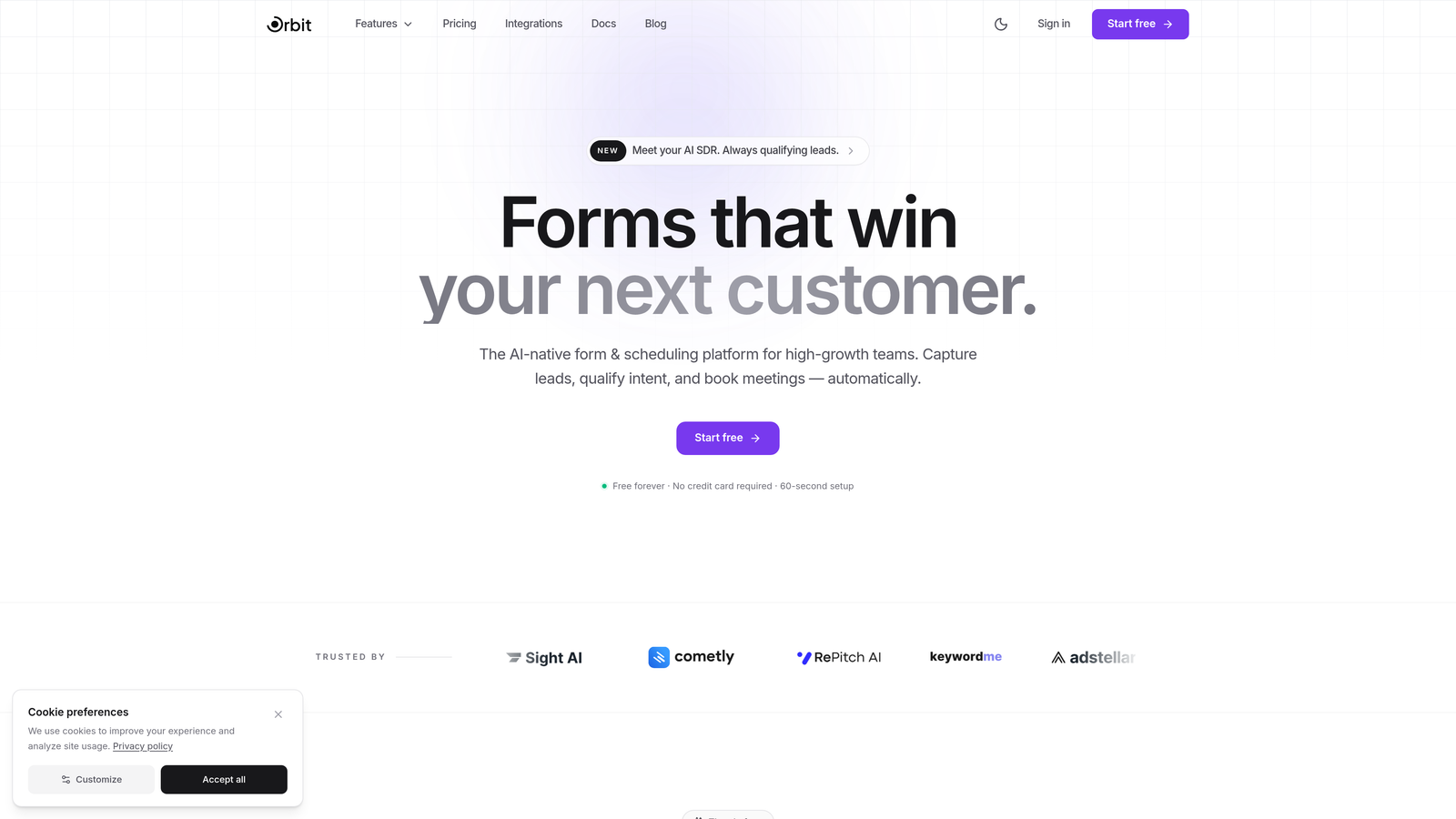
Orbit AI is an AI-powered form builder that captures, scores, and routes leads automatically so your team focuses on prospects most likely to convert.
Where This Tool Shines
Most form builders collect data and stop there. Orbit AI goes a step further by evaluating each submission in real time, scoring leads based on the signals that matter to your business, and routing high-intent prospects to the right follow-up flow automatically. For ecommerce brands managing high inquiry volume, that intelligence layer removes a lot of manual triage work.
The form design experience is built with conversion in mind. Templates are clean, mobile-first, and optimized for the moments that matter most in an ecommerce journey: product inquiries, wholesale applications, quiz-style product finders, and post-purchase feedback. You're not starting from a blank canvas every time.
Key Features
AI Lead Scoring: Automatically qualifies and scores each form submission so your team can prioritize high-intent prospects without manual review.
Conversion-Optimized Templates: Pre-built form templates designed specifically for ecommerce use cases, from product quizzes to wholesale inquiry forms.
Conditional Logic and Dynamic Fields: Show or hide fields based on user input, creating personalized form paths that feel relevant rather than generic.
Ecommerce and CRM Integrations: Connects with popular ecommerce platforms and CRM tools to keep your lead data flowing where it needs to go.
Mobile-First Design: Every form renders beautifully on mobile, which matters when a significant share of your store traffic arrives on phones.
Best For
High-growth ecommerce teams and DTC brands that generate meaningful lead volume and want intelligent qualification built into the form layer itself. Particularly valuable for stores running wholesale programs, product recommendation funnels, or any workflow where lead quality matters as much as lead volume.
Pricing
Visit orbitforms.ai for current pricing plans. A free starting option is available to get your first forms live quickly.
2. Shopify Forms
Best for: Shopify merchants who want zero-friction email capture without leaving the Shopify admin.
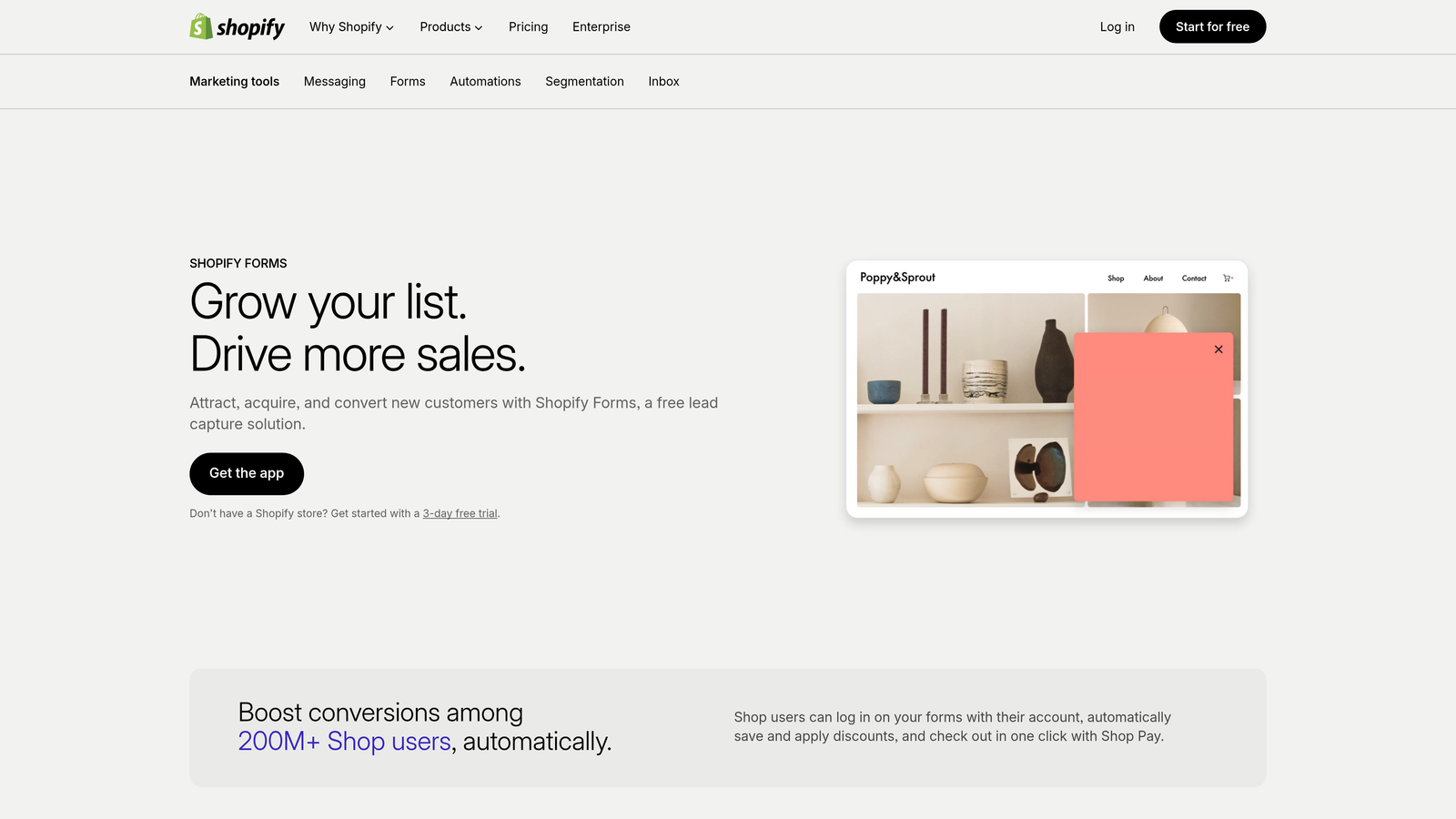
Shopify Forms is Shopify's native, free form builder for creating email capture forms, customer surveys, and contact forms directly within the Shopify admin.
Where This Tool Shines
When you're already running your store on Shopify, the appeal of a native tool is hard to argue with. There's no third-party app to configure, no API keys to manage, and no data sync to worry about. Submissions go directly into your Shopify customer profiles and segments, which means your email marketing lists stay current with zero extra effort.
It's not the most feature-rich option on this list, but for foundational use cases like growing an email list, collecting contact inquiries, or running a simple post-purchase survey, it handles the job cleanly without adding cost or complexity.
Key Features
Native Shopify Integration: Forms live inside your Shopify admin with no setup friction or third-party connections required.
Automatic Customer Profile Sync: Submissions automatically update Shopify customer profiles and segments in real time.
Shopify Email Compatibility: Works directly with Shopify Email so you can trigger follow-up campaigns immediately after a form is submitted.
Brand-Matching Templates: Customizable templates that pull from your store's existing theme and branding settings.
Free for All Merchants: Included at no additional cost with any active Shopify subscription.
Best For
Shopify merchants who want a simple, reliable email capture and contact form solution without adding app costs. Best suited for stores with straightforward form needs rather than complex conditional logic or payment-enabled workflows.
Pricing
Free, included with any Shopify subscription. No additional cost for any plan tier.
3. Typeform
Best for: Product recommendation quizzes and engaging post-purchase surveys that feel like conversations.
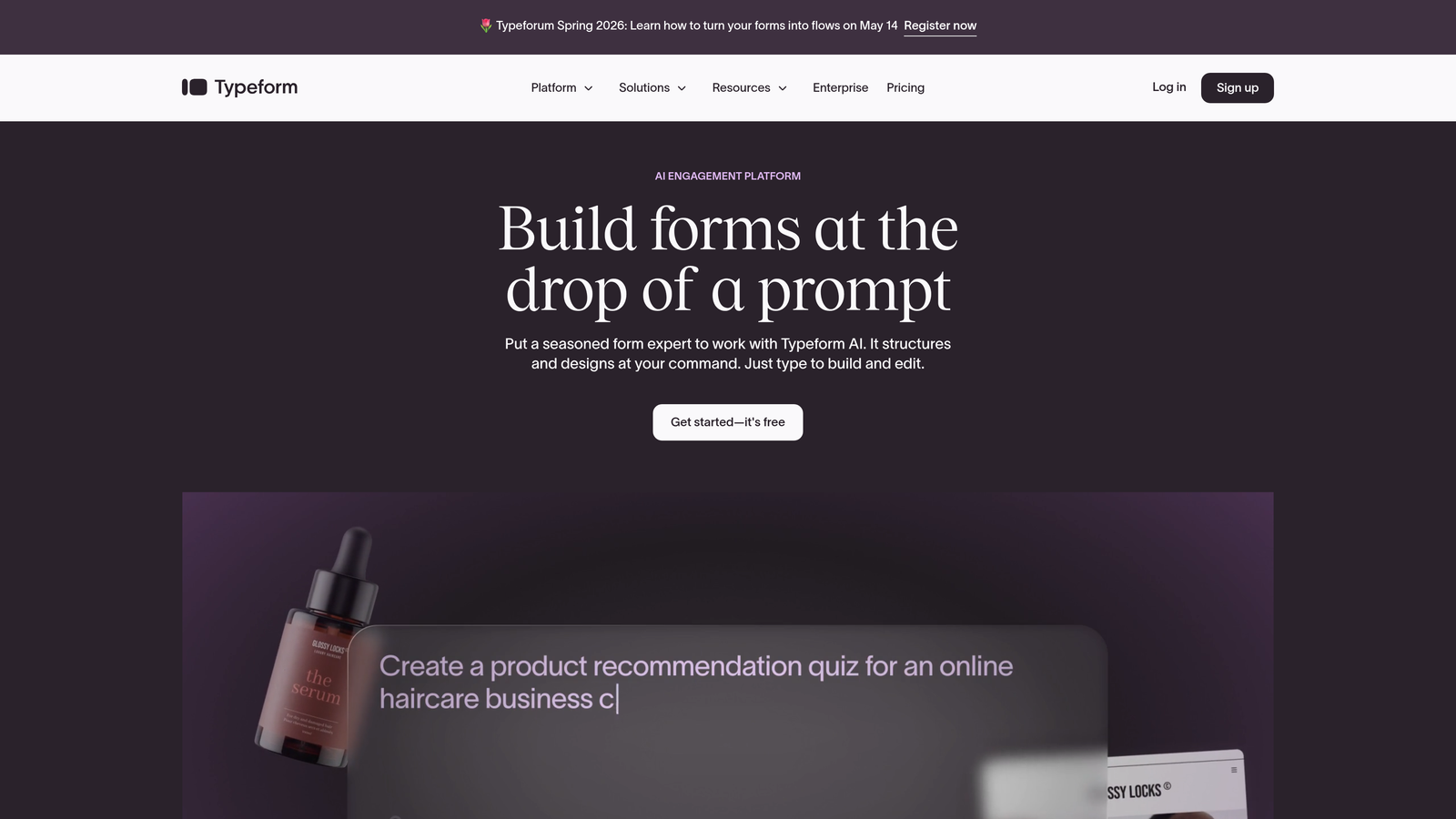
Typeform is a conversational form builder known for its one-question-at-a-time format that keeps completion rates high and brand experience consistent.
Where This Tool Shines
Typeform's format works especially well for ecommerce use cases where you need to gather nuanced information without overwhelming the customer. Product recommendation quizzes are a natural fit: guide shoppers through a few focused questions, then serve them a curated product suggestion based on their answers. The experience feels personal rather than transactional.
The logic branching capabilities mean each respondent follows a path tailored to their previous answers. A skincare brand asking about skin type, concerns, and routine can send each customer to a completely different product outcome, all within a single form.
Key Features
Conversational Interface: One-question-at-a-time format that reduces cognitive load and improves form completion rates.
Logic Branching: Route respondents to different questions or outcomes based on their previous answers, enabling true product recommendation flows.
Ecommerce Integrations: Connects with Shopify, Klaviyo, and other major ecommerce and email marketing tools.
Embedded Forms and Popups: Flexible display options for on-site experiences, from full-page embeds to popup triggers.
Built-In Analytics: Tracks completion rates, drop-off points, and response data so you can optimize your forms over time.
Best For
Ecommerce brands running product recommendation quizzes, detailed customer onboarding flows, or post-purchase NPS surveys where the quality of the experience matters as much as the data collected.
Pricing
Free plan available with limited responses. Paid plans start at $25 per month, billed annually.
4. Jotform
Best for: Standalone order forms and product catalogs with built-in payment processing.
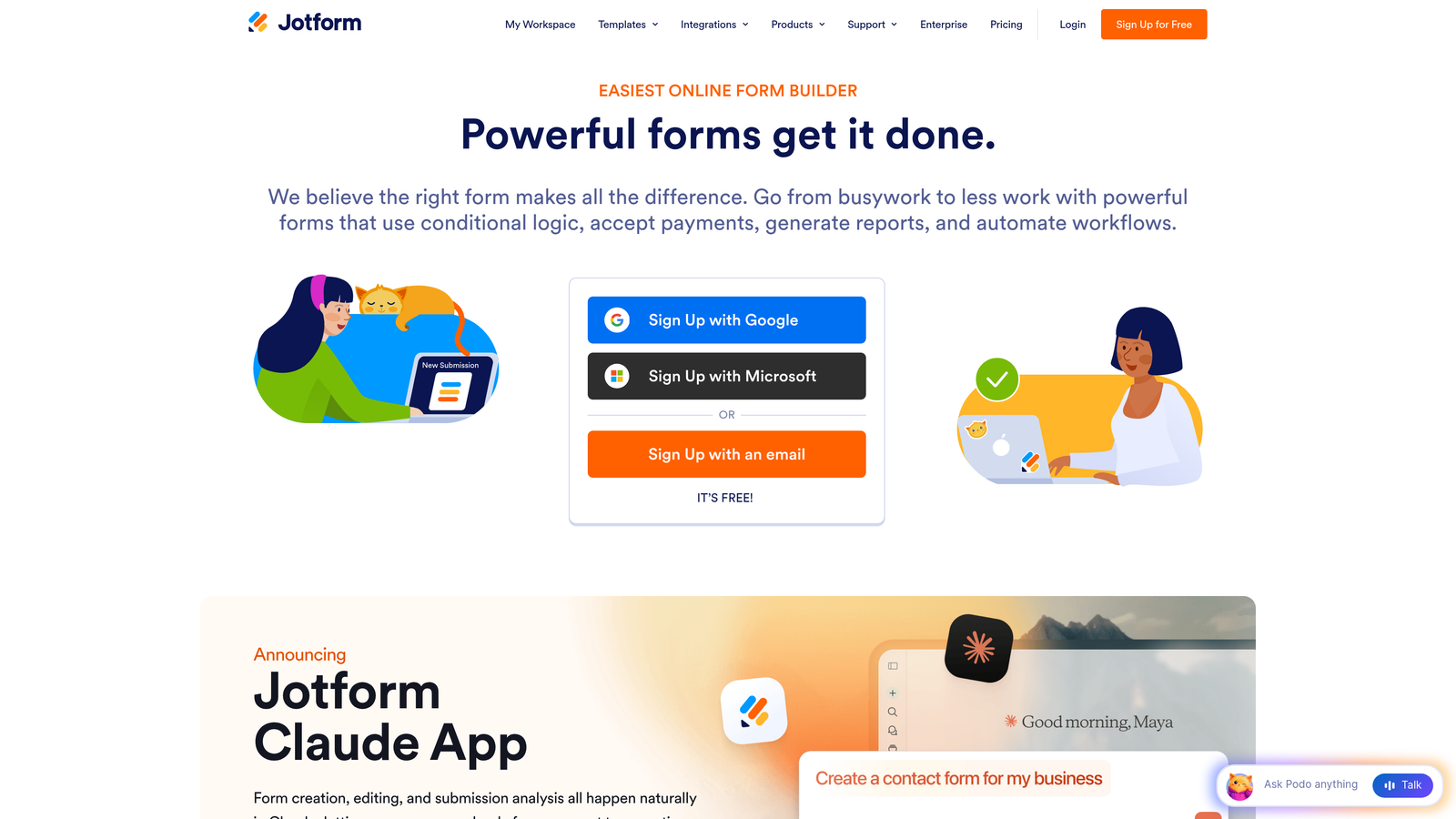
Jotform is a versatile form builder with one of the broadest payment gateway libraries available, making it a strong choice for ecommerce teams that need payment-enabled forms outside their main storefront.
Where This Tool Shines
Where Jotform separates itself from the field is in its depth of payment integrations. With connections to more than 100 payment gateways including Stripe, PayPal, and Square, it's possible to build a fully functional order form without touching your main ecommerce platform at all. This is particularly useful for wholesale orders, custom product requests, or event-based sales that don't fit neatly into a standard storefront.
The template library is extensive and genuinely ecommerce-specific. You're not adapting a generic contact form into an order form; you're starting from a template that already includes product image fields, quantity selectors, and coupon code inputs.
Key Features
100+ Payment Integrations: Connects with Stripe, PayPal, Square, and dozens of other gateways for flexible payment collection directly in forms.
Ecommerce Templates: Purpose-built templates for order forms, product catalogs, and service booking workflows.
Product Catalog Fields: Drag-and-drop product image, description, and quantity fields for building visual order forms.
Inventory Tracking and Coupons: Built-in inventory tracking fields and coupon code support for promotional campaigns.
PDF Invoice Generation: Automatically generates PDF invoices from form submissions for order confirmation and record-keeping.
Best For
Ecommerce businesses that need payment-enabled order forms, wholesale inquiry forms, or custom product configurators that operate independently from their main storefront platform.
Pricing
Free plan supports up to 5 forms. Paid plans start at $34 per month, billed annually.
5. WPForms
Best for: WooCommerce stores looking for a beginner-friendly form plugin with native WordPress integration.
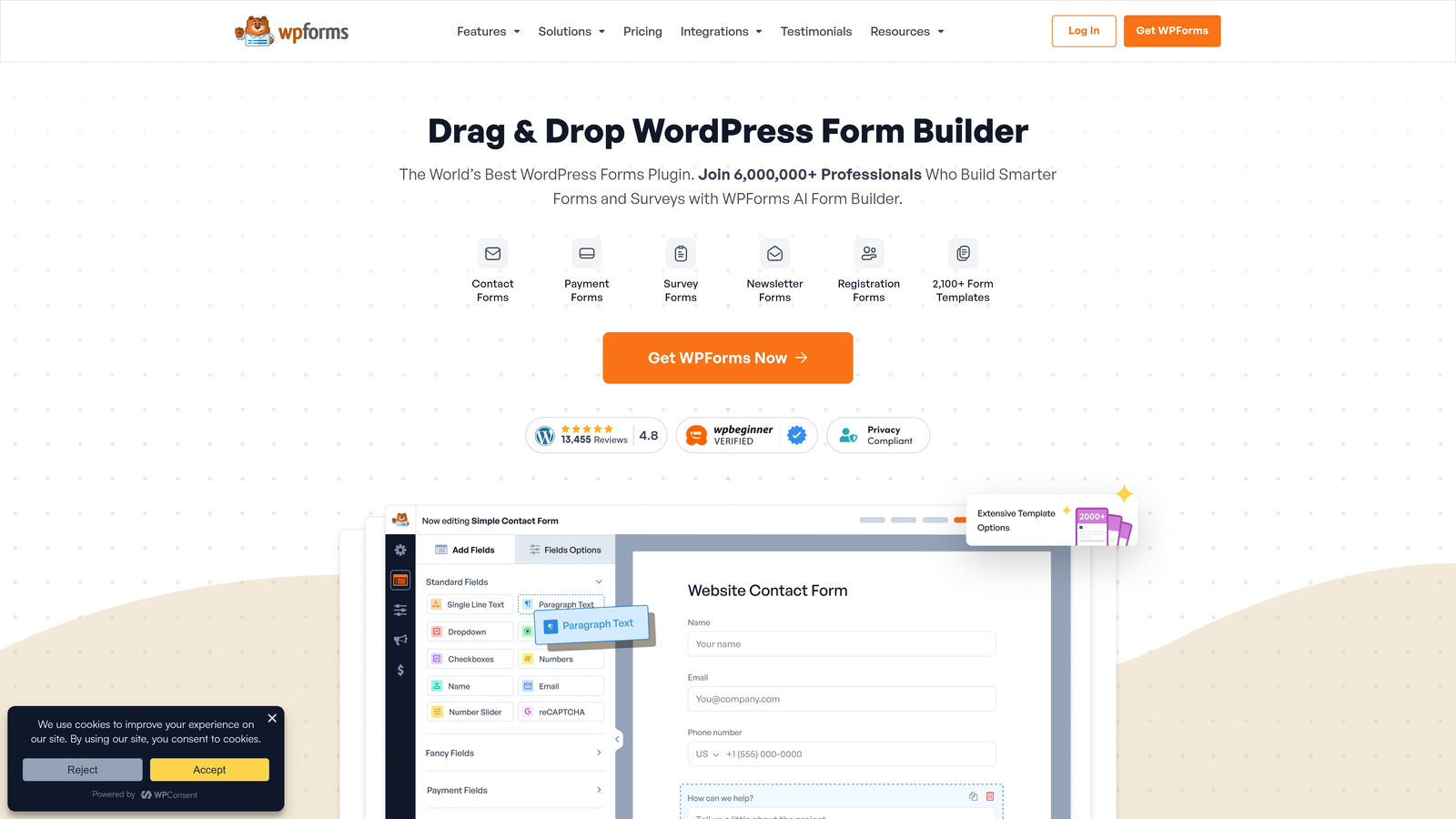
WPForms is a drag-and-drop WordPress form plugin with dedicated WooCommerce add-ons, making it the go-to choice for stores built on the WordPress ecosystem.
Where This Tool Shines
If your store runs on WooCommerce, WPForms is designed with your stack in mind. The WooCommerce-specific add-ons let you trigger form actions based on order events, connect form submissions to customer accounts, and build product-specific inquiry flows that tie directly into your existing WordPress setup.
The builder itself is genuinely beginner-friendly without feeling limited. Multi-page forms, conditional logic, and payment integrations are all available without requiring any code. For store owners managing their own site, that accessibility is a real advantage.
Key Features
Native WordPress Builder: Drag-and-drop form creation that integrates natively with WordPress without plugin conflicts.
WooCommerce Add-Ons: Dedicated add-ons for WooCommerce order triggers, product-specific forms, and customer account integration.
Payment Integrations: Accepts payments via Stripe, PayPal, and Authorize.Net directly through form submissions.
Conditional Logic and Multi-Page Forms: Build branching, multi-step form experiences with visual conditional logic controls.
User Registration Forms: Create customer registration and login forms that connect to WordPress user accounts.
Best For
WooCommerce store owners and WordPress developers who want a reliable, well-supported form plugin that grows with their store's complexity. Particularly strong for teams that prefer managing everything within the WordPress dashboard.
Pricing
Basic plan starts at $49.50 per year. Pro plan at $199.50 per year, which includes WooCommerce add-ons and advanced features.
6. Gravity Forms
Best for: Complex product configurators, pricing calculators, and wholesale workflows on WordPress.
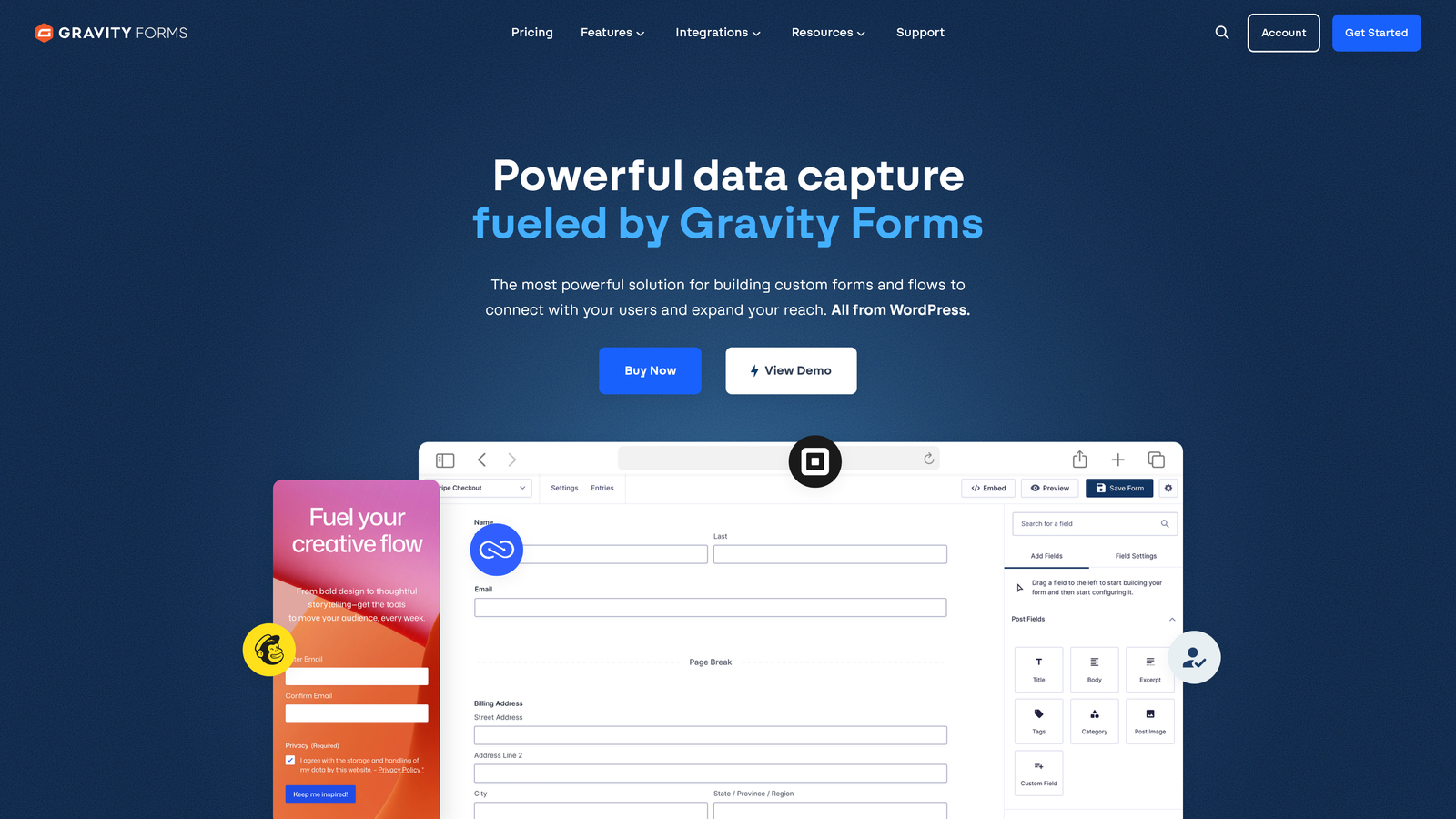
Gravity Forms is an advanced WordPress form plugin built for teams that need serious conditional logic, pricing calculations, and deep third-party integrations.
Where This Tool Shines
Gravity Forms is where you turn when your form requirements go beyond what most builders can handle. Think custom product configurators where price updates dynamically based on selected options, or wholesale application forms that calculate order totals, apply tiered pricing, and route submissions to different fulfillment teams based on order size. That level of logic is Gravity Forms' home territory.
The add-on ecosystem is extensive, with official and community-built integrations covering everything from Stripe payments to Salesforce CRM to custom webhooks. For development teams managing complex ecommerce workflows, that flexibility is hard to replicate elsewhere.
Key Features
Pricing Calculation Fields: Dynamic pricing fields that calculate totals based on quantity, selected options, and conditional rules.
Advanced Conditional Logic: Multi-layer conditional logic for building complex, multi-step product configurator experiences.
Extensive Add-On Ecosystem: Official and third-party add-ons for payments, CRM integrations, and custom workflow connections.
Webhook and REST API Support: Connect form submissions to any external system via webhooks or the Gravity Forms REST API.
Entry Management: Built-in entry management dashboard for tracking, filtering, and managing form submissions as order records.
Best For
WordPress developers and ecommerce teams running complex B2B workflows, custom product configurators, or wholesale ordering systems that require sophisticated pricing logic and deep integration capabilities.
Pricing
Basic license starts at $59 per year. Elite license required for all add-ons and multisite support.
7. Privy
Best for: Shopify and BigCommerce stores focused on list growth, coupon delivery, and cart abandonment reduction.
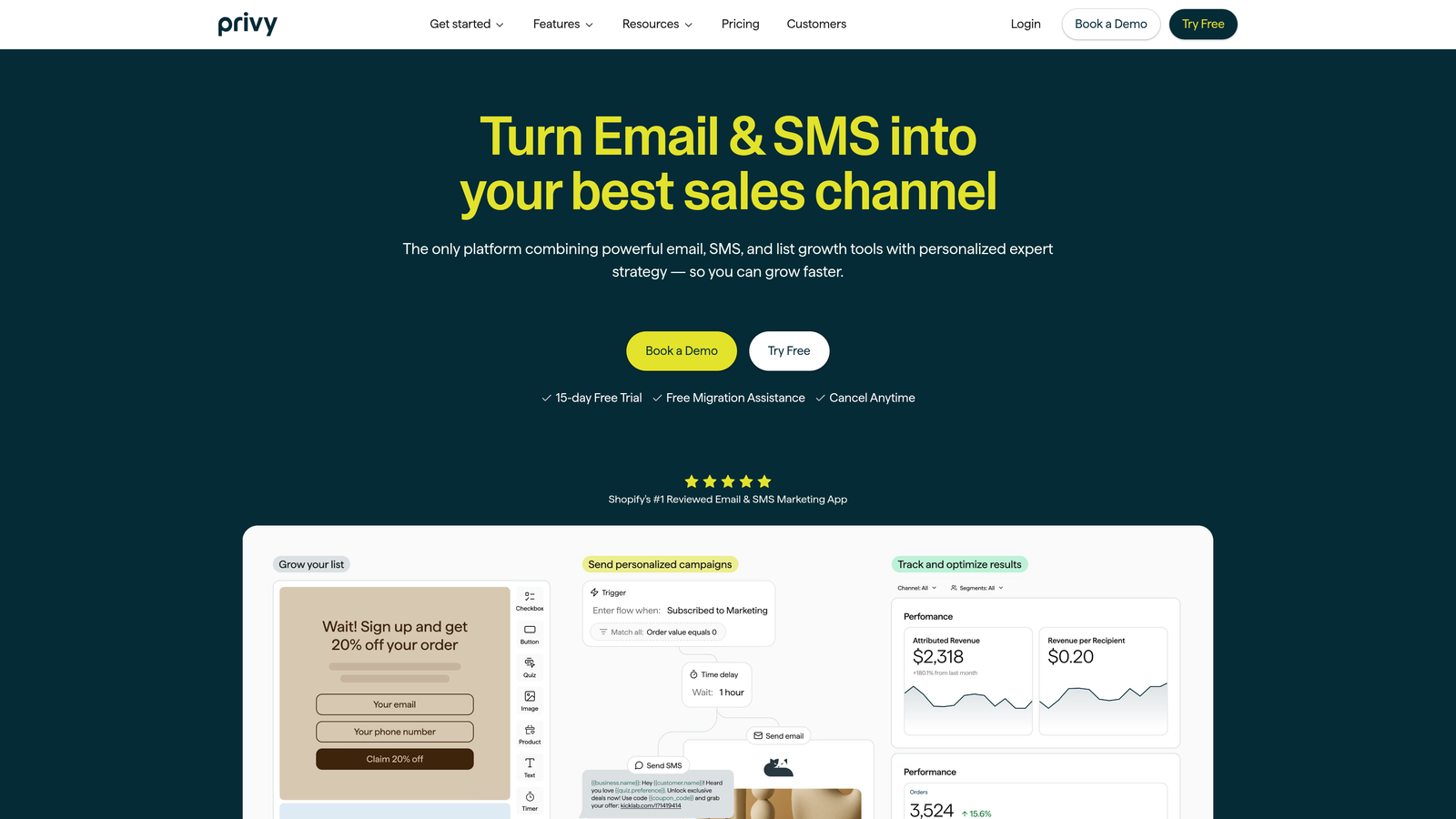
Privy is an ecommerce-native popup and form platform built specifically to grow email and SMS lists while reducing cart abandonment through targeted, behavior-triggered campaigns.
Where This Tool Shines
Privy is purpose-built for the ecommerce conversion funnel in a way that general form builders aren't. Exit-intent detection, cart-value targeting, and page-level triggers let you show the right offer to the right shopper at exactly the right moment. A popup offering 10% off to a visitor who's about to leave a product page with items in their cart is far more effective than a generic site-wide banner.
The spin-to-win gamified forms are a standout feature for brands that want to make coupon capture feel like an experience rather than an interruption. Combined with built-in email and SMS automation, Privy handles the full capture-to-follow-up loop without needing additional tools.
Key Features
Exit-Intent and Spin-to-Win Forms: Behavior-triggered popups including exit-intent detection and gamified coupon delivery forms.
Smart Targeting Rules: Target forms by cart value, page URL, visitor behavior, and session history for highly relevant offers.
Native Ecommerce Integrations: Direct integrations with Shopify, BigCommerce, and Wix with no middleware required.
Email and SMS Automation: Built-in follow-up automation triggered by form submissions, including abandoned cart sequences.
A/B Testing: Test popup designs, copy, and timing to optimize conversion rates across form variants.
Best For
Shopify and BigCommerce merchants focused on growing their email and SMS subscriber lists, reducing cart abandonment, and delivering coupon codes through targeted, behavior-triggered form experiences.
Pricing
Free plan available for basic popup and form functionality. Paid plans start at $24 per month.
8. Formstack
Best for: Enterprise ecommerce teams that need compliance-grade forms connected to backend fulfillment and CRM systems.
Formstack is an enterprise-grade form and workflow automation platform that connects form submissions to fulfillment systems, CRMs, and support tools without writing custom code.
Where This Tool Shines
Formstack operates at a different scale than most tools on this list. It's not just a form builder; it's a workflow automation layer that connects form submissions to the downstream systems that actually process them. For enterprise ecommerce teams managing wholesale agreements, regulated product categories, or B2B sales cycles, that backend connectivity is the primary value proposition.
Compliance features including HIPAA, GDPR, and PCI certification make Formstack a credible option for ecommerce categories like health products, financial services, or any vertical where data handling requirements are strict. Most form builders don't operate at this compliance level.
Key Features
Visual Workflow Builder: Connect form submissions to backend systems, approval workflows, and fulfillment processes through a visual drag-and-drop interface.
Compliance Certifications: HIPAA, GDPR, and PCI compliance for ecommerce operations in regulated industries.
Electronic Signature Collection: Collect legally binding e-signatures for wholesale agreements, custom orders, and B2B contracts.
Salesforce-Native Integration: Deep, native Salesforce integration for B2B ecommerce teams managing complex sales pipelines.
CRM Pre-Fill: Pre-populate form fields from existing CRM data to reduce friction for returning customers and wholesale accounts.
Best For
Enterprise ecommerce operations, B2B wholesale teams, and brands in regulated product categories that need compliance-grade data handling and deep integration with CRM and fulfillment systems.
Pricing
Forms plan starts at $50 per month. Enterprise pricing available for larger teams with advanced workflow and compliance requirements.
9. Tally
Best for: Bootstrapped ecommerce startups that need unlimited forms without paying for a subscription.
Tally is a free, minimalist form builder with a Notion-style block interface that offers unlimited forms and submissions on its free plan, making it an exceptional value for early-stage ecommerce businesses.
Where This Tool Shines
The value proposition is straightforward: unlimited forms, unlimited submissions, and core features like conditional logic and hidden fields, all at no cost. For a bootstrapped store that needs a contact form, a custom order request form, and a post-purchase survey without a monthly bill, Tally solves the problem cleanly.
The Notion-style block editor is genuinely pleasant to use. Building a form feels more like writing a document than configuring a tool, which lowers the learning curve significantly. Webhooks and Zapier integrations mean you can connect Tally forms to your existing ecommerce workflows even on the free plan.
Key Features
Unlimited Free Forms: Create and publish unlimited forms with unlimited submissions on the free plan, no credit card required.
Block-Based Editor: Notion-style interface that makes form building feel intuitive and fast, even for non-technical users.
Conditional Logic and Hidden Fields: Full conditional logic and hidden field support included on the free plan.
Webhooks and Zapier: Connect form submissions to ecommerce platforms and automation tools via webhooks and Zapier, even without a paid plan.
File Upload Fields: Accept file uploads for custom order requests, artwork submissions, or product personalization inputs.
Best For
Early-stage ecommerce founders, bootstrapped DTC brands, and solo operators who need capable, good-looking forms without committing to a monthly subscription. Also a great secondary tool for teams that want a lightweight option for low-volume use cases alongside their primary form platform.
Pricing
Free plan includes all core features with unlimited forms and submissions. Tally Pro is $29 per month for branding removal, custom domains, and priority support.
Which Tool Is Right for Your Store
The right form builder depends on two things: your ecommerce platform and your most pressing conversion gap. Here's a quick-reference guide to help you match the tool to your situation.
Running on Shopify: Start with Shopify Forms for basic email capture since it's free and already connected to your store. Add Privy if list growth and cart abandonment are your primary focus. Use Typeform for product recommendation quizzes or detailed surveys where experience quality matters.
Running on WooCommerce or WordPress: WPForms is the most accessible starting point for most store owners. If your forms involve complex pricing logic, product configurators, or wholesale workflows, Gravity Forms is the more powerful option.
Platform-agnostic or multi-platform: Jotform handles payment-enabled order forms across any platform. Formstack is the right call for enterprise teams with compliance requirements and backend integration needs. Tally is the best free option for startups and secondary use cases.
Focused on lead qualification and conversion intelligence: This is where Orbit AI stands apart. If you're generating meaningful lead volume through your forms and want AI to automatically score, qualify, and route those leads, Orbit AI adds a layer of intelligence that none of the other tools on this list provide natively.
One practical note: many ecommerce teams use more than one tool. A native Shopify form for email capture, a Typeform quiz for product recommendations, and an AI-powered tool for lead qualification can each serve a distinct role in your conversion funnel without overlap.
The best starting point is always the tool that solves your most immediate problem. If that problem is converting more of your existing traffic into qualified leads, start building free forms today with Orbit AI and see how intelligent form design can elevate your conversion strategy.


