

Online form builders have evolved far beyond simple contact forms. Today's best platforms handle lead qualification, conditional logic, CRM integrations, and conversion optimization without a single line of code. But with so many options on the market, choosing the right one for your team's specific needs can feel genuinely overwhelming.
This review covers six standout form builders, evaluated across the criteria that matter most to high-growth teams: ease of use, design quality, lead capture capabilities, integrations, and pricing transparency. Whether you're building lead gen forms for a SaaS product, running customer surveys, or qualifying inbound prospects, this guide cuts through the noise.
Each tool was assessed on its core strengths, honest limitations, and the types of teams it genuinely serves best. No fluff, just clear and actionable insight to help you pick the right platform and start converting faster.
1. Orbit AI
Best for: High-growth SaaS and B2B teams that need forms to qualify leads, not just collect them.
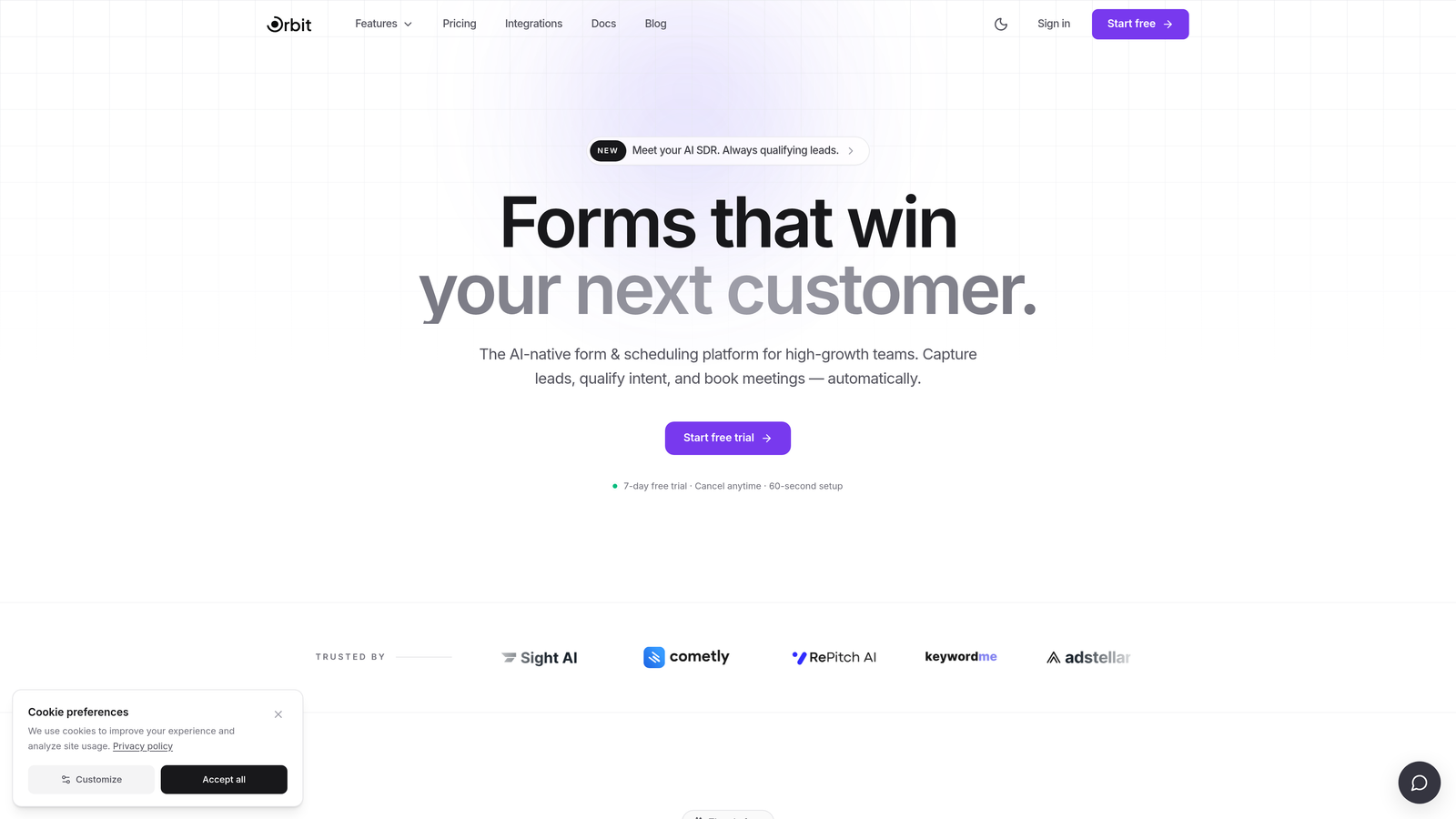
Orbit AI is an AI-powered form builder built specifically for teams where lead quality matters as much as lead volume.
Where This Tool Shines
What separates Orbit AI from most form builders is where the intelligence lives. Rather than collecting raw form data and leaving your sales team to sort through it manually, Orbit AI embeds lead qualification directly into the form experience itself. Prospects are scored, routed, or filtered before they ever reach your CRM.
This is a meaningful shift for B2B and SaaS teams running high-volume inbound. Instead of treating your form as a passive data collection point, Orbit AI turns it into an active part of your pipeline. The design quality is also worth noting: forms are modern, branded, and built with conversion in mind rather than as an afterthought.
Key Features
AI-Powered Lead Qualification: Intelligent qualification logic runs inside the form flow, scoring and routing prospects automatically based on your criteria.
Conversion-Optimized Design: Clean, modern UI with branded customization options designed to reduce drop-off and increase completion rates.
Conditional Logic and Dynamic Fields: Personalize the form experience in real time based on how prospects respond, creating relevant paths for different segments.
CRM and Marketing Integrations: Connect directly to the tools your team already uses to ensure qualified leads flow into the right place instantly.
B2B and SaaS-Specific Templates: Purpose-built for lead generation use cases common in SaaS, not generic contact forms repurposed for enterprise workflows.
Best For
Orbit AI is the strongest fit for SaaS companies, B2B marketing teams, and growth-focused organizations where lead quality directly impacts revenue. If you're running paid acquisition, outbound campaigns, or any inbound motion where sales team time is expensive, the built-in qualification layer pays for itself quickly.
Pricing
Check current plans and pricing directly at orbitforms.ai. Pricing is structured to support teams at different growth stages.
2. Typeform
Best for: Marketing teams that want polished, conversational forms for surveys, NPS, and lead gen.
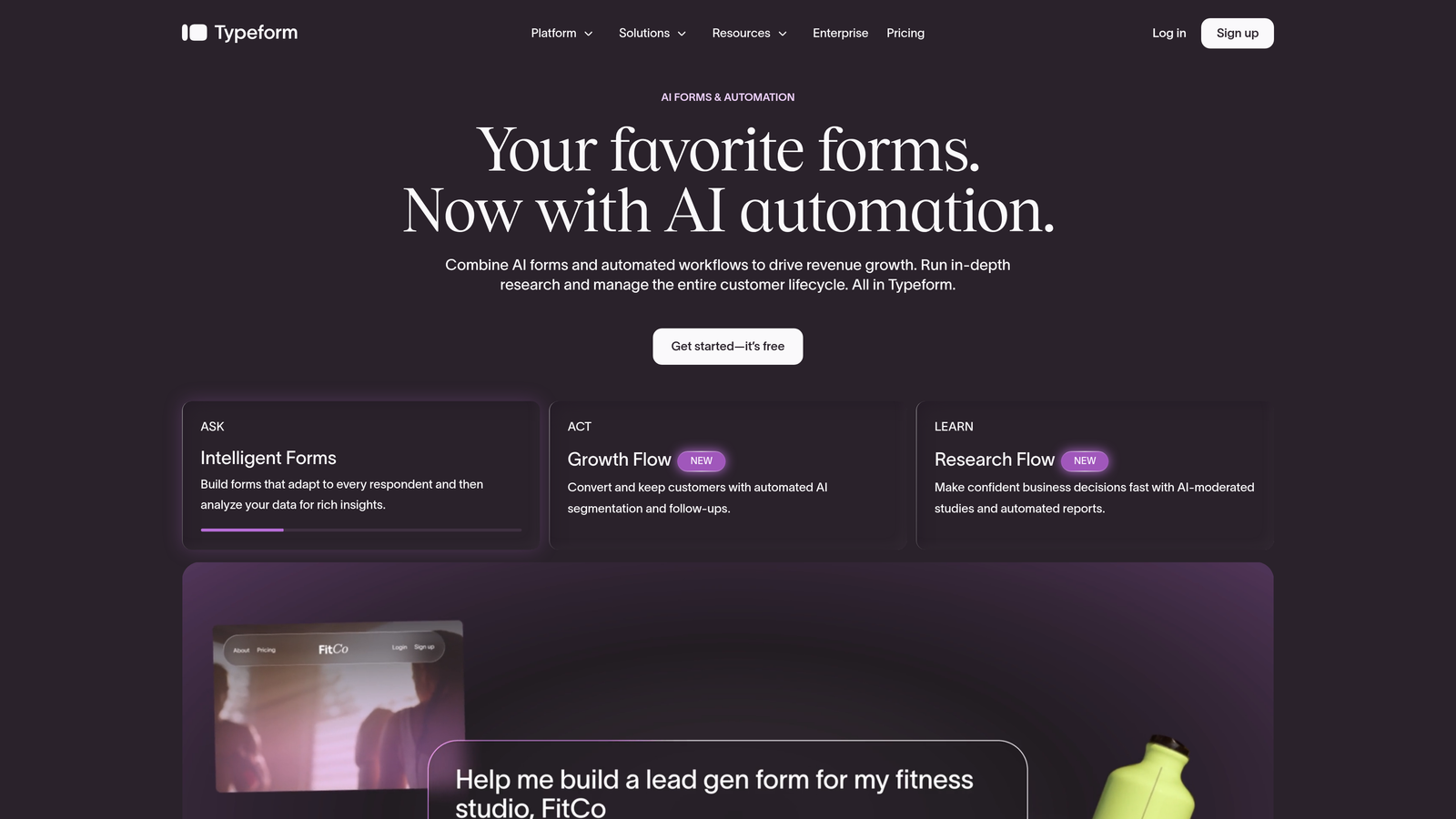
Typeform is a conversational form builder known for its one-question-at-a-time format and some of the best visual design in the category.
Where This Tool Shines
Typeform's core insight is that forms feel less like forms when they only show one question at a time. This approach reduces cognitive load and can meaningfully improve completion rates, particularly for longer surveys or multi-step onboarding flows where traditional forms feel like a wall of fields.
The brand customization options are genuinely strong. You can match forms closely to your visual identity, and the overall experience feels premium compared to many alternatives. It's a natural fit for teams where the form itself is a brand touchpoint, not just a utility.
Key Features
Conversational Single-Question UX: One question at a time reduces form fatigue and creates a more engaging experience for respondents.
Brand Customization: Deep visual controls for fonts, colors, backgrounds, and layout to match your brand identity closely.
Conditional Logic: Available on paid plans, allowing you to branch the form experience based on previous answers.
Native Integrations: Connects with HubSpot, Salesforce, Slack, and a wide range of other tools, plus Zapier for extended coverage.
Template Library: A large collection of pre-built forms for surveys, quizzes, lead capture, and product feedback.
Best For
Typeform works well for marketing and product teams running surveys, NPS programs, customer research, and brand-forward lead capture. It's less suited for teams that need built-in lead qualification logic or complex multi-step B2B workflows, where the conversational format can feel limiting.
Pricing
A free plan is available with limited features. Paid plans unlock conditional logic, more responses, and advanced integrations. Verify current pricing at typeform.com/pricing.
3. Tally
Best for: Early-stage startups and lean teams that need a capable free form builder without submission limits.
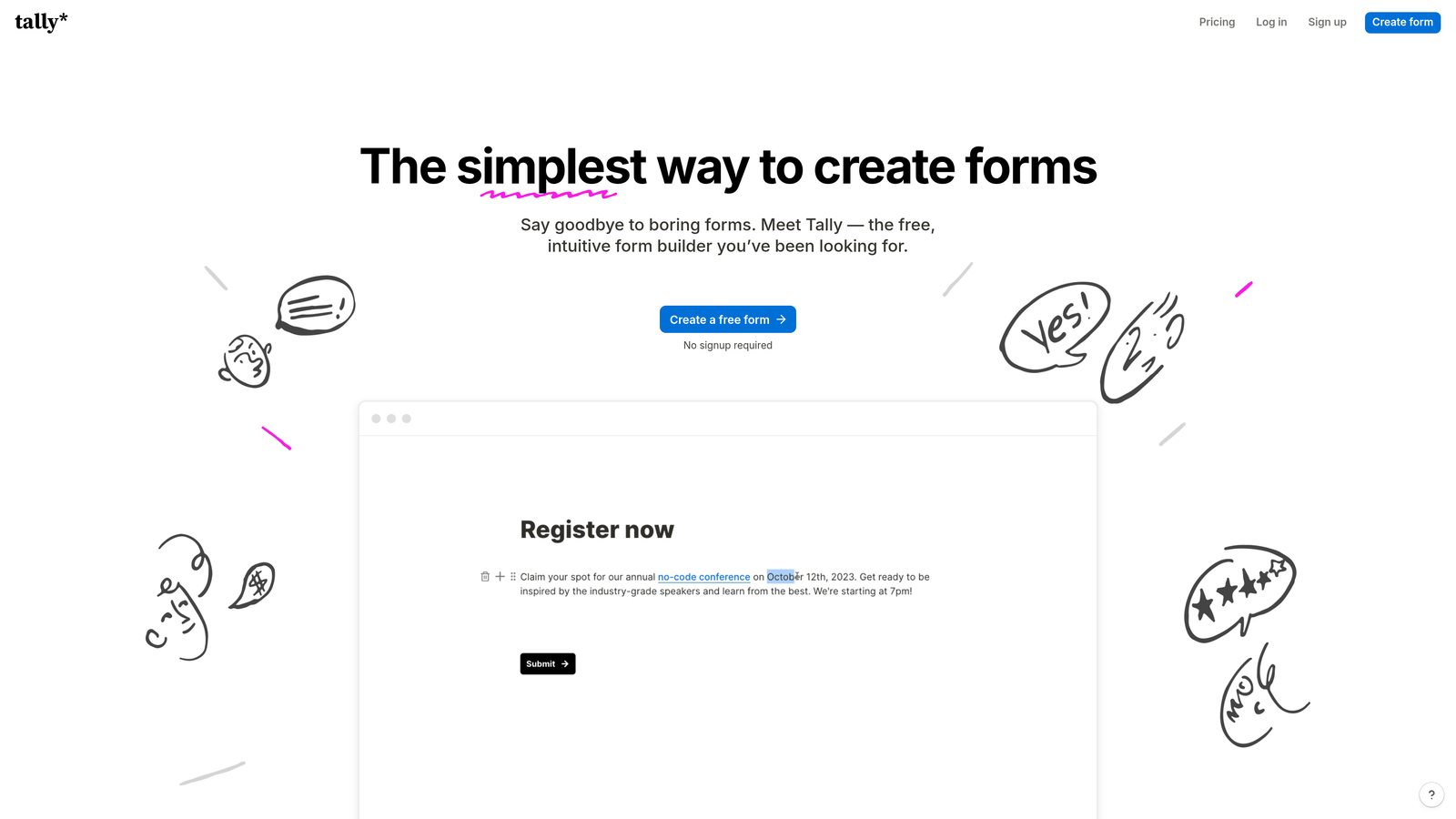
Tally is a free-first form builder with a Notion-inspired block editor that punches well above its price point.
Where This Tool Shines
Tally's most compelling differentiator is simple: the free plan includes unlimited forms and unlimited submissions. For most form builder competitors, submission limits are how they push users toward paid plans. Tally removes that friction entirely, which makes it genuinely useful for early-stage teams, indie makers, and anyone who needs to collect data at volume without a budget commitment.
The block-based editor will feel immediately familiar to anyone who has used Notion. Building a form is intuitive and fast, without requiring design experience. It covers the essentials well: conditional logic, file uploads, and Stripe payment collection are all available even on the free tier.
Key Features
Unlimited Forms and Submissions (Free): No artificial submission caps on the free plan, a genuine rarity in this category.
Notion-Style Block Editor: Drag-and-drop block interface that's fast to learn and easy to use without design skills.
Conditional Logic: Branch and personalize form paths based on responses, available on the free plan.
Payment Collection: Stripe integration for accepting payments directly through forms.
Pro Plan Upgrades: Custom domains, branding removal, and additional customization options for teams that need a more polished experience.
Best For
Tally is an excellent choice for early-stage startups, solo founders, and small teams that need capable forms without spending money upfront. It's less suited for complex B2B lead qualification workflows or teams that need deep native CRM integrations out of the box.
Pricing
Free plan is genuinely capable and has no submission limits. A Pro plan is available for teams that need custom branding and domains. Verify current pricing at tally.so.
4. Paperform
Best for: SMBs, creators, and service businesses that need forms that double as mini landing pages.
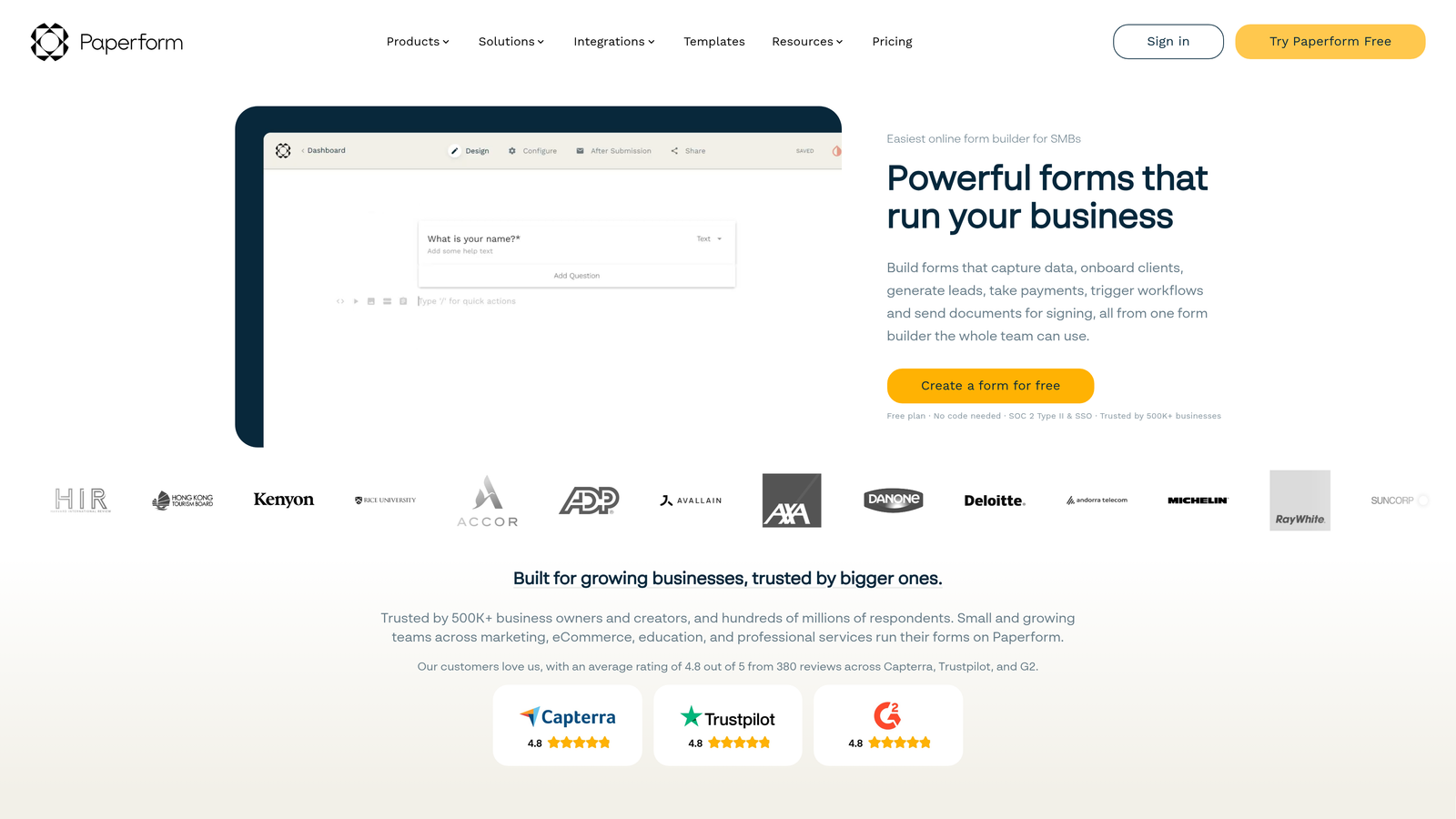
Paperform is a hybrid form-and-landing-page builder that combines data collection with rich media, payments, and bookings in a single experience.
Where This Tool Shines
Paperform occupies a unique position in the category. Rather than building a pure form, you're building something closer to an interactive page: you can embed images, video, and rich content alongside your form fields, which makes it particularly effective for product orders, event registrations, service bookings, and any scenario where context matters alongside the data collection.
The built-in payment and booking capabilities mean you can run a complete transaction flow without stitching together multiple tools. For small businesses and creators managing client intake, event signups, or product sales, this all-in-one approach saves meaningful time and complexity.
Key Features
Hybrid Form-and-Page Builder: Combine rich media content with form fields to create immersive, contextual form experiences.
Built-In Payments and Bookings: Accept payments, manage appointments, and handle event registrations natively without third-party tools.
Conditional Logic and Calculations: Dynamic field logic and calculation fields for pricing, scoring, or routing based on responses.
Custom Redirects and Confirmations: Control exactly what happens after submission, including personalized confirmation messages and redirects.
Integration Support: Native connections and Zapier support for connecting to a wide range of external tools.
Best For
Paperform is a strong fit for SMBs, consultants, coaches, and creators who need forms that do more than collect data. It's not purpose-built for B2B lead qualification or high-volume SaaS pipelines, but for service-based businesses it offers excellent flexibility in a single platform.
Pricing
No permanent free plan is available, but a trial lets you explore the platform before committing. Paid plans tier by submissions and features. Verify current pricing at paperform.co/pricing.
5. Jotform
Best for: Teams that need a broad template library, deep integrations, and workflow automation in one platform.
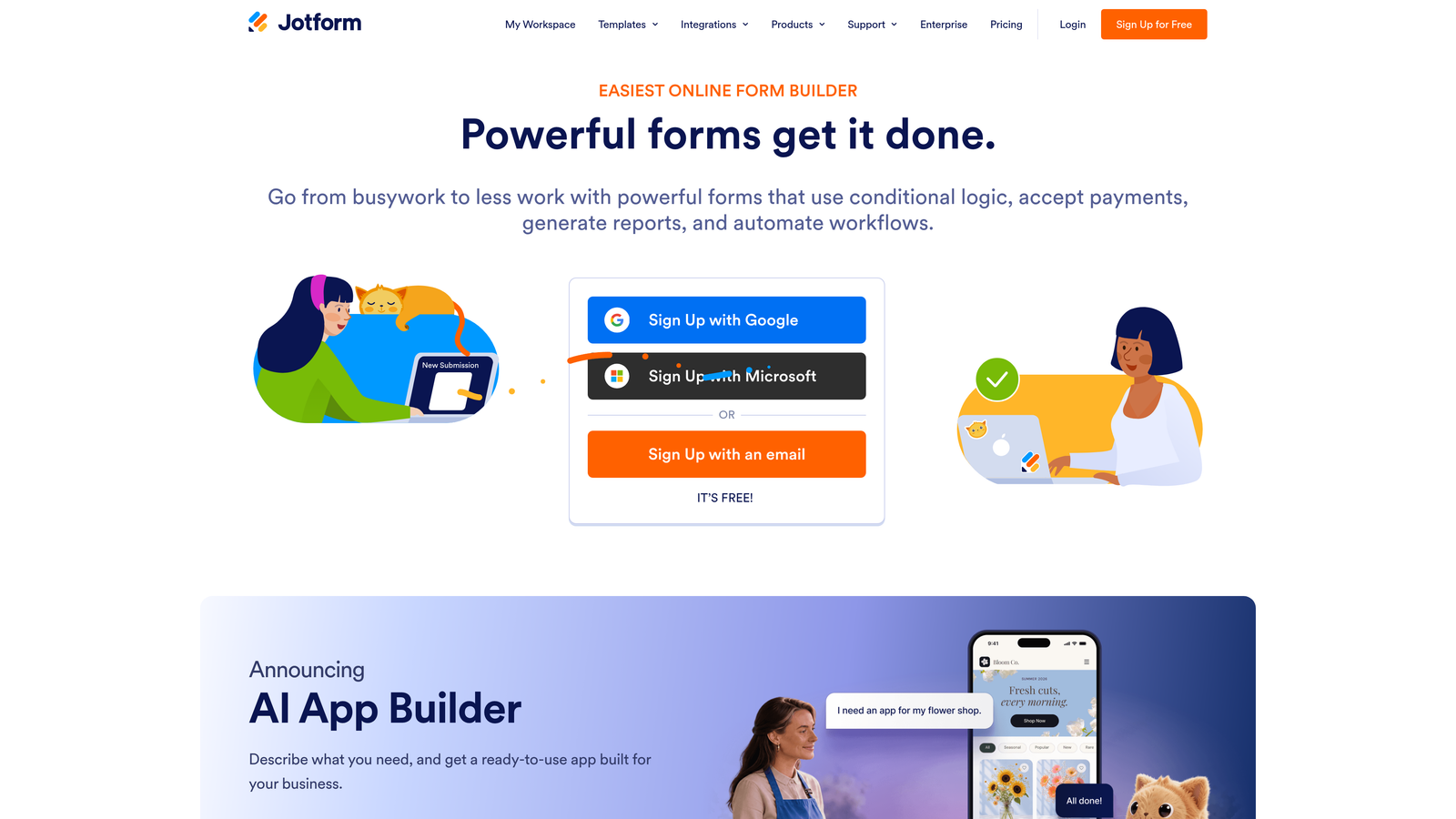
Jotform is one of the most established form builders in the market, with thousands of templates and an integration ecosystem that covers nearly every major business tool.
Where This Tool Shines
Jotform's depth is its defining strength. With thousands of pre-built templates spanning everything from HR forms to healthcare intake to payment collection, it's rare to encounter a use case Jotform hasn't already templated. For teams that need to move fast without building from scratch, this is a meaningful advantage.
The workflow capabilities go well beyond basic form building. Jotform supports approval routing, e-signatures, and PDF document generation, which makes it viable for internal operations, HR processes, and compliance-adjacent workflows. HIPAA-compliant plans are also available for healthcare-adjacent use cases.
Key Features
Extensive Template Library: Thousands of pre-built templates across dozens of categories, covering almost every industry and use case.
Deep Integration Ecosystem: Native connections to Salesforce, HubSpot, Google Sheets, PayPal, and hundreds of other tools.
Workflow Automation: Approval routing and conditional notifications for multi-step internal workflows.
E-Signatures and PDF Generation: Collect legally binding signatures and generate PDF documents directly from form submissions.
HIPAA-Compliant Plans: Available for teams in regulated industries that need compliant data collection.
Best For
Jotform suits mid-sized businesses and operations teams that need a versatile, well-integrated platform for a wide range of form types. The interface can feel dated compared to newer entrants, and the sheer feature volume can be overwhelming for teams with simple needs, but for complex, multi-department use cases it remains highly capable.
Pricing
A free plan is available with submission limits. Paid plans scale by submission volume and user count. Verify current pricing at jotform.com/pricing.
6. Formstack
Best for: Enterprise teams and regulated industries that need compliance-grade data collection with document workflows.
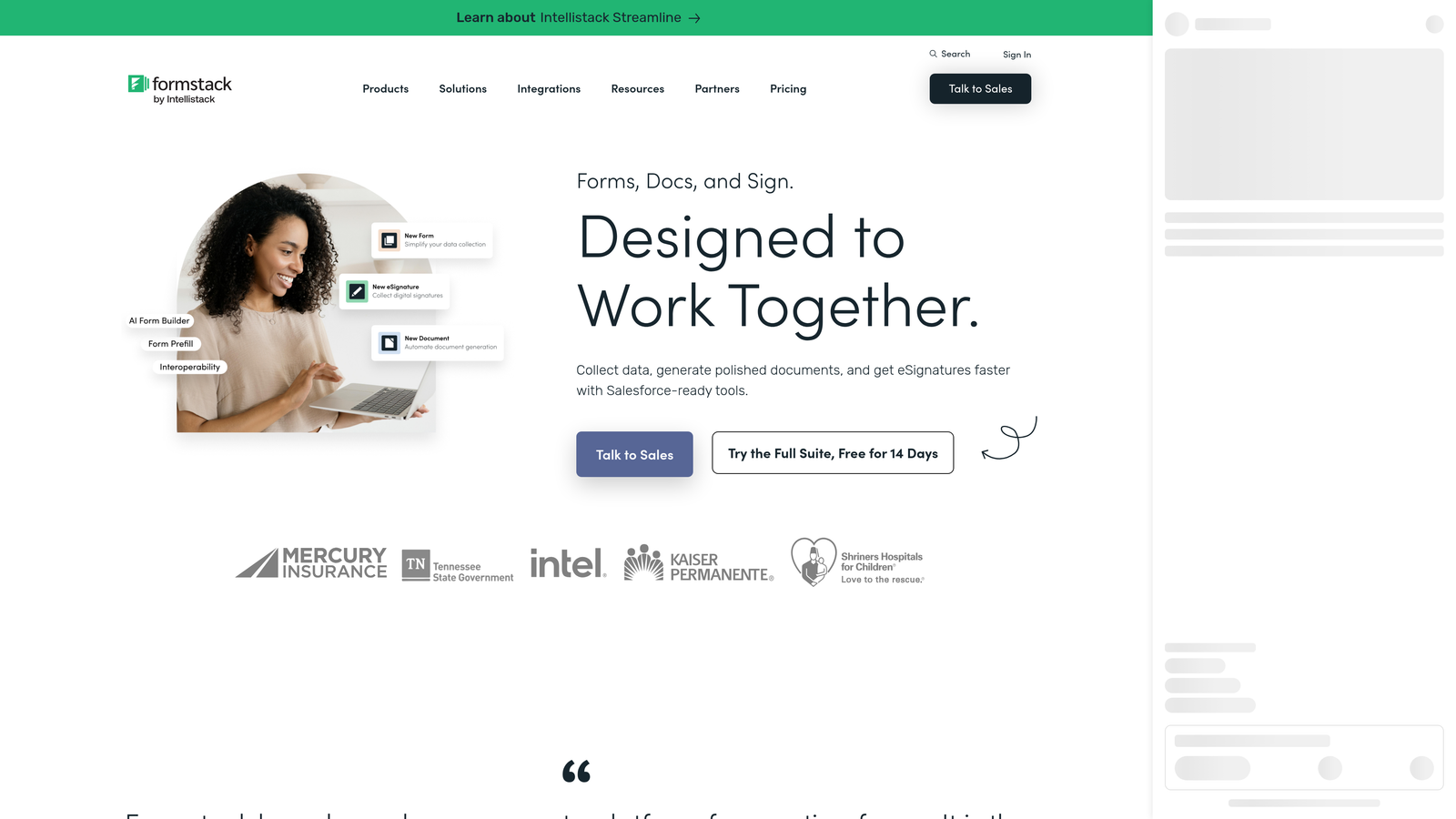
Formstack is an enterprise-grade form and workflow platform built for organizations where compliance, security, and document generation are non-negotiable requirements.
Where This Tool Shines
Formstack's value proposition is clearest in regulated industries. HIPAA compliance and SOC 2 Type II certification aren't features you can easily bolt on after the fact, and Formstack has built its platform around these requirements from the ground up. For healthcare organizations, legal teams, financial services firms, and government agencies, this compliance foundation is the starting point, not an add-on.
Beyond compliance, Formstack combines data collection with document generation and e-signature workflows in a way that supports end-to-end process automation. A single form submission can trigger a document to be generated, routed for signature, and filed, without manual intervention. For organizations running high-volume, document-heavy processes, this is a genuine operational advantage.
Key Features
HIPAA and SOC 2 Type II Compliance: Enterprise-grade security and compliance certifications for regulated industry requirements.
Document Generation: Automatically generate documents from form submissions, reducing manual document creation.
E-Signature Workflows: Collect legally binding signatures as part of an integrated form and document process.
Advanced Routing and Approvals: Route submissions through multi-step approval workflows with conditional logic.
Enterprise SSO and User Management: Centralized user access controls and single sign-on for large organizational deployments.
Best For
Formstack is the right choice for enterprise teams in healthcare, legal, finance, and government that need compliance-grade data collection combined with document and signature workflows. It's overkill for most startups and SMBs, and the pricing reflects its enterprise positioning. Teams without compliance requirements will likely find better value elsewhere.
Pricing
Formstack carries a higher price point that reflects its enterprise feature set and compliance credentials. No free plan is available. Verify current pricing at formstack.com/pricing.
Which Tool Is Right for Your Team?
The right form builder depends almost entirely on what you need forms to do downstream. Here's a quick breakdown to help you decide.
For B2B and SaaS lead qualification: Orbit AI is the clear choice. No other tool on this list embeds AI-powered lead scoring and routing directly into the form experience. If your forms are part of a revenue pipeline, not just a data collection exercise, Orbit AI is built for exactly that context.
For brand-forward surveys and NPS: Typeform delivers the most polished conversational experience and works well for marketing teams where the form itself is a brand touchpoint.
For lean teams on a budget: Tally's genuinely unlimited free plan is hard to beat for early-stage startups and solo operators who need capable forms without a financial commitment.
For service businesses and creators: Paperform's hybrid form-and-page approach handles payments, bookings, and rich media in a way that purpose-built form tools don't match.
For broad operational use cases: Jotform's template depth and integration ecosystem make it a solid all-rounder for mid-sized teams with diverse form needs across departments.
For regulated enterprise environments: Formstack is the go-to for healthcare, legal, and financial organizations where compliance and document workflows are core requirements.
If you're running a high-growth team where lead quality, conversion rates, and pipeline efficiency are the metrics that matter, the intelligence built into your form experience is what separates good from great. Start building free forms today and see how AI-powered qualification can change what your forms actually do for your business.


