

Not all form builders are created equal, especially when your forms are the front door to your pipeline. Whether you're capturing leads, qualifying prospects, or collecting customer data, the tool you choose directly impacts how many people complete your form and how useful that data is on the other side.
This roundup covers the top form creation tools built for teams that care about conversion, not just collection. We've evaluated each platform on ease of use, design quality, logic and conditional features, integrations, and how well it supports lead qualification workflows.
If you're running a high-growth SaaS operation, a marketing agency, or any team where form submissions translate directly to revenue, this list is for you. We'll start with our top pick and work through five strong alternatives, each with a distinct strength depending on your use case.
1. Orbit AI
Best for: High-growth SaaS teams that need forms to qualify leads, not just collect them.
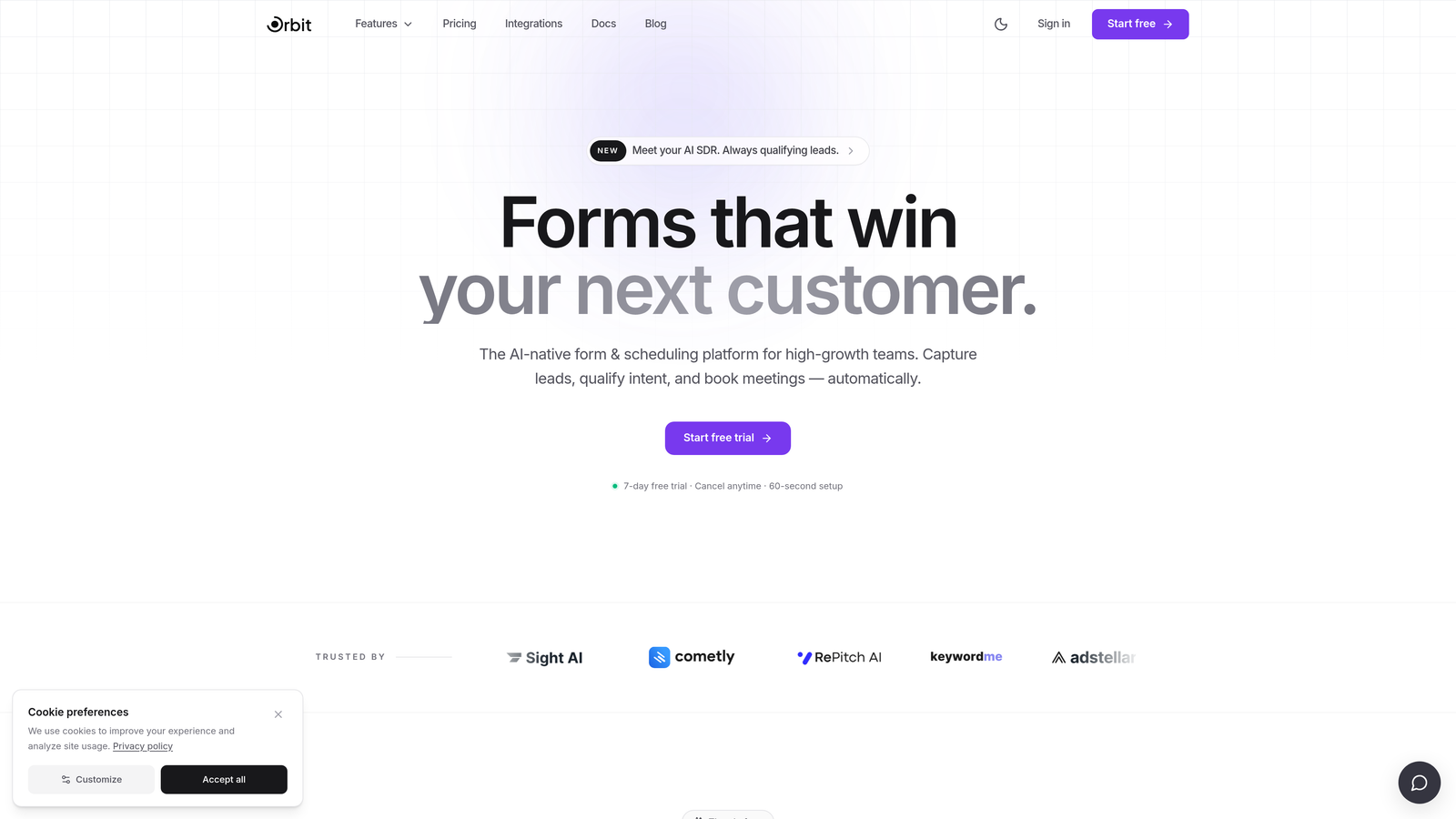
Orbit AI is an AI-powered form builder designed to turn every submission into a qualified, actionable lead.
Where This Tool Shines
Most form builders stop at data collection. Orbit AI goes a step further by embedding lead qualification directly into the form experience itself. As a prospect fills out a form, the platform evaluates their responses in real time, scoring and routing leads before they ever hit your CRM. That means your sales team gets pre-qualified leads, not a raw pile of submissions to sort through manually.
The design quality is equally strong. Forms built on Orbit AI look modern and polished, which matters more than people admit. A well-designed form signals credibility and reduces drop-off. Combine that with intelligent conditional logic and dynamic routing, and you have a form that adapts to each respondent while doing qualification work in the background.
Key Features
AI-Powered Lead Qualification: Evaluates responses in real time to score and qualify leads directly within the form flow, before they reach your team.
Real-Time Lead Scoring: Assigns lead scores based on how respondents answer, enabling instant prioritization without manual review.
Conversion-Optimized Design: Modern, clean form layouts built to reduce friction and improve completion rates across device types.
Conditional Logic and Dynamic Routing: Adapts the form experience based on responses, showing relevant questions and routing leads to the right outcome.
CRM and Marketing Automation Integrations: Connects with the tools your team already uses to keep lead data flowing without manual handoffs.
Best For
Orbit AI is the strongest fit for B2B SaaS teams, growth marketers, and sales-led organizations where lead quality directly determines pipeline health. If your team is spending time manually sorting through form submissions to find the qualified ones, this platform addresses that problem at the source.
Pricing
Visit orbitforms.ai for current pricing plans. A free starting option is available for teams ready to explore the platform.
2. Typeform
Best for: Teams that want a polished, conversational form experience for surveys and lead capture.
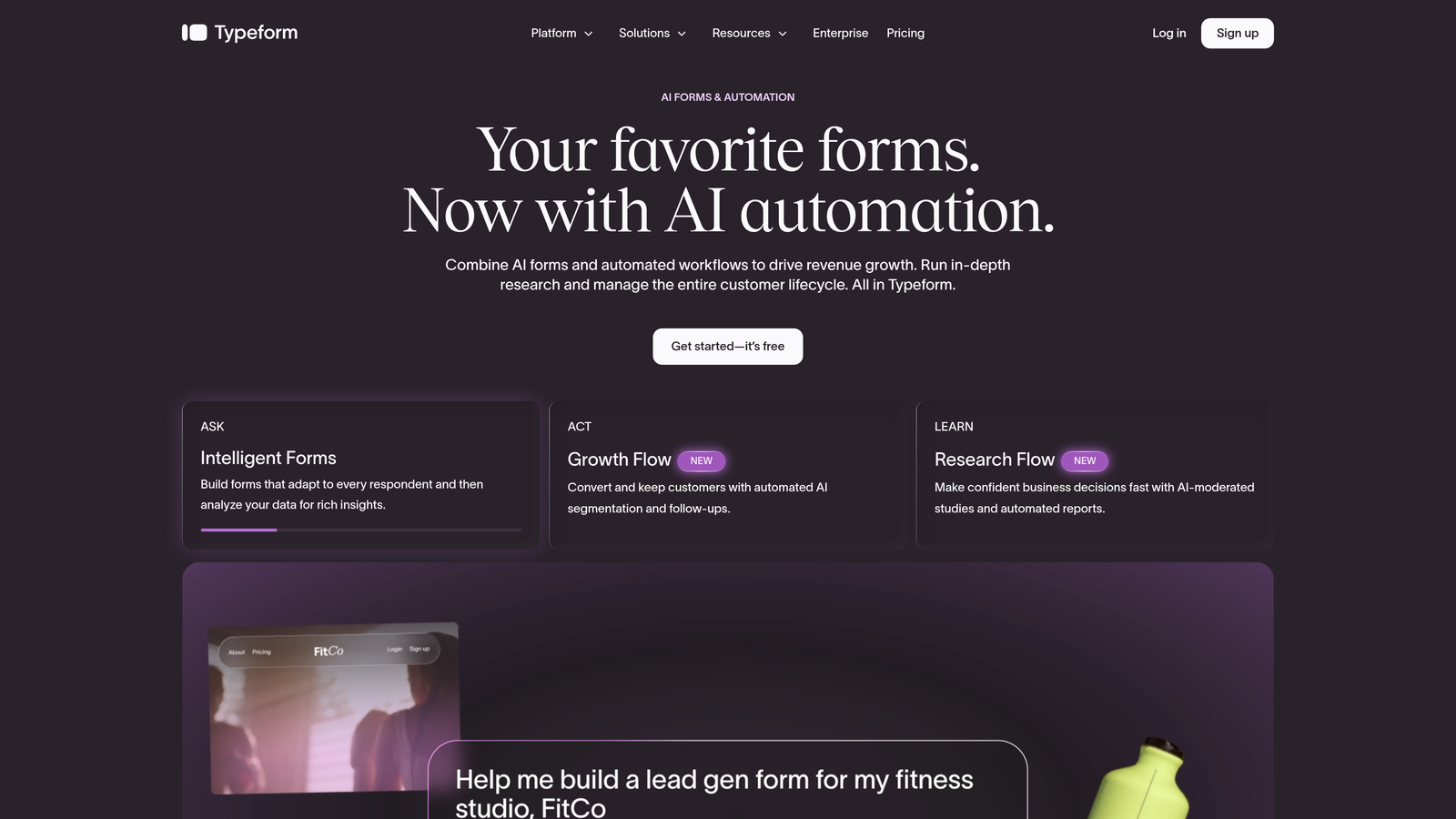
Typeform is a conversational form builder that presents one question at a time, creating a dialogue-style experience that feels less like a form and more like a conversation.
Where This Tool Shines
Typeform pioneered the one-question-at-a-time format, and it remains one of the best in that category. The approach reduces cognitive load for respondents, which can improve completion rates on longer forms like surveys, quizzes, and detailed lead capture flows. The visual design is consistently high quality, and brand customization options are solid across paid plans.
Where Typeform earns its reputation is in the experience it creates. If your form is the first impression a prospect has of your brand, Typeform makes that impression feel premium. The tradeoff is that the conversational format can feel slower for respondents who just want to fill something out quickly.
Key Features
Conversational One-Question UI: Presents questions sequentially to create a dialogue-style experience that keeps respondents engaged.
Logic Jumps and Conditional Branching: Routes respondents through different question paths based on their answers.
Design Templates and Brand Customization: Strong template library with options to match your brand's colors, fonts, and imagery.
CRM and Marketing Tool Integrations: Connects with major platforms including HubSpot, Salesforce, and Mailchimp.
Quiz and Survey Capabilities: Supports scoring, outcome-based results, and multi-purpose form types beyond simple lead capture.
Best For
Typeform is a great fit for marketing teams running surveys, product teams collecting user feedback, and anyone who wants a premium-feeling form experience. It's less ideal for teams that need built-in lead qualification or complex workflow automation without additional tooling.
Pricing
Free plan available with basic features. Paid plans start at $25 per month billed annually, with higher tiers unlocking advanced logic and integrations.
3. Jotform
Best for: Teams that need maximum template variety and built-in payment or e-signature support.
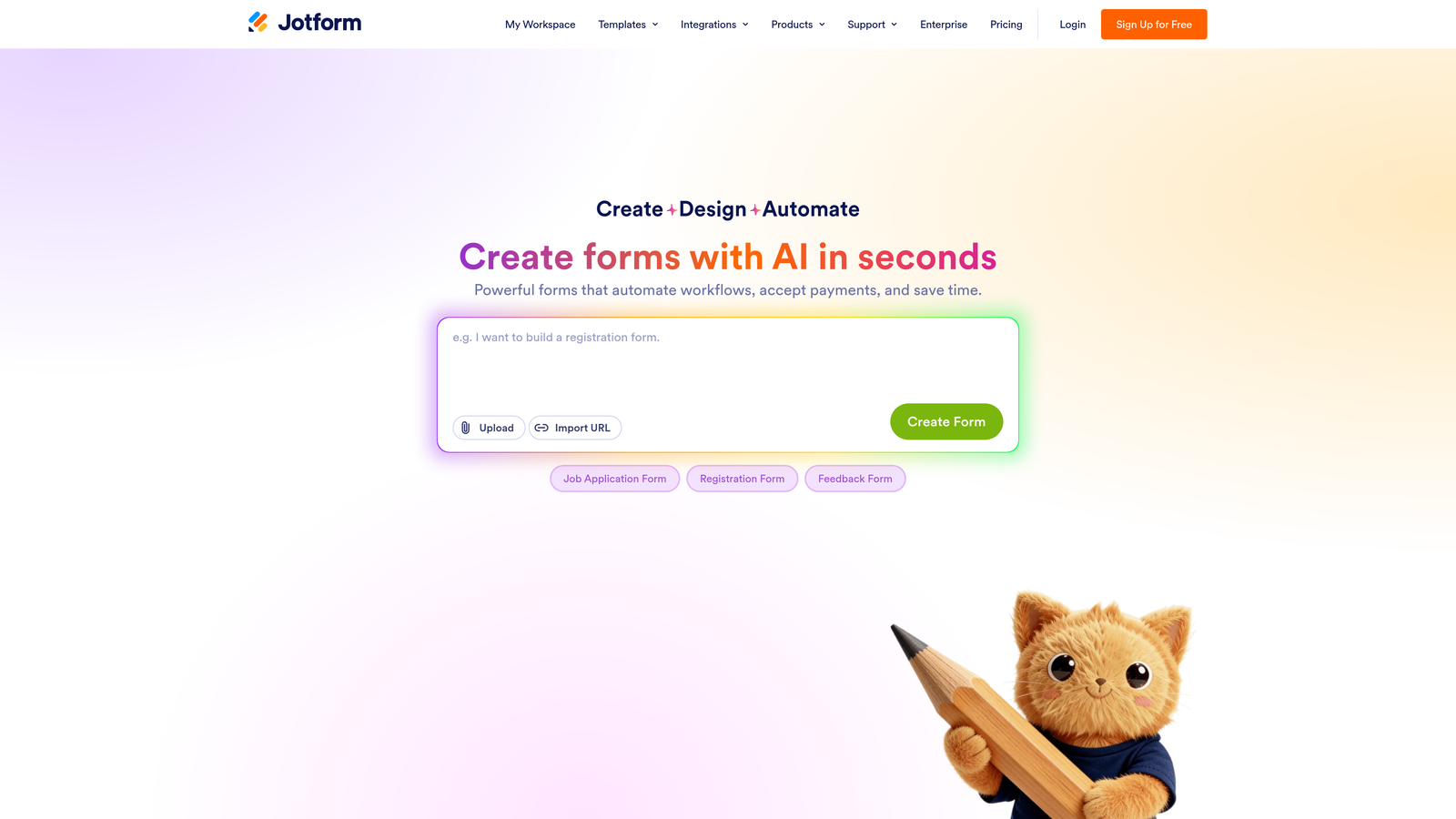
Jotform is one of the most feature-rich form builders on the market, covering an enormous range of use cases with over 10,000 templates and broad integration support.
Where This Tool Shines
Jotform's biggest strength is its sheer breadth. Whatever your industry or use case, there's almost certainly a template for it. Beyond templates, the platform supports payment collection through Stripe, PayPal, and Square, e-signature functionality, and calculation fields, making it a versatile choice for teams with varied form needs across departments or clients.
It's particularly popular with agencies and SMBs managing forms for multiple clients, because the platform can handle everything from event registrations to intake forms to order forms without needing additional tools. The tradeoff is that the interface can feel dense compared to more minimal builders, and the design output is functional rather than visually distinctive.
Key Features
10,000+ Templates: An extensive library covering virtually every industry and form type, from medical intake to e-commerce orders.
Built-In Payment Collection: Accepts payments through Stripe, PayPal, and Square directly within forms, no third-party workaround needed.
E-Signature Support: Collects legally binding signatures within the form flow, useful for contracts and agreements.
Conditional Logic and Calculation Fields: Supports dynamic form behavior and numeric calculations based on respondent input.
Extensive Third-Party Integrations: Connects with hundreds of apps including CRMs, project management tools, and cloud storage platforms.
Best For
Jotform is well-suited for agencies managing diverse client form needs, operations teams handling internal workflows, and any team that needs payment collection or e-signatures baked in without adding another tool to the stack.
Pricing
Free plan available with limited submissions. Paid plans start at $34 per month billed annually, with higher tiers for larger teams and submission volumes.
4. Tally
Best for: Startups and indie teams that want fast, friction-free form creation with a generous free tier.
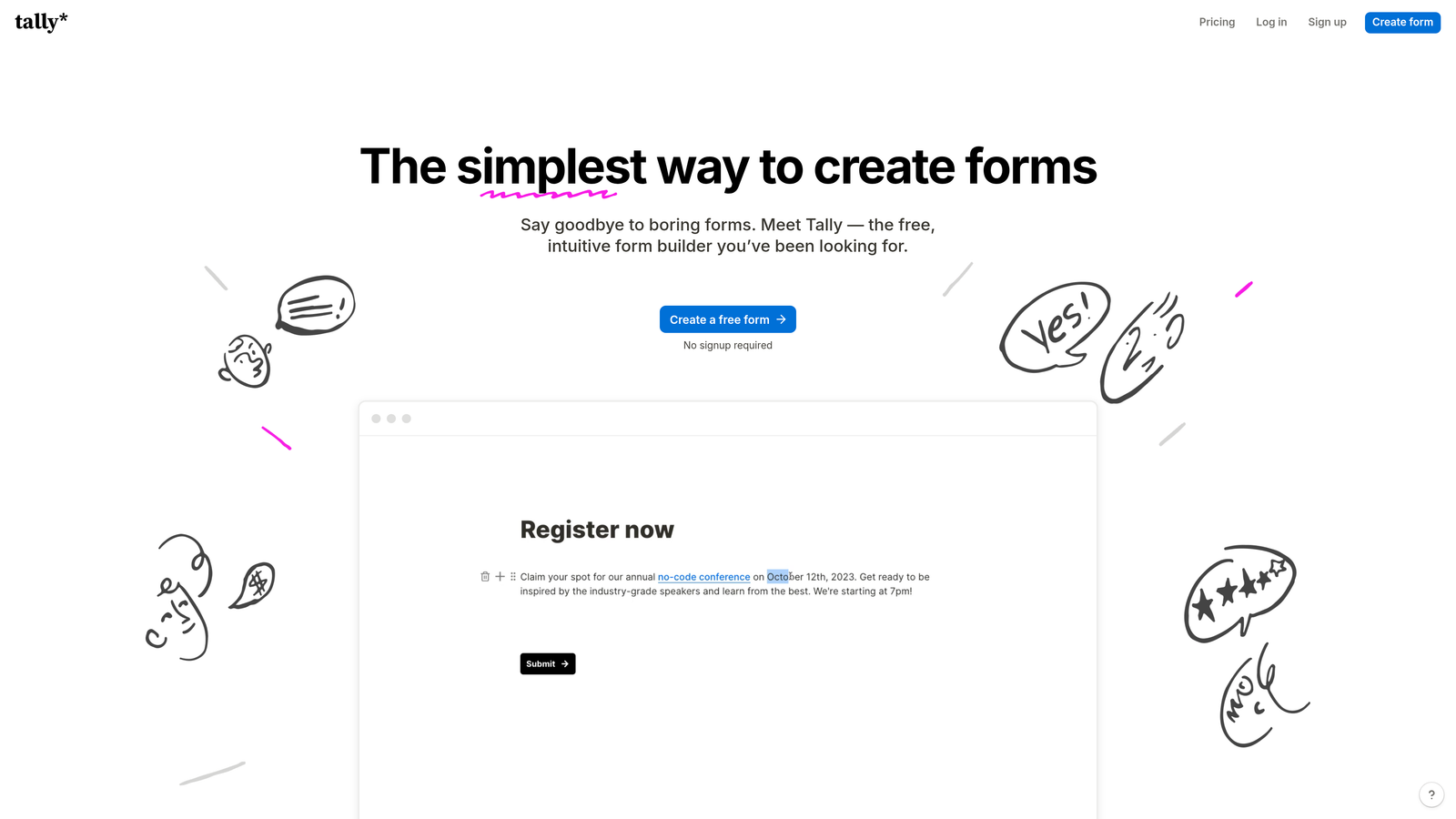
Tally is a minimalist, Notion-inspired form builder that makes getting a form live as fast and frictionless as possible.
Where This Tool Shines
Tally's block-based editor will feel immediately familiar to anyone who uses Notion. You build forms the same way you'd write a document, which removes the learning curve almost entirely. What makes Tally stand out in a crowded market is how much it gives away on its free plan: unlimited forms, unlimited responses, conditional logic, and hidden fields, all without paying a cent.
For early-stage teams or solo operators who need forms up quickly and don't want to think too hard about pricing tiers, Tally is genuinely hard to beat. It's not built for heavy enterprise use or complex lead qualification workflows, but for clean, functional forms that look good and work reliably, it delivers.
Key Features
Notion-Style Block Editor: Familiar document-style interface that makes building forms fast and intuitive without a steep learning curve.
Unlimited Forms and Responses on Free Plan: One of the most generous free tiers in the category, with no submission caps.
Conditional Logic and Hidden Fields: Available on the free plan, allowing basic dynamic form behavior without upgrading.
Clean Embed Options: Forms embed cleanly into websites and tools with minimal design friction.
Zapier and Native Integrations: Connects to popular tools through Zapier and a growing set of native integrations.
Best For
Tally is ideal for startups, indie hackers, and small teams that need forms fast without budget overhead. It's a strong fit for internal forms, quick surveys, and simple lead capture, but teams with complex qualification or automation needs will likely outgrow it.
Pricing
Generous free plan with no submission limits. Pro plan is $29 per month billed annually, adding features like custom domains and advanced integrations.
5. Paperform
Best for: Consultants, coaches, and creative teams who want forms that double as branded landing pages.
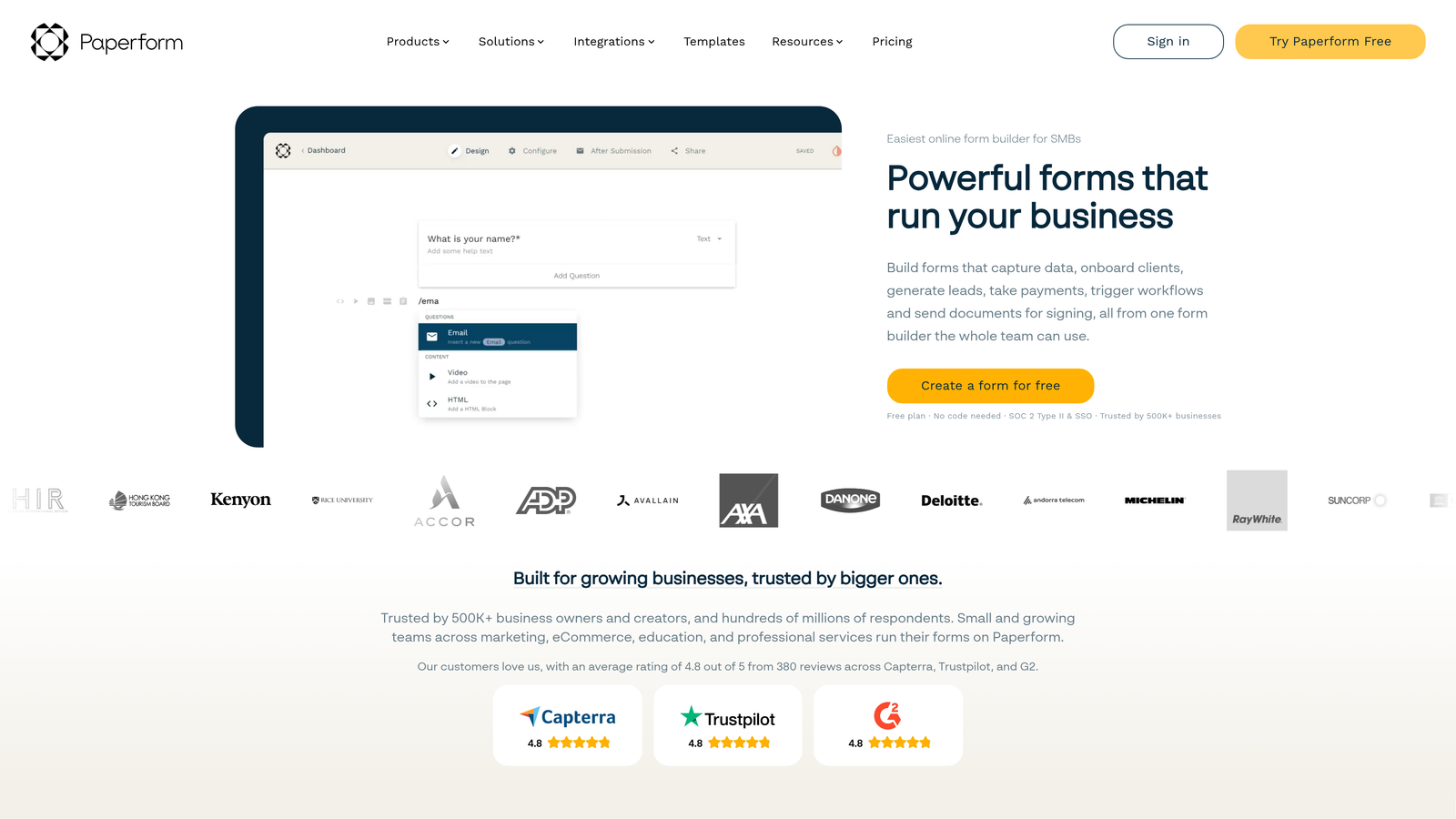
Paperform is a document-style form builder that lets you mix rich text, images, and form fields on a single canvas to create forms that look and feel like full landing pages.
Where This Tool Shines
Paperform takes a fundamentally different approach to form design. Instead of a structured form layout, you get a blank canvas where you can write copy, embed images, add video, and drop in form fields wherever they make sense. The result is a form that reads more like a branded document than a data collection tool, which works particularly well for client-facing workflows where presentation matters.
It also supports appointment scheduling, payment collection, and conditional logic, making it a surprisingly capable all-in-one tool for service businesses. The design output is consistently polished, and the editor is more intuitive than you'd expect given how flexible it is.
Key Features
Document-Style Editor with Rich Media: Mix text, images, video, and form fields freely on a single canvas for a landing page-style experience.
Payment Collection and Product Selling: Accept payments and sell products or services directly through forms without additional plugins.
Conditional Logic and Calculation Fields: Build dynamic forms that adapt based on responses and perform real-time calculations.
Built-In Appointment Scheduling: Lets respondents book time with you directly within the form, removing the need for a separate scheduling tool.
Strong Brand Customization: High degree of visual control to match forms to your brand identity.
Best For
Paperform is best for consultants, coaches, creative agencies, and service businesses that want their forms to reflect their brand quality. It's less suited for high-volume B2B lead generation workflows where AI qualification or CRM depth is the priority.
Pricing
Plans start at $24 per month billed annually. There is no permanent free plan, though a trial is available.
6. Formstack
Best for: Enterprise and mid-market teams with complex workflow automation and compliance requirements.
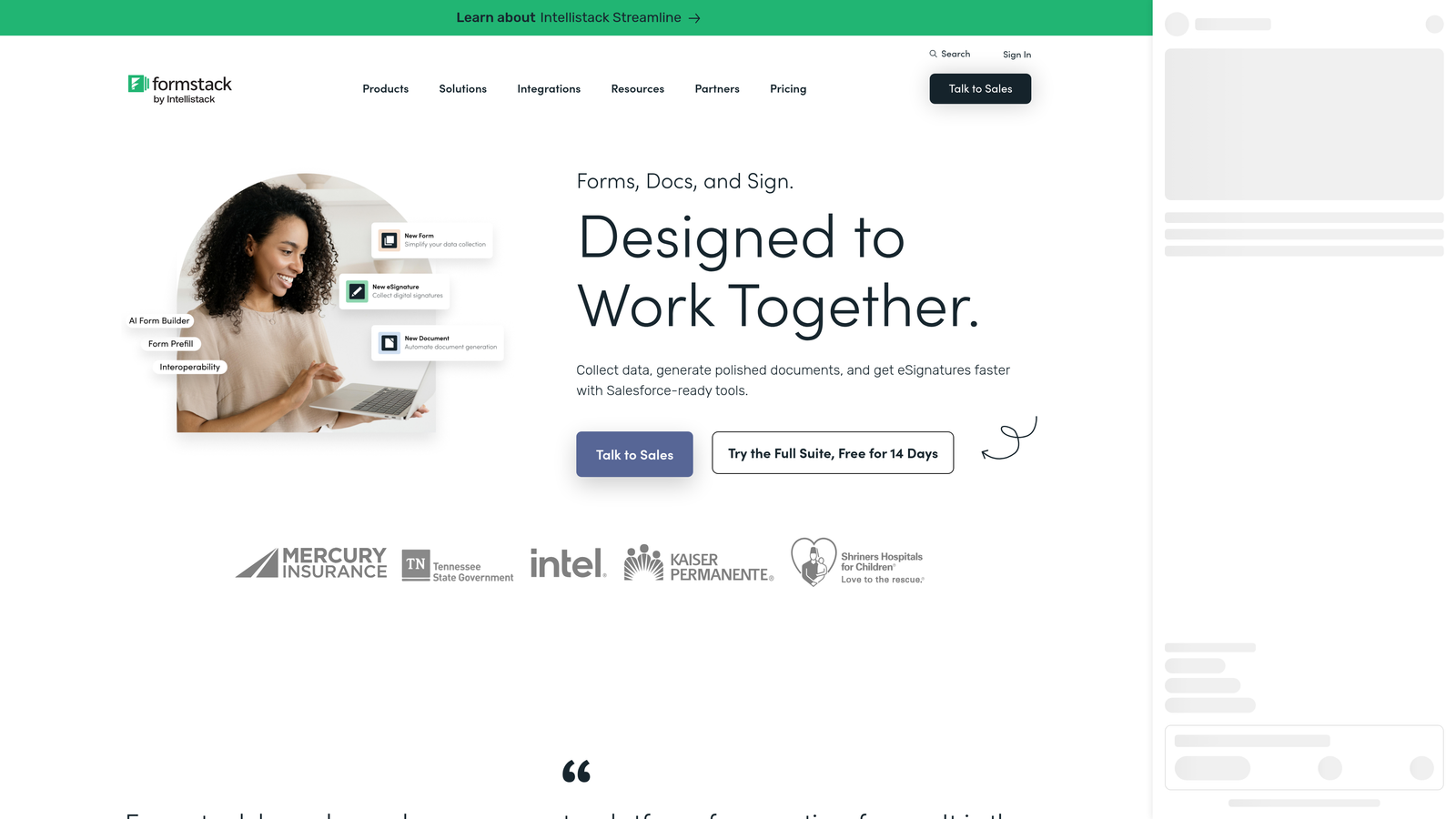
Formstack is an enterprise-grade form and workflow automation platform built for organizations that need more than data collection, including document generation, e-signatures, and multi-step approval flows.
Where This Tool Shines
Formstack operates at a different level of complexity than most tools on this list. It's designed for organizations where form submissions trigger multi-step internal processes: approvals, document generation, compliance checkpoints, and automated handoffs between teams. If your forms are embedded in operational workflows rather than just marketing funnels, Formstack has the infrastructure to support that.
Its data security and compliance credentials are also notably strong, making it a viable option for regulated industries like healthcare, finance, and legal. The platform's Salesforce integration is particularly deep, which matters for enterprise teams running their entire revenue operation through that ecosystem.
Key Features
Multi-Step Workflow Automation: Builds approval chains and automated processes that trigger based on form submissions, beyond simple notifications.
Document Generation and E-Signatures: Creates documents from form data and collects legally binding signatures within the same platform.
Advanced Data Security and Compliance: Includes features for HIPAA, GDPR, and other regulatory frameworks relevant to enterprise use cases.
Conditional Logic and Prefill Options: Supports dynamic form behavior and pre-populates fields using known data to reduce friction.
Salesforce and Enterprise CRM Integrations: Deep native integration with Salesforce and other enterprise systems for seamless data flow.
Best For
Formstack is the right choice for enterprise teams, compliance-sensitive industries, and organizations with complex internal workflows that extend well beyond lead capture. The price point reflects that positioning, making it less suitable for early-stage or growth-stage teams without those specific needs.
Pricing
Plans start at $83 per month billed annually. Enterprise pricing is available for larger organizations with custom requirements.
Which Tool Is Right for Your Team?
The best form builder for your team depends entirely on what you need your forms to actually do. Here's a quick way to think through the decision.
If lead qualification is the priority, and you're tired of your sales team sorting through unqualified submissions, Orbit AI is the clear standout. It's the only tool on this list that embeds AI-powered lead scoring directly into the form experience, which is a meaningful advantage for B2B SaaS teams where pipeline quality matters as much as volume.
If you want a premium conversational experience for surveys and brand-forward lead capture, Typeform delivers consistently polished results. For maximum template variety and built-in payments or e-signatures, Jotform is hard to beat on breadth alone.
Tally is the obvious choice if you're early-stage and need forms up fast without spending money. Paperform is worth serious consideration for service businesses and consultants who want their forms to look like extensions of their brand. And Formstack earns its place for enterprise teams with compliance requirements and complex multi-step workflows.
For high-growth teams where every form submission is a potential revenue conversation, the right tool isn't just one that collects data. It's one that makes that data immediately useful. Transform your lead generation with AI-powered forms that qualify prospects automatically while delivering the modern, conversion-optimized experience your team needs. Start building free forms today and see how intelligent form design can change what happens after someone hits submit.


