

Not all form builders are created equal. Most are designed for data collection: drop in some fields, hit publish, and wait for submissions to roll in. Conversion-focused form tools are built with a fundamentally different goal. They're engineered to turn visitors into qualified leads, and that difference shows up directly in your pipeline.
This guide covers the top tools specifically built (or well-suited) for conversion optimization. Think conditional logic, AI-powered lead qualification, multi-step flows, and smart routing. Whether you're running a B2B demand gen program, optimizing a SaaS signup funnel, or building lead capture for a high-growth team, the right tool can meaningfully move your conversion metrics.
We evaluated each tool on conversion-specific features, ease of use, integrations, and pricing — not just how many fields you can cram into a form. Here's what made the cut.
1. Orbit AI
Best for: AI-powered lead qualification and conversion optimization for high-growth teams
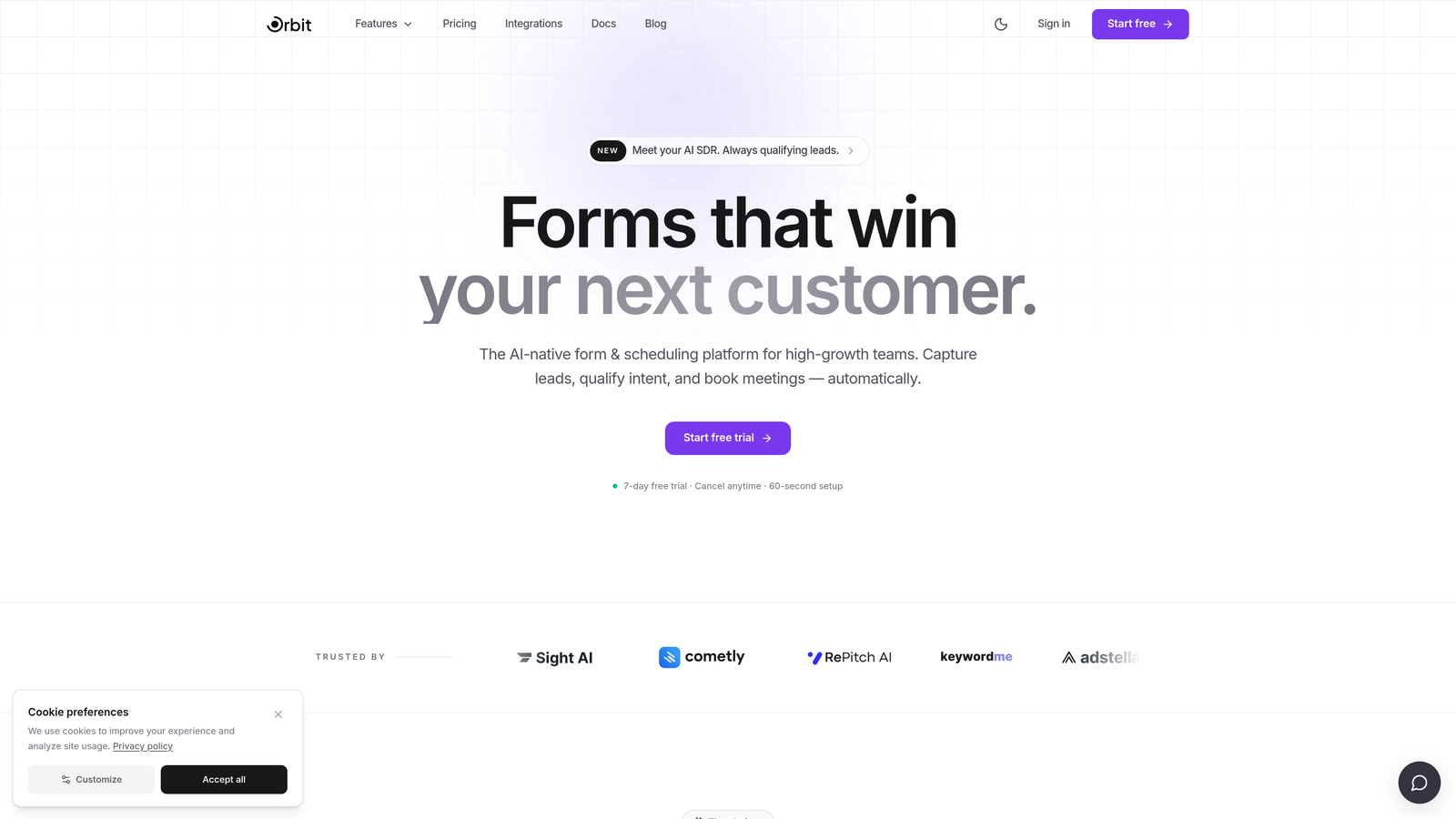
Orbit AI is an AI-powered form builder built specifically for conversion optimization and intelligent lead qualification.
Where This Tool Shines
Most form builders stop at collecting submissions. Orbit AI goes further: it scores and qualifies leads automatically based on how respondents answer, then routes them to the right destination in your sales workflow. For high-growth B2B teams, this means your CRM gets pre-qualified leads instead of raw data dumps.
The platform combines modern, branded form design with the kind of intelligent logic that used to require custom development or a patchwork of third-party tools. It's built for teams who treat their forms as a conversion asset, not just a data entry point.
Key Features
AI-Powered Lead Qualification: Automatically scores and qualifies leads based on form responses, so your sales team focuses on the right prospects.
Conditional Logic and Smart Routing: Dynamically adjusts form flow and routes leads to the right team or workflow based on response data.
Conversion-Optimized Templates: Modern, branded form designs engineered to reduce abandonment and improve completion rates.
CRM and Sales Tool Integrations: Native integrations ensure qualified leads land in your CRM automatically, without manual handoffs.
Conversion-Focused Analytics: Reporting centered on conversion metrics, not just submission volume, so you can optimize what actually matters.
Best For
High-growth SaaS teams, B2B demand generation programs, and any organization that needs forms to do more than collect data. Particularly valuable if you're running qualification-heavy funnels where lead quality matters as much as lead volume.
Pricing
Visit orbitforms.ai for current pricing details and free trial options.
2. Typeform
Best for: Conversational form experiences that reduce abandonment through engaging UX
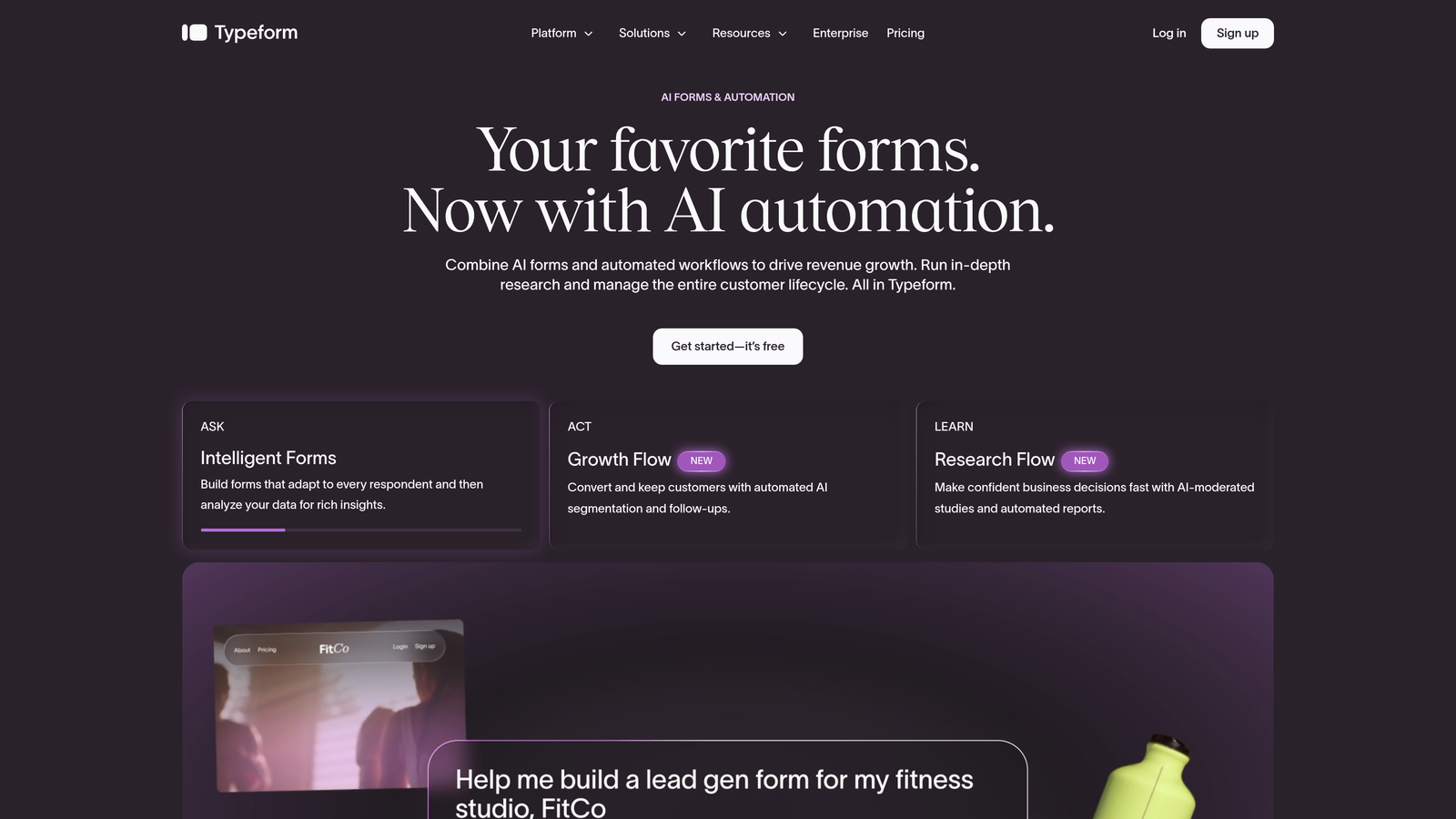
Typeform is a conversational form builder known for its one-question-at-a-time interface that creates a more engaging respondent experience.
Where This Tool Shines
Typeform's core insight is that presenting one question at a time feels less overwhelming than a wall of fields. This approach can reduce abandonment, particularly in longer forms where traditional layouts tend to lose respondents partway through.
Its Logic Jumps feature enables conditional branching, so the form adapts based on previous answers. This makes it well-suited for qualification flows where different respondent profiles should follow different paths through your funnel.
Key Features
Conversational One-Question UX: Presents questions sequentially to create an engaging, chat-like experience.
Logic Jumps: Conditional branching that routes respondents through different question paths based on their answers.
CRM Integrations: Connects with HubSpot, Salesforce, Slack, and hundreds of other tools via native integrations and Zapier.
Media Embedding: Supports video and image embedding within form flows for richer, more personalized experiences.
Drop-Off Analytics: Per-question analytics show exactly where respondents abandon, enabling targeted optimization.
Best For
Marketing and SaaS teams who prioritize respondent experience and want a polished, branded form flow. Strong fit for surveys, lead capture, and onboarding flows where engagement quality matters.
Pricing
Free tier available; paid plans start at approximately $25/month. Verify current pricing at typeform.com.
3. HubSpot Forms
Best for: Teams already using HubSpot who want CRM-native lead capture with zero integration overhead
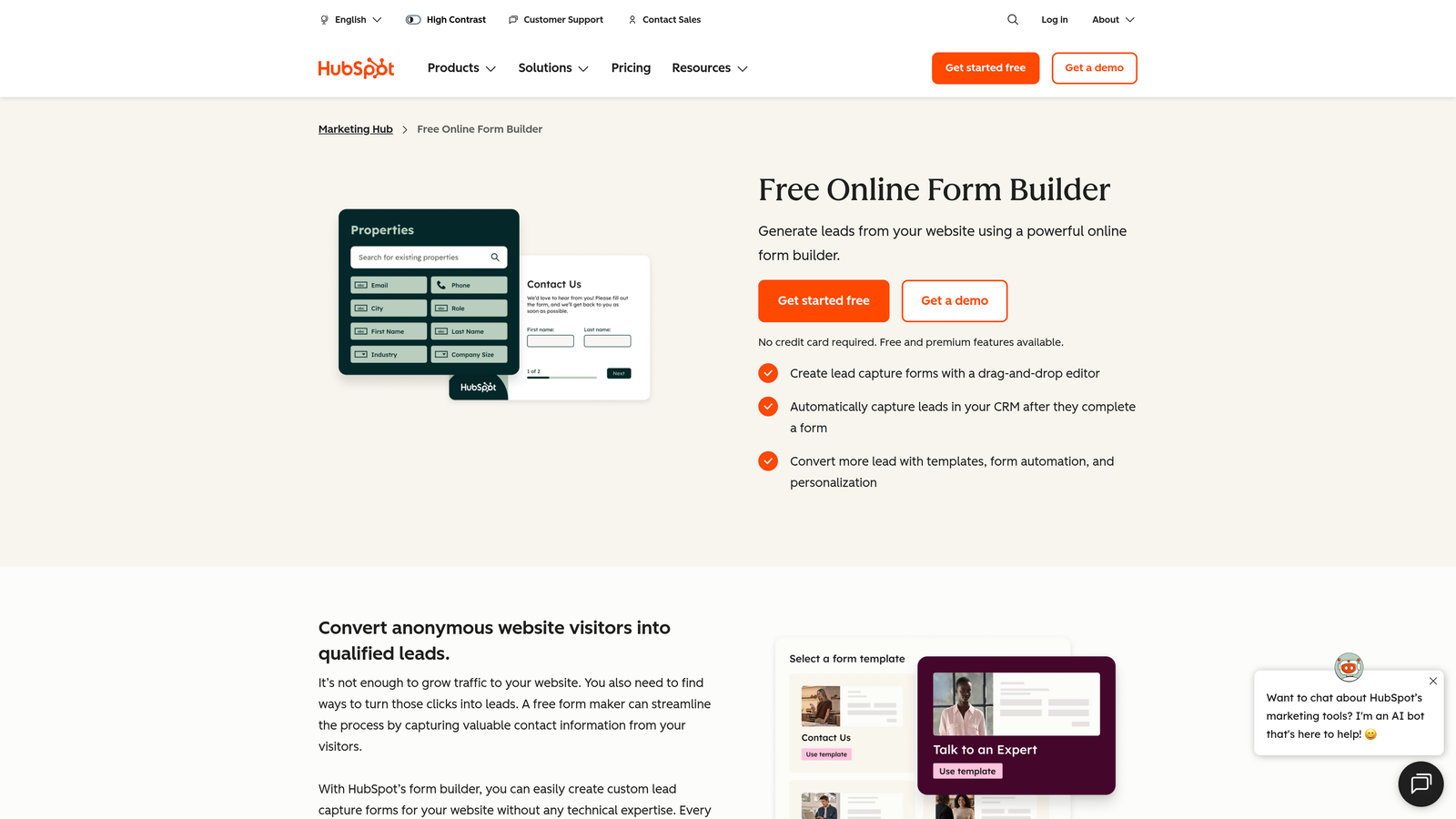
HubSpot Forms is a CRM-native form builder included free with HubSpot's platform, deeply integrated with contact management and marketing automation.
Where This Tool Shines
If your team runs on HubSpot, the forms tool is a natural extension of your existing stack. Every submission flows directly into your CRM with no middleware, no Zapier zap, and no data mapping required. Contacts are created or updated automatically, and workflows trigger instantly.
The progressive profiling feature is particularly valuable for conversion: returning contacts won't see fields HubSpot already knows about them. Instead, the form surfaces new questions to progressively enrich the contact record over time, reducing friction on repeat visits.
Key Features
Native CRM Sync: Submissions create or update HubSpot contacts instantly with no integration setup required.
Progressive Profiling: Automatically skips fields already known for returning contacts, reducing form length and friction.
Workflow Triggers: Form submissions can directly kick off HubSpot automation sequences, email nurtures, and task assignments.
Smart Forms: Adapt displayed fields based on a contact's lifecycle stage or existing properties.
A/B Testing: Built-in testing available on paid Marketing Hub tiers.
Best For
Teams already invested in the HubSpot ecosystem. If you're not on HubSpot, the standalone form experience is less compelling. If you are, it's one of the most frictionless lead capture options available.
Pricing
Free with HubSpot CRM; advanced features require paid Marketing Hub tiers. Verify current pricing at hubspot.com.
4. Unbounce
Best for: Paid media teams running landing page tests who need AI-powered traffic optimization
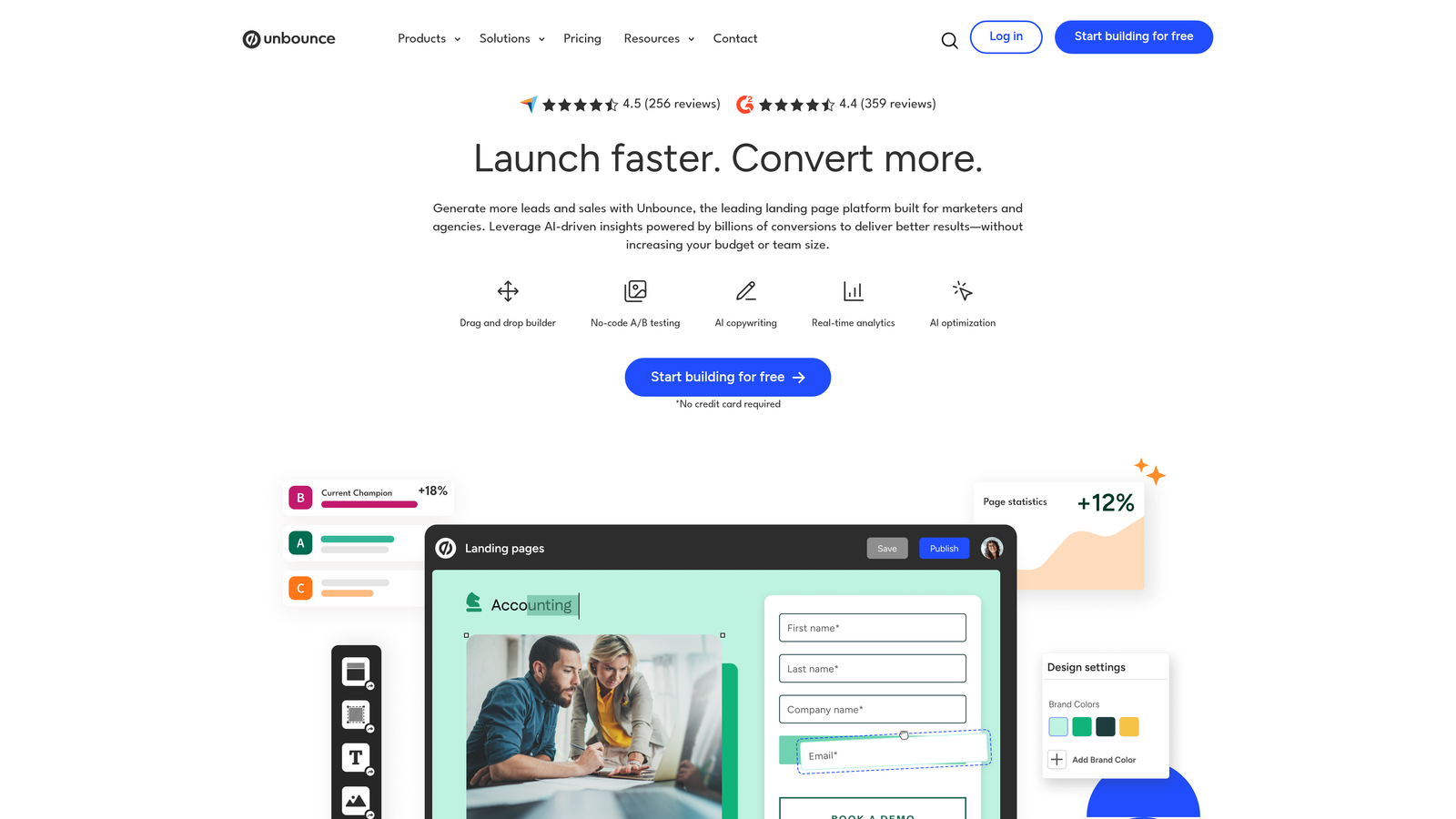
Unbounce is a landing page platform with embedded form capabilities and an AI Smart Traffic feature that automatically routes visitors to the best-performing page variant.
Where This Tool Shines
Unbounce sits at the intersection of form building and landing page optimization. Its Smart Traffic feature uses AI to analyze visitor attributes and route each person to the variant most likely to convert them — rather than splitting traffic evenly as traditional A/B tests do. For paid media teams, this can meaningfully improve conversion rates without waiting for statistical significance.
The drag-and-drop page builder makes it easy to test different form placements, copy variations, and page layouts without engineering involvement.
Key Features
AI Smart Traffic: Automatically routes visitors to the highest-converting page variant based on individual attributes.
Landing Page Builder: Drag-and-drop editor with integrated forms, no developer required.
A/B and Multivariate Testing: Built-in testing infrastructure for pages and form configurations.
Dynamic Text Replacement: Personalizes form and page copy based on the ad or keyword that brought the visitor.
Conversion Analytics: Tracks performance across variants with heatmap integrations available.
Best For
Performance marketing teams running paid search or social campaigns who need a fast, flexible way to build, test, and optimize landing pages with embedded lead capture forms.
Pricing
Starts at approximately $99/month. Verify current pricing at unbounce.com.
5. Jotform
Best for: Teams needing maximum form flexibility with a vast template library and payment support
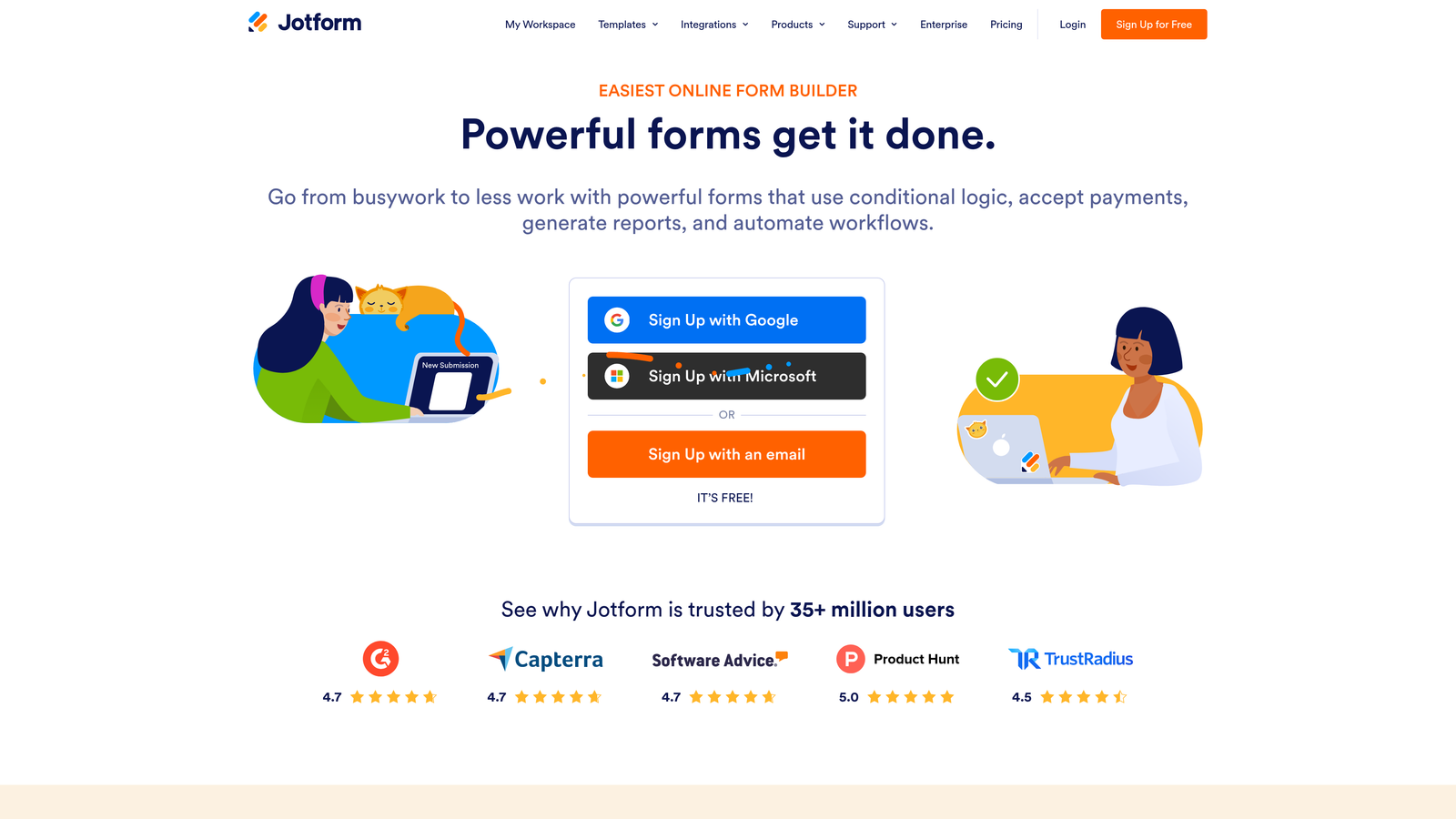
Jotform is one of the most feature-complete form builders available, with an extensive template library, payment integrations, and powerful conditional logic.
Where This Tool Shines
Jotform's strength is breadth. With over 10,000 templates and support for payments, approvals, e-signatures, and complex conditional logic, it can handle almost any form use case out of the box. For teams with diverse form needs across departments, it reduces the need to manage multiple tools.
It's worth noting that Jotform isn't conversion-first by design — it's a general-purpose powerhouse. But its conditional logic capabilities and submission management tools make it a capable option for teams building qualification flows who also need flexibility for other form types.
Key Features
10,000+ Templates: Extensive library covering virtually every industry and use case.
Conditional Logic: Show/Hide and Skip logic for dynamic, adaptive form flows.
Payment Integrations: Native support for Stripe, PayPal, and Square for form-based transactions.
Jotform Tables: Built-in submission management for filtering, organizing, and acting on form data.
Approval Workflows and E-Signatures: Supports multi-step approval processes and digital signature collection.
Best For
Operations teams, agencies, and businesses needing a single form tool that can handle everything from lead capture to payments to internal approvals. Less ideal if pure conversion optimization is the primary goal.
Pricing
Free tier available; paid plans start at approximately $34/month. Verify current pricing at jotform.com.
6. Tally
Best for: Startups and lean teams wanting a fast, lightweight form builder with a generous free tier
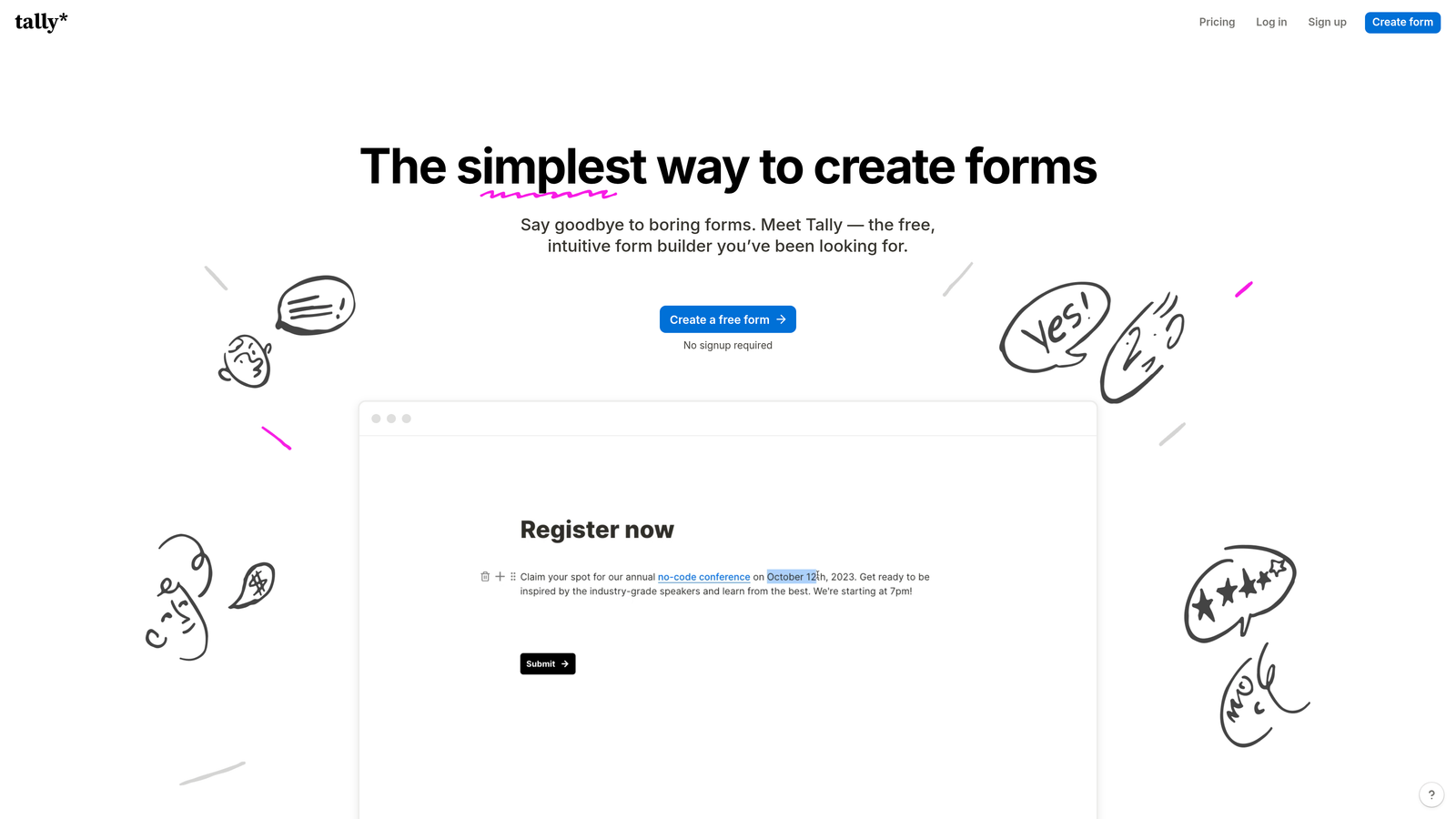
Tally is a Notion-inspired form builder with a clean block editor interface, fast-loading forms, and one of the most generous free tiers in the category.
Where This Tool Shines
Tally's appeal is simplicity and speed. The block-based editor feels familiar to anyone who uses Notion, making form creation fast and intuitive without a learning curve. Forms load quickly and embed cleanly into websites without performance overhead — a genuine advantage for conversion, since page speed affects completion rates.
For early-stage startups or product teams that need functional forms without a significant budget, Tally's free tier (which includes unlimited forms and responses) is hard to beat.
Key Features
Notion-Style Block Editor: Intuitive, familiar interface that makes form creation fast for modern teams.
Unlimited Free Forms and Responses: No submission caps on the free tier, unlike most competitors.
Conditional Logic and Multi-Page Forms: Supports branching flows and multi-step form structures.
Clean Embed Performance: Forms load without heavy scripts that slow down your site.
Integrations: Connects with Notion, Zapier, and major CRMs for data routing.
Best For
Startups, indie makers, and lean product teams that need reliable forms quickly without a large budget. Less suited for teams that need advanced lead scoring or deep CRM automation built into the form layer.
Pricing
Generous free tier available; Pro plan at approximately $29/month. Verify current pricing at tally.so.
7. Growform
Best for: High-volume lead generation with multi-step flows designed to minimize drop-off
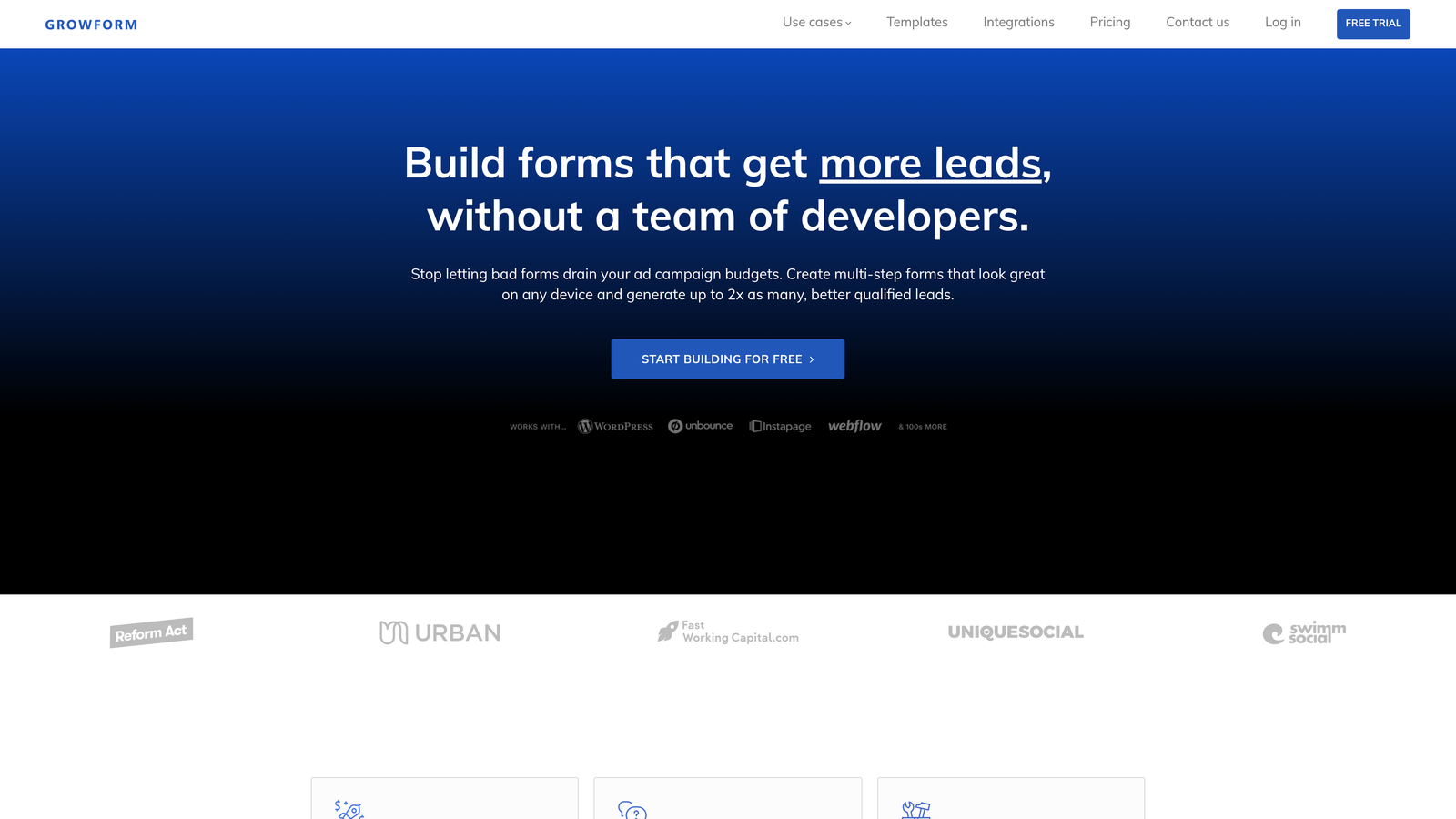
Growform is a multi-step form builder purpose-built for lead generation, with UX patterns specifically designed to reduce abandonment in longer qualification flows.
Where This Tool Shines
Growform is one of the few tools on this list that was designed from the ground up for lead gen conversion, not general form building. Its multi-step format, progress indicators, and UX patterns are all oriented toward keeping respondents engaged through longer qualification sequences — the kind of flows common in home services, insurance, legal, and other high-volume B2C lead gen verticals.
For B2B teams running longer qualification forms, Growform's focus on reducing abandonment at each step makes it worth evaluating alongside more general-purpose tools.
Key Features
Multi-Step Lead Gen Optimization: Purpose-built for multi-step flows with conversion-focused UX patterns throughout.
Progress Bars and Abandonment Reduction: Visual progress indicators and step design aimed at keeping respondents moving forward.
Conditional Logic: Dynamic qualification flows that adapt based on previous responses.
Webhook and API Integrations: Flexible lead distribution to CRMs, dialer systems, and lead management platforms.
White-Label Options: Agency-friendly white-labeling for client deployments.
Best For
High-volume lead generation teams, performance marketers in B2C verticals, and agencies running lead gen campaigns for clients who need multi-step qualification with minimal drop-off.
Pricing
Verify current pricing at growform.co.
8. Leadpages
Best for: Small teams and solopreneurs who want an all-in-one landing page and lead capture platform
Leadpages is a landing page and lead capture platform combining drag-and-drop page building with opt-in forms, A/B testing, and basic conversion analytics.
Where This Tool Shines
Leadpages positions itself as a full-funnel tool for smaller teams: build the page, embed the form, run the split test, and track conversions — all in one place. For solopreneurs or small marketing teams without dedicated developers, this reduces the complexity of managing separate tools for each layer of the funnel.
The platform includes built-in performance tips that flag conversion issues on your pages, which can be useful for teams without dedicated CRO expertise.
Key Features
Drag-and-Drop Page Builder: Build landing pages with embedded lead capture forms without coding.
A/B Split Testing: Test page and form variations to identify higher-converting configurations.
Pop-Up and Alert Bar Formats: Multiple form placement options beyond standard embedded forms.
Email and CRM Integrations: Connects with major email marketing platforms and CRM tools.
Built-In Conversion Guidance: Performance tips highlight potential issues with your page and form setup.
Best For
Small businesses, solopreneurs, and lean marketing teams who want a single platform for landing pages and lead capture without needing to stitch together multiple tools.
Pricing
Starts at approximately $49/month. Verify current pricing at leadpages.com.
9. Paperform
Best for: Brand-conscious teams who need rich, visually polished forms with multi-purpose functionality
Paperform is a document-style form builder with rich media embedding and deep customization, designed for teams where aesthetics and brand consistency are as important as conversion.
Where This Tool Shines
Paperform's document-style editor lets you mix form fields with rich text, images, and video in a way that feels more like a designed page than a traditional form. This makes it particularly effective for forms where context matters: product order forms, booking flows, quiz funnels, or any scenario where guiding the respondent through information improves completion.
The platform's flexibility across use cases (payments, bookings, surveys, quizzes) means it can serve multiple team functions beyond lead capture, reducing tool sprawl for smaller organizations.
Key Features
Document-Style Editor: Mix rich text, images, and video alongside form fields for context-rich experiences.
Deep Brand Customization: Highly customizable themes for fully brand-consistent form design.
Multi-Purpose Functionality: Supports payments, bookings, quizzes, and surveys within a single tool.
Conditional Sections and Smart Fields: Dynamic form logic that adapts based on respondent input.
Integrations: Connects with Stripe, Zapier, Slack, and other common tools.
Best For
Design-conscious teams, agencies, and businesses where brand presentation directly affects conversion. Also a good fit for teams needing one tool to handle multiple form types across their organization.
Pricing
Starts at approximately $29/month. Verify current pricing at paperform.io.
Which Tool Is Right for Your Team?
The right conversion-focused form tool depends heavily on what's actually holding your funnel back. Here's a quick-reference breakdown by use case to help you cut through the options.
AI lead qualification and scoring: Orbit AI is the clear choice if you need forms that don't just collect leads but actively qualify and route them. It's built specifically for high-growth teams who treat lead quality as a primary metric.
CRM-native lead capture: If your team runs on HubSpot, HubSpot Forms is the path of least resistance. The native sync, progressive profiling, and workflow triggers make it the most frictionless option for HubSpot users.
Conversational form UX: Typeform remains the benchmark for engaging, one-question-at-a-time experiences. If respondent drop-off is your main problem and you want a polished, branded flow, it's a strong contender.
Multi-step lead gen at volume: Growform was purpose-built for this. If you're running high-volume lead gen with long qualification flows, its abandonment-reduction focus makes it worth a close look.
Lightweight and free: Tally is the best starting point for startups and lean teams that need functional forms without budget overhead.
Before you commit to any tool, audit your current form stack against your actual conversion goals. Are your forms collecting submissions or qualifying leads? Are you routing the right prospects to the right teams automatically, or relying on manual review? The answers will point you toward the right tool.
If AI-powered lead qualification is on your roadmap, start building free forms today with Orbit AI and see how intelligent form design can elevate your conversion strategy.


