

Enterprise teams face a unique challenge with forms: they need tools that handle massive scale, strict compliance requirements, complex workflows, and seamless integrations — all without sacrificing the conversion performance that drives revenue. A clunky, slow, or poorly designed form isn't just a UX problem at the enterprise level; it's a pipeline problem.
This list covers the best form builders built for enterprise-grade demands. Whether your priority is AI-powered lead qualification, deep CRM integrations, HIPAA compliance, or high-volume data collection, there's a tool here for your team. Each pick has been evaluated on scalability, security, customization, integrations, and overall fit for high-growth organizations.
If you're also looking to improve what happens after the form submit, check out our guides on how to improve lead quality and lead scoring best practices to get the most from your form data.
1. Orbit AI
Best for: B2B enterprise teams that need AI-powered lead qualification built directly into the form flow.
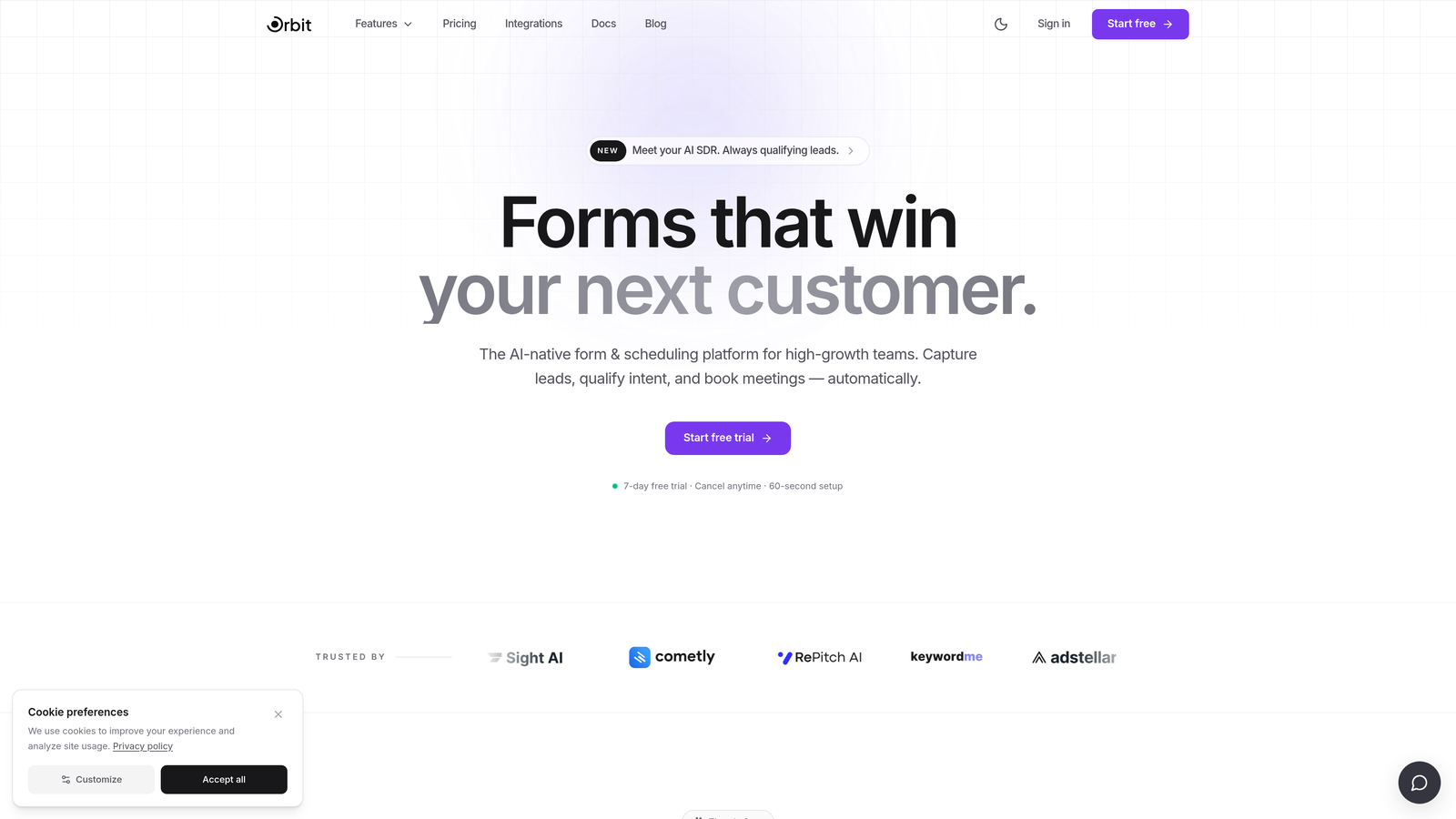
Orbit AI is an AI-powered form builder with native lead qualification, designed specifically for high-growth enterprise teams focused on conversion optimization and pipeline quality.
Where This Tool Shines
Most form builders treat lead qualification as an afterthought, something you bolt on downstream through your CRM or a third-party scoring tool. Orbit AI flips that model entirely. The AI qualification layer lives inside the form itself, which means your sales team gets scored, prioritized leads the moment someone submits, without waiting for data to sync across multiple platforms.
For revenue ops and demand gen teams, this is a meaningful shift. Pipeline quality becomes a form-level concern rather than a post-processing problem. Orbit AI also delivers polished, conversion-optimized form design out of the box, so you're not trading aesthetics for intelligence.
Key Features
AI-Powered Lead Qualification: Lead scoring happens natively within the form flow, eliminating the need for downstream integrations to assess prospect quality.
Conversion-Optimized Design: Forms are visually polished by default, built to maximize completion rates without requiring a designer.
Real-Time Lead Scoring: Scores are generated and surfaced in real time, giving sales teams immediate context on inbound leads.
Enterprise Customization: Full control over branding, form structure, and logic to match complex enterprise workflows and brand standards.
Built for B2B Demand Gen: The platform is purpose-built for the use cases that matter most to high-growth B2B teams: lead gen, pipeline qualification, and revenue ops.
Best For
Enterprise B2B teams in SaaS, tech, and professional services where pipeline quality is as important as volume. Particularly strong for demand generation, revenue operations, and growth teams that want AI-driven qualification without adding more tools to their stack.
Pricing
Visit orbitforms.ai for current enterprise pricing details. Enterprise plans are available for high-growth teams with advanced qualification and customization needs.
2. Formstack
Best for: Regulated industries requiring HIPAA compliance, workflow automation, and document generation from form data.
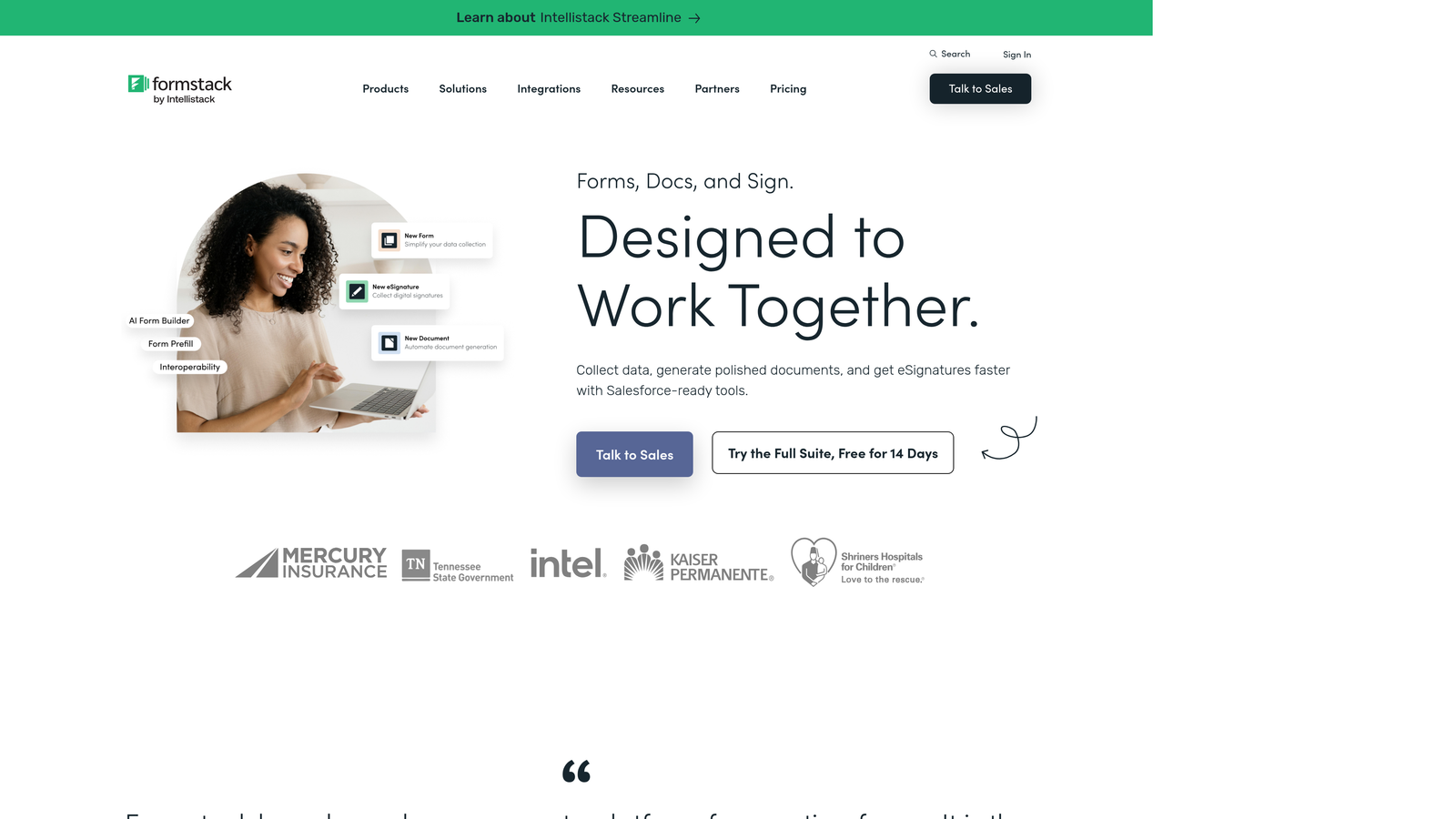
Formstack is an enterprise-focused form and workflow automation platform with strong compliance capabilities, particularly for healthcare, finance, and government sectors.
Where This Tool Shines
Formstack has carved out a strong niche in regulated industries where compliance isn't optional. Its HIPAA-compliant forms, combined with built-in e-signature capabilities and Formstack Documents for automated document generation, make it a genuine end-to-end solution for organizations that need forms to trigger complex downstream workflows.
The multi-step approval routing is a standout feature for enterprise teams with internal review processes. Rather than exporting data and managing approvals in a separate tool, Formstack keeps the entire workflow contained within the platform.
Key Features
HIPAA-Compliant Forms: Purpose-built compliance features for healthcare and other regulated industries, including data encryption and audit trails.
Workflow Automation: Multi-step approval routing lets teams build structured review processes directly connected to form submissions.
Formstack Documents: Automatically generate polished documents, contracts, or reports from submitted form data.
E-Signature Integration: Collect legally binding signatures as part of the form or workflow process without a separate tool.
SSO and Advanced Security: Enterprise plans include single sign-on, advanced access controls, and dedicated support.
Best For
Healthcare organizations, financial services firms, and government agencies that need HIPAA compliance, document generation, and structured approval workflows. Also strong for any enterprise team managing complex multi-department processes tied to form data.
Pricing
Enterprise pricing is available on request. Team plans are available at mid-range SaaS pricing, with enterprise tiers including dedicated support and advanced compliance features.
3. Jotform
Best for: Enterprise teams that need an extensive template library, broad integrations, and flexible workflow management across multiple departments.
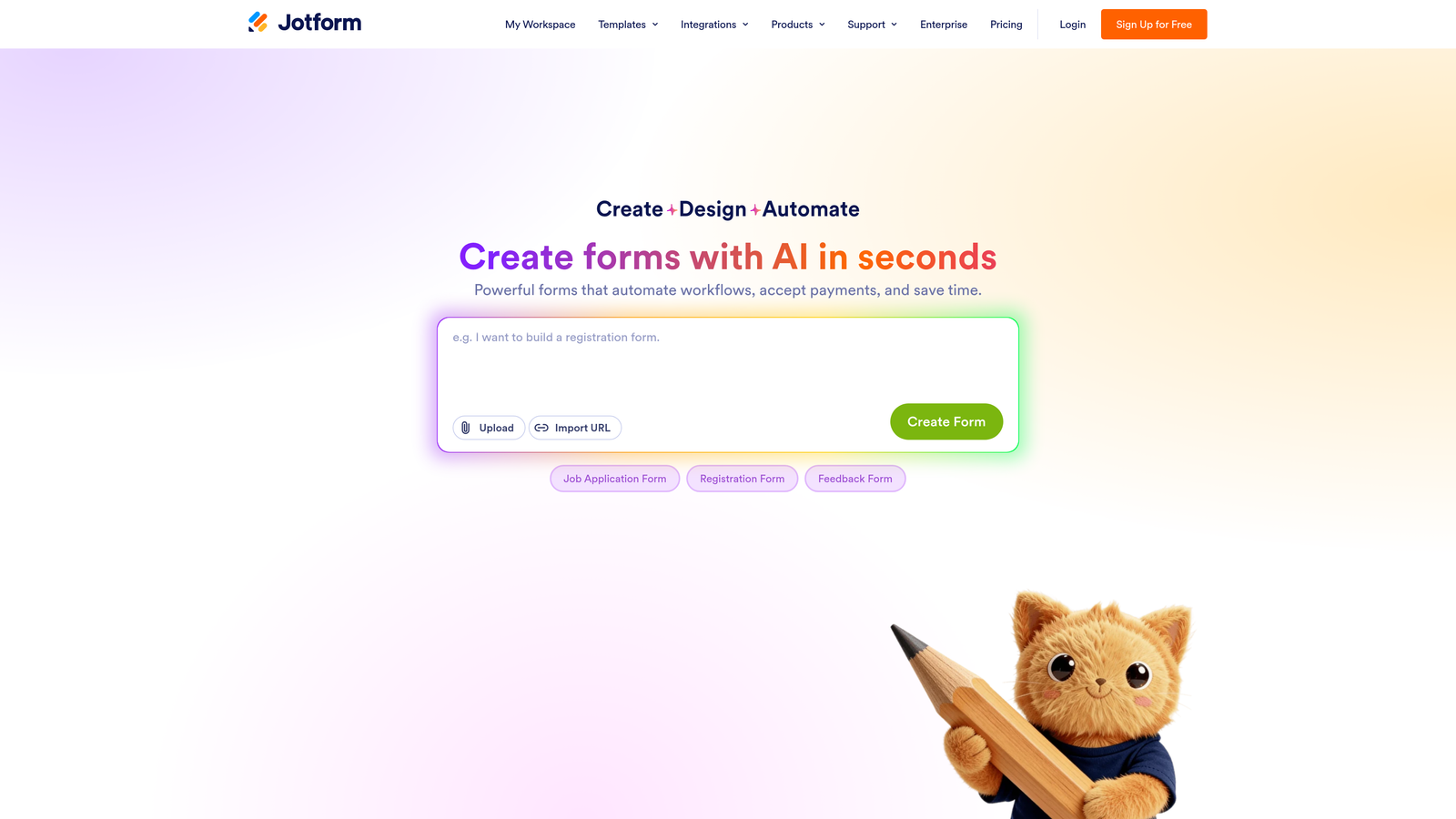
Jotform is one of the most widely adopted form platforms globally, offering an enormous template library and a broad integration ecosystem built for enterprise-scale deployment.
Where This Tool Shines
Jotform's sheer breadth is its defining strength. With over 10,000 templates covering virtually every department use case, and more than 100 native integrations including Salesforce and HubSpot, it's the kind of platform that can serve HR, marketing, legal, and operations simultaneously without requiring different tools for each team.
At the enterprise tier, Jotform adds HIPAA compliance, local data residency options, custom branding, and white-labeling, making it viable for organizations with strict data governance requirements. Jotform Tables and Jotform Approvals extend the platform into lightweight workflow territory, which reduces the need for additional tools in simpler use cases.
Key Features
10,000+ Templates: One of the largest template libraries available, spanning every department and industry use case imaginable.
HIPAA Compliance and Data Residency: Enterprise plans include compliance features and local data storage options for regulated or region-specific requirements.
100+ Native Integrations: Connects directly with Salesforce, HubSpot, and a wide range of CRMs, payment processors, and productivity tools.
Jotform Tables and Approvals: Built-in workflow management tools that turn form submissions into structured, trackable processes.
Custom Branding and White-Labeling: Enterprise tier supports full brand customization and white-labeled deployments for client-facing use cases.
Best For
Large organizations that need a single platform to serve multiple departments with different form requirements. Particularly well-suited to teams that prioritize integration breadth and template variety over specialized features.
Pricing
Enterprise pricing is custom and quote-based. Lower tiers are available at accessible price points, making Jotform a viable option for teams at various stages of growth before committing to enterprise plans.
4. Typeform
Best for: Enterprise teams running branded surveys, NPS programs, and lead gen forms where conversational UX and completion rates are the priority.
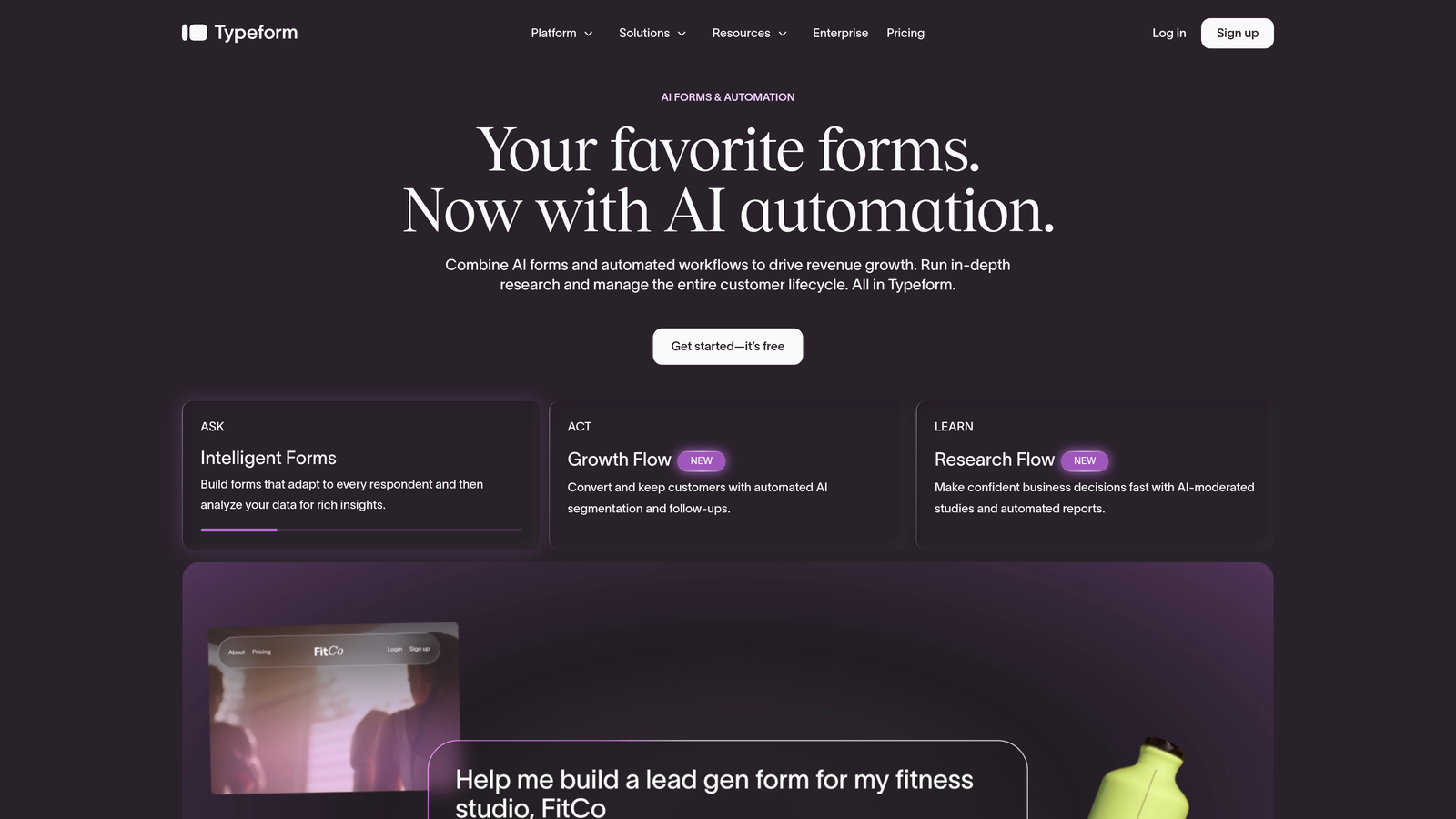
Typeform is a conversational form builder known for its one-question-at-a-time interface, which drives higher engagement and completion rates for surveys and lead generation at scale.
Where This Tool Shines
Typeform's signature UX, presenting one question at a time rather than a full-page form, creates a more focused, less overwhelming experience for respondents. For enterprise teams running NPS surveys, market research, or branded lead gen campaigns, this format consistently outperforms traditional forms in terms of completion and engagement.
The logic jump and branching capabilities are genuinely powerful, allowing teams to build personalized form paths that adapt based on previous answers. At the enterprise tier, Typeform adds SSO, GDPR compliance tools, custom domains, and priority support to meet organizational security and governance requirements.
Key Features
Conversational One-Question Interface: The signature UX presents questions sequentially, reducing cognitive load and improving form completion rates.
Advanced Logic Jumps and Branching: Build personalized, dynamic form paths that respond to each respondent's answers in real time.
SSO and GDPR Tools: Enterprise plans include single sign-on, GDPR compliance features, and custom domain support for security-conscious organizations.
CRM and Tool Integrations: Native connections to HubSpot, Salesforce, Slack, and a range of other enterprise tools.
Branded Lead Gen and NPS: Purpose-built for survey-style use cases where brand experience and data quality matter equally.
Best For
Enterprise marketing, customer success, and research teams that run high-volume surveys, NPS programs, and branded lead gen campaigns. Teams looking for Typeform alternatives focused on AI-powered qualification may also want to explore this comparison.
Pricing
Business and Enterprise tiers are available. Enterprise pricing is quote-based, with plans including custom domains, SSO, and priority support tailored to organizational requirements.
5. Paperform
Best for: Teams that need forms to function as branded landing pages, with strong conditional logic, payment collection, and a document-style editing experience.
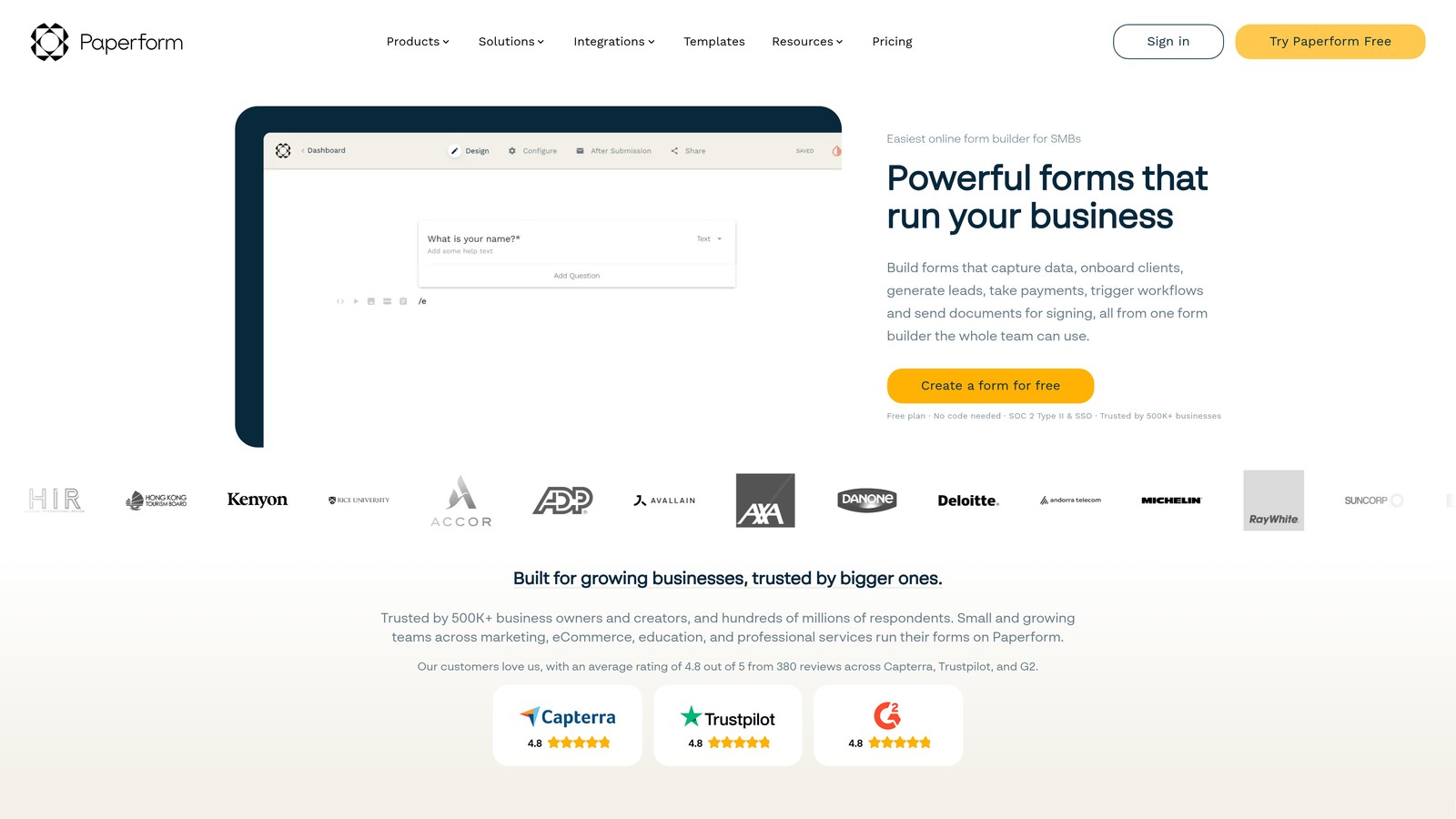
Paperform is a flexible, document-style form builder that blends form functionality with branded landing page aesthetics, plus robust conditional logic and native payment support.
Where This Tool Shines
Paperform takes a different approach to form design: instead of a traditional form builder interface, it uses a document-style editor that lets you mix text, images, and form fields freely. The result is forms that look and feel like polished, branded pages rather than generic data-collection tools, which matters when you're sending prospects or clients to a form as part of a high-touch experience.
The conditional logic and calculation fields are among the more powerful available in this category, making Paperform a strong choice for complex use cases like pricing calculators, quote request forms, or multi-step applications. Native payment collection via Stripe, PayPal, and Square adds further versatility for teams that need to monetize directly through the form.
Key Features
Document-Style Editor: A free-form editing experience that produces forms indistinguishable from branded landing pages.
Advanced Conditional Logic and Calculations: Sophisticated branching and calculation fields support complex, dynamic form experiences.
Native Payment Collection: Accept payments directly through forms via Stripe, PayPal, and Square without third-party workarounds.
Custom Domains and White-Labeling: Higher-tier plans support custom domains and white-labeled deployments for brand consistency.
Team Collaboration: Shared workspaces and collaboration features for teams managing multiple forms across departments or clients.
Best For
Marketing teams, agencies, and enterprise organizations that need forms to carry the weight of a landing page experience. Particularly strong for quote requests, product configurators, event registrations, and any use case where brand presentation and complex logic intersect.
Pricing
Agency and business tiers are available at accessible price points. Enterprise-level features including custom domains, white-labeling, and advanced analytics are available on higher-tier plans.
6. Tally
Best for: Enterprise teams that need fast, low-friction form deployment with a minimal learning curve and generous free-tier capabilities.
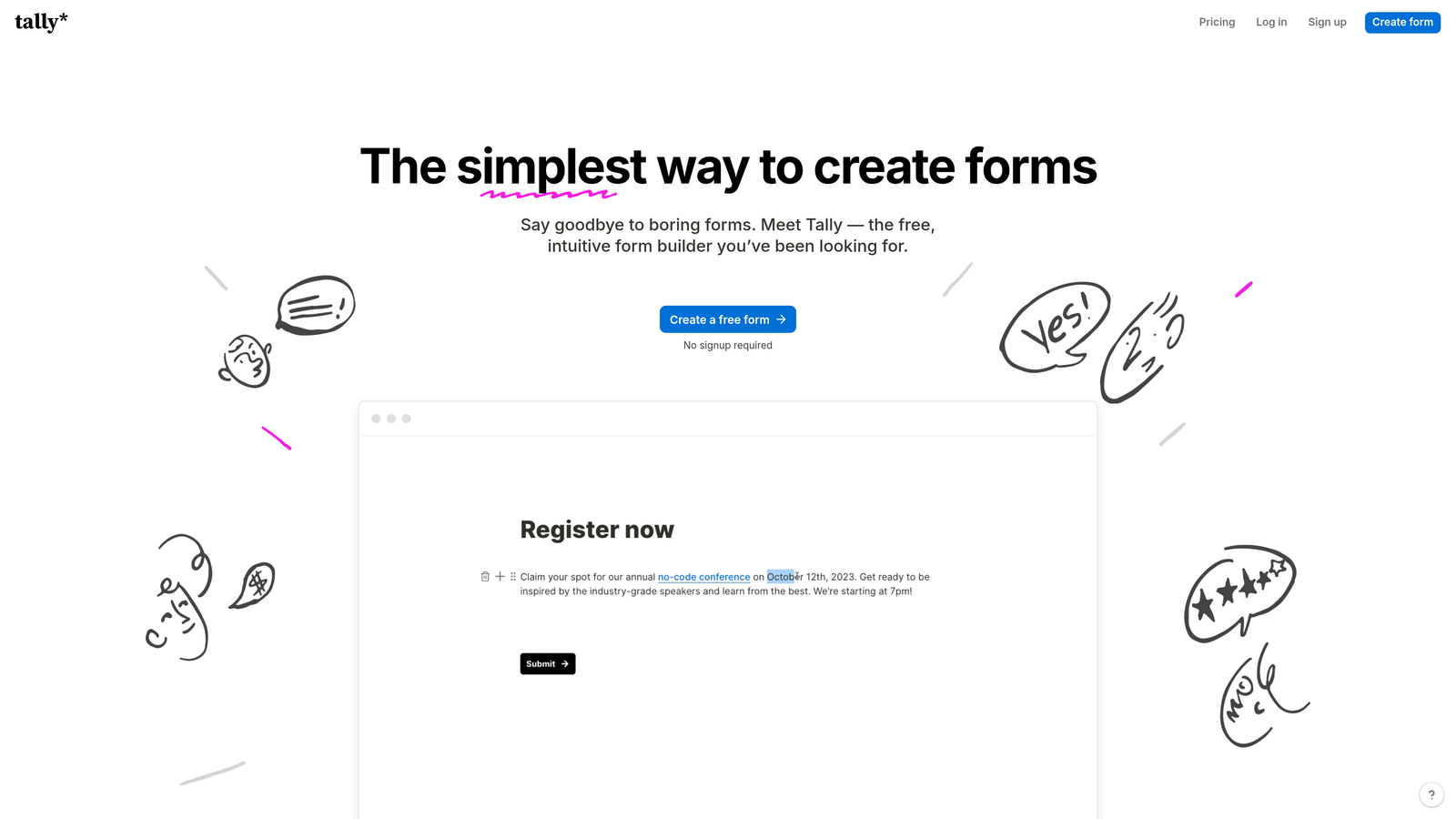
Tally is a lightweight, Notion-inspired form builder with unlimited forms, a minimal setup process, and growing adoption among enterprise teams that value speed of deployment.
Where This Tool Shines
Tally's appeal is rooted in simplicity. The Notion-like editing experience means most users are productive within minutes, not hours, which makes it an attractive option for enterprise teams that need to spin up internal forms, intake requests, or feedback surveys quickly without involving a dedicated form specialist.
The free tier is genuinely generous: unlimited forms with conditional logic, file uploads, and payment collection included. Tally Pro adds custom domains, white-labeling, and priority support at a price point that sits well below most enterprise-tier competitors. For organizations that need a lightweight complement to a heavier platform, or a fast-moving team that wants to avoid procurement cycles, Tally punches above its weight.
Key Features
Notion-Like Editing Experience: An intuitive, block-based editor that requires virtually no onboarding time for teams already familiar with modern productivity tools.
Unlimited Forms on Free Tier: No form limits even at the free level, making it accessible for teams testing the platform before committing.
Conditional Logic, File Uploads, and Payments: Core functionality including branching logic, file collection, and payment processing available across tiers.
Custom Domains and White-Labeling: Tally Pro unlocks brand customization features for external-facing deployments.
Affordable Relative to Enterprise Competitors: Pro pricing is positioned well below most enterprise form builder alternatives, making it accessible for growing teams.
Best For
Internal operations teams, fast-moving startups within larger organizations, and enterprise teams that need a lightweight, low-overhead form tool for internal workflows, quick surveys, or supplementary data collection alongside a primary platform.
Pricing
A free tier is available with unlimited forms and core features. Tally Pro is affordably priced for teams, with pricing well below most enterprise-tier competitors in this category.
Choosing the Right Tool for Your Enterprise
The right form builder for your enterprise depends entirely on what you need forms to do. These six tools cover meaningfully different ground, and the best choice comes down to your primary use case, your team's technical requirements, and where form performance fits in your broader revenue strategy.
If pipeline quality and AI-powered lead qualification are your priorities, Orbit AI is built specifically for that problem. It's the only tool on this list where AI scoring happens inside the form flow itself, making it the strongest fit for B2B demand gen and revenue ops teams that need qualified leads, not just submitted forms.
For regulated industries with compliance requirements, Formstack's HIPAA capabilities and workflow automation make it the clear choice. If you need breadth across departments with a massive template library, Jotform delivers. For conversational, survey-style experiences that prioritize completion rates, Typeform leads the category. Paperform is the pick when forms need to function as full landing pages with complex logic and payments. And Tally earns its place for teams that need fast, low-friction deployment without the overhead of an enterprise procurement process.
The best enterprise form builder is the one that turns your form submissions into pipeline momentum. Start building free forms today with Orbit AI and see how intelligent form design and native lead qualification can transform the quality of your inbound pipeline from day one.


