

JotForm is a capable form builder, but agencies have largely outgrown it. Between rigid branding controls, limited lead qualification logic, and per-submission pricing that doesn't scale well across multiple clients, many agency teams are actively shopping for something better.
This list covers the strongest JotForm alternatives for agencies in 2026 — tools that handle everything from client-facing intake forms to conversion-optimized lead capture. Whether you're managing five clients or fifty, each option here offers something JotForm doesn't.
Selection criteria: agency-friendliness (white-labeling, multi-client management), lead qualification capabilities, design flexibility, integration depth, and pricing transparency. Here are the top tools worth your attention.
1. Orbit AI
Best for: Agencies running B2B or SaaS lead generation campaigns where lead quality matters.
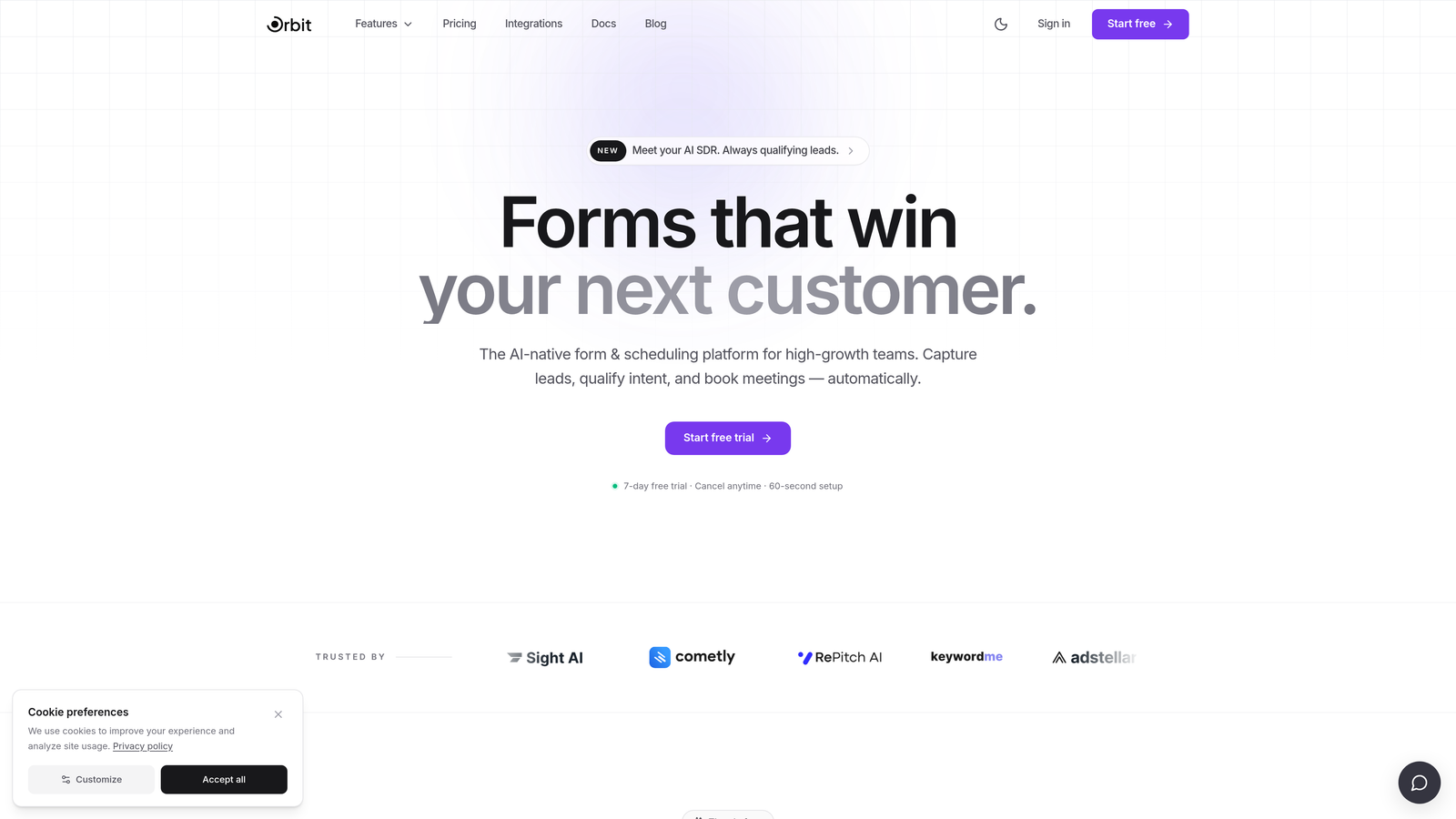
Orbit AI is an AI-powered form builder with built-in lead qualification, designed specifically for agencies and high-growth teams focused on conversion optimization.
Where This Tool Shines
Most form builders collect data and stop there. Orbit AI goes further with an AI-powered lead qualification engine that scores and routes leads automatically, which is a meaningful differentiator for agencies running campaigns where lead quality matters as much as lead volume. Instead of dumping raw submissions into a CRM and letting your team sort through them manually, Orbit AI does that filtering work for you.
The design system is built for client-facing work. Forms are modern, highly customizable, and easy to brand for individual clients without requiring CSS gymnastics. For agencies juggling multiple client accounts, the multi-client workspace structure keeps data, branding, and workflows cleanly separated.
Key Features
AI Lead Qualification Engine: Automatically scores and routes incoming leads so your team focuses on the prospects most likely to convert.
Conversion-Optimized Templates: Pre-built form templates designed specifically for lead generation campaigns, not generic data collection.
Modern Design System: Highly customizable visual design that makes it straightforward to match any client's brand guidelines.
Multi-Client Workspace Management: Agency-native account structure keeps client data, branding, and billing cleanly separated at scale.
CRM and Marketing Automation Integrations: Deep connections to the platforms agencies already use for lead management and campaign reporting.
Best For
Orbit AI is the strongest fit for agencies running lead generation campaigns for B2B or SaaS clients, where qualifying leads at the form level saves significant downstream effort. It's also well-suited for agencies that need to deliver polished, client-branded form experiences without heavy custom development work.
Pricing
Visit orbitforms.ai for current pricing and plan details. A free starting option is available.
2. Typeform
Best for: Brand-forward agencies that prioritize form aesthetics and completion rate optimization.
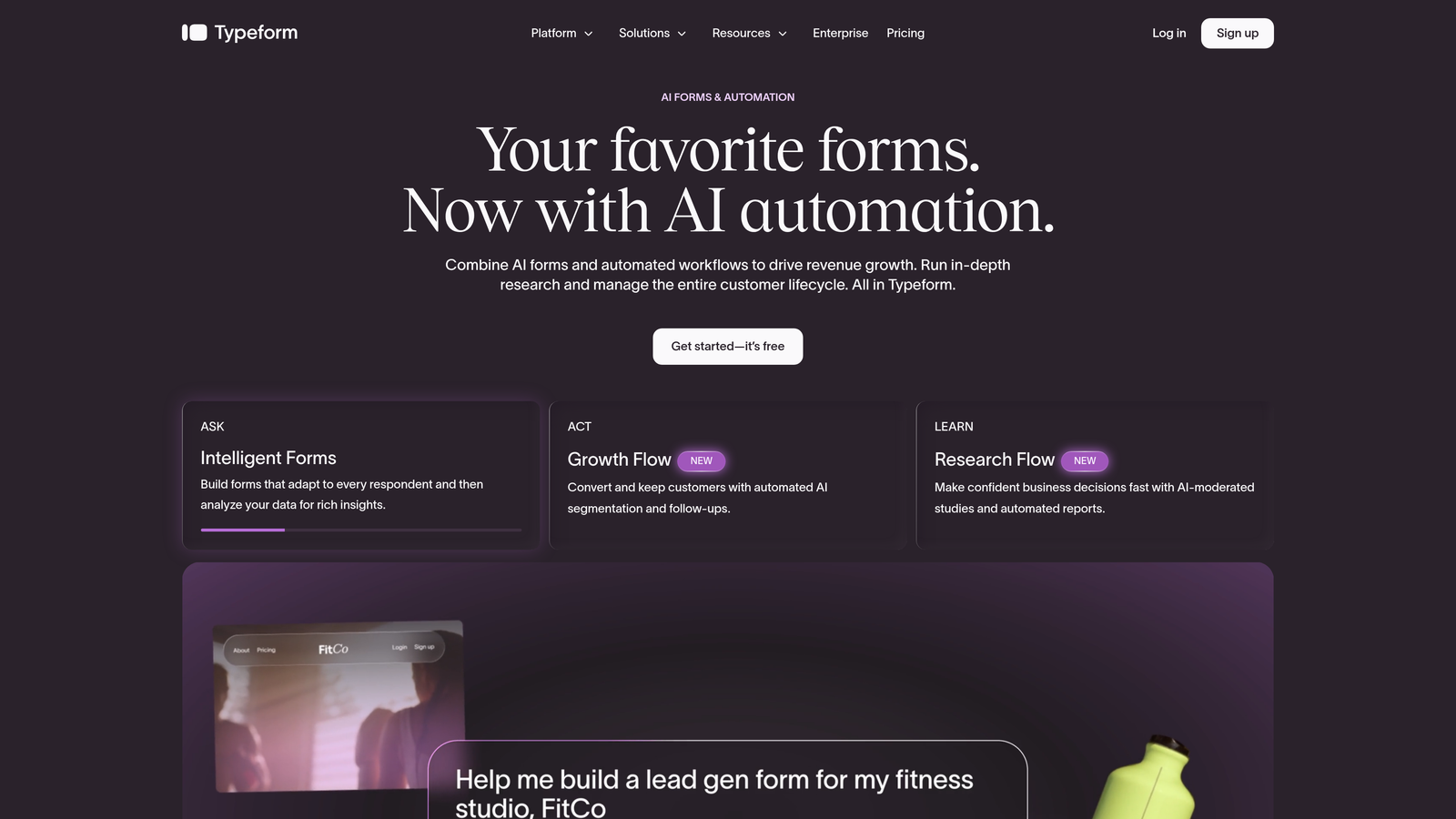
Typeform is a well-established conversational form builder known for its one-question-at-a-time format that drives higher engagement on longer forms.
Where This Tool Shines
Typeform's conversational format is genuinely effective for forms where you'd otherwise see drop-off: longer surveys, multi-step qualification flows, and onboarding questionnaires. Presenting one question at a time reduces cognitive load and keeps respondents moving through the form. For agencies where the client experience is part of the brand promise, that polish matters.
Business and higher-tier plans include workspace features and white-labeling options that make it workable for multi-client agency environments. The integration library is broad, with native connections to HubSpot, Salesforce, Slack, and Zapier covering most agency tech stacks. One honest caveat: the one-question-at-a-time format can frustrate users who want to scan a form before filling it out, which is worth testing with your specific audience.
Key Features
Conversational UX: One-question-at-a-time format reduces drop-off on longer, more complex forms.
Brand Design Customization: Strong visual customization and white-labeling options available on higher-tier plans.
Native Integrations: Direct connections to HubSpot, Salesforce, Slack, and Zapier without requiring middleware for most workflows.
Logic Jumps and Conditional Branching: Personalized form paths based on respondent answers, useful for qualification and segmentation.
Team Collaboration: Workspace and team features on business plans support multi-user agency environments.
Best For
Typeform works best for agencies where the visual and experiential quality of the form is a core deliverable. It's particularly strong for client-facing surveys, brand research projects, and lead capture forms where a polished, engaging experience is part of the brief.
Pricing
Free plan available. Paid plans start at approximately $25/month. Note that per-response pricing applies on lower tiers, which can add up for high-volume agency campaigns.
3. Paperform
Best for: Agencies building landing-page-style forms that blend rich content with data collection.
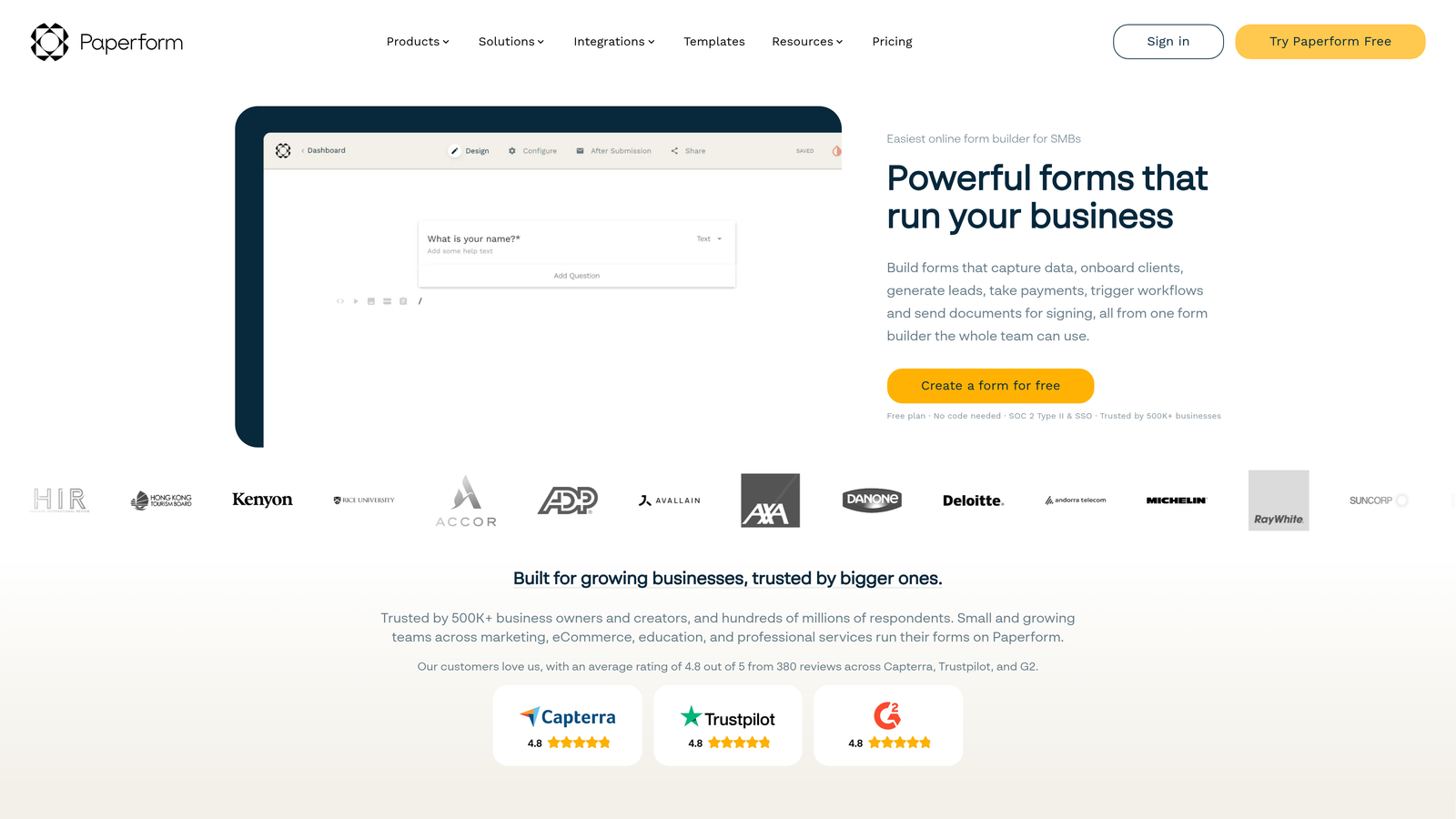
Paperform is a flexible form builder with a document-style editor that lets you mix text, images, video, and form fields freely on the same page.
Where This Tool Shines
Paperform's biggest differentiator is its editor model. Rather than a traditional form builder where fields live in a rigid structure, Paperform lets you build something closer to a landing page: add context, imagery, and video alongside your form fields in a freeform document layout. This makes it particularly effective for forms that need to sell or explain before they ask, like service intake forms, event registrations, or product order forms.
Native payment processing through Stripe, PayPal, and Braintree is a practical advantage for agencies that build forms with transactional elements. The agency and team plans include client workspace management, which addresses one of the core multi-client challenges agencies face. The freeform editor does have a learning curve compared to more structured builders, so factor that into your team's onboarding time.
Key Features
Document-Style Editor: Mix rich content (text, images, video) with form fields freely on the same page for landing-page-style experiences.
Native Payment Processing: Built-in support for Stripe, PayPal, and Braintree without requiring third-party integrations.
Conditional Logic and Calculations: Strong branching logic and calculation fields for complex form flows and pricing configurators.
Agency and Team Plans: Client workspace management available on higher-tier plans for multi-client environments.
Integration Library: Broad connections via Zapier and direct CRM integrations for workflow automation.
Best For
Paperform suits agencies building forms that need to do more than collect data: service pages with embedded intake forms, event registrations with rich context, or any scenario where the form itself needs to communicate value before asking for information.
Pricing
Plans start at approximately $24/month. Agency and team plans are available at higher tiers for multi-client management.
4. Tally
Best for: Budget-conscious agency teams that need unlimited forms without a heavy monthly commitment.
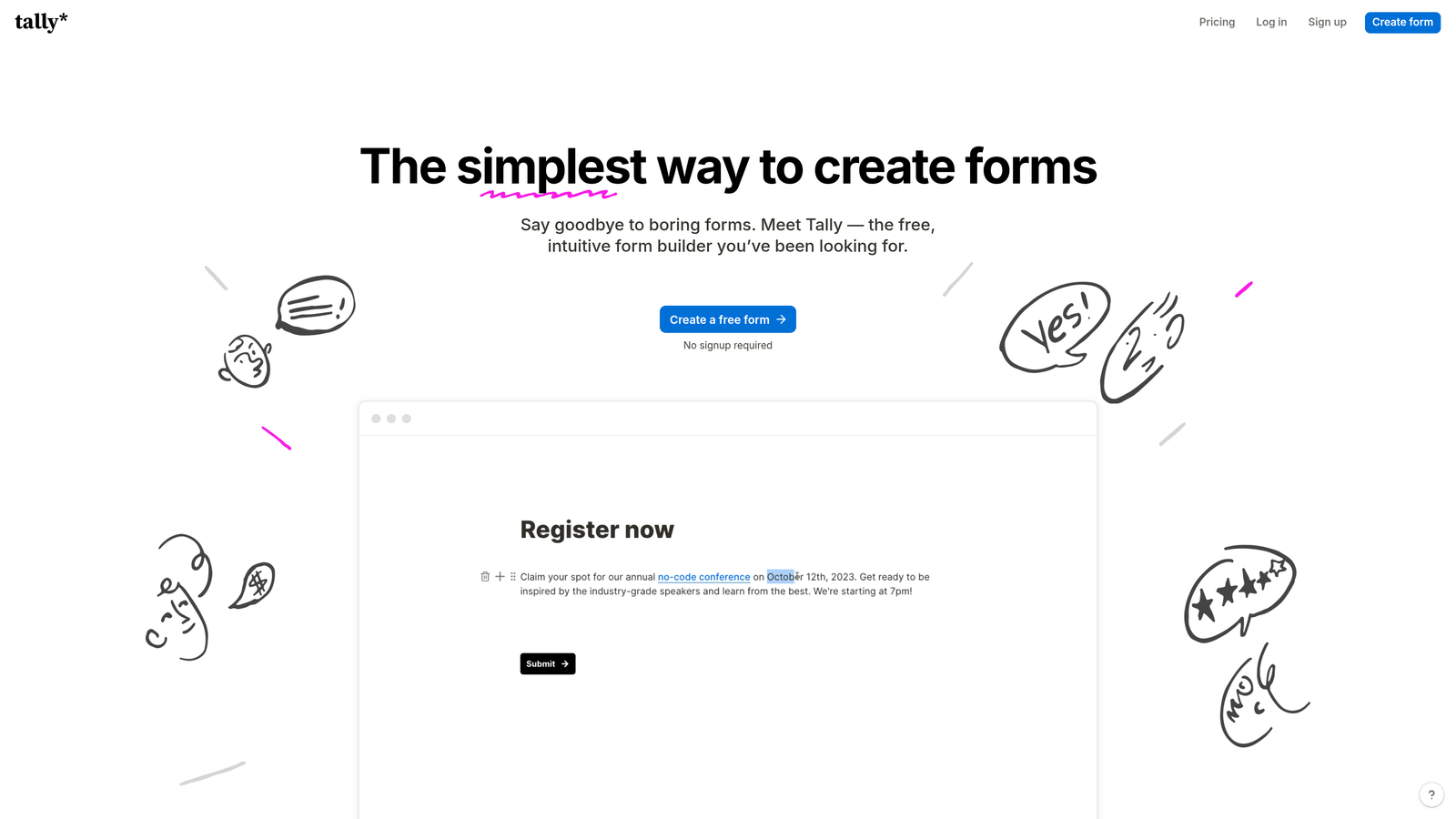
Tally is a Notion-inspired free form builder with genuinely unlimited forms and responses on its free plan, making it a strong option for lean agency teams or lower-complexity projects.
Where This Tool Shines
Tally's free tier is unusually generous. Most form builders limit either form count, response volume, or both on free plans. Tally removes both of those constraints, which matters for agencies that need to spin up many forms quickly without worrying about hitting a ceiling. The editor is clean and minimal, and teams already comfortable with Notion's block-based interface will feel at home immediately.
Conditional logic and multi-page forms are supported, which covers the basics for most standard agency use cases. The product has been developing actively, and the paid Pro plan adds custom domains and white-labeling for client-facing work. The honest limitation: Tally lacks the advanced lead qualification logic or deep workflow automation of the paid tools on this list, so it's best suited to simpler intake forms, surveys, and data collection rather than complex lead gen campaigns.
Key Features
Unlimited Free Tier: Genuinely unlimited forms and responses on the free plan, with no submission caps or form limits.
Notion-Style Editor: Clean, minimal block-based editor that's fast to learn and quick to use for straightforward forms.
Conditional Logic: Multi-page forms and conditional branching supported on both free and paid plans.
Zapier and Make Integrations: Workflow automation connections for routing responses to other tools in your stack.
White-Labeling on Pro: Custom domains and removal of Tally branding available on the paid plan for client-facing forms.
Best For
Tally is the right call for agencies managing a high volume of simpler forms on a tight budget, or for teams that need a quick, no-cost solution for internal forms, client surveys, and basic intake workflows. It's less suited for agencies where lead qualification and advanced automation are core requirements.
Pricing
Free plan includes unlimited forms and responses. Pro plan starts at approximately $29/month and adds white-labeling, custom domains, and additional features.
5. Formstack
Best for: Agencies serving enterprise clients in regulated industries like healthcare, legal, or finance.
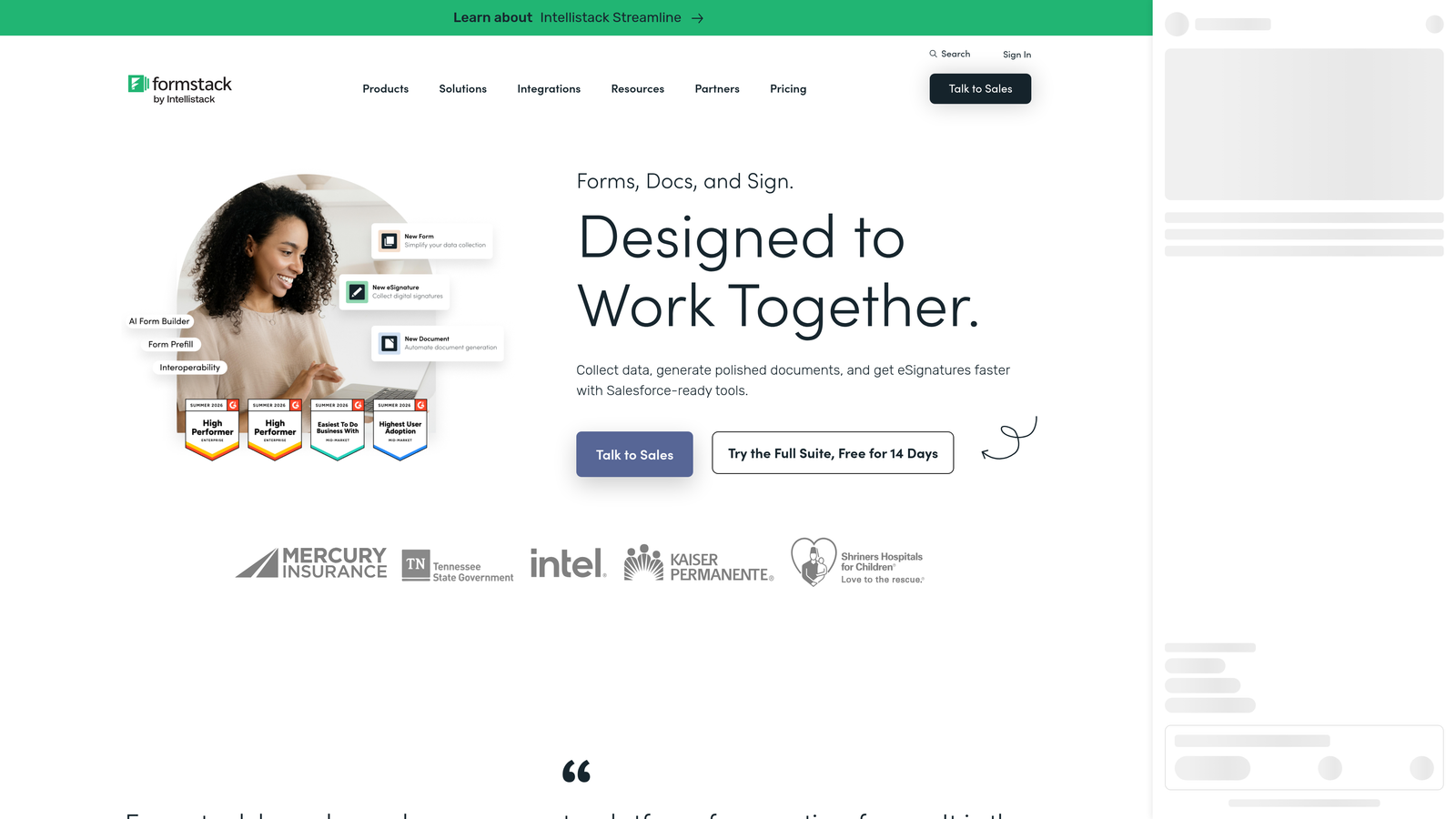
Formstack is an enterprise-grade form and workflow platform with deep automation, document generation, and compliance features built for complex organizational needs.
Where This Tool Shines
Formstack is less a form builder and more a full workflow platform that happens to start with forms. Its standout capabilities are in what happens after submission: multi-step approval routing, automated document generation, and e-signature collection built directly into the platform. For agencies serving clients in healthcare, legal, or financial services, the HIPAA and GDPR compliance features are a meaningful differentiator that many lighter-weight tools simply can't match.
The integration depth with enterprise CRMs like Salesforce and HubSpot is strong, and the conditional logic and branching capabilities handle complex form flows well. The honest trade-off is cost: Formstack is significantly more expensive than the other tools on this list, and much of its power is in workflow automation that agencies focused purely on lead generation may never use. It earns its place here for the specific agency niche that needs enterprise compliance and workflow depth.
Key Features
Advanced Workflow Automation: Multi-step approval routing and automated workflows that go well beyond standard form-to-email notifications.
Document Generation and E-Signatures: Create documents from form data and collect legally binding signatures natively within the platform.
Compliance Features: HIPAA and GDPR compliance capabilities for agencies working with regulated industries and sensitive data.
Robust Conditional Logic: Complex branching and conditional rules for sophisticated form flows and data routing.
Enterprise Integrations: Deep native connections to Salesforce, HubSpot, and other enterprise platforms used by larger clients.
Best For
Formstack is the right fit for agencies that regularly serve clients in healthcare, legal, or financial services, where compliance isn't optional. It's also strong for agencies that need to automate complex multi-step approval workflows or document generation processes alongside their form work.
Pricing
Starts at approximately $83/month. Enterprise pricing is available for larger deployments. This is notably higher than the other tools on this list, so the ROI calculation depends heavily on whether your agency needs the compliance and workflow features.
Which Tool Is Right for Your Agency?
The right choice depends on what your agency actually needs from a form builder, because these tools solve meaningfully different problems.
If your agency's core work is lead generation for B2B or SaaS clients, Orbit AI is the strongest starting point. The AI-powered lead qualification layer addresses a gap that every other tool on this list leaves open: most form builders collect leads, but Orbit AI scores and routes them automatically. For agencies where lead quality is the deliverable, that's a significant operational advantage. The modern design system and multi-client workspace structure make it practical for agency-scale work from day one.
For brand-first agencies where the form experience is part of the creative output, Typeform remains a strong option. Its conversational format and design quality are genuinely differentiated, particularly for longer surveys and research projects where completion rate is critical.
If budget is the primary constraint, Tally's free tier is hard to argue with for simpler use cases. Unlimited forms and responses without a monthly fee gives lean agency teams real flexibility for standard intake and survey work.
For agencies serving regulated industries where compliance is non-negotiable, Formstack's HIPAA and GDPR features justify the higher price point. And for agencies building forms that need to function more like landing pages, Paperform's document-style editor fills a niche that traditional form builders don't address well.
The best way to find your fit is to test the tool against a real client brief. Start building free forms today with Orbit AI and see how AI-powered lead qualification changes what your forms can do for clients who care about conversion, not just collection.


