

For SaaS companies, not all leads are created equal. Sending every form submission straight to sales wastes time, burns pipeline, and tanks rep morale. The right lead qualification software filters signal from noise automatically, scoring, routing, and prioritizing the prospects most likely to convert.
This list covers the best tools purpose-built (or well-suited) for SaaS lead qualification in 2026. We evaluated each on qualification depth, CRM integrations, ease of setup, and how well they serve high-growth teams who need results without a six-month implementation. Whether you're optimizing top-of-funnel forms, scoring inbound leads, or routing enterprise prospects to the right rep instantly, there's a solution here for your stack.
One important framing note before you dive in: qualification happens at multiple layers. Some tools work at the form level, others at the CRM level, some through data enrichment, and others through predictive scoring or intent signals. The best setup for your team may combine more than one approach. Keep that in mind as you read through each option.
1. Orbit AI
Best for: SaaS teams who want to qualify leads at the point of capture without adding another tool to their stack.
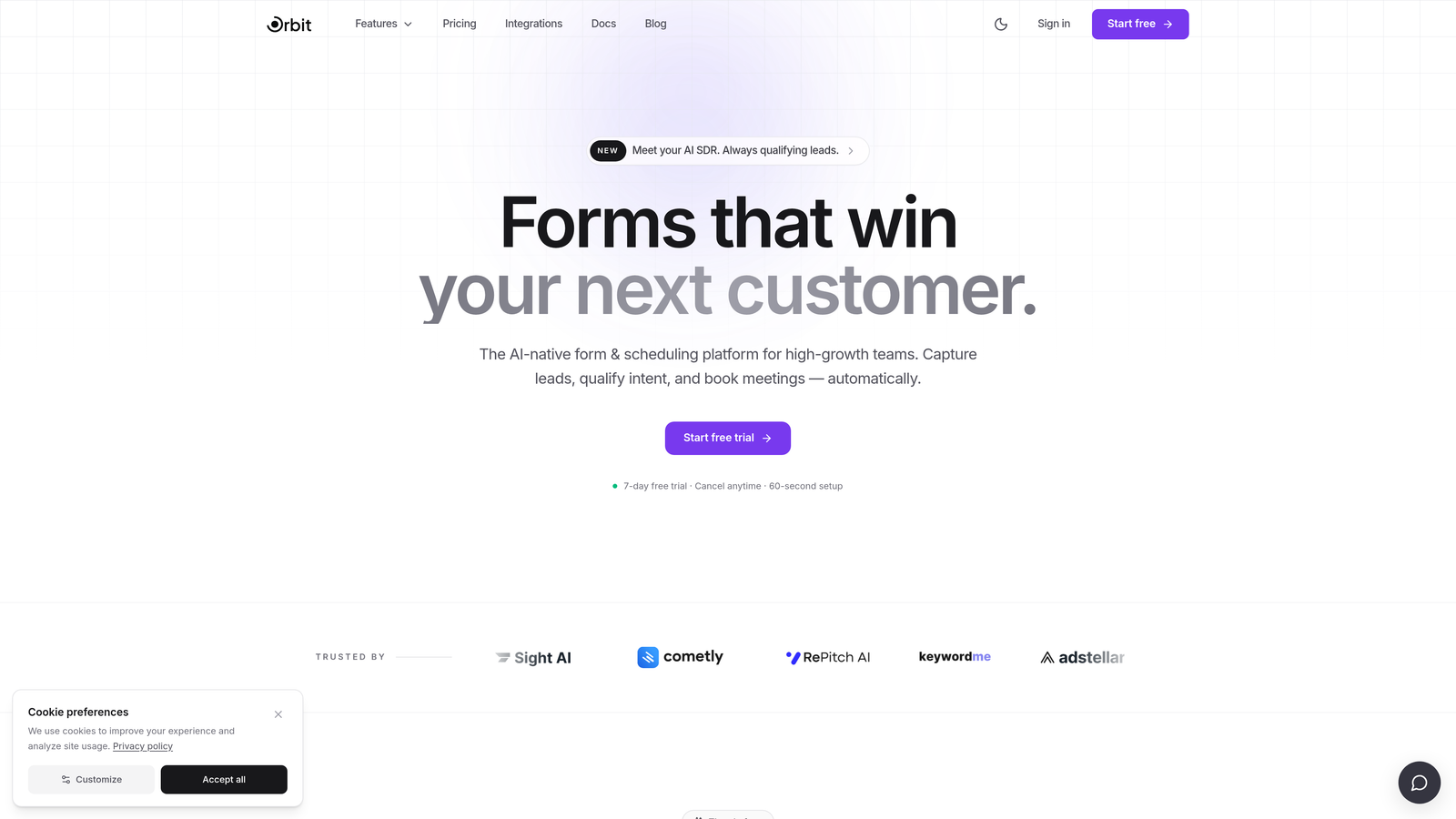
Orbit AI is an AI-powered form builder with native lead qualification built directly into the form experience, designed for high-growth SaaS teams focused on conversion.
Where This Tool Shines
Most form builders treat qualification as an afterthought. You collect responses, export them to a spreadsheet or CRM, and then someone manually decides who's worth a follow-up. Orbit AI flips that model by embedding qualification logic into the form itself, so by the time a lead submits, you already know whether they fit your ICP.
The combination of conditional branching and AI-driven scoring means each prospect gets a personalized flow. A startup founder gets different questions than an enterprise VP, and your team gets a pre-qualified, routed lead rather than a raw submission. For SaaS teams running lean sales operations, that upstream qualification has real downstream value.
Key Features
AI-Driven Lead Qualification: Qualification logic runs inside the form experience itself, scoring leads based on their responses before they ever reach your CRM.
Conditional Logic and Branching: Questions adapt based on previous answers, creating personalized qualification flows that feel conversational rather than interrogative.
Conversion-Optimized Design: Forms are built with a clean, modern UI that reduces abandonment and fits the aesthetic expectations of SaaS buyers.
Lead Scoring and Routing: Responses automatically trigger scoring rules and route leads to the right rep, queue, or workflow based on fit.
CRM and Marketing Automation Integrations: Connects with the tools already in your stack so qualified leads flow directly into your pipeline without manual handling.
Best For
High-growth SaaS teams who want to reduce sales waste by qualifying at the top of the funnel. Particularly strong for teams with a clear ICP who want to stop routing every submission to sales and start routing only the right ones. Also a good fit if your current form tool lacks any built-in qualification logic.
Pricing
Visit orbitforms.ai for current pricing details. A free starting option is available for teams who want to explore the platform before committing.
2. HubSpot
Best for: Mid-market SaaS teams who want lead scoring built into the same platform as their CRM.
HubSpot is a CRM platform with native lead scoring, workflow automation, and pipeline management built into a single connected system.
Where This Tool Shines
The biggest advantage HubSpot offers for lead qualification is consolidation. Scoring lives inside the same platform where reps manage their pipeline, so there's no context-switching to understand whether a lead is worth pursuing. Reps see scores directly in their deal and contact views.
HubSpot also supports both rule-based scoring (you define the criteria) and AI-powered predictive scoring on higher tiers, which uses historical conversion data to weight leads automatically. For teams already running HubSpot as their CRM, adding a separate qualification tool may be unnecessary.
Key Features
Rule-Based and Predictive Lead Scoring: Manual scoring lets you define criteria; predictive scoring uses AI to rank leads based on historical conversion patterns.
CRM-Native Score Visibility: Lead scores appear directly in the pipeline view, so reps always have qualification context without leaving their workflow.
Workflow Automation: Trigger routing, notifications, or nurture sequences automatically when a lead crosses a score threshold.
Native Form and Landing Page Integration: Scoring works seamlessly with HubSpot forms and pages, reducing the need for third-party connectors.
Lead Quality Reporting: Track conversion rates by source, score tier, and channel to continuously refine your qualification model.
Best For
SaaS teams already using HubSpot as their CRM who want to activate lead scoring without introducing a new vendor. Predictive scoring is a meaningful upgrade for teams with enough historical conversion data to train the model.
Pricing
Free CRM available. Lead scoring features unlock on Marketing Hub Professional, which starts at approximately $800/month. Verify current pricing at hubspot.com.
3. Clearbit
Best for: B2B SaaS teams who want to qualify leads with richer data without making prospects fill out longer forms.
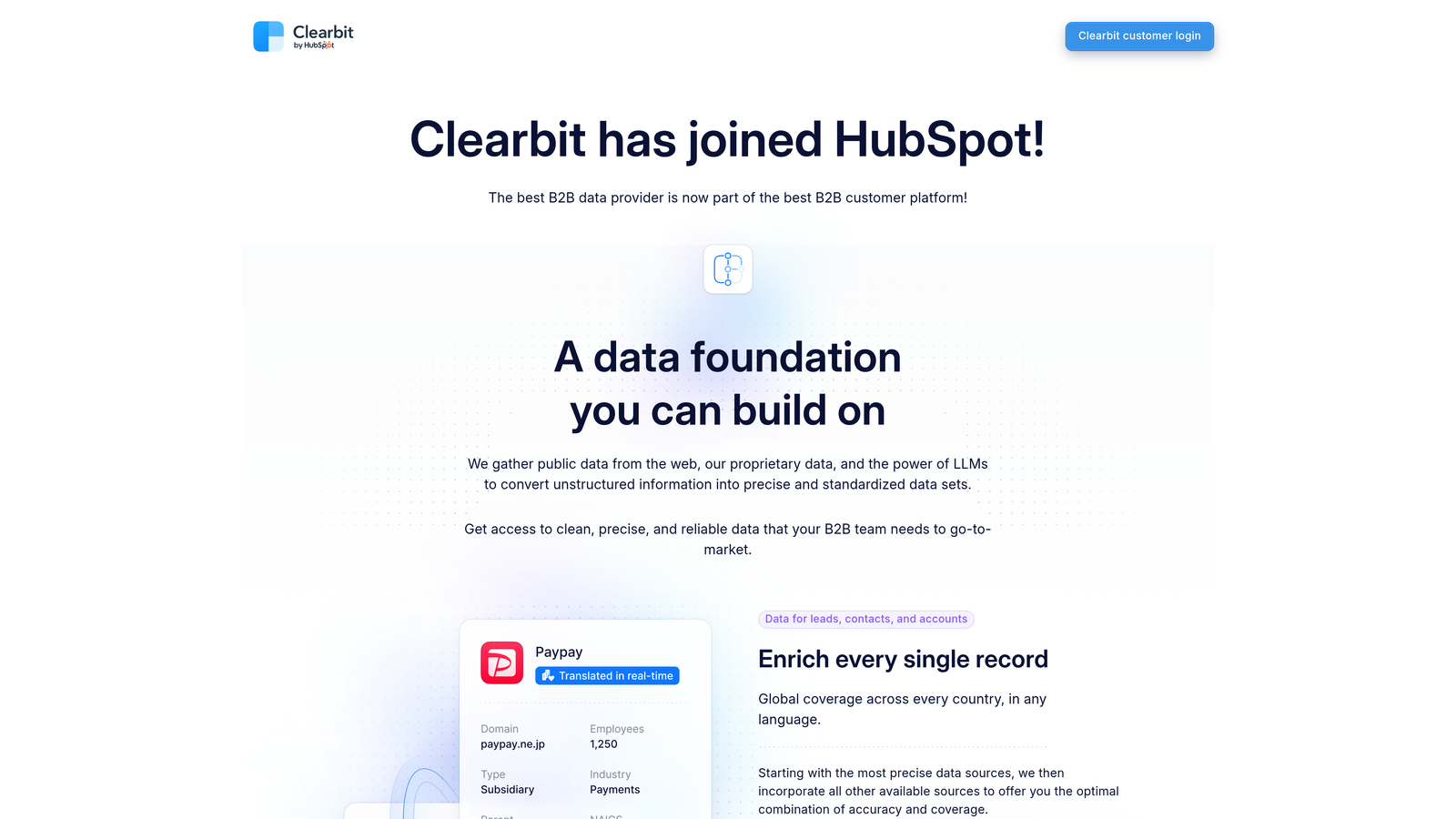
Clearbit is a real-time data enrichment platform, now part of HubSpot, that appends firmographic, technographic, and contact data to form submissions automatically.
Where This Tool Shines
There's a real tension in SaaS lead capture: the more qualification data you want, the longer the form, and the longer the form, the more people abandon it. Clearbit resolves that tension by filling in the gaps. A prospect enters their email address, and Clearbit appends company size, industry, tech stack, funding stage, and more, all without the prospect having to type a single additional field.
That enriched data feeds directly into your scoring model, which means qualification decisions are based on verified firmographic signals rather than self-reported answers. The Reveal feature also identifies anonymous website visitors by company, adding an intent layer to your qualification picture.
Key Features
Real-Time Form Enrichment: Automatically appends company and contact data to submissions the moment a prospect provides their email.
Form Shortening: Remove fields like company size, industry, and job title from forms since Clearbit fills them in, reducing friction without sacrificing data quality.
Technographic Data: Identifies the tools a prospect's company uses, enabling ICP qualification based on tech stack fit.
Reveal for Anonymous Visitors: Surfaces the companies visiting your site before they fill out a form, giving sales early visibility into intent.
CRM and Stack Integrations: Connects with HubSpot, Salesforce, and Segment for seamless data flow into your existing qualification workflows.
Best For
B2B SaaS teams with a well-defined ICP who want to qualify based on firmographic and technographic fit without adding form fields. Works best as a layer that enhances an existing scoring setup rather than a standalone qualification solution.
Pricing
Contact HubSpot or Clearbit directly for current pricing. Pricing has historically been usage-based. Visit clearbit.com for details.
4. MadKudu
Best for: SaaS RevOps and growth teams who want machine learning-powered lead scoring without building a data science function in-house.
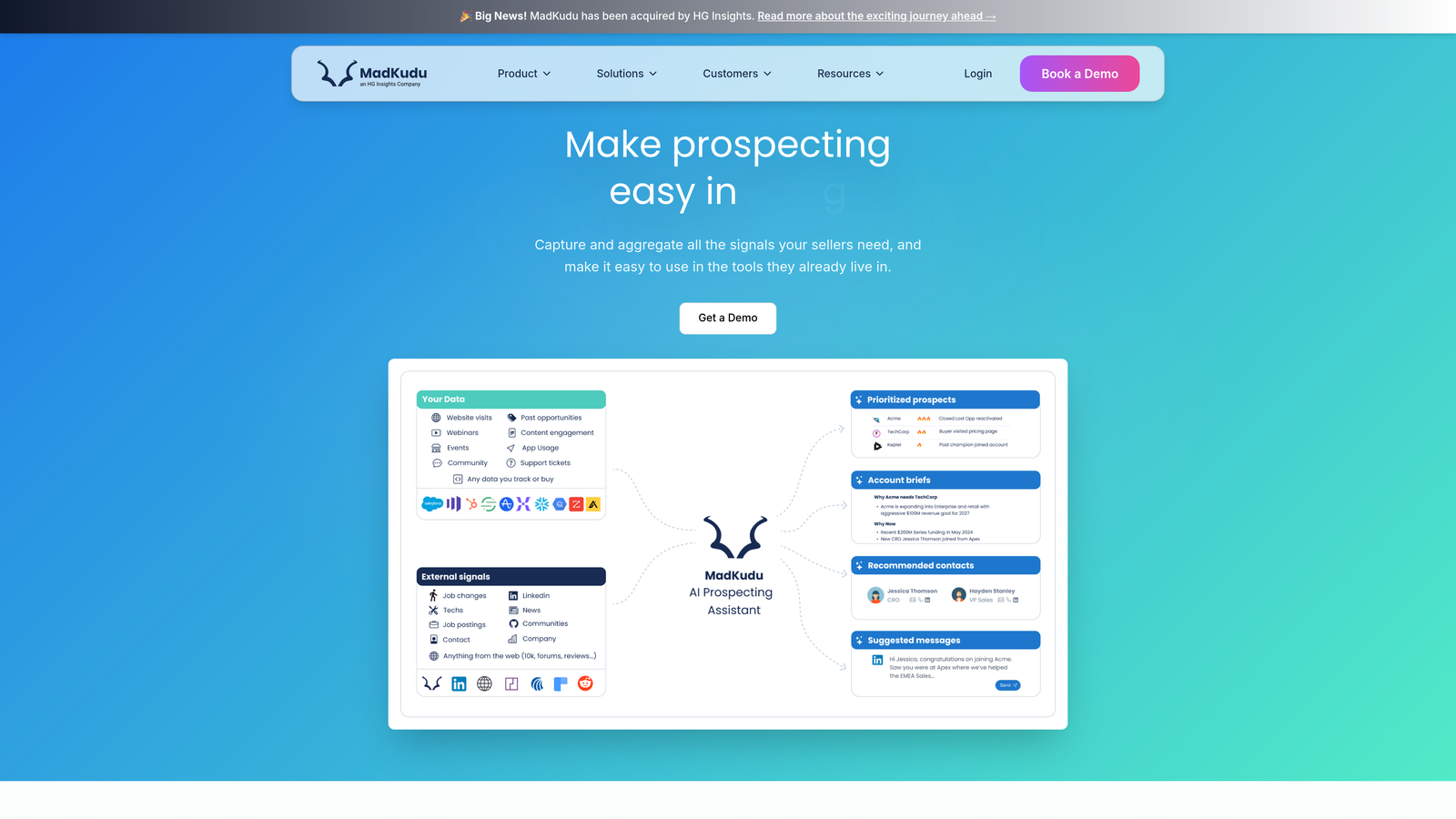
MadKudu is a predictive lead scoring platform built specifically for SaaS companies, using machine learning to score leads across behavioral, firmographic, and product usage signals.
Where This Tool Shines
Generic lead scoring tools treat all B2B companies the same. MadKudu was built for SaaS, which means it understands signals that matter in a SaaS context: trial activity, feature adoption, usage frequency, and product-led growth behaviors. That specificity makes its scoring models meaningfully more relevant for PLG and hybrid GTM teams.
The explainability layer is also worth calling out. Rather than delivering a score as a black box, MadKudu shows why a lead received its score, which helps RevOps teams refine their ICP definitions and gives sales reps the context they need to have a relevant first conversation.
Key Features
ML-Powered Predictive Scoring: Machine learning models trained on your historical data surface the leads most likely to convert, without manual rule-building.
Product Usage Signal Integration: Incorporates trial behavior and product activity data alongside firmographic signals for multi-dimensional qualification.
Customer Fit Score and Behavioral Score: Two separate scoring dimensions give a complete picture of both who a lead is and how they're engaging.
Score Explainability: Each score includes a breakdown of the factors driving it, giving sales reps actionable context for outreach.
SaaS Stack Integrations: Connects with Salesforce, HubSpot, Segment, and Intercom for seamless data flow across your GTM tools.
Best For
Mid-market to enterprise SaaS companies with enough historical conversion data to train a predictive model. Especially strong for PLG teams who want to incorporate product usage into their qualification logic.
Pricing
Contact MadKudu directly for pricing. The platform targets mid-market to enterprise SaaS organizations. Visit madkudu.com for details.
5. Chili Piper
Best for: SaaS teams with an inbound sales motion where speed-to-lead is a critical conversion factor.
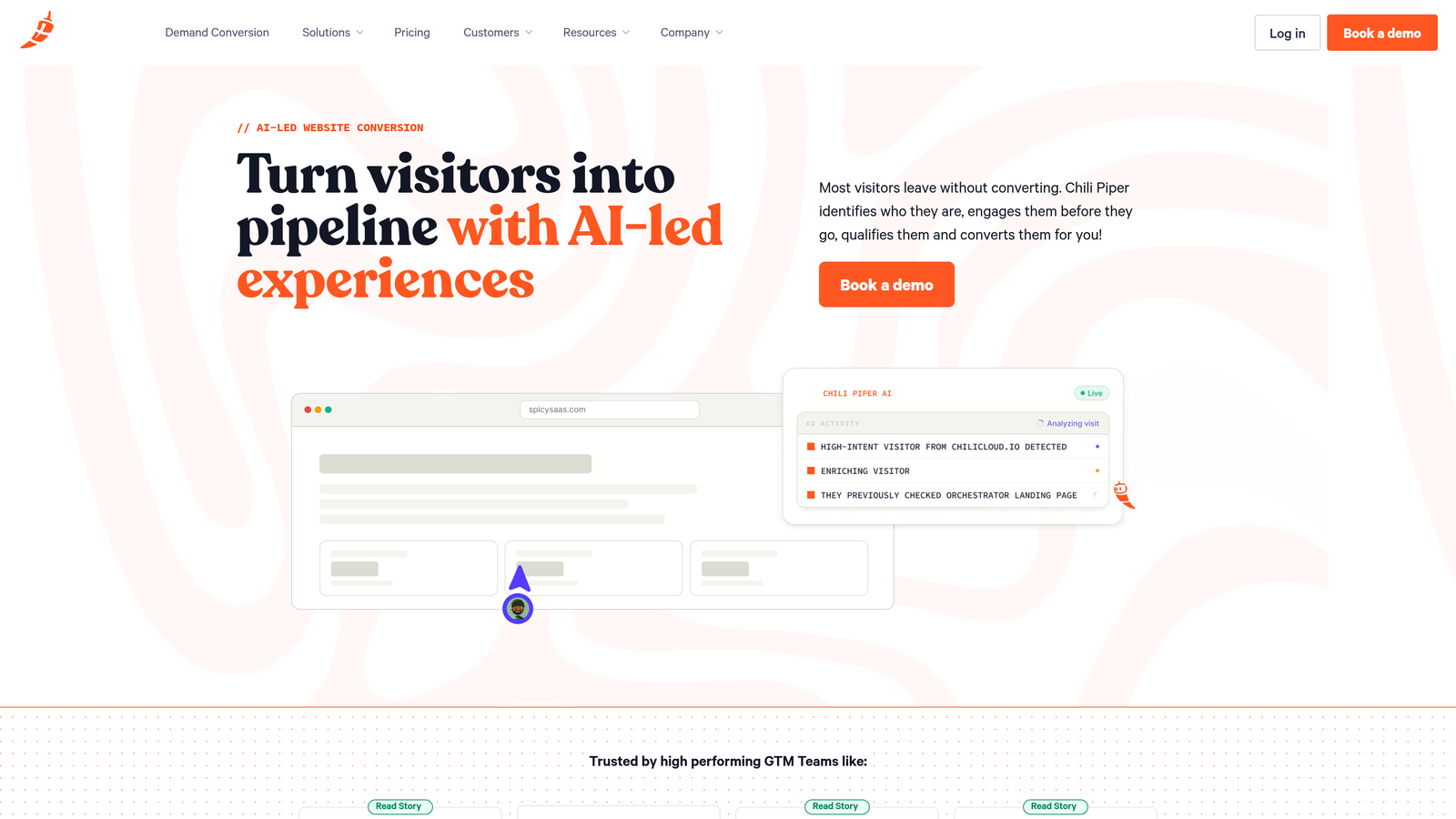
Chili Piper is an inbound lead conversion platform that combines qualification-based routing with instant calendar booking, turning qualified form submissions into booked meetings in real time.
Where This Tool Shines
Chili Piper addresses a specific but high-impact problem: qualified leads that go cold because follow-up takes too long. When a high-fit prospect submits a form, Chili Piper routes them to the right rep and presents an instant booking interface, so the meeting gets scheduled while the prospect's intent is still hot.
The routing logic is where real qualification value lives. You can define rules based on form field values, company size, geography, or any other criteria, ensuring that enterprise prospects go to enterprise reps and SMB leads go to the right queue. That routing intelligence reduces the manual triage that typically happens in RevOps.
Key Features
Instant Meeting Booking: A calendar booking interface appears immediately after form submission, capturing meetings while intent is highest.
Qualification-Based Routing Rules: Route leads to specific reps, teams, or workflows based on form field values and qualification criteria.
Round-Robin and Territory Routing: Distribute leads fairly across reps or route by territory to match your sales structure.
Distro for Advanced Lead Distribution: A dedicated product for more complex inbound lead distribution logic across larger sales teams.
CRM and Form Integrations: Works with HubSpot, Salesforce, and major form tools so it fits into your existing inbound stack.
Best For
SaaS companies with a defined inbound sales motion where time-to-contact directly impacts conversion. Particularly valuable for teams that have already solved scoring but lose leads in the handoff between marketing and sales.
Pricing
Instant Booker starts at approximately $22.50/user/month. Distro is priced separately. Verify current pricing at chilipiper.com.
6. Salesforce Sales Cloud
Best for: Enterprise SaaS organizations with dedicated RevOps resources who need deep customization and AI-powered scoring at scale.
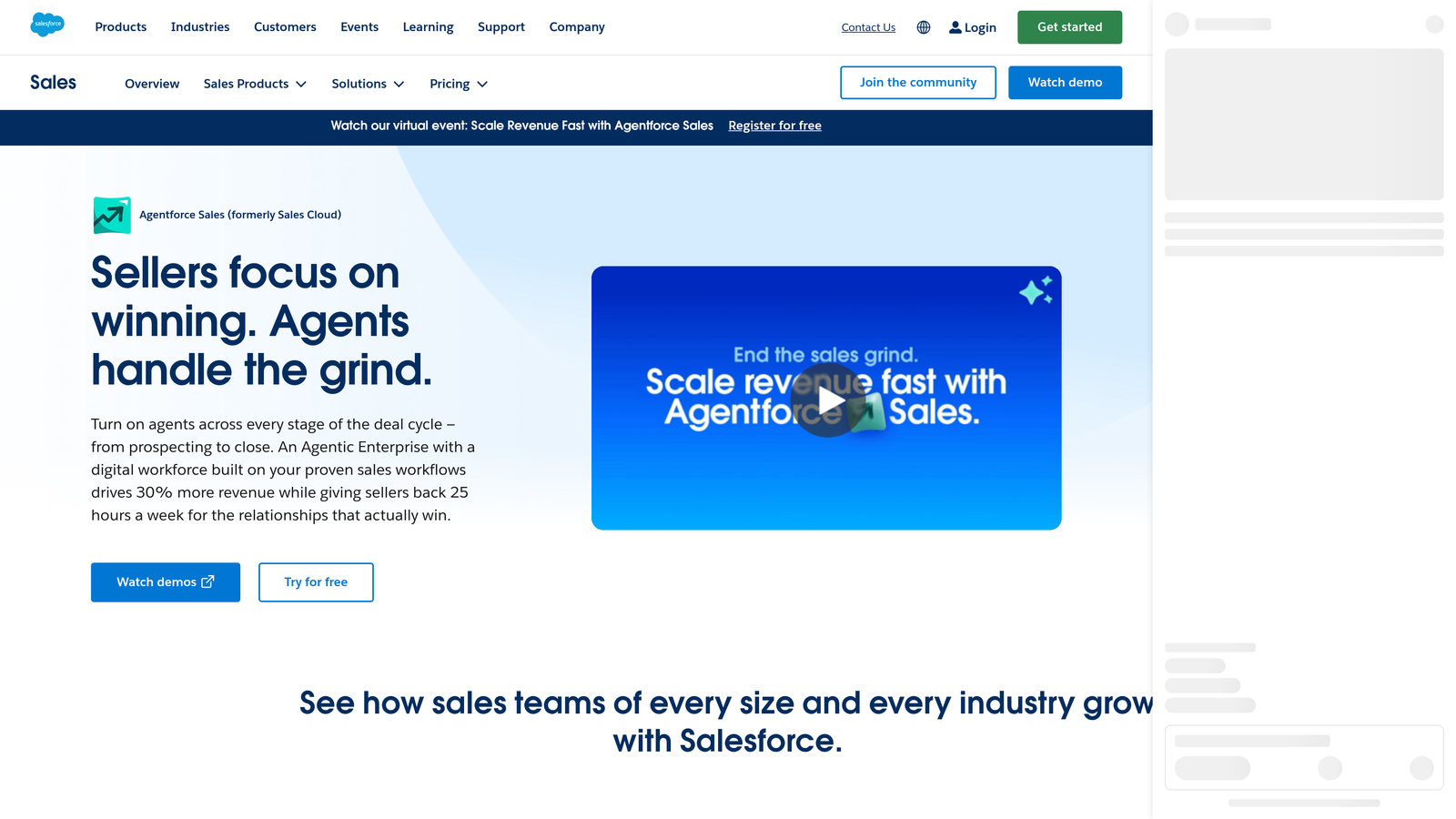
Salesforce Sales Cloud is an enterprise CRM with highly configurable lead scoring, assignment rules, and Einstein AI-powered qualification built for large, complex sales organizations.
Where This Tool Shines
Salesforce is the standard for enterprise SaaS qualification because of its depth of customization. You can build scoring models that incorporate any combination of lead fields, activity data, firmographic attributes, and behavioral signals. Assignment rules can route based on virtually any criteria your business requires.
Einstein Lead Scoring adds an AI layer that learns from your historical conversion data to predict which leads are most likely to close. The tradeoff is implementation complexity: Salesforce rewards teams who invest in setup and administration, but it's not a plug-and-play solution for lean teams without dedicated Salesforce expertise.
Key Features
Einstein Lead Scoring: AI-powered scoring that predicts conversion likelihood based on your historical pipeline data, without manual rule configuration.
Configurable Assignment Rules: Route leads by territory, criteria, round-robin, or any custom logic your sales structure requires.
Deep Workflow Customization: Build complex qualification and lead management workflows that match your exact GTM process.
Extensive Integration Ecosystem: Connect third-party enrichment, intent, and ABM tools to enhance scoring with additional data layers.
Pipeline Health Reporting: Dashboards and reports track lead quality, conversion rates, and pipeline health across the full funnel.
Best For
Enterprise SaaS organizations with dedicated RevOps or Salesforce admin resources. The platform's power is proportional to the investment in configuration and maintenance, making it less suitable for teams without that capacity.
Pricing
Sales Cloud starts at $25/user/month (Starter). Einstein features are available on Enterprise tier at $165/user/month and above. Verify current pricing at salesforce.com.
7. Marketo Engage
Best for: Enterprise SaaS marketing operations teams running complex, multi-channel nurture programs at scale.
Marketo Engage is an enterprise marketing automation platform with multi-channel behavioral lead scoring, part of the Adobe Experience Cloud.
Where This Tool Shines
Marketo's scoring model is built for complexity. It captures behavioral signals across email engagement, web activity, content downloads, webinar attendance, and more, then aggregates those signals into a score that reflects both who a lead is and how actively they're engaging with your brand. That multi-channel view is difficult to replicate in lighter-weight tools.
Scoring decay rules are particularly valuable for SaaS teams with longer sales cycles. A lead who downloaded a whitepaper six months ago shouldn't carry the same score as someone who attended a webinar last week. Marketo's configurable decay logic keeps scores current and prevents stale leads from clogging the pipeline.
Key Features
Multi-Channel Behavioral Scoring: Scores incorporate activity across email, web, content, webinars, and events for a comprehensive engagement picture.
Scoring Decay Rules: Automatically reduce scores over time when engagement drops, keeping your lead quality signal accurate and current.
MQL Threshold Automation: Automatically pass leads to sales when they cross a defined score threshold, removing manual triage from the handoff process.
Advanced Segmentation: Segment leads by persona, lifecycle stage, and qualification criteria for precise targeting and routing.
Bi-Directional Salesforce Sync: Deep integration with Salesforce ensures scores and lead data stay synchronized across marketing and sales systems.
Best For
Enterprise SaaS marketing operations teams with complex, multi-touch programs and a need for sophisticated scoring logic. The platform's depth requires dedicated marketing ops resources to configure and maintain effectively.
Pricing
Contact Adobe for current pricing. Marketo Engage is an enterprise-tier investment. Visit business.adobe.com for details.
8. 6sense
Best for: SaaS companies with an ABM motion who want to qualify in-market accounts before they ever submit a form.
6sense is an account-based revenue intelligence platform that uses intent signals and predictive AI to identify and prioritize accounts showing buying behavior, often before any direct engagement.
Where This Tool Shines
Every other tool on this list qualifies leads after they engage with you. 6sense works earlier in the cycle, identifying accounts that are actively researching solutions like yours based on content consumption, search behavior, and third-party intent signals. For SaaS teams with an ABM motion, that pre-engagement intelligence changes how you prioritize both inbound and outbound.
The anonymous visitor identification capability is particularly useful. When a company visits your pricing page or product pages without filling out a form, 6sense can surface that company in your prioritization dashboards, giving sales and SDR teams a list of warm accounts to work without waiting for a form submission.
Key Features
Third-Party Intent Data: Aggregates intent signals from across the web to surface accounts actively researching your category.
AI-Powered Account Scoring: Predicts buying stage and account fit using machine learning models trained on intent and firmographic data.
Anonymous Visitor Identification: Maps anonymous website traffic to company accounts, giving sales visibility into intent before a form is ever submitted.
Buying Stage Prediction: Categorizes accounts by where they are in the buying journey so sales can tailor outreach timing and messaging.
Prioritization Dashboards: Surfaces the highest-priority accounts for sales and SDR teams in a single, actionable view.
Best For
SaaS companies with a defined ABM strategy and an enterprise or mid-market ICP. 6sense works best when qualification happens at the account level rather than the individual lead level, and when sales and marketing are aligned on target account lists.
Pricing
Contact 6sense directly for pricing. The platform is enterprise-focused. Visit 6sense.com for details.
9. Typeform
Best for: Self-serve SaaS or PLG teams who want a low-friction, conversational qualification experience at the top of the funnel.
Typeform is a conversational form platform with branching logic that creates personalized qualification flows, well-suited for SaaS products where a friendly, low-friction experience matters.
Where This Tool Shines
Typeform's core strength is the experience it creates for the person filling out the form. One question at a time, a clean and modern interface, and logic jumps that make the flow feel like a conversation rather than an interrogation. For PLG or self-serve SaaS products where the buyer journey is largely self-directed, that experience quality can meaningfully reduce form abandonment.
The branching logic enables basic qualification without requiring a dedicated scoring engine. You can route prospects to different outcomes based on their answers, whether that's a demo booking, a self-serve trial, or a nurture sequence, all without touching your CRM configuration. That said, Typeform is primarily a form tool: deeper scoring and routing logic requires integration with other platforms in your stack.
Key Features
Logic Jumps and Branching: Questions adapt dynamically based on previous responses, creating a personalized flow for each respondent.
Conversational UI: One-question-at-a-time format with clean design reduces abandonment and creates a positive first impression.
Hidden Fields and URL Parameters: Pre-populate context like UTM source or account data without asking the prospect to enter it manually.
Quiz and Assessment Formats: Interactive qualification formats that engage prospects while gathering the data you need to score them.
Integration-Based Routing: Connects with HubSpot, Salesforce, Zapier, and Slack to pass qualified leads into downstream workflows.
Best For
Self-serve SaaS or PLG teams where form experience quality is a priority and qualification logic is relatively straightforward. Teams needing deeper scoring, routing, or AI-driven qualification will want to pair Typeform with a dedicated scoring tool or consider a purpose-built alternative like Orbit AI.
Pricing
Free plan available. Paid plans start at $25/month (Basic). Verify current pricing at typeform.com.
Which Tool Is Right for Your Team
The right lead qualification software depends heavily on where your biggest qualification gap lives, whether that's at the form level, the scoring layer, the routing handoff, or earlier in the funnel at the account level.
Here's a quick guide by team profile:
Early-stage or growth-stage SaaS: Start with Orbit AI to qualify at the point of capture without adding complexity to your stack. Pair it with HubSpot if you need CRM-native scoring as you scale.
PLG or self-serve SaaS: Typeform works well for low-friction top-of-funnel flows. If you need AI-driven qualification built in rather than bolted on, Orbit AI is the stronger fit for teams who want qualification to happen before the lead hits your CRM.
Mid-market SaaS with a sales team: HubSpot covers most qualification needs if you're already in that ecosystem. Add Clearbit for enrichment-driven qualification without longer forms, and Chili Piper if speed-to-lead is a conversion problem you're actively trying to solve.
Enterprise SaaS with RevOps resources: Salesforce Sales Cloud or Marketo Engage for scoring depth and complexity. Layer in 6sense if you have an ABM motion and want to qualify accounts before they raise their hand. MadKudu is worth evaluating if you want ML-powered scoring that understands SaaS-specific signals like product usage and trial behavior.
Most high-growth SaaS teams end up combining tools across layers: form-level qualification, CRM scoring, enrichment, and routing. The key is starting with the layer where you're losing the most value today. For many teams, that's the top of the funnel, where unqualified submissions overwhelm sales before any scoring logic even runs.
If that sounds familiar, start building free forms today and see how qualifying leads at the point of capture can reduce downstream sales waste while improving the experience for the prospects who actually fit your ICP. You can also explore our resources on building a lead qualification framework for sales, how to qualify leads automatically, and how to improve lead quality for deeper guidance on each layer of the qualification stack.


