

For marketers, a form isn't just a form. It's the moment a stranger decides whether to trust you with their contact information, their budget range, their timeline. The right form software turns that moment into a qualified lead. The wrong one turns it into a bounce.
The challenge is that most form tools were built for general use: HR onboarding, event RSVPs, customer feedback. Marketers have different needs entirely. You need conditional logic that adapts to user behavior, CRM integrations that route leads without manual cleanup, design flexibility that doesn't embarrass your brand, and ideally some intelligence baked in to separate serious prospects from tire-kickers.
This list focuses specifically on form platforms built or well-suited for marketing use cases: lead capture, qualification, segmentation, and conversion optimization. We evaluated each tool on ease of use, marketing-specific features, integrations with CRMs and marketing stacks, design flexibility, and pricing. Whether you're running paid campaigns, building nurture flows, or trying to qualify inbound leads faster, there's a tool here for your team.
1. Orbit AI
Best for: B2B and SaaS teams that need lead qualification built directly into the form flow.
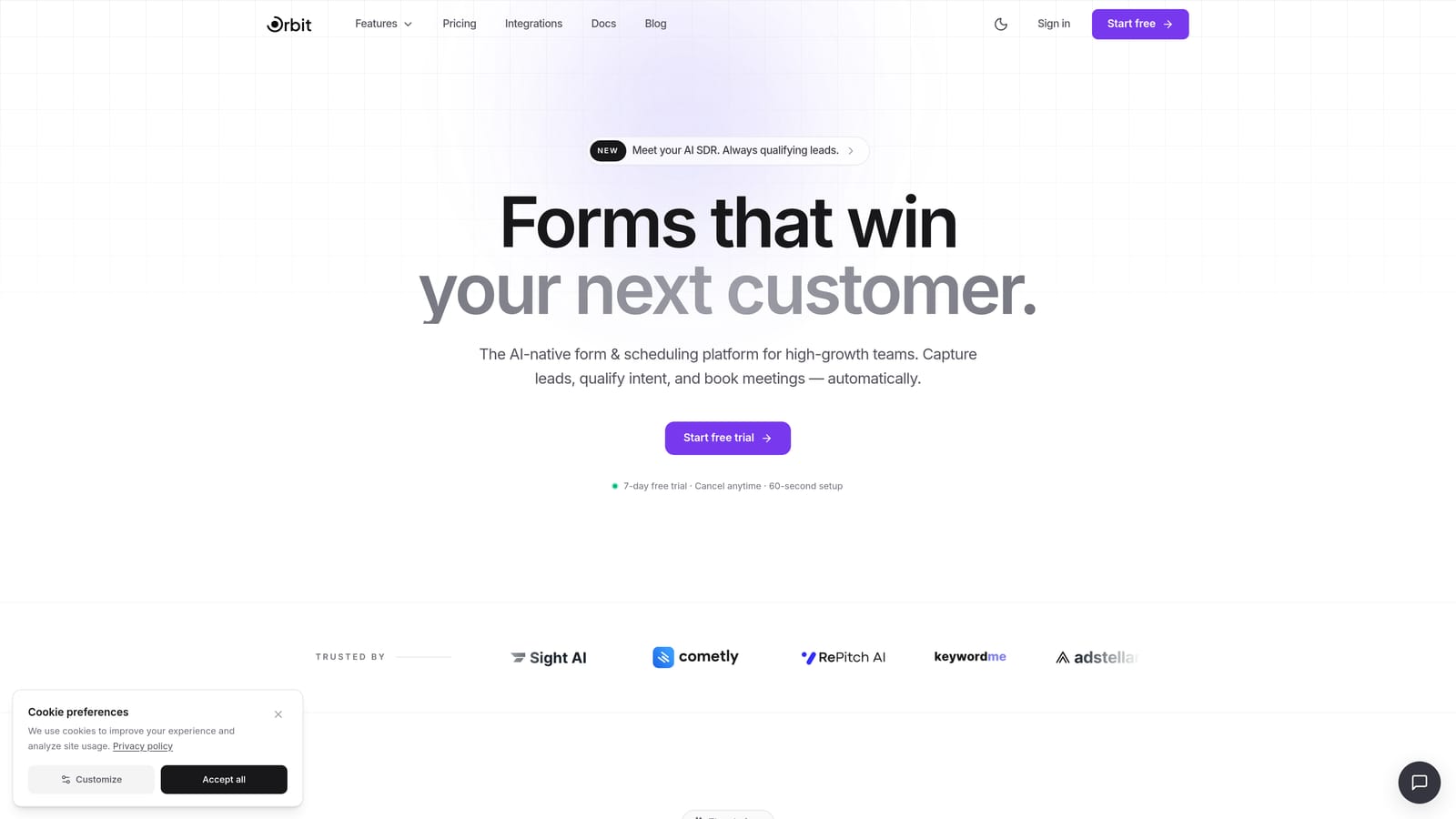
Orbit AI is an AI-powered form builder designed specifically for high-growth marketing teams, with built-in lead qualification and conversion-optimized design.
Where This Tool Shines
Most form tools collect data and then leave the qualification work to your CRM, your sales team, or a series of manual filters. Orbit AI flips that model. The platform is built around the idea that the form itself should do the qualifying, scoring leads based on their responses before they ever hit your pipeline.
This matters most for B2B and SaaS teams running demo request flows, gated content, or inbound lead gen at scale. Instead of chasing down unqualified submissions, your team receives leads that have already been assessed and routed based on criteria you define. The design system is also worth noting: forms are visually polished by default, which means less time fighting with styling and more time optimizing for conversion.
Key Features
AI-Driven Lead Qualification: Scores and qualifies leads within the form flow itself, before they reach your CRM or sales team.
Conversion-Optimized Design System: Modern, polished UI out of the box so your forms match the quality of the rest of your marketing.
Conditional Logic: Dynamic, personalized form experiences that adapt based on how a respondent answers each question.
CRM and Marketing Stack Integrations: Seamless lead routing into the tools your team already uses, with no manual data wrangling.
Built for B2B Inbound: Purpose-built for the workflows that matter to SaaS and B2B marketing teams, from demo requests to gated asset downloads.
Best For
Marketing teams at B2B and SaaS companies who are tired of sifting through unqualified form submissions. Particularly valuable for teams running paid acquisition where lead quality directly affects CAC, or for inbound teams trying to route prospects to the right sales rep automatically.
Pricing
Visit orbitforms.ai for current plan details. The platform is built for growth-stage and scaling teams, so pricing reflects marketing-focused use cases.
2. Typeform
Best for: Marketers who prioritize form engagement and completion rates over speed of capture.
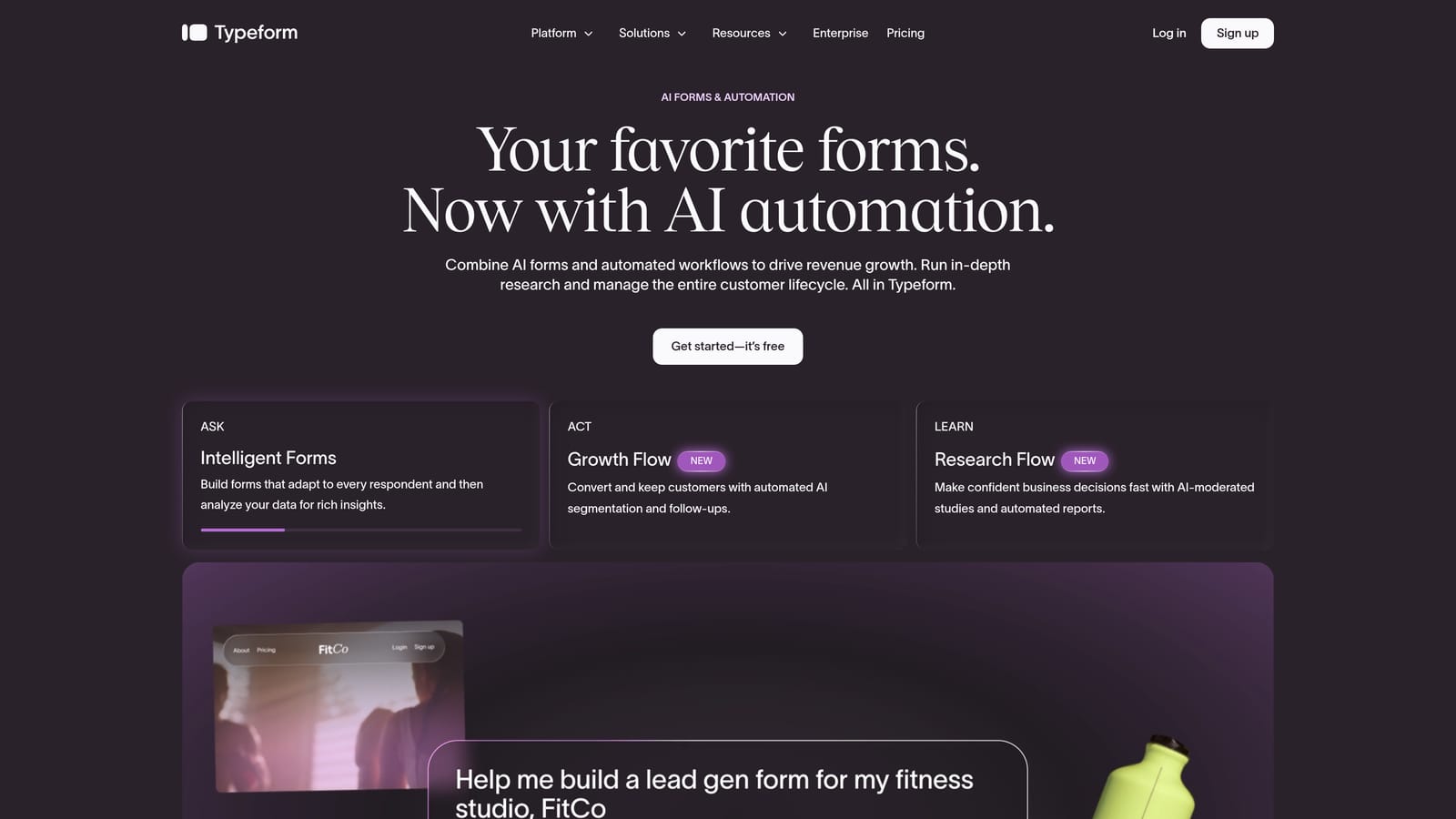
Typeform is a conversational form builder known for its one-question-at-a-time interface that improves engagement and completion rates.
Where This Tool Shines
Typeform built its reputation on making forms feel less like forms. The single-question flow reduces cognitive load, and for audiences who might abandon a traditional multi-field layout, that design philosophy genuinely improves completion. It's also one of the more recognizable brands in the marketing tool space, which means your team likely won't need much onboarding.
The integration depth is solid for marketing use cases: HubSpot, Salesforce, Mailchimp, and Zapier are all supported. Where Typeform can feel limiting is in high-intent, high-volume lead capture scenarios. The conversational pace that helps engagement can also slow down prospects who are ready to convert quickly. Pricing also scales with response volume, which adds up for teams running large campaigns.
Key Features
Conversational Single-Question Flow: Presents one question at a time, reducing drop-off and improving the overall respondent experience.
Conditional Logic: Available on paid plans, allowing you to branch the form based on previous answers.
Marketing Integrations: Native connections to HubSpot, Salesforce, Mailchimp, and Zapier for lead routing and automation.
Branded Themes: Custom design options and the ability to embed video and images within form questions.
Response Analytics: Drop-off tracking and completion rate data to help you optimize form performance over time.
Best For
Marketers building survey-style lead gen forms, audience research tools, or any form where respondent experience and completion rate are the primary metrics. Less ideal for teams that need deep lead qualification or high-volume, speed-optimized capture.
Pricing
Free plan available with limited responses. Paid plans start from approximately $25/month. Verify current pricing at typeform.com.
3. Jotform
Best for: Marketers who need maximum template variety and a broad integration ecosystem without a steep learning curve.
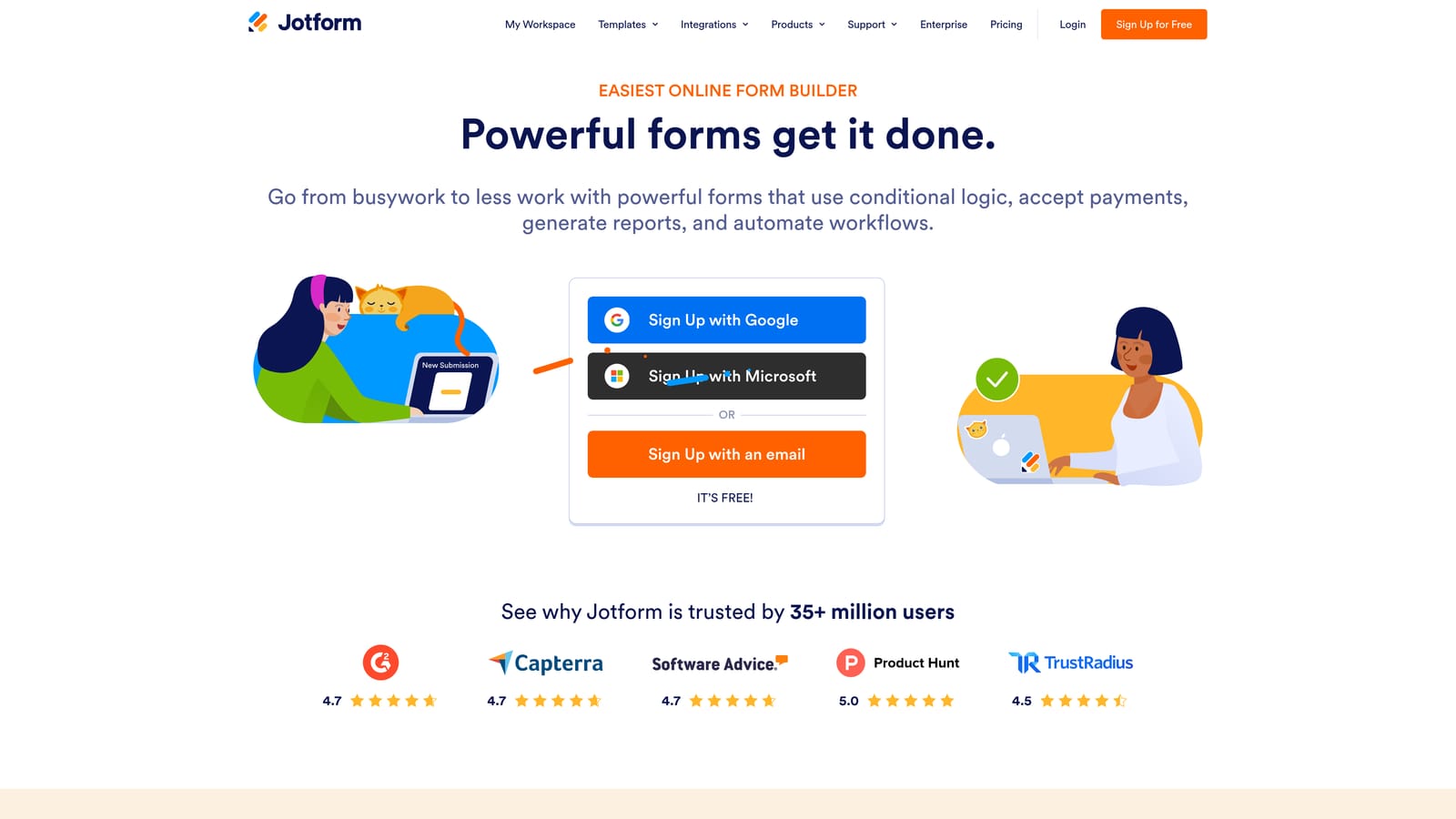
Jotform is a feature-rich, template-heavy form builder with one of the broadest integration ecosystems in the market.
Where This Tool Shines
If breadth is what you need, Jotform is hard to beat. The template library covers virtually every marketing scenario you can think of: event registration, lead magnets, product interest surveys, demo requests, newsletter signups. Starting from a template dramatically reduces build time, and the integration library means you can almost certainly connect it to whatever CRM or email platform you're already using.
The tradeoff is polish. Jotform's UI can feel dated compared to newer tools, and the sheer number of features can make the platform feel overwhelming for teams that just need something clean and fast. Advanced conditional logic is also gated behind higher-tier plans, which is worth factoring in if your forms need to branch significantly based on user input.
Key Features
10,000+ Pre-Built Templates: One of the largest template libraries available, covering nearly every marketing and lead gen use case.
Wide Integration Library: Connects with CRMs, payment processors, email marketing platforms, and hundreds of other tools.
Form Analytics: Basic submission tracking and conversion data to monitor form performance.
Conditional Logic and Calculations: Dynamic form fields that respond to user input, available across plans.
Payment Collection and E-Signatures: Built-in support for transactions and document signing, useful for event or product-led marketing flows.
Best For
Marketing teams that need to spin up forms quickly across a wide variety of use cases, or teams with diverse integration requirements. Also a solid choice for marketers who need payment collection or e-signature functionality alongside standard lead capture.
Pricing
Free plan available. Paid plans start from approximately $34/month. Verify current pricing at jotform.com.
4. Paperform
Best for: Marketers who want forms that function more like branded landing pages than traditional data collection fields.
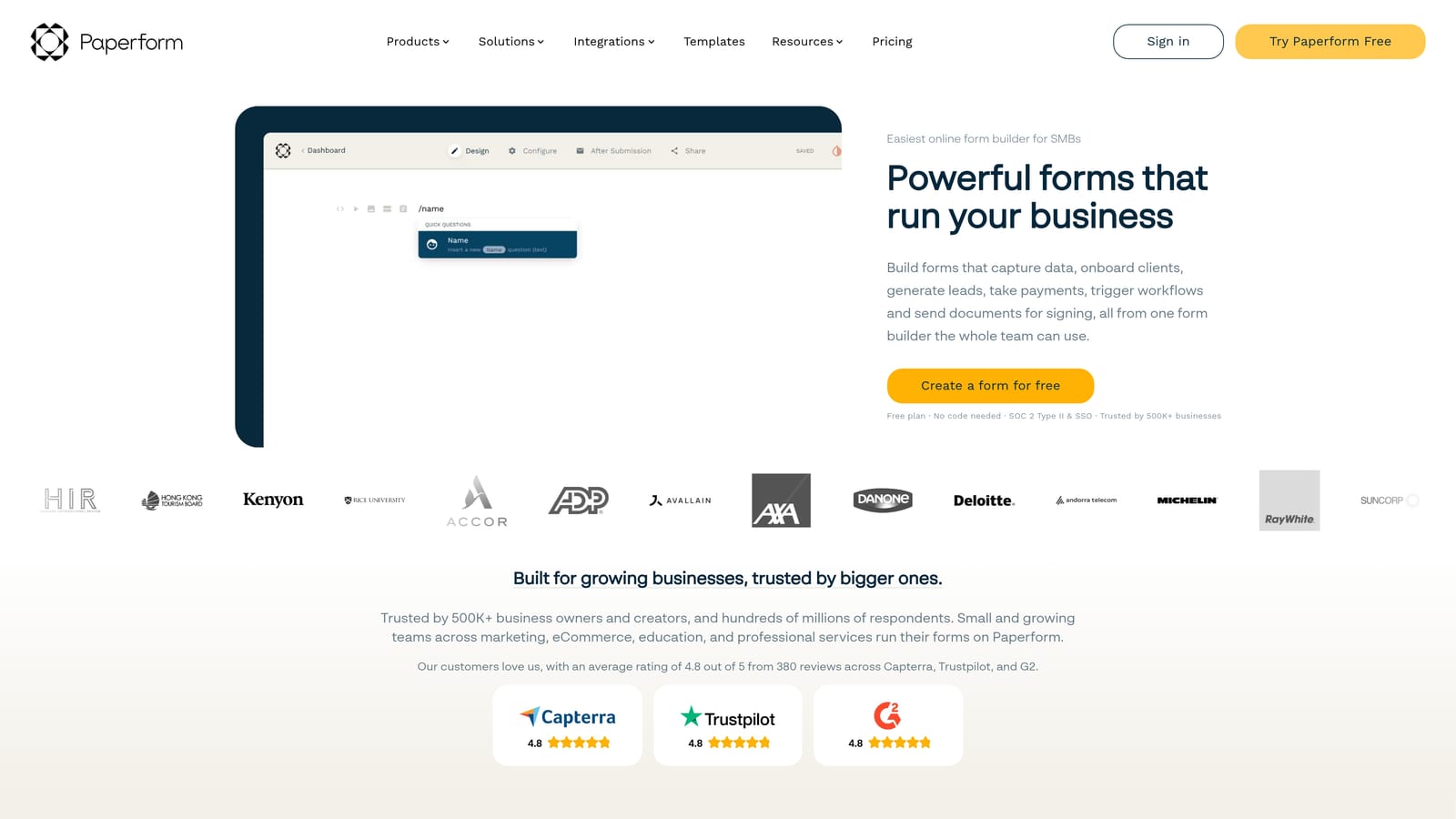
Paperform is a form builder that blends form fields with rich content, letting marketers create forms that function like mini landing pages.
Where This Tool Shines
Paperform occupies a unique position in the market. Instead of separating your form from your content, it lets you weave them together. You can embed images, video, rich text, and product descriptions directly alongside your form fields, which makes it particularly effective for event registrations, product launches, and lead magnets where context matters.
The editing experience is clean and intuitive, and the ability to use a custom domain makes the final result feel like a standalone page rather than an embedded widget. Where Paperform is less suited is in high-volume, data-heavy qualification scenarios. If your primary goal is processing large numbers of leads with complex scoring logic, the form-as-landing-page format can feel like the wrong tool for the job.
Key Features
Rich Content Embedding: Combine text, images, and video with form fields to create content-rich, branded form experiences.
Conditional Logic and Branching: Personalize the form path based on how respondents answer earlier questions.
Payment Collection: Built-in payment processing for event tickets, product purchases, or paid content access.
Custom Domains: Publish forms on your own branded URL for a seamless on-brand experience.
Integrations: Connects via Zapier, with native integrations for Slack, Mailchimp, and others.
Best For
Content marketers, event marketers, and teams running product launches or lead magnets where the form experience needs to feel like a destination rather than a data entry point. Less suited for teams prioritizing lead volume and qualification depth.
Pricing
Paid plans only, starting from approximately $24/month. No free plan available. Verify current pricing at paperform.co.
5. Tally
Best for: Marketers who want a fast, intuitive form builder with a genuinely useful free plan.
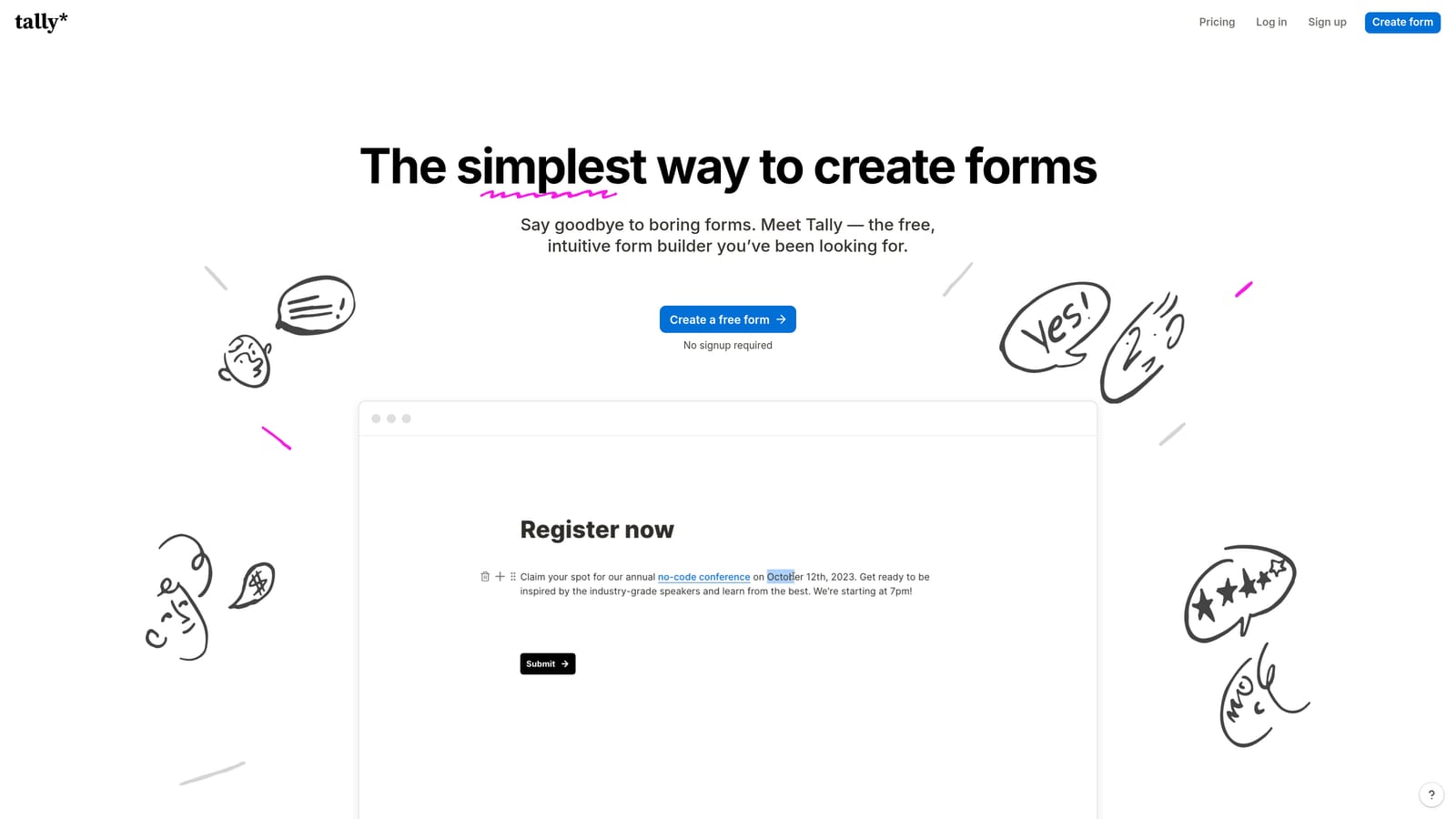
Tally is a Notion-inspired form builder with a generous free plan and a clean, distraction-free editing experience.
Where This Tool Shines
Tally's biggest differentiator is its free plan, which includes unlimited forms and unlimited submissions. For most form tools, "free" means heavily restricted. With Tally, the free tier is genuinely functional for small teams or marketers who need to move fast without budget approval. The block-based editor will feel immediately familiar to anyone who's used Notion, which means almost no learning curve.
The limitations show up at the enterprise end. Tally's native marketing integrations are fewer than competitors, and teams with complex workflows or large-scale CRM requirements may find themselves hitting the ceiling of what the platform can handle. But for lean teams, early-stage companies, or marketers who need to launch something quickly, Tally is hard to argue with.
Key Features
Unlimited Forms and Submissions (Free): The free plan doesn't cap your forms or responses, which is genuinely rare in this market.
Block-Based Editor: Intuitive Notion-style editing that non-technical marketers can pick up immediately.
Conditional Logic and File Uploads: Available even on the free plan, covering the basics of dynamic form design.
Easy Embedding: Drops cleanly into websites and Notion pages with minimal setup.
Zapier and Native Integrations: Basic connectivity to the tools in your stack, with Zapier bridging the gaps.
Best For
Early-stage startups, lean marketing teams, or any marketer who needs to build and publish forms quickly without a budget conversation. Also a strong choice for teams already living in Notion who want their forms to feel like a natural extension of that workflow.
Pricing
Robust free plan with unlimited forms and submissions. Pro plan approximately $29/month. Verify current pricing at tally.so.
6. Formstack
Best for: Enterprise marketing teams that need workflow automation, compliance features, and deep CRM integration in a single platform.
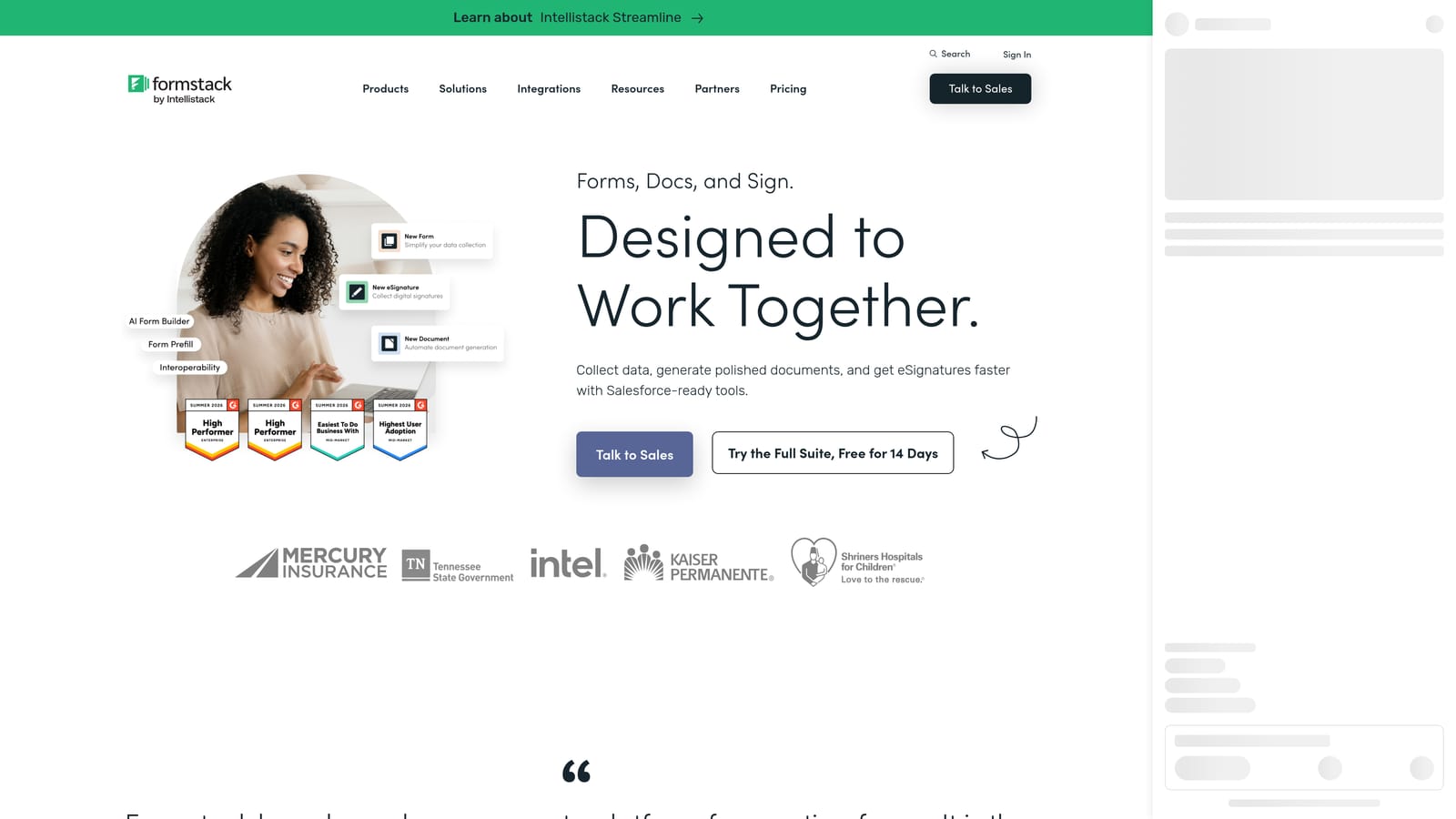
Formstack is an enterprise form and workflow automation platform with deep CRM integrations and compliance-grade data handling.
Where This Tool Shines
Formstack is built for organizations where forms are just the beginning of a longer workflow. Once a submission comes in, the platform can trigger document generation, route approvals through multiple stakeholders, collect e-signatures, and push data into Salesforce or other enterprise CRMs. For marketing teams embedded in larger organizations with legal, compliance, or IT requirements, that depth matters.
The HIPAA and GDPR compliance features make Formstack one of the few options for industries like healthcare or financial services where data handling requirements are non-negotiable. The tradeoff is complexity and cost. Formstack has a steeper learning curve than most tools on this list, and the pricing reflects its enterprise positioning. Teams that just need clean lead capture forms will likely find it more than they need.
Key Features
Advanced Workflow Automation: Trigger multi-step workflows from form submissions, including approvals, routing, and notifications.
Document Generation and E-Signatures: Create and send documents directly from form data, with e-signature collection built in.
Compliance Features: HIPAA and GDPR compliance capabilities for regulated industries and enterprise data requirements.
Deep Salesforce Integration: Native, enterprise-grade Salesforce connectivity for teams with complex CRM workflows.
Multi-Step Approval Routing: Route submissions through defined approval chains before data moves downstream.
Best For
Enterprise marketing teams, particularly those in regulated industries or organizations where form submissions trigger complex internal workflows. Not the right fit for lean teams or marketers who prioritize speed and simplicity over workflow depth.
Pricing
Starts from approximately $83/month. Verify current pricing at formstack.com.
Which Tool Is Right for Your Marketing Team?
The honest answer is that the best form software depends entirely on what you're trying to accomplish. There's no universal winner here, but there are clear fits for different types of marketers.
If your primary goal is lead qualification and you're running B2B or SaaS inbound campaigns, Orbit AI is the most purpose-built option on this list. The AI-driven qualification logic means your forms do more than collect data: they assess, score, and route leads before your team ever touches them. That's a meaningful advantage when lead quality directly affects your pipeline and your CAC.
If engagement and completion rate are your north star, Typeform's conversational format earns its reputation. For teams that need breadth and a massive template library, Jotform covers the most ground. Paperform is the right call when your form needs to function as a branded content experience rather than a simple capture field. Tally is the strongest free option on the market, and a genuinely good choice for lean teams moving fast. Formstack belongs in enterprise environments where compliance and workflow automation are non-negotiable.
For most growth-focused marketing teams, the question comes down to this: do you need a form tool, or do you need a lead qualification engine? If it's the latter, start with Orbit AI.
Transform your lead generation with AI-powered forms that qualify prospects automatically while delivering the modern, conversion-optimized experience your high-growth team needs. Start building free forms today and see how intelligent form design can elevate your conversion strategy.


