

For startups, every lead counts. And clunky, generic forms are quietly killing your conversion rates before prospects even reach your sales team. The right form builder doesn't just collect data; it qualifies leads, adapts to user behavior, and fits seamlessly into your growth stack.
This list cuts through the noise. We've evaluated the top smart form builders based on what actually matters for high-growth teams: AI capabilities, ease of setup, conversion-focused design, integration depth, and pricing that makes sense at the early stages. Whether you're capturing leads, running onboarding flows, or qualifying inbound prospects, there's a tool here for your stage and use case.
For a deeper look at what separates high-performing forms from average ones, check out our guide on how to improve form conversion rates and how to qualify leads with forms.
1. Orbit AI
Best for: High-growth B2B SaaS startups that need forms to qualify and prioritize leads automatically.
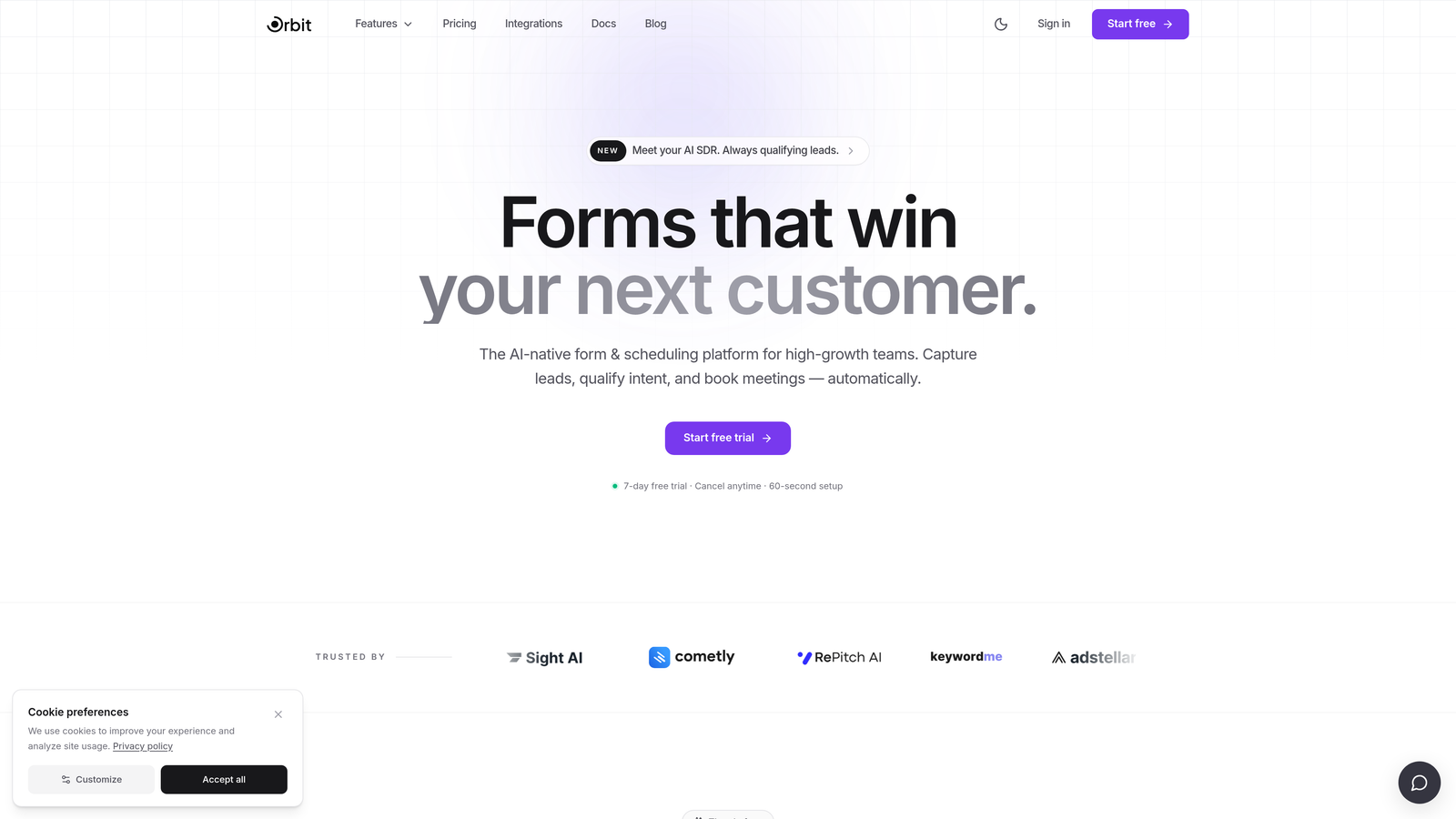
Orbit AI is an AI-powered form builder with native lead qualification built directly into the form experience.
Where This Tool Shines
Most form builders stop at data collection. Orbit AI takes the next step: it scores and qualifies leads in real time as prospects fill out your form. For B2B SaaS teams where pipeline quality matters as much as pipeline volume, that distinction is significant. You're not just capturing submissions; you're identifying which ones are worth your sales team's attention immediately.
The form design is genuinely modern and conversion-optimized out of the box. You don't need a designer to create forms that feel on-brand and professional. Combined with conditional logic and dynamic fields, Orbit AI lets small teams build sophisticated, personalized form experiences without heavy technical lifting.
Key Features
AI-Powered Lead Qualification: Scores and prioritizes leads in real time as they complete your form, so your team focuses on the highest-value prospects first.
Conversion-Optimized Templates: Modern, beautiful form designs built to reduce friction and improve completion rates from the first interaction.
Conditional Logic and Dynamic Fields: Personalizes the form experience based on user responses, showing only relevant questions to each prospect.
Lead Routing: Automatically connects qualified leads to the right team member or workflow based on scoring criteria you define.
Built for B2B SaaS: Purpose-built for high-growth teams where conversion optimization and lead intelligence are core priorities, not afterthoughts.
Best For
Orbit AI is the right fit for B2B SaaS startups and growth-stage teams that are serious about lead quality. If your sales team is spending time chasing unqualified leads or manually scoring inbound prospects, this tool directly addresses that bottleneck. It's particularly well-suited for teams running demand generation campaigns where form-to-pipeline conversion is a key metric.
Pricing
Visit orbitforms.ai for current plan details. The platform is designed with startup-friendly pricing in mind.
2. Typeform
Best for: Startups that want a polished, conversational form experience with strong brand presence.
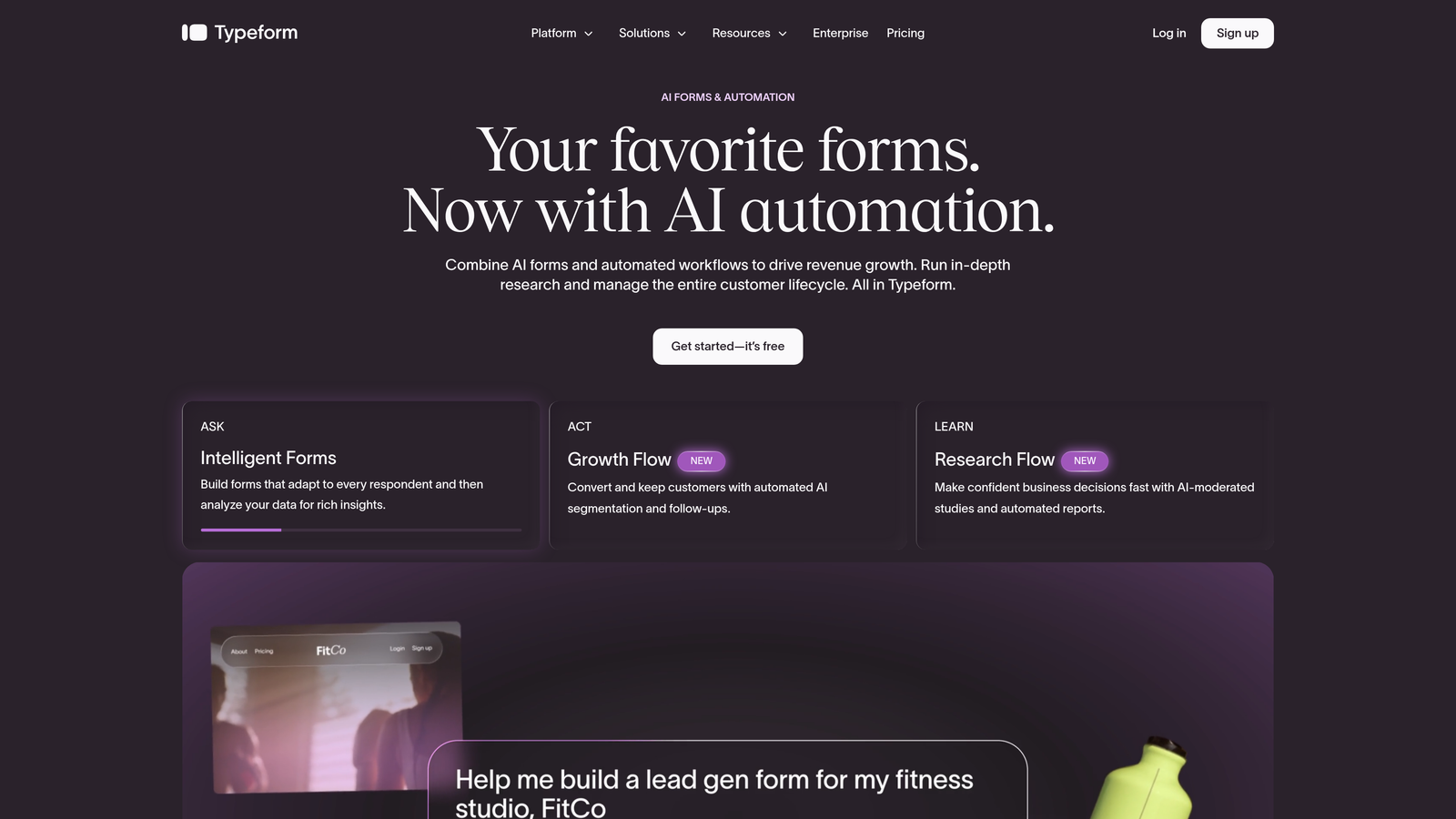
Typeform is a conversational form builder known for its one-question-at-a-time interface that keeps users engaged and reduces abandonment.
Where This Tool Shines
Typeform's signature UX is genuinely effective at holding attention. By presenting one question at a time in a clean, distraction-free layout, it creates a form experience that feels more like a conversation than a data entry task. For consumer-facing startups or brand-forward products, that experience quality matters.
Its integration ecosystem is one of the strongest in the category. Connecting Typeform to HubSpot, Salesforce, Zapier, or Slack is straightforward, making it a practical choice for teams already building out their growth stack. The template library is extensive, covering use cases from lead capture to customer feedback to event registration.
Key Features
One-Question-at-a-Time UX: Keeps respondents focused and engaged, which typically improves form completion rates compared to traditional multi-field layouts.
Conditional Logic and Branching: Available on paid plans, allowing you to create personalized paths through the form based on previous answers.
Integration Ecosystem: Native connections to HubSpot, Salesforce, Zapier, Slack, and many other tools your startup likely already uses.
Video and Image Embedding: Lets you embed rich media directly within forms to add context or personality to specific questions.
Large Template Library: Hundreds of pre-built templates across a wide range of startup use cases, from lead gen to NPS surveys.
Best For
Typeform works well for brand-forward consumer startups, product teams running user research, and any team that wants a polished, high-engagement form experience. It's less suited for teams with advanced lead qualification needs, as its AI features are less mature than newer entrants in the category.
Pricing
Free tier available with limited responses. Paid plans start at approximately $25/month. Verify current pricing at typeform.com, as costs can increase as usage scales.
3. Tally
Best for: Pre-revenue or bootstrapped startups that need a capable form builder without any upfront cost.
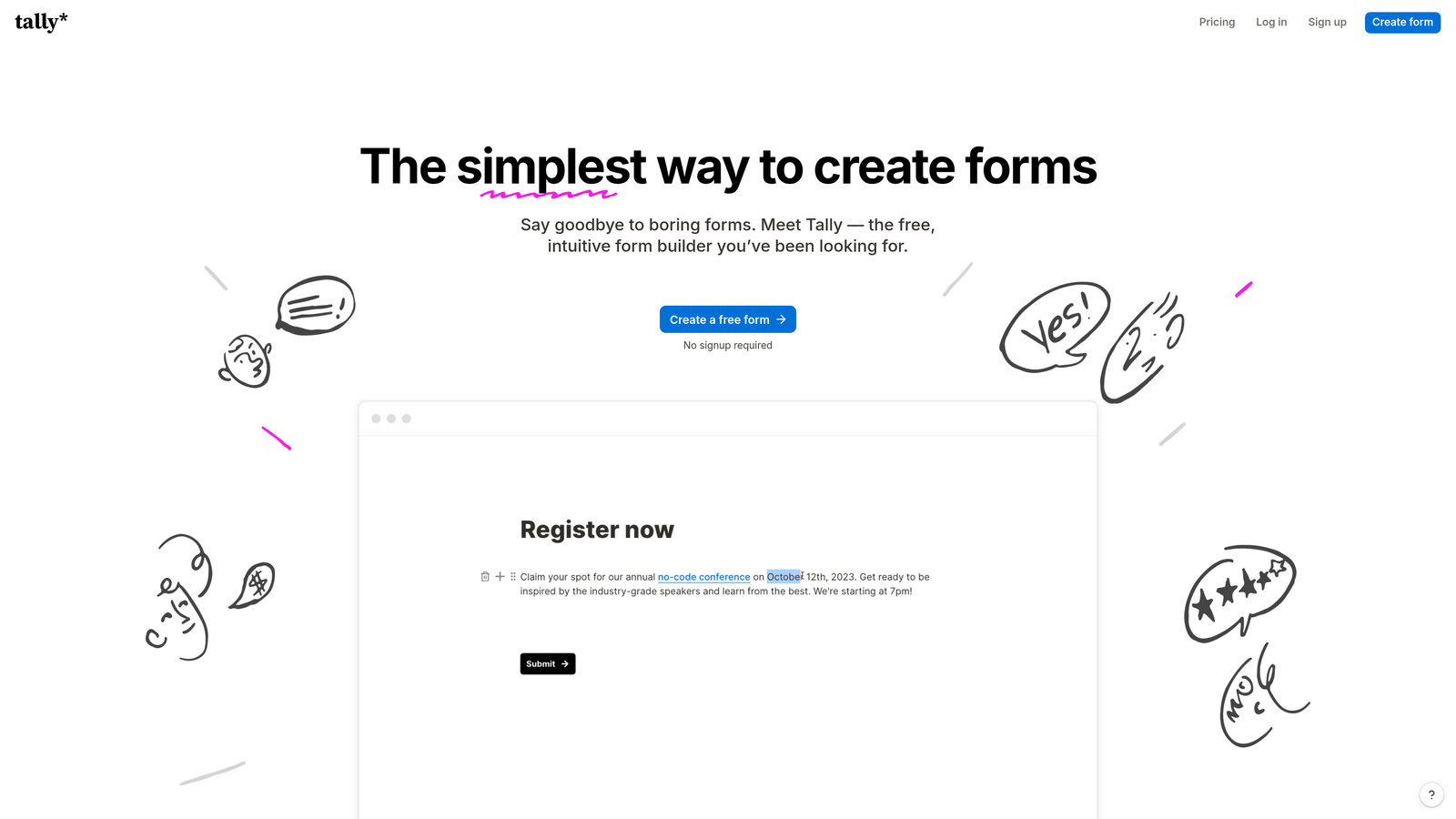
Tally is a free-first form builder with a Notion-inspired editor and one of the most generous free plans in the entire category.
Where This Tool Shines
Tally's free plan is genuinely remarkable for what it includes: unlimited forms, unlimited responses, and no Tally branding. That last point is unusual. Most free-tier form tools plaster their logo across your forms, which can undermine the professional impression you're trying to make with early prospects. Tally skips that entirely.
The block-based editor will feel immediately familiar to anyone who uses Notion. Building a form is fast and intuitive, and the tool supports conditional logic, file uploads, and Stripe payments even at the free tier. For a startup validating ideas or running early-stage lead capture, it's a hard offer to beat.
Key Features
Unlimited Forms and Responses on Free Plan: No submission caps or artificial limits pushing you toward a paid tier before you're ready.
No Branding on Free Tier: Your forms look clean and professional without a "Powered by Tally" footer, which is rare in this pricing tier.
Notion-Inspired Block Editor: Drag-and-drop building experience that's intuitive for teams already comfortable with modern productivity tools.
Conditional Logic and Stripe Payments: Supports branching logic, file uploads, and direct payment collection without requiring a paid upgrade.
Easy Embedding: Embeds cleanly into any website or Notion page with minimal setup.
Best For
Tally is the obvious choice for pre-revenue startups, solo founders, and bootstrapped teams that need functional, professional forms without spending anything. It's better suited for data collection and simple lead capture than for advanced lead intelligence or conversion optimization workflows.
Pricing
Free plan is robust and genuinely useful. A Pro plan is available for advanced features. Verify current details at tally.so.
4. Paperform
Best for: Startups running varied campaigns that need forms, payments, and scheduling from a single platform.
Paperform is a versatile form and landing page builder that combines forms, payments, scheduling, and branded document-style layouts in one tool.
Where This Tool Shines
Paperform's freeform editor is its defining feature. Instead of building forms that look like forms, you can create experiences that look like branded landing pages or styled documents. For startups running multiple types of campaigns from a single tool, that flexibility is genuinely useful. You can build a lead capture page, a product intake form, and a client scheduling flow without switching platforms.
The integration depth is strong. Beyond Zapier's 2,000+ app connections, Paperform offers native integrations with commonly used tools. The addition of built-in payment collection and scheduling means early-stage startups can consolidate several tools into one, which keeps both costs and complexity down.
Key Features
Freeform Document-Style Editor: Creates forms that look like branded landing pages rather than traditional data entry screens, improving the respondent experience.
Built-In Payment Collection: Accept payments directly through forms without needing a separate payment integration layer.
Scheduling Capabilities: Combine form submissions with appointment booking in a single flow.
2,000+ App Integrations: Extensive connectivity via Zapier plus native connections to popular growth tools.
Calculation Fields and Conditional Logic: Supports dynamic pricing, lead scoring proxies, and personalized form paths based on user inputs.
Best For
Paperform suits startups that need one tool to handle multiple campaign types: lead capture, product sales, service booking, and client intake. It's a strong choice for small teams trying to minimize their tool stack without sacrificing capability.
Pricing
Essentials plan starts at approximately $24/month. Verify current pricing at paperform.io.
5. Jotform
Best for: Startups in regulated industries or teams that need extensive templates and native integrations out of the box.
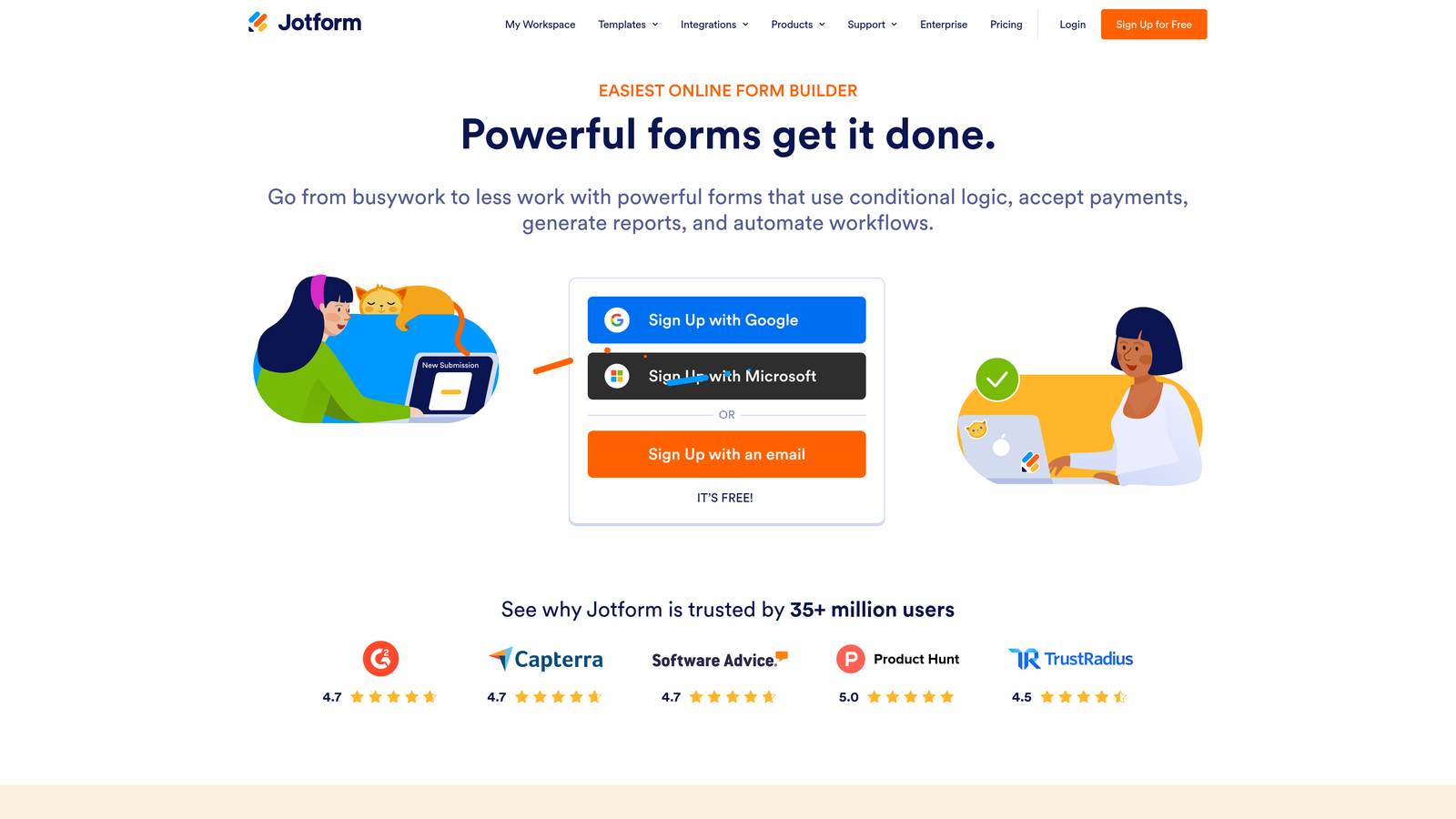
Jotform is a feature-rich form builder with over 10,000 templates, 150+ native integrations, and strong compliance certifications.
Where This Tool Shines
Jotform's depth is its headline feature. With more than 10,000 pre-built templates, you can find a starting point for virtually any use case imaginable, from healthcare intake forms to SaaS trial signups. For startups that need to move fast and don't want to build from scratch, that library is a real time-saver.
Its compliance posture is particularly valuable for startups operating in regulated spaces. HIPAA, GDPR, and SOC 2 certifications are available, which means healthtech, fintech, or edtech startups don't need to worry about outgrowing Jotform's compliance infrastructure as they scale. The newer Jotform AI feature adds form-building assistance that can speed up initial setup.
Key Features
10,000+ Pre-Built Templates: One of the largest template libraries in the category, covering virtually every industry and use case.
150+ Native Integrations: Direct connections to CRMs, payment processors, project management tools, and marketing platforms without relying solely on Zapier.
HIPAA, GDPR, and SOC 2 Compliance: Built-in compliance infrastructure that makes Jotform viable for startups in regulated industries from day one.
AI Form Builder Assistant: Helps generate form structures and questions faster, reducing the time from idea to live form.
Advanced Reporting Dashboard: Built-in analytics that surface submission trends and response data without requiring external reporting tools.
Best For
Jotform is well-suited for startups in healthcare, finance, or education where compliance is non-negotiable, and for ops-heavy teams that need a large variety of form types across the business. Note that the interface can feel dense for small teams that only need a handful of simple forms.
Pricing
Free tier available with limited monthly submissions. Paid plans start at approximately $34/month. Verify current pricing at jotform.com.
6. Formstack
Best for: Growth-stage startups preparing for enterprise sales that need advanced workflow automation and compliance infrastructure.
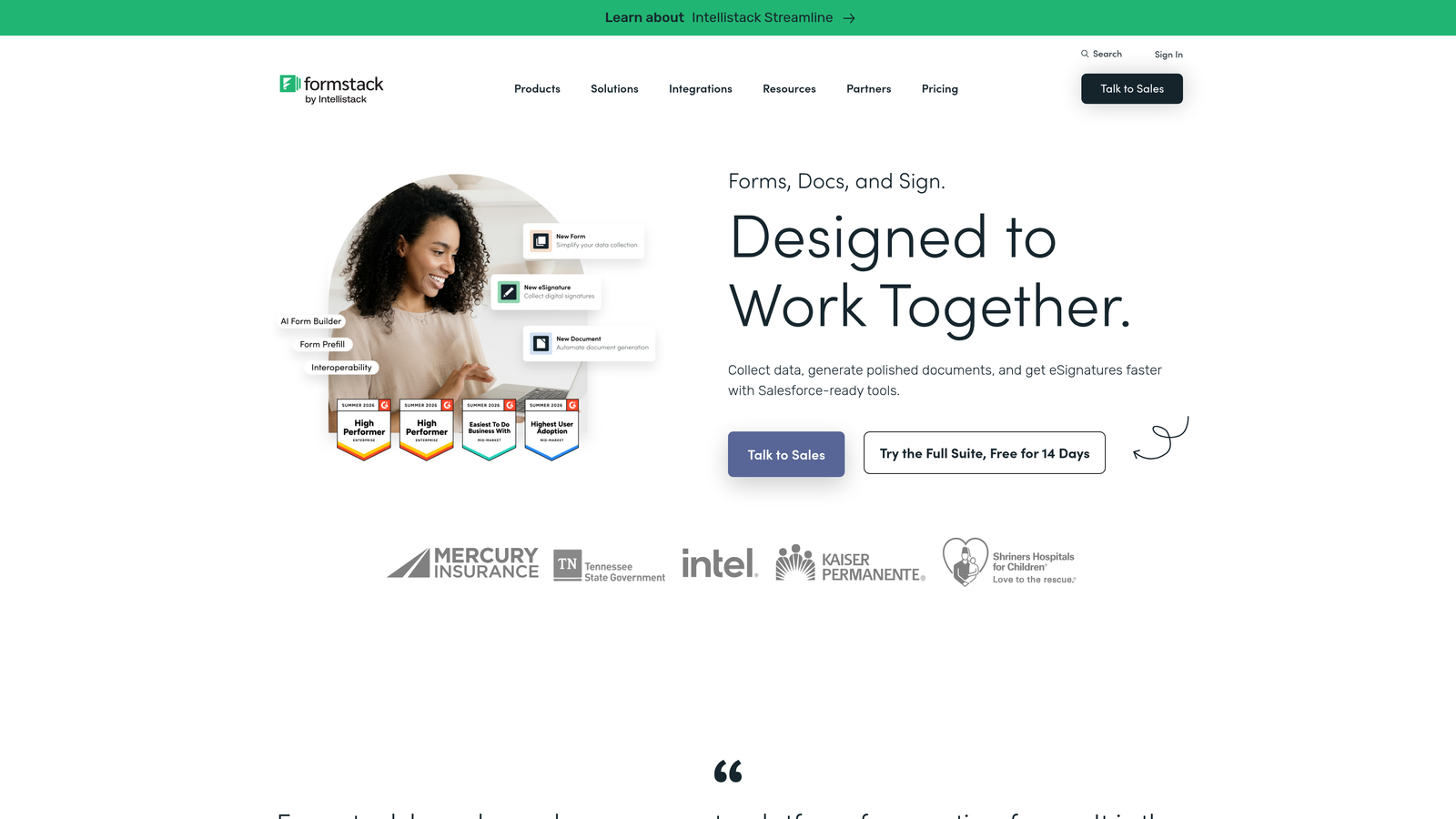
Formstack is an enterprise-ready form and workflow automation platform built for organizations that need data routing, document generation, and compliance at scale.
Where This Tool Shines
Formstack goes well beyond form building. Where most tools stop at collecting a submission and firing it to your CRM, Formstack extends into multi-step approval workflows, document generation, and e-signature capabilities. For a Series A or Series B startup that's starting to sell into enterprise accounts, that infrastructure matters.
Its compliance credentials are comprehensive: HIPAA, FERPA, and SOC 2 certifications make it viable for startups in healthcare, education, and financial services. The ability to prefill forms with existing CRM data is also a meaningful feature for teams running complex sales or onboarding processes where asking prospects to re-enter known information creates unnecessary friction.
Key Features
Advanced Workflow Automation: Extends beyond form submission into multi-step approval processes, data routing, and team notifications.
Document Generation and E-Signatures: Creates contracts, proposals, or onboarding documents directly from form data and collects signatures in the same flow.
HIPAA, FERPA, and SOC 2 Compliance: Broad compliance coverage for startups operating in regulated industries or selling to enterprise buyers with strict security requirements.
CRM Prefill: Pulls existing data from your CRM to pre-populate form fields, reducing friction for returning prospects or existing customers.
Multi-Step Approval Workflows: Routes submissions through defined approval chains, which is essential for procurement, legal, or HR processes.
Best For
Formstack is the right fit for growth-stage startups at Series A and beyond that are building enterprise-grade processes and need their form infrastructure to match. It's overkill for very early-stage teams and carries a steeper learning curve than lighter tools on this list.
Pricing
Formstack sits at a higher price point than most tools on this list. Visit formstack.com for current plan details.
Which Tool Is Right for Your Startup?
The honest answer is that the best smart form builder depends entirely on where your startup is right now and what you're trying to accomplish with your forms.
Here's a quick way to think through the decision:
Pre-revenue or bootstrapped teams: Start with Tally. The free plan is genuinely capable, and you won't be forced into a paid tier before you're ready.
Brand-forward consumer startups: Typeform's conversational UX and polished design will match the experience quality your audience expects.
Multi-use campaigns from one tool: Paperform's combination of forms, payments, and scheduling makes it a strong choice for small teams consolidating their stack.
Integration-heavy ops workflows or regulated industries: Jotform's native integration depth and compliance certifications cover a wide range of operational needs.
Scaling toward enterprise: Formstack's workflow automation and document generation capabilities grow with you as your processes become more complex.
Startups serious about lead quality and conversion: This is where Orbit AI stands apart. If your goal isn't just to collect form submissions but to identify your best leads automatically and route them to your sales team in real time, Orbit AI is purpose-built for exactly that. For B2B SaaS teams where pipeline quality drives revenue, having AI-powered qualification built directly into your form experience is a meaningful advantage over tools that treat lead scoring as an afterthought.
Transform your lead generation with AI-powered forms that qualify prospects automatically while delivering the modern, conversion-optimized experience your high-growth team needs. Start building free forms today and see how intelligent form design can elevate your conversion strategy.


