

Choosing an AI form tool isn't just about features. It's about whether the pricing makes sense for your team's size, submission volume, and growth trajectory. With AI-powered capabilities now baked into most modern form builders, the real differentiator is value: what do you get, at what cost, and does it scale without punishing your success?
This guide breaks down the best AI form tools with transparent pricing comparisons, covering free tiers, paid plans, and what's actually included at each level. Whether you're a lean startup qualifying leads or a scaling SaaS team running high-volume campaigns, this list focuses on platforms that combine genuine AI capabilities with clear, fair pricing. We've deliberately left out tools that bury their best features behind enterprise sales calls or opaque quote processes.
If you're evaluating where to start, it's also worth understanding why most forms lose leads before they even reach your CRM. And if you already have Orbit AI in mind, you can jump straight to the Orbit AI pricing page to see current plans.
1. Orbit AI
Best for: High-growth teams focused on lead qualification, scoring, and conversion optimization
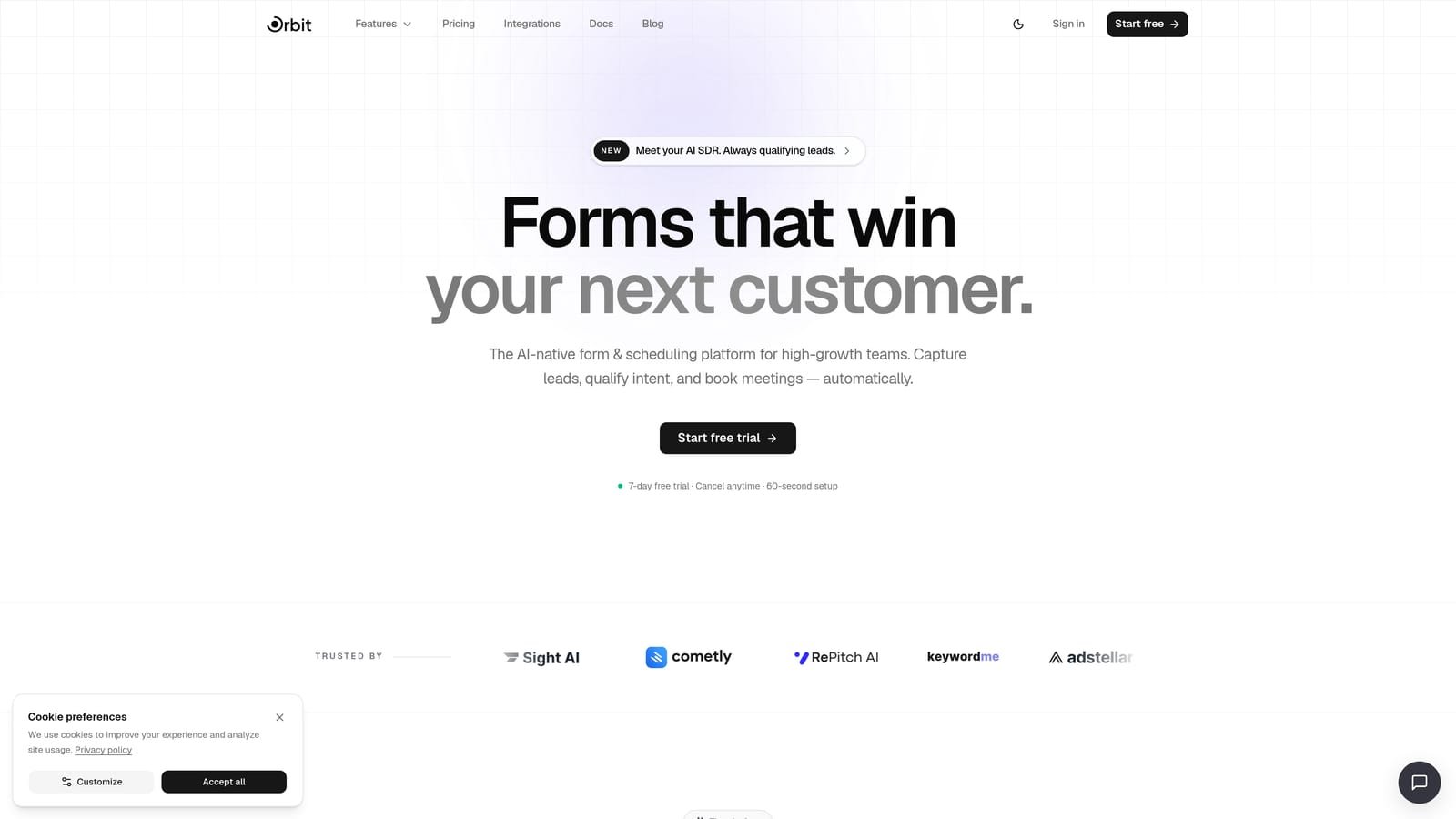
Orbit AI is an AI-powered form builder built specifically around lead generation and qualification, not just form creation.
Where This Tool Shines
Most form tools have added AI as an afterthought: a button that generates questions from a prompt. Orbit AI takes a fundamentally different approach. Its platform centers on AI agents that qualify, score, and route leads automatically, meaning your form isn't just collecting data. It's actively working to separate high-intent prospects from noise before they ever reach your sales team.
This makes Orbit AI particularly compelling for SaaS teams, growth marketers, and demand generation leads who are tired of sifting through unqualified submissions. The conversion-optimized design isn't cosmetic either. The forms are built to reduce drop-off and drive completions, which matters when every lead has a cost attached to it.
Key Features
AI Lead Qualification Agents: Automatically qualify and score incoming leads in real time, so your team focuses on prospects that actually fit your ICP.
Conversion-Optimized Form Design: Forms built to minimize drop-off with modern, responsive layouts designed for high-growth teams.
Sequences and Automated Follow-Up: Trigger personalized follow-up workflows based on lead scores and form responses, keeping momentum without manual effort.
Analytics Dashboard: Track form performance, lead quality, and conversion rates in one place to continuously optimize your campaigns.
Contacts Management: Centralize all captured leads with qualification data attached, giving your team a clean, actionable view of your pipeline.
Best For
Orbit AI is the strongest fit for SaaS companies, growth teams, and demand generation marketers who need more than a form. If lead quality matters as much as lead volume, and you want AI that qualifies and routes automatically rather than just generating questions, this is the platform built for that outcome.
Pricing
Current plans and tiers are available at orbitforms.ai/pricing. Pricing is designed to scale with your team's needs without penalizing growth.
2. Typeform
Best for: Brand-forward teams wanting a polished, conversational form experience
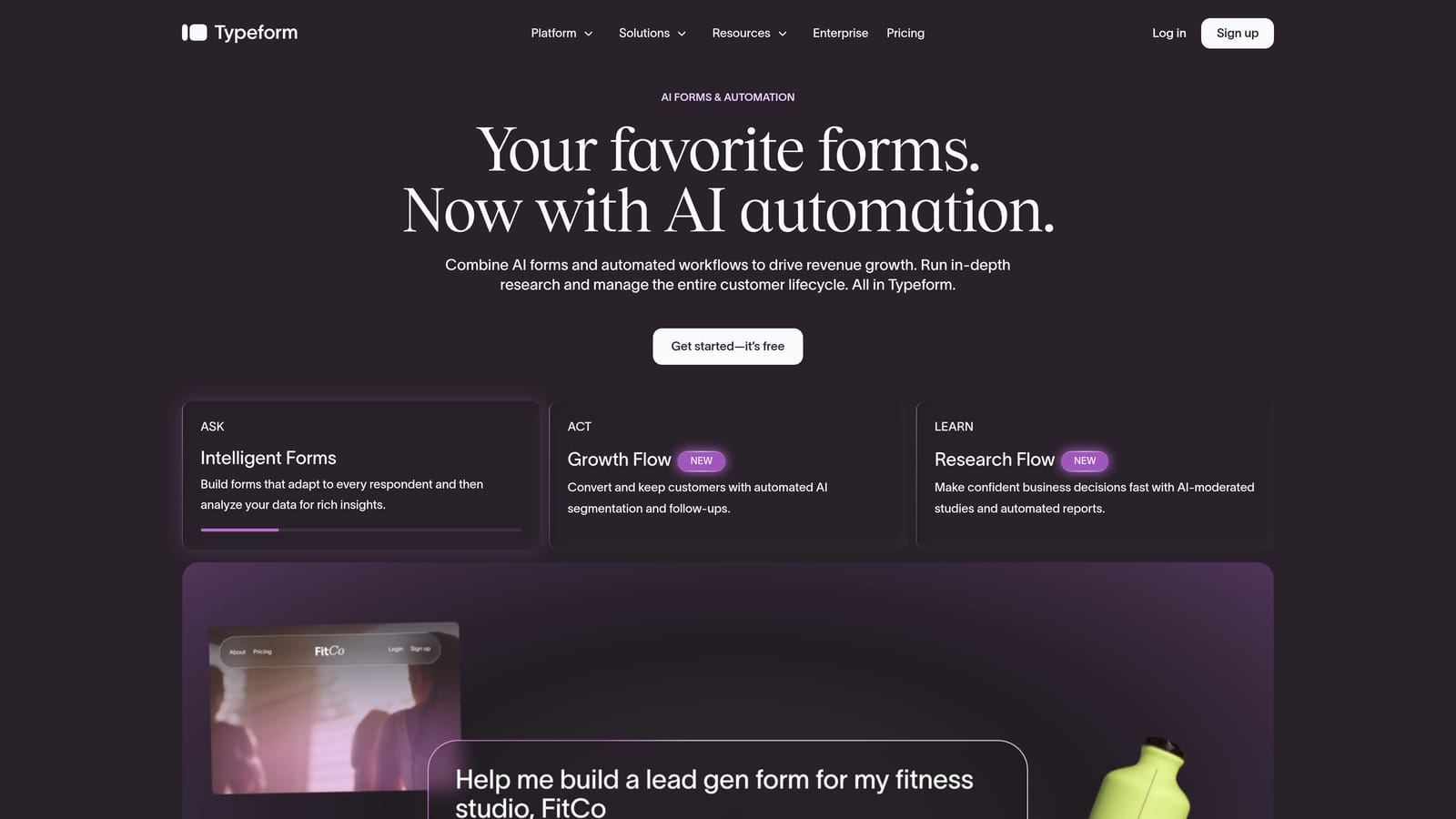
Typeform is a conversational form builder known for its one-question-at-a-time UX and strong visual design capabilities.
Where This Tool Shines
Typeform's signature format, presenting one question at a time in a clean, full-screen layout, creates a genuinely engaging experience that feels less like a form and more like a conversation. For teams where brand perception matters and form aesthetics are part of the customer journey, Typeform is hard to beat on presentation.
The AI form builder, available on paid plans, lets you generate a complete form from a text prompt, which speeds up creation significantly. Logic jumps and conditional branching add meaningful personalization, though the real power of the platform is in its design-first philosophy rather than deep automation.
Key Features
Conversational One-at-a-Time Flow: Presents questions sequentially for a more engaging, lower-friction experience than traditional multi-field forms.
AI Form Builder: Generate complete forms from a text prompt on paid plans, reducing setup time considerably.
Visual Branding and Customization: Deep control over fonts, colors, backgrounds, and media to match your brand identity precisely.
Logic Jumps and Conditional Branching: Route respondents through different question paths based on their answers.
Wide Integration Library: Connects with major CRMs, marketing platforms, and productivity tools.
Best For
Typeform works well for marketing teams, agencies, and brands where form aesthetics and respondent experience are a priority. It's less suited for teams that need high-volume submissions on a tight budget, as response caps on lower tiers can become a friction point quickly.
Pricing
Free plan: approximately 10 responses per month. Multiple paid tiers are available with higher response limits and additional features. Verify current pricing at typeform.com/pricing.
3. Jotform
Best for: Teams needing a high-volume, template-rich form solution with chatbot-style AI agents
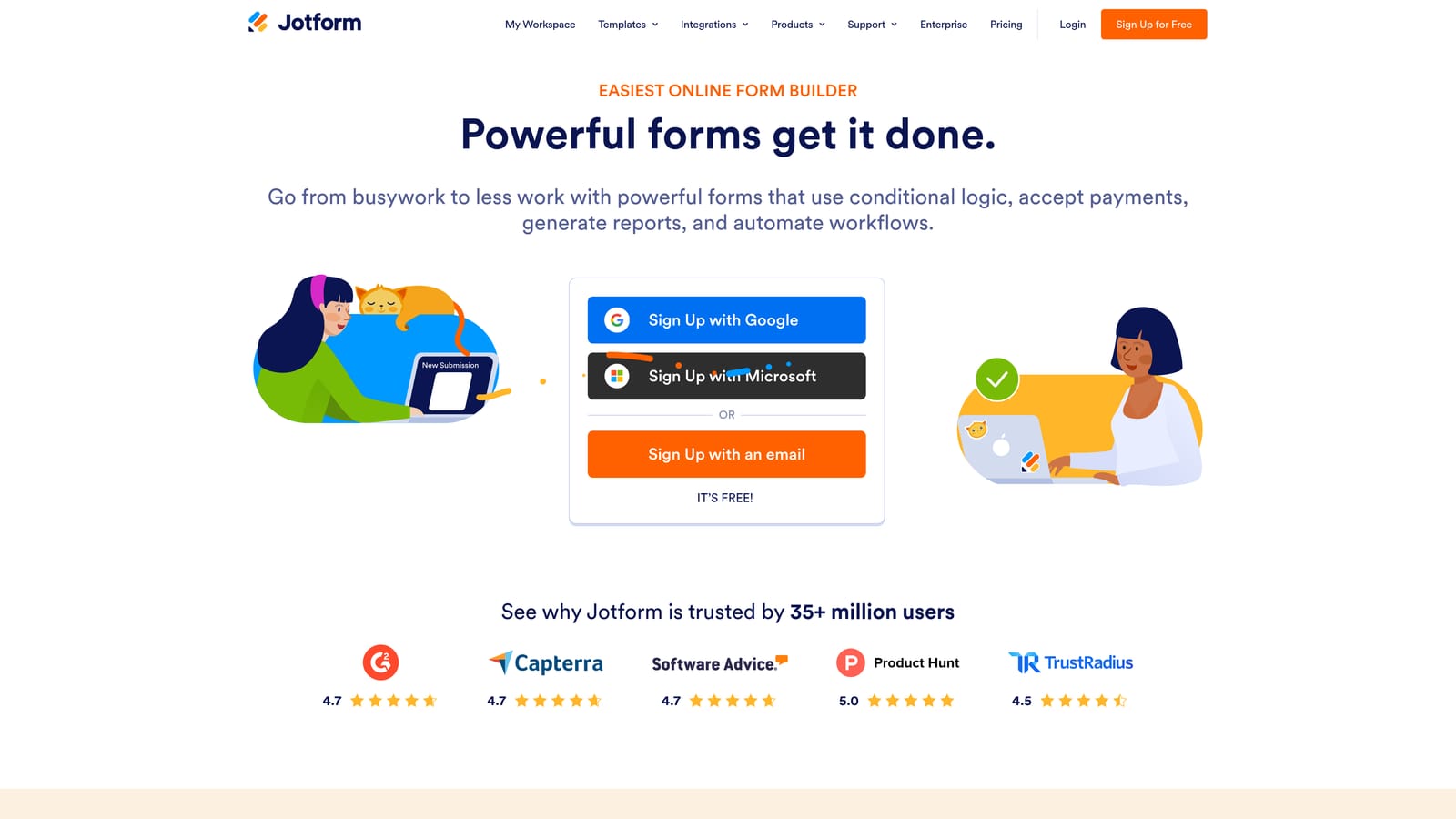
Jotform is one of the most established form builders available, offering an enormous template library and newer AI agent capabilities for conversational data collection.
Where This Tool Shines
Jotform's depth is its biggest asset. With over 10,000 templates spanning industries from healthcare to e-commerce, you can get a functional form live in minutes without starting from scratch. For teams managing multiple use cases across departments, this breadth is genuinely useful.
The newer Jotform AI Agents bring chatbot-style interactions to form experiences, allowing for more dynamic conversations rather than static question lists. The platform also supports built-in payments and e-signatures, making it versatile for operational workflows beyond simple data collection.
Key Features
10,000+ Form Templates: One of the largest template libraries available, covering virtually every industry and use case.
Jotform AI Agents: Conversational AI agents that collect data through chatbot-style interactions rather than traditional form layouts.
AI Form Builder: Generate forms from text prompts to accelerate setup and reduce manual configuration.
Payment and E-Signature Integrations: Accept payments and collect signatures natively within forms.
Tiered Submission Volume Plans: Plans scale by submission count, making it straightforward to match your tier to actual usage.
Best For
Jotform suits operations teams, agencies managing multiple clients, and businesses with diverse form needs across departments. Teams that prioritize template availability and integration breadth over cutting-edge AI qualification will find it a reliable workhorse.
Pricing
Free plan: 5 forms and 100 monthly submissions. Paid plans include Bronze, Silver, Gold, and Enterprise tiers. Verify current pricing at jotform.com/pricing.
4. Paperform
Best for: Service businesses and freelancers combining forms with payments, bookings, and product sales
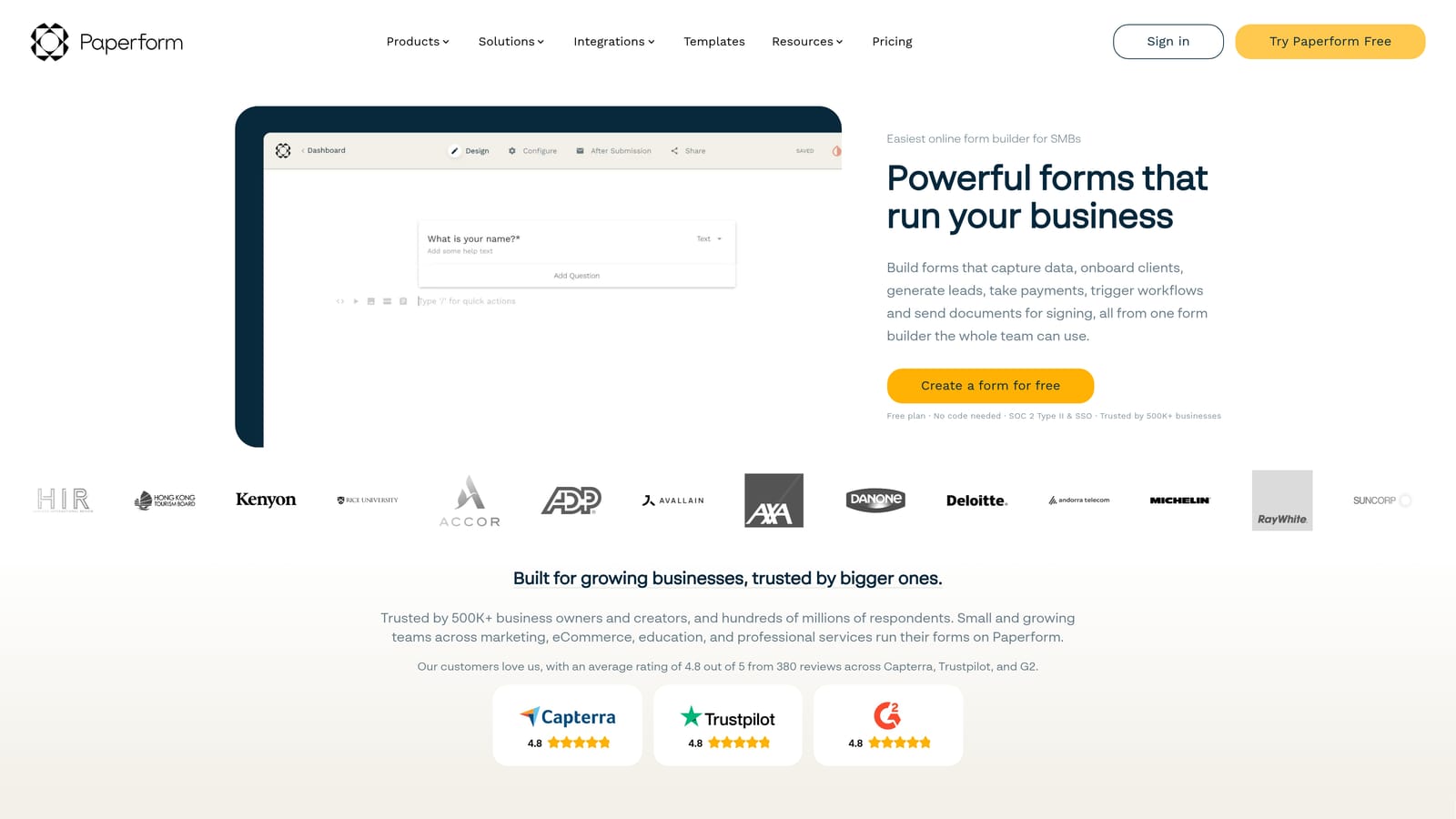
Paperform is a flexible form builder that natively integrates payments, product sales, and appointment booking directly within the form experience.
Where This Tool Shines
Paperform occupies a unique space in this comparison. Rather than treating payment collection as an add-on integration, the platform builds it directly into the form creation experience. You can sell products, accept deposits, and manage bookings all within a single form, which simplifies workflows for service businesses significantly.
The editor supports rich text, embedded media, and highly customizable layouts, giving forms a landing page-like quality. AI-assisted form creation helps speed up the building process, though the AI capabilities here are more focused on generation than qualification or automation.
Key Features
Native Payment Processing: Accept payments via Stripe, PayPal, and Square directly within forms, without third-party workarounds.
Product and Service Sales: Sell physical or digital products and services natively inside the form interface.
Appointment and Booking Integrations: Manage scheduling and bookings alongside data collection in one unified form.
AI-Assisted Form Creation: Generate and refine forms using AI prompts to reduce setup time.
Rich Media Embedding: Embed images, video, and custom content alongside form fields for a more engaging layout.
Best For
Paperform is an excellent fit for freelancers, consultants, coaches, and small service businesses that need to collect payments and manage bookings without building a separate checkout flow. It's less suited for teams with high submission volumes on a tight budget, as there's no meaningful free tier.
Pricing
14-day free trial available. Paid plans include Essentials, Pro, and Business tiers. Verify current pricing at paperform.co/pricing.
5. Tally
Best for: Early-stage teams and individuals wanting unlimited forms and submissions at no cost
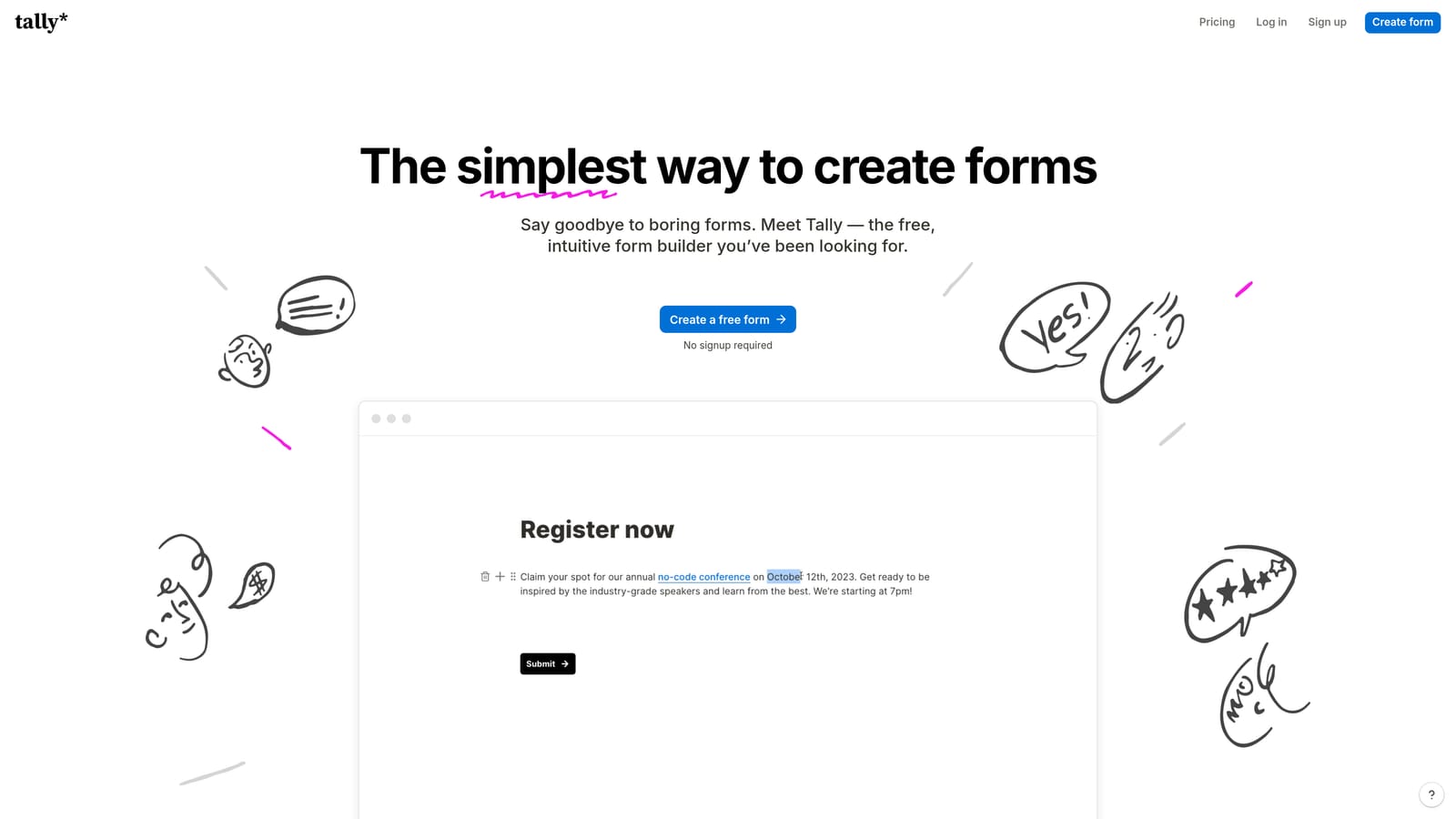
Tally is a Notion-inspired form builder offering the most generous free tier in this comparison, with unlimited forms and unlimited submissions available at zero cost.
Where This Tool Shines
Tally's free plan is genuinely remarkable compared to the rest of the market. While most tools cap responses, forms, or features on their free tiers, Tally gives you unlimited forms and unlimited submissions from day one. For early-stage teams or solo operators who need functional forms without a budget commitment, this is a significant advantage.
The block-based editor feels immediately familiar if you've used Notion, making it one of the more intuitive building experiences available. AI form generation lets you create forms from text prompts, and the clean, minimal aesthetic means forms look professional without heavy customization effort.
Key Features
Unlimited Free Forms and Submissions: No caps on form count or submission volume on the free plan, the most generous offering in this roundup.
Notion-Like Block Editor: Intuitive drag-and-drop building experience that feels familiar to teams already using Notion.
AI Form Generation: Create complete forms from text prompts to accelerate setup.
No Branding on Pro: Embed forms anywhere without Tally branding when on the paid Pro plan.
Conditional Logic and Integrations: Basic conditional branching and connections to popular tools for workflow automation.
Best For
Tally is the right call for early-stage startups, individual creators, and teams that need reliable form collection without spending anything. It's not built for advanced lead qualification or complex automation, so teams with serious lead-gen requirements will likely outgrow it.
Pricing
Free plan: Unlimited forms and unlimited submissions. Tally Pro adds advanced features including branding removal. Verify current pricing at tally.so/pricing.
6. Formstack
Best for: Enterprise teams in regulated industries needing forms, document workflows, and compliance features
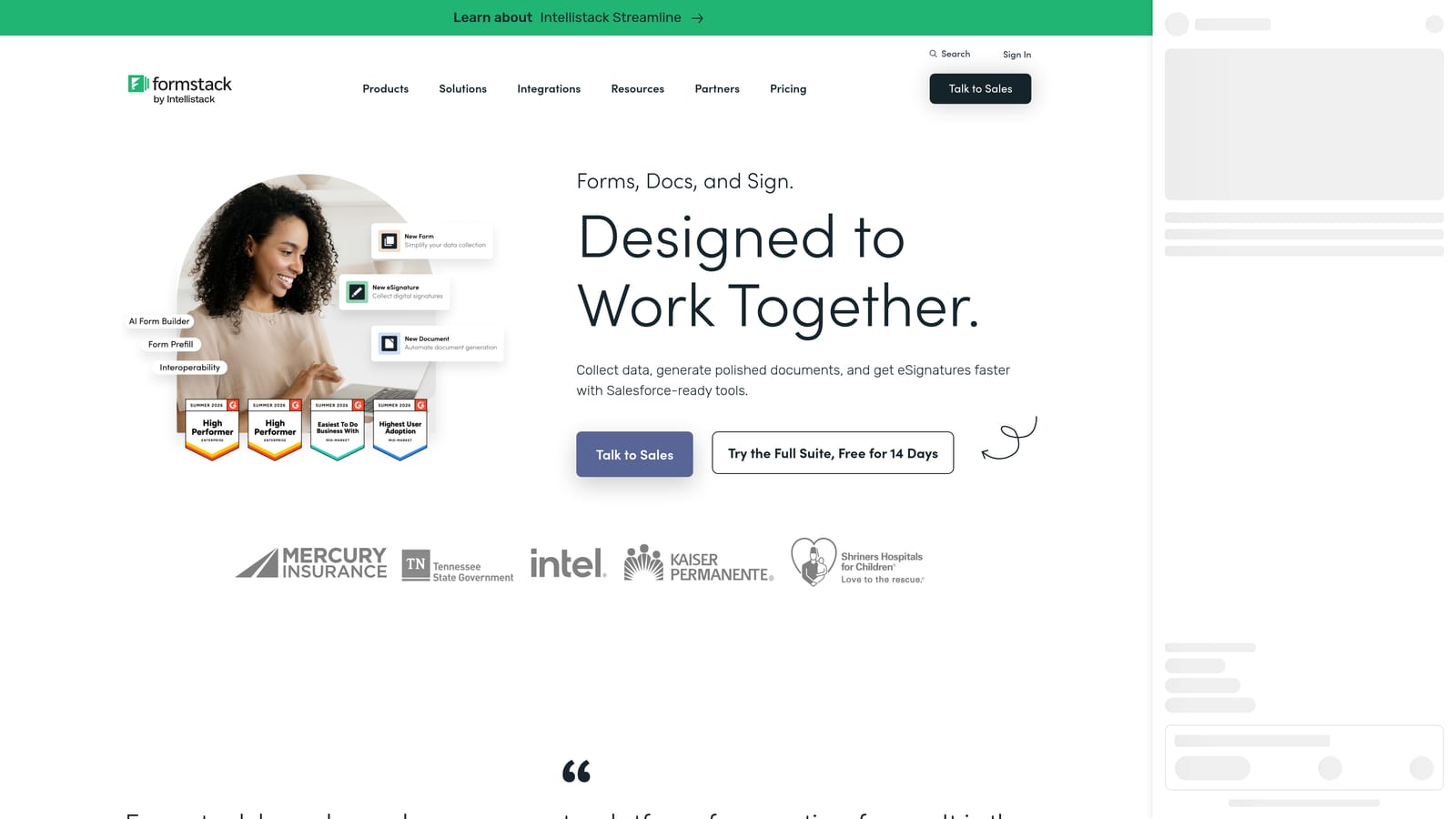
Formstack is an enterprise-grade platform combining form building with document generation, approval workflows, and compliance-ready data handling.
Where This Tool Shines
Formstack operates at a different level of organizational complexity than most tools in this list. It's built for environments where a form submission triggers a chain of events: document generation, multi-step approvals, e-signature collection, and CRM updates, all within a governed, compliant workflow. For regulated industries like healthcare, legal, and financial services, this depth is genuinely necessary.
HIPAA-compliant data collection and deep Salesforce integration make Formstack a strong fit for enterprise teams where data governance isn't optional. AI-assisted creation helps reduce setup time for complex workflows, though the platform's real value is in its process automation capabilities rather than AI-driven lead qualification.
Key Features
Document Generation and E-Signatures: Automatically generate documents from form data and collect legally binding signatures within the same workflow.
Multi-Step Approval Chains: Route submissions through defined approval processes with conditional routing based on form responses.
HIPAA-Compliant Data Collection: Purpose-built compliance controls for regulated industries handling sensitive data.
Salesforce and Enterprise CRM Integrations: Deep, native connections to Salesforce and other enterprise systems for seamless data flow.
AI-Assisted Workflow Creation: Use AI prompts to accelerate the building of complex forms and multi-step workflows.
Best For
Formstack is built for mid-market and enterprise organizations in regulated industries that need forms as part of a broader operational workflow. It's overkill for small teams and cost-prohibitive for early-stage companies. If compliance and document automation are core requirements, it's worth evaluating seriously.
Pricing
Formstack operates on enterprise and higher-tier SaaS pricing, often involving custom quotes for larger organizations. Verify current plans at formstack.com/pricing.
Which Tool Fits Your Situation
Six tools, six genuinely different use cases. Here's how to cut through the noise and match the right platform to where your team actually is.
For lead-gen-focused SaaS and growth teams: Orbit AI is the clear choice. It's the only platform in this list built specifically around AI-powered lead qualification and scoring, not just form generation. If converting high-quality leads is your primary objective, the AI agents and qualification workflows justify the investment. Start with the Orbit AI pricing page to find the right tier.
For budget-constrained early teams: Tally's unlimited free plan is hard to argue with. You get functional, professional-looking forms with no submission caps and no time limits. It's an excellent starting point before you need more sophisticated automation.
For high-volume, template-driven needs: Jotform's depth and breadth make it the practical choice for operations teams managing multiple form use cases across departments. The template library alone saves significant setup time.
For brand-forward conversational experiences: Typeform remains the benchmark for polished, design-led form interactions. If the respondent experience is part of your brand story, the investment in Typeform's paid tiers makes sense.
For payment-integrated service workflows: Paperform's native payment and booking capabilities make it the natural fit for freelancers, coaches, and service businesses that need checkout and scheduling baked into the form itself.
For enterprise compliance and document automation: Formstack is purpose-built for regulated industries that need forms as part of complex, governed workflows. It's not for everyone, but for the right organization, it's the right tool.
The best AI form tool is the one that solves your actual problem at a price that makes sense for your stage. If that problem is lead qualification and conversion, start building free forms today with Orbit AI and see what AI-powered qualification actually looks like in practice.


