

Growth teams live and die by their ability to capture, qualify, and convert leads at scale. The form tool you choose isn't just a data collection checkbox: it's a frontline conversion asset. The wrong one leaks leads, frustrates prospects, and leaves your sales team chasing unqualified contacts. The right one qualifies intent, routes submissions intelligently, and feeds your pipeline with signal-rich data.
This list covers the best form tools built for growth teams, including platforms that handle everything from simple contact forms to AI-powered lead qualification. We evaluated each tool on conversion-focused features, conditional logic, integrations, ease of use for non-technical teams, and pricing transparency. Whether you're scaling a SaaS product, running performance marketing campaigns, or optimizing a B2B funnel, there's a tool here that fits your stack.
1. Orbit AI
Best for: High-growth SaaS and B2B teams that need AI-powered lead qualification built into the form layer.
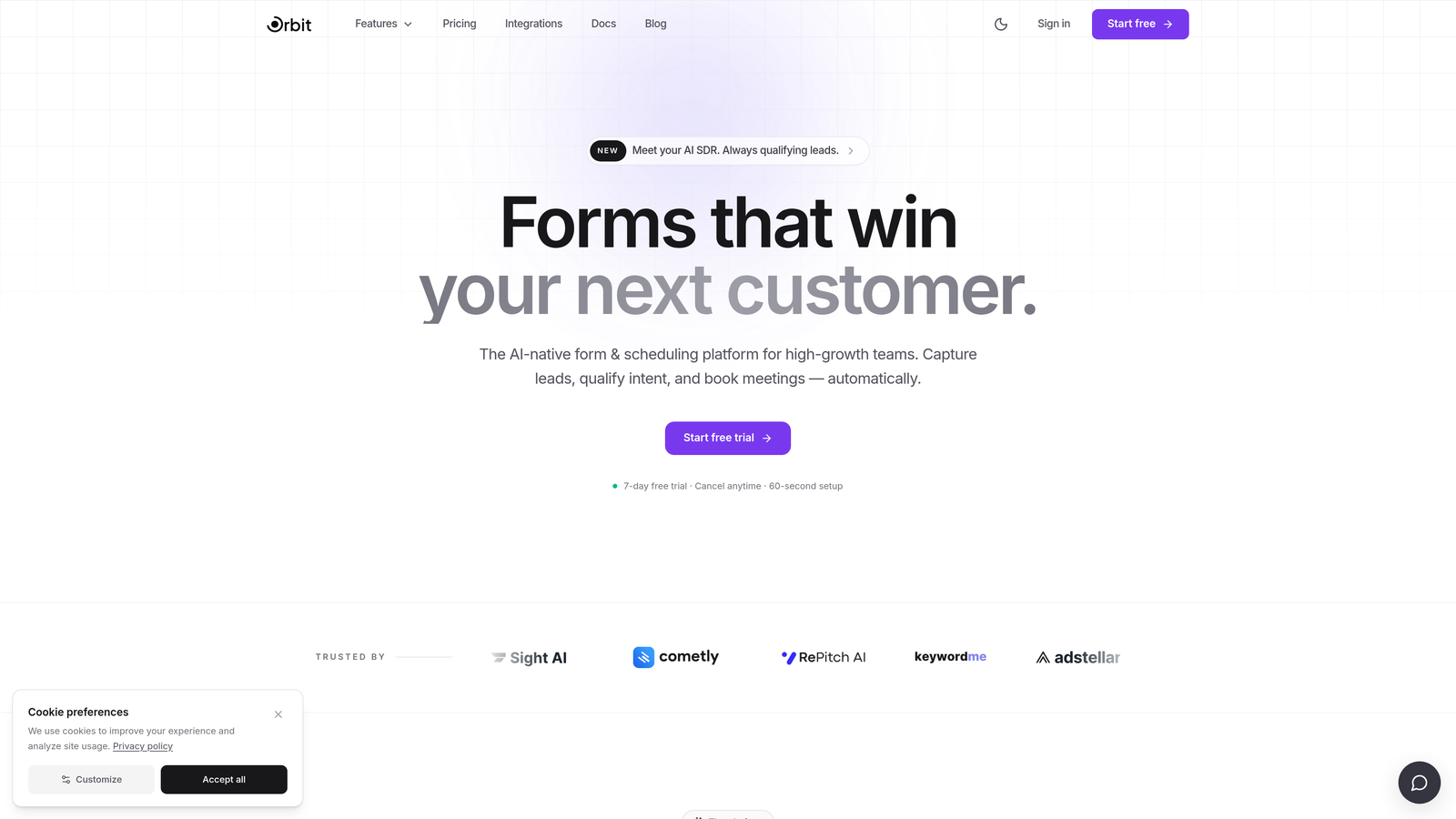
Orbit AI is an AI-powered form builder that combines conversion-optimized design with intelligent lead qualification at the point of submission.
Where This Tool Shines
Most form tools stop at data collection. Orbit AI goes a step further by qualifying leads the moment they hit submit. Instead of dumping raw form fills into your CRM and leaving sales to sort through noise, Orbit AI scores and routes submissions automatically, so your team is working with signal-rich leads from the start.
The design philosophy is equally deliberate. Forms built on Orbit AI are modern and conversion-optimized by default, not as an afterthought. For growth teams running paid campaigns or inbound funnels, that combination of beautiful UX and intelligent qualification is a meaningful edge.
Key Features
AI-Powered Lead Qualification: Automatically scores and routes submissions based on qualification signals, reducing lag between form fill and sales action.
Conversion-Optimized Form Design: Built-in design system tailored for high-growth stacks, so forms look polished without requiring a designer.
Conditional Logic: Personalize the form experience dynamically based on user inputs, keeping prospects engaged and reducing drop-off.
Native CRM and Marketing Integrations: Connects directly with CRMs and marketing automation tools so qualified leads flow into your pipeline without manual intervention.
Real-Time Lead Enrichment: Surfaces qualification signals at submission time, giving sales teams richer context before the first touchpoint.
Best For
Orbit AI is the strongest fit for SaaS and B2B growth teams where lead quality matters as much as lead volume. If your sales cycle depends on fast, accurate qualification and your team is tired of manually triaging form submissions, this is built for that exact problem.
Pricing
Visit orbitforms.ai for current pricing plans. Plans are designed to scale with growing teams.
2. Typeform
Best for: Teams that want higher form completion rates through a polished, conversational experience.
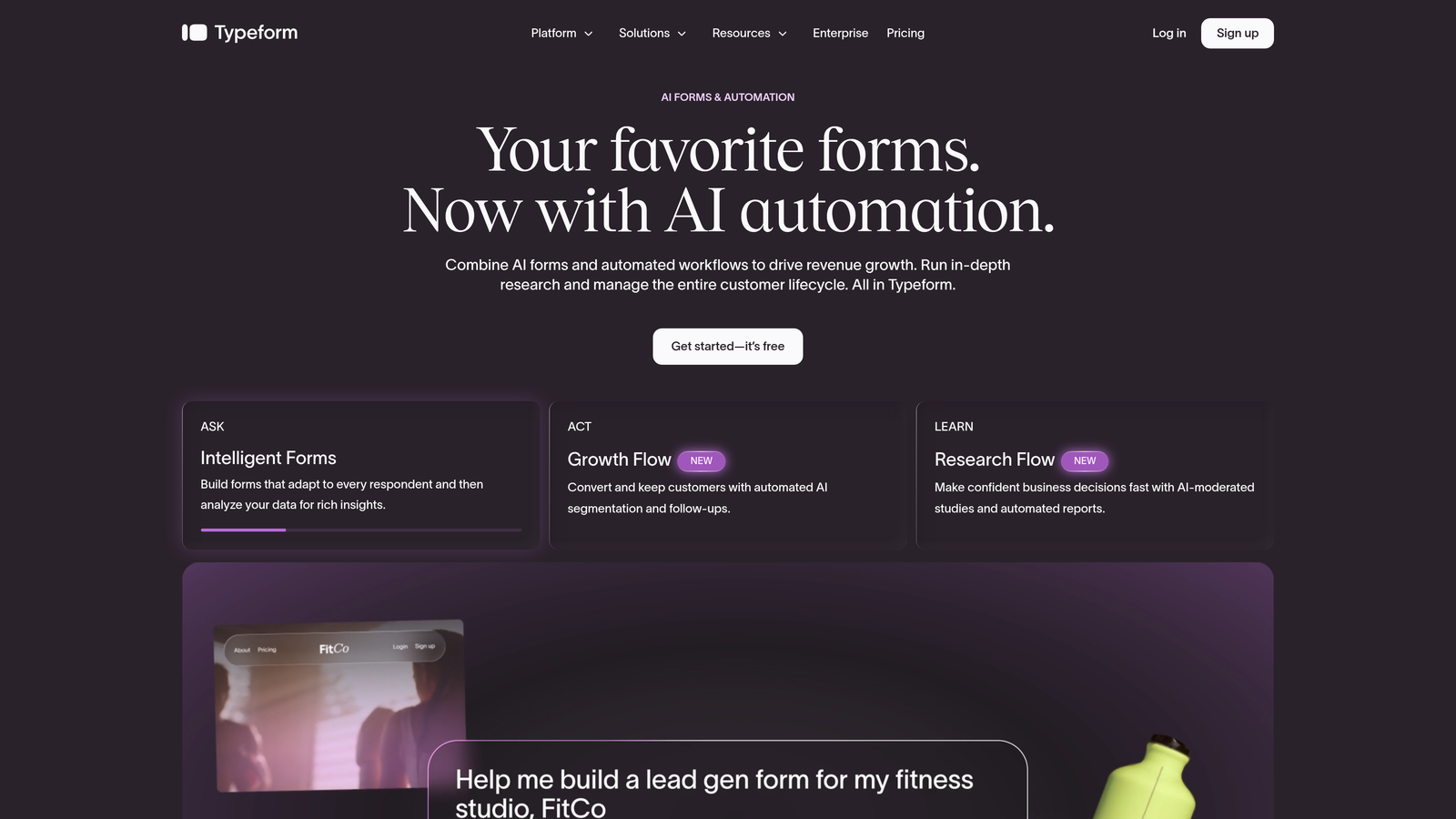
Typeform is a conversational form builder that presents one question at a time, reducing cognitive load and form abandonment.
Where This Tool Shines
Typeform pioneered the one-question-at-a-time format, and it remains one of the most effective approaches for longer forms where traditional multi-field layouts cause drop-off. The experience feels more like a conversation than a data entry task, which matters when you're asking prospects to invest time in a qualification survey or onboarding flow.
The design system is genuinely polished. Brand customization is straightforward, and the integration ecosystem is broad enough to fit most modern growth stacks. The main trade-off: users who want to scan ahead or jump between questions can find the linear format limiting.
Key Features
Conversational UX: One-question-at-a-time format keeps respondents focused and reduces abandonment on longer forms.
Conditional Logic and Branching: Robust logic paths let you personalize the form journey based on earlier answers.
Brand Customization: Full control over colors, fonts, and imagery to match your visual identity.
Broad Integration Ecosystem: Native connections to HubSpot, Salesforce, Slack, and 500+ tools via Zapier.
Rich Media Support: Embed video and images directly within form questions to add context or increase engagement.
Best For
Typeform works well for growth teams running longer qualification surveys, customer research forms, or onboarding flows where engagement and completion rate are the primary concern. Less ideal for teams that need built-in lead scoring or advanced qualification logic.
Pricing
Free tier available with response limits. Paid plans start at approximately $25/month. Verify current pricing at typeform.com.
3. Tally
Best for: Lean teams that need unlimited forms and submissions without a budget conversation.
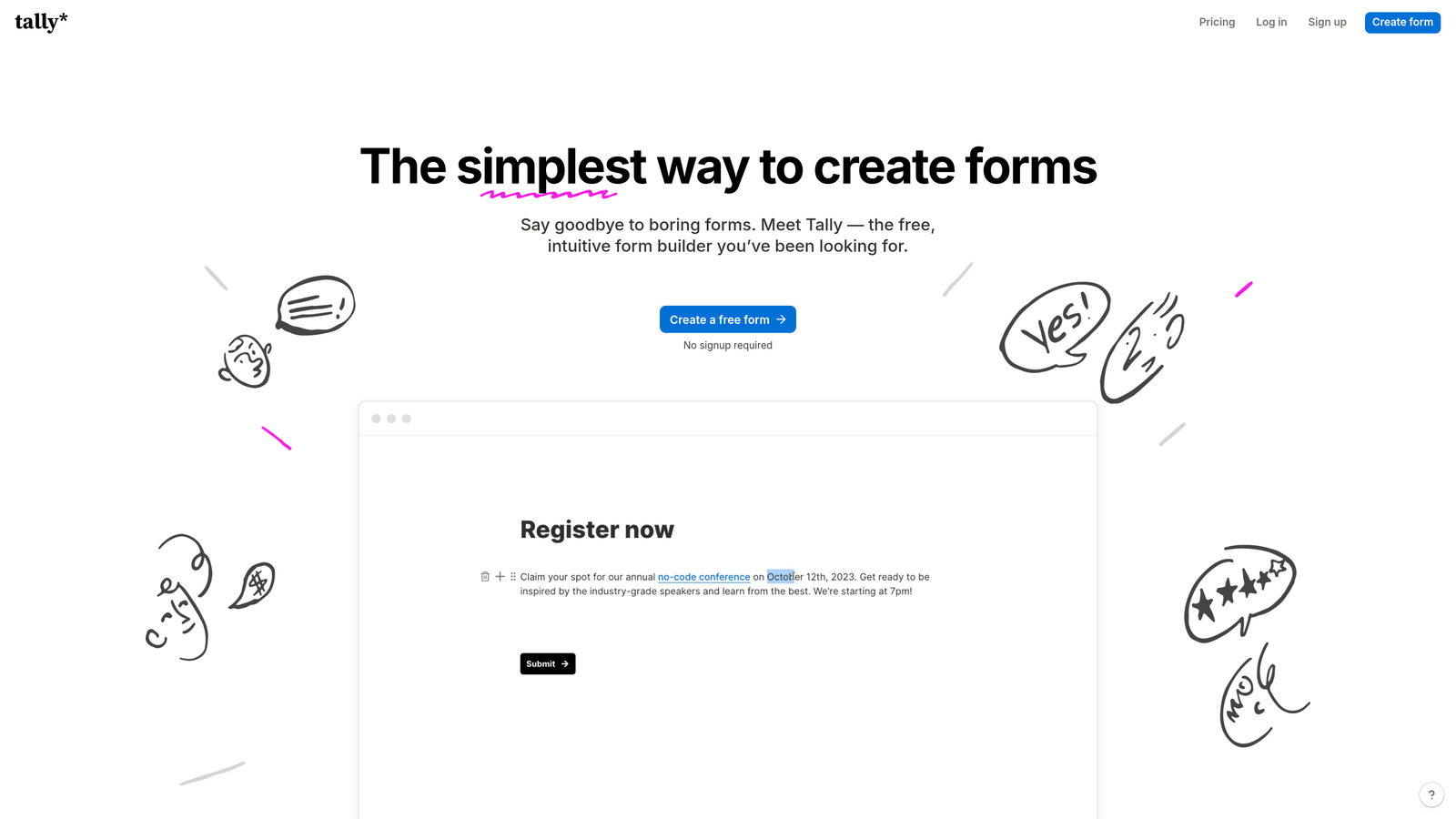
Tally is a minimal, Notion-inspired form builder with one of the most generous free tiers in the market: unlimited forms and unlimited submissions at no cost.
Where This Tool Shines
Tally's free tier is genuinely unusual. Most form tools cap submissions or forms on their free plans, but Tally doesn't. For early-stage growth teams or those operating with tight budgets, this removes a common friction point entirely. You can ship forms fast, iterate quickly, and never worry about hitting a submission ceiling.
The block-based editor will feel immediately familiar to anyone who uses Notion. It's clean, distraction-free, and easy to learn without onboarding. Tally also embeds natively into Notion pages, which makes it a natural fit for teams already living in that ecosystem.
Key Features
Unlimited Free Forms and Submissions: No artificial caps on the free plan, a rare offering in this category.
Block-Based Editor: Notion-style interface that's intuitive for teams already familiar with that workflow.
Conditional Logic and Hidden Fields: Core logic features available without upgrading to a paid plan.
Native Notion Embedding: Drop forms directly into Notion pages with minimal setup.
Zapier and Make Integrations: Connect to broader toolchains via automation platforms.
Best For
Tally is ideal for early-stage teams, indie operators, or any growth team that needs to move fast without procurement friction. It's less suited for teams that need advanced lead qualification, enterprise workflows, or deep CRM routing.
Pricing
Free tier includes unlimited forms and submissions. Pro plan available for additional features. Verify current pricing at tally.so.
4. Paperform
Best for: Growth teams running varied campaign types who want one tool for forms, payments, and scheduling.
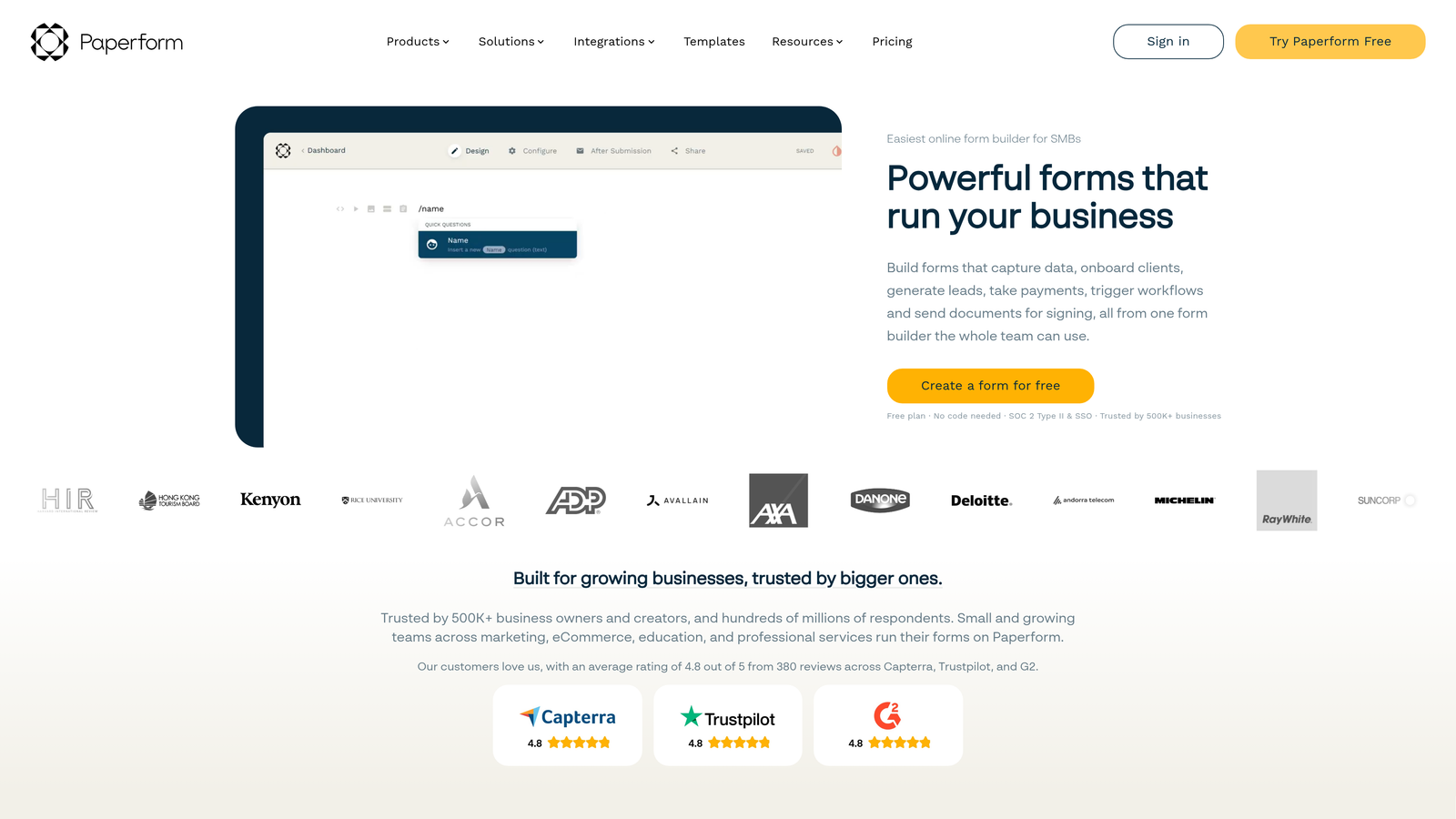
Paperform is a flexible form builder where each form functions as a standalone mini landing page, supporting rich media, payments, and scheduling alongside standard form logic.
Where This Tool Shines
Paperform occupies an interesting space between form builder and lightweight landing page tool. If you're running a campaign that needs to collect leads, accept payments, and allow scheduling all in one place, Paperform handles that without requiring three separate tools. The design flexibility is a genuine standout: forms feel like crafted pages rather than embedded widgets.
For growth teams managing multiple campaign types simultaneously, consolidating around a tool that handles this range can meaningfully reduce tool sprawl. The trade-off is that Paperform doesn't offer a free tier, so it requires budget commitment from day one.
Key Features
Mini Landing Page Format: Each form is a standalone page with support for rich media, custom layouts, and full design control.
Built-In Payment Collection: Native Stripe integration lets you collect payments directly within the form flow.
Scheduling and Booking: Built-in scheduling functionality for teams running demos, consultations, or appointments.
Conditional Logic and Calculation Fields: Strong logic capabilities including calculated fields for pricing estimators or scoring.
CRM and Automation Integrations: Connects via Zapier, Make, and direct integrations with popular CRM platforms.
Best For
Paperform suits growth teams with varied use cases: lead capture, event registration, payment collection, and booking all in one tool. It's a strong pick for teams that want design control and multi-functionality without stitching together multiple platforms.
Pricing
Paid plans only, starting at approximately $24/month. No free tier available. Verify current pricing at paperform.co.
5. Jotform
Best for: Larger teams or regulated industries that need enterprise compliance, high submission volume, and workflow automation.
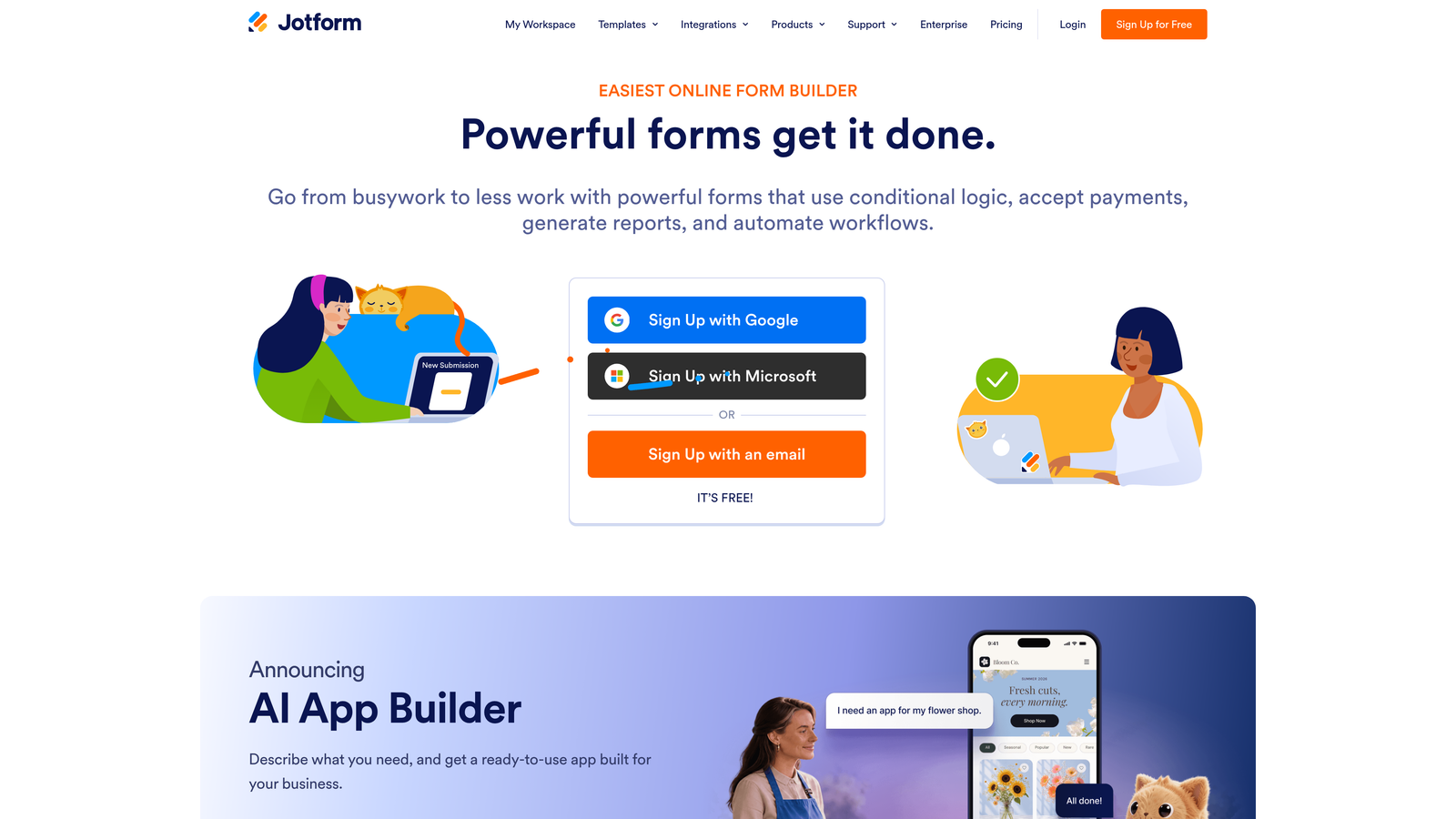
Jotform is one of the most established form builders available, offering thousands of templates, enterprise compliance options, and built-in workflow automation.
Where This Tool Shines
Jotform's template library is genuinely massive, covering virtually every industry and use case. If you need to spin up a form fast without building from scratch, there's almost certainly a template that gets you 80% of the way there. This is especially useful for larger teams managing forms across multiple departments or campaigns simultaneously.
The compliance story is also strong. HIPAA and GDPR compliance options make Jotform one of the few form tools appropriate for teams in regulated industries like healthcare or financial services. Add in approval workflows, multi-step routing, and Jotform Tables for data management, and it's a comprehensive platform for teams that need more than a simple embed.
Key Features
Extensive Template Library: Thousands of pre-built templates across industries, reducing time-to-deploy significantly.
Enterprise Compliance: HIPAA and GDPR compliance options for teams operating in regulated environments.
Approval Workflows: Multi-step routing and approval logic for teams with internal review processes.
High Submission Volume Capacity: Built to handle enterprise-scale form traffic without performance issues.
Jotform Tables: Built-in data management layer for organizing and acting on submission data without exporting to a separate tool.
Best For
Jotform is best suited for larger organizations, compliance-sensitive teams, or growth operations that need forms as part of a broader internal workflow. Lean growth teams may find it more heavyweight than necessary for pure lead capture use cases.
Pricing
Free tier available with submission limits. Paid plans scale by submission volume and feature access. Verify current pricing at jotform.com.
6. Formstack
Best for: Revenue operations and enterprise teams where form submissions trigger complex, multi-step business processes.
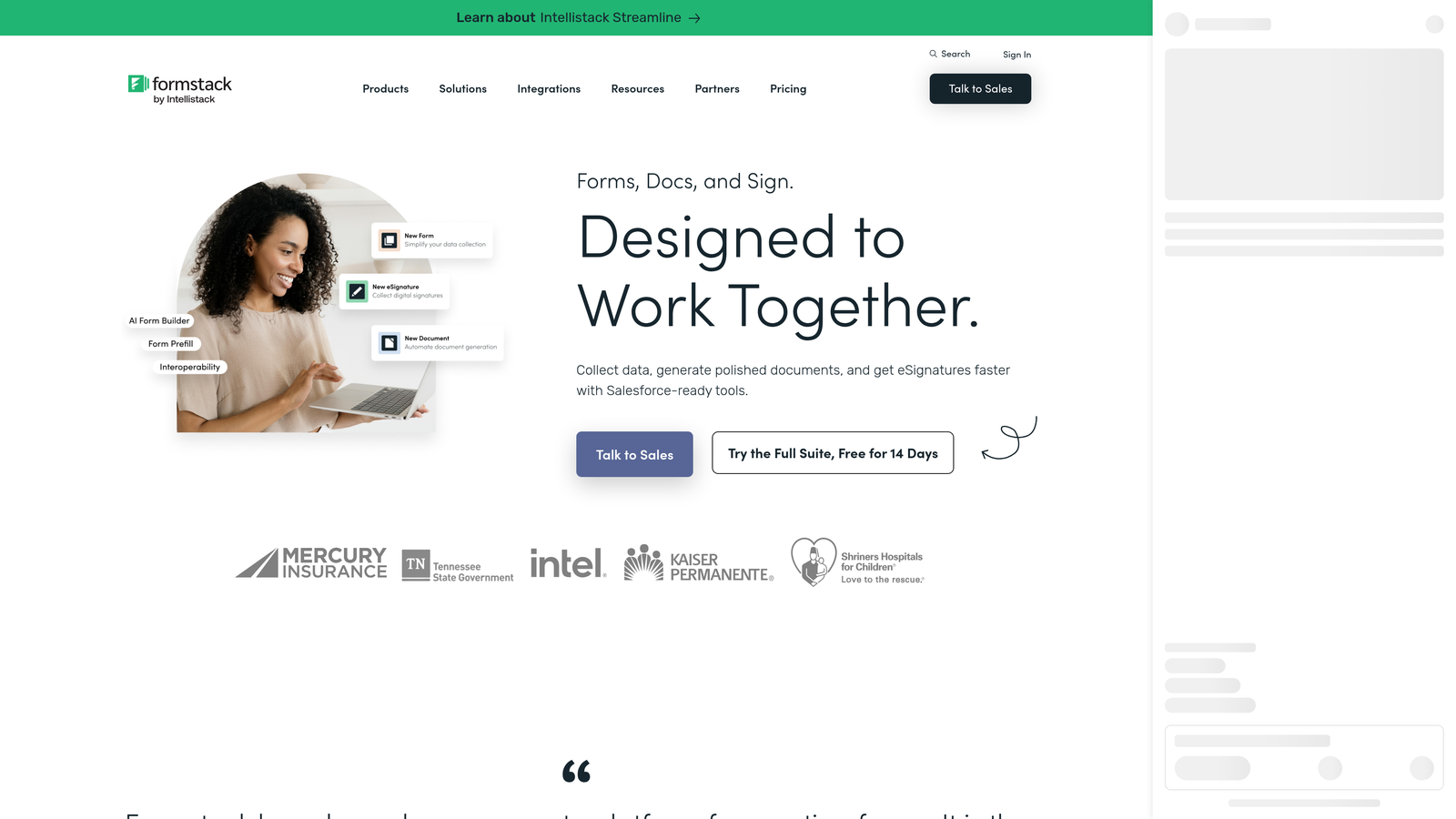
Formstack is an enterprise-grade form and workflow automation platform that extends beyond data collection into document generation, e-signatures, and deep CRM integration.
Where This Tool Shines
Formstack is purpose-built for teams where a form submission is the beginning of a process, not the end of one. When a prospect fills out a form and that action needs to trigger a contract generation, a Salesforce opportunity creation, an e-signature request, and a routed approval workflow, Formstack handles that chain natively. That level of process integration is difficult to replicate with lighter-weight tools.
The Salesforce-native integration is particularly strong for revenue operations teams. Data flows directly into Salesforce objects without middleware gymnastics, which matters when your CRM is the system of record for your entire revenue process.
Key Features
Salesforce-Native Integration: Deep, direct integration with Salesforce for revenue operations teams where CRM data integrity is critical.
Document Generation: Automatically generate populated documents from form submission data, reducing manual data entry downstream.
E-Signature Capabilities: Built-in e-signature functionality for contracts, agreements, and consent forms triggered by submissions.
Multi-Step Workflow Automation: Complex, branching workflows triggered by form submissions across teams and systems.
Enterprise Security and Compliance: Advanced security controls and compliance features for organizations with strict data governance requirements.
Best For
Formstack is the right choice for enterprise revenue operations, legal, or compliance teams that need forms embedded in larger business processes. It's not the right fit for lean growth teams wanting fast, lightweight lead capture: the complexity and cost reflect its enterprise positioning.
Pricing
Higher-end enterprise pricing. Verify current plans and packaging at formstack.com.
Which Tool Is Right for Your Growth Team?
The best form tool depends entirely on where your team is in its growth journey and what you need forms to actually do for your pipeline.
If lead qualification is your primary challenge, and you need forms that do more than collect data, Orbit AI is the clearest fit. The combination of AI-powered qualification, modern conversion-optimized design, and native CRM routing makes it purpose-built for growth teams where pipeline quality is the metric that matters.
For teams prioritizing completion rates on longer surveys or research forms, Typeform's conversational format is hard to beat. If you're early-stage and budget-constrained, Tally's unlimited free tier lets you move fast without financial friction. Paperform earns its place for teams running multi-purpose campaigns where payments and scheduling live alongside lead capture.
Jotform is the go-to for larger organizations needing compliance, high volume, and workflow automation across departments. And if your revenue operations team needs forms embedded in a complex Salesforce-driven process with document generation and e-signatures, Formstack is built for exactly that.
The pattern is clear: simpler, faster, and more conversion-focused for lean growth teams; heavier and more process-oriented as organizational complexity grows. Most high-growth SaaS and B2B teams will find the sweet spot in tools that prioritize lead quality over raw feature count.
Ready to see what AI-powered qualification looks like in practice? Start building free forms today and experience how intelligent form design can transform your conversion strategy from the first touchpoint forward.


