

For startups, every lead counts. A clunky, generic form can silently kill your conversion rate before a prospect ever reaches your sales team. The right custom form builder doesn't just collect data; it qualifies leads, reflects your brand, and integrates cleanly into your growth stack.
But with dozens of options on the market, choosing the right tool can feel overwhelming, especially when you're balancing tight budgets with the need to move fast. This guide cuts through the noise. We've evaluated six form builders specifically through the lens of startup needs: ease of customization, lead qualification capabilities, pricing transparency, and how quickly a non-technical team can get up and running.
Whether you're building your first lead capture form or overhauling your entire data collection workflow, this list will help you find the right fit. Let's get into it.
1. Orbit AI
Best for: High-growth B2B SaaS teams that need AI-powered lead qualification baked into their forms.
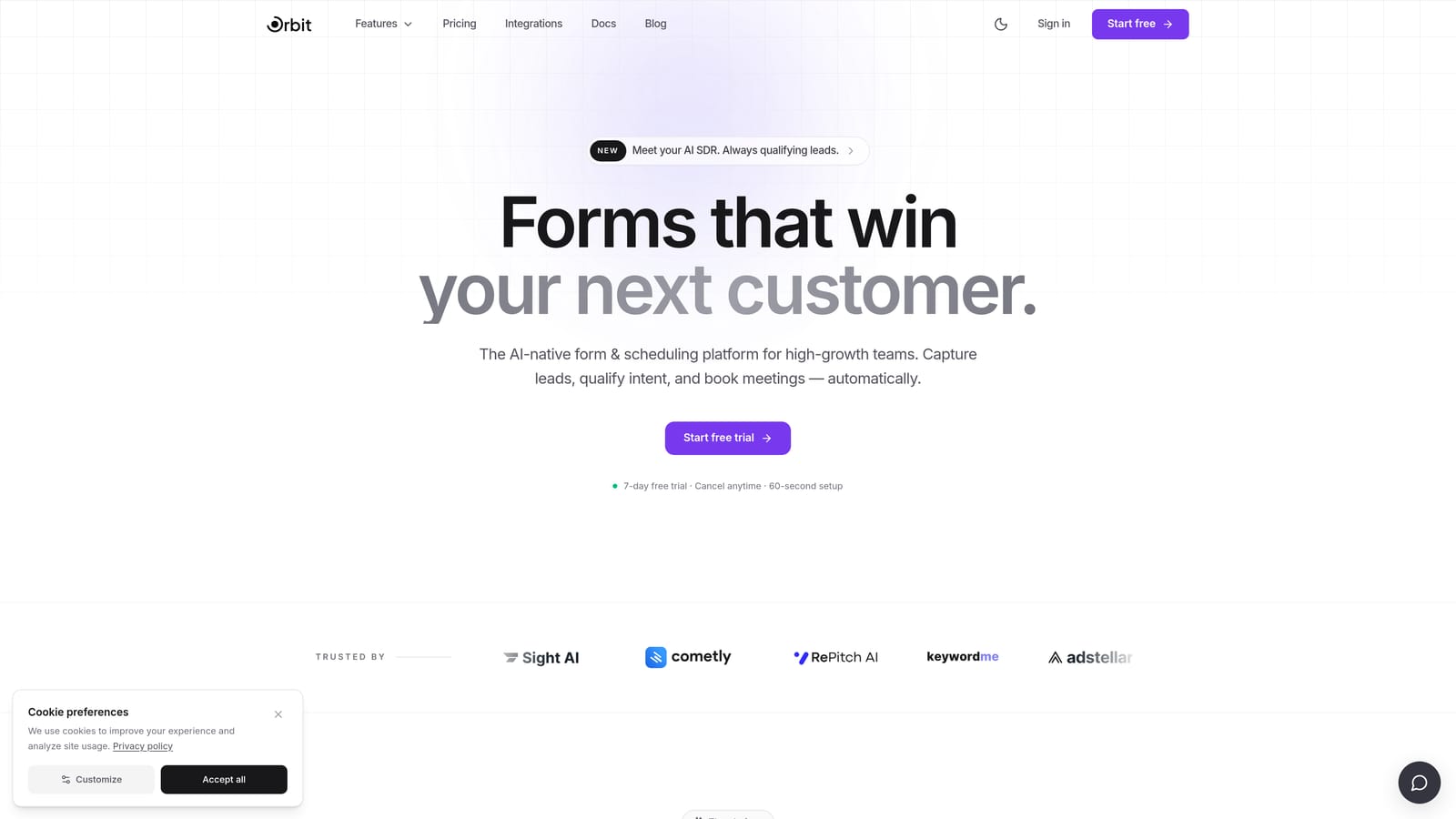
Orbit AI is an AI-powered form builder built specifically for conversion optimization and lead qualification, not passive data collection.
Where This Tool Shines
Most form builders hand you a submission and walk away. Orbit AI takes a fundamentally different approach: it scores and filters leads at the point of submission, so your sales team spends time on the right prospects rather than chasing dead ends. For B2B startups where lead quality directly impacts revenue, that distinction matters enormously.
The platform pairs that intelligence layer with genuinely modern form design. You're not choosing between beautiful and smart. Orbit AI delivers both, with customizable templates built to maximize completion rates and conditional logic that creates personalized form experiences without requiring any engineering resources.
Key Features
AI-Powered Lead Qualification: Scores and filters leads in real time at the point of submission, surfacing your highest-value prospects automatically.
Conversion-Optimized Templates: Modern, customizable designs built to reduce friction and improve form completion rates across devices.
Conditional Logic and Dynamic Fields: Personalizes the form experience based on how respondents answer, creating a more relevant journey for each lead.
CRM and Marketing Stack Integrations: Connects with the tools B2B SaaS teams already use, keeping your lead data flowing without manual work.
Form Performance Analytics: Tracks completion rates and identifies where prospects drop off, giving you the data to iterate and improve continuously.
Best For
Orbit AI is the strongest fit for high-growth SaaS teams and B2B companies where lead quality directly impacts pipeline performance. If you're scaling a sales motion and need your forms to do more than collect names and emails, this is the tool built for that job.
Pricing
Visit orbitforms.ai for current pricing details and free trial options. The platform is designed to be accessible for startups at various growth stages.
2. Typeform
Best for: Consumer-facing startups that prioritize polished, on-brand form experiences and high completion rates.
Typeform is a conversational form builder known for its one-question-at-a-time format and strong design flexibility.

Where This Tool Shines
Typeform's signature experience is its conversational flow. Instead of presenting respondents with a wall of fields, it walks them through one question at a time, which generally reduces cognitive load and can improve completion rates compared to traditional long-form layouts. For startups that want their forms to feel like a brand touchpoint rather than a data extraction exercise, that matters.
The design customization is genuinely strong. You can apply a full brand kit, control typography and colors, and create forms that feel native to your product or marketing site. The trade-off is that advanced logic and integrations are gated behind higher-tier plans, which can push costs up as your needs grow.
Key Features
Conversational One-Question Format: Presents questions sequentially to reduce friction and create a more engaging respondent experience.
Brand Kit Support: Full design customization including fonts, colors, and imagery to match your startup's visual identity.
Logic Jumps and Conditional Branching: Routes respondents through different paths based on their answers for more relevant form experiences.
Integration Ecosystem: Connects with HubSpot, Salesforce, Slack, and Zapier, covering most startup marketing and sales stacks.
Completion Rate Analytics: Tracks where respondents drop off so you can optimize individual questions over time.
Best For
Typeform works well for consumer-facing startups, product teams running user research, and any team that places a high premium on form aesthetics. It's less optimized for B2B lead qualification specifically, but strong for brand-forward data collection.
Pricing
A free plan is available with limited submissions and features. Paid plans start around $25 per month, though advanced features require higher tiers. Verify current pricing at typeform.com before committing.
3. Tally
Best for: Bootstrapped or early-stage startups that need unlimited forms and submissions without paying anything upfront.
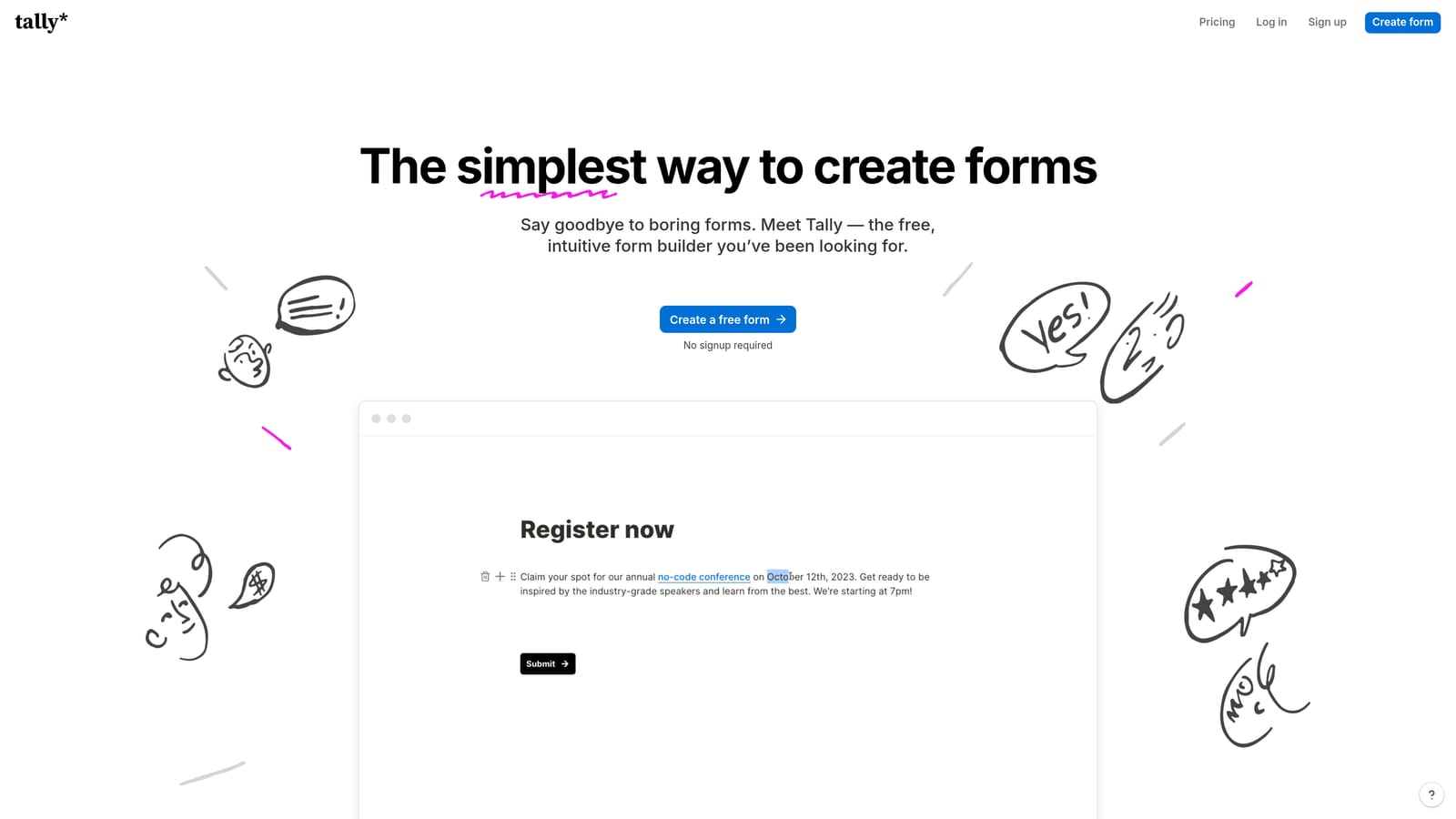
Tally is a Notion-inspired form builder with one of the most generous free tiers available in this market.
Where This Tool Shines
Tally's free plan is genuinely rare: unlimited forms and unlimited submissions with no Tally branding on embedded forms. For a bootstrapped startup that needs to move fast without worrying about hitting submission caps or paying for a tool before it proves its value, that's a meaningful advantage.
The editor feels immediately familiar to anyone who uses Notion. It's block-based, intuitive, and requires no learning curve for startup teams already living in productivity tools. The honest caveat is that Tally doesn't offer AI-powered lead qualification or deep analytics. It's a clean, capable tool that startups may outgrow as their lead generation needs become more sophisticated.
Key Features
Unlimited Free Tier: Create unlimited forms and collect unlimited submissions on the free plan, with no Tally branding on embedded forms.
Notion-Like Block Editor: Drag-and-drop block interface that feels intuitive for teams already using modern productivity tools.
Conditional Logic and Multi-Page Forms: Supports branching logic and multi-step flows even on the free plan.
Embed Anywhere: Forms embed cleanly on any website or product without requiring custom code.
Zapier and Make Integrations: Connects to your broader stack through automation platforms, though native integrations are more limited than some competitors.
Best For
Tally is an excellent starting point for pre-revenue or early-stage startups that need functional forms without any upfront cost. It's also a strong fit for internal forms, surveys, and lightweight data collection workflows where advanced lead qualification isn't required.
Pricing
The free plan covers unlimited forms and submissions. Tally Pro is available at a modest monthly fee for teams that need advanced features. Verify current pricing at tally.so.
4. Paperform
Best for: Startups that need one tool to handle forms, landing pages, payments, and scheduling in a single workflow.
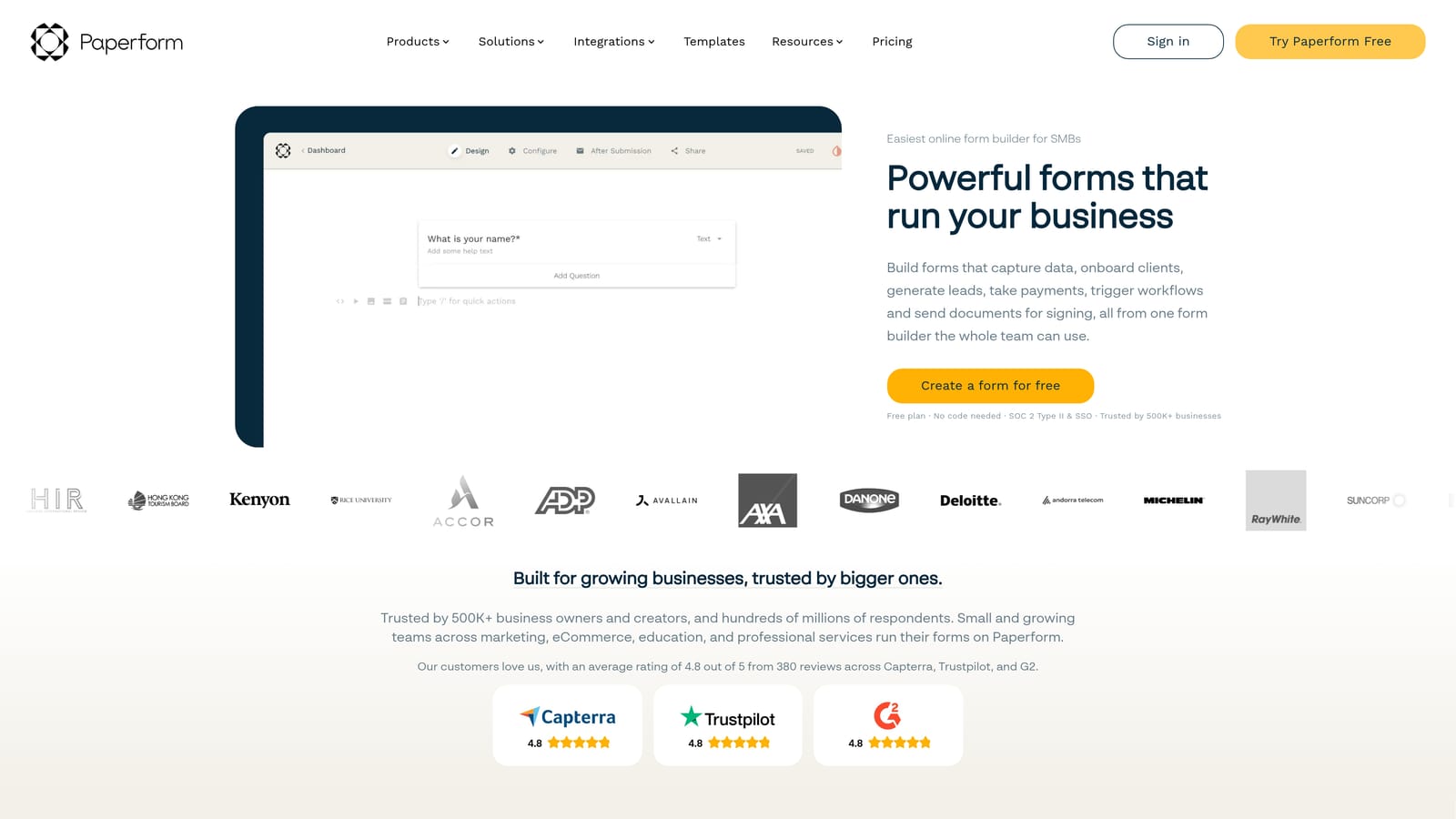
Paperform is a flexible form builder that blurs the line between form and landing page, combining rich media, payments, and scheduling in one platform.
Where This Tool Shines
Paperform's core differentiator is its versatility. A Paperform "form" can include rich text, images, video, embedded content, and Stripe payment collection all in one page. For startups that need to sell a product, book a consultation, and capture a lead without stitching together three separate tools, that consolidation has real operational value.
The multi-step form flows and conditional logic are solid, and the 200+ integrations cover most common startup workflows. Where Paperform falls short relative to tools like Orbit AI is in lead qualification intelligence. It's a strong multi-purpose tool, but it doesn't score or filter leads automatically.
Key Features
Form-as-Landing-Page Design: Build forms that function as full pages with rich media, text, and visual content alongside your questions.
Native Stripe Payments: Collect payments directly within a form without requiring a separate checkout tool or integration.
Conditional Logic and Multi-Step Flows: Create branching form experiences that adapt based on respondent answers.
Scheduling and Appointment Booking: Built-in booking functionality that removes the need for a separate scheduling tool.
200+ Integrations: Connects with Zapier, Notion, Google Sheets, and a wide range of other platforms.
Best For
Paperform suits startups that run multiple workflow types, particularly those combining lead capture, payments, and scheduling. It's a strong choice for service businesses, consultants, and early-stage teams that want to consolidate tools without sacrificing flexibility.
Pricing
Paid plans start around $24 per month. There is no permanent free plan, though trial options may be available. Verify current pricing at paperform.co before committing.
5. Jotform
Best for: Startups managing diverse, high-volume form needs across multiple teams or departments.
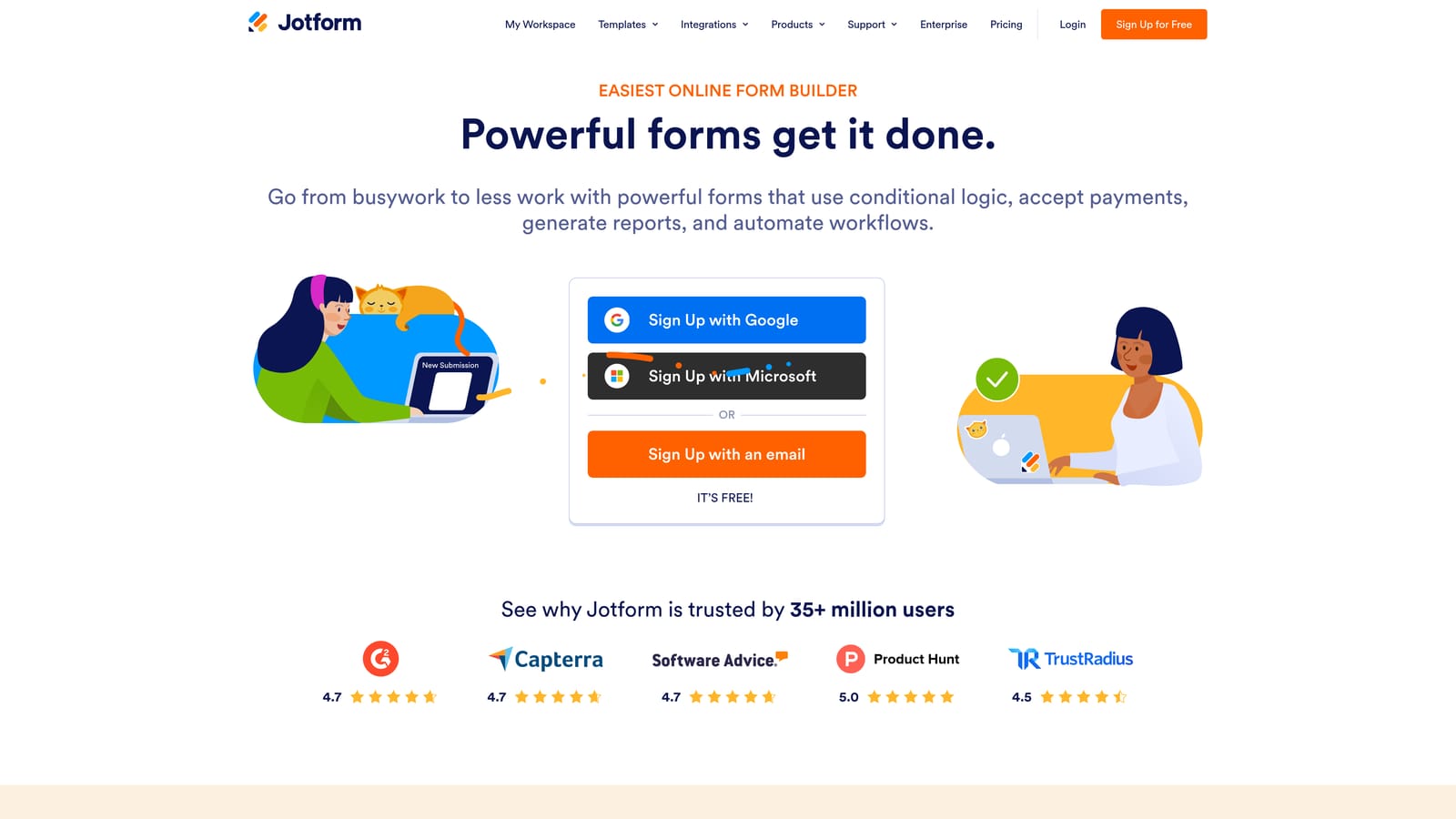
Jotform is one of the most established form builders available, offering thousands of templates and a broad integration ecosystem.
Where This Tool Shines
Jotform's depth is its defining characteristic. With thousands of pre-built templates spanning virtually every industry and use case, it's the tool you reach for when you need to spin up a new form type quickly without building from scratch. For startups managing forms across multiple functions, such as HR onboarding, customer feedback, event registration, and lead capture, that template library saves meaningful time.
The integration support is equally broad. Jotform connects with Salesforce, HubSpot, Slack, Zapier, and major payment processors out of the box. The trade-off is complexity: Jotform can feel like a lot for simple use cases, and the interface reflects its breadth. Teams with focused, straightforward form needs may find lighter tools more efficient.
Key Features
Thousands of Pre-Built Templates: Covers virtually every industry and use case, dramatically reducing time-to-launch for new form types.
Drag-and-Drop Builder: No coding required; accessible to non-technical team members across departments.
Wide Integration Support: Native connections to Salesforce, HubSpot, Slack, and Zapier for seamless data flow.
Multi-Provider Payment Collection: Accepts payments via Stripe, PayPal, and Square within a single form.
HIPAA-Compliant Plans: Higher-tier plans meet healthcare compliance requirements, relevant for health tech startups.
Best For
Jotform works best for startups with diverse form needs spread across multiple teams, or those in industries where compliance matters. It's particularly well-suited to health tech startups that need HIPAA-compliant data collection without switching to an enterprise tool.
Pricing
A free plan is available with submission and storage limits. Paid plans scale with usage and feature requirements. Verify current pricing at jotform.com.
6. Formstack
Best for: Compliance-driven startups in regulated industries like healthcare, legal, or fintech.
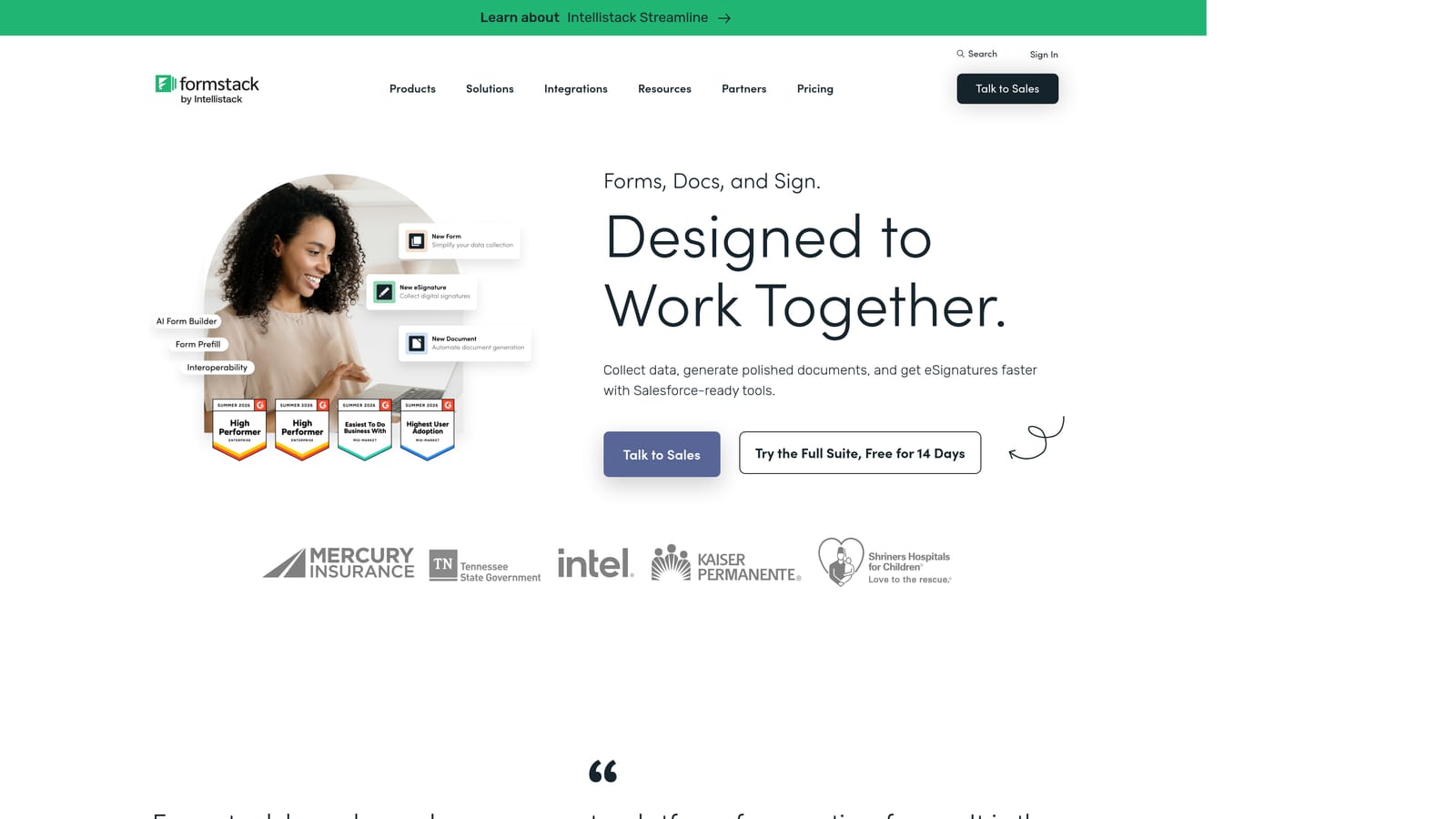
Formstack is an enterprise-leaning form builder with strong compliance credentials, workflow automation, and document generation capabilities.
Where This Tool Shines
Formstack occupies a specific niche: it's the tool you choose when compliance is non-negotiable. HIPAA compliance, advanced security controls, and approval-based workflow routing make it the most credible option on this list for startups operating in regulated industries. If your startup handles sensitive health, legal, or financial data, Formstack's compliance infrastructure removes a significant burden.
Beyond compliance, Formstack's workflow automation is genuinely powerful. Approval routing, document generation, and e-signature capabilities mean it can handle complex multi-step processes that simpler form builders can't touch. The honest trade-off is cost and complexity: Formstack is priced higher than every other tool on this list and is likely overkill for early-stage or consumer-focused startups.
Key Features
HIPAA Compliance and Advanced Security: Built-in compliance controls that meet regulatory requirements for sensitive data collection.
Workflow Automation with Approval Routing: Automates multi-step approval processes without requiring custom development.
Conditional Logic and Dynamic Fields: Adapts form content based on respondent input for more relevant data collection.
Salesforce-Native Integration: Deep, native connection to Salesforce for startups running enterprise sales motions.
Document Generation and E-Signatures: Creates and collects signed documents directly within the platform, replacing separate tools.
Best For
Formstack is the right choice for startups in healthcare, legal, or financial services where data compliance requirements are strict and non-negotiable. It's less suitable for early-stage or consumer-focused startups where budget efficiency and speed are the primary concerns.
Pricing
Formstack carries a higher price point than most tools on this list, reflecting its enterprise positioning. It's best evaluated as an investment for compliance-driven use cases rather than a general-purpose form tool. Verify current pricing at formstack.com.
Which Tool Is Right for Your Startup?
The honest answer is that the best form builder depends almost entirely on what your startup needs most right now. Here's a quick way to think through it.
If you're a B2B SaaS team focused on lead quality and conversion optimization, Orbit AI is the clear choice. It's the only tool on this list that qualifies leads at the point of submission, which means your sales team spends time on the right prospects rather than sorting through noise. For high-growth teams where pipeline efficiency directly impacts revenue, that intelligence layer is a genuine competitive advantage.
If brand aesthetics and conversational form experiences are your top priority, Typeform delivers a polished product that works well for consumer-facing teams. For bootstrapped founders who need unlimited forms without spending a dollar, Tally is the most accessible starting point in this market.
Paperform suits startups that need one tool to handle forms, payments, and scheduling together. Jotform fits teams managing high-volume, diverse form needs across multiple departments. And Formstack is the right call when compliance requirements in regulated industries make everything else a non-starter.
Most startups will find they outgrow their first form builder as their lead generation motion matures. Starting with a tool built for conversion optimization from day one can save you a painful migration later.
Transform your lead generation with AI-powered forms that qualify prospects automatically while delivering the modern, conversion-optimized experience your high-growth team needs. Start building free forms today and see how intelligent form design can elevate your conversion strategy.


