

Not all leads are created equal. For SaaS teams scaling their inbound motion, the real challenge isn't generating leads — it's knowing which ones deserve your attention right now. Without a systematic way to prioritize, sales reps spend their best hours chasing low-intent prospects while high-fit, ready-to-buy accounts quietly go cold.
Lead scoring software solves this by automatically ranking leads based on behavioral signals, firmographic fit, and engagement patterns. The result: your team focuses energy where it matters most, and fewer opportunities fall through the cracks.
This list covers the top lead scoring tools built for SaaS use cases, from AI-powered form qualification to full-suite revenue platforms. Each was selected based on SaaS relevance, integration depth with common stacks, AI and automation capabilities, pricing transparency, and scalability for high-growth teams.
1. Orbit AI
Best for: SaaS teams that want to qualify and score leads at the point of capture, before they reach the CRM.
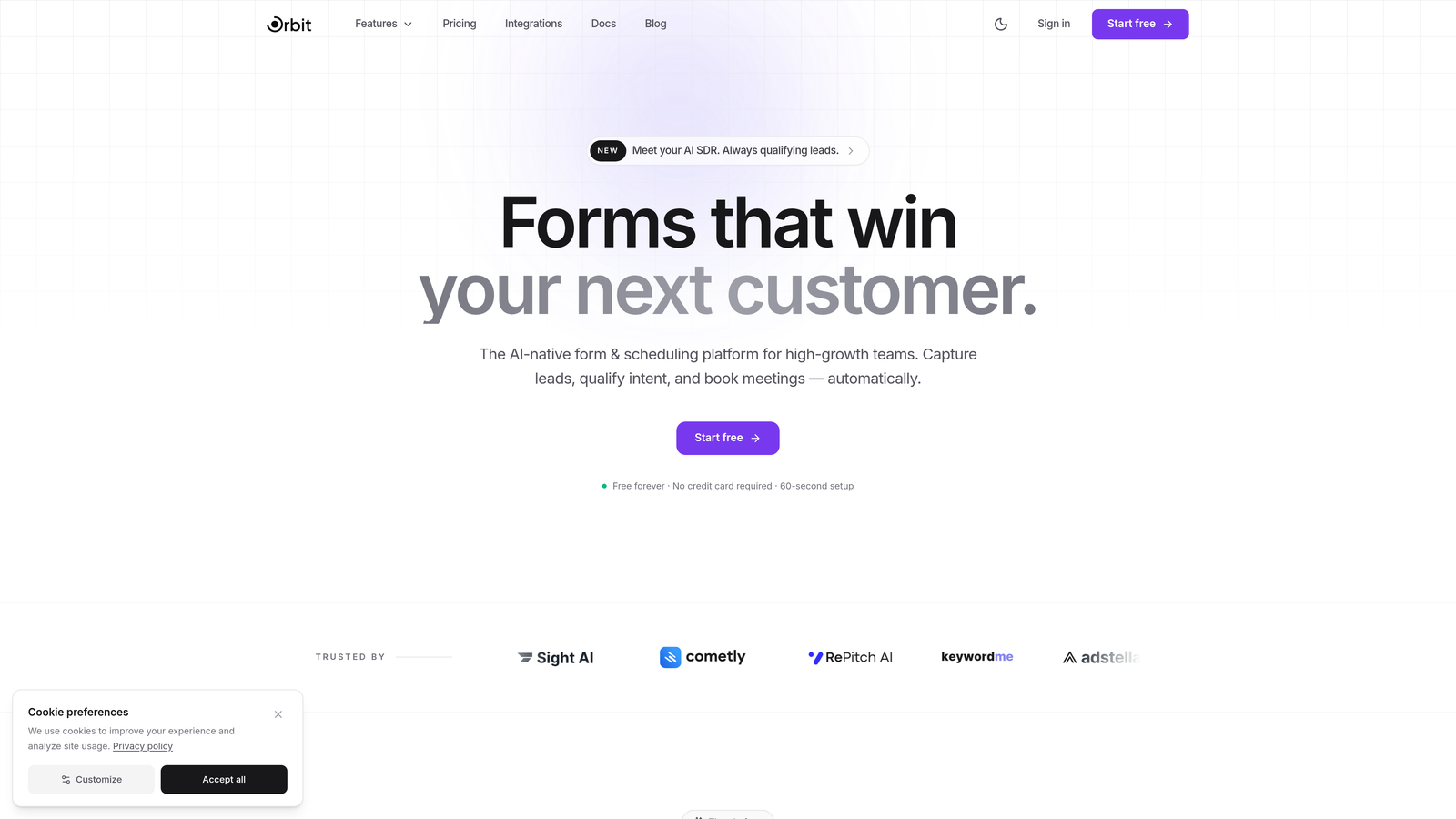
Orbit AI is an AI-powered form builder that qualifies and scores leads in real time, so your sales team receives prioritized, high-intent prospects rather than a raw, unfiltered list.
Where This Tool Shines
Most lead scoring happens retroactively — a lead enters your CRM, and scoring logic runs afterward. Orbit AI flips that model. By embedding qualification intelligence directly into the form interaction, it scores leads the moment they engage, based on their responses, behavior during the form session, and fit against your ideal customer profile.
For high-growth SaaS teams, this means sales reps open their CRM to a prioritized queue rather than a pile of raw submissions. It also means your conversion-optimized forms are doing double duty: capturing leads and qualifying them simultaneously.
Key Features
AI-Driven Lead Qualification: Scoring logic is embedded directly into form interactions, not applied as an afterthought in your CRM.
Real-Time Scoring: Leads are scored instantly based on responses, engagement behavior, and fit criteria you define.
Conversion-Optimized Form Design: Forms are built to maximize submission rates, so you're scoring more of the right traffic, not less of it.
Seamless CRM Integrations: Scored leads pass to your sales team instantly, with context attached, so no manual triage is needed.
Built for SaaS Growth Teams: The platform is designed around the workflows and stack integrations that SaaS teams actually use.
Best For
SaaS companies that want to move lead qualification upstream — closer to the point of first contact. Ideal for growth teams running high-volume inbound who need their forms to do more than just collect email addresses.
Pricing
Visit orbitforms.ai for current pricing plans. A 7-day free trial gets you started.
2. HubSpot Lead Scoring
Best for: Teams already running on HubSpot who want scoring built into their existing CRM and marketing workflows.
HubSpot Lead Scoring is a native predictive and manual scoring system built directly into HubSpot's CRM and Marketing Hub, using your existing contact data to surface the best leads.
Where This Tool Shines
If your team already lives in HubSpot, adding lead scoring requires no new tools, no new integrations, and no new data pipelines. HubSpot's predictive scoring uses machine learning trained on your actual CRM data to identify which contacts are most likely to close — and it updates continuously as new conversion data comes in.
The manual scoring layer gives you full control to layer in custom criteria: job title, company size, page visits, email engagement, form submissions. Combine both for a scoring model that balances data-driven prediction with your team's institutional knowledge.
Key Features
Predictive Lead Scoring: Machine learning models trained on your own CRM conversion history, not generic benchmarks.
Custom Rule-Based Criteria: Flexible manual scoring to capture signals your ML model might miss.
Workflow Automation: Trigger automated follow-up sequences, alerts, or task assignments when leads hit score thresholds.
Contact and Company-Level Scoring: Score individual contacts and the accounts they belong to, useful for ABM motions.
Score-Based Segmentation: Build lists and reports filtered by score for targeted campaigns and sales prioritization.
Best For
HubSpot-native teams at the mid-market level who want scoring without adding another tool to their stack. Works best when you already have meaningful CRM data for the predictive model to learn from.
Pricing
Included in Marketing Hub Professional at $800/month and Enterprise plans. Manual scoring is available on lower tiers.
3. Salesforce Einstein Lead Scoring
Best for: Enterprise SaaS teams running Salesforce who need AI-powered scoring that works natively within their existing CRM infrastructure.
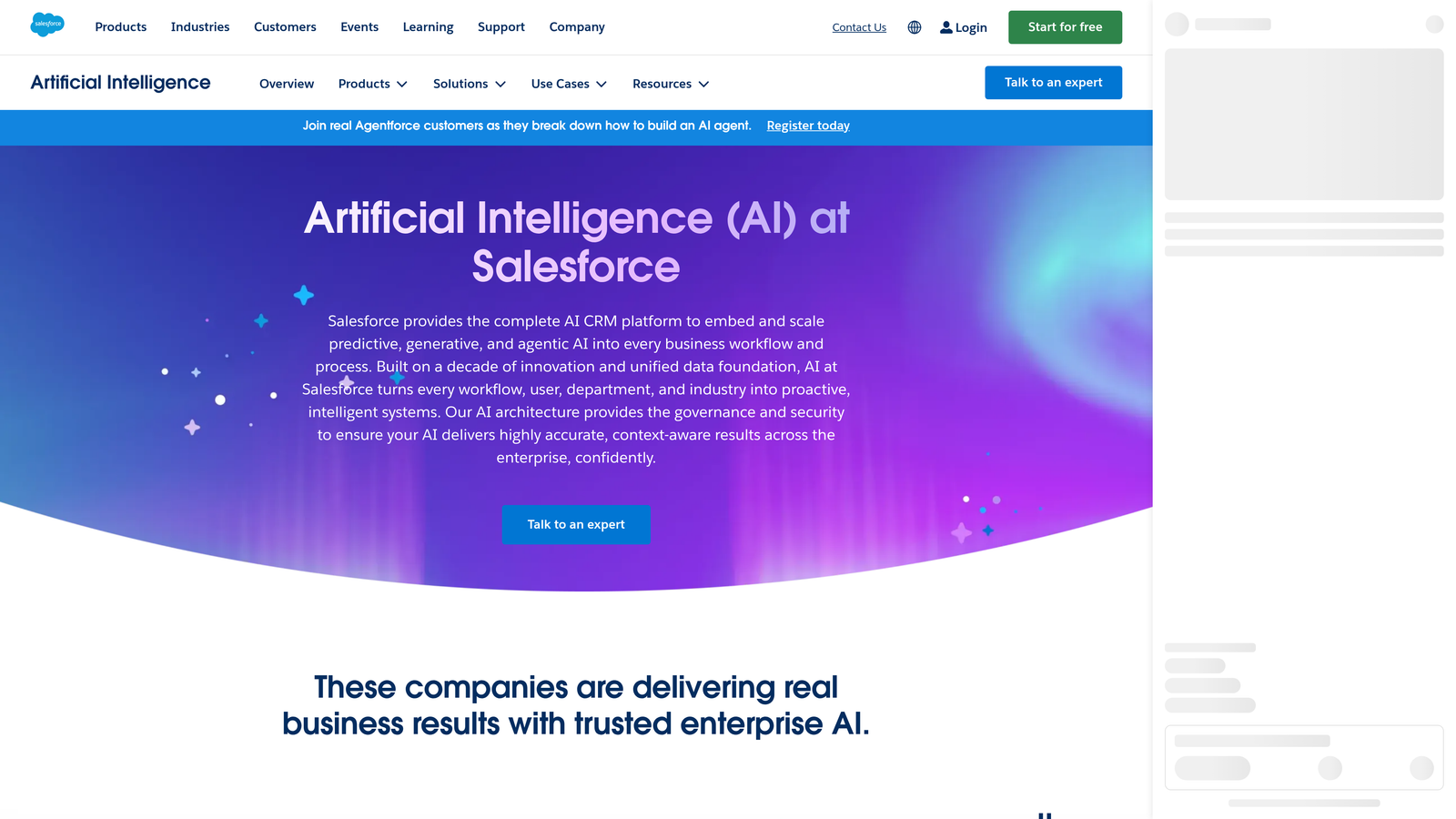
Salesforce Einstein Lead Scoring is an AI-powered scoring layer within Salesforce that analyzes your historical conversion patterns to predict which leads are most likely to close.
Where This Tool Shines
Einstein's key advantage is that it learns from your Salesforce data specifically — not industry averages or generic models. It identifies which lead characteristics and behaviors have historically correlated with closed deals in your pipeline, then surfaces those patterns to score new leads accordingly.
Crucially, Einstein provides transparency into why a lead scores high, giving reps context they can actually act on rather than a black-box number they don't trust.
Key Features
Conversion History Modeling: ML models trained exclusively on your Salesforce data for company-specific accuracy.
Transparent Scoring Factors: Reps can see which signals are driving a lead's score, building trust in the system.
Automatic Model Retraining: The model updates as new conversion data flows in, staying accurate over time.
Native Salesforce Integration: No third-party connectors, no data syncing headaches — scoring lives inside your existing CRM.
Workflow Compatibility: Works alongside existing Salesforce automation rules, reports, and dashboards.
Best For
Enterprise SaaS teams with large Salesforce datasets and complex sales motions. The more historical conversion data you have, the more accurate Einstein's models become.
Pricing
Included in Salesforce Sales Cloud Einstein as an add-on or in the Unlimited Edition. Contact Salesforce for current pricing.
4. MadKudu
Best for: Product-led growth SaaS companies that need to combine in-product behavior signals with firmographic data for PQL scoring.
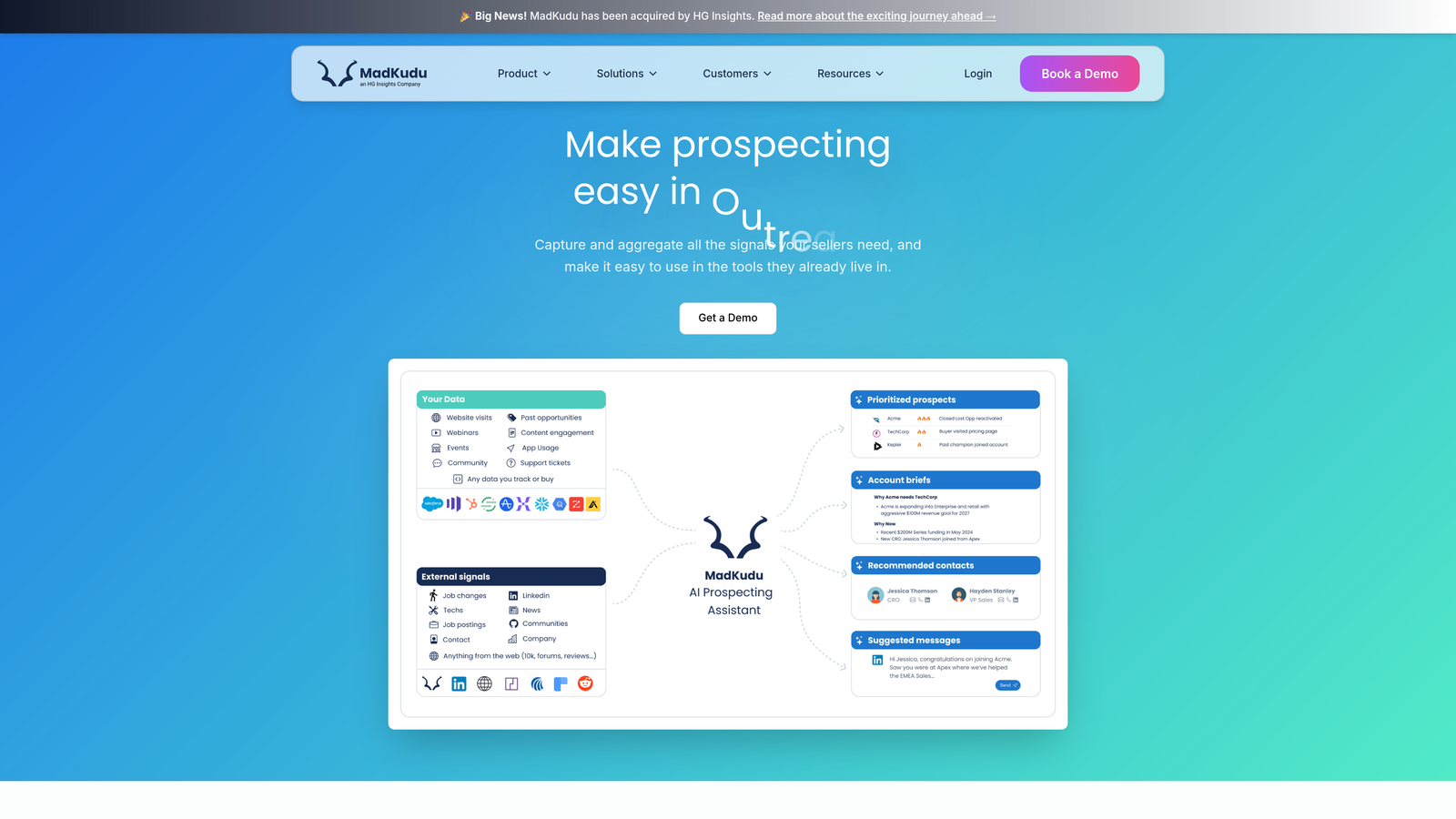
MadKudu is a lead scoring platform purpose-built for PLG SaaS companies, blending in-app usage data with firmographic and technographic enrichment to identify product-qualified leads.
Where This Tool Shines
Most scoring platforms are built around marketing engagement signals: email opens, page views, form fills. MadKudu goes deeper by pulling in what users actually do inside your product. A free user who has invited three teammates and hit a key activation milestone is a very different lead than one who signed up and never logged in again — and MadKudu knows the difference.
This makes it particularly powerful for PLG motions where product usage is the strongest buying signal you have. Pre-built models for common PLG conversion patterns mean you're not starting from scratch.
Key Features
Product-Qualified Lead (PQL) Scoring: Scores based on actual in-app usage data, not just marketing touchpoints.
Firmographic and Technographic Enrichment: Combines usage signals with company-level fit data for a complete picture.
Broad Integration Support: Connects with Segment, Amplitude, Salesforce, and HubSpot out of the box.
Pre-Built PLG Models: Ready-made scoring frameworks for common product-led growth conversion patterns.
Real-Time API Access: Scoring is accessible via API for embedding into custom workflows and internal tools.
Best For
PLG SaaS companies with meaningful product usage data and a self-serve funnel. If your best leads are the ones actively using your product, MadKudu is built for exactly that use case.
Pricing
Custom pricing targeted at mid-market and above. Contact MadKudu directly for a quote based on your data volume and use case.
5. Clearbit (now part of HubSpot)
Best for: Teams that want to enrich and score leads based on firmographic, technographic, and intent data rather than just behavioral signals.
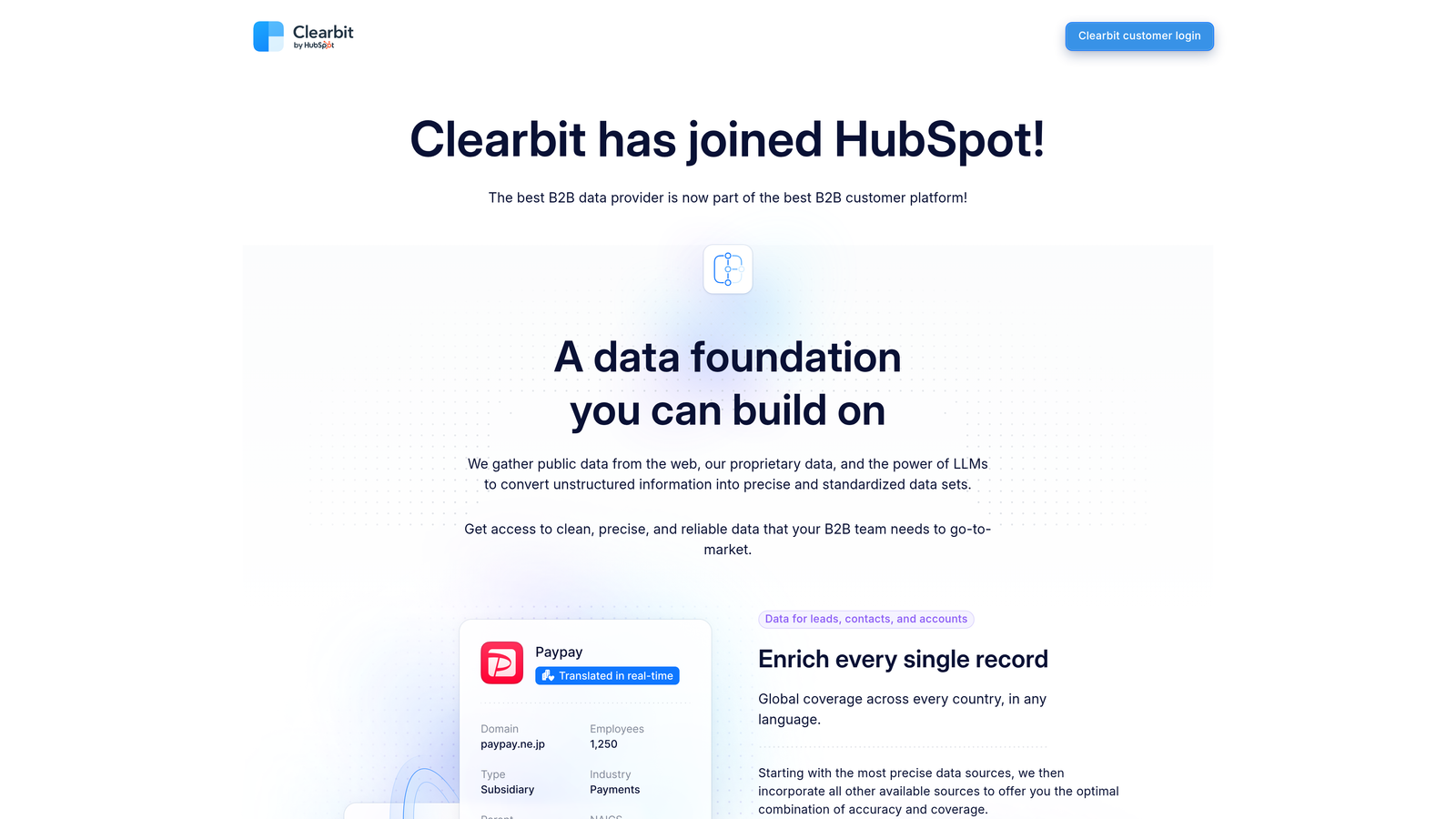
Clearbit is a data enrichment platform that powers lead scoring by appending rich company and contact attributes to every lead in real time, giving your scoring models far more signal to work with.
Where This Tool Shines
Clearbit's core value is data density. When a lead submits a form with just their email address, Clearbit can instantly append their company size, industry, funding stage, technology stack, and more — turning a thin lead record into a rich scoring input. This is particularly valuable for SaaS companies with tight ICP definitions.
The Reveal feature goes further, identifying anonymous website visitors by company and scoring them against your ICP before they've even raised their hand.
Key Features
Real-Time Enrichment: Appends 100+ data attributes per company and contact at the moment of lead capture.
Anonymous Visitor Identification: Reveal identifies companies visiting your site and scores them by ICP fit.
ICP-Based Fit Scoring: Score leads against your ideal customer profile using industry, employee count, tech stack, and funding signals.
Native HubSpot Integration: Fully integrated into HubSpot since the 2023 acquisition, with streamlined data flow.
API Access: Feed enrichment data into custom scoring models or third-party platforms.
Best For
SaaS teams with a clearly defined ICP who want to score leads on fit data rather than relying solely on engagement behavior. Pairs exceptionally well with HubSpot's scoring layer.
Pricing
A free tier is available. Paid plans vary and are increasingly integrated into HubSpot plans. Contact HubSpot or Clearbit for current standalone pricing.
6. ActiveCampaign
Best for: Small to mid-size SaaS teams that want lead scoring bundled into their marketing automation platform without a separate CRM.
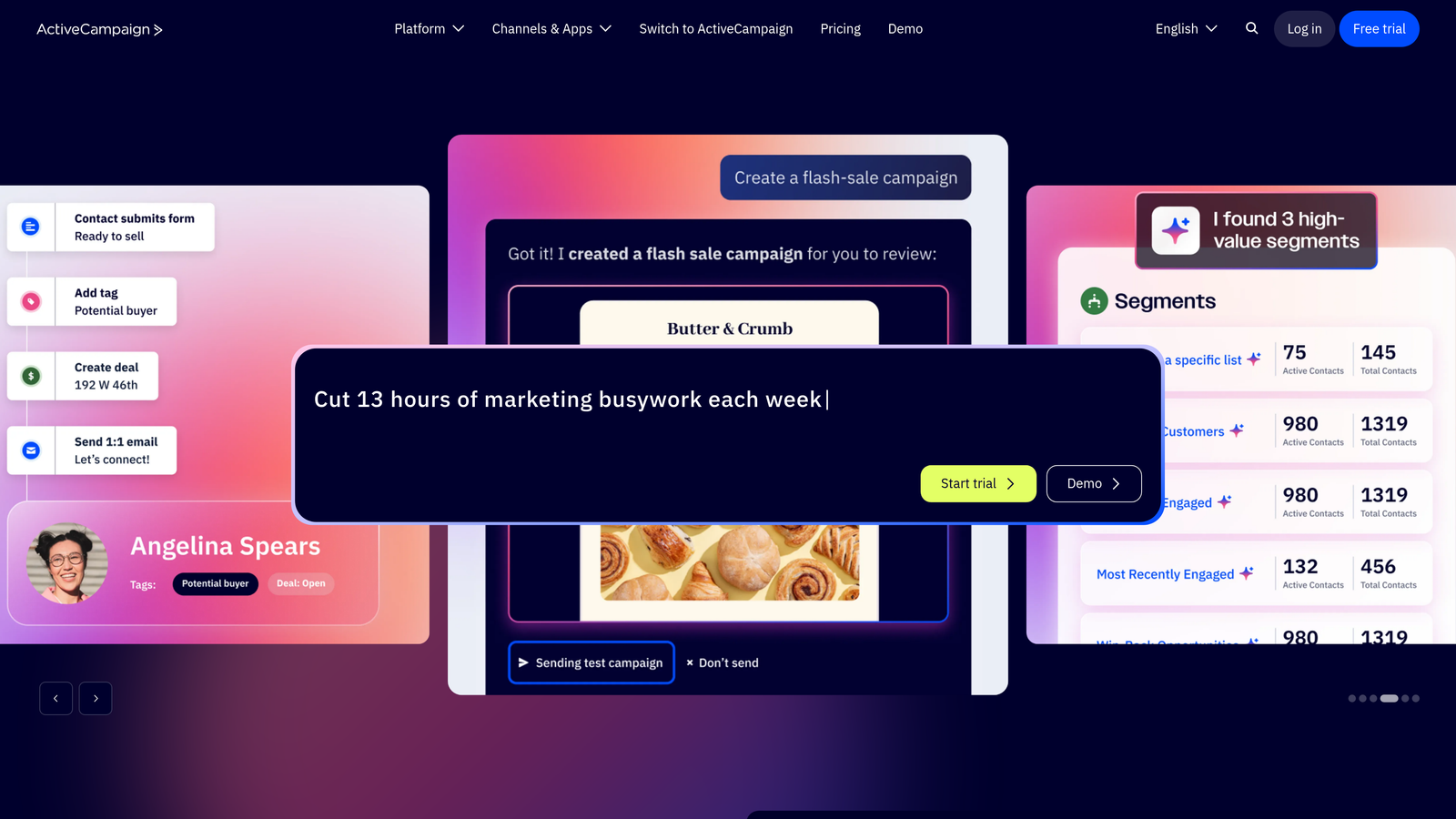
ActiveCampaign is a marketing automation platform with built-in contact and lead scoring tied to email engagement, site behavior, and custom events.
Where This Tool Shines
ActiveCampaign's scoring is tightly woven into its automation engine. When a lead hits a score threshold, you can trigger an email sequence, notify a sales rep, move them to a different pipeline stage, or all three — without any manual intervention. For smaller SaaS teams that need scoring without enterprise-level complexity or price tags, this is a compelling combination.
The included CRM means you're not stitching together multiple tools. Scoring, automation, and pipeline management live in one place.
Key Features
Behavior-Based Scoring: Score contacts based on email opens, link clicks, site visits, and custom event triggers.
Deal Scoring: Score active pipeline deals, not just contacts, for better sales prioritization.
Threshold-Based Automation: Automatically trigger actions when leads reach defined score levels.
Built-In CRM: No separate CRM required — contacts, scores, and pipeline are managed in one platform.
Automation Recipes: Pre-built automation templates that incorporate scoring logic to speed up setup.
Best For
Early-stage and mid-size SaaS teams that need an affordable, all-in-one marketing automation and scoring solution without the overhead of enterprise platforms.
Pricing
Lead scoring is available on the Plus plan, which starts at around $49/month. Pricing scales with contact list size.
7. Breadcrumbs
Best for: Revenue teams that want to build, test, and iterate on scoring models collaboratively without depending on engineering resources.
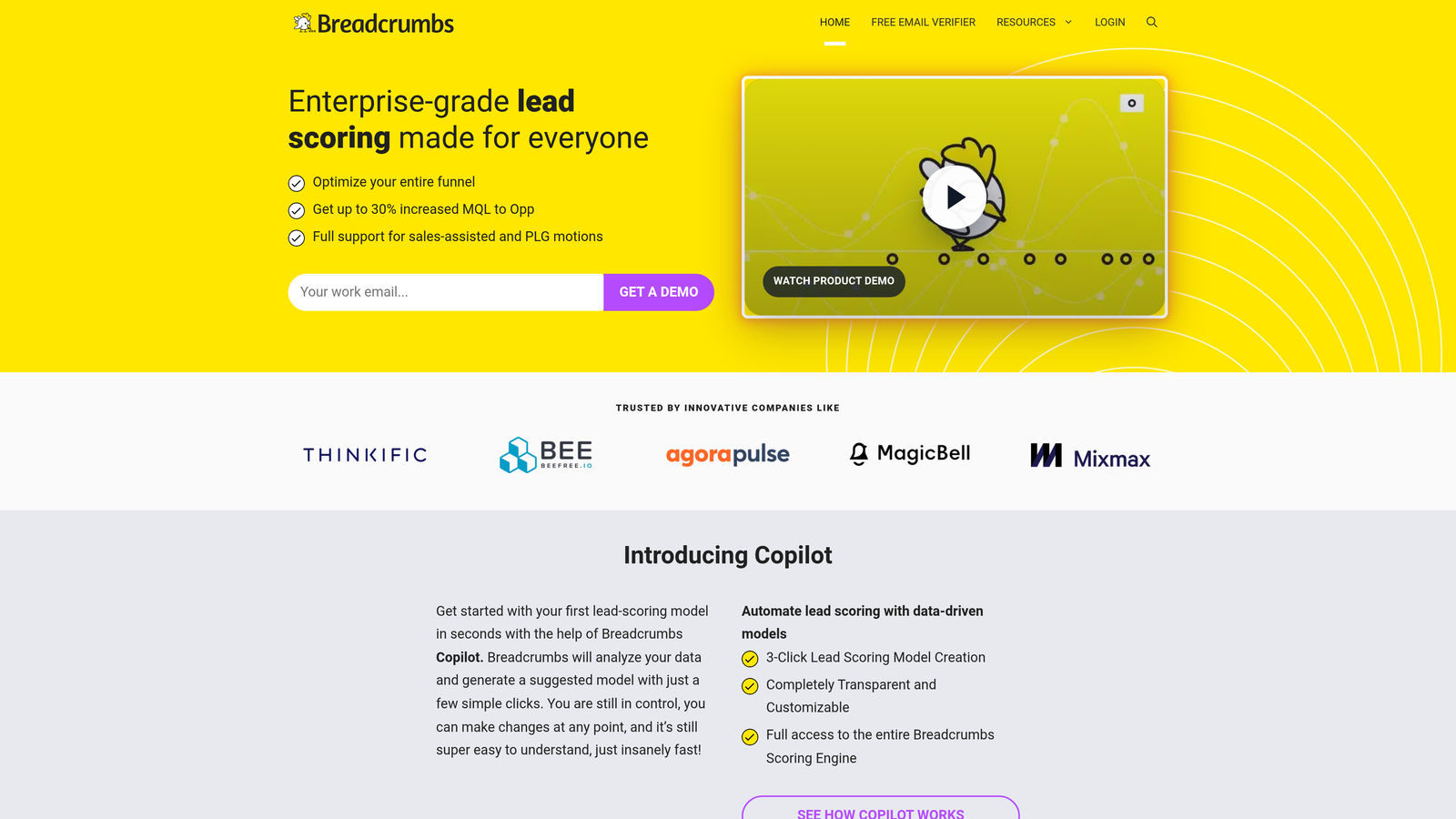
Breadcrumbs is a no-code, collaborative lead scoring platform that lets marketing and sales teams build sophisticated scoring models and refine them over time without writing a single line of code.
Where This Tool Shines
Breadcrumbs introduces a concept it calls co-dynamic scoring, which combines a fit model (who the lead is) with an activity model (what they've done) to produce a more complete picture of lead quality. The no-code builder means both marketing and sales can contribute to and iterate on the scoring model, reducing the "scoring as a black box" problem that often creates friction between teams.
Scoring decay is a standout feature: leads that go cold automatically lose score over time, keeping your prioritization list fresh and accurate without manual maintenance.
Key Features
Co-Dynamic Scoring: Combines fit and activity dimensions into a single, unified lead score.
No-Code Model Builder: Marketing and sales can build and adjust scoring models without engineering support.
Scoring Decay: Scores automatically decrease for leads that disengage, keeping the priority queue current.
A/B Testing for Models: Test different scoring approaches against each other to find what actually predicts conversion.
Broad Integrations: Connects with HubSpot, Salesforce, Intercom, and Segment.
Best For
SaaS revenue teams that want full ownership over their scoring model and the ability to experiment without engineering bottlenecks. Particularly useful when marketing and sales are actively collaborating on pipeline quality.
Pricing
A free tier is available. Paid plans start at $99/month, making it accessible for growing teams.
8. LeanData
Best for: Enterprise SaaS companies with complex account-based sales motions that need scoring paired with intelligent lead routing and matching.
LeanData is a lead management platform that combines scoring with lead-to-account matching and sophisticated routing logic, designed for B2B SaaS teams where getting the right lead to the right rep quickly is as important as knowing which leads are hot.
Where This Tool Shines
Scoring a lead is only half the battle — the other half is making sure it reaches the right sales rep at the right time. LeanData solves both problems simultaneously. Its visual routing flowcharts let you build complex assignment logic based on territory, account ownership, score thresholds, and rep availability, without writing custom code.
For ABM-focused SaaS teams, lead-to-account matching ensures that a new lead from a target account is immediately connected to the right account record and routed to the correct rep, not lost in a general queue.
Key Features
Lead-to-Account Matching: Automatically associates new leads with existing account records for accurate account-based scoring.
Visual Routing Flowcharts: Build complex lead assignment logic with a drag-and-drop interface.
Score-Based Distribution: Route leads using round-robin or weighted assignment rules tied to lead scores.
Native Salesforce Integration: Built to operate within Salesforce, not alongside it.
Speed-to-Lead Reporting: Track how quickly scored leads are being contacted and identify routing bottlenecks.
Best For
Mid-market to enterprise SaaS companies with account-based sales motions, large sales teams, and complex territory structures where routing accuracy directly impacts revenue.
Pricing
Custom pricing targeted at mid-market and enterprise. Contact LeanData for a quote based on team size and routing complexity.
9. Zoho CRM Lead Scoring
Best for: Budget-conscious SaaS teams that want solid lead scoring capabilities without paying enterprise-level prices.
Zoho CRM offers built-in lead scoring with both rule-based and AI-powered (Zia) scoring, delivering meaningful functionality at a price point that smaller SaaS teams can actually afford.
Where This Tool Shines
Zoho's Zia AI assistant adds a layer of predictive intelligence on top of traditional rule-based scoring, analyzing patterns in your CRM data to forecast conversion likelihood. For teams that aren't ready to invest in a dedicated scoring platform, having this capability built into their CRM at no extra per-feature cost is a significant advantage.
Negative scoring is particularly useful for SaaS qualification: automatically deprioritize leads from industries you don't serve, companies too small to convert, or contacts who've gone silent for extended periods.
Key Features
Rule-Based Scoring: Define custom scoring criteria across any field, activity, or interaction in your CRM.
Zia AI Predictions: AI-powered conversion likelihood scores layered on top of manual rules.
Multi-Touchpoint Scoring: Score across email interactions, calls, social engagement, and web activity.
Negative Scoring: Automatically reduce scores for disqualifying signals, keeping your priority list clean.
Affordable Entry Point: Scoring functionality included at a price point well below most dedicated platforms.
Best For
Early-stage or cost-conscious SaaS teams that want reliable lead scoring built into their CRM without the overhead of enterprise platforms or standalone scoring tools.
Pricing
Lead scoring is available from the Enterprise plan at $40 per user per month, billed annually.
Which Lead Scoring Tool Is Right for Your SaaS Team?
The right choice depends almost entirely on where you are in your growth journey and how your current stack is built.
If you want to qualify leads before they ever reach your CRM, Orbit AI is the natural starting point. It moves scoring upstream to the form interaction itself, so your sales team opens their queue to pre-qualified, prioritized prospects rather than raw submissions. For teams focused on conversion optimization and high-growth inbound, this is a meaningful shift in how qualification works.
For product-led growth SaaS companies where in-app behavior is the strongest buying signal, MadKudu is the purpose-built choice. It understands PLG conversion patterns in a way that general-purpose tools simply don't.
HubSpot Lead Scoring paired with Clearbit enrichment is the go-to combination for teams already invested in the HubSpot ecosystem. You get predictive ML scoring, rich firmographic data, and tight workflow integration without adding new vendors.
For enterprise SaaS teams on Salesforce, Einstein Lead Scoring offers the deepest CRM-native intelligence, while LeanData adds the routing layer that large sales organizations need to act on scored leads at scale.
If budget is a constraint, Zoho CRM and ActiveCampaign both deliver solid scoring functionality at accessible price points — without forcing you to choose between scoring and other essential tools.
As AI-driven scoring becomes standard across the SaaS landscape, the teams that win will be those who qualify leads earlier, score them more accurately, and route them faster. Understanding lead scoring best practices and exploring automated lead scoring approaches will help you get more from whichever platform you choose.
Ready to move qualification upstream? Start your free trial today and see how intelligent form design can transform your lead generation from a volume game into a precision one.


