

Not every form submission is worth the same. A contact form filled out by a Fortune 500 VP means something very different from one submitted by a student doing research — yet without lead scoring, both land in your CRM with equal weight, waiting for someone to manually sort through them.
Lead scoring software for forms helps you automatically rank, qualify, and prioritize incoming leads based on the data they submit. The right tool routes high-intent prospects to sales instantly, nurtures mid-tier leads automatically, and filters out poor fits before they waste anyone's time.
This list covers the top tools for scoring leads directly from forms — whether you're building smarter intake forms, layering scoring onto existing workflows, or looking for an all-in-one platform that handles both form creation and qualification. Tools are evaluated on scoring flexibility, form-native capabilities, CRM integrations, and ease of setup for non-technical teams.
1. Orbit AI
Best for: High-growth SaaS teams wanting AI-powered lead qualification built directly into their forms
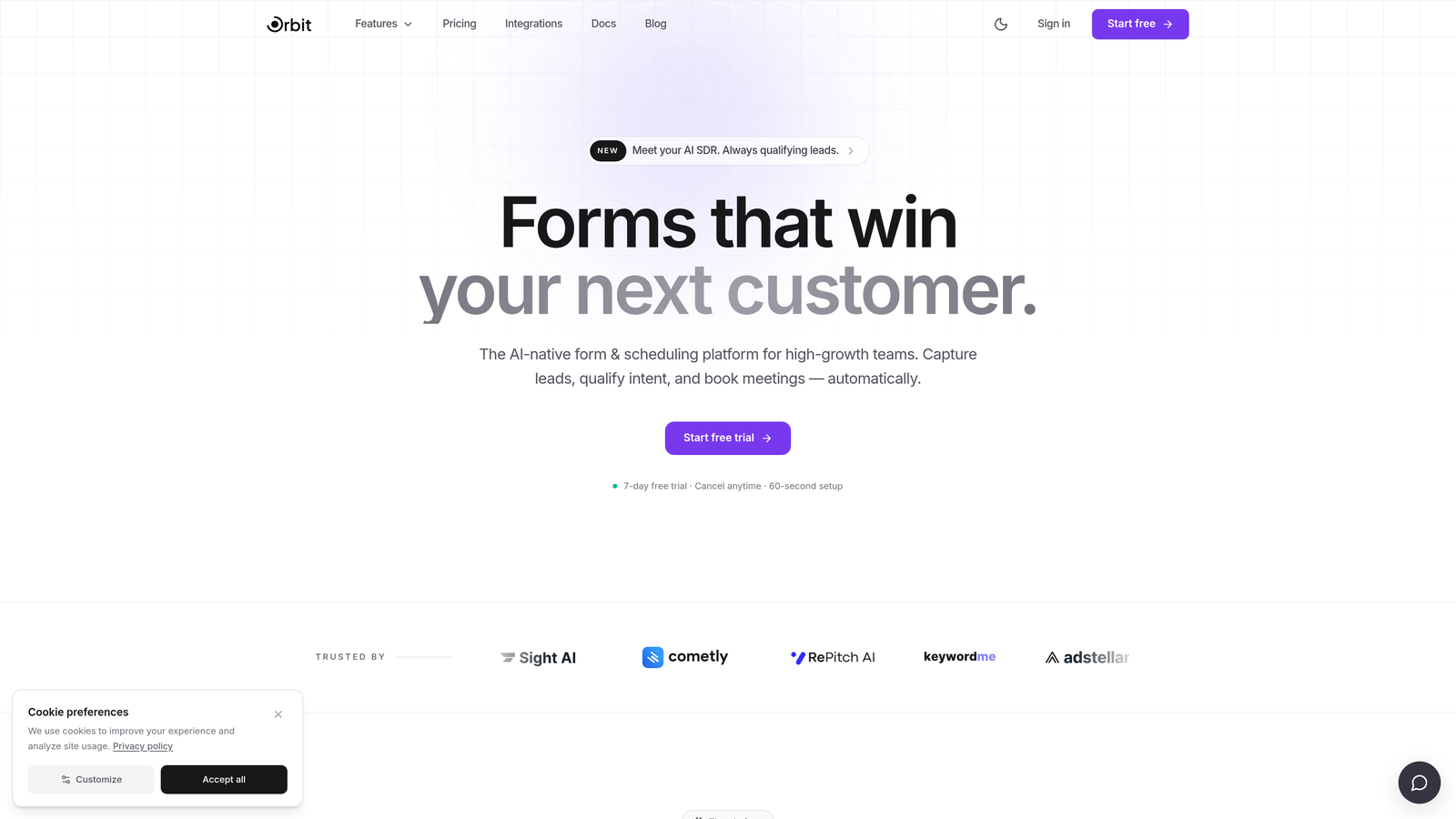
Orbit AI is an AI-powered form builder with built-in lead qualification and real-time scoring designed for conversion-focused teams.
Where This Tool Shines
Most lead scoring tools sit downstream from your forms — they receive submission data and score it inside your CRM or MAP after the fact. Orbit AI takes a fundamentally different approach: scoring happens at the point of data capture, in real time, as the form is being completed. For teams that want immediate routing decisions without waiting for data to travel through multiple systems, this architectural difference matters.
The platform is built specifically for lead generation use cases, which means the form design, conditional logic, and qualification layer all work together rather than being bolted on separately. You get conversion-optimized forms and intelligent scoring without needing a separate marketing automation tool to bridge the gap.
Key Features
AI-Powered Lead Qualification: Scores submissions in real time based on the data respondents enter, so high-intent leads are identified the moment they hit submit.
Conversion-Optimized Form Design: Beautiful, modern form templates built with lead generation in mind — not generic data collection.
Conditional Logic Routing: High-scoring leads can be automatically routed to sales, a booking page, or a priority follow-up sequence based on their score.
No Additional MAP Required: Qualification and scoring are native to the platform, reducing the number of tools and integrations your team needs to manage.
Built for Non-Technical Teams: Setup doesn't require a marketing ops specialist or developer — the interface is designed for growth and marketing teams to own independently.
Best For
High-growth SaaS and B2B teams who want scoring to happen at the form level, not as an afterthought in the CRM. Particularly valuable for teams without dedicated marketing ops resources who still want sophisticated qualification logic.
Pricing
Visit orbitforms.ai for current pricing details, as plans are updated regularly.
2. HubSpot Marketing Hub
Best for: Teams already using HubSpot CRM who want scoring tied to behavioral signals and form data
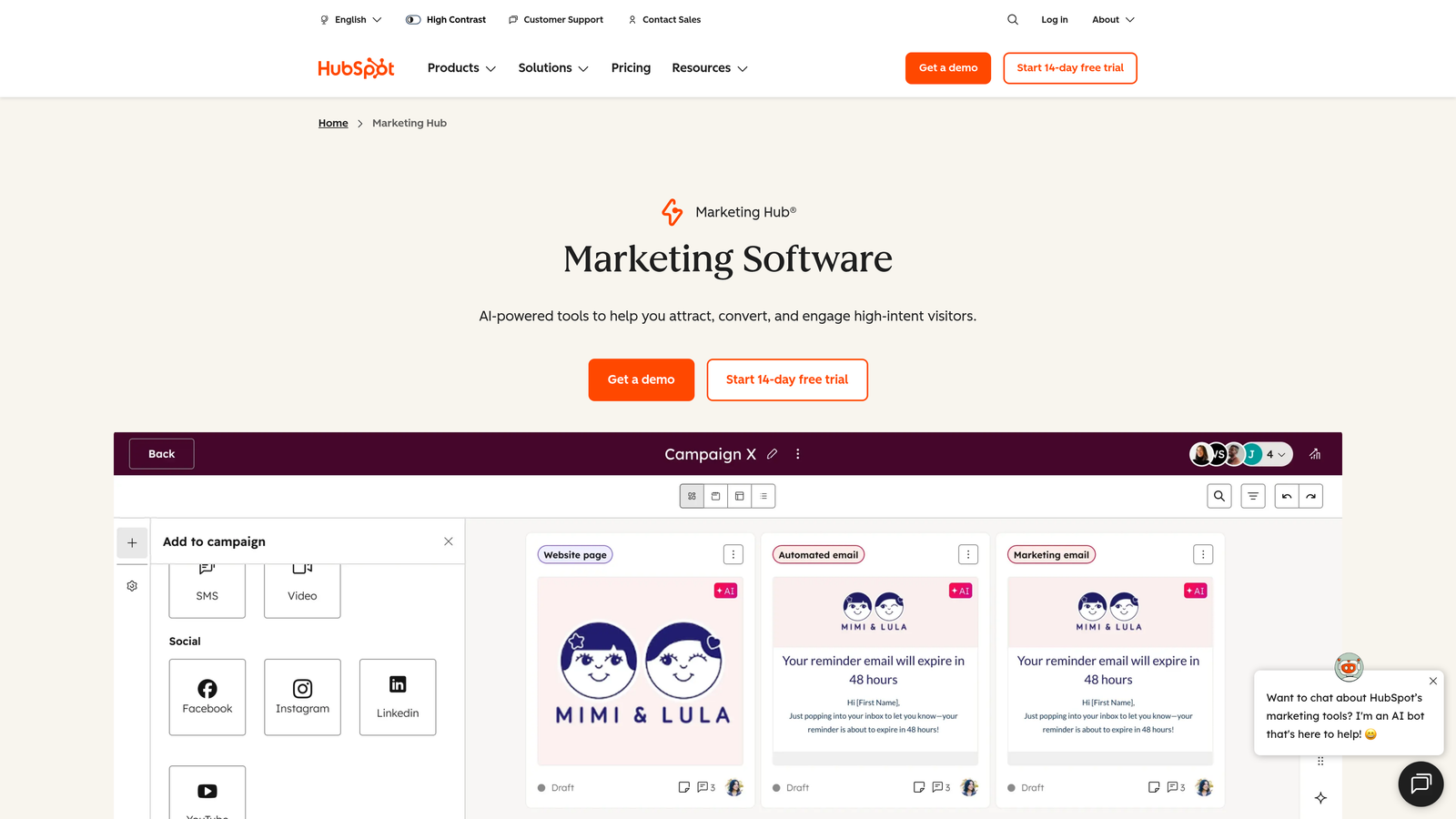
HubSpot Marketing Hub is a full marketing automation platform with contact-based lead scoring that factors in form submissions, email engagement, and site behavior.
Where This Tool Shines
HubSpot's scoring strength comes from its breadth of data. Because it tracks form fills, email opens, page visits, and CRM activity all in one place, your lead scores reflect a genuinely holistic picture of prospect engagement — not just a single touchpoint. For teams already running their CRM in HubSpot, this is a natural extension rather than a new tool to learn.
The platform offers both rule-based scoring (where you define point values for specific actions) and predictive scoring on Enterprise tiers, which uses machine learning to identify patterns in your best customers and apply them automatically.
Key Features
Rule-Based and Predictive Scoring: Choose manual scoring rules or let HubSpot's predictive model identify high-quality leads based on historical data.
Multi-Signal Scoring: Incorporates form submissions, email engagement, and website behavior into a single contact score.
Native HubSpot Forms: Form submissions feed directly into the scoring engine without any integration work.
Automated Follow-Up Workflows: Score thresholds can trigger lead rotation, sales notifications, or nurture sequences automatically.
Predictive Scoring on Enterprise: Available on the highest tier for teams with enough historical data to train the model effectively.
Best For
Mid-market and enterprise teams already invested in the HubSpot ecosystem. Less compelling as a standalone scoring tool if you're not using HubSpot CRM, given the pricing tier required to access scoring features.
Pricing
Professional starts at $800/month; Enterprise at $3,600/month. Scoring features are not available on Starter plans.
3. Marketo Engage
Best for: Enterprise marketing ops teams needing highly configurable, multi-dimensional scoring engines
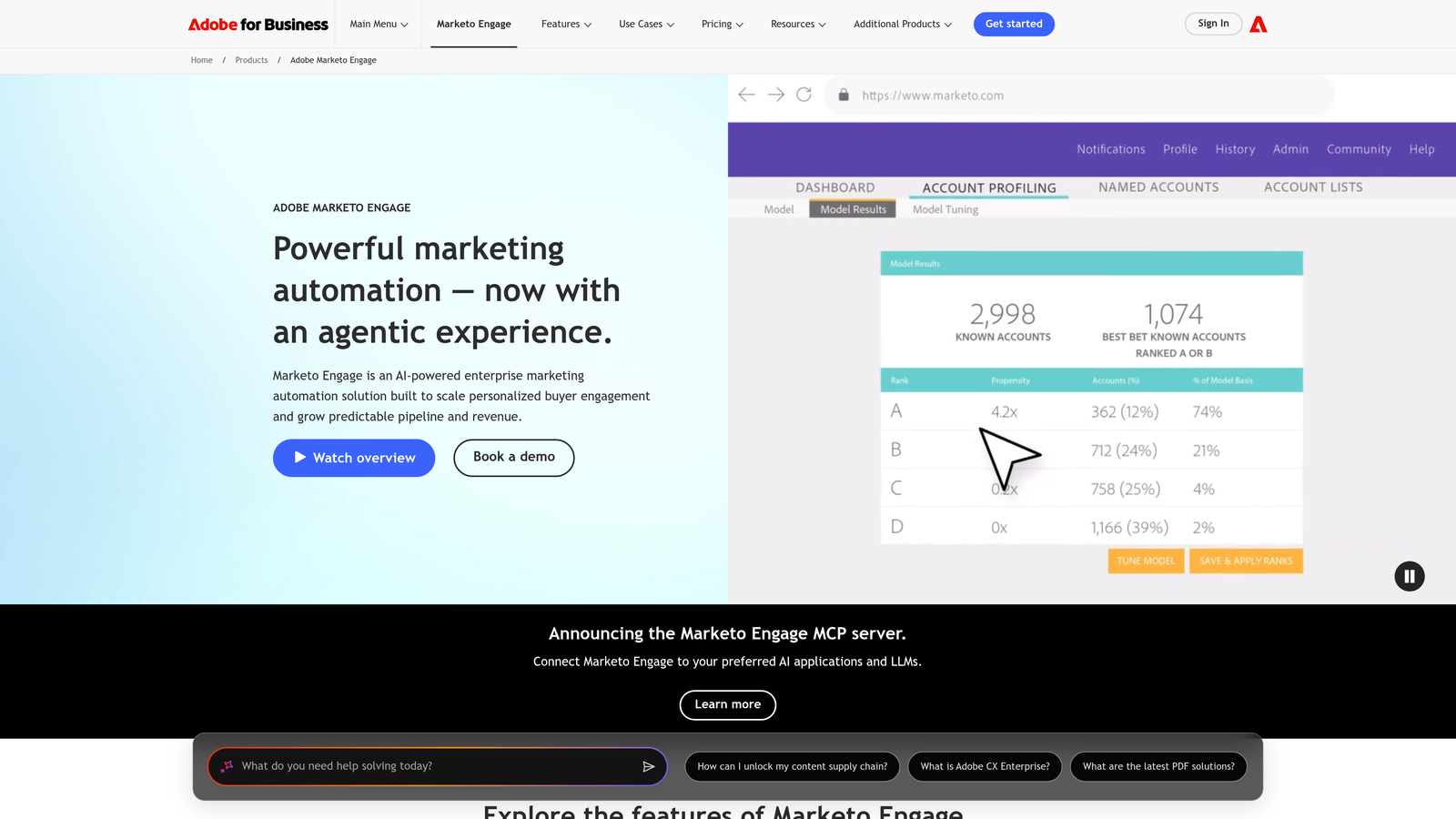
Marketo Engage is Adobe's enterprise marketing automation platform with one of the most configurable lead scoring engines available.
Where This Tool Shines
Marketo's scoring engine is genuinely powerful. It supports demographic scoring (based on firmographic data captured in forms, like job title or company size) and behavioral scoring (based on actions like email clicks or page visits) running simultaneously, with separate score fields for each. This lets sales teams see not just how engaged a prospect is, but how well they match your ideal customer profile.
Scoring decay rules are a standout feature: scores automatically decrease over time if a prospect goes quiet, keeping your database clean and preventing stale leads from clogging your pipeline. For large organizations with complex scoring models, this level of configurability is difficult to match.
Key Features
Multi-Dimensional Scoring: Separate demographic and behavioral score fields give a complete picture of lead quality and engagement.
Scoring Decay Rules: Scores automatically decrease when prospects become inactive, maintaining score accuracy over time.
Marketo Forms 2.0 with Progressive Profiling: Forms reveal new fields on return visits, gradually building richer lead profiles without overwhelming first-time visitors.
Advanced Segmentation: Dynamic lists update automatically when leads cross score thresholds, enabling precise targeting.
Deep CRM Integration: Native sync with Salesforce and Microsoft Dynamics for enterprise sales workflows.
Best For
Enterprise organizations with dedicated marketing operations staff. The learning curve and pricing make it impractical for smaller teams, but for complex B2B environments with high lead volumes, it's a category leader.
Pricing
Custom enterprise pricing. Contact Marketo directly for a quote — costs typically scale with database size and feature tier.
4. ActiveCampaign
Best for: SMBs wanting lead scoring integrated with email automation and CRM at an accessible price point
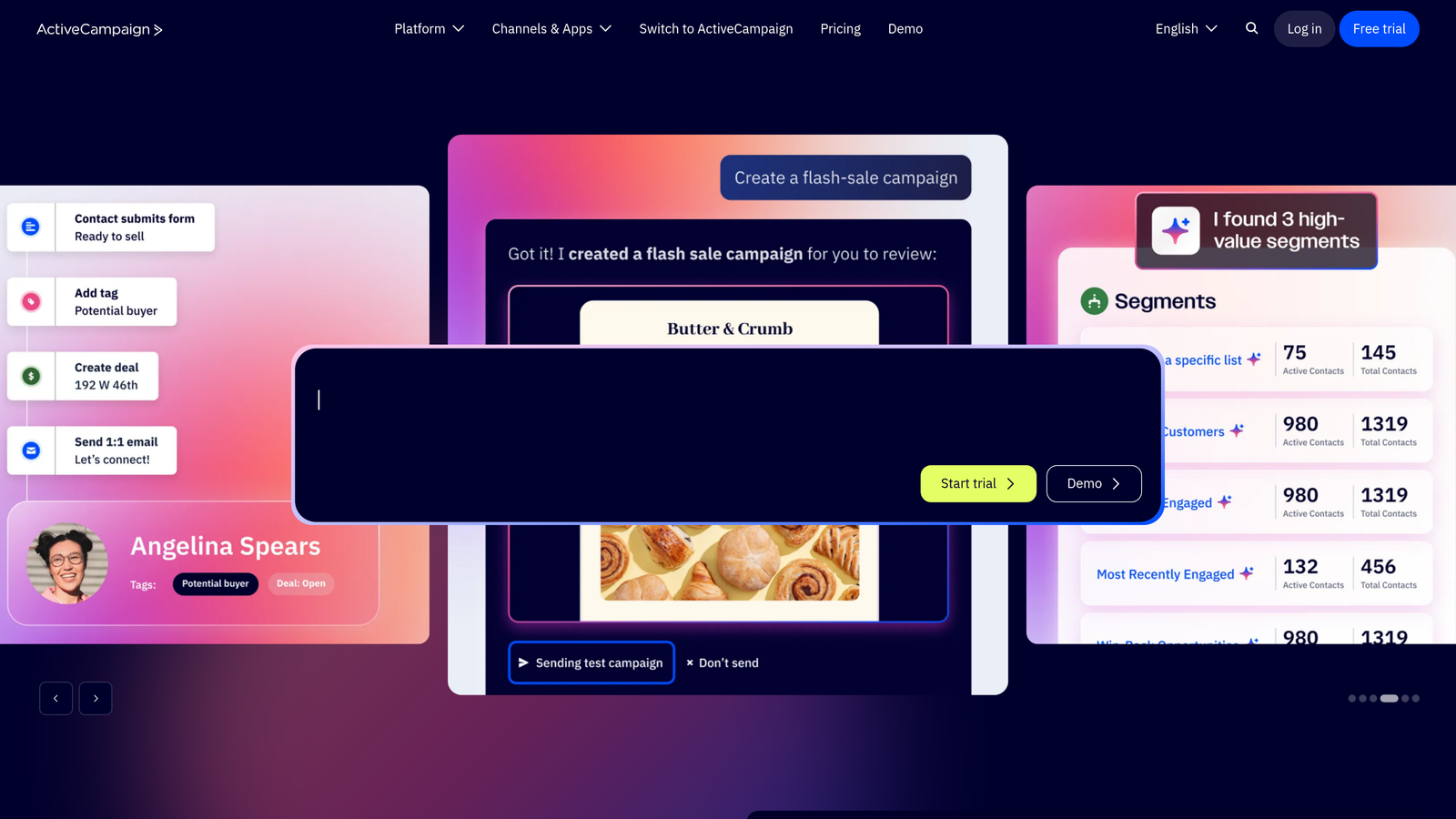
ActiveCampaign is a marketing automation and CRM platform built for SMBs, with lead scoring triggered by form submissions, email engagement, and custom events.
Where This Tool Shines
ActiveCampaign hits a sweet spot between accessibility and capability. Its scoring model can incorporate form fills, email clicks, site visits, and custom event data — giving you a multi-signal score without the enterprise complexity or price tag of Marketo or Pardot. Score thresholds can trigger automation directly, so when a lead crosses a defined score, a sales task gets created, a notification fires, or a nurture sequence kicks off.
The built-in CRM includes deal scoring alongside contact scoring, which is useful for teams managing both marketing-qualified and sales-qualified lead stages in the same platform.
Key Features
Multi-Trigger Scoring: Scores update based on form fills, email engagement, website visits, and custom events from your product or app.
Automation Based on Score Thresholds: Define score cutoffs that trigger sales alerts, task creation, or pipeline movement automatically.
Built-In CRM with Deal Scoring: Manage contact and deal scoring together in one platform without a separate CRM integration.
Native Form Builder: Includes conditional logic for smarter data capture that feeds directly into the scoring engine.
900+ Integrations: Connects with most popular tools via native integrations, reducing the need for Zapier workarounds.
Best For
SMBs and growing teams that want genuine scoring sophistication without enterprise pricing. Also a strong choice for teams that want email marketing, CRM, and lead scoring in a single subscription.
Pricing
Marketing and CRM plans start at $49/month, with pricing scaling by contact count. Lead scoring is available on higher tiers.
5. Typeform + Zapier
Best for: Teams wanting high-completion conversational forms with flexible routing to external scoring tools
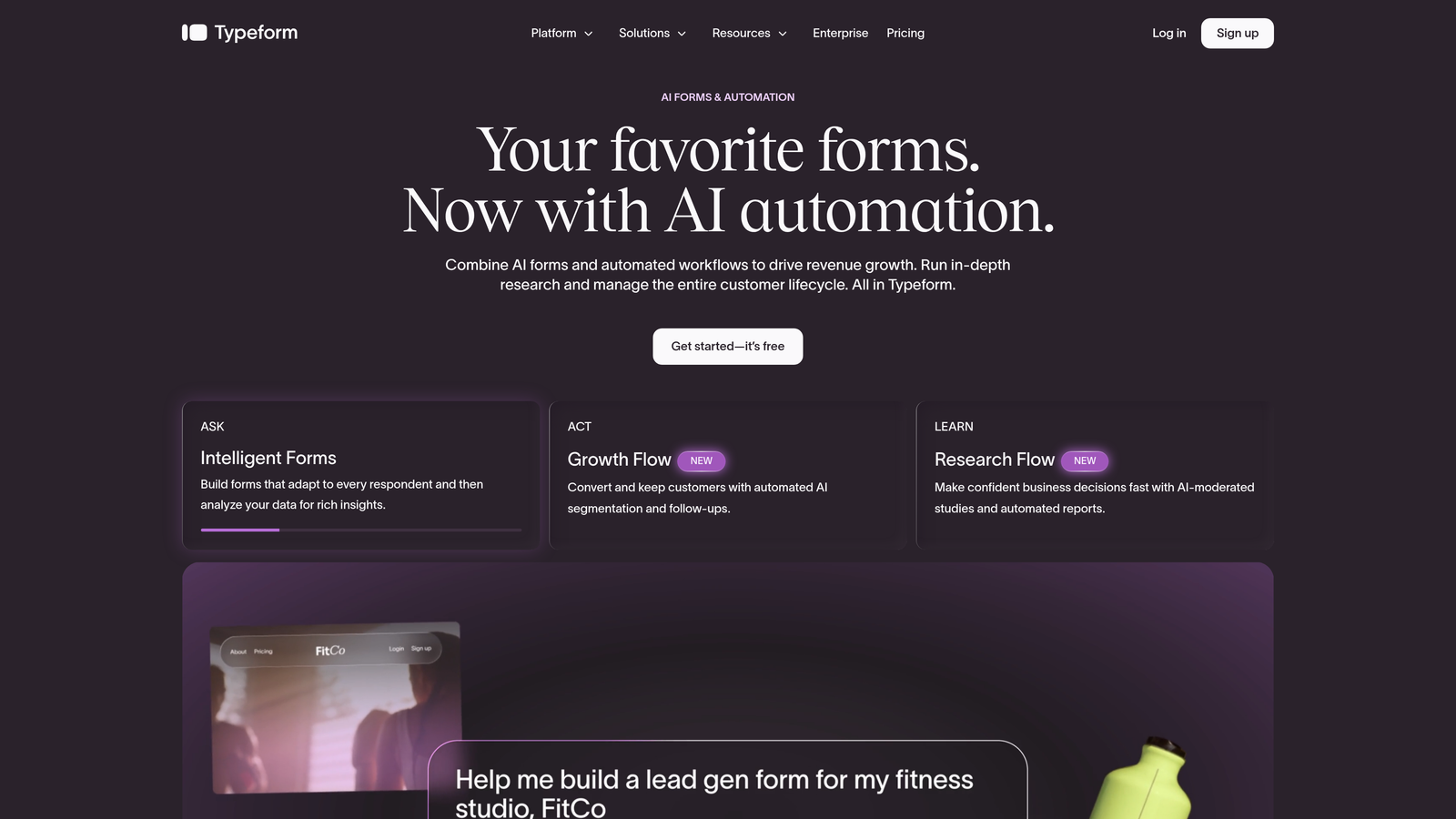
Typeform is a popular conversational form builder that, when paired with Zapier automation, enables flexible lead routing into CRMs and scoring workflows without writing code.
Where This Tool Shines
Typeform doesn't have native lead scoring, but it excels at capturing high-quality data through its conversational, one-question-at-a-time format. Completion rates for conversational forms tend to be higher than traditional multi-field forms, which means more leads entering your scoring pipeline in the first place. Logic jumps allow the form to adapt based on previous answers, so respondents only see relevant questions.
The Zapier layer is where scoring logic lives: you can route Typeform responses to HubSpot, Salesforce, ActiveCampaign, or a spreadsheet, and apply scoring rules in those tools based on the answers captured. It's more manual to set up than a native scoring solution, but highly flexible for teams with existing CRM investments.
Key Features
Conversational Form Format: One-question-at-a-time design typically improves completion rates compared to traditional long forms.
Logic Jumps: Dynamic question paths adapt based on previous answers, capturing more relevant qualification data.
Zapier Routing: Connect Typeform responses to virtually any CRM or scoring tool in your stack without code.
CRM Integrations: Native connections to HubSpot, Salesforce, ActiveCampaign, and many others for direct data sync.
Outcome Screens: Display personalized results or next steps based on how respondents answered, adding immediate value.
Best For
Teams already using Typeform for data collection who want to layer scoring onto existing workflows. Also a good fit for agencies building lead capture forms for clients with varied CRM environments.
Pricing
Typeform has a free basic plan; paid plans start from $25/month. Zapier plans start from $19.99/month. Budget both when evaluating total cost.
6. Salesforce Marketing Cloud Account Engagement (Pardot)
Best for: Sales-led B2B organizations running Salesforce CRM who need dual scoring and ICP grading
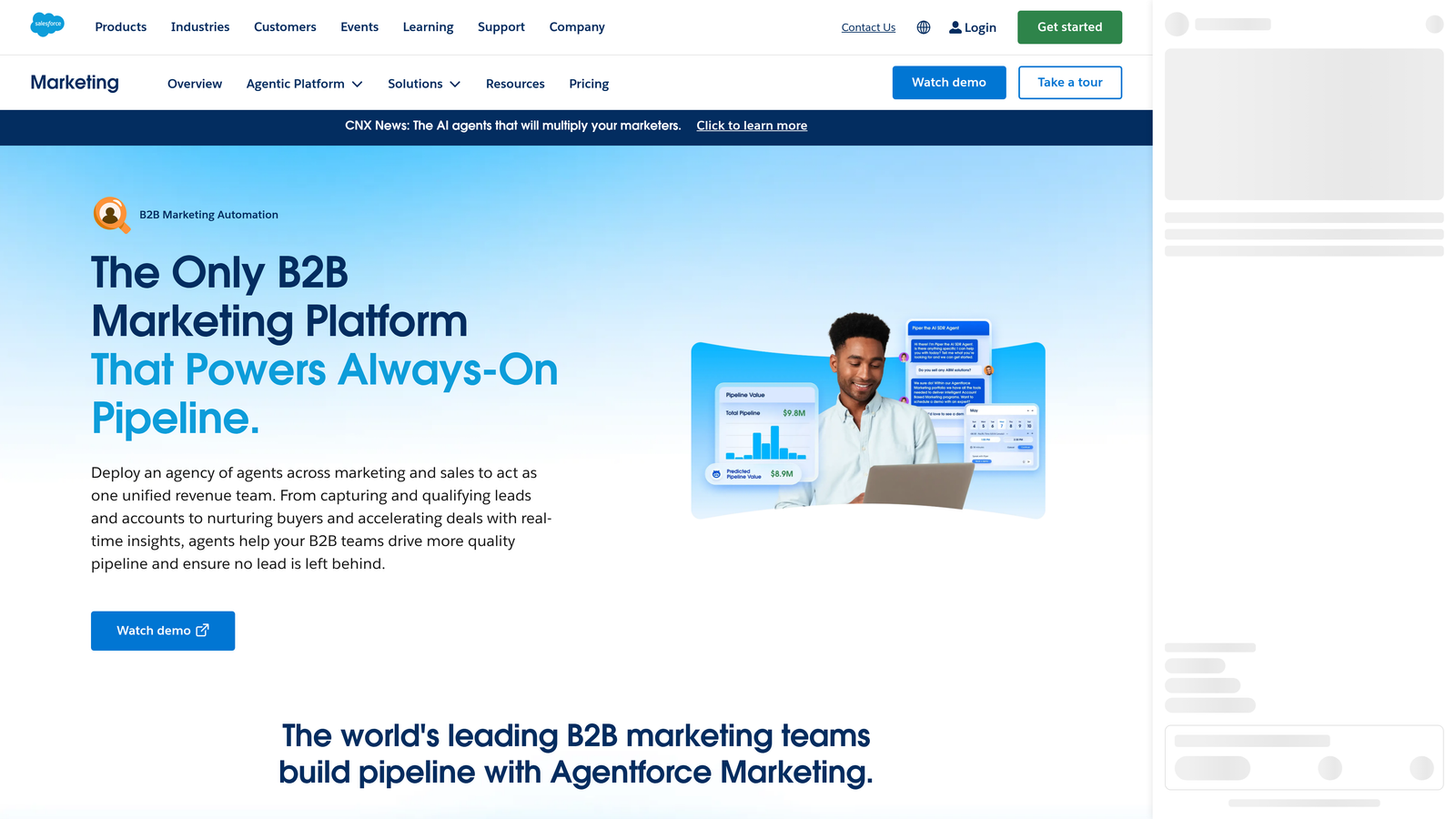
Salesforce Marketing Cloud Account Engagement (formerly Pardot) is Salesforce's B2B marketing automation platform with a dual scoring and grading system.
Where This Tool Shines
Pardot's most distinctive feature is its dual evaluation system: scoring measures behavioral engagement (form fills, email clicks, page views), while grading measures how closely a prospect matches your ideal customer profile based on firmographic data like job title, company size, and industry. A lead can have a high score but a low grade — meaning they're engaged but not a good fit — and Pardot surfaces both dimensions clearly for sales teams.
Form handlers allow Pardot to capture data from any form on your website, not just Pardot-native forms, which is useful for teams with existing form infrastructure. The native Salesforce sync means lead data, scores, and grades appear directly in Salesforce records without manual data transfer.
Key Features
Dual Scoring and Grading: Separate behavioral score and ICP fit grade give sales teams a complete picture of each prospect.
Form Handler Technology: Captures data from any form on your site, not just Pardot-built forms.
Dynamic Lists: Automatically update when leads cross score or grade thresholds, enabling real-time segmentation.
Native Salesforce Sync: Scores and grades appear directly in Salesforce CRM records for sales visibility.
Engagement Studio: Visual workflow builder for creating automated nurture paths triggered by score changes.
Best For
Mid-market and enterprise B2B teams with Salesforce as their CRM of record. The pricing and complexity make it a poor fit for smaller teams, but for Salesforce-centric organizations, it's a natural choice.
Pricing
Growth tier starts at $1,250/month; Plus at $2,500/month, billed annually. Enterprise and Advanced tiers are available at higher price points.
7. Pipedrive LeadBooster
Best for: Sales-focused SMBs using Pipedrive who want simple form-to-pipeline lead routing
Pipedrive LeadBooster is Pipedrive's lead generation add-on that includes a web form builder feeding directly into Pipedrive pipelines with qualification routing rules.
Where This Tool Shines
LeadBooster isn't a sophisticated scoring engine — but for teams whose primary goal is getting form submissions into the right sales pipeline quickly, it does the job cleanly. Web forms feed directly into Pipedrive's leads inbox, and routing rules assign incoming leads to specific reps or pipelines based on the answers submitted. The setup is genuinely simple, requiring no technical expertise.
The combination of web forms and chatbot in a single add-on means teams can capture leads across different surface areas and funnel them into the same Pipedrive workflow, with source tracking to understand which channel is performing best.
Key Features
Direct Pipeline Integration: Form submissions go straight into Pipedrive's leads inbox, skipping manual data entry entirely.
Routing Rules: Assign incoming leads to specific reps, teams, or pipelines based on form response criteria.
Chatbot and Forms Combined: Both lead capture tools work together within the same LeadBooster add-on.
Lead Source Tracking: Built-in tracking shows which channels and forms are generating the most leads.
No-Code Setup: Designed for sales teams to configure independently without developer involvement.
Best For
Small to mid-sized sales teams already using Pipedrive as their CRM. Teams looking for true predictive scoring or complex multi-signal models will need a more sophisticated tool.
Pricing
LeadBooster add-on starts from $32.50/month and requires an active Pipedrive subscription. Total cost depends on your Pipedrive plan tier.
8. Zoho CRM + Zoho Forms
Best for: Budget-conscious teams already in the Zoho ecosystem wanting native form-to-CRM scoring
Zoho Forms connects natively with Zoho CRM's lead scoring rules, making it a cost-effective option for teams already using Zoho's suite of products.
Where This Tool Shines
The appeal here is tight native integration at a price point that's accessible for smaller teams. Zoho Forms submissions map directly to Zoho CRM lead and contact records, and CRM scoring rules apply automatically to incoming form data without any manual configuration or third-party integration. For teams already paying for Zoho CRM, adding Zoho Forms is a low-cost way to implement form-based scoring.
Conditional form logic allows you to capture smarter data — showing or hiding fields based on previous answers — which improves the quality of data flowing into your scoring rules and reduces noise in your CRM.
Key Features
Native Zoho Forms to CRM Integration: Form submissions flow directly into Zoho CRM records without middleware or manual mapping.
Automatic Scoring Rule Application: CRM scoring rules apply to incoming form data immediately upon submission.
Conditional Form Logic: Dynamic fields improve data quality by showing relevant questions based on previous answers.
Field Mapping: Map form fields precisely to CRM lead or contact record fields for clean data structure.
Workflow Automation: Score thresholds trigger automated CRM workflows, notifications, or task assignments.
Best For
Small businesses and growing teams already invested in the Zoho ecosystem. The value proposition weakens significantly if you're not using Zoho CRM, since the scoring integration is built around that native connection.
Pricing
Zoho Forms starts from $8/month; Zoho CRM from $14/user/month. Combined, this is one of the most affordable full-stack options on this list.
9. Jotform + Jotform Workflows
Best for: Non-technical teams needing flexible form routing and conditional approval logic without complex setup
Jotform is one of the most widely used form builders available, and its Workflows feature enables conditional routing based on form responses — a lightweight but effective scoring proxy for teams that don't need a full MAP.
Where This Tool Shines
Jotform Workflows won't replace a dedicated scoring engine, but they solve a real problem elegantly: routing different types of leads to different destinations based on what they submitted. An enterprise-sized company response can automatically trigger a sales notification and fast-track approval, while an SMB response routes to a standard nurture sequence. This conditional routing functions as practical qualification logic even without a numeric score.
The breadth of Jotform's template library and integration ecosystem makes it particularly useful for teams managing multiple lead capture touchpoints — from contact forms to event registrations to product demo requests — all feeding into the same routing workflow.
Key Features
Conditional Approval Workflows: Route form submissions to different people, pipelines, or sequences based on specific response criteria.
5,000+ Form Templates: Includes a wide range of lead capture templates to get started quickly without building from scratch.
CRM Integrations: Native connections to HubSpot, Salesforce, and 100+ other apps for downstream scoring and management.
Smart PDF Forms: Useful for enterprise use cases requiring formatted document output from form submissions.
No-Code Setup: Workflow configuration is accessible to non-technical team members without developer support.
Best For
Operations teams, agencies, and non-technical users who need flexible conditional routing without the overhead of a full marketing automation platform. Teams needing true numeric lead scoring should pair Jotform with a CRM that handles scoring natively.
Pricing
Free plan available with core features. Paid plans start from $34/month, with higher tiers unlocking more submissions, workflows, and integrations.
Which Tool Is Right for Your Team?
The right lead scoring tool depends less on which platform has the most features and more on where scoring fits into your existing workflow. Here's how to think through the decision.
If you're a high-growth SaaS team that wants AI-powered qualification built directly into your forms, Orbit AI is the natural starting point. Scoring happens at the point of capture, routing decisions are immediate, and you don't need a separate MAP to make it work. It's purpose-built for exactly this use case.
For teams already deep in HubSpot or Salesforce, staying in your ecosystem makes sense. HubSpot Marketing Hub gives you multi-signal scoring with strong automation capabilities, while Pardot's dual scoring and grading system is purpose-built for sales-led B2B orgs running Salesforce. Neither is cheap, but both eliminate integration complexity.
SMBs on a budget get strong value from ActiveCampaign, which combines email automation, CRM, and lead scoring in one accessible platform. Zoho's integrated stack is even more affordable for teams already in that ecosystem. Both deliver genuine scoring functionality without enterprise pricing.
Agencies and ops teams managing complex form logic across multiple clients or use cases will appreciate Jotform's flexibility and template depth. Typeform plus Zapier is a solid choice for teams that want better form completion rates and already have scoring infrastructure in their CRM.
The best lead scoring setup is the one your team will actually use consistently. Start with the tool that fits your current stack and team size, then expand scoring sophistication as your lead volume grows and your qualification criteria become clearer.
Ready to see what AI-powered form scoring looks like in practice? Start building free forms today and qualify leads from your very first submission with Orbit AI's built-in intelligence.


