
When your lead data lives in seven different places—your forms in one tool, email engagement in another, CRM notes somewhere else—you're not just disorganized. You're losing deals. Sales reps waste hours hunting for context before calls. Marketing can't segment properly because half the data is missing. And those hot leads? They slip through the cracks while your team plays digital scavenger hunt.
The solution isn't another spreadsheet or manual export routine. It's choosing tools built specifically to consolidate, sync, and centralize lead information from the moment of capture through every touchpoint.
We evaluated dozens of platforms based on their ability to unify fragmented lead data, ease of integration, and real-time sync capabilities. Here are the top tools that actually solve the scattered data problem.
1. Orbit AI
Best for: Teams wanting to prevent data fragmentation at the point of lead capture
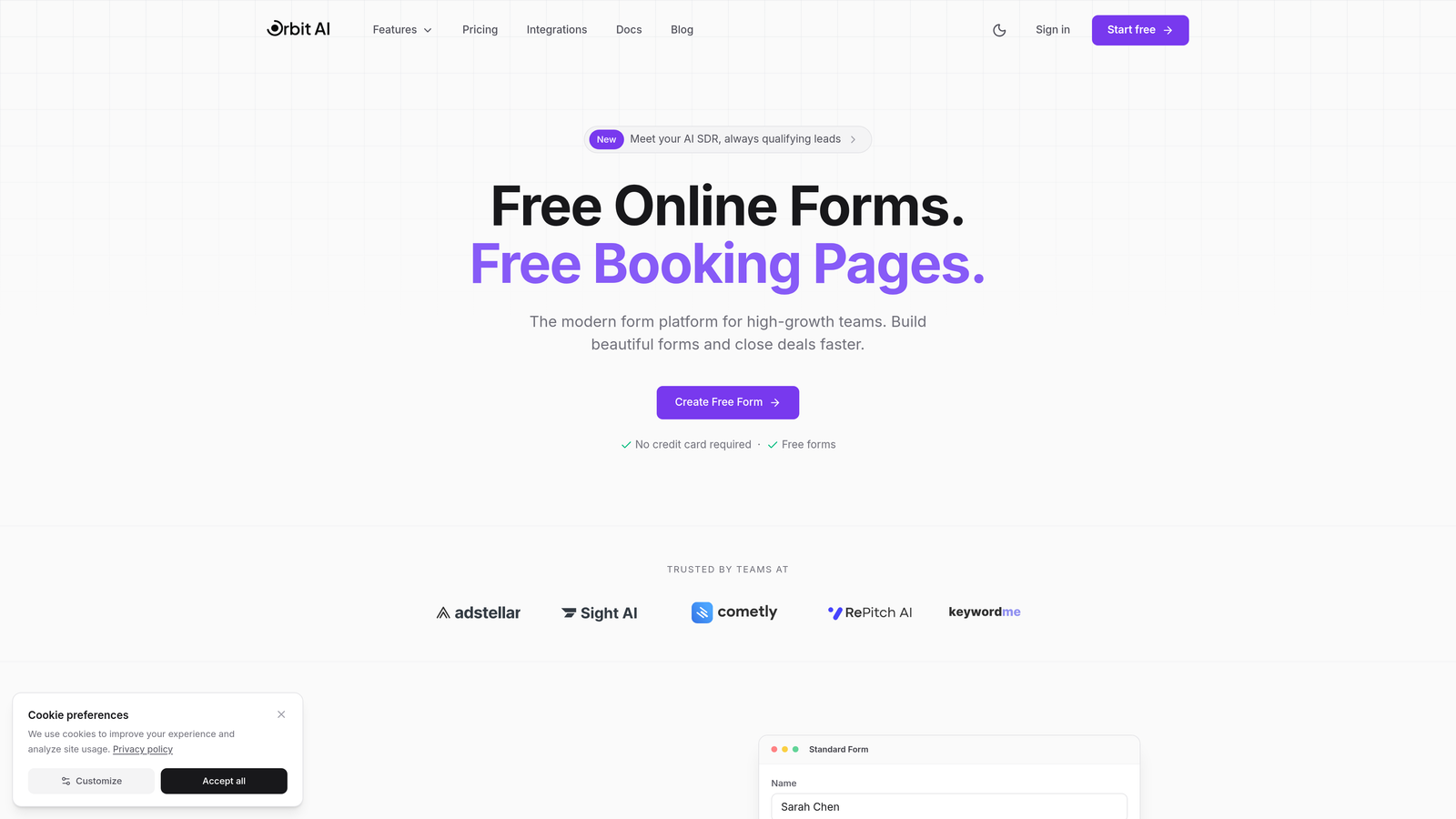
Orbit AI is an AI-powered form builder that captures, qualifies, and routes leads to your CRM automatically—eliminating data silos before they start.
Where This Tool Shines
Most data unification tools try to fix the problem after leads are already scattered. Orbit AI takes a different approach: it prevents fragmentation from happening in the first place. When someone fills out your form, the platform doesn't just capture their information—it qualifies them using AI, enriches the data, and pushes everything to your CRM in real time.
This means your sales team gets complete, contextualized lead information the moment someone converts. No manual exports. No waiting for overnight syncs. No wondering which system has the latest data.
Key Features
AI-Powered Lead Qualification: Automatically scores and qualifies leads during form submission, adding context your team needs.
Native CRM Integrations: Connects directly with HubSpot, Salesforce, Pipedrive, and other major platforms for seamless data flow.
Automated Routing Workflows: Sends qualified leads to the right team members based on score, reducing manual triage.
Complete Journey Analytics: Tracks the full lead lifecycle from form submission through conversion in one view.
Real-Time Sync: Eliminates the lag and errors that come with manual exports or batch processing.
Best For
High-growth teams tired of stitching together form builders, qualification tools, and CRMs. If your current setup means leads get captured in one place while qualification happens somewhere else and CRM updates require manual work, Orbit AI consolidates that entire flow into a single, intelligent system.
Pricing
A 7-day free trial gets you started. Paid plans start at competitive rates designed for growing businesses that need advanced qualification and routing capabilities.
2. HubSpot Operations Hub
Best for: Teams already using HubSpot who need unified data across their tech stack
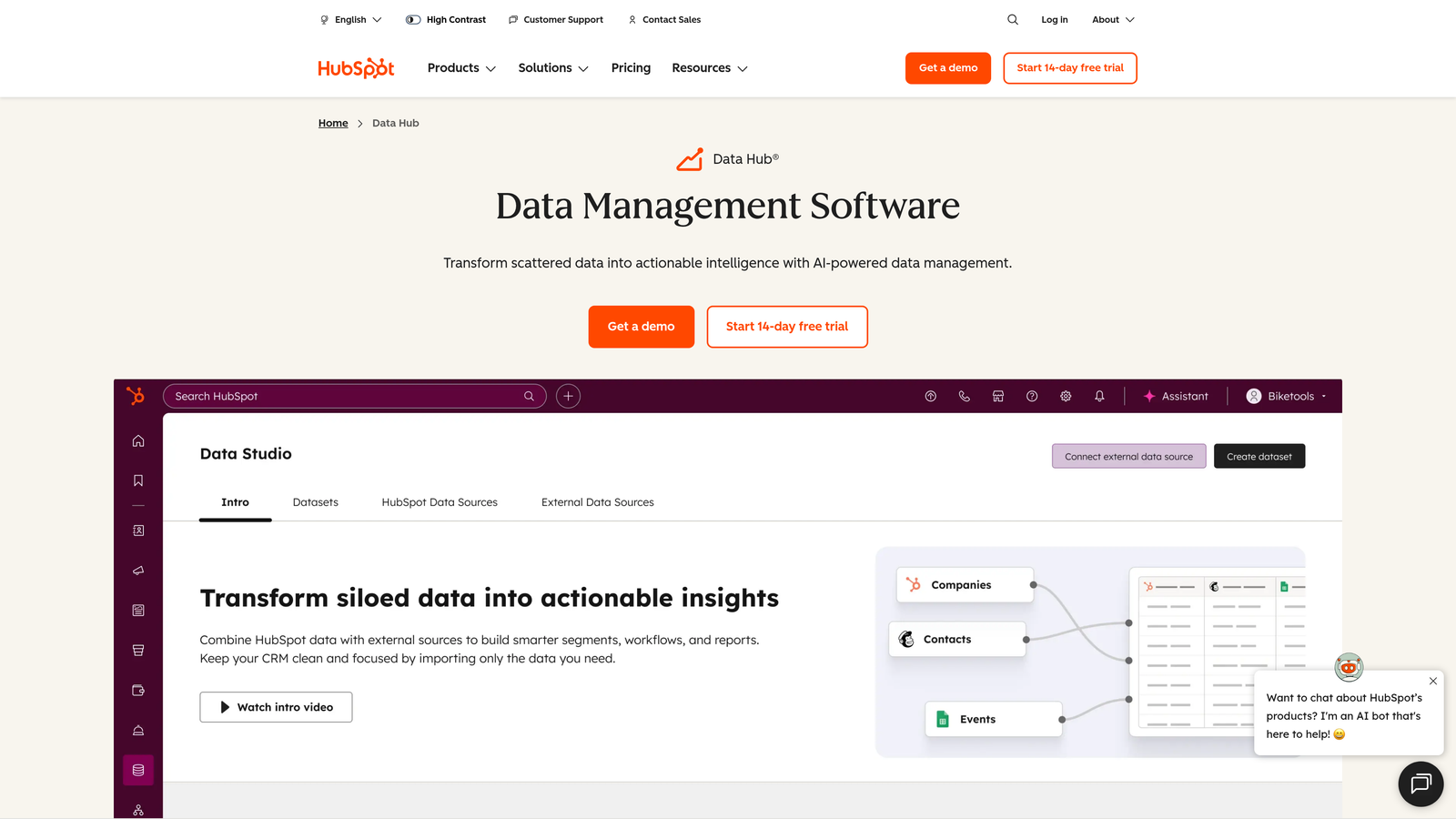
HubSpot Operations Hub is a data sync and automation platform that connects your entire tech stack while keeping customer data clean and unified within the HubSpot ecosystem.
Where This Tool Shines
If you're already invested in HubSpot, Operations Hub becomes your command center for data unification. It excels at pulling information from external tools—your support tickets, product usage data, payment systems—and syncing everything back to your central HubSpot database.
The platform handles the messy reality of data quality automatically. Duplicate records get merged. Formatting inconsistencies get fixed. Your team stops worrying about whether the data in HubSpot matches what's in your other systems.
Key Features
Two-Way Data Sync: Connects with 1,000+ third-party apps and keeps information flowing bidirectionally in real time.
Data Quality Automation: Automatically deduplicates records and standardizes formatting across your database.
Programmable Automation: Lets technical teams write custom code actions for complex data transformation workflows.
Unified Datasets: Creates custom reports that pull from multiple data sources for complete visibility.
Field-Level Mapping: Gives you granular control over exactly how data flows between systems.
Best For
Companies with HubSpot as their central system of record who need to pull in data from specialized tools without abandoning their existing tech stack. Particularly valuable for mid-market companies with 5-10 core business applications that need to stay in sync.
Pricing
Free tools available with basic features. Starter plan at $20/month for small teams. Professional plan at $800/month unlocks advanced automation and custom code capabilities.
3. Segment
Best for: Technical teams building a customer data platform from the ground up
Segment is a customer data platform that collects information from every touchpoint—web, mobile, email, support—and routes it to your analytics, marketing, and sales tools in real time.
Where This Tool Shines
Think of Segment as the central nervous system for your customer data. Instead of building individual integrations between every tool in your stack, you send all your data to Segment once, and it handles distribution to 400+ destinations.
The real power comes from identity resolution. Segment tracks anonymous website visitors, then stitches together their complete journey once they convert—connecting pre-conversion behavior with post-conversion activity. Your sales team sees the full story, not just what happened after someone filled out a form.
Key Features
Single API Collection: Captures data from web, mobile, servers, and cloud apps through one unified API.
400+ Destination Integrations: Routes your data to analytics, marketing, and sales tools without custom development.
Identity Resolution: Unifies anonymous and known user profiles to create complete customer timelines.
Real-Time Audiences: Builds and activates segments instantly across all your tools simultaneously.
Privacy Controls: Manages consent and data governance centrally rather than in each individual tool.
Best For
Companies with technical resources who want complete control over their customer data infrastructure. Works especially well for product-led growth companies tracking complex user journeys across multiple touchpoints before conversion.
Pricing
Free tier available for startups with limited data volume. Team plan starts at $120/month. Enterprise pricing scales with data volume and number of sources.
4. Zapier
Best for: Non-technical teams needing quick connections between everyday business tools
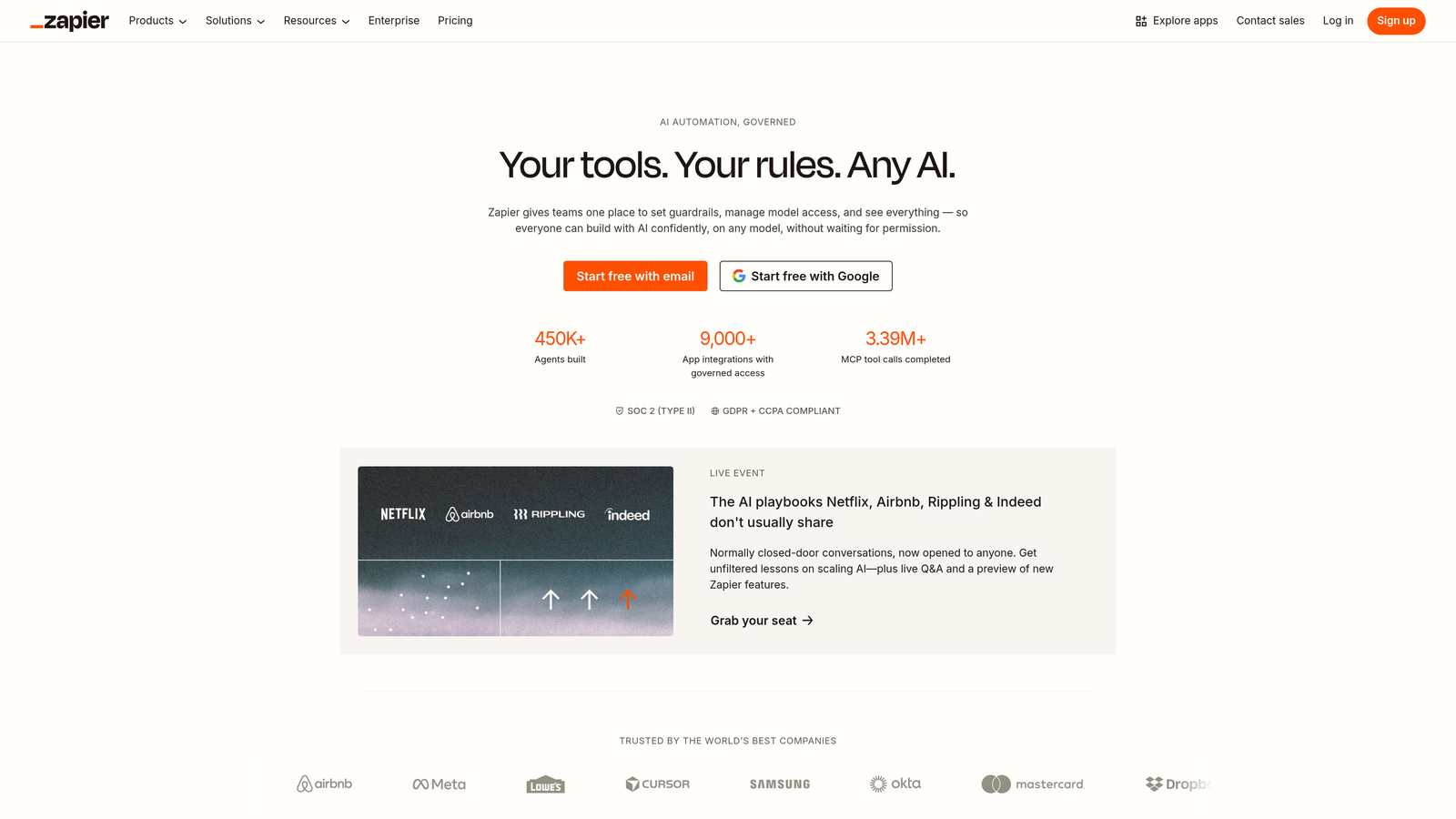
Zapier is a no-code automation platform connecting 5,000+ apps to move lead data automatically between your tools without requiring developer resources.
Where This Tool Shines
Zapier democratizes data unification. Your marketing coordinator can build the same integrations that used to require engineering tickets. When a lead fills out a Typeform, Zapier can enrich the data through Clearbit, add it to your CRM, notify your sales team in Slack, and create a task in Asana—all in minutes.
The platform's strength is its simplicity. You don't need to understand APIs or data structures. If you can describe what should happen when something occurs, you can probably build it in Zapier.
Key Features
5,000+ App Integrations: Connects virtually every business tool with pre-built templates for common workflows.
Multi-Step Workflows: Chains together multiple actions to route data through complex processes automatically.
Data Transformation Tools: Includes filters and formatters to clean and standardize information as it moves.
Conditional Logic: Uses Paths to route leads differently based on their attributes or behaviors.
Error Handling: Automatically retries failed steps and alerts you when something needs attention.
Best For
Small to mid-sized teams without dedicated engineering resources who need to connect their tools quickly. Particularly effective for marketing operations teams managing lead flow across multiple platforms.
Pricing
Free tier includes 100 tasks per month. Starter plan at $19.99/month for 750 tasks. Professional plan at $49/month adds premium apps and unlimited Zaps.
5. Clay
Best for: Sales teams needing enriched, unified prospect data from multiple sources
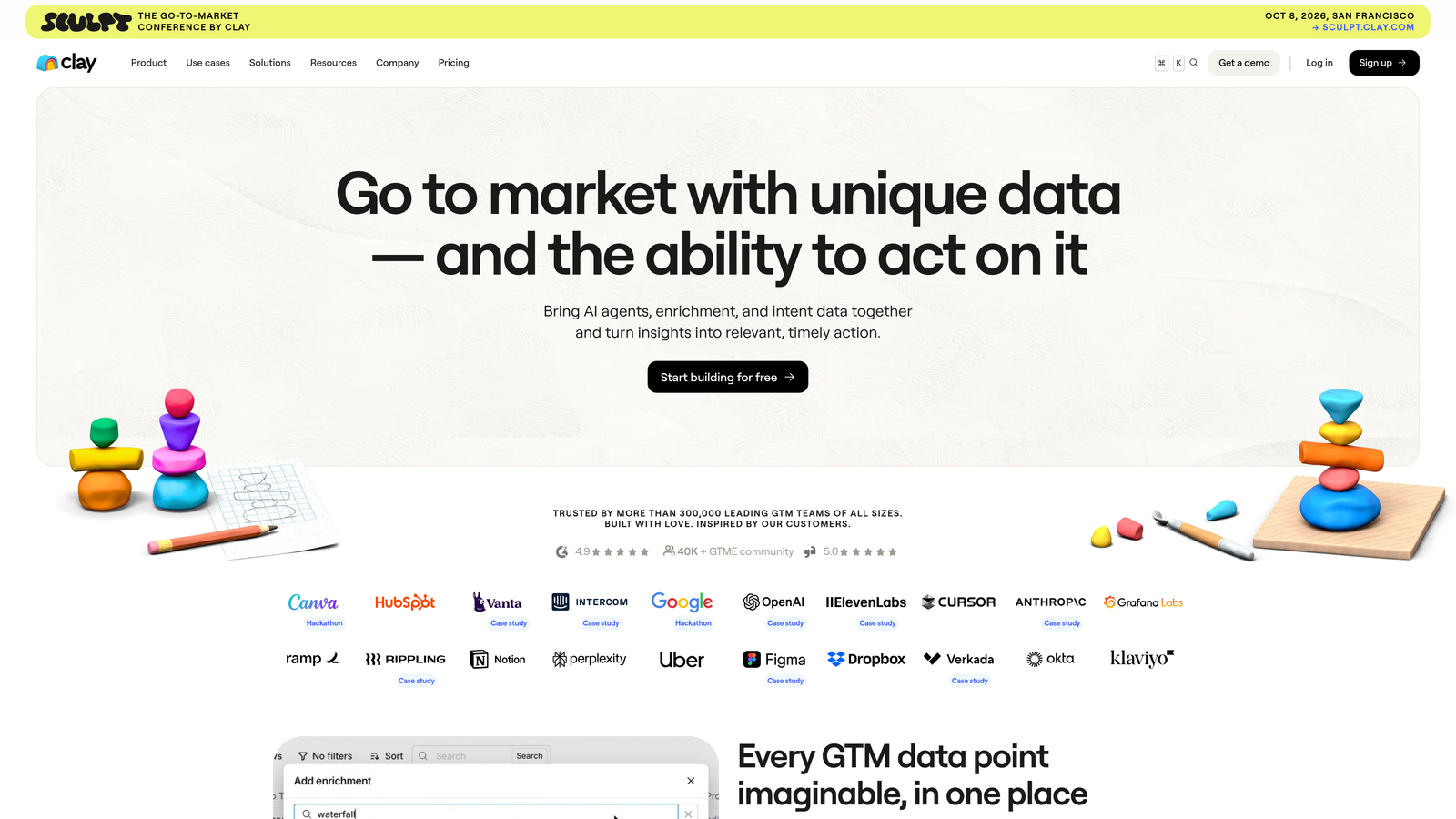
Clay is a data enrichment and automation platform that consolidates prospect information from 75+ providers into unified, actionable lead profiles.
Where This Tool Shines
Clay solves a specific type of data fragmentation: when basic lead information exists in your CRM, but the context you need to sell effectively is scattered across LinkedIn, company websites, news sources, and data providers. The platform uses waterfall enrichment—trying multiple data sources until it finds what you need.
This means you stop manually researching prospects before calls. Clay automatically pulls job changes, company funding news, technology stack information, and social media activity into one enriched record that syncs back to your CRM.
Key Features
Waterfall Enrichment: Queries 75+ data providers sequentially to maximize coverage and minimize cost.
AI-Powered Data Cleaning: Standardizes inconsistent data formats and fills gaps intelligently.
Automatic Deduplication: Identifies and merges duplicate records across different data sources.
CRM Sync: Pushes enriched data back to Salesforce, HubSpot, or other systems automatically.
Custom Enrichment Workflows: Builds sequences that combine multiple data sources for specific use cases.
Best For
Outbound sales teams and account-based marketing programs that need deep prospect intelligence. Works particularly well for companies selling to other businesses where firmographic and technographic data drives targeting.
Pricing
Free tier available for testing. Paid plans start at $149/month with credits for data enrichment. Enterprise plans offer volume pricing and dedicated support.
6. Fivetran
Best for: Data teams centralizing lead information in a warehouse for unified analysis
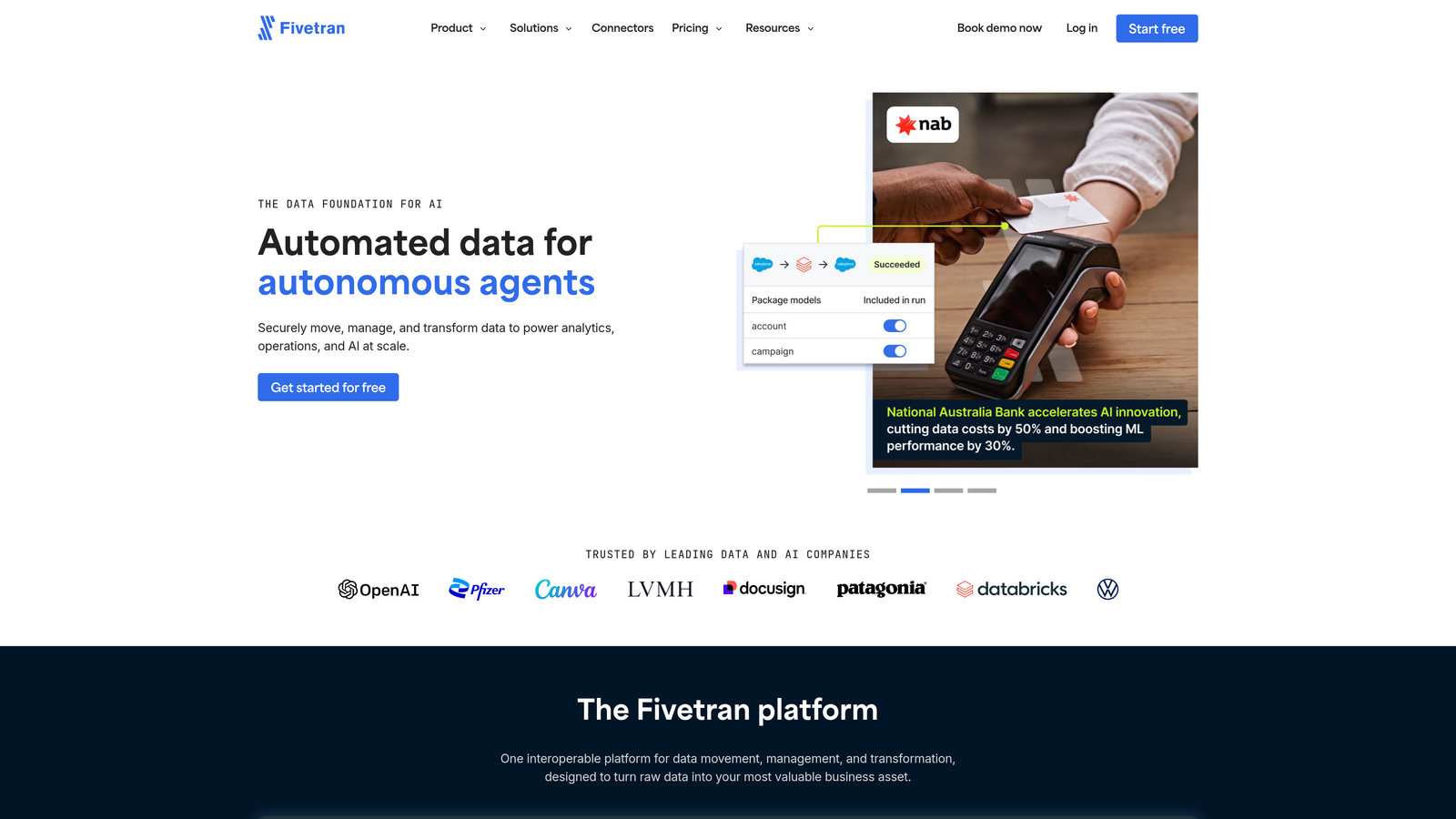
Fivetran is an automated data pipeline platform that extracts lead data from 300+ sources and centralizes it in your data warehouse for unified analysis and activation.
Where This Tool Shines
Fivetran takes a different approach to data unification. Instead of syncing between operational tools, it pulls everything into a central data warehouse—Snowflake, BigQuery, or Redshift. This creates a single source of truth that your analytics, data science, and business intelligence teams can query without worrying about API limits or stale data.
The platform handles schema changes automatically. When your CRM adds a new field or your marketing automation platform restructures its data model, Fivetran adapts without breaking your pipelines.
Key Features
300+ Pre-Built Connectors: Extracts data from SaaS apps, databases, and event streams without custom code.
Automated Schema Management: Detects and handles changes in source systems automatically.
Incremental Updates: Syncs only changed data for efficient, cost-effective replication.
Pre-Built Data Models: Includes transformation templates for common analytics use cases.
Data Observability: Monitors pipeline health and alerts you to issues before they impact analysis.
Best For
Companies with data warehouses who need a reliable way to centralize information from their entire tech stack. Particularly valuable for organizations doing sophisticated lead scoring, attribution modeling, or predictive analytics.
Pricing
Usage-based pricing calculated by monthly active rows. Free tier available for small data volumes. Standard plans start around $1 per million active rows with minimum commitments.
7. Salesforce Data Cloud
Best for: Enterprise Salesforce users needing real-time unified customer profiles
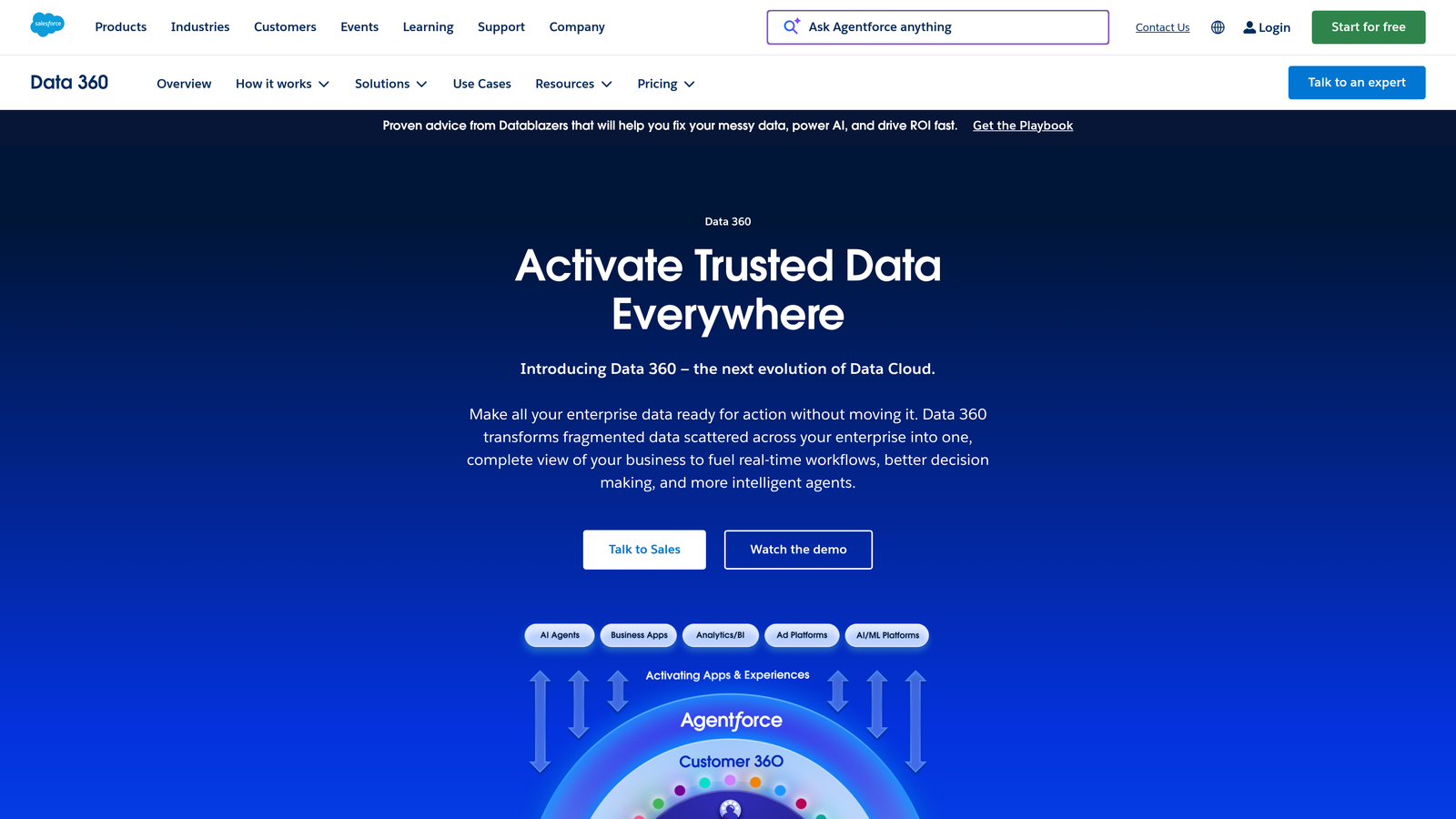
Salesforce Data Cloud is an enterprise customer data platform that unifies lead and customer profiles across all Salesforce clouds and external systems in real time.
Where This Tool Shines
Data Cloud operates at a different scale than point-to-point integration tools. It's designed for enterprises with millions of customer records spread across Sales Cloud, Service Cloud, Marketing Cloud, and dozens of external systems. The platform creates unified profiles that update in real time as customers interact with any touchpoint.
The integration with Einstein AI means you don't just get unified data—you get intelligent insights. The system identifies which leads are most likely to convert, which customers are at risk of churning, and which accounts show expansion opportunities.
Key Features
Real-Time Identity Resolution: Matches and merges customer records across touchpoints as interactions happen.
Native Salesforce Integration: Works seamlessly with all Salesforce products without complex middleware.
Einstein AI Insights: Applies machine learning to unified profiles for predictive scoring and recommendations.
Streaming Data Ingestion: Processes customer events in real time rather than batch updates.
Calculated Insights: Creates custom metrics that combine data from multiple sources automatically.
Best For
Large enterprises already invested in the Salesforce ecosystem who need to unify customer data at scale. Most valuable for companies with complex customer journeys spanning multiple business units and channels.
Pricing
Enterprise-level pricing based on data volume and feature requirements. Contact Salesforce directly for quotes. Typically requires significant investment and implementation resources.
8. Make (formerly Integromat)
Best for: Teams needing visual workflows with advanced data transformation capabilities
Make is a visual automation platform with sophisticated data transformation tools for building complex workflows that unify lead data across systems.
Where This Tool Shines
Make gives you more control than simple automation tools without requiring you to write code. The visual scenario builder shows exactly how data flows through your workflow, making it easier to troubleshoot and optimize complex integrations.
Where Make really differentiates itself is in data transformation. You can parse JSON responses, manipulate arrays, apply conditional logic, and handle errors—all through a visual interface. This makes it possible to build sophisticated data unification workflows that would otherwise require custom development.
Key Features
Visual Scenario Builder: Drag-and-drop interface that maps data flow visually for easier understanding.
Advanced Data Transformation: Includes tools for parsing, formatting, and manipulating complex data structures.
Branching Logic: Routes data through different paths based on conditions and filters.
Error Handling: Builds fallback workflows and retry logic for reliable automation.
1,500+ App Integrations: Connects with most business tools through pre-built modules.
Best For
Operations teams comfortable with some technical concepts who need more power than Zapier but don't want to write custom code. Works well for companies with complex data transformation requirements between systems.
Pricing
Free tier includes 1,000 operations per month. Core plan at $9/month for 10,000 operations. Pro plan at $16/month adds advanced features and priority support.
9. Clearbit
Best for: B2B companies needing automatic lead enrichment and standardization
Clearbit is a B2B data enrichment platform that automatically appends company and contact data to lead records, standardizing information across your entire tech stack.
Where This Tool Shines
Clearbit solves data fragmentation by filling in the gaps. When someone submits a form with just their email address, Clearbit instantly appends their job title, company size, industry, technology stack, and 100+ other attributes. This enriched data flows to your CRM, marketing automation, and analytics tools simultaneously.
The platform keeps your data fresh automatically. When contacts change jobs or companies get acquired, Clearbit updates your records without manual intervention. This means your segmentation stays accurate and your sales team doesn't waste time on outdated information.
Key Features
Real-Time Enrichment: Appends data at the moment of form submission or CRM record creation.
100+ Data Attributes: Provides comprehensive company and contact information from verified sources.
Automatic Data Refresh: Keeps records current by detecting and updating changed information.
Native CRM Integrations: Syncs enriched data directly to Salesforce, HubSpot, and other platforms.
Company Reveal: Identifies anonymous website visitors by company for account-based marketing.
Best For
B2B companies with incomplete lead data who need standardized firmographic and technographic information. Particularly effective for account-based marketing teams and sales development representatives who need context before outreach.
Pricing
Usage-based pricing with different rates for enrichment, reveal, and prospecting features. Contact Clearbit for custom quotes based on your data volume and specific needs.
Making the Right Choice
The best tool depends on where your data fragmentation problem starts. If leads are getting scattered the moment they convert, Orbit AI prevents that fragmentation at the source—capturing, qualifying, and routing everything to your CRM in one intelligent flow.
For teams already using HubSpot, Operations Hub extends your existing investment with powerful data sync capabilities. Technical teams building a comprehensive customer data infrastructure should look at Segment for its flexibility and extensive integration ecosystem.
Need quick wins without engineering resources? Zapier connects your tools fast. Make offers more sophisticated workflows when you need advanced data transformation. Sales teams focused on outbound should explore Clay for its powerful enrichment capabilities.
If you're centralizing data in a warehouse for analytics, Fivetran provides reliable automated pipelines. Large Salesforce enterprises get the most from Data Cloud's real-time unification. And B2B companies with incomplete lead information benefit from Clearbit's automatic enrichment.
The common thread? All these tools eliminate manual data movement. They sync automatically, reduce errors, and give your team complete context when it matters. The question isn't whether to unify your lead data—it's which approach fits your specific tech stack and workflows.
Ready to stop the fragmentation before it starts? Start your free trial today and see how intelligent form design can elevate your conversion strategy while keeping all your lead data unified from the moment of capture.


