

When a high-value lead fills out your form, every second counts. The wrong rep, the wrong timing, or a clunky manual handoff can kill a deal before it even gets started. Lead routing and assignment tools solve this by automatically directing incoming leads to the right sales rep, team, or queue based on rules you define.
This guide covers the best lead routing and assignment tools available in 2026, selected based on automation depth, CRM integrations, ease of setup, and how well they serve high-growth teams. Whether you're a lean startup routing leads from a single form or an enterprise managing complex territory assignments, there's a tool here built for your workflow.
Note: Orbit AI is our own product and is listed first. We've done our best to give you an honest, balanced view of all the tools on this list.
1. Orbit AI
Best for: High-growth SaaS teams that want to qualify and route leads at the form layer
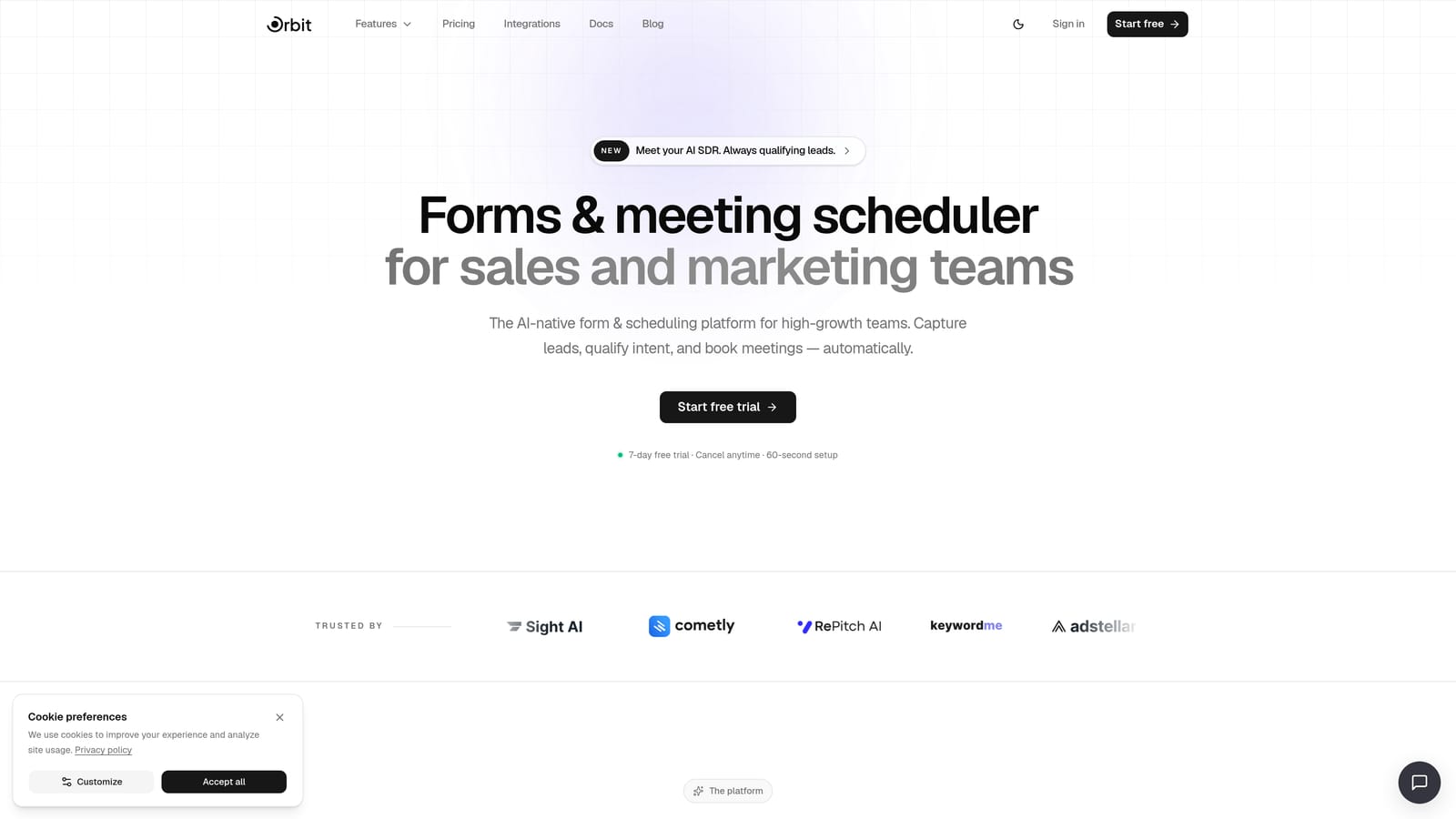
Orbit AI is an AI-powered form builder with built-in lead qualification and routing workflows designed for conversion-focused revenue teams.
Where This Tool Shines
Most routing tools operate after a lead enters your CRM. Orbit AI flips that model. Qualification happens at the form layer itself, so by the time a lead reaches your pipeline, it's already been scored, segmented, and routed based on what the prospect actually told you. This upstream approach reduces noise in your CRM and means your reps receive leads that are already contextualized.
The AI agents layer adds another dimension: automated scoring and segmentation that goes beyond simple field matching. Combined with built-in scheduling and sequences, Orbit AI lets you move from form submission to booked meeting without stitching together a half-dozen separate tools.
Key Features
AI-Powered Lead Qualification: Qualification happens at the form layer before leads ever hit your CRM, so reps only see pre-screened, relevant prospects.
Conditional Routing Workflows: Route leads dynamically based on specific form responses, territory rules, or custom logic you define.
AI Agents for Scoring and Segmentation: Automated agents analyze lead data and segment prospects without requiring manual review or tagging.
Built-In Scheduling and Sequences: Trigger follow-up sequences or let prospects book directly after form completion, keeping momentum high immediately post-submission.
Contact Management with Full Lead History: A unified view of each contact's form interactions, routing history, and engagement in one place.
Best For
SaaS teams running high-volume inbound lead generation who want qualification and routing to happen before leads reach the CRM. Particularly strong for teams that want to consolidate their form builder, lead scoring, and routing into a single platform rather than managing multiple tools.
Pricing
Visit orbitforms.ai/pricing for current plan details and tier breakdowns.
2. LeanData
Best for: Enterprise revenue teams with complex Salesforce-based routing requirements
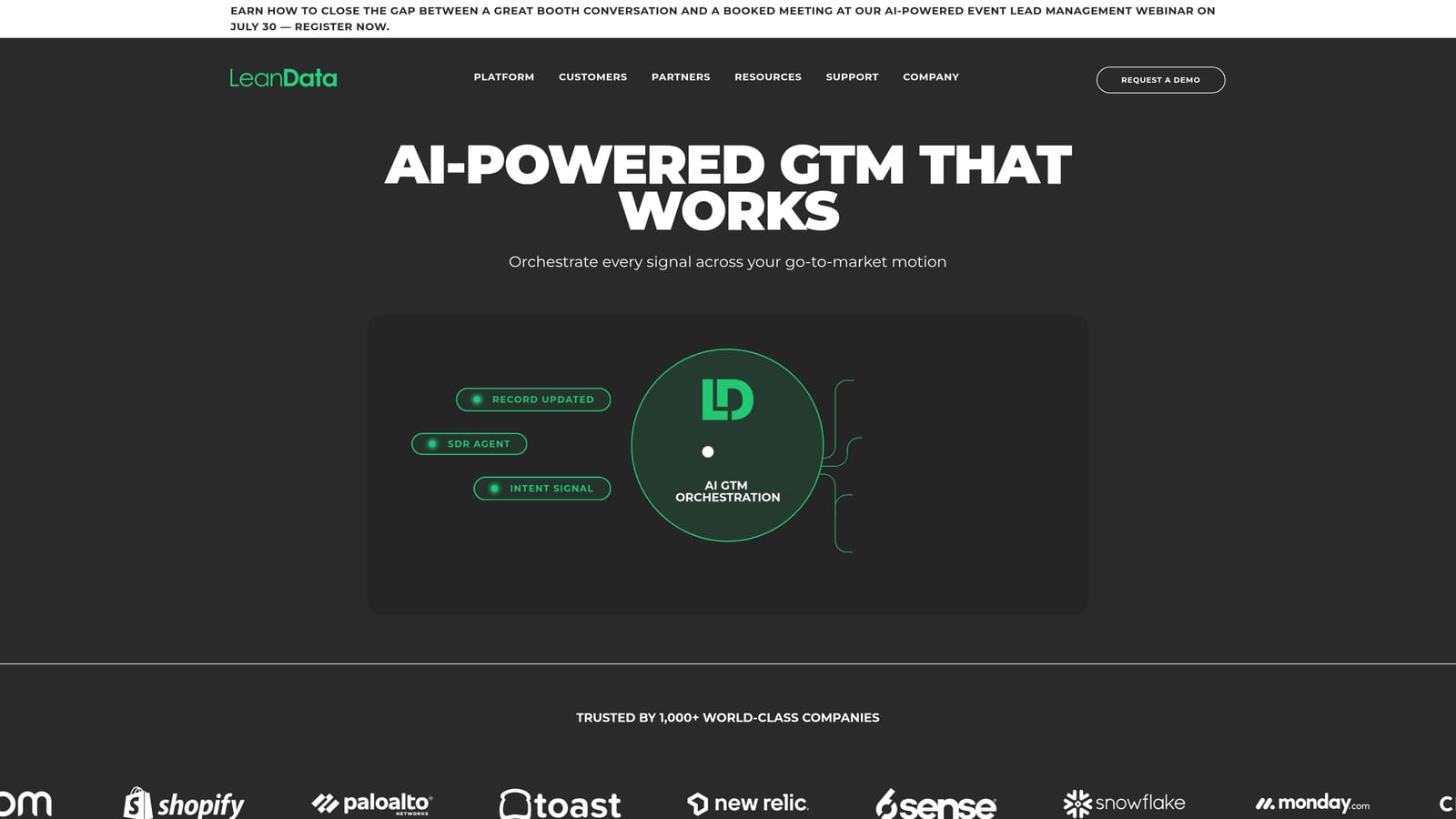
LeanData is an enterprise-grade lead routing platform built around a visual FlowBuilder for Salesforce-heavy revenue operations teams.
Where This Tool Shines
LeanData is the platform RevOps teams reach for when routing complexity outgrows what native Salesforce can handle. Its visual FlowBuilder lets you map out intricate routing logic, including account-based matching, territory hierarchies, and multi-step handoff sequences, without writing a single line of code. That visual layer is genuinely useful for documenting and auditing routing logic as your GTM motion evolves.
The matching and deduplication capabilities are a standout feature. LeanData can match incoming leads to existing accounts or contacts in Salesforce, which is critical for account-based selling where routing to the wrong rep on an existing account can create friction or damage relationships.
Key Features
Visual FlowBuilder: Drag-and-drop interface for building and visualizing complex multi-branch routing logic without technical resources.
Account-Based Routing: Match leads to existing accounts and route them to the correct owner, supporting ABM-focused go-to-market motions.
Territory and Round-Robin Assignment: Flexible distribution models covering geographic territories, team queues, and fair round-robin allocation.
Matching and Deduplication: Identifies duplicate records and matches leads to accounts before routing, keeping your CRM clean.
Routing Analytics: Reporting on assignment performance, routing bottlenecks, and rep-level distribution fairness.
Best For
Enterprise sales and RevOps teams running Salesforce as their CRM who need sophisticated territory management, account-based routing, and a visual way to govern routing logic across a large, distributed sales organization.
Pricing
Enterprise pricing; contact LeanData directly for a quote. No public pricing tiers listed.
3. Chili Piper
Best for: B2B demand gen teams focused on converting inbound form submissions into booked meetings instantly
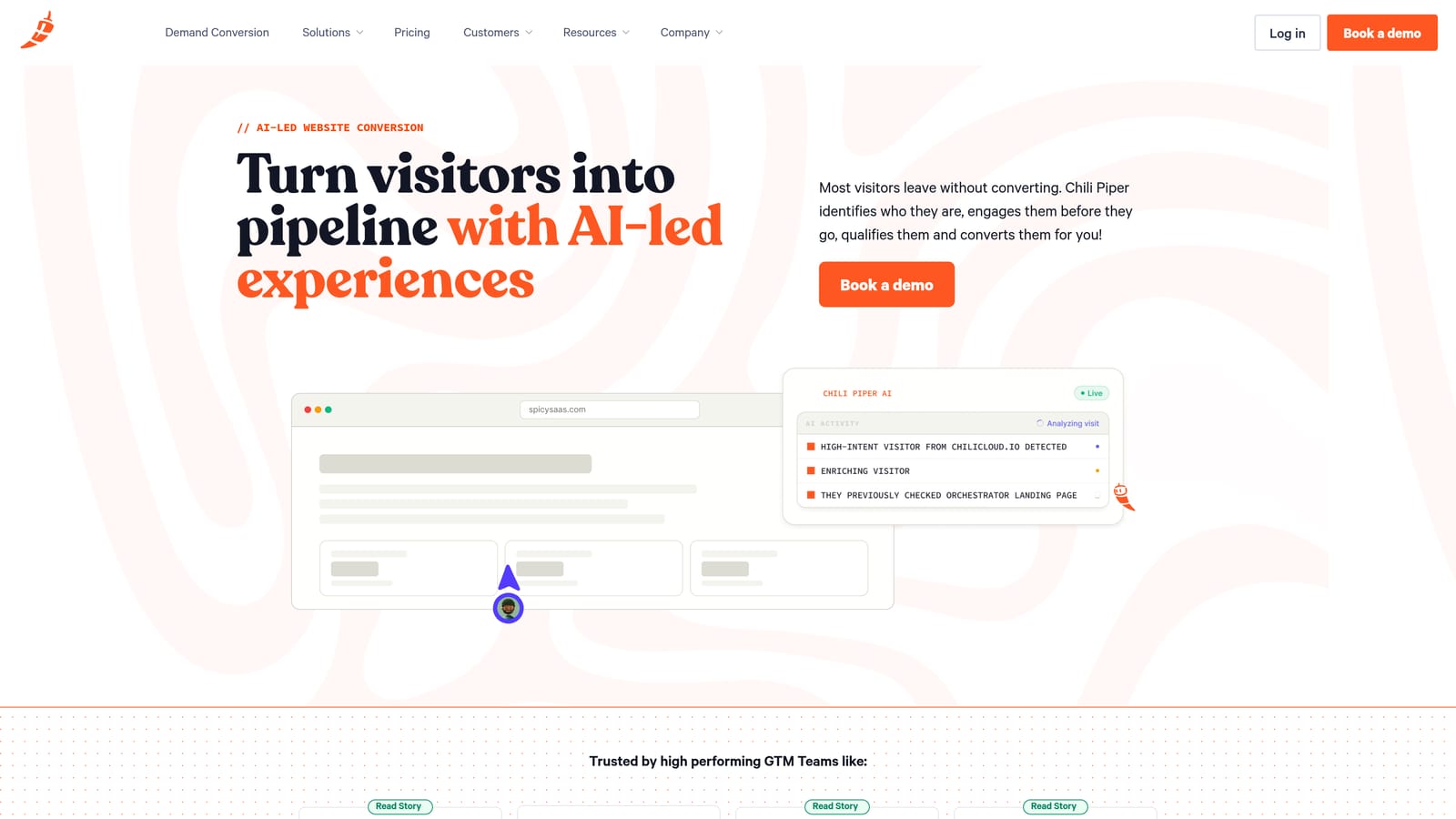
Chili Piper is an inbound lead routing and instant scheduling platform that connects form submissions to booked meetings in real time.
Where This Tool Shines
Chili Piper's core value proposition is speed-to-meeting. When a prospect submits a form, they're immediately presented with a calendar to book time with the right rep, rather than receiving a "we'll be in touch" email and waiting. This post-form scheduling experience is where Chili Piper has built its reputation, particularly among B2B SaaS demand gen teams running high-volume inbound programs.
The routing logic underpinning the scheduling is solid, with support for round-robin distribution, territory-based assignment, and SDR-to-AE handoff routing. The CRM sync with Salesforce and HubSpot means rep availability and ownership data stays accurate without manual updates.
Key Features
Instant Post-Form Scheduling: Prospects can book a meeting immediately after form submission, dramatically reducing time-to-meeting.
Rule-Based Routing: Route to the correct rep or team based on form field values, CRM data, or territory rules.
Round-Robin and Territory Assignment: Distribute leads fairly across teams or by geographic and segment-based rules.
CRM Sync: Native integration with Salesforce and HubSpot keeps routing data and meeting records in sync automatically.
SDR-to-AE Handoff Routing: Dedicated routing logic for transitioning qualified leads between sales development and account executive teams.
Best For
B2B SaaS and demand generation teams where the primary goal is converting inbound form fills into booked meetings as quickly as possible, with minimal friction for the prospect.
Pricing
Seat-based pricing model; check chilipiper.com for current rates, as pricing has evolved over time.
4. Salesforce Lead Assignment Rules
Best for: Salesforce customers with straightforward routing needs who want zero additional cost
Salesforce Lead Assignment Rules is a native CRM feature that automatically assigns incoming leads based on criteria you configure directly within Salesforce.
Where This Tool Shines
If your team is already paying for Salesforce and your routing logic is relatively simple, this is the obvious starting point. There's no additional licensing cost, no new platform to learn, and no integration to maintain. You define criteria based on lead field values, and Salesforce automatically assigns the record to the appropriate user or queue.
The trade-off is flexibility. Native assignment rules don't support true round-robin distribution without workarounds, there's no visual builder for mapping logic, and complex multi-condition routing can become difficult to maintain as your team scales. It's a strong tool for what it is, but teams with growing routing complexity often find themselves needing something more purpose-built.
Key Features
Criteria-Based Assignment: Assign leads using conditions built on any lead field value, such as industry, region, or company size.
Queue-Based Routing: Route leads to team queues rather than individual reps, letting teams self-assign from a shared pool.
Automatic Reassignment on Conversion: Reassign records automatically when a lead converts to a contact or opportunity.
Email Notifications: Alert reps automatically when a new lead is assigned to them.
No Additional Cost: Included with standard Salesforce CRM licenses at no extra charge.
Best For
Teams already on Salesforce with relatively simple, criteria-based routing needs and no budget for additional tooling. Not ideal for teams needing round-robin distribution, complex territory logic, or visual routing management.
Pricing
Included with existing Salesforce CRM licenses. No additional cost.
5. HubSpot Workflows
Best for: HubSpot-native teams looking to automate lead assignment within their existing CRM
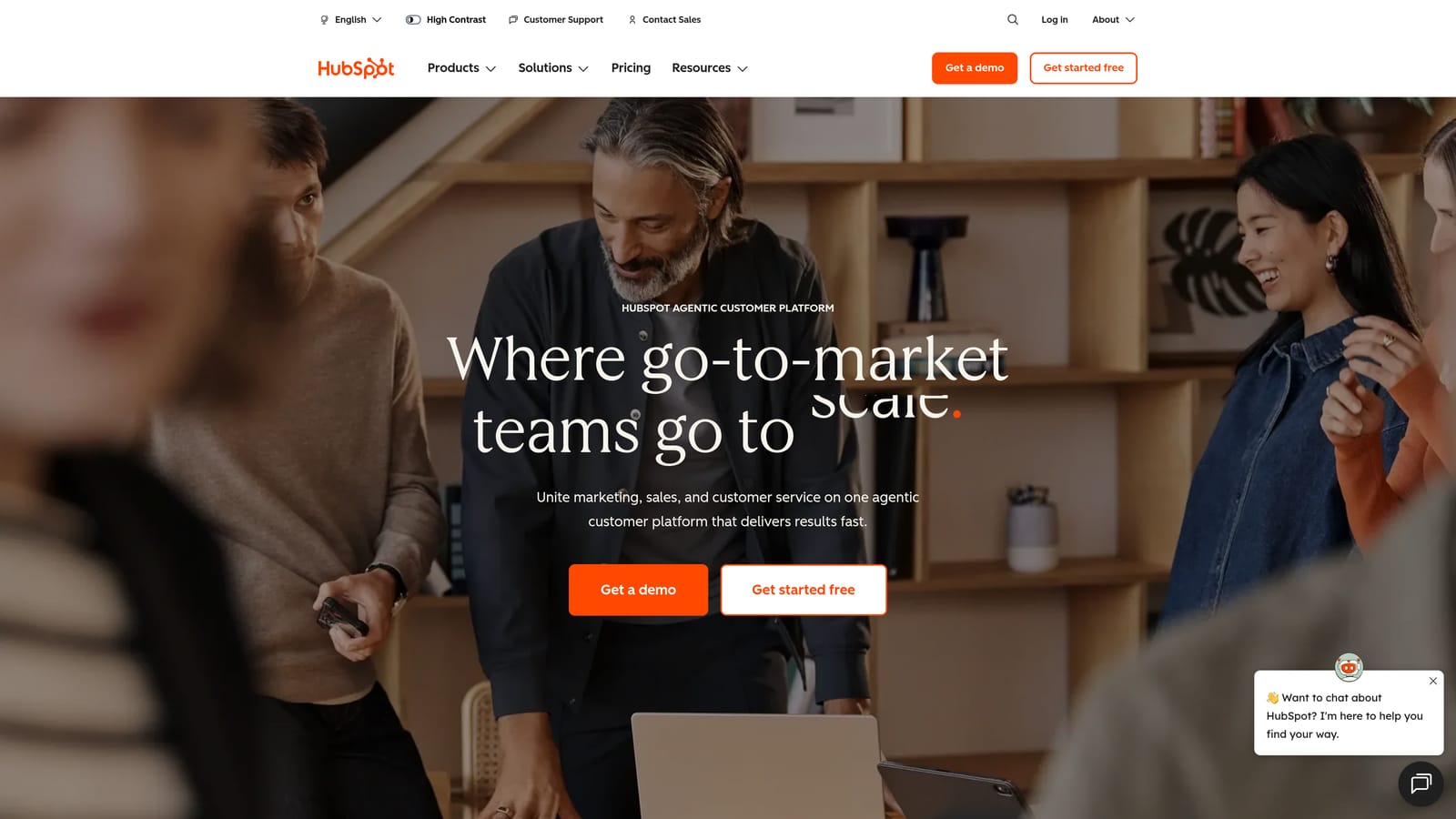
HubSpot Workflows is HubSpot's built-in automation engine, capable of routing and assigning contacts based on CRM properties, lifecycle stages, and form submissions.
Where This Tool Shines
For teams running their entire GTM stack inside HubSpot, Workflows is the natural first stop for lead routing. Because it's native to the CRM, there's no data sync to worry about. You can trigger routing logic the moment a form is submitted, a contact property changes, or a lifecycle stage advances. The setup is accessible to non-technical marketers, and the logic builder is intuitive enough for most common routing scenarios.
Where it falls short is in sophisticated territory management and true round-robin distribution. HubSpot does support round-robin assignment via workflow actions, but it's not as robust as dedicated routing platforms. Teams with complex territory hierarchies or large sales organizations often find they need to layer on additional tooling.
Key Features
Property-Based Assignment: Route and assign contacts using any CRM contact or company property as a trigger condition.
Lifecycle Stage Triggers: Initiate routing logic automatically when a contact moves to a new lifecycle stage, such as MQL or SQL.
Round-Robin Assignment: Distribute leads across a team using built-in round-robin workflow actions.
Slack and Email Notifications: Notify reps via Slack or email the moment a lead is assigned to them.
Native Form and Deal Integration: Works seamlessly with HubSpot forms and deal pipelines without any additional configuration.
Best For
Marketing and sales teams fully committed to the HubSpot ecosystem who want to handle routing without adding another platform. Best suited for teams with moderate routing complexity and a primarily inbound lead motion.
Pricing
Included in paid Sales Hub and Marketing Hub tiers. Advanced automation features require higher-tier plans.
6. Zapier
Best for: Early-stage teams that need flexible, cross-platform lead routing without writing code
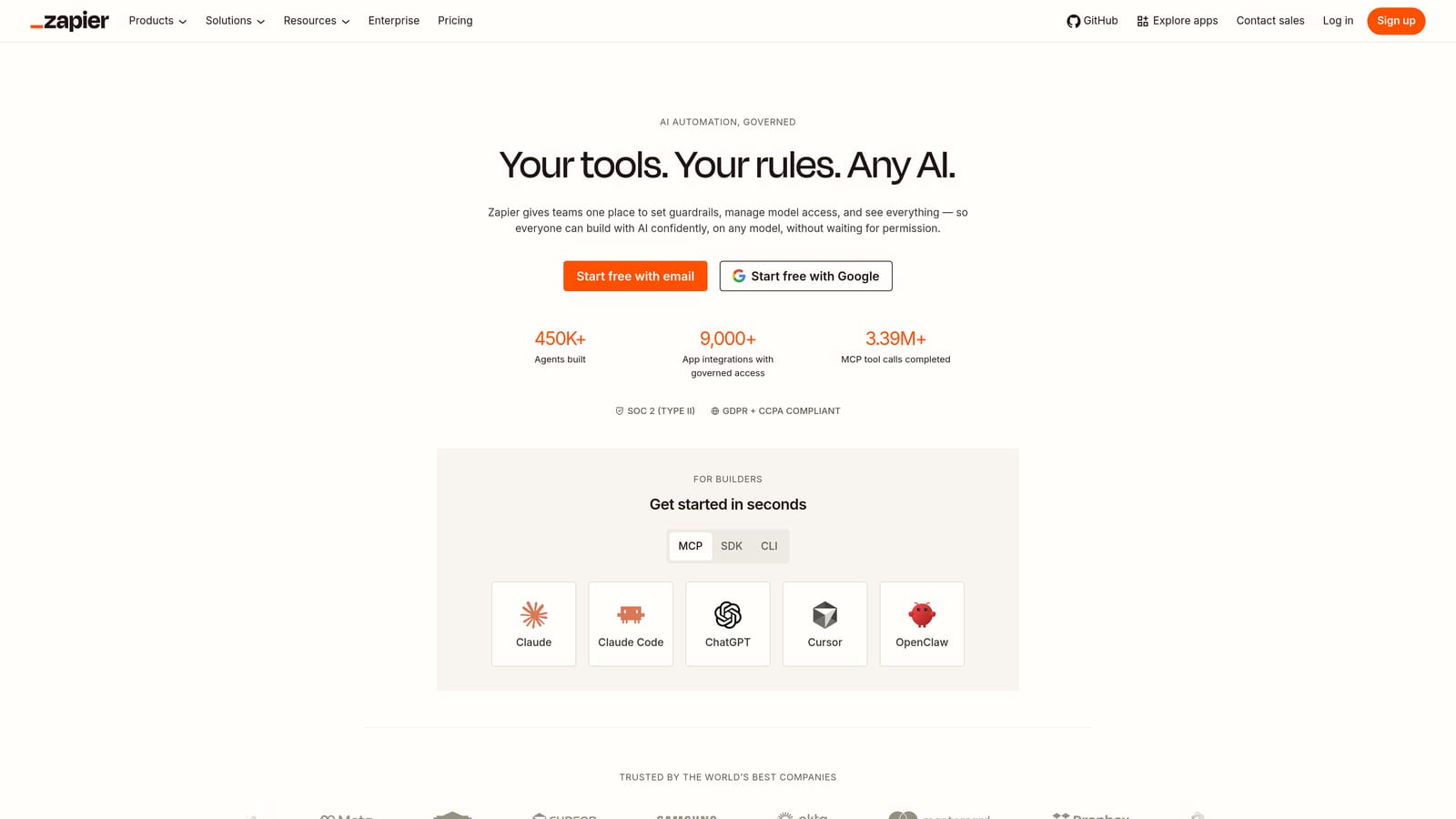
Zapier is a no-code automation platform that can route leads between forms, CRMs, Slack, email, and thousands of other tools using trigger-based workflows.
Where This Tool Shines
Zapier isn't purpose-built for lead routing, but its flexibility makes it a practical solution for teams that need to connect multiple tools without a dedicated routing platform. Think of it as the connective tissue between your form tool, CRM, and communication channels. When a lead comes in, a Zap can check field values, apply conditional logic via Paths, and send that lead to the right destination, whether that's a CRM owner, a Slack channel, or an email sequence.
The limitation is that Zapier routing logic can become brittle as edge cases multiply. Managing complex multi-branch routing across a large team requires careful Zap design and ongoing maintenance. It's most effective for straightforward scenarios: route this type of lead to this rep, notify this channel, create this record.
Key Features
Trigger-Based Routing: Initiate routing actions from form submissions, CRM updates, or events in thousands of connected apps.
Conditional Paths: Build multi-branch routing logic using Zapier's Paths feature to handle different lead types differently.
Broad App Ecosystem: Connect form tools, CRMs, Slack, email platforms, and more in a single automated workflow.
No-Code Setup: Accessible to non-technical users with no development resources required.
Template Library: Pre-built Zap templates for common lead routing scenarios to accelerate setup.
Best For
Early-stage startups or small teams that need to route leads across multiple tools without a dedicated routing platform. Also useful as a bridge layer when your primary tools don't have native integration with each other.
Pricing
Free tier available with limited Zaps. Paid plans start at approximately $19.99/month; check zapier.com for current pricing as plans are updated regularly.
7. RevenueHero
Best for: B2B SaaS teams that want Chili Piper-style functionality with more transparent pricing
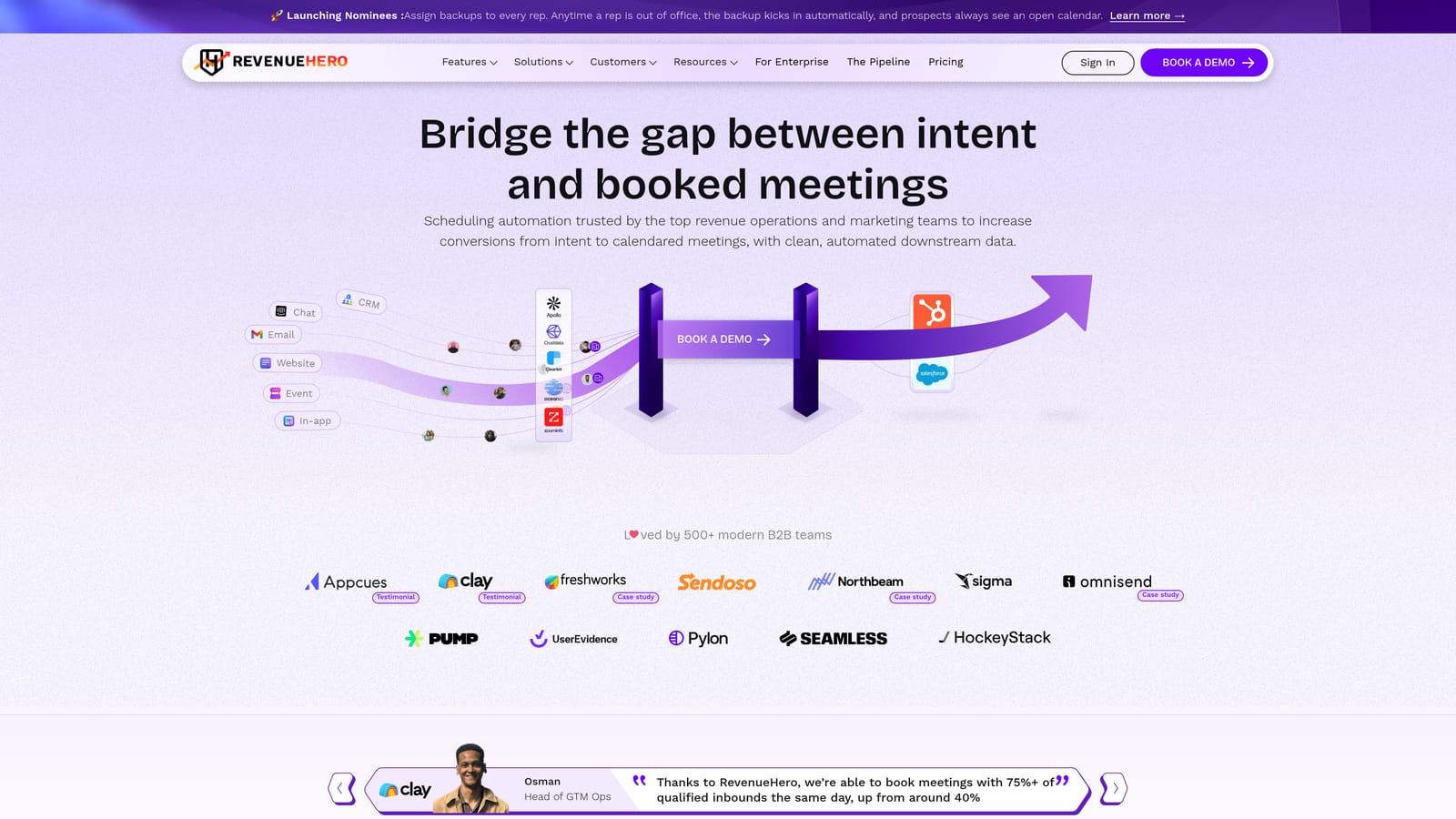
RevenueHero is a B2B pipeline acceleration platform combining form-based lead qualification, intelligent rep routing, and instant calendar booking.
Where This Tool Shines
RevenueHero positions itself squarely in the inbound routing and scheduling space, competing directly with Chili Piper. The platform qualifies leads at the form level, matches them to the best available rep using CRM data and availability signals, and presents instant booking options, all in a single flow. The CRM matching logic is a notable strength: it can look up existing account ownership in Salesforce or HubSpot and route accordingly, which matters for teams with an account-based sales motion.
Teams that have found Chili Piper's pricing difficult to predict often evaluate RevenueHero as an alternative. The core workflow is similar, but RevenueHero has positioned itself as more accessible for growing SaaS teams that aren't yet at enterprise scale.
Key Features
Form-Based Qualification and Routing: Qualify leads through form responses and route them instantly to the appropriate rep based on defined rules.
Smart Rep Matching: Uses CRM data and real-time rep availability to match prospects with the most appropriate salesperson.
Instant Calendar Booking: Prospects can book a meeting immediately after qualification, reducing time-to-conversation.
Round-Robin and Priority Distribution: Flexible assignment models including fair round-robin and priority-based routing for senior reps.
Salesforce and HubSpot Integration: Native CRM sync keeps ownership data, routing records, and meeting details accurate.
Best For
Growing B2B SaaS teams running inbound demand generation who want a dedicated qualification-plus-scheduling platform and are evaluating alternatives to more expensive enterprise routing tools.
Pricing
Check revenuehero.io for current pricing. RevenueHero has historically offered more transparent pricing than some competitors in this category.
8. Calendly Routing
Best for: Teams already using Calendly who want to add a lightweight qualification layer to their scheduling flow
Calendly Routing is Calendly's built-in routing forms feature that directs prospects to the right meeting type, rep, or team based on qualifying questions answered before booking.
Where This Tool Shines
If your team already relies on Calendly for scheduling, Routing is the path of least resistance for adding basic lead qualification. Rather than sending every inbound prospect to the same generic booking link, you present a short qualifying form first. Based on their answers, prospects are routed to the right event type, team, or individual rep. Non-fit prospects can be redirected away from the booking flow entirely, saving reps' calendars for qualified conversations.
The CRM data lookup feature is a useful addition: Calendly can check existing Salesforce or HubSpot records and use that data to inform routing decisions, rather than relying solely on what the prospect self-reports in the form.
Key Features
Pre-Booking Qualifying Form: Ask qualifying questions before allowing a prospect to access your calendar, filtering out non-fit leads.
Flexible Routing Destinations: Route to an individual rep, a team round-robin, or a specific event type based on qualifying answers.
CRM Data Lookup: Pull existing HubSpot or Salesforce data to inform routing decisions beyond self-reported form responses.
Disqualification Paths: Redirect prospects who don't meet your criteria away from the booking flow with a custom message or alternative resource.
Simple Setup: Configured entirely within the existing Calendly interface with no new platform to learn.
Best For
Teams already on Calendly's Teams plan or above who want to add a qualification layer to their scheduling flow without adopting a dedicated routing platform. Not the right fit for teams needing deep CRM routing logic or high-volume lead operations.
Pricing
Available on Calendly Teams plan and above. Check calendly.com for current plan pricing.
9. Distribution Engine
Best for: Salesforce-native sales ops teams that need workload-balanced, accountable lead distribution
Distribution Engine is a Salesforce AppExchange tool specializing in workload-balanced round-robin assignment with rep availability tracking and detailed distribution reporting.
Where This Tool Shines
Distribution Engine fills a specific gap that native Salesforce assignment rules leave open: fair, workload-aware distribution with real accountability. Rather than simple round-robin that ignores whether a rep is out of office or overwhelmed, Distribution Engine tracks rep availability and capacity, adjusting assignments accordingly. This matters for sales ops teams where distribution fairness directly impacts rep morale and pipeline health.
Because it's fully native to Salesforce, there's no external platform to authenticate, no data sync to monitor, and no integration to maintain. Everything lives inside your existing Salesforce org, which simplifies administration considerably for teams that prefer to keep their stack consolidated.
Key Features
Workload-Balanced Distribution: Assign leads based on rep workload and capacity rather than simple sequential rotation.
Rep Availability Tracking: Accounts for rep availability, including out-of-office status, to prevent leads from sitting unworked.
Automatic Reassignment: Automatically reassigns leads that haven't been worked within a defined timeframe, preventing leads from going cold.
Distribution Reporting: Detailed analytics on assignment fairness, rep performance, and routing outcomes for sales ops review.
Fully Native to Salesforce: Operates entirely within your Salesforce org with no external platform or data sync required.
Best For
Sales operations teams running Salesforce who need accountability and fairness in lead distribution across a larger rep team, particularly where rep availability and workload vary significantly. A strong alternative to LeanData for teams whose primary need is distribution equity rather than complex routing logic.
Pricing
Contact for pricing via the Salesforce AppExchange listing at distributionengine.com.
Which Tool Is Right for Your Team?
The right lead routing tool depends on where your routing problem actually lives and what your existing stack looks like. Here's a quick way to think through the decision.
If you want qualification before leads hit your CRM: Orbit AI is built for exactly this. The form layer qualification model means your pipeline stays clean and your reps only see leads that have already been scored and segmented. It's the strongest fit for high-growth SaaS teams running inbound lead generation at scale.
If you're a Salesforce-heavy enterprise: LeanData is the category leader for complex territory management, account-based routing, and visual routing governance. Distribution Engine is worth evaluating if your primary need is workload-balanced distribution rather than routing logic complexity.
If speed-to-meeting is your primary metric: Chili Piper and RevenueHero both combine routing with instant calendar booking. Chili Piper has more market history; RevenueHero is often cited as a more accessible alternative for growing teams.
If you're already inside HubSpot or Salesforce: Start with the native tools. HubSpot Workflows and Salesforce Lead Assignment Rules handle a surprising amount of routing complexity at no additional cost. Add a dedicated platform only when you hit their limits.
If you need cross-platform flexibility on a tight budget: Zapier gives you the connective tissue to route leads between almost any combination of tools. It requires more setup discipline but is highly adaptable for early-stage teams.
If you're already on Calendly: Calendly Routing adds a qualification layer to your existing scheduling flow with minimal lift. It's not a replacement for a dedicated routing platform, but it's a smart upgrade for teams that don't need one yet.
Lead routing is ultimately about making sure your best leads reach the right rep at the right moment. The tools above each solve that problem from a different angle. Start with where your leads enter your funnel and work backward from there.
If that entry point is a form, which it is for most inbound SaaS teams, start building free forms today with Orbit AI and see how qualifying leads at the source changes the quality of everything that follows.


