

You've invested in Leadfeeder to identify which companies are visiting your website. The data flows in, your dashboard fills up with company names, and then... what? You know who's visiting, but you're stuck in a frustrating middle ground: too much information to act on manually, not enough qualified leads to justify the cost.
If this sounds familiar, you're not alone. High-growth teams are increasingly exploring beyond Leadfeeder as their visitor intelligence needs evolve. Perhaps you've hit pricing walls as your traffic scales, encountered data accuracy issues with smaller companies, or struggled to integrate visitor insights into your existing sales workflow.
The visitor identification market has matured significantly. What started as simple IP-to-company matching has evolved into sophisticated platforms offering intent signals, person-level identification, and AI-powered lead scoring. But here's the thing: more features don't always mean better results.
Throughout this guide, we'll evaluate each alternative across five critical dimensions: database coverage and accuracy, integration capabilities with your CRM and marketing stack, pricing structure and scalability, compliance with privacy regulations (especially GDPR), and the depth of insights beyond basic company identification. We'll also address the elephant in the room—visitor identification alone creates a "known visitor problem" where you can see who's browsing but struggle to convert that knowledge into qualified conversations.
Let's explore the solutions that might better fit your team's specific needs and budget.
1. Clearbit Reveal: Enterprise-Grade Intelligence for Data-Driven Teams
The Challenge It Solves
Enterprise teams need more than just company names—they need enriched firmographic data that integrates seamlessly with their existing tech stack. Clearbit Reveal addresses the gap between basic visitor identification and actionable sales intelligence by providing deep company profiles the moment a visitor lands on your site.
The Strategy Explained
Clearbit Reveal uses advanced IP-to-company matching combined with one of the industry's most comprehensive B2B databases. When a visitor arrives at your website, Reveal instantly identifies the company and appends detailed firmographic data including employee count, revenue estimates, technology stack, and industry classification.
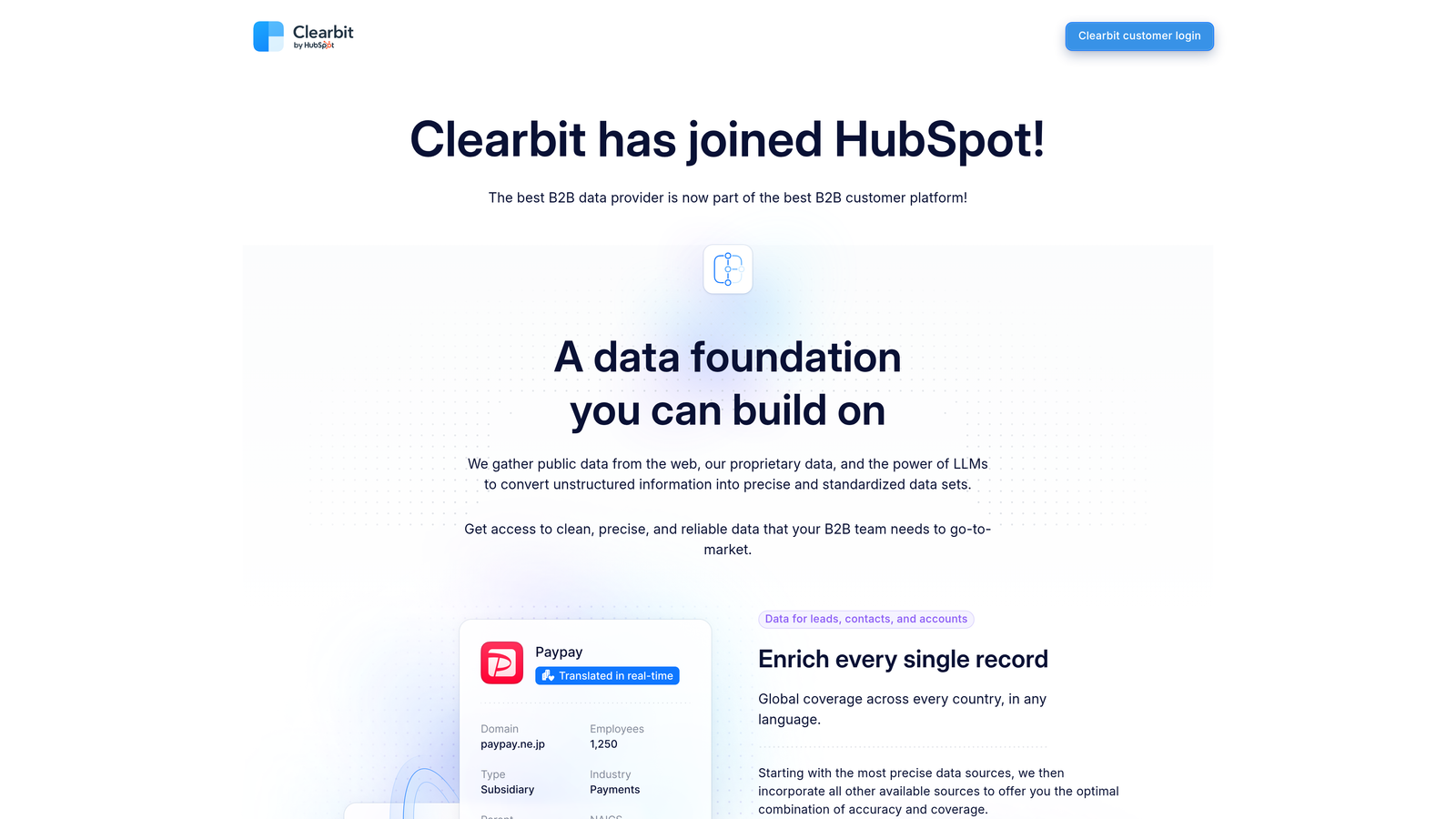
What sets Clearbit apart is its native integration ecosystem. The data flows directly into Salesforce, HubSpot, Marketo, and other platforms you already use, enabling automated workflows based on visitor attributes. Your sales team can receive real-time Slack notifications when target accounts visit high-intent pages, while marketing can trigger personalized campaigns based on company size or industry.
Implementation Steps
1. Install the Clearbit Reveal tracking script on your website and configure page-level tracking for key conversion paths and product pages.
2. Connect Reveal to your CRM and marketing automation platform, then define your ideal customer profile criteria to filter out irrelevant traffic.
3. Build automated workflows that route high-value visitors to sales, trigger personalized email sequences, or customize website content based on company attributes.
Pro Tips
Clearbit's pricing scales with your traffic volume, making it better suited for mid-market to enterprise teams with established budgets. Focus on integrating visitor data with your existing lead scoring models rather than treating it as a standalone tool. The real value emerges when Reveal data informs your entire go-to-market motion.
2. 6sense: AI-Powered Intent Intelligence for ABM Programs
The Challenge It Solves
Account-based marketing teams struggle to identify which target accounts are actually in-market and ready for outreach. 6sense solves this by combining visitor identification with predictive AI that analyzes buying signals across multiple channels, helping you prioritize accounts based on genuine intent rather than just website visits.
The Strategy Explained
6sense goes far beyond traditional visitor identification by aggregating intent signals from across the web—not just your site. The platform monitors research behavior, content consumption patterns, and engagement signals to build predictive models that identify accounts entering active buying cycles.
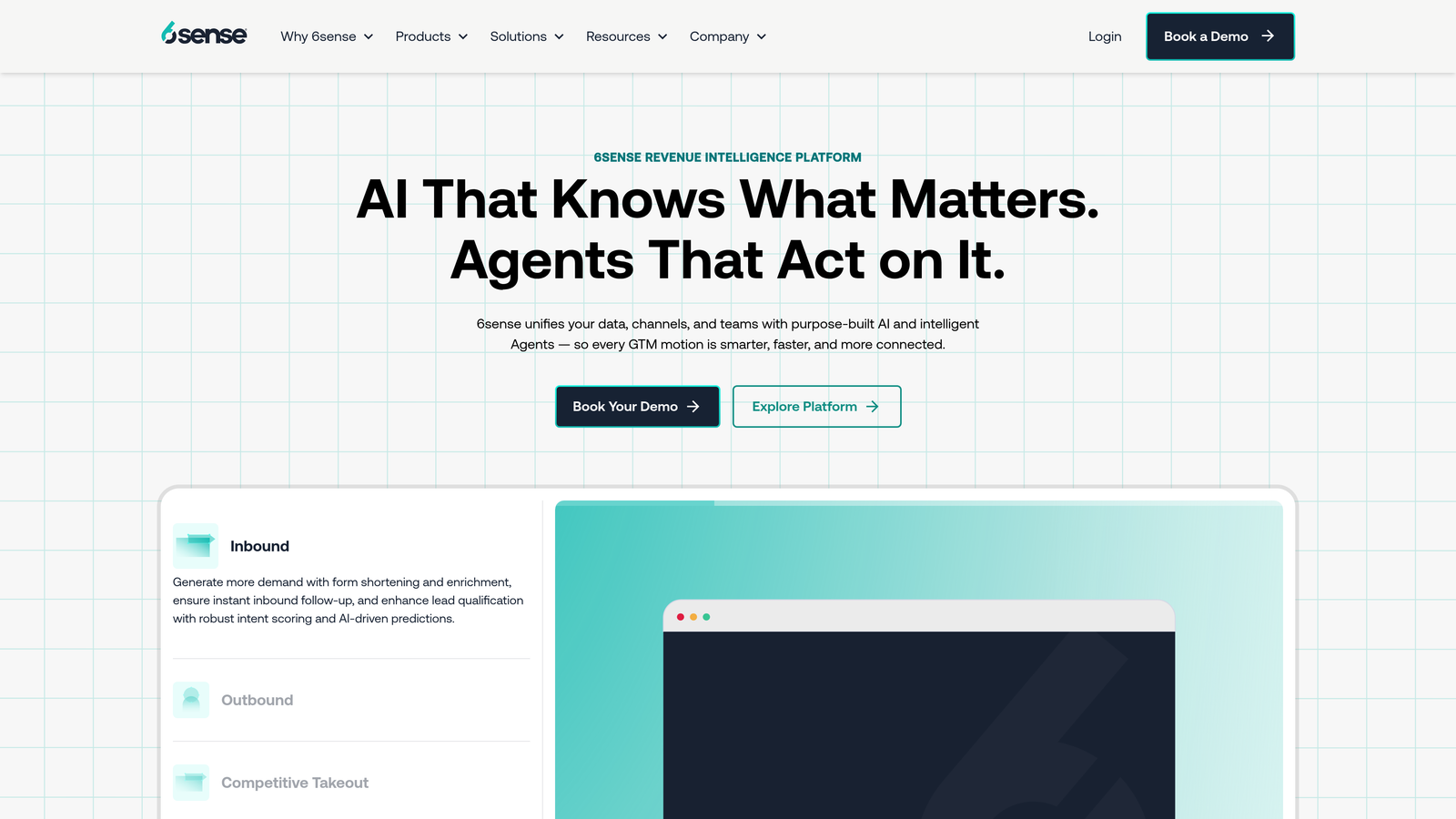
When a target account visits your website, 6sense doesn't just tell you they were there. It provides context: what stage of the buying journey they're in, which topics they're researching, how their engagement compares to similar accounts, and whether now is the right time to reach out. This intelligence powers account prioritization, personalized advertising, and sales outreach timing.
Implementation Steps
1. Define your total addressable market and upload your target account list into 6sense for continuous monitoring across digital channels.
2. Configure the platform to track keyword research, content topics, and competitor analysis that indicates buying intent in your category.
3. Integrate 6sense with your advertising platforms to run targeted campaigns to in-market accounts and sync intent scores with your CRM for sales prioritization.
Pro Tips
6sense represents a significant investment and works best for organizations with established ABM programs and annual contract values that justify the platform cost. The AI models improve over time, so expect a ramp period of several months before the predictive insights reach full accuracy. This isn't a tool for early-stage startups—it's built for teams running sophisticated, multi-channel ABM motions.
3. Albacross: European-Focused Intelligence with GDPR at Its Core
The Challenge It Solves
European companies and those serving EU markets face unique challenges with visitor identification due to GDPR requirements. Albacross was built from the ground up with European privacy regulations in mind, offering robust visitor intelligence without the compliance headaches that plague US-centric platforms.
The Strategy Explained
Albacross specializes in identifying European companies visiting your website with particular strength in the Nordic and DACH regions. The platform maintains compliance with GDPR through transparent data processing agreements and cookie consent management while still delivering detailed company identification and engagement tracking.
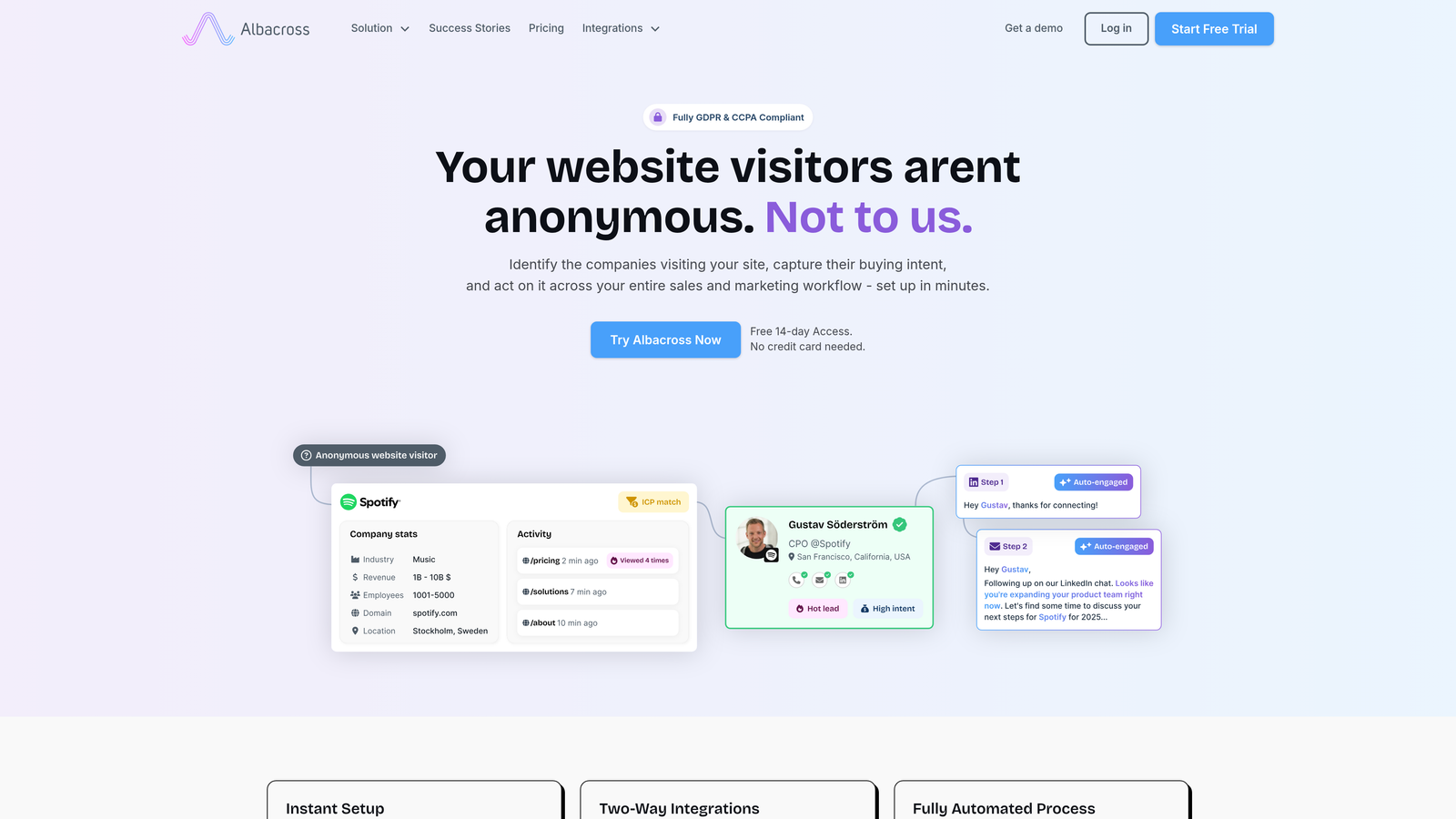
Beyond basic identification, Albacross provides lead scoring based on visit frequency, page depth, and engagement patterns. The platform's strength lies in its European company database accuracy and its understanding of regional privacy requirements. You can segment visitors by country, industry, and company size, then export qualified leads directly to your CRM or trigger automated outreach sequences.
Implementation Steps
1. Implement Albacross tracking code and configure your cookie consent management to ensure GDPR compliance while maximizing identification rates.
2. Set up company filters to focus on your target market segments and define engagement thresholds that indicate genuine buying interest.
3. Create lead lists based on visitor behavior and integrate with your email platform or CRM to enable automated follow-up workflows.
Pro Tips
If your primary market is Europe, Albacross often outperforms US-based alternatives in terms of database coverage and identification accuracy. The platform's pricing is more accessible than enterprise solutions like Clearbit, making it suitable for mid-market European companies. Pay special attention to the cookie consent integration—proper setup significantly impacts identification rates while maintaining compliance.
4. Lead Forensics: Real-Time Alerts for Sales-Driven Organizations
The Challenge It Solves
Sales teams lose opportunities when they discover visitor data days after the fact. Lead Forensics prioritizes speed, delivering real-time alerts when target companies visit your site so your sales team can strike while the prospect is actively researching your solution.
The Strategy Explained
Lead Forensics focuses on immediate notification and detailed journey tracking rather than broad integrations or AI-powered insights. When a company visits your website, the platform can send instant email or SMS alerts to designated sales reps, including which pages they viewed, how long they stayed, and any forms they interacted with.
The platform maintains a global IP database and provides detailed visitor timelines showing multiple visits over time. This historical view helps sales teams understand engagement patterns and identify when accounts are moving from casual research to serious evaluation. Lead Forensics also attempts to provide contact information for key decision-makers at identified companies, though this data quality varies by region and company size.
Implementation Steps
1. Install the Lead Forensics tracking pixel and configure real-time alert rules based on company attributes, page visits, or engagement thresholds.
2. Assign specific territories or industries to individual sales reps so alerts route to the appropriate team member automatically. Understanding what is smart lead routing can help you optimize this process.
3. Train your sales team to act on real-time notifications within hours, not days—the value diminishes significantly if you wait to follow up.
Pro Tips
Lead Forensics works best for organizations with responsive sales teams who can act on leads quickly. The platform's contact data should be verified before outreach—accuracy varies considerably. Be prepared for higher pricing compared to some alternatives, as Lead Forensics positions itself as a premium solution. The real-time alerting is valuable, but only if your sales process can accommodate immediate follow-up.
5. Visitor Queue: Budget-Friendly Identification for Growing Teams
The Challenge It Solves
Startups and small businesses need visitor identification capabilities without enterprise-level budgets. Visitor Queue delivers core identification functionality at accessible price points, making it possible for smaller teams to understand who's visiting their website without breaking the bank.
The Strategy Explained
Visitor Queue strips away the advanced features and focuses on doing one thing well: identifying companies visiting your website and providing basic contact information for outreach. The platform offers a straightforward dashboard showing which companies visited, what pages they viewed, and estimated contact details for key personnel.
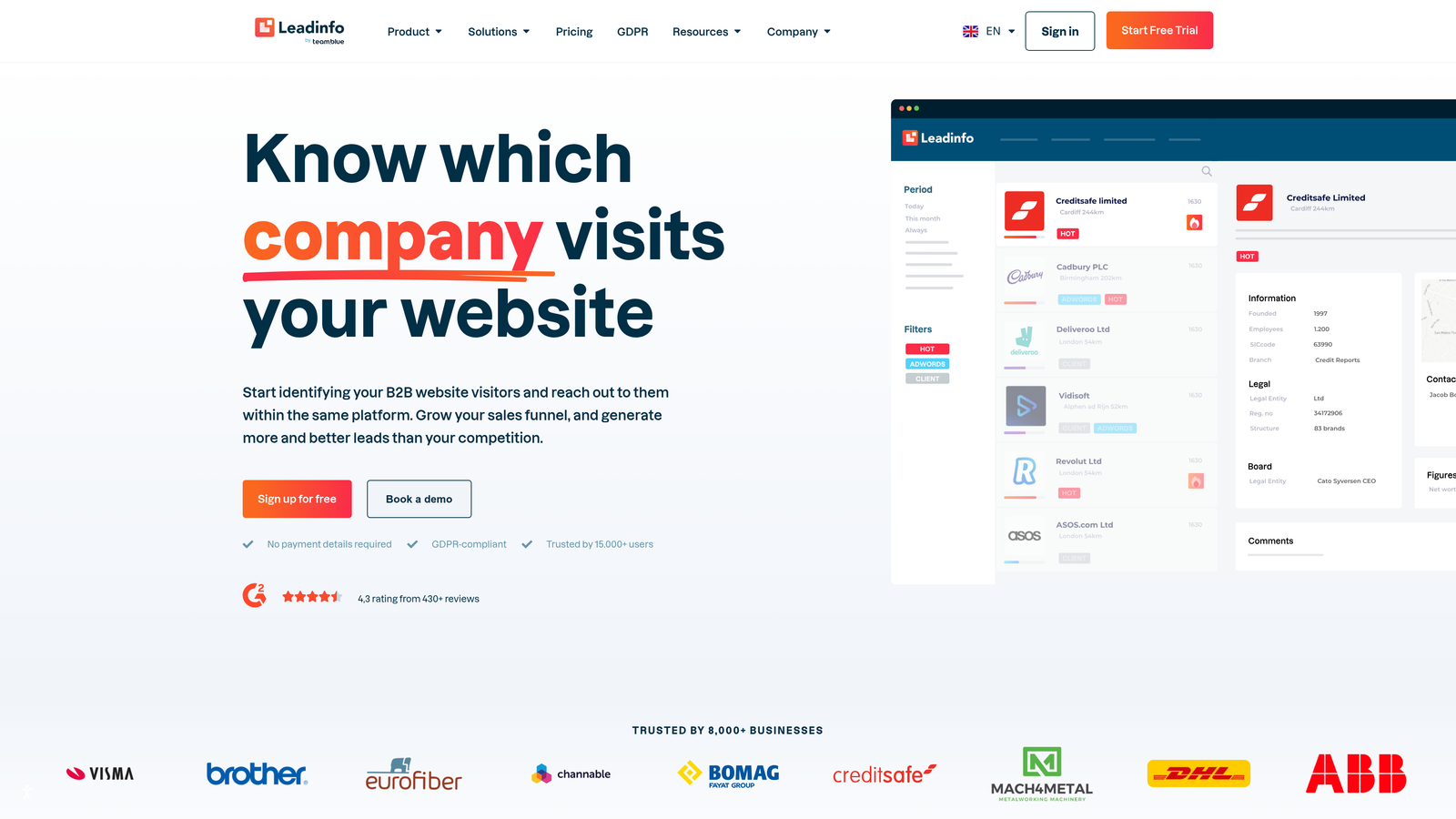
While it lacks the sophisticated AI, intent signals, and deep integrations of enterprise platforms, Visitor Queue provides enough intelligence for small sales teams to prioritize outreach. The platform includes basic CRM integrations and email export functionality, allowing you to incorporate visitor data into your existing workflows without complex setup.
Implementation Steps
1. Add the Visitor Queue tracking code to your website and configure basic filters to exclude ISPs, competitors, and irrelevant traffic.
2. Set up daily or weekly email digests summarizing visitor activity and highlighting companies that match your ideal customer profile.
3. Export qualified visitor lists to your CRM or email platform for manual outreach by your sales team.
Pro Tips
Visitor Queue is ideal for companies with monthly website traffic under 10,000 visitors and small sales teams who can manually review and act on visitor data. Don't expect the database coverage or accuracy of premium platforms—you'll encounter more unidentified visitors and less detailed company information. The value proposition is access to visitor identification at a fraction of enterprise platform costs, not cutting-edge features. For startups evaluating options, exploring formstack alternatives for startups can complement your visitor intelligence strategy.
6. Demandbase: Full-Funnel ABM Platform with Integrated Visitor Intelligence
The Challenge It Solves
Organizations running account-based marketing programs need more than visitor identification—they need a unified platform for advertising, personalization, and sales intelligence. Demandbase solves the integration headache by combining visitor identification with ABM advertising, website personalization, and sales intelligence in a single platform.
The Strategy Explained
Demandbase approaches visitor identification as one component of a comprehensive ABM strategy. The platform identifies website visitors, but that's just the starting point. It also enables you to run targeted display and social advertising to specific accounts, personalize website content based on visitor attributes, and provide sales teams with account-level intelligence that combines website activity with broader engagement signals.
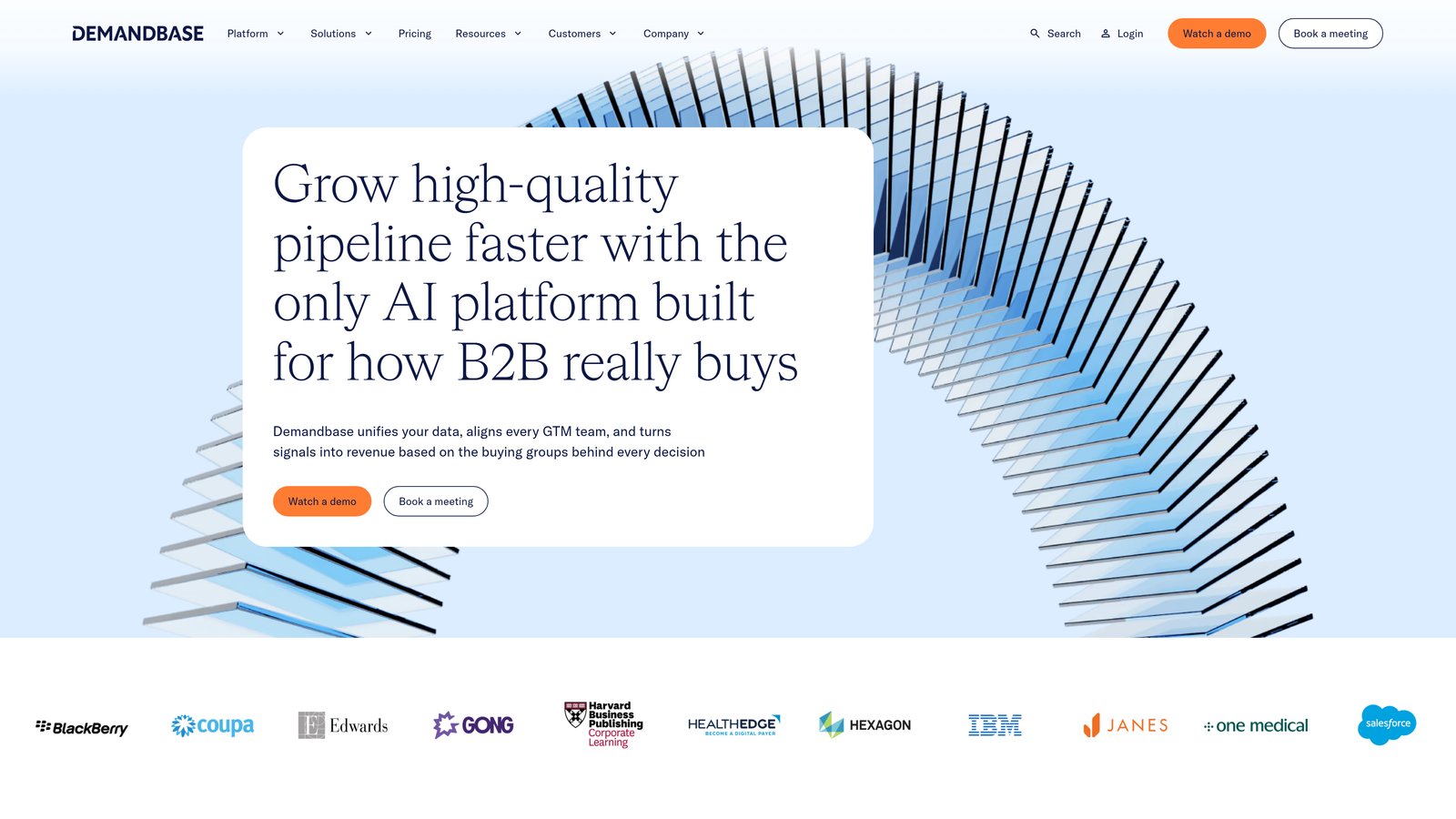
The integrated approach means your advertising, website experience, and sales outreach all work from the same account data and engagement insights. When a target account engages with your advertising, visits your website, and downloads content, Demandbase creates a unified view of that journey rather than forcing you to piece together data from multiple tools.
Implementation Steps
1. Define your target account list and configure account-based advertising campaigns across display, social, and programmatic channels.
2. Implement website personalization rules that customize content, messaging, and CTAs based on account attributes and engagement stage.
3. Integrate Demandbase with your CRM and marketing automation platform to sync account engagement data and trigger sales workflows.
Pro Tips
Demandbase represents a significant investment and makes sense primarily for mid-market to enterprise B2B companies with established ABM programs and marketing budgets to support multi-channel campaigns. The platform's value increases when you use multiple components—if you only need visitor identification, more focused tools may be more cost-effective. Expect a learning curve and plan for dedicated resources to manage the platform effectively. For enterprise teams evaluating comprehensive solutions, understanding enterprise lead capture pricing helps with budget planning.
7. Snitcher: Lightweight Solution with Native Analytics Integration
The Challenge It Solves
Many teams already use Google Analytics for website tracking and don't want to add complex new platforms to their stack. Snitcher bridges the gap by providing visitor identification that integrates natively with Google Analytics, allowing you to see company-level data alongside your existing traffic metrics.
The Strategy Explained
Snitcher takes a streamlined approach to visitor identification with a focus on simplicity and ease of use. The platform identifies companies visiting your website and pushes that data directly into Google Analytics as custom dimensions, allowing you to segment and analyze company visits using the analytics interface you already know.
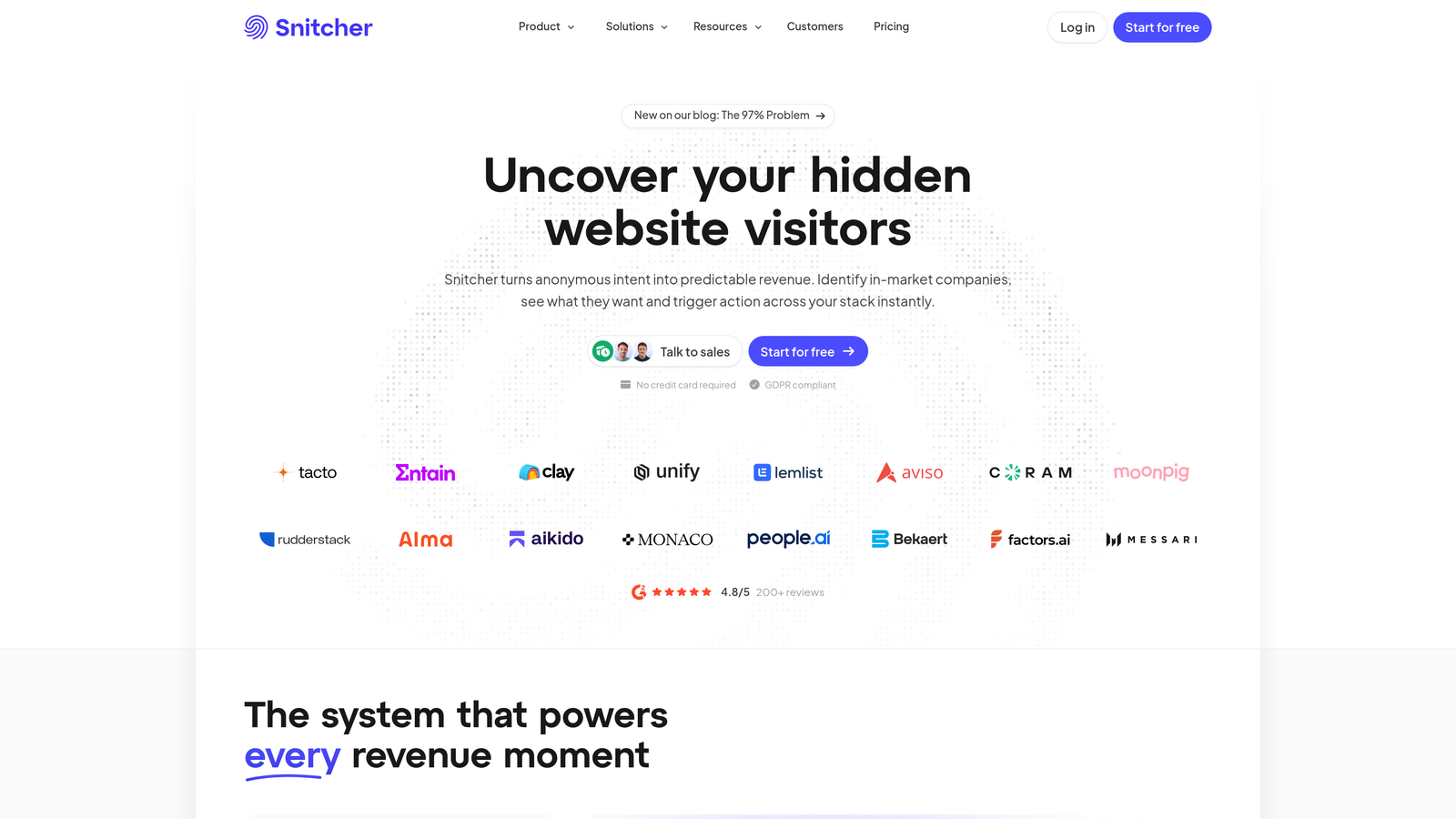
Beyond the Analytics integration, Snitcher provides a clean dashboard showing identified companies, their visit history, and basic firmographic data. The platform includes email notifications for high-value visitors and simple CRM integrations for exporting leads. The emphasis is on getting actionable visitor data without the complexity of enterprise platforms.
Implementation Steps
1. Install the Snitcher tracking script and connect your Google Analytics account to enable automatic data synchronization.
2. Configure company filters to focus on relevant traffic and set up email alerts for visits from target accounts or high-intent page views.
3. Create custom segments in Google Analytics using the company data dimensions to analyze visitor behavior by industry, company size, or other attributes.
Pro Tips
Snitcher works best for marketing teams that live in Google Analytics and want visitor identification without learning a new platform. The database coverage focuses primarily on European companies, with less comprehensive coverage in other regions. Pricing is straightforward and based on identified companies per month, making it predictable for budgeting purposes. This is a solid middle-ground option between budget tools and enterprise platforms.
8. RB2B: Person-Level Identification Through LinkedIn Matching
The Challenge It Solves
Company-level identification tells you which organization visited your site, but not which specific person was browsing. RB2B addresses this limitation by attempting to identify individual visitors through LinkedIn profile matching, giving sales teams specific contacts to reach out to rather than generic company information.
The Strategy Explained
RB2B uses a different approach than traditional IP-based identification. The platform attempts to match website visitors with LinkedIn profiles by analyzing various signals and data points. When successful, this provides not just a company name but an actual person's name, title, and LinkedIn profile—dramatically more actionable for sales outreach.
The platform focuses on quality over quantity, identifying fewer visitors than broad IP-matching tools but providing more detailed information when identification succeeds. RB2B works particularly well for identifying visitors who arrive from LinkedIn or other social channels where matching signals are stronger.
Implementation Steps
1. Implement the RB2B tracking pixel and configure your ideal customer profile criteria to filter person-level identifications.
2. Connect your CRM to automatically create contact records for identified individuals and associate them with their company accounts.
3. Train your sales team to personalize outreach using the LinkedIn profile information and visit context provided by the platform.
Pro Tips
Person-level identification rates are significantly lower than company-level identification—expect to identify specific individuals for a small percentage of your traffic. The quality of those identifications, however, is often worth the trade-off for sales teams. RB2B works best when combined with other identification tools rather than as your sole visitor intelligence solution. The platform is relatively new compared to established players, so evaluate carefully and consider starting with a trial period. Teams focused on lead generation alternatives often pair RB2B with form-based capture for maximum coverage.
9. Factors.ai: Visitor Intelligence Combined with Attribution Modeling
The Challenge It Solves
Marketing teams struggle to connect visitor identification with campaign attribution and ROI measurement. Factors.ai solves this by combining visitor intelligence with multi-touch attribution, helping you understand not just who visited your site but which marketing efforts drove those visits and influenced conversions.
The Strategy Explained
Factors.ai identifies website visitors while simultaneously tracking their journey across marketing touchpoints. The platform connects visitor activity with advertising campaigns, email interactions, content downloads, and other engagement points to build comprehensive account journeys.
This integrated approach means you can see which accounts visited your website after engaging with specific campaigns, how many touchpoints occurred before conversion, and which channels deserve credit for pipeline generation. The attribution modeling helps marketing teams optimize budget allocation based on what actually drives qualified accounts to engage, not just general traffic metrics. For teams seeking better analytics capabilities, this combination proves particularly valuable.
Implementation Steps
1. Install Factors.ai tracking and connect your advertising platforms, marketing automation system, and CRM to enable cross-channel journey tracking.
2. Define your attribution model (first-touch, last-touch, linear, or custom) and configure conversion events that matter for your business.
3. Build dashboards that combine visitor identification with attribution insights to understand which channels drive target account engagement.
Pro Tips
Factors.ai makes most sense for marketing teams that need to prove ROI and optimize multi-channel campaigns, not just identify visitors. The platform requires clean data integration across your marketing stack to deliver accurate attribution—expect to invest time in proper setup. Pricing is based on identified companies and attribution events, so costs can scale quickly for high-traffic sites. The combined visitor intelligence and attribution capability is powerful but may be overkill if you only need basic identification.
10. Form-Based Lead Capture: Converting Identified Visitors into Qualified Leads
The Challenge It Solves
Here's the uncomfortable truth about visitor identification: knowing which companies visit your website doesn't automatically create qualified leads. You can see that Acme Corp visited your pricing page, but without a direct signal of interest, your sales team is stuck making cold outreach based on anonymous browsing behavior. Form-based lead capture solves this by transforming passive visitors into active, qualified prospects.
The Strategy Explained
Modern form builders like Orbit AI take a complementary approach to visitor identification. Instead of trying to identify anonymous browsers, they focus on creating conversion experiences so compelling that visitors willingly identify themselves. AI-powered forms can qualify leads in real-time through conversational interactions, route prospects to the right sales rep automatically, and integrate seamlessly with your CRM—all while delivering a modern, mobile-optimized experience.
The strategic advantage is quality over quantity. While visitor identification tools might show you hundreds of companies browsing your site, form-based capture gives you the subset who are genuinely interested enough to start a conversation. These are warmer leads with clearer intent, making your sales team's job dramatically easier. Exploring typeform alternatives for lead qualification can help you find the right fit for your conversion strategy.
Implementation Steps
1. Audit your current conversion paths and identify where visitors drop off before submitting contact information or requesting demos.
2. Replace generic contact forms with intelligent, conversational forms that adapt based on visitor responses and qualify leads through strategic questions. Consider implementing a multi-step form builder to improve completion rates.
3. Implement progressive profiling and conditional logic to gather the right information without overwhelming prospects with lengthy forms.
Pro Tips
Form-based capture works best when paired with visitor identification, not as a replacement. Use identification tools to understand who's browsing, then use optimized forms to convert the most promising visitors into qualified leads. Focus on reducing form friction—every additional field decreases conversion rates. AI-powered qualification helps you gather necessary information without creating tedious forms. The goal is making it easier for interested prospects to raise their hand, not harder.
Building Your Complete Visitor Intelligence Stack
Choosing the right Leadfeeder alternative isn't about finding the "best" tool—it's about matching capabilities to your specific needs, budget, and go-to-market strategy.
For early-stage startups with limited budgets, tools like Visitor Queue or Snitcher provide basic identification at accessible price points. Mid-market companies with growing sales teams might find better value in Albacross or Lead Forensics, which balance features with reasonable costs. Enterprise organizations running sophisticated ABM programs should evaluate platforms like 6sense or Demandbase that offer comprehensive account intelligence beyond simple visitor identification.
But here's what matters most: visitor identification alone doesn't generate pipeline. The most successful teams combine identification tools with strong lead capture mechanisms. They use visitor intelligence to understand who's browsing, then deploy optimized conversion experiences to transform interest into qualified conversations.
Think about your complete conversion funnel, not just the identification layer. Can you act on the visitor data you're collecting? Do you have the sales capacity to follow up on hundreds of identified companies? Are your forms and conversion paths optimized to capture leads who are ready to engage?
The gap between knowing who visits your site and actually converting those visitors into customers is where many B2B teams struggle. Visitor identification shows you the opportunity. Intelligent lead capture helps you seize it.
Transform your lead generation with AI-powered forms that qualify prospects automatically while delivering the modern, conversion-optimized experience your high-growth team needs. Start building free forms today and see how intelligent form design can elevate your conversion strategy.


