

Choosing the right donation form platform can be the difference between a visitor who bounces and a donor who gives — and then gives again. For nonprofits, every friction point in the donation flow costs real revenue for real causes, and the platform you choose shapes every step of that experience.
This guide covers nine platforms built to handle online donations, from lightweight embeddable forms to full-featured fundraising suites. Whether you're a scrappy grassroots org collecting your first online donations or a mid-size nonprofit optimizing a high-volume campaign, there's a purpose-built tool here for you.
We evaluated each platform on conversion-focused design, payment processing capabilities, recurring donation support, fee structures, and integration depth. One note: Orbit AI leads this list because its AI-powered form builder offers a genuinely compelling option for nonprofits focused on donor qualification and conversion. That said, every tool here earns its place on merit.
1. Orbit AI
Best for: Nonprofits that want AI-driven donor segmentation and conversion-optimized form design.
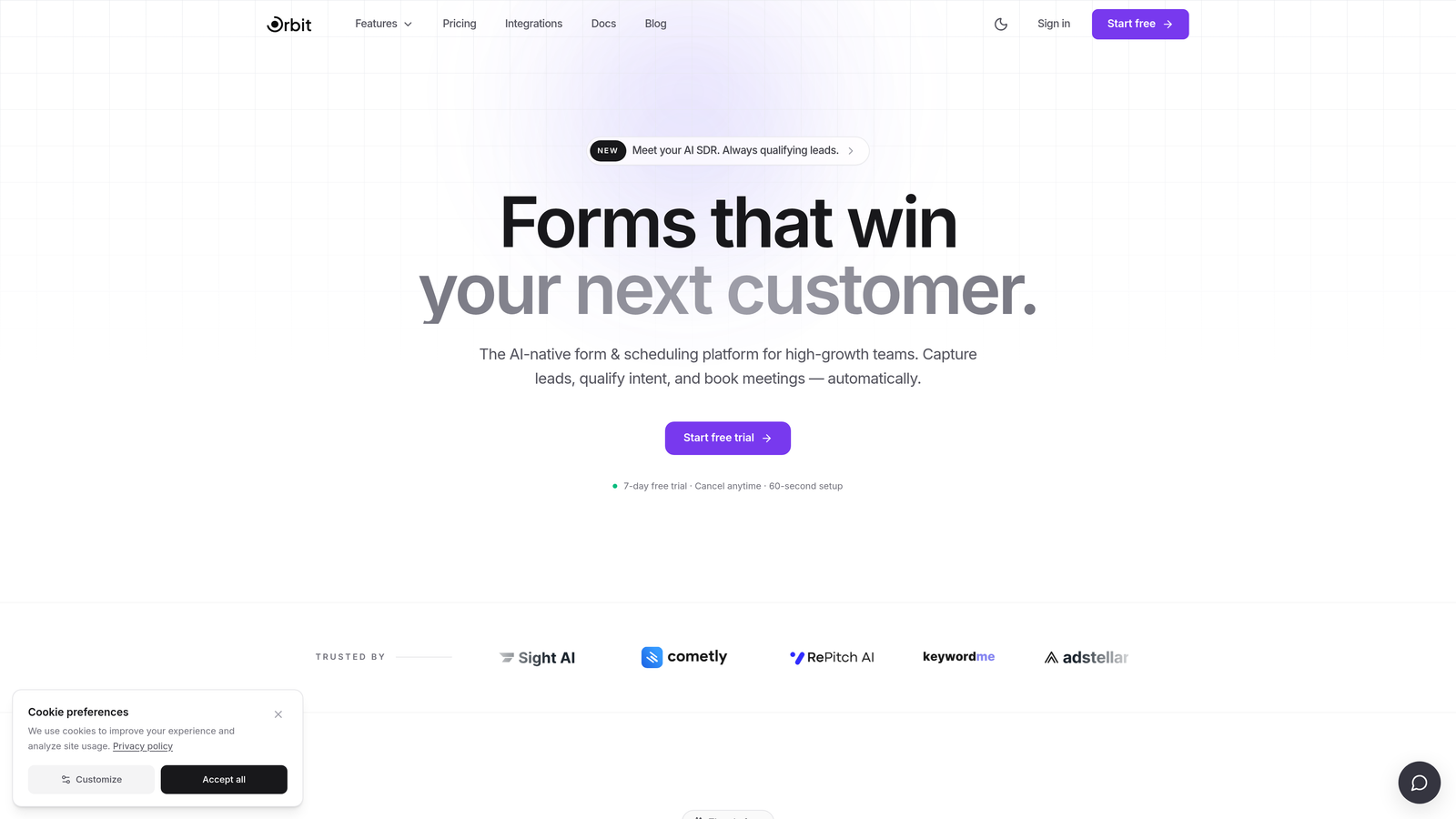
Orbit AI is an AI-powered form builder with conversational logic and donor qualification capabilities, built for teams that want smarter forms rather than generic donation widgets.
Where This Tool Shines
Most donation forms treat every visitor the same: one static form, one ask, no intelligence. Orbit AI flips that model. Its conversational form logic adapts questions based on how a donor responds, letting you surface different experiences for a first-time $25 donor versus a prospective major gift prospect. That kind of dynamic branching is rare in the donation form space, and it's genuinely valuable for nonprofits that want to qualify donors rather than just collect transactions.
The design quality also stands out. Orbit AI's forms are modern and polished, reflecting well on your nonprofit brand at a moment when donor trust matters most. For organizations that have struggled with clunky embedded widgets that feel off-brand, this is a meaningful upgrade.
Key Features
AI-Driven Form Logic: Forms adapt questions and pathways in real time based on donor input, creating a personalized giving experience.
Donor Qualification Layer: Automatically segments major gift prospects from general donors based on responses, without manual review.
Conversion-Optimized Design: Minimal friction, modern UI, and thoughtful form flow designed to maximize completion rates.
Deep Integration Capabilities: Connects with CRMs, email platforms, and payment processors to fit into your existing tech stack.
Beautiful Form UI: Polished, on-brand design that builds donor confidence rather than undermining it.
Best For
Nonprofits that want sophisticated form logic and donor segmentation, particularly organizations running major gift programs alongside general online giving. Also a strong fit for teams using Stripe who want a no-code front end with real intelligence behind it. Less suited for orgs that need built-in payment processing or a standalone donor management system.
Pricing
Visit orbitforms.ai for current plan pricing. A free option is available to get started.
2. Donorbox
Best for: Small-to-mid nonprofits wanting a purpose-built donation platform with fast setup.
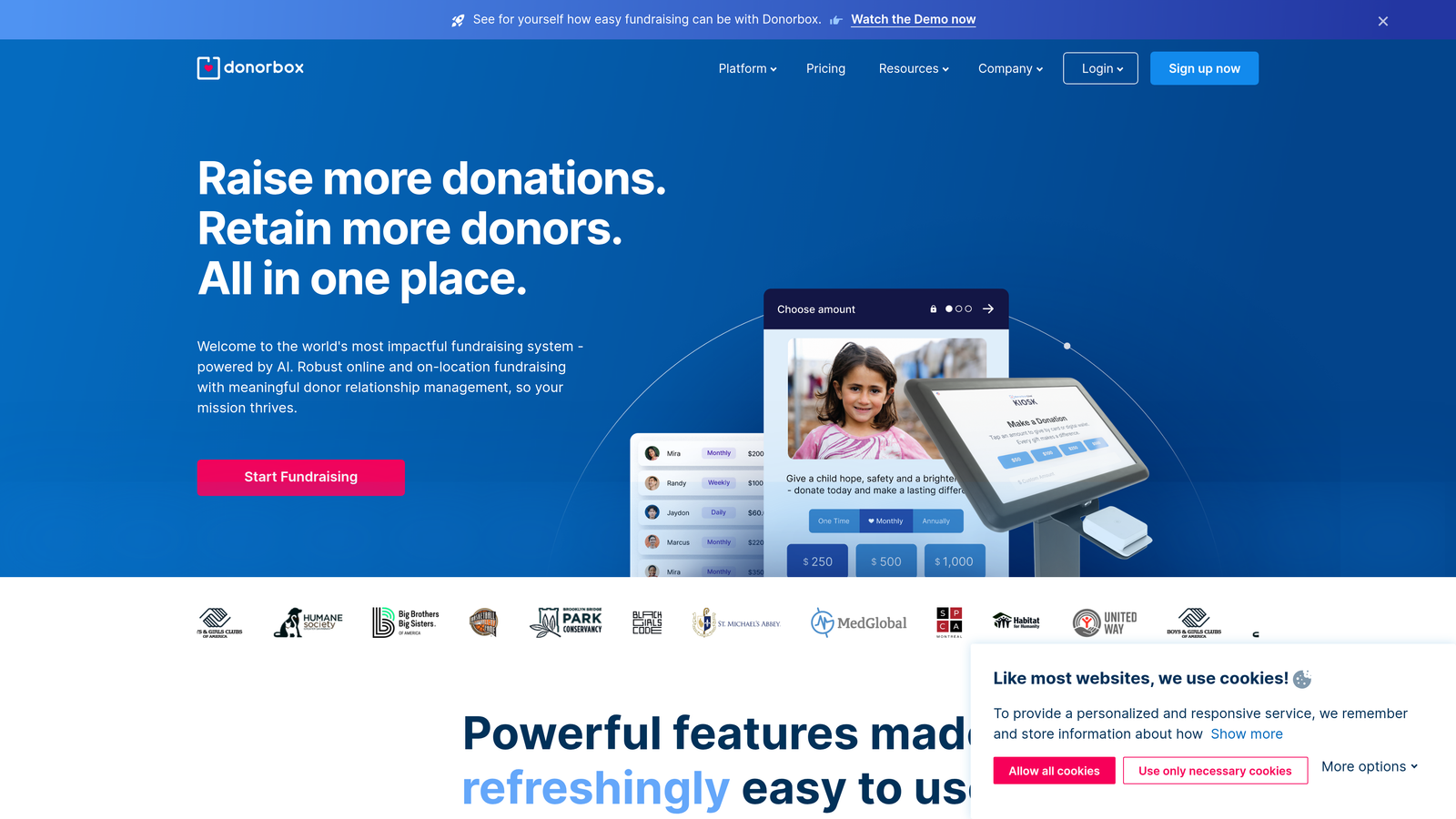
Donorbox is a purpose-built nonprofit donation platform with recurring giving, donor portals, and straightforward embed options for any website.
Where This Tool Shines
Donorbox has earned its reputation as a go-to for nonprofits that need a reliable, functional donation form without a heavy technical lift. You can embed a working donation form on your website in minutes, and the recurring giving infrastructure is solid. Donors can manage their own giving through a self-service portal, which reduces administrative overhead for your team.
The platform's breadth is also worth noting. Campaign pages, goal meters, and donor walls give you tools that go beyond a simple checkout form, without requiring a full enterprise platform investment.
Key Features
Recurring Donation Management: Donors can set up, pause, and update monthly giving directly through a self-service portal.
Easy Website Embedding: Embeds on any website in minutes with a simple code snippet, no developer required.
Built-In Payment Processing: Stripe and PayPal integrations handle payment processing out of the box.
Campaign Tools: Campaign pages, progress goal meters, and donor walls help drive urgency and social proof.
Low Platform Fee Structure: Transparent, low percentage-based fee keeps costs predictable.
Best For
Small-to-mid nonprofits that want a purpose-built donation platform they can deploy quickly. Donorbox is particularly well-suited for organizations that prioritize recurring giving programs and want donors to manage their own subscriptions without staff involvement. The UI is functional rather than flashy, which suits orgs that prioritize reliability over aesthetics.
Pricing
1.5% platform fee on donations plus standard payment processing fees. A free plan is available with higher platform fees applied.
3. Givebutter
Best for: Nonprofits running peer-to-peer campaigns, events, or livestream fundraising at zero platform cost.
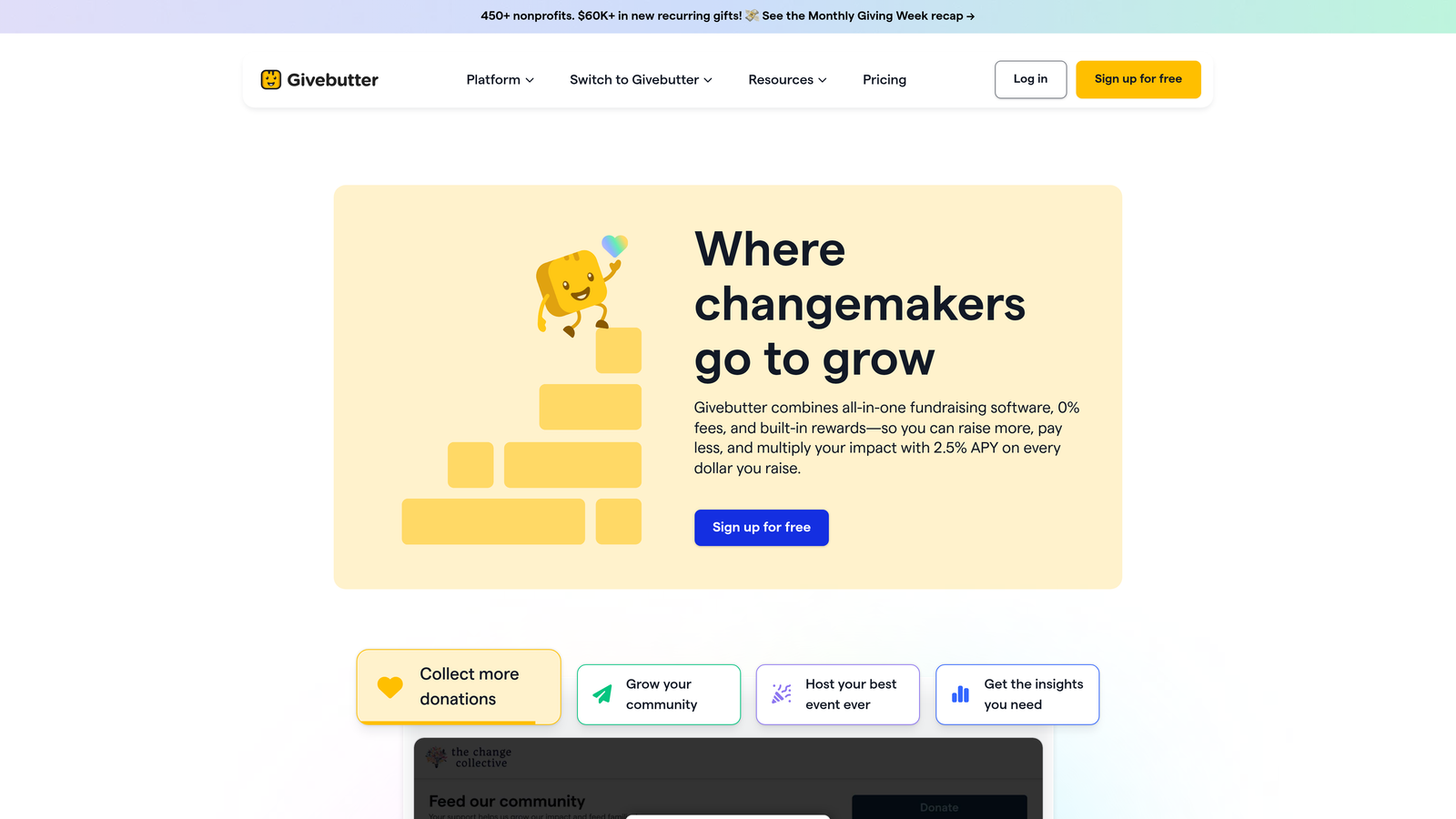
Givebutter is a free fundraising platform covering campaigns, events, peer-to-peer, and livestream giving, with a revenue model based on optional donor tips.
Where This Tool Shines
Givebutter's 0% platform fee model is genuinely compelling, especially for smaller nonprofits where every dollar of overhead matters. The platform covers a wide range of fundraising formats — from simple donation pages to full peer-to-peer campaigns and live fundraising events — without charging the organization anything. Instead, donors are prompted to leave an optional tip to cover costs.
The built-in CRM and social sharing tools add real value beyond just payment collection. For nonprofits that want a single platform to run campaigns, manage donors, and engage supporters, Givebutter punches well above its price point.
Key Features
0% Platform Fee: The tip-to-cover model means the platform is free for nonprofits; donors can optionally cover transaction costs.
Peer-to-Peer Fundraising: Team and individual fundraising pages with leaderboards and social sharing built in.
Livestream Fundraising: Native livestream integration lets you run virtual fundraising events directly through the platform.
Text-to-Give: Mobile giving via text message for events and campaigns.
Built-In CRM: Donor management and contact tracking included without a separate subscription.
Best For
Nonprofits running event-driven or peer-to-peer campaigns who want comprehensive tools without platform fees. Worth noting: the tip prompts shown to donors are prominent, which some donors may find confusing. This is a trade-off to understand before committing. Paid plans are available for organizations that want additional features beyond the free tier.
Pricing
Free platform for nonprofits. Optional donor tips cover processing fees. Paid plans available for additional features and capabilities.
4. Fundraise Up
Best for: Higher-volume nonprofits that want machine learning to optimize donation amounts in real time.
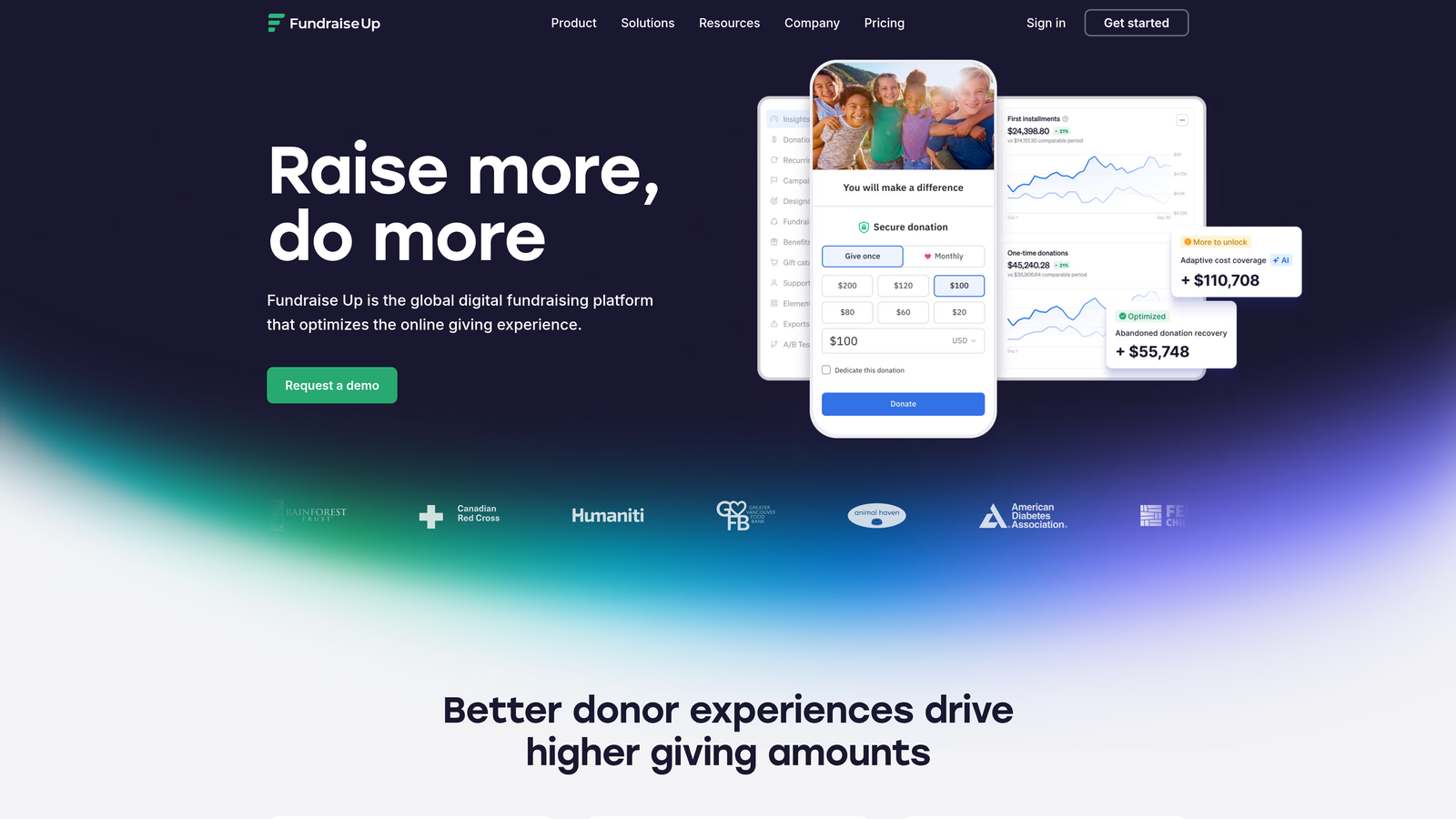
Fundraise Up is an AI-powered donation platform that uses machine learning to optimize ask amounts and recurring giving upsells in real time.
Where This Tool Shines
Fundraise Up is the most technically sophisticated dedicated nonprofit donation platform on this list. Its machine learning layer analyzes donor behavior signals and dynamically adjusts suggested ask amounts, which can meaningfully improve average gift size on high-traffic donation pages. The automatic recurring giving upsell prompts are also well-designed, nudging one-time donors toward monthly giving without feeling aggressive.
The payment method breadth is another differentiator. Supporting Apple Pay, Google Pay, cryptocurrency, and stock donations in a single platform is rare, and it removes barriers for donors who prefer non-traditional giving methods.
Key Features
ML-Driven Ask Optimization: Machine learning adjusts suggested donation amounts in real time based on individual donor signals.
Recurring Giving Upsells: Automatic prompts encourage one-time donors to upgrade to monthly giving at the right moment.
Diverse Payment Methods: Apple Pay, Google Pay, cryptocurrency, and stock donations all supported natively.
Built-In A/B Testing: Test donation page variations without needing a separate optimization tool.
Major CRM Integrations: Salesforce and other leading CRMs connect directly to the platform.
Best For
Mid-to-large nonprofits with meaningful donation page traffic who can leverage AI optimization at volume. The percentage-based pricing model means smaller orgs may not see enough ROI to justify the cost. For high-volume campaigns, the smart ask optimization alone can offset the platform fee.
Pricing
Percentage-based pricing; contact Fundraise Up directly for a quote. Best suited for higher-volume nonprofits where optimization ROI is clearest.
5. Stripe + Stripe Checkout
Best for: Nonprofits with technical resources who want maximum customization and a verified nonprofit processing rate.
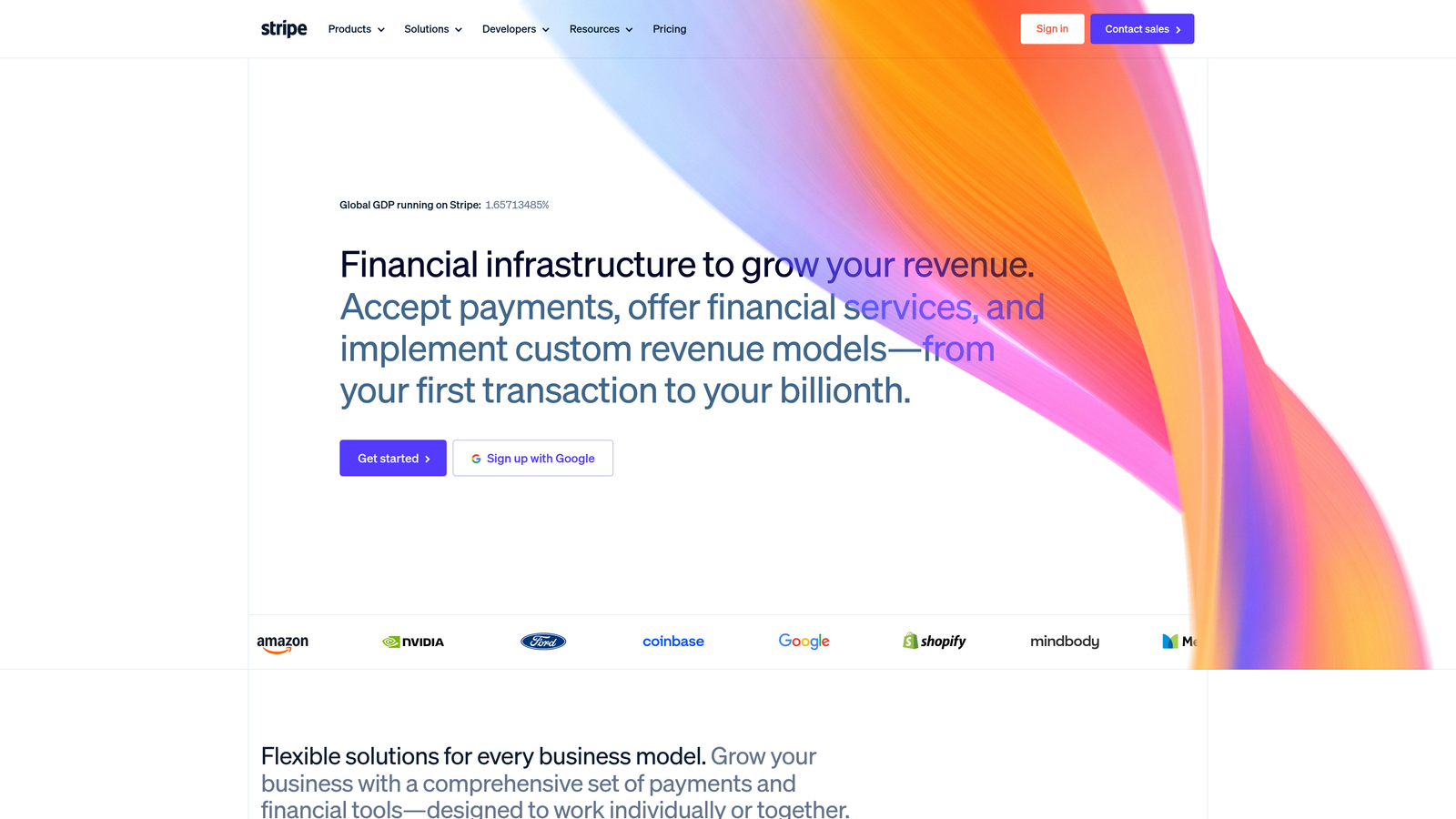
Stripe is developer-friendly payment infrastructure with a verified nonprofit rate, offering maximum flexibility for organizations willing to build a custom donation experience.
Where This Tool Shines
Stripe isn't a nonprofit platform — it's payment infrastructure. But for orgs with technical resources or a form builder integration, it offers something the dedicated platforms can't: complete control over the donation experience. You design the form, the flow, and the confirmation experience exactly as you want it, without being constrained by a platform's template library.
The verified nonprofit processing rate is a meaningful financial benefit. Once approved, nonprofits receive a discounted rate that can add up significantly at volume. Pairing Stripe with a smart form builder like Orbit AI gives you the best of both worlds: intelligent form logic on the front end and Stripe's reliable payment rails on the back end.
Key Features
Nonprofit Processing Rate: Verified nonprofits receive a discounted processing rate, lower than Stripe's standard fees.
Full UX Customization: Build exactly the donation form and confirmation flow your brand requires.
Recurring Billing Infrastructure: Robust subscription management for monthly giving programs.
Extensive API Options: Connect to virtually any CRM, email platform, or analytics tool via API.
Form Builder Compatibility: Pairs well with tools like Orbit AI for no-code implementations on top of Stripe's payment layer.
Best For
Nonprofits with a developer on staff or a technical partner, and organizations that want to avoid platform fees by building a custom experience. Not a fit for orgs that need built-in donor management or a turnkey setup with no technical involvement.
Pricing
Discounted processing rate for verified nonprofits; no platform fee. Standard Stripe rates apply until nonprofit verification is approved.
6. Classy
Best for: Enterprise nonprofits needing a comprehensive fundraising suite with campaigns, events, and peer-to-peer.
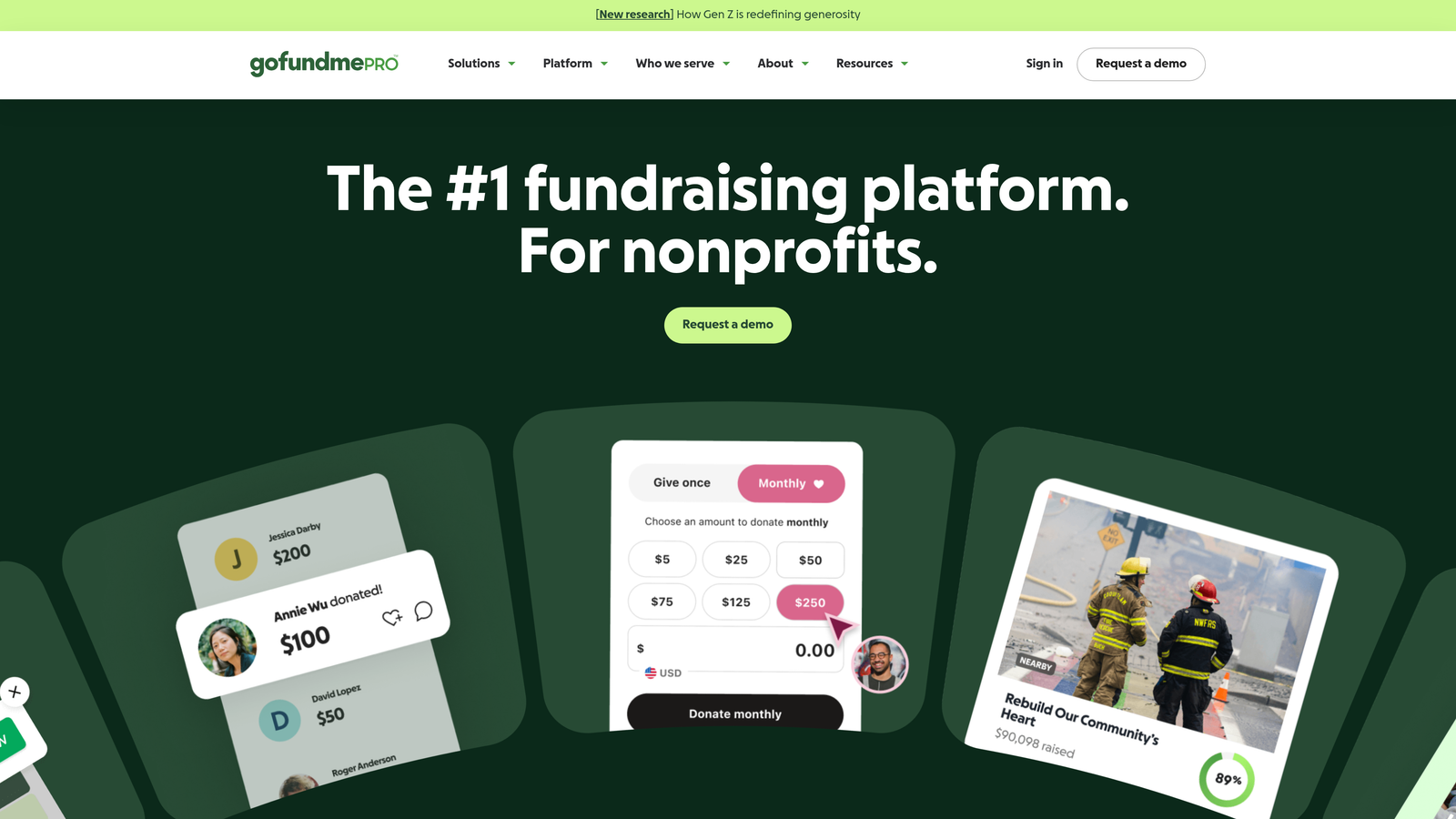
Classy is an enterprise nonprofit fundraising platform, now part of GoFundMe, offering campaigns, events, peer-to-peer, and comprehensive donor management.
Where This Tool Shines
Classy has strong brand recognition in the nonprofit sector for good reason. Its campaign management capabilities are comprehensive, covering everything from one-time donation pages to multi-team peer-to-peer campaigns and event registration. For larger organizations managing complex fundraising programs across multiple channels, having everything under one roof has real operational value.
The Salesforce integration is a notable strength for enterprise nonprofits already invested in that ecosystem. Reporting and donor analytics are also more developed than most mid-market platforms. It's worth evaluating the current product state given the GoFundMe acquisition, but Classy remains a leading option for organizations at this scale.
Key Features
Campaign and Event Management: Full suite covering donation pages, fundraising campaigns, and event registration in one platform.
Peer-to-Peer Fundraising: Team and individual fundraising pages with robust management tools.
Sustainer Programs: Recurring giving infrastructure designed to grow and retain monthly donors.
Donor Analytics: Robust reporting dashboards for tracking campaign performance and donor behavior.
Salesforce Integration: Native integration with Salesforce for enterprise CRM workflows.
Best For
Mid-to-large nonprofits running multi-channel fundraising programs who need an enterprise-grade platform with strong reporting and CRM connectivity. Pricing is custom, making it less accessible for smaller organizations.
Pricing
Custom enterprise pricing; contact Classy directly for a quote. Not publicly listed.
7. Qgiv
Best for: Event-heavy nonprofits that need text-to-give, auctions, and in-person giving alongside online forms.
Qgiv is a fundraising platform with strong text-to-give and mobile giving capabilities alongside standard online donation forms.
Where This Tool Shines
Qgiv's real differentiation is its event and mobile giving toolkit. Text-to-give with keyword campaigns, event registration, live auction tools, and kiosk giving support make it a strong fit for nonprofits that raise a significant portion of their revenue at in-person events. Many platforms treat events as an afterthought; Qgiv treats them as a primary use case.
The tiered pricing structure also makes it accessible for organizations at different budget levels, with plans that scale as your needs grow. The interface is more utilitarian than some newer platforms, but the functional depth for event-driven fundraising is hard to match at this price point.
Key Features
Text-to-Give: Keyword-based text giving campaigns with real-time tracking for events and appeals.
Event and Auction Tools: Event registration, live auction management, and bid tracking built into the platform.
In-Person Giving Support: Kiosk and tablet-based giving for events and physical locations.
Peer-to-Peer Fundraising: Individual and team fundraising pages for supporter-led campaigns.
Tiered Pricing: Plans structured for different organizational sizes and budget levels.
Best For
Nonprofits that run galas, auctions, walk/run events, or other in-person fundraising programs where text-to-give and mobile giving are central to the strategy. Less ideal for orgs where visual design is a priority, as the interface is functional rather than polished.
Pricing
Tiered monthly plans starting at accessible rates; contact Qgiv for current pricing details.
8. PayPal Giving Fund
Best for: Enrolled nonprofits wanting a zero-fee supplementary giving channel with built-in donor discovery.
PayPal Giving Fund is a zero-fee giving channel for enrolled nonprofits, leveraging PayPal's trusted brand and built-in donor discovery.
Where This Tool Shines
PayPal Giving Fund's most underappreciated feature is donor discovery. When your nonprofit enrolls, PayPal surfaces it to its existing user base, meaning donors who might never have found your organization can give directly through the PayPal interface. For nonprofits looking to expand their donor base without paid acquisition, this passive discovery channel has real value.
The 0% platform fee for enrolled nonprofits is also genuinely attractive as a supplementary channel. The trade-off is clear: you're operating within PayPal's UX, not your own, which means limited customization and no control over the donation experience. Think of it as an additional giving channel, not a replacement for your primary donation form.
Key Features
0% Platform Fee: Enrolled nonprofits pay no platform fee on donations received through the Giving Fund.
Donor Discovery: PayPal surfaces enrolled nonprofits to its user base, creating passive inbound giving opportunities.
Trusted Brand: PayPal's brand recognition reduces donor hesitation compared to unfamiliar payment interfaces.
Simple Enrollment: Eligible 501(c)(3) organizations can enroll without complex technical setup.
Supplementary Channel: Works alongside your primary donation form to capture donors who prefer PayPal.
Best For
Any eligible 501(c)(3) that wants a zero-cost supplementary giving channel. This is not a primary donation platform strategy: you have no control over the UX, and customization is essentially nonexistent. But as one additional way for donors to find and give to you, the enrollment cost-benefit is hard to argue with.
Pricing
Free for enrolled nonprofits. Standard PayPal processing fees may apply in some configurations.
9. Bloomerang Payments
Best for: Nonprofits already using Bloomerang CRM who want native payment processing with zero manual data entry.
Bloomerang Payments is native payment processing embedded within Bloomerang's donor CRM, where every donation automatically syncs to donor records.
Where This Tool Shines
The core value proposition here is simple: when payment processing and donor management live in the same system, the manual data entry problem disappears. Every donation automatically creates or updates a donor record, complete with giving history, engagement scores, and retention data. For nonprofits that have experienced the pain of reconciling a payment processor against a CRM, this seamless sync is a genuine operational improvement.
Bloomerang's built-in donor retention scoring and dashboards add another layer of value. You're not just collecting donations — you're building a picture of donor health over time, which supports smarter stewardship and re-engagement efforts.
Key Features
Automatic Donor Record Sync: Every transaction is instantly logged to the corresponding donor record, eliminating manual reconciliation.
Online Giving Pages: Branded donation pages with recurring giving options built in.
Donor Retention Scoring: Built-in dashboards track donor health and flag at-risk supporters before they lapse.
CRM-Native Experience: No integration to maintain — payments and donor data live in the same system by design.
Best For
Organizations already subscribed to Bloomerang CRM who want to consolidate their payment processing and donor management into a single system. If you're not using Bloomerang CRM, there's no compelling reason to choose Bloomerang Payments over the other options on this list.
Pricing
Bundled with Bloomerang CRM; pricing is based on database size. Contact Bloomerang directly for current rates.
Which Platform Is Right for Your Nonprofit?
The honest answer is that the best donation form platform is the one your donors actually complete. Technology is only part of the equation — form design, friction, and the quality of the giving experience matter just as much as which payment processor sits underneath.
Here's a quick way to think through the decision based on your situation:
If you want AI-driven donor segmentation and conversion-optimized forms: Start with Orbit AI. Its conversational form logic is particularly powerful for nonprofits that want to treat major gift prospects differently from general donors, and its modern design sets a higher bar for the donation experience.
If you need a turnkey nonprofit platform with recurring giving: Donorbox is the reliable, purpose-built choice that gets you live quickly without technical complexity.
If budget is your primary constraint: Givebutter's 0% platform fee model is hard to beat, especially for peer-to-peer or event-driven campaigns.
If you're a high-volume nonprofit wanting AI optimization: Fundraise Up's machine learning ask optimization is the most sophisticated dedicated tool in this category.
If you run event-heavy fundraising programs: Qgiv's text-to-give and auction tools make it the strongest fit for in-person giving scenarios.
If you're already in the Bloomerang ecosystem: Bloomerang Payments removes data entry friction and is the obvious choice for existing customers.
Most nonprofits underutilize smart form design as a conversion lever. A thoughtful, adaptive form that meets donors where they are — qualifying their interest, reducing friction, and reflecting your brand — can meaningfully improve the percentage of visitors who complete a gift. That's the lever worth pulling before you invest in more traffic or bigger campaigns.
If you're ready to see what a smarter donation form experience looks like, start your free trial today and explore how Orbit AI's intelligent form design can improve your donor conversion strategy from the first interaction.


