If you're running a Shopify store, your forms are doing more work than you might think. From capturing leads and qualifying buyers to collecting post-purchase feedback and processing custom order requests, the right form builder can meaningfully impact your conversion rate and customer experience.
But not all form builders are built for Shopify's ecosystem. Some are clunky to embed, others lack conditional logic, and most weren't designed with lead qualification in mind. This list focuses on tools that genuinely work well in a Shopify context, whether you need a simple contact form or a multi-step lead qualification flow.
We've evaluated each tool on ease of Shopify integration, form customization, automation capabilities, and pricing. Here are the top Shopify form builder apps worth considering in 2026.
1. Orbit AI
Best for: High-growth Shopify teams that want AI-powered lead qualification built into their forms.
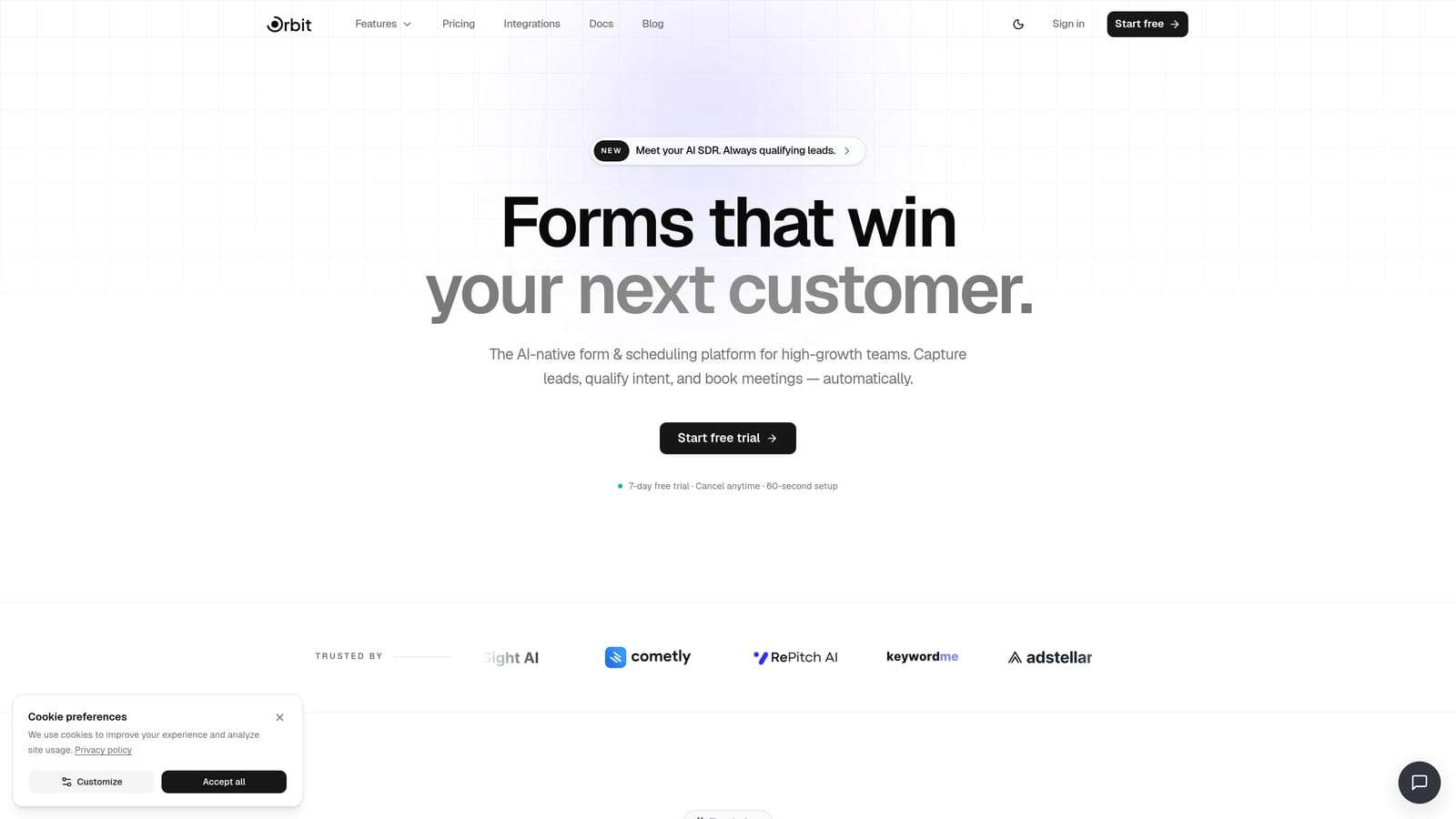
Orbit AI is an AI-powered form builder designed for conversion optimization, with built-in lead qualification and workflow automation.
Where This Tool Shines
Most form builders are data collection tools. Orbit AI is different: it's built around the idea that your forms should actively qualify and segment leads, not just capture them. For Shopify teams running high-volume lead flows, wholesale inquiries, or custom product requests, that distinction matters.
The multi-step form builder is modern and conversion-focused, with design controls that let you create branded, polished experiences without touching code. Embed it on any Shopify page via script or iframe, and the forms render cleanly on mobile, which matters given how much Shopify traffic comes from phones.
Key Features
AI Lead Qualification: Automatically scores and segments leads at the form level, so your team focuses on the right prospects first.
Multi-Step Form Builder: Conversion-optimized layouts with progress indicators, modern design controls, and conditional logic built in.
Workflow Automation and AI Agents: Build follow-up sequences and automated workflows triggered by form submissions, without needing a separate automation tool.
Analytics Dashboard: Track form performance, completion rates, and drop-off points so you can iterate on what's working.
Contact Management: CRM-lite functionality built directly into the platform, so submissions don't just disappear into a spreadsheet.
Best For
Shopify teams that treat lead generation seriously. If you're running wholesale inquiry flows, product qualification questions, or any form where lead quality matters as much as volume, Orbit AI is built for that use case. It's particularly well-suited to high-growth DTC brands and B2B-adjacent Shopify operations.
Pricing
Check orbitforms.ai/pricing for current plans. A free starting option is available.
2. Typeform
Best for: Brands that want a conversational, high-engagement form experience with strong third-party integrations.
Typeform is a conversational form builder known for its one-question-at-a-time format and polished visual design.

Where This Tool Shines
Typeform's signature format, showing one question at a time rather than a full form, tends to feel less overwhelming to respondents. For lifestyle brands and DTC stores where brand experience matters, that conversational flow can meaningfully improve completion rates compared to traditional multi-field forms.
It works on Shopify via iframe embed or direct link, and integrates with Klaviyo, HubSpot, and Zapier, which covers most Shopify merchants' integration needs. The limitation is that it's not a native Shopify app, so setup requires a bit more manual configuration than some alternatives.
Key Features
Conversational Format: One-question-at-a-time flow that reduces friction and keeps respondents engaged.
Logic Jumps: Conditional branching that adapts the form path based on previous answers.
Shopify Embed: Works via iframe or direct link on any Shopify page or blog post.
Integration Ecosystem: Native connections to Klaviyo, HubSpot, Zapier, and other tools common in Shopify stacks.
Rich Media Support: Add images and video within form questions for a more engaging experience.
Best For
DTC and lifestyle Shopify brands where brand experience is central to the customer journey. Also a solid choice for post-purchase surveys and customer research where completion rate is the primary goal.
Pricing
Free plan available. Paid plans start around $25/month. Verify current pricing at typeform.com/pricing.
3. Jotform
Best for: Shopify merchants who need complex forms with payment collection, approval workflows, or extensive template options.
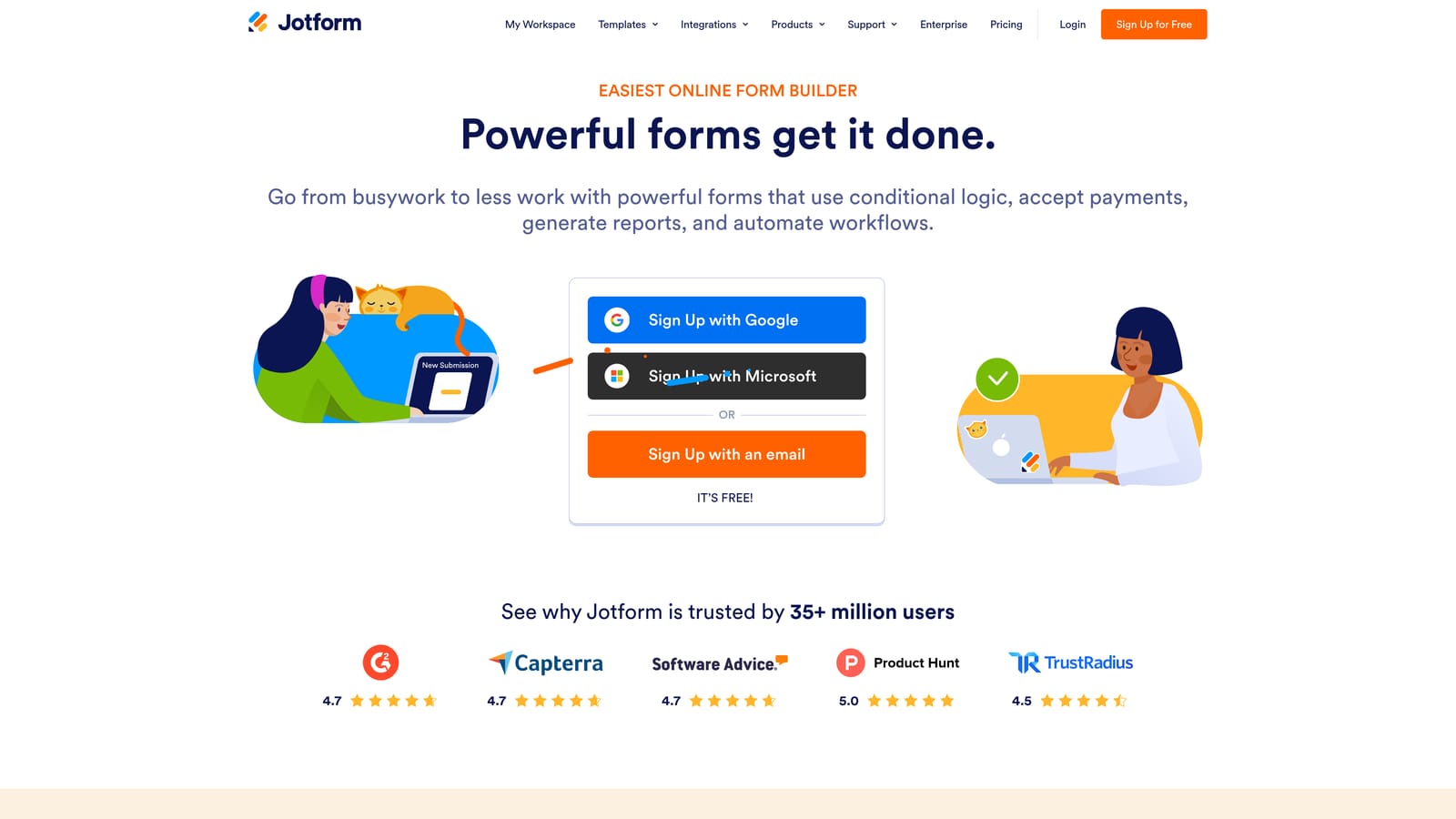
Jotform is one of the most feature-rich form builders available, with a native Shopify App Store listing and built-in payment processing.
Where This Tool Shines
Jotform's breadth is its biggest strength. If you need a wholesale order form with calculation fields, a deposit collection form with Stripe integration, or a custom product request form with an internal approval workflow, Jotform can handle all of it. The template library is enormous, and many templates are purpose-built for e-commerce use cases.
The native Shopify app listing is a practical advantage: installation is more straightforward than tools that require manual embed code, and it reduces the risk of theme conflicts. For merchants who want to move fast without technical overhead, that matters.
Key Features
Native Shopify App: Listed directly in the Shopify App Store for easier installation and theme compatibility.
Payment Collection: Built-in support for Stripe, PayPal, and Square, useful for deposits, pre-orders, or paid applications.
Template Library: Thousands of templates including wholesale forms, order forms, and customer feedback surveys.
Advanced Conditional Logic: Show or hide fields, calculate totals, and branch form paths based on user input.
Approval Workflows: Route submissions through internal review processes before taking action, ideal for B2B or wholesale scenarios.
Best For
Shopify stores with complex form requirements: wholesale operations, custom product configurators, or any scenario where payment collection and internal approval workflows need to work together.
Pricing
Free plan available with limits. Paid plans start around $34/month. Verify current pricing at jotform.com/pricing.
4. Tally
Best for: Lean teams or early-stage Shopify stores that want a clean, capable form builder with a genuinely useful free tier.
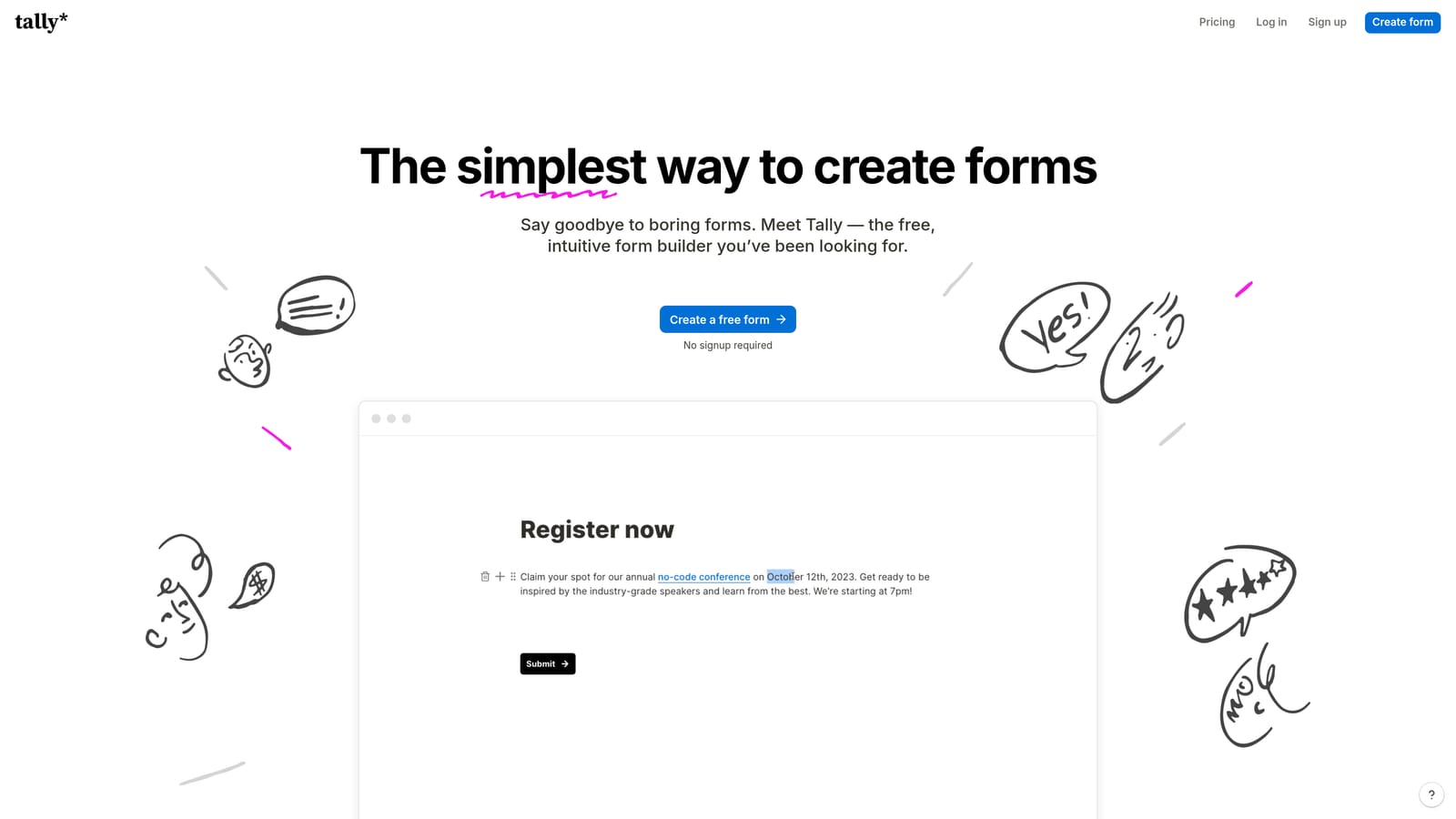
Tally is a Notion-style form builder with a block-based editor, conditional logic, and one of the most generous free tiers in the category.
Where This Tool Shines
Tally's free plan stands out because it removes branding from your forms, something most competitors reserve for paid tiers. For early-stage stores or teams testing different form strategies before committing to a paid tool, that's a meaningful advantage. The block-based editor is intuitive, especially for anyone already comfortable with Notion.
Shopify embed works via iframe, which is straightforward to set up. Zapier integration connects Tally submissions to Shopify workflows, Klaviyo lists, or whatever else is in your stack. It's not the most powerful tool on this list, but for teams that need something clean and fast without a monthly bill, it's hard to beat.
Key Features
No Branding on Free Plan: Unusually generous for the category, free accounts don't show Tally branding on published forms.
Block-Based Editor: Fast to learn, especially for teams already using Notion or similar tools.
Conditional Logic: Multi-page forms with logic branching available on both free and paid plans.
Shopify Embed: Embed via iframe on any Shopify page with a simple copy-paste workflow.
Zapier Integration: Connect form submissions to Shopify, Klaviyo, Mailchimp, and other tools in your stack.
Best For
Early-stage Shopify stores, lean teams, or any merchant who wants to test form strategies without committing to a paid plan. Also a good fit for simple contact forms, newsletter signups, and customer surveys where advanced qualification isn't needed.
Pricing
Generous free tier available. Tally Pro is around $29/month. Verify current pricing at tally.so/pricing.
5. Paperform
Best for: Shopify brands running campaign-specific landing pages, product launches, pre-orders, or waitlist campaigns.
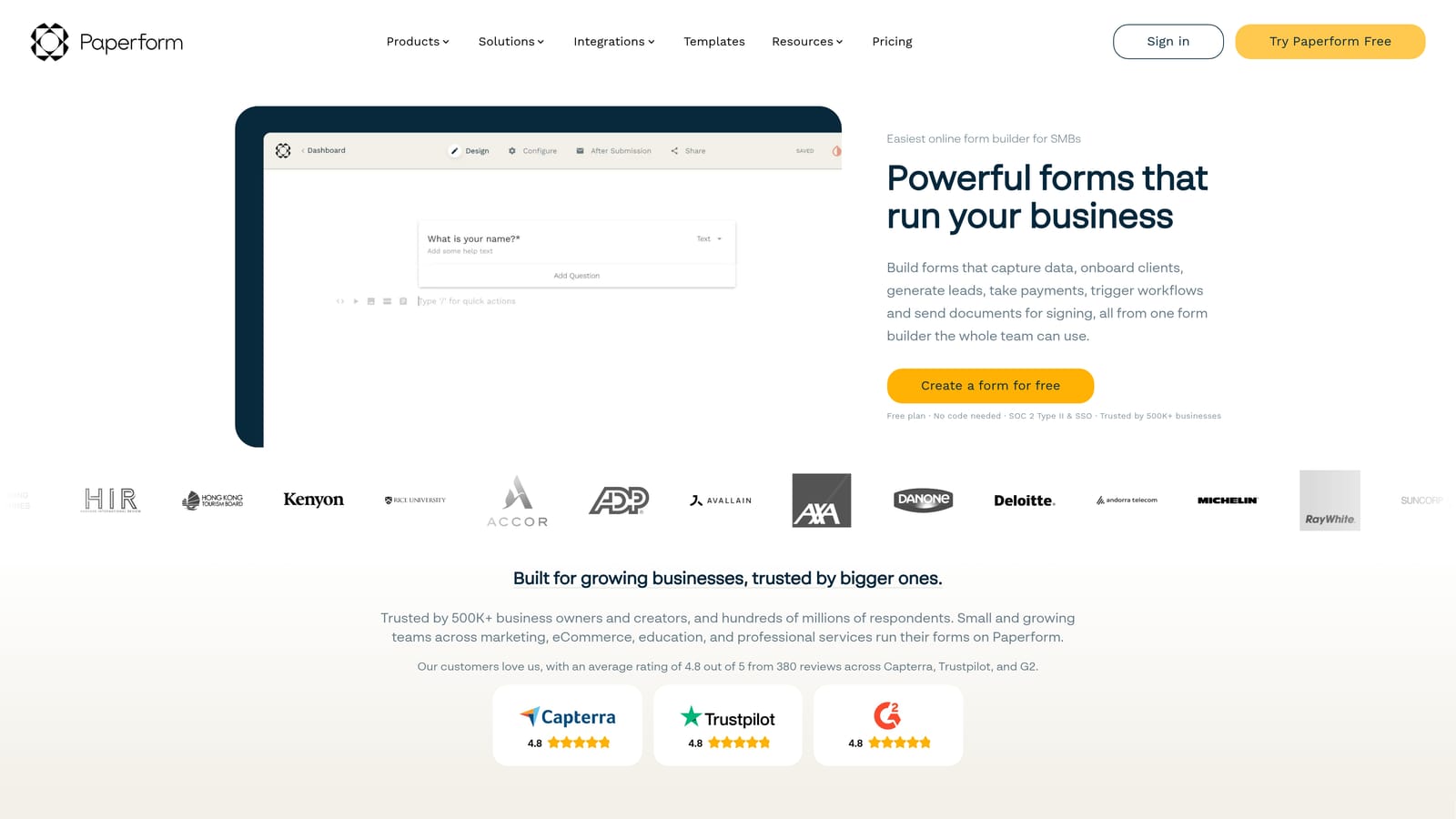
Paperform is a hybrid form builder and mini landing page tool where each form functions as a fully branded standalone page.
Where This Tool Shines
Paperform occupies a unique space: it's not just a form, it's closer to a lightweight landing page. Each form can include rich text, images, and branded design elements alongside the actual form fields, making it well-suited for product launches, pre-order campaigns, and waitlists where you want a polished standalone experience rather than a form embedded in an existing page.
For Shopify merchants running seasonal campaigns or testing new product concepts, the ability to spin up a branded form-page quickly is genuinely useful. Shopify integration runs through Zapier, which adds a step compared to native apps, but covers most common data sync needs.
Key Features
Standalone Form Pages: Each form functions as its own branded page, not just an embeddable widget.
Payment and Product Fields: Collect payments and product selections directly within the form experience.
Conditional Logic: Show or hide fields and sections based on user responses, with calculation support for pricing and totals.
Zapier Integration: Sync form data to Shopify, CRM tools, and email platforms through Zapier workflows.
Design Customization: Strong brand control over fonts, colors, and layout for consistent campaign experiences.
Best For
Shopify brands that frequently run campaigns, product launches, or waitlists and want each initiative to have its own polished, branded form-page. Also a good fit for pre-order flows where payment collection and design quality both matter.
Pricing
Starts around $29/month. Verify current pricing at paperform.co/pricing.
6. Formstack
Best for: Enterprise Shopify Plus operations or regulated industries that require compliance certifications and advanced workflow automation.
Formstack is an enterprise-grade form builder with HIPAA, GDPR, and SOC 2 compliance, along with robust workflow and document generation capabilities.
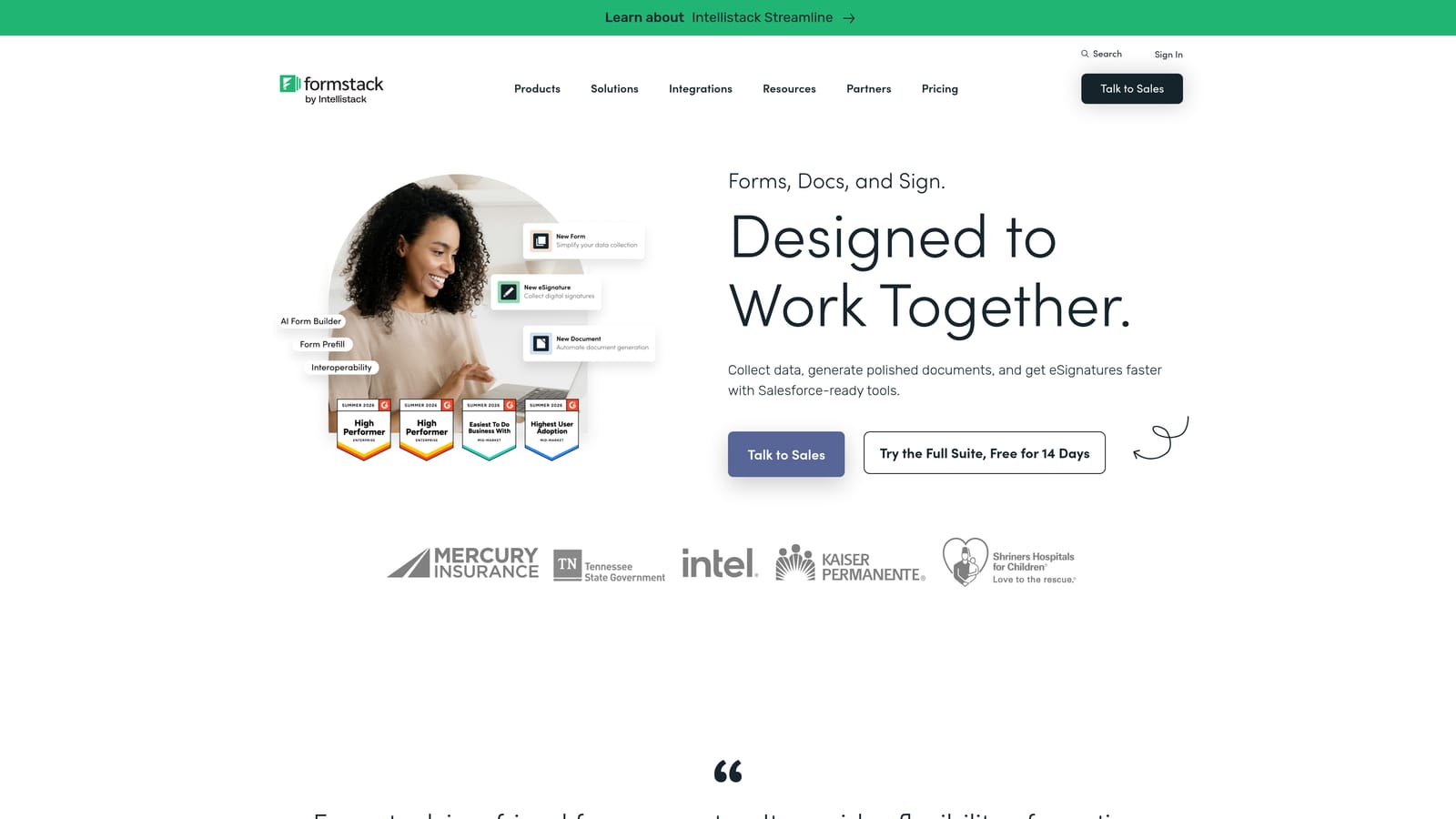
Where This Tool Shines
Formstack is in a different weight class than most tools on this list. If your Shopify operation touches regulated data, such as health-related products, financial services, or industries with strict data handling requirements, Formstack's compliance certifications make it the only credible option here. HIPAA compliance alone disqualifies most other form builders for those use cases.
Beyond compliance, Formstack's workflow automation is genuinely enterprise-grade. Document generation, multi-step approval routing, and team permission controls go well beyond what smaller tools offer. Shopify connectivity runs through Zapier or direct API integration, which is standard at the enterprise level.
Key Features
Compliance Certifications: HIPAA, GDPR, and SOC 2 compliance for regulated industries and enterprise data requirements.
Advanced Workflow Automation: Multi-step approval routing, document generation, and automated action triggers.
Conditional Logic: Multi-step forms with branching logic and field dependencies.
API and Zapier Integration: Connect to Shopify and other enterprise systems via direct API or Zapier workflows.
Enterprise Admin Controls: Team permissions, role-based access, and audit trails for larger organizations.
Best For
Large Shopify Plus operations, regulated industries, or enterprise teams that need compliance certifications and advanced internal workflow automation alongside their form builder. Not the right fit for lean teams or standard e-commerce use cases where simpler tools will serve better at a lower cost.
Pricing
Enterprise-oriented pricing, starting significantly higher than other tools on this list. Verify current plans at formstack.com/pricing.
Which Shopify Form Builder Is Right for Your Store?
The honest answer is that the best tool depends on what you're actually trying to accomplish. Each of these form builders serves a distinct use case, and picking the wrong one usually means either paying for features you don't need or hitting a ceiling on the ones you do.
Here's a quick breakdown by use case to help you decide:
AI-powered lead qualification: Orbit AI is the only tool on this list built around qualifying and segmenting leads at the form level. If your Shopify store generates significant inquiry volume and lead quality matters, it's the obvious starting point.
Conversational UX and brand experience: Typeform is the go-to for DTC brands where the form experience itself is part of the brand. The one-question-at-a-time format consistently outperforms traditional forms for completion rates in research-style and survey contexts.
Complex forms with payments or approvals: Jotform's depth and native Shopify app make it the strongest choice for wholesale order forms, deposit collection, and anything requiring internal approval routing.
Free tier without compromise: Tally's free plan removes branding, which is rare. For early-stage stores or teams testing form strategies, it's the most generous starting point available.
Campaign landing pages and pre-orders: Paperform's standalone page format makes it uniquely suited for product launches and waitlists where you want a complete branded experience, not just an embedded form.
Enterprise compliance requirements: Formstack is the only option here with HIPAA and SOC 2 certifications. For regulated industries on Shopify Plus, that's non-negotiable.
If you're a high-growth team focused on turning store visitors into qualified leads, start your free trial today with Orbit AI and see how AI-powered lead qualification can change what your forms actually do for your business.