

Lead generation is only as good as your ability to scale it. Whether you're closing 10 deals a month or 1,000, the tools powering your pipeline need to grow with you, capturing, qualifying, and routing leads without adding headcount or complexity.
The problem? Most lead gen tools are built for small teams or enterprise budgets, leaving high-growth SaaS companies in an awkward middle ground. You need platforms that flex with your volume, sharpen lead quality as you grow, and connect cleanly to the rest of your stack.
This list cuts through the noise. We've evaluated nine scalable lead generation software platforms across capture quality, qualification depth, automation capabilities, and pricing flexibility. Each pick was chosen for its ability to handle increasing lead volume without sacrificing conversion quality, because scaling junk leads faster is not the goal.
1. Orbit AI
Best for: High-growth SaaS teams that want AI-powered lead qualification built directly into their form experience.
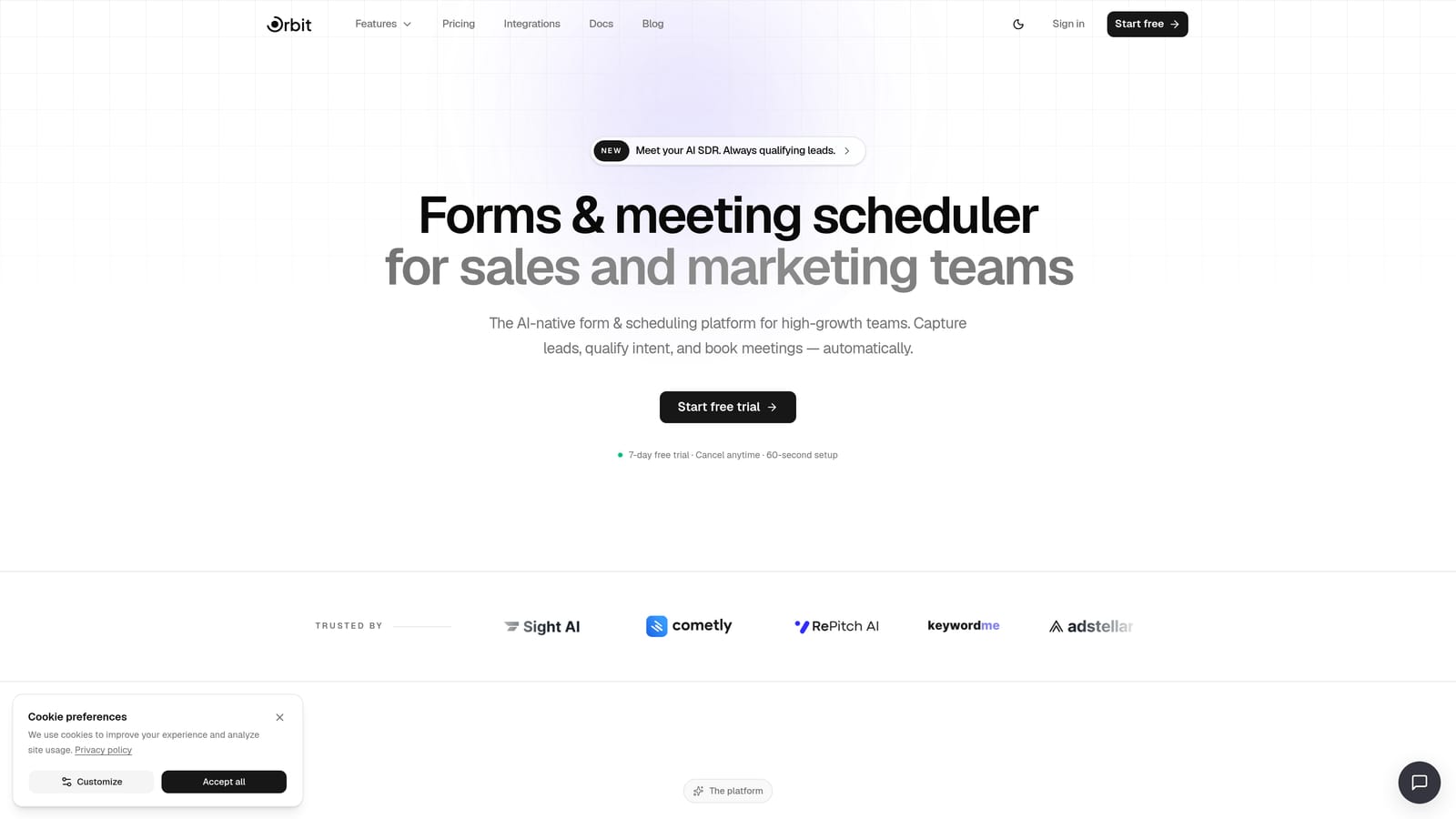
Orbit AI is an AI-powered form builder platform designed for conversion-obsessed teams who want to qualify leads automatically, not just collect them.
Where This Tool Shines
Most form builders are passive. They capture data and hand it off. Orbit AI takes a different approach by embedding lead qualification logic directly into the form experience itself, so your sales team receives pre-qualified prospects rather than raw submissions that need manual review.
The platform is built with design quality and conversion performance in mind. Forms look modern and professional without requiring a developer, and the underlying AI does the heavy lifting of scoring, routing, and following up with leads based on the criteria that matter to your business.
Key Features
AI-Powered Lead Qualification: Qualification logic runs inside the form experience, scoring and filtering leads before they ever reach your CRM or sales team.
Conversion-Optimized Templates: Modern, flexible form designs built to reduce abandonment and improve completion rates across devices.
AI Agents for Routing and Follow-Up: Automated agents handle lead routing and initial follow-up sequences without manual intervention.
Workflow Automation: Connect forms to downstream tools like CRMs, email platforms, and Slack through built-in workflow logic.
Built-In Analytics: Track form performance, lead quality trends, and conversion rates from a single dashboard.
Best For
Orbit AI is a strong fit for SaaS marketing and growth teams that prioritize lead quality over raw volume. If your current form setup generates plenty of submissions but your sales team spends too much time disqualifying leads manually, this platform directly addresses that friction.
Pricing
Visit orbitforms.ai/pricing for current plan details. Multiple tiers are available to match different team sizes and usage levels.
2. HubSpot Marketing Hub
Best for: Teams that want a single platform handling forms, email, landing pages, and CRM in one connected ecosystem.
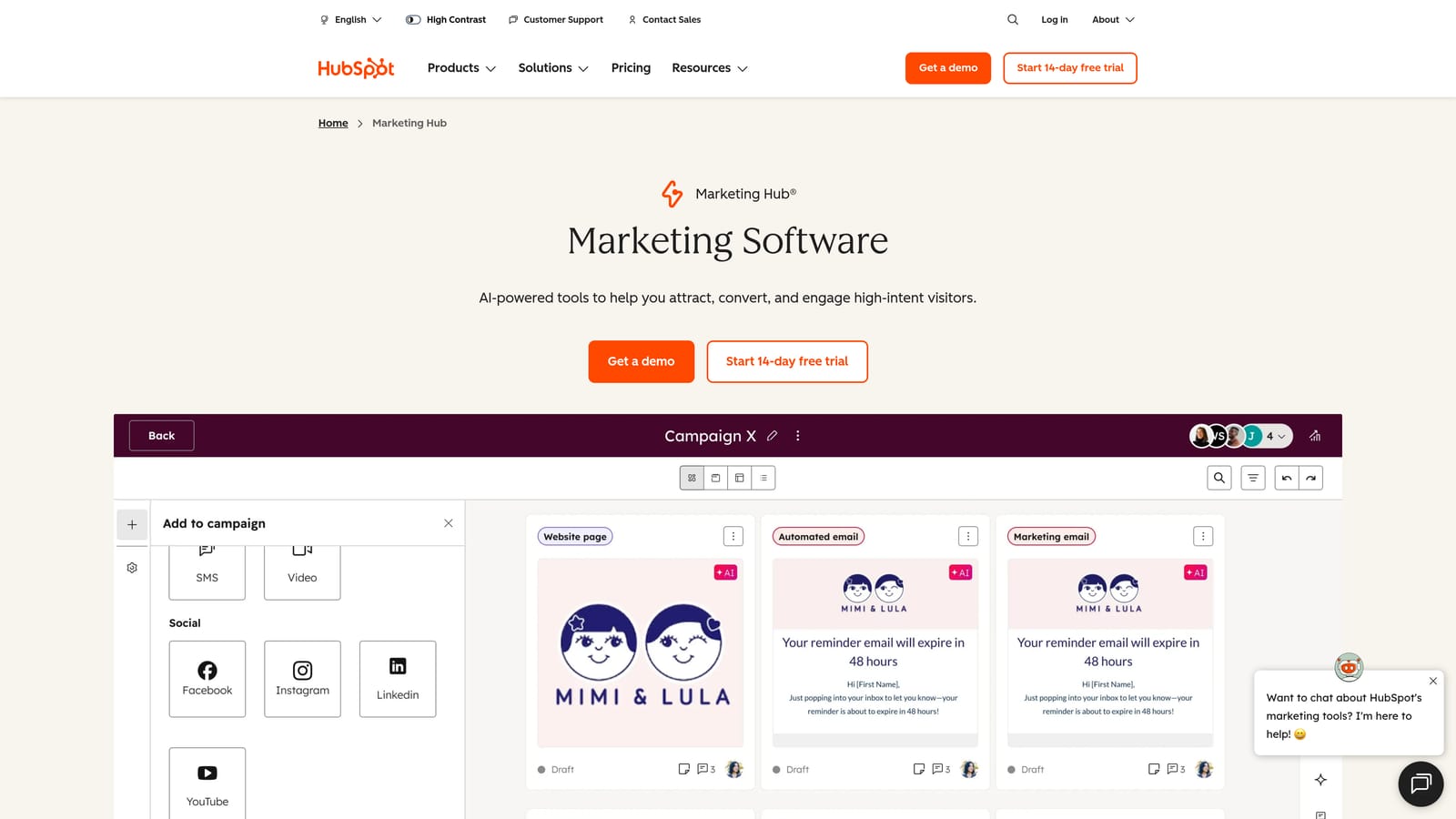
HubSpot Marketing Hub is a mature all-in-one inbound marketing platform that scales from early-stage startups to enterprise revenue teams.
Where This Tool Shines
HubSpot's biggest advantage is its native connectivity. Forms, landing pages, email nurture sequences, and contact records all live in the same system, which eliminates the data sync headaches that come with stitching together separate tools. When a lead fills out a form, their entire journey is tracked automatically.
The platform's breadth is both its strength and its complexity. It handles a wide range of use cases well, but teams that only need one piece of the stack may find themselves paying for features they don't use.
Key Features
Native Forms and Landing Pages: Build and publish capture assets that connect directly to HubSpot CRM without any integration setup.
Lead Nurture Automation: Email workflows trigger based on form submissions, contact properties, and behavioral signals.
Lead Scoring and Segmentation: Score contacts based on engagement and firmographic data, then segment for targeted campaigns.
Integration Marketplace: Connects with hundreds of third-party tools including Salesforce, Slack, and most major ad platforms.
Scalable Tiers: A free tier makes it accessible early, while enterprise plans support large contact databases and advanced reporting.
Best For
HubSpot Marketing Hub suits teams that want to consolidate their inbound stack under one roof. It's particularly valuable for companies that already use HubSpot CRM or Sales Hub, since the native data sharing across hubs reduces manual work significantly.
Pricing
A free tier is available with basic features. Paid plans scale based on contact count and feature access. Check HubSpot's website for current pricing tiers.
3. Apollo.io
Best for: SDR teams running outbound prospecting at scale with built-in contact data and email sequencing.
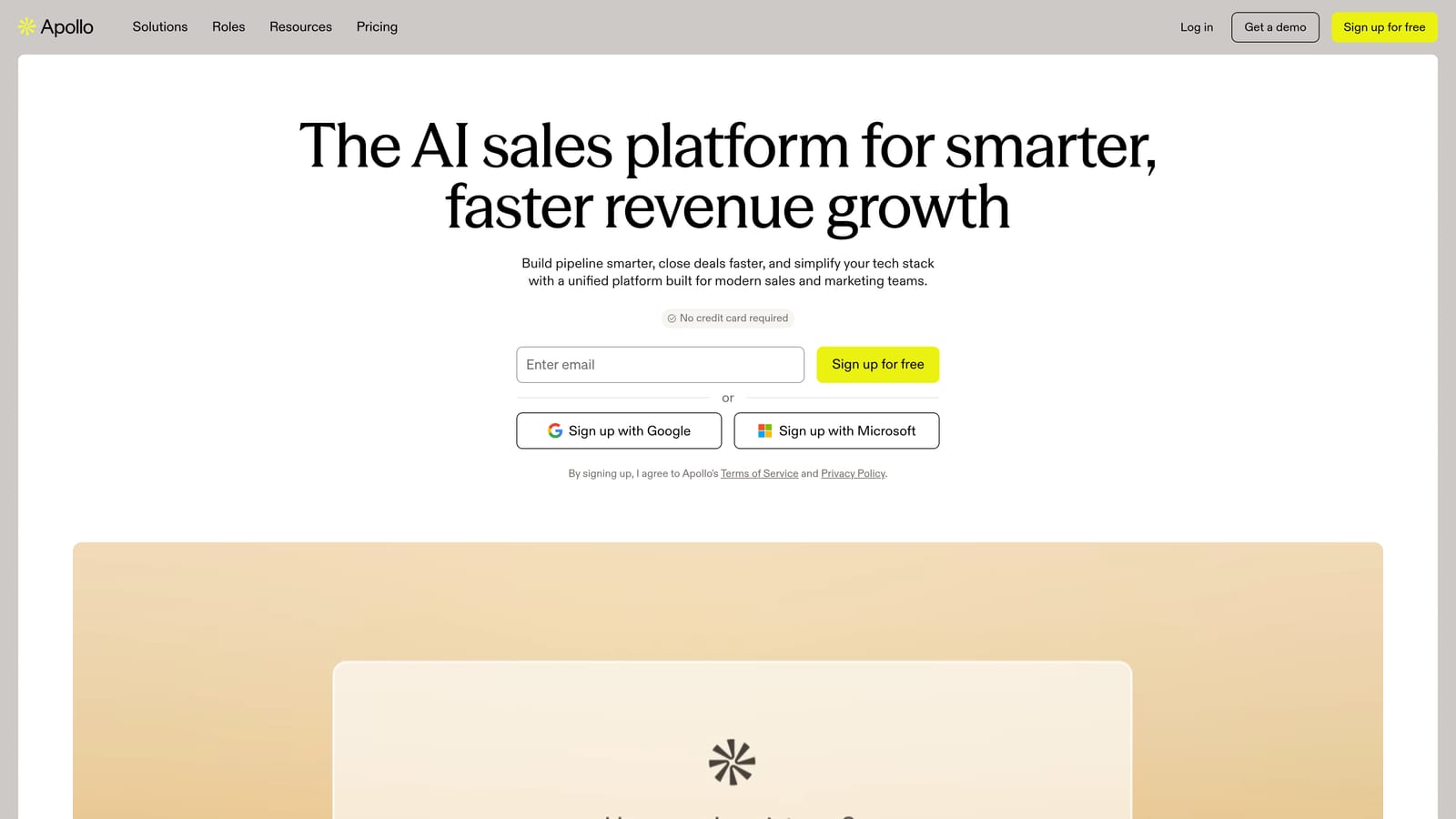
Apollo.io is a B2B sales intelligence and engagement platform that combines one of the largest contact databases available with outbound sequencing tools in a single interface.
Where This Tool Shines
Apollo removes the friction from outbound prospecting by putting contact discovery and outreach in the same platform. Instead of exporting leads from one tool and importing them into another, your reps can find a prospect, verify their contact data, and launch an email sequence without leaving the screen.
The intent signals and job change alerts are particularly useful for timing outreach. Reaching out when a prospect changes roles or when their company shows buying intent meaningfully improves response rates compared to cold, untriggered sequences.
Key Features
B2B Contact Database: Access a large database of company and contact records with email addresses, phone numbers, and firmographic data.
Email Sequencing: Build and automate multi-step outbound email sequences with A/B testing and reply detection.
Intent Signals and Alerts: Surface prospects showing buying intent or recent job changes for timely, contextual outreach.
Chrome Extension: Prospect directly from LinkedIn profiles and company websites without switching tools.
CRM Sync: Push contacts and activity data to Salesforce or HubSpot automatically.
Best For
Apollo.io is built for outbound-heavy sales teams, particularly SDR and BDR functions that need to generate pipeline from cold prospects. It scales well as team size grows, with seat-based pricing and shared team features.
Pricing
A free tier is available with limited export credits. Paid plans scale based on credit volume and seat count. Check Apollo's website for current plan details.
4. Breeze Intelligence by HubSpot
Best for: Inbound teams that want to enrich lead data automatically at the point of form submission without asking for more fields.
Breeze Intelligence is HubSpot's real-time B2B data enrichment product, formerly known as Clearbit, now integrated natively into the HubSpot ecosystem.
Where This Tool Shines
The core insight behind Breeze Intelligence is simple: shorter forms convert better, but sales teams need rich data to prioritize and personalize outreach. Breeze solves this by appending firmographic and contact data automatically when a lead submits a form, so you capture less but know more.
The native HubSpot integration makes it particularly powerful for teams already on that platform. Enriched data flows directly into contact records, lead scoring models, and segmentation lists without any manual import or sync configuration.
Key Features
Real-Time Enrichment: Append company size, industry, tech stack, and contact data to leads at the moment of form submission.
Form Shortening: Reduce required form fields while still capturing the full data picture through automatic enrichment.
Intent Signals: Identify contacts and companies showing active buying behavior to prioritize follow-up.
Native HubSpot Integration: Enriched data populates directly into HubSpot contact and company records.
Firmographic Segmentation: Use enriched data to build more precise audience segments for campaigns and scoring.
Best For
Breeze Intelligence is best suited for HubSpot-centric teams that want to improve lead quality without adding form fields or manual research steps. It's a natural fit for inbound-led SaaS companies where form conversion rate and data quality are both priorities.
Pricing
Breeze Intelligence is bundled into HubSpot plans. Check HubSpot's current pricing page for details on which tiers include access.
5. Intercom
Best for: Product-led growth companies that want to qualify and route leads through conversational chat rather than static forms.
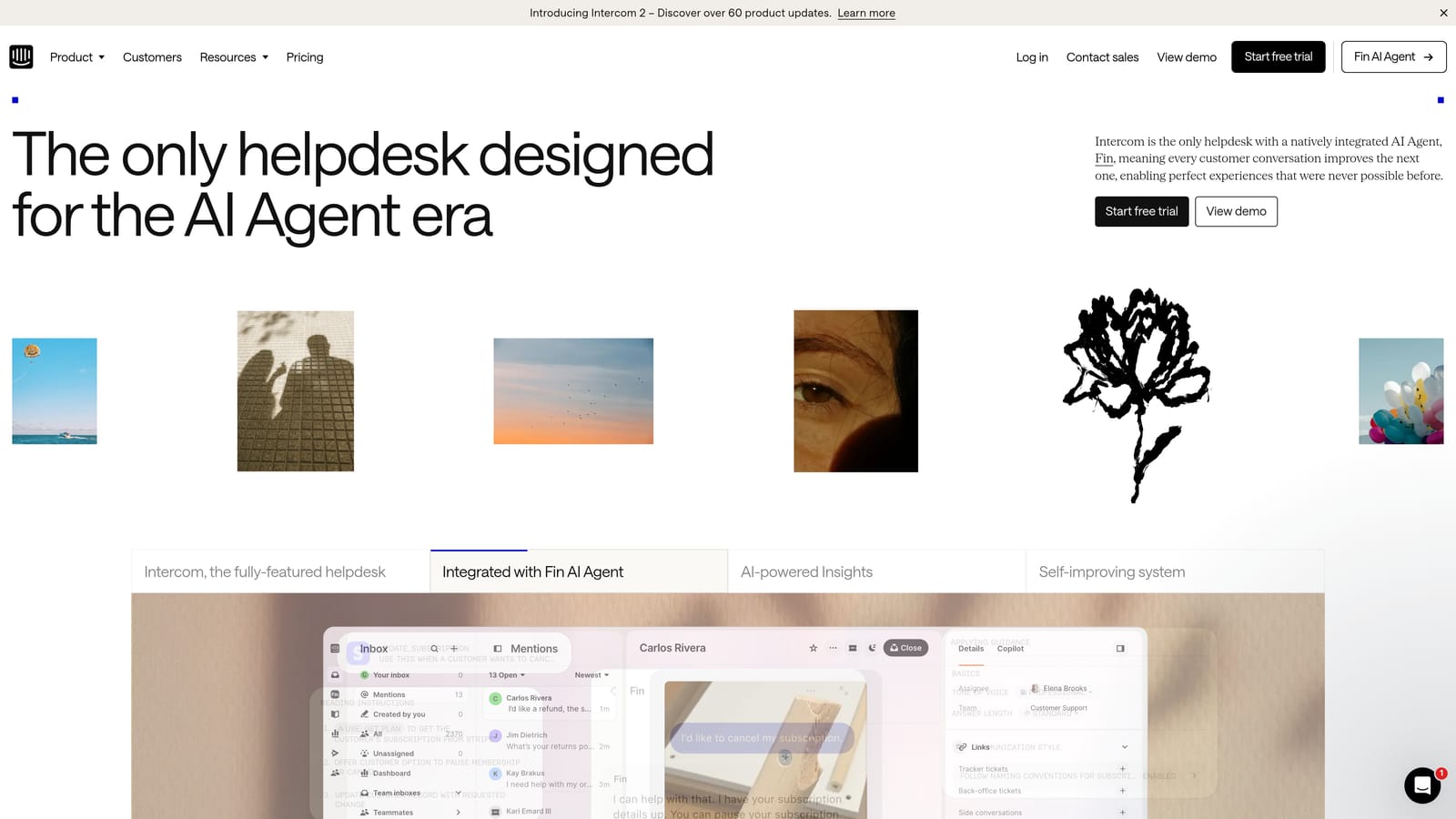
Intercom is a conversational marketing and customer messaging platform that uses AI-powered bots and live chat to engage, qualify, and route visitors in real time.
Where This Tool Shines
Intercom's strength is meeting visitors where they are, on your website or inside your product, and starting a conversation rather than directing them to a form. The Fin AI bot handles initial qualification automatically, asking the right questions and routing high-intent leads to sales or booking links without human intervention.
For PLG companies, Intercom is particularly valuable because it bridges the gap between product usage and sales outreach. Behavioral triggers based on in-app activity can initiate conversations at exactly the right moment in the user journey.
Key Features
Fin AI Bot: AI-powered bot handles lead qualification conversations, answers questions, and routes prospects based on responses.
Behavioral Targeting: Trigger messages and chat flows based on visitor behavior, page views, or product activity.
Meeting Booking: Embed calendar booking directly into chat flows so qualified leads can schedule calls without leaving the conversation.
In-App Messaging: Reach users inside your product with targeted messages for upsell, expansion, or re-engagement.
CRM and Help Desk Integrations: Connect Intercom data to Salesforce, HubSpot, and major support platforms.
Best For
Intercom works best for SaaS companies with significant website or product traffic where conversational engagement outperforms static forms. It's especially strong for teams running a PLG or hybrid sales motion where product usage signals feed directly into sales outreach.
Pricing
Tiered plans based on seats and usage volume. Enterprise pricing is available on request. Check Intercom's website for current plan details.
6. Dealfront
Best for: Account-based marketing teams that want to identify and act on anonymous B2B website visitors.
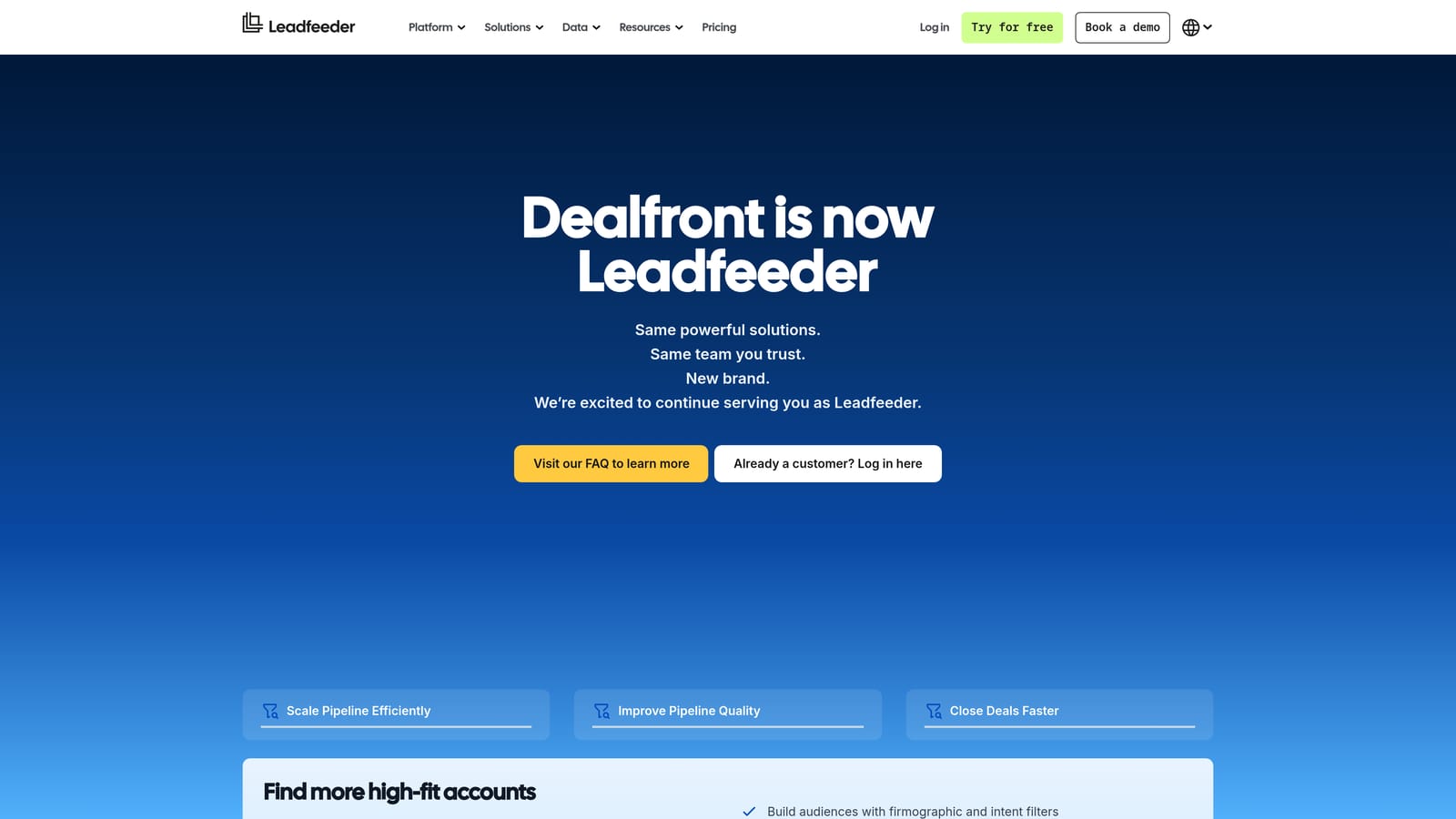
Dealfront (formerly Leadfeeder) is a B2B website visitor identification platform that reveals which companies are browsing your site and surfaces contact data for targeted outreach.
Where This Tool Shines
Most website visitors leave without filling out a form. Dealfront addresses this blind spot by identifying the companies behind anonymous traffic, giving your sales team a list of warm prospects who have already shown interest by visiting your site, even if they never converted.
The behavioral scoring layer adds useful prioritization. Companies that spend significant time on pricing pages or product feature pages score higher than those who bounce from the homepage, helping sales teams focus their outreach on the most engaged accounts.
Key Features
Anonymous Visitor Identification: Reveal which companies are visiting your website, including firmographic details like industry, size, and location.
Contact Data Access: Surface key decision-makers at identified companies for direct outreach.
Behavioral Scoring: Score companies based on pages visited, session depth, and time on site to prioritize follow-up.
CRM Integration: Push identified companies and contacts directly into Salesforce, HubSpot, or other CRM platforms.
ABM Fit: Designed to support account-based marketing motions where target account engagement is tracked closely.
Best For
Dealfront is a strong fit for B2B SaaS companies running ABM programs or sales-led motions where website intent is a key signal. It's particularly useful when your sales team needs warm leads to work but form conversion rates are limiting inbound volume.
Pricing
A limited free plan is available. Paid plans scale based on the number of companies identified per month. Check Dealfront's website for current pricing.
7. ActiveCampaign
Best for: Marketing teams that need sophisticated lead nurture automation with built-in CRM and lead scoring capabilities.
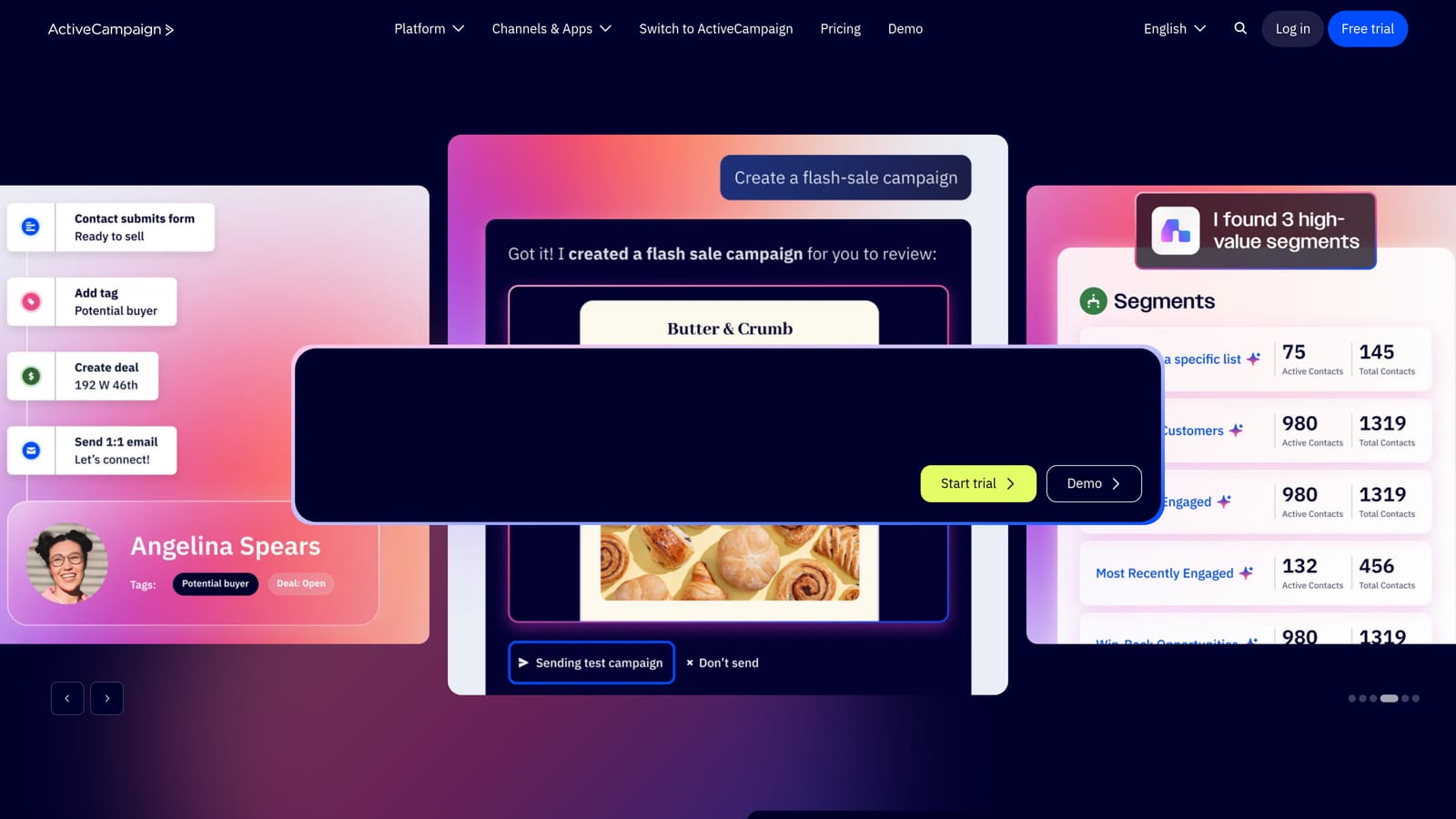
ActiveCampaign is an email marketing and automation platform with a visual workflow builder, lead scoring engine, and built-in CRM designed for teams that run complex nurture sequences.
Where This Tool Shines
ActiveCampaign's visual automation builder is one of the most flexible in its category. You can construct multi-branch nurture sequences that respond to email engagement, site behavior, form submissions, and CRM stage changes, all within a single workflow canvas without needing developer support.
The lead scoring system integrates tightly with these automations. As contacts accumulate points based on engagement signals, they can automatically trigger stage changes, sales notifications, or new sequence enrollments, reducing the manual handoff work between marketing and sales.
Key Features
Visual Automation Builder: Build complex, branching nurture sequences using a drag-and-drop canvas with conditional logic.
Lead Scoring: Score contacts based on email opens, clicks, site visits, and custom events to identify sales-ready leads.
Dynamic Segmentation: Segment contacts using behavioral and firmographic data for personalized campaign targeting.
Built-In CRM: Manage deals and pipeline stages without a separate CRM tool, with automation triggered by pipeline movement.
Broad Integrations: Connect with form builders, lead capture tools, and data enrichment platforms through native integrations and Zapier.
Best For
ActiveCampaign suits marketing teams that run sophisticated, multi-touch nurture programs and need automation logic that goes beyond simple drip sequences. It's a particularly good fit for teams with longer sales cycles where lead nurture plays a meaningful role in conversion.
Pricing
Tiered plans based on contact count and feature access. No permanent free plan is available. Check ActiveCampaign's website for current pricing.
8. Unbounce
Best for: Paid traffic teams that need high-converting landing pages built and tested quickly without developer involvement.
Unbounce is an AI-powered landing page builder focused on conversion optimization, with Smart Traffic routing and a no-code drag-and-drop editor designed for fast iteration.
Where This Tool Shines
Unbounce's Smart Traffic feature sets it apart from standard landing page builders. Rather than requiring you to manually run A/B tests and wait for statistical significance, Smart Traffic's AI automatically routes each visitor to the page variant most likely to convert based on their attributes and behavior.
For teams running paid acquisition at scale, this means faster optimization cycles and higher conversion rates without the manual work of analyzing test results and reallocating traffic. The dynamic text replacement feature also allows landing pages to match the exact copy of the ad that brought each visitor, improving message match and reducing bounce rates.
Key Features
Smart Traffic AI: Automatically routes visitors to the highest-converting page variant based on visitor attributes, reducing the need for manual A/B test management.
Drag-and-Drop Builder: Build and publish conversion-focused landing pages without writing code, using a library of optimized templates.
Dynamic Text Replacement: Personalize page copy to match paid ad text for improved message match and quality scores.
Built-In Analytics: Track conversion rates, visitor behavior, and variant performance from a single dashboard.
Integration Ecosystem: Connect with CRMs, email platforms, and form tools including HubSpot, Salesforce, and Mailchimp.
Best For
Unbounce is purpose-built for paid acquisition teams that need to move fast on landing page creation and optimization. It's a strong fit for growth marketers running multiple campaigns simultaneously who need each page to perform independently without developer bottlenecks.
Pricing
Tiered plans based on conversions and traffic volume. No free tier is available. Check Unbounce's website for current plan details.
9. Salesloft
Best for: Enterprise revenue teams that need coordinated multi-channel sales engagement, deal intelligence, and revenue forecasting in one platform.
Salesloft is a mature enterprise sales engagement platform combining outbound cadences, conversation intelligence, deal tracking, and revenue forecasting for complex, team-based selling motions.
Where This Tool Shines
Salesloft is designed for organizations where multiple roles, including SDRs, account executives, and managers, need to work in a coordinated way across a shared pipeline. The cadence system handles multi-channel outreach across email, phone, LinkedIn, and SMS, while conversation intelligence captures and analyzes every sales call automatically.
The deal intelligence layer is what separates Salesloft from simpler sequencing tools. Pipeline health tracking and revenue forecasting give leadership visibility into which deals are at risk and where the team's attention should focus, making it a genuine revenue operations platform rather than just an outreach tool.
Key Features
Multi-Channel Cadences: Orchestrate coordinated outreach sequences across email, phone calls, LinkedIn touches, and SMS from a single platform.
Conversation Intelligence: Record, transcribe, and analyze sales calls with AI coaching recommendations for reps and managers.
Deal Intelligence: Track deal health, engagement signals, and pipeline risk across the full opportunity lifecycle.
Revenue Forecasting: Generate data-driven forecasts integrated with CRM data for more accurate pipeline projections.
SDR and AE Coordination: Workflow design supports handoffs and collaboration between prospecting and closing roles within shared accounts.
Best For
Salesloft is built for enterprise sales organizations with structured SDR and AE teams, complex deal cycles, and a need for leadership-level pipeline visibility. It's not the right fit for small teams or early-stage companies, but for organizations at scale managing large, multi-stakeholder opportunities, it's a comprehensive platform.
Pricing
Custom enterprise pricing. Contact Salesloft's sales team directly for a quote tailored to your team size and requirements.
Choosing the Right Tool for Your Growth Stage
The right scalable lead generation software depends entirely on where your leads come from and where your biggest conversion gaps exist. No single platform covers every motion well, and the most effective growth stacks typically combine two or three complementary tools rather than relying on one all-in-one solution.
Here's a quick way to think about the options by use case:
For inbound form capture and qualification: Orbit AI leads here, particularly for teams that want AI-powered qualification built directly into the form experience rather than bolted on afterward.
For outbound prospecting at scale: Apollo.io gives SDR teams contact data, sequencing, and intent signals in a single workflow, while Salesloft adds the enterprise-grade coordination and forecasting layer for larger revenue teams.
For lead enrichment and data quality: Breeze Intelligence appends firmographic data automatically at form submission, and Dealfront surfaces intent from anonymous website visitors who never fill out a form at all.
For nurture automation and lifecycle marketing: ActiveCampaign's visual automation builder and HubSpot Marketing Hub both handle complex multi-touch sequences well, with HubSpot offering deeper native CRM connectivity.
Scalability isn't about picking the biggest platform. It's about choosing tools that handle increasing volume without breaking your conversion quality or your team's workflow. Start with your highest-friction point in the lead journey, fix that first, and build outward from there.
If your biggest opportunity is capturing and qualifying inbound leads more effectively, start building free forms today and see how AI-powered form design can improve both the volume and quality of leads entering your pipeline.


